
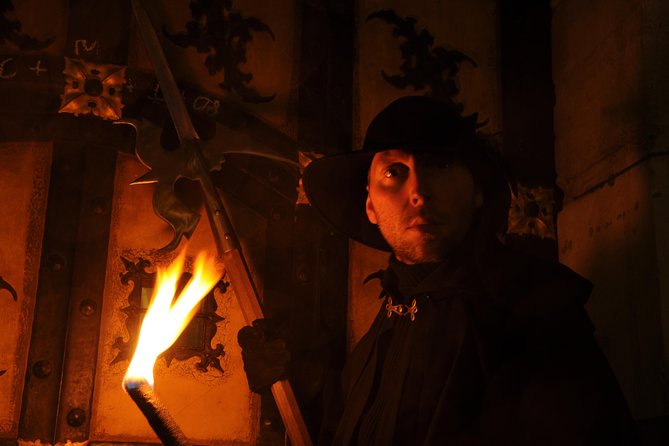
REVIEW · NIGHT WATCHMAN AND COSTUMED TOURS
On the road with the night watchman
The night watchman turns Munich into a storybook. This 90-minute walk uses lantern-style narration to connect you to dark alleys and real landmarks, from Old Peter’s crooked tower to the Zeughaus. I love the story-first pacing and the way every stop points you to an exact corner you can actually find afterward, but one drawback to flag is language clarity, since a past booking experience reported the host used German only.
You start at Marienplatz, then drift through the old city gate area and finish up near Odeonsplatz, which makes it easy to keep exploring on your own once the tour ends. With a maximum of 30 people and a mobile ticket, the logistics feel simple, and you’re not stuck in a huge crowd.
One more thing to consider: there is no built-in glühwein stop in the format. If you’re hoping for a hot drink moment, you might want to plan your own nearby add-on before or after the walk.
In This Review
- Key things to know before you go
- Why Munich Turns Different After Dark With a Night Watchman
- Marienplatz Start to Odeonsplatz Finish, You Stay in the Old Town
- Stop 1, Old Peter and the Devil Tale Behind the Crooked Tower
- Old Town Hall, Moat Crossings, and the Bean Counter Moment
- Alter Hof, Torture Chamber Passing, and the Duke Who Got Chased
- Frauenkirche and the Widow Petronella Stromairin’s Inheritance
- Jakobsplatz, the Zeughaus Armory, and Halberds Still Waiting
- What You’ll Actually Learn, and What You Can Skip
- Price and Timing, Does 17.44 Buy Enough Value?
- Who Should Book This Night Watchman Walk
- Should You Book This Tour in Munich?
- FAQ
- How long is the night watchman tour?
- Where do I meet the guide?
- Where does the tour end?
- Is there an admission cost for the stops?
- How big is the group?
- What is the cancellation timeframe?
Key things to know before you go
- A lantern-led, story-driven route through Munich’s central old town
- Five major stops tied to devils, dukes, and a widow’s inheritance tale
- Short visits (about 20 minutes each) that keep the pace comfortable
- Old Town Hall, Alter Hof, Frauenkirche, and the Zeughaus all in one circuit
- Free-admission stops listed for each location on the route
- Small group cap of 30 for better attention to the guide
More lantern-lit rounds after dark
- Munich: Night Watchman Walking Tour★ 4.7 · 2,092 reviews
- Munich: Night Watchman Torch Tour in German★ 4.8 · 1,280 reviews
- Munich: Middle Ages Tour with Night Watchman★ 4.9 · 652 reviews
- München: Der Nachtwächter für Kinder – Führung auf Deutsch★ 5.0 · 322 reviews
Why Munich Turns Different After Dark With a Night Watchman
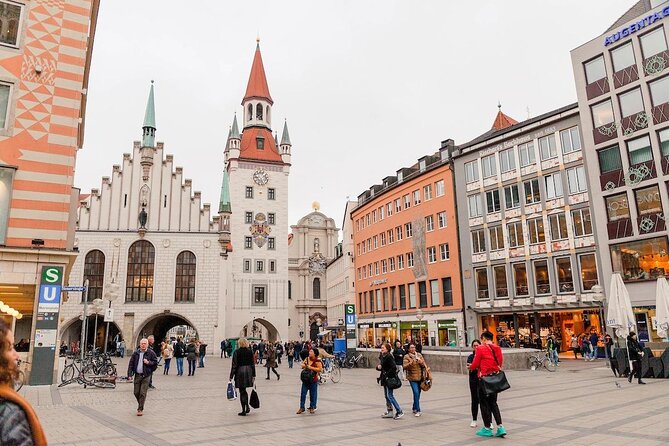
Munich in the evening has a way of slowing down. Lights soften the edges of stone, doorways look deeper, and even a straight street can feel like a secret passage if someone is guiding your attention. That is the whole point of a night watchman tour: you are not just viewing buildings, you are learning how the city used to be experienced when people stayed alert and moved carefully.
On this walk, you follow a night watchman character who weaves legends into the exact places you see. The tone is dramatic, but the route is practical. Instead of one long lecture, the stories come in chunks, roughly 20 minutes at a time, which helps you absorb the details without getting tired before the last stop.
I also like that this is not an all-day production. About 1 hour 30 minutes is a sweet spot for an evening activity. You get your old-town fix, you learn names and anecdotes you can remember, and you still have energy left for a post-tour stroll.
Marienplatz Start to Odeonsplatz Finish, You Stay in the Old Town
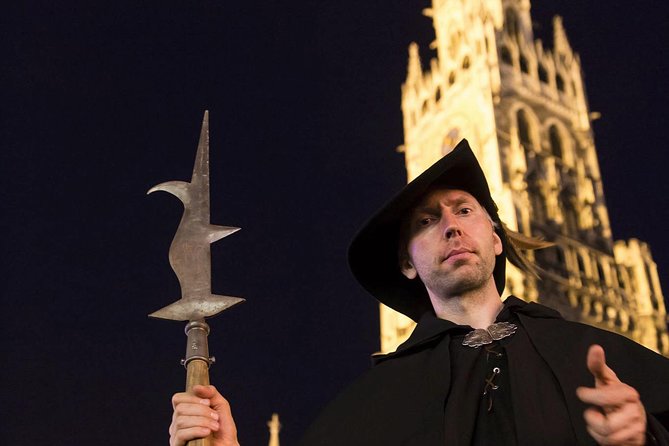
The tour begins at Mariensäule, Marienplatz 22. This is a location that makes sense for visitors because it anchors you in the city center. You’re also within easy reach of public transportation, which matters if your dinner plans, tram rides, or hotel location are flexible.
The walk ends at Odeonsplatz, Odeonspl. The provider notes that the tour always finishes within the old town area, between the gate zone around Isartor, Sendlinger Tor, Karlstor, and Odeonsplatz. Translation for your planning: you will not be left out in the suburbs with a long trip home. You’re positioned to keep exploring on foot after the tour ends.
One practical perk of the format is the mobile ticket. If you hate hunting for paper vouchers, you can keep things simple. The group size is capped at 30, which usually means you can still see what the guide is pointing at, instead of spending the whole time craning your neck over shoulders.
Stop 1, Old Peter and the Devil Tale Behind the Crooked Tower
Your first stop is St. Peter’s Church, often called Old Peter. This is a fitting opener because Old Peter is Munich’s oldest church, which gives you instant context. But the tour’s hook here is not just age. It’s the story that the night watchman once fought a devil on the tower top, and that is why the tower is still slightly crooked.
Even if you’re not a “tower nerd,” that kind of legend is useful. It gives you a visual anchor. When you look up, you can connect the physical quirk of the tower to a reason you actually remember, instead of just thinking, “that tower looks a little odd.”
After the church, the route continues into the old cemetery. This is where the narration widens from legend into everyday life and customs. You’ll learn about funeral customs from the past, and you’ll also hear where a saying comes from that stinks to heaven. It’s one of those moments where you realize language and culture have roots in very human situations, not just jokes.
Watch your footing here. Cemeteries and older church grounds often have uneven surfaces. Bring comfortable shoes and keep your mind on the story, not on balancing around small steps.
Old Town Hall, Moat Crossings, and the Bean Counter Moment
Next you head to Old Town Hall. Before you reach it, the tour crosses the old city moat of the 12th century and moves toward the old city gate by the town hall. That moat detail matters because it gives you a sense of scale. You are seeing the kind of urban defense that used to define how people moved, entered, and felt safe.
Then comes the narration tied to a character the night watchman knows. You’ll hear about the bean counter, a figure linked with the administrative world of the city. It’s a playful way to mix politics and power into a walk that otherwise might feel like architecture spotting.
This stop works well if you like connecting stories to specific spaces. Old Town Hall is busy in daytime, but at night it feels more like part of the old city’s circulation system. You can get why this place mattered without needing a textbook summary.
If you’re the type who wants to linger and take your time with photos, keep expectations realistic. The time at each location is about 20 minutes, so you get enough to orient yourself and understand the scene, but not enough for long museum-style wandering.



Alter Hof, Torture Chamber Passing, and the Duke Who Got Chased
From there you move to Alter Hof, walking along Burgstraße into an area described as the first castle of the Bavarian dukes in Munich. The narration brings in tension and unrest, with the route passing by the torture chamber and city prison.
You should treat this as a “you hear about it while walking by” kind of stop. The phrasing here is about passing those spots, not staging a visit deep into historical interiors. That still has value. Even seeing the surroundings while the guide explains what happened there helps you picture the city as something harsher and more controlled than modern life.
Then the story zooms in on the Impler uprising. You learn that the night watchman was present and that the citizens managed to chase the duke out of his castle on short notice. That kind of tale changes how you read the area. Instead of thinking only about power and architecture, you start thinking about who pushed back and how quickly the balance could shift.
I like this stop because it adds conflict to the evening. Earlier you had a devil story. Here you get human stakes: rebellion, authority, and civic action. If you’re trying to understand what Munich looked like when it was still forming its identity, this is a good turn in the narrative.
Frauenkirche and the Widow Petronella Stromairin’s Inheritance
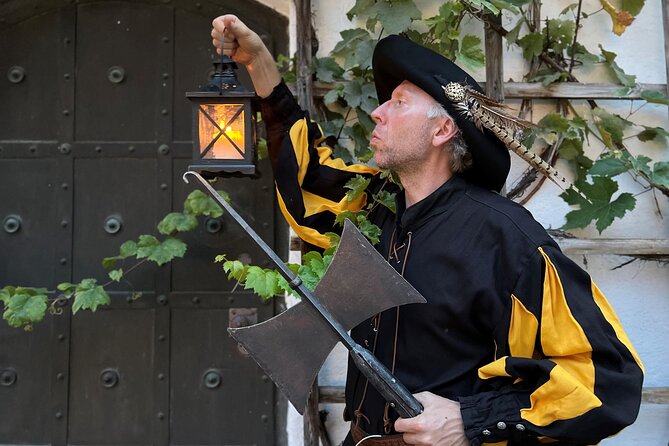
Now the walk pivots to Frauenkirche, Munich’s cathedral. The route is described as moving through narrow, dark alleys before suddenly you are standing directly at the cathedral. That’s a classic night watchman effect, and it’s more than theatrical. The alley-to-cathedral transition makes the big landmark feel earned, not sudden.
The narration at Frauenkirche centers on a tombstone of Petronella Stromairin, described as an old but rich widow. You’ll hear the story of how she did not let young men who pursued her inheritance cheat her. This is one of those details that feels specific enough to remember, which is rare on tours that stay too general.
You also get a lesson in how people tried to protect themselves through wealth, law, and social bargaining. Even if you don’t leave with a full legal history, you leave with a character name and a reason the cathedral area matters beyond its silhouette.
A practical note: Frauenkirche is visually striking. If you want photos, plan a quick shot and then return your attention to the guide. At night, lighting can be uneven and it is easy to lose the story while you are searching for the perfect angle.
Jakobsplatz, the Zeughaus Armory, and Halberds Still Waiting
The tour’s final stretch takes you along Dultstraße to Dultplatz, which is described as today’s Jakobsplatz. You then reach the Zeughaus, the medieval armory of Munich.
Here the narration flips from legends and people to objects. The guide tells you that halberds and other armaments are kept in the Zeughaus to this day. That detail is powerful because it makes the story feel tangible. You hear about protection, conflict, and the night watchman’s role, then you see that weapons have a physical presence in the building.
The night watchman also sings a farewell song. You get the sense that the tour is closing the circle: safety for the people, vigilance by night, and a return to ordinary sleep. The lyrics you’ll hear include lines about people being safe, going home without worries, and the watch continuing through the long night.
This ending works because it leaves you with a concrete image. Most evening tours end with a generic “thanks for coming.” This one ends with a clear, visual anchor and a final emotional tone of closure.
What You’ll Actually Learn, and What You Can Skip
This experience is not about memorizing dates. It is about learning how Munich’s old town can be read like a story map. Each stop gives you a different lens:
- Old Peter teaches you that legends get attached to real quirks, like a crooked tower.
- Old Town Hall frames the city as defended and organized, with gate and moat context.
- Alter Hof adds the darker side of urban life, with prison and unrest in the narration.
- Frauenkirche gives you a character and a social story tied to a specific tombstone.
- Zeughaus lands on physical artifacts, halberds and armaments, and turns the watchman’s role into something you can picture.
If you like history presented as human drama, you’ll find this tour satisfying. You get names, places, and a handful of vivid images you can carry home. If you only want straightforward facts, you might find some parts too legend-heavy. The good news is the route still takes you past major landmarks, so you are not wasting your time even if you tune parts in and out.
Also, because each stop is about 20 minutes, you can handle the pacing. You are not forced into long waiting or long standing around. You can listen, look, and then move on.
Price and Timing, Does 17.44 Buy Enough Value?
The price is $17.44 per person, with tours commonly booked about 16 days in advance. For a guided 90-minute walk through central Munich, that feels like value, especially because the route hits multiple high-profile sites in a single evening outing.
Here is the real value calculation: you are buying direction and meaning. Walking Munich’s old town on your own is easy, but it can become a blur of streets unless someone helps you connect what you see to a story. This tour does that job. You get a guided explanation at five stops, plus an evening atmosphere that changes how you perceive the same landmarks.
Group size helps the value too. With a maximum of 30 travelers, you’re more likely to hear the narration and see the guide’s cues. That matters because if you can’t hear, you end up doing your own reading with less context.
The biggest timing advantage is the duration. If you have only one free evening, this format gives you an organized route without eating your whole night.
One caution on value: if you specifically want a mulled wine moment, you should not assume it is part of the plan. That’s not a deal-breaker, but it affects how “evening-themed” the experience feels compared to tours that include a drink.
Who Should Book This Night Watchman Walk
This tour is a strong fit if you like:
- Evening storytelling that points you to exact places
- Iconic Munich landmarks without needing museum time
- Learning a few memorable names, like Petronella Stromairin
- A route that stays in the old town gate area, so you can continue exploring after
It may be less ideal if:
- You need a strictly formal, fact-only guided style
- You are sensitive to language uncertainty, since one booking experience reported a German-only approach
On the practical side, the tour notes that most travelers can participate, service animals are allowed, and it is near public transportation. So you don’t have to overthink the physical logistics as long as you’re comfortable walking in older parts of the city at night.
Should You Book This Tour in Munich?
I’d book this if you want an evening activity that gives you both orientation and atmosphere. For $17.44, you get a guided circuit through major old-town landmarks, plus stories that stick because they are tied to crooked towers, tombstones, and a working-looking armory setting.
I would make one small check before you commit: confirm what language the tour will be. One past experience described German-only delivery and an awkward moment. If you’re comfortable with German or you can adjust, that risk drops a lot.
Also, if your ideal night includes a glühwein stop, plan a quick drink nearby yourself. Once you set that expectation, this becomes a fun, focused way to see central Munich after dark and leave with stories you can retell.
FAQ
How long is the night watchman tour?
It lasts about 1 hour 30 minutes.
Where do I meet the guide?
The meeting point is Mariensäule, Marienplatz 22, 80331 München.
Where does the tour end?
The tour ends at Odeonsplatz, Odeonspl., 80333 München, within the old town area between the gate zone around Isartor, Sendlinger Tor, Karlstor, and Odeonsplatz.
Is there an admission cost for the stops?
The stops on the route are listed with admission ticket free.
How big is the group?
The tour has a maximum of 30 travelers.
What is the cancellation timeframe?
You can cancel for a full refund up to 24 hours before the experience starts. After that window, the amount paid is not refunded.
The Night Watchman Goes Again
Everything else we filed on Munich
- Munich Beer and Bavarian Bites Private Tour
★ 5.0 · 11 reviews - Private Day Trip from Munich to Neuschwanstein and Linderhof
★ 4.0 · 11 reviews - Private Munich Old Town Walking Tour – with optional Breakfast
★ 5.0 · 11 reviews - Festive Concert in the All-Saints Court Church
★ 4.6 · 11 reviews - Private Castle Tour from Munich: Neuschwanstein, Hohenschwangau, and Linderhof
★ 4.5 · 12 reviews - Munich: Oktoberfest Big Beer Tent Evening including table reservation
★ 4.8 · 12 reviews
Night Watchman and Costumed Tours, side by side.
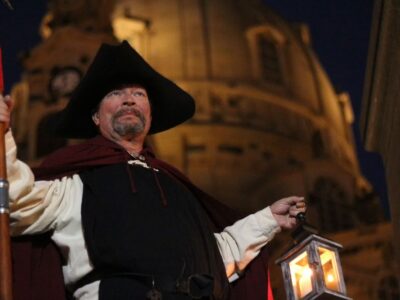 ★ 4.6Dresden: The Original Night Watchman Tour in Lantern LightFrom $176,653 reviews
 ★ 4.7Hamburg: Night Watchman’s Tour of St. Pauli in GermanFrom $234,818 reviews
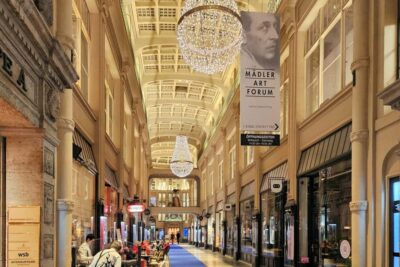 ★ 4.6Leipzig: 1.5-Hour Public Tour with Night Watchman BremmeFrom $173,116 reviews
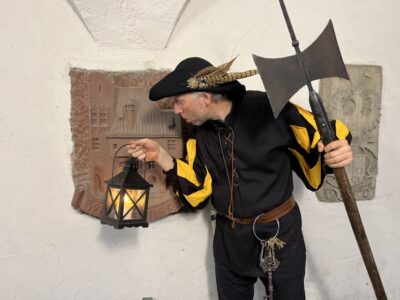 ★ 4.7Munich: Night Watchman Walking TourFrom $5302,092 reviews
 ★ 4.8Dresden: Night Watchman Tour Through The Old TownFrom $171,758 reviews
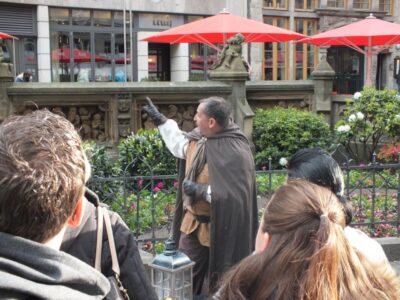 ★ 4.6Cologne: The Night Watchman Old Town Walking Tour in GermanFrom $171,395 reviews
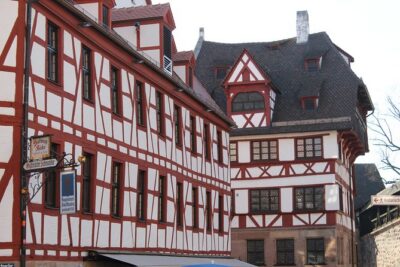 ★ 5.0Medieval Tour in Nuremberg in SpanishFrom $191,374 reviews
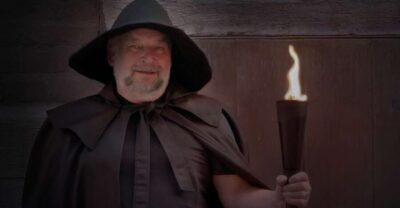 ★ 4.8Munich: Night Watchman Torch Tour in GermanFrom $221,280 reviews
Other lists this tour is on