
REVIEW · 2-HOUR EXPERIENCES
Private 2-Hour Hamburg Highlights Walking Tour
Hamburg makes sense fast on this private walk. In about two hours, you cover the city’s key landmarks with a guide who keeps it clear in English. I love the full attention of a private guide, and I love that the listed major stops are free admission. The one drawback is the pace is brisk, so if you want long reads and slow photo stops, you may feel a bit rushed.
You’ll meet at the World War memorial on Schl enbrücke 1 in central Hamburg and finish near Harry’s Hamburger Hafenbasar, at Ponton Nr. 2, by the Elbphilharmonie concert hall. The price is $302.34 per group (up to 15), which can be a smart deal if you’re traveling with others who want the same quick overview.
In This Review
- Key things that make this tour worth your time
- Two hours to see Hamburg’s essentials without guessing
- Price and group value: $302.34 per group up to 15
- Meeting at the memorial, ending by Elbphilharmonie
- Town Hall, St. Petri, and Trostbrücke: the old core in fast focus
- Hamburg Town Hall, completed in 1897
- St. Petri Kirche: faith at the historical core
- Trostbrücke: where old and new once divided
- St. Nikolai memorial and Deichstrasse: how memory meets trade
- Mahnmal St. Nikolai: WWII devastation remembered
- Deichstrasse: a 17th-century look at old Hamburg
- Speicherstadt (UNESCO) to Elbphilharmonie: trade roots, modern face, harbor finish
- Speicherstadt: UNESCO world heritage built in 1888
- Elbphilharmonie: the harbor’s crowning jewel
- Landungsbrücke area: old harbor heart and city-wide views
- What the pacing feels like, and how to make it work for your day
- Guide style you can expect, based on real examples
- Who should book this private Hamburg highlights walk
- Quick decision: should you book?
- FAQ
- How long is the Private 2-Hour Hamburg Highlights Walking Tour?
- Is this a private tour?
- What language is the tour guide?
- How much does it cost?
- Where do we start and where do we finish?
- Which stops are included?
- Do I need paid tickets for the stops?
- What is the cancellation policy?
Key things that make this tour worth your time
- Private group, not a cattle call, so your questions stay in the conversation
- Eight highlights in about two hours, with quick, focused stops so you can still do your own plans after
- Free admission at every listed stop, including UNESCO Speicherstadt
- Harbor views built in, since the route ends at Elbphilharmonie and Landungsbrücken area
- English-language guiding, with guides like Evan and Ilika mentioned in past tours
Other walking routes through Hamburg
- Hamburg: Guided Walking Tour for Magic Fans★ 4.8 · 1,992 reviews
- Reeperbahn Walking Tour with St. Pauli Local★ 4.8 · 577 reviews
- Hamburg: Speicherstadt Walking Tour with Coffee Tasting★ 4.6 · 360 reviews
- Hamburg Reeperbahn Small-Group Walking Tour★ 4.0 · 269 reviews
Two hours to see Hamburg’s essentials without guessing
A highlight walk is only useful if it helps you orient fast. This one does that by hitting the big civic sites, the religious heart of the old core, and then swinging you toward the port, where Hamburg’s identity really shows. You get a tight loop that’s designed for visitors who want the essentials without spending your whole day “researching.”
The structure is simple: short stop, quick context, then you move. Each of the main landmarks is timed around five minutes, so you’re not stuck in a long line or wandering with no plan. For me, the real win is the mix. You see official Hamburg (Town Hall), spiritual Hamburg (St. Petri), and memory Hamburg (St. Nikolai memorial), then you shift to trade Hamburg (Deichstrasse and Speicherstadt) and the big modern symbol by the water (Elbphilharmonie).
And because it’s a private tour, you’re not competing with other groups for the guide’s attention. That matters in a city like Hamburg, where local details can turn a pretty building into something you actually understand.
Price and group value: $302.34 per group up to 15
This is priced at $302.34 per group, with a maximum group size of up to 15. That means your value depends on how you pack your group.
- If you travel with 6 to 10 people, the per-person cost usually feels reasonable for a private, English-guided walk.
- If you’re only 1 or 2 people, it’s still a solid choice when you strongly prefer a private guide over joining a larger group tour.
One practical tip: if you’re traveling with friends, family, or colleagues, this format is built for sharing. You’ll all benefit from the same route, and you’ll still have your own guide time. Even the stop length helps here, because two hours is long enough to get the story, but short enough that you don’t lose a day.
Also note the tour uses a mobile ticket. It’s a small thing, but it makes check-in easier when you’re moving around the city.
Meeting at the memorial, ending by Elbphilharmonie
The start point is Denkmal für die Gefallenen beider Weltkriege on Schl enbrücke 1 (central Hamburg). The ending point is Harry’s Hamburger Hafenbasar at Sandtorhafen, Ponton Nr. 2, right beside the Elbphilharmonie concert hall.
Why that ending matters: Elbphilharmonie sits at the edge of the harbor experience, where Hamburg feels both old and new. Finishing there is handy because you can continue on foot for waterfront views, grab a meal nearby, or simply let the area set the mood for the rest of your day.
The meeting and finish are also close enough to public transit that you can usually build a plan around it without turning your day into logistics.
Town Hall, St. Petri, and Trostbrücke: the old core in fast focus
This part of the walk is all about how old Hamburg organized itself and how the city separated and reconnected spaces over time.



Hamburg Town Hall, completed in 1897
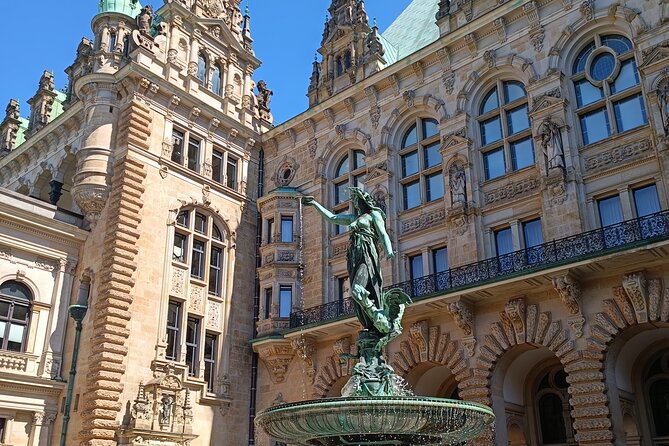
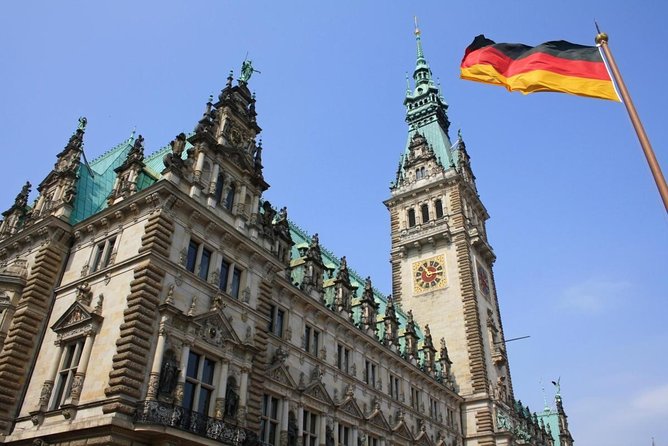
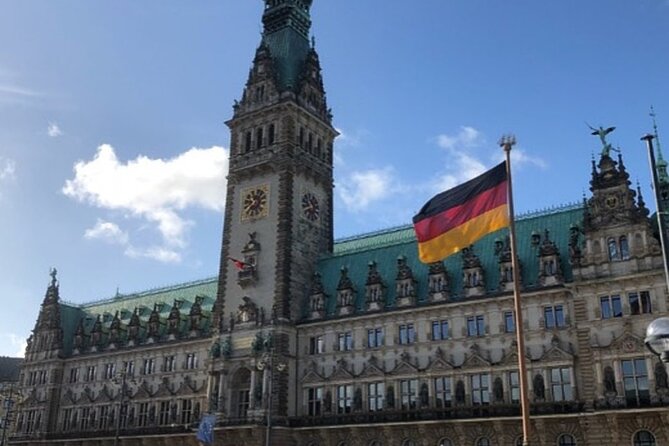
Your first stop is Hamburg Town Hall. It was completed in 1897 and is a central focal point of the old town. Even if you never go inside, the exterior sets the tone. You’re seeing the city’s civic identity, not just a pretty square.
What I like about this stop for you: it gives you a way to interpret what you see later. When you understand how the city represented authority, trade, and community, the rest of the route clicks faster.
What to watch for: take a moment to orient your bearings. This area is the hub of the story, and the tour’s next stops build directly outward from it.
St. Petri Kirche: faith at the historical core
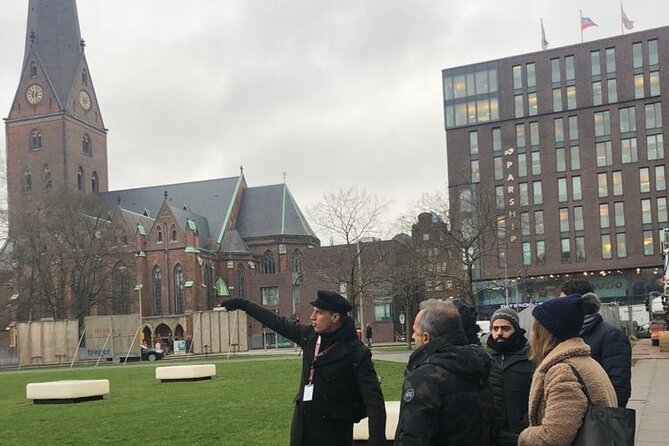
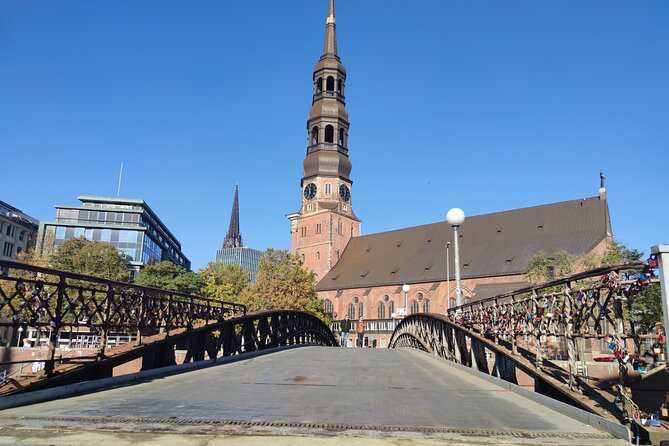
Next comes St. Petri Kirche. This church sits on the historical core of Hamburg, and it’s one of those stops that turns a map location into a lived place. A church isn’t just architecture here. It’s a marker of how communities organized daily life and long-term identity.
Trostbrücke: where old and new once divided
Then you reach Trostbrücke, described as the former divide between the old and the new town. Bridges often look like simple connections, but this one matters because it signals change. Hamburg did not grow in a straight line. It shifted, expanded, and redefined its urban boundaries.
Tip for photos: Trostbrücke is a quick stop, so if you care about capturing your angle, decide where you want your shot before the group moves on.
St. Nikolai memorial and Deichstrasse: how memory meets trade
After the early civic and religious markers, the route moves into the darker and more human side of Hamburg’s story, then transitions into the streets that point you toward commerce.
Mahnmal St. Nikolai: WWII devastation remembered
Your fourth stop is Mahnmal St. Nikolai, a burnt out church that serves as a reminder of World War II devastation. This is the emotional anchor of the walk.
The value here is perspective. Seeing it as part of a walking route prevents it from becoming just a landmark you check off. You understand it as part of a larger city that rebuilt itself, redesigned itself, and kept moving.
How to get more out of it: pause. This stop is only around five minutes, but it’s one where a brief quiet moment makes the information land.
Deichstrasse: a 17th-century look at old Hamburg
Then comes Deichstrasse, described as a journey back in time to 17th-century Hamburg. If you want your walking tour to feel like more than monuments, this is where street context helps.
Deichstrasse is the type of street that can make you picture how people traveled, traded, and lived centuries ago. The advantage of having a guide here is that you’re not left guessing why this street is significant.
Potential drawback to consider: because this segment is time-boxed, you may not get enough detail if you’re the type who loves reading every sign. If that’s you, treat these five minutes as a highlight of themes, not a complete tour of the neighborhood.
Speicherstadt (UNESCO) to Elbphilharmonie: trade roots, modern face, harbor finish
Now you move from the historical “center” toward Hamburg’s identity as a port city. The route’s arc is smart, because it saves the biggest visual payoff for later.
Speicherstadt: UNESCO world heritage built in 1888
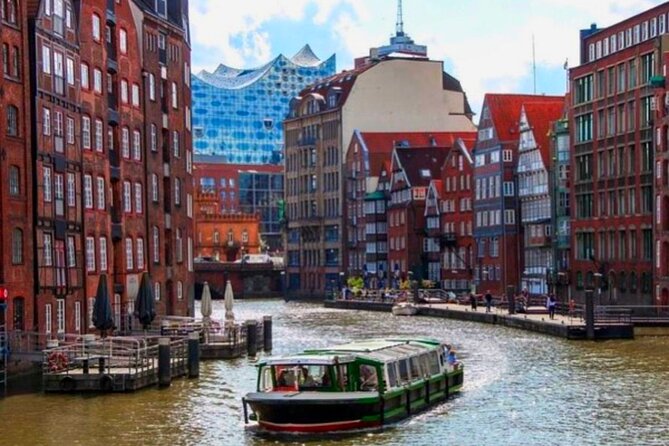
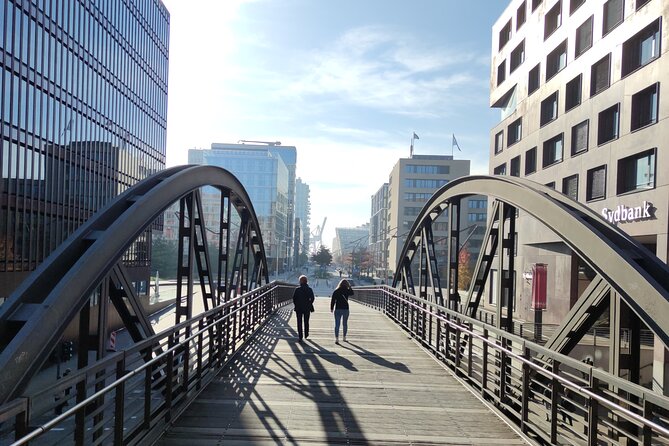
The tour heads to Speicherstadt, built in 1888 and now a UNESCO world heritage site. This is where Hamburg’s trading machine becomes visible.
Speicherstadt’s value is that it’s not only scenic. It explains a core idea: Hamburg’s wealth and global connections grew through storage, shipping, and logistics. You see how infrastructure can become architecture.
Why this matters for you: if you’ve never connected a port city to daily practical building types, Speicherstadt is the place where that connection becomes obvious.
Elbphilharmonie: the harbor’s crowning jewel
Then it’s Elbphilharmonie, described as the crowning jewel of the harbor. This is the modern symbol you expect in a port city that reinvented itself.
The guide’s explanation (and your own quick look around) turns it from a single photo spot into part of a bigger story about how Hamburg balances tradition and reinvention.
Landungsbrücke area: old harbor heart and city-wide views
Finally, you reach Landungsbrucke, described as the old heart of Hamburg’s harbour and a great place to see the whole city. Ending here is ideal because the harbor gives you a stage for everything you learned.
When the tour finishes near Elbphilharmonie by Harry’s Hamburger Hafenbasar, you’re positioned for whatever comes next, including more water views, a stroll, or just letting the harbor energy carry you.
What the pacing feels like, and how to make it work for your day
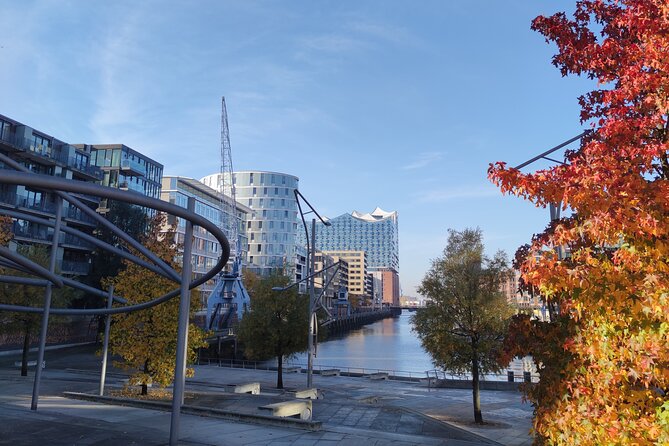
A two-hour highlights tour is never a slow museum outing. It’s more like a guided best-of album: fast sequencing so you walk away with clarity.
Each stop is around five minutes. That means:
- you’ll get orientation plus a handful of key facts
- you’ll see the important visual points without needing long transit between them
- you still have time afterward to go back for close-ups if something grabs you
If you hate rushing, don’t worry. You can still slow your own pace. The trick is to pick two or three stops that you care about most and plan your time around those. For the rest, let the guide’s context do the heavy lifting.
One more practical note: hearing can make or break any walking tour. A past group mentioned that some people had issues hearing during a town hall segment, and the response focused on speaking louder. If you know your hearing is sensitive in outdoor sound, stand where you can hear best and don’t be afraid to ask your guide to repeat or speak up.
Guide style you can expect, based on real examples
This tour stands or falls on the guide, and here the pattern is consistent. People describe guides as friendly, patient, and willing to answer questions. English is also a strong point, especially for solo travelers who want the whole story in one language.
Names that have come up include:
- Evan, described as informative and fun, with humor and plenty of context
- Ilika, praised for being patient and very knowledgeable about Hamburg’s history
- Angela, noted as investing in the information and even walking through the local political system at Town Hall
- Kristina, highlighted for being accommodating, including for a group touring with four kids
- Isabel and Stephanie, mentioned as friendly and enthusiastic
What this means for you: the best version of the tour isn’t just a checklist of landmarks. It’s a guided explanation of how Hamburg works, why it looks the way it does, and what events shaped it. Some people also mention that guides connect current events to the city’s past, which is a good way to avoid learning history that feels stuck in the past.
Who should book this private Hamburg highlights walk
This is a good match if you:
- have limited time and want a fast overview that still feels thoughtful
- prefer a private, English guide rather than joining a larger group
- want a mix of iconic sights and meaningful context, not just photos
- like cities with layers, where WW2 memory, harbor trade, and modern architecture all share the same street-level reality
It can also work well for families. One account mentioned a guide being accommodating with four kids. That suggests the pacing is structured enough to keep things moving without turning the walk into a stressful sprint.
If you’re the kind of traveler who loves to end the tour near a major landmark so you can keep exploring on your own, finishing by Elbphilharmonie is a smart setup. You’re not stranded away from the action.
Quick decision: should you book?
Book this tour if you want a high-confidence two-hour plan that covers the main Hamburg story, from civic buildings and churches to UNESCO Speicherstadt and harbor views. The free-admission nature of the listed stops makes it easier to justify, because you’re not paying extra just to stand at the right place and learn.
Skip it only if you want long, slow visits, lots of museum time, or deep interior access at every stop. This walk is built for motion and context, not for extended study.
If you’re traveling in a group, especially up to 15, this format can be excellent value. If you’re solo, it can still be worth it when you strongly prefer private guiding and clear English narration over a larger mixed group experience.
FAQ
How long is the Private 2-Hour Hamburg Highlights Walking Tour?
The tour is listed as 2 hours approximately.
Is this a private tour?
Yes. It’s a private tour/activity, and only your group participates.
What language is the tour guide?
The tour is offered in English.
How much does it cost?
The price is $302.34 per group, up to 15 people.
Where do we start and where do we finish?
You start at Denkmal für die Gefallenen beider Weltkriege on Schl enbrücke 1, 20354 Hamburg, and you finish at Harry’s Hamburger Hafenbasar, Sandtorhafen, Ponton Nr. 2, 20457 Hamburg, beside the Elbphilharmonie concert hall.
Which stops are included?
The tour covers Hamburg Town Hall, St. Petri Kirche, Trostbrücke, Mahnmal St. Nikolai, Deichstrasse, Speicherstadt, Elbphilharmonie, and Landungsbrucke.
Do I need paid tickets for the stops?
The provided stop details list admission ticket free for each of the landmarks listed in the route.
What is the cancellation policy?
Free cancellation is available if you cancel up to 24 hours in advance for a full refund.
Pavements of Hamburg
Everything else we filed on Hamburg
- Hamburg: Safari tour in St. Pauli
★ 4.9 · 11 reviews - Hamburg: Party Bingo with the Bingo Gringos
★ 4.8 · 11 reviews - Hamburg Harbor: 3.5-Hour Guided Tour by Bike
★ 4.7 · 11 reviews - Hamburg: 2-Hour St. Georg Walking Tour
★ 4.8 · 11 reviews - Hamburg: Guided Walking Tour in Danish
★ 5.0 · 11 reviews - Discover Hamburg in a retro Bulli
★ 3.0 · 12 reviews
2-Hour Experiences, side by side.
 ★ 4.7Hamburg: 2-Hour XXL Port of Hamburg Cruise TourFrom $476,979 reviews
 ★ 4.9Berlin: Third Reich and Cold War 2 Hour Walking TourFrom $236,830 reviews
 ★ 5.0Berlin’s Best: 2 Hour Walking Tour Third Reich and the Cold WarFrom $245,486 reviews
 ★ 4.8Leipzig: 2-Hour Guided Walking Tour in GermanFrom $181,612 reviews
 ★ 4.8Hamburg: Speicherstadt and HafenCity 2-Hour TourFrom $2821,063 reviews
 ★ 4.6Koblenz: 2-Hour Sightseeing Cruise on the RhineFrom $20839 reviews
 ★ 4.3Cologne: 2-Hour Evening Cruise on the Rhine RiverFrom $34797 reviews
 ★ 4.6Cologne: Kölsch Beer and Brew House 2-Hour TourFrom $22651 reviews