
REVIEW · COLD WAR BERLIN
Berlin’s Best: 2 Hour Walking Tour Third Reich and the Cold War
Berlin can feel overwhelming, then suddenly it makes sense. This 2 hour walk links major Third Reich and Cold War landmarks on foot, with live commentary so the city’s heavy history lands in your mind the right way.
I like two things a lot. First, you hit the big-name sights plus the in-between streets that bus tours often skip. Second, the guide experience is praised for clear explanations and answering questions, with names like Glen and Ben popping up for their engaging, organized style.
One thing to factor in: some stops deal with brutal topics. You will want a guide who keeps it respectful, and this route leans on that tone, but it is still not a casual stroll.
In This Review
- Key highlights you will actually remember
- Berlin in 2 hours: why this walk works
- Start at Brandenburg Gate, then watch the meaning shift
- Reichstag Building: power, destruction, and politics in one stop
- Tiergarten memorial: the Cold War lands with metal and weight
- The Victory Column and Albert Speer’s world-city fantasy
- Holocaust Memorial: walking remembrance, not just looking
- Fuhrerbunker area: the last days of 1945
- Goering’s Airforce ministry and East Germany’s proclamation
- Topography of Terror: the SS, Gestapo, and SD HQ site
- Niederkirchnerstraße: a section of wall with real escape stories
- Checkpoint Charlie: the famous face-off and the Wall’s fall
- Price and value: what $24.07 buys you
- What the tour feels like day to day
- Who should book this Berlin walk
- Should you book this tour?
- FAQ
- How long is the Berlin Third Reich and Cold War walking tour?
- How much does the tour cost?
- Where does the tour start and end?
- When should I arrive before the tour begins?
- Is the tour offered in English?
- What is included with the booking?
- Are there any admission tickets required at the stops?
- What group size is this tour limited to?
- Is free cancellation available?
- Are service animals allowed, and is it near transit?
Key highlights you will actually remember
- Reunified Germany starts at Brandenburg Gate, with context that frames everything that follows
- Reichstag Building and the 1933 fire story, tied to how Hitler used power and space
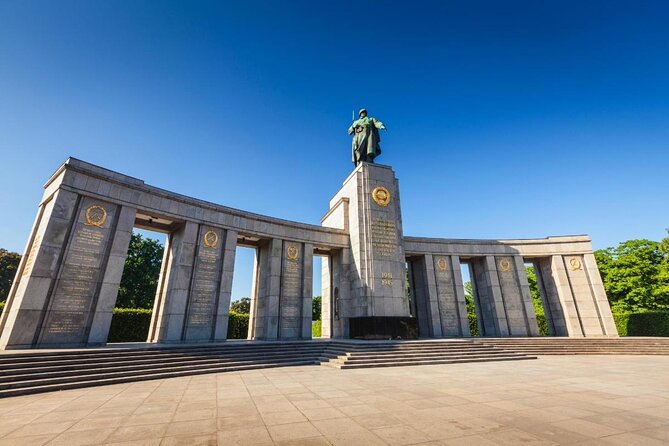
- Tiergarten Soviet memorial displays real wartime hardware, including a T34/76 and field artillery
- Holocaust Memorial to the Murdered Jews of Europe, an intense walk through remembrance
- Berlin Wall details at Niederkirchnerstraße, including escape attempts and what happened
- Checkpoint Charlie as the grand finale, with the 1961 tank standoff and the fall of the Wall
More of the divided city, written up in full
- Berlin: Third Reich and Cold War 2 Hour Walking Tour★ 4.9 · 6,830 reviews
- Berlin: Berlin Story Bunker Entry Ticket★ 4.6 · 6,759 reviews
- Berlin’s Best: 2 Hour Walking Tour Third Reich and the Cold War★ 5.0 · 5,486 reviews
- Berlin: 75-minute Trabi Safari★ 4.8 · 2,854 reviews
Berlin in 2 hours: why this walk works
Two hours in Berlin sounds short until you realize the route is built like a timeline. You start at symbols of Germany’s modern era, then work backward and forward through dictatorship, mass murder, postwar division, and the Cold War face-off. That pacing matters because Berlin history can feel like puzzle pieces, and this tour hands you the picture.
You also get the advantage of walking. You see the monuments, yes, but you also stand on the streets where decisions were made and people tried to survive. That means the story feels grounded, not like a museum slideshow.
Finally, the group moves in a way that lets your guide connect past to present. The tour is offered in English only, and the small group size helps you ask questions without feeling rushed. The meeting point is right by major transit, and the tour caps at 30 travelers, so you do not end up swallowed by a crowd.
Start at Brandenburg Gate, then watch the meaning shift
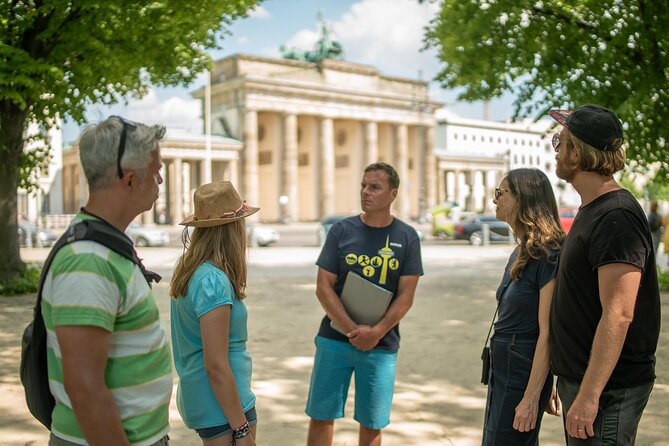
The tour begins at Brandenburg Gate, at Pariser Platz side. Even if you have seen it in photos a hundred times, on this walk it is not just a photo stop. Your guide explains why it became the symbol of reunified Germany, and then you watch how that symbolism changes as the route moves into darker decades.
What I like here is the framing. You are not thrown into slogans and dates. You get a sense of how the same location can represent different things depending on who controls the story at the time.
Practical note: arrive 15 minutes early and look for the guide with the pink umbrella at the Tourist Information office at Brandenburg Gate. This is one of those small details that saves you time and stress, especially if you are juggling a tight itinerary.
Reichstag Building: power, destruction, and politics in one stop
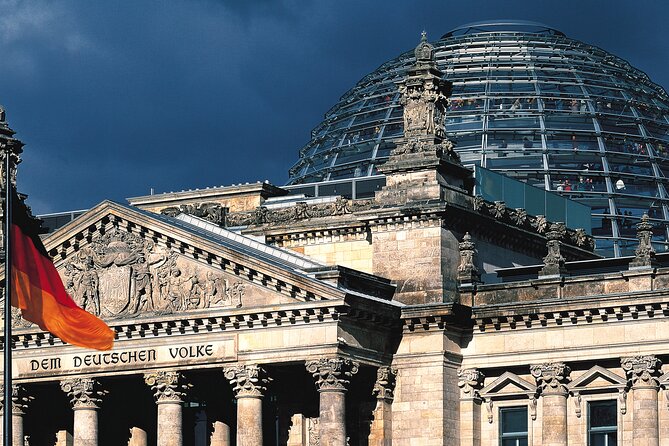
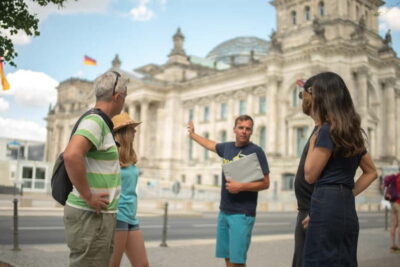
Next you move to the Reichstag Building, the house of parliament. This part is powerful because your guide connects the building to German history over roughly the last century, not just one event.
You also hear the story of the Reichstag fire in 1933 and how Hitler used the building during his dictatorship. The key value for you is the cause-and-effect angle. You can leave this stop understanding how political power gets reinforced through fear, propaganda, and control of key institutions.
The stop is listed as free entry, but even if you are only viewing from outside, the guide’s explanation gives you something many quick visits miss: the building as a stage where history was performed.
Tiergarten memorial: the Cold War lands with metal and weight
From here you head into the Tiergarten area for the Soviet Memorial. This is not abstract history. You see Soviet wartime equipment, including a T34/76 tank and field artillery from World War II.
This stop is a useful counterweight to the Nazi-era sites earlier in the walk. Berlin’s twentieth-century story is not one dictatorship only. It is competing powers, competing narratives, and monuments that each side uses to define what victory means.
If you want a tour that does not stay stuck in one era, this is the moment where you feel the timeline bend into the Cold War. The guide also helps you connect the symbolism of the memorial to why the city remained tense even after the war ended.
Further wartime history walks we have written up
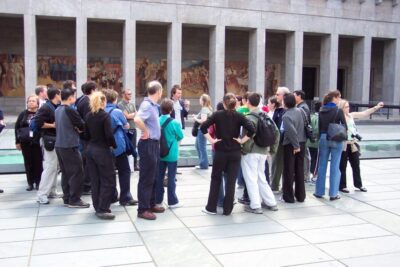
The Victory Column and Albert Speer’s world-city fantasy
The route includes the Victory Column, and your guide explains why Albert Speer moved it from its original location to a new site. You also hear about Speer’s plans for the new capital city of the world, Germania, including that it would have been the new name for Berlin if the Nazis had won World War II.
This is one of those stops where the story shifts from battlefields to architecture and planning. That sounds dry until you realize it is exactly how dictators try to make power feel permanent. Speer’s ideas are about future-facing control: shaping streets, monuments, and the visual language of a state.
For you, the payoff is perspective. Berlin’s monuments can look neutral at first glance, but under the surface they were often part of a political design.
Holocaust Memorial: walking remembrance, not just looking
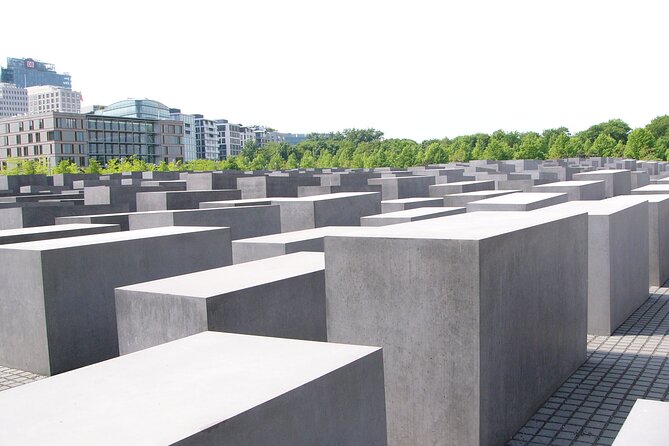
Then comes one of the hardest stops: the Holocaust Memorial, formally the Memorial to the Murdered Jews of Europe. Your route is a walk through the immense memorial dedicated to the victims.
This is not about trivia. This is about space, scale, and how a city chooses to remember mass murder. Your guide gives context as you move, so you are not just staring at shapes. You understand what the memorial represents and why that matters in Berlin today.
One consideration: because the atmosphere is intense, take a breath when you need it. Bring your own pace. If you feel your head spinning, you can pause and let the guide catch up with the group.
Fuhrerbunker area: the last days of 1945
Next you stand above Hitler’s bunker site, and your guide talks through the last days of World War II and Hitler’s suicide on April 30th 1945. You also learn how Germans come to terms with this destructive past today.
This part is delicate. A good guide does not turn it into spectacle. From the way this tour is described, the emphasis is on thoughtful explanation and respectful handling of the subject. That balance is part of why people rate this tour so highly.
For you, the value is the shift from ideological history to human consequence. You are not just learning about systems. You are learning about the collapse, the final decisions, and the aftermath that followed.
Goering’s Airforce ministry and East Germany’s proclamation
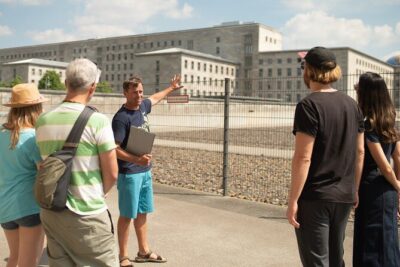
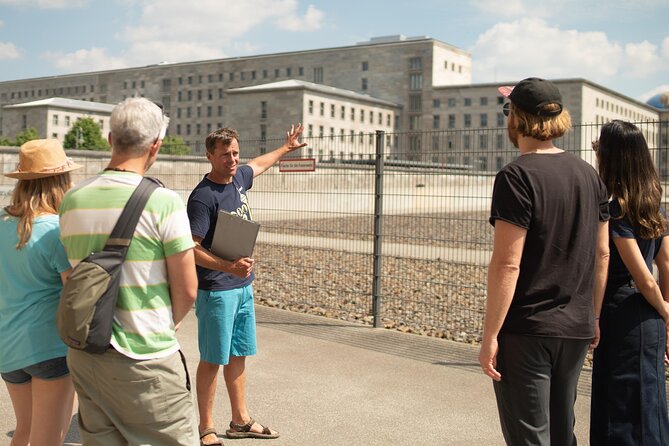
The walk then stretches along the Hermann Göring Airforce ministry area. Your guide connects it to the place where East Germany, the GDR, was proclaimed in 1949.
This is a clever pivot in the route because it ties a Nazi-era power structure to a postwar communist state milestone. Berlin did not erase buildings. It repurposed their meaning.
If you are the kind of person who likes to spot how cities reuse their physical history, you will appreciate this. It shows you how power shifts without needing to start from scratch.
Topography of Terror: the SS, Gestapo, and SD HQ site
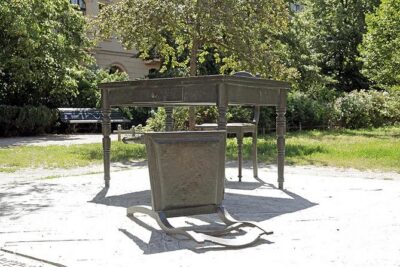
After that, you see the site where Nazi institutions had headquarters, including the SS, Gestapo, and SD. Today, the area houses the Topography of Terror exhibition, and the guide explains the crimes associated with those organizations.
The tour time here includes time to see the site and to absorb the guide’s context. The most useful part is how your guide helps you connect bureaucracy and brutality. These were not just battlefield groups. They were systems that helped terror spread.
You should come ready for dark content and accept that this is a serious stop. If you prefer a lighter pace, this tour may feel heavy, but it is built to keep you moving and understanding.
Niederkirchnerstraße: a section of wall with real escape stories
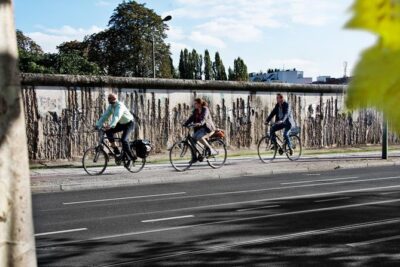
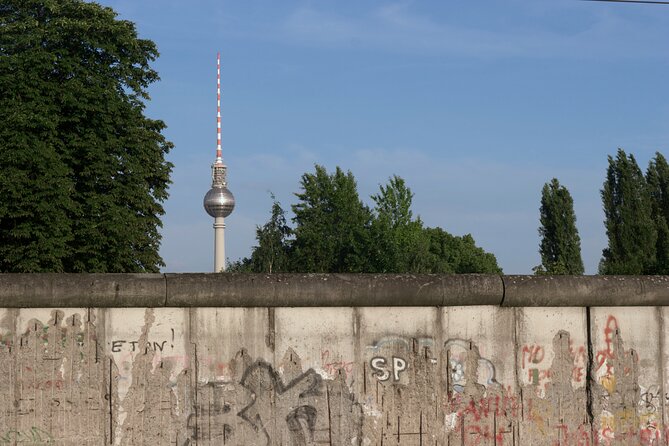
The next highlight is Niederkirchnerstraße, where you see a large piece of the Berlin Wall. This is where your guide talks about escape attempts, including what happened to people who tried, as well as the difference in life on East Berlin versus West Berlin.
This stop matters because it puts the Wall into human terms. A wall is easy to summarize as concrete and barbed wire. But the guide gives you the pressure behind it, and the consequences on both sides of the divide.
If you want to understand why Berlin citizens lived with tension every day, not just during major events, this stop delivers.
Checkpoint Charlie: the famous face-off and the Wall’s fall
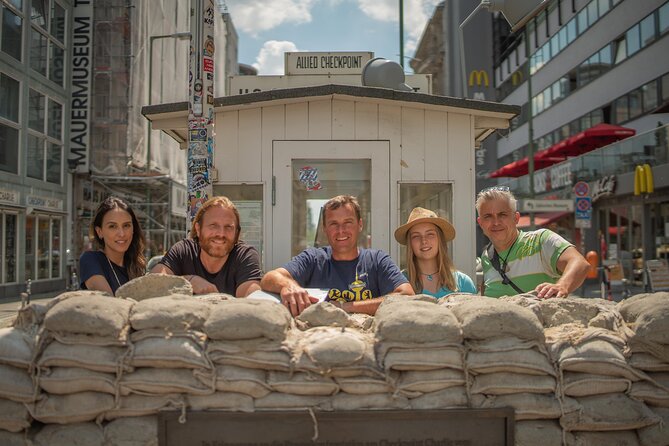
The tour ends at Checkpoint Charlie, one of the most famous crossing points through the Berlin Wall. It is a fitting finish because your guide covers big Cold War moments here, including the Soviet versus USA tank standoff in 1961 on this street.
Then the story moves to the Wall coming down on the night of November 9, 1989. Finally, you wrap up with how reunification has gone over the last 30 plus years, tying the past to what you see in Berlin today.
This ending is practical too. After two hours, you are in a central area where it is easy to keep exploring on your own. You also get a final dose of narrative closure: dictatorship to division to reunification.
Price and value: what $24.07 buys you
At about $24.07 per person for a tour that runs around two hours, you are paying for three things: a structured route, a professional English-speaking local guide, and a tight selection of major sites you can otherwise piece together slowly.
Here is the value logic I use when deciding if a history walk is worth it:
- If you already know the names of the places, a guide should add meaning, not just location.
- If you are short on time, the route should reduce wasted walking and decision fatigue.
- If the subject matter is intense, the guide should keep the tone respectful and organized.
This tour hits those points by stacking major landmarks that represent key eras, while still keeping the walk compact. The stops listed are ticket free in the tour outline, so you are not paying extra entry fees just to stand in front of the history. You also get the benefit of historical photos used at certain points, which adds context without slowing the group down.
The group limit of 30 also helps. It is large enough to feel normal, small enough that your questions can get answered.
What the tour feels like day to day
Expect a walking tour with a steady rhythm, not a slow museum crawl. The itinerary includes breaks long enough to see, listen, and take a few photos, and the tour keeps moving between zones tied to different decades.
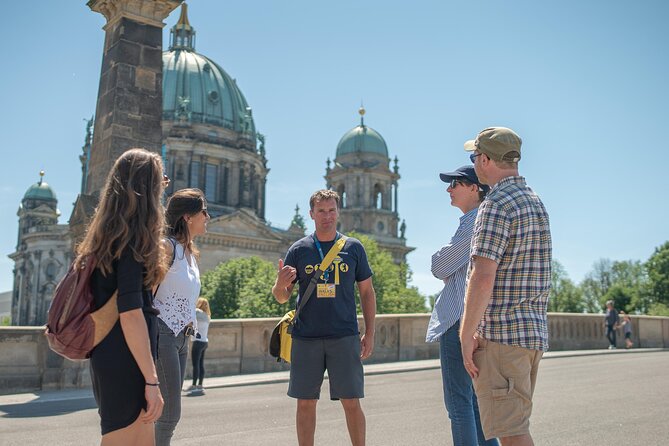
Guides on this route are repeatedly praised for clarity and engagement, with names like Glen, Ben, Maggie, Rebecca, Tom, and Mikhail showing up in feedback for being organized and able to answer questions. You will likely experience a similar style: your guide gives context, keeps the story flowing, and allows questions when the group has them.
If you are visiting in winter, plan ahead. One review specifically warned about cold weather and sensible shoes, plus gloves. That advice is worth taking seriously because you will be outside for the whole two hours.
Who should book this Berlin walk
I would book this tour if you:
- Want a fast way to connect Third Reich sites and Cold War sites into one timeline
- Like walking Berlin’s core landmarks rather than riding a bus
- Prefer an English-speaking local guide with room for questions
- Want to see famous places like Brandenburg Gate and Checkpoint Charlie while still getting context behind them
I would think twice if you:
- Need a very light, upbeat tour. The Holocaust Memorial and the Nazi HQ site are intense by design
- Have trouble walking for about two hours, even though the route is flexible and built around outdoor stops
Should you book this tour?
Book it if you want a strong foundation in Berlin’s most consequential decades, without spending your whole day decoding the city on your own. The route is efficient, the landmarks are right, and the guide format is geared toward helping the story make sense.
Skip it only if you know you want zero heavy content, or you prefer a more leisurely pace with lots of museum time. Otherwise, this is one of those practical history walks that helps you see Berlin with better eyes for the rest of your trip.
FAQ
How long is the Berlin Third Reich and Cold War walking tour?
The tour lasts about 2 hours.
How much does the tour cost?
The price is $24.07 per person.
Where does the tour start and end?
It starts at Brandenburg Gate, Pariser Platz side, at the Tourist Information office. It ends at Checkpoint Charlie, Friedrichstraße 43-45, 10117 Berlin, Germany.
When should I arrive before the tour begins?
Meet 15 minutes before the tour starts in front of the Tourist Information office at Brandenburg Gate (Pariser Platz side), and look for the guide with the pink umbrella.
Is the tour offered in English?
Yes, the tour is offered in English only.
What is included with the booking?
You get a professional English-speaking local guide and a walking tour in English.
Are there any admission tickets required at the stops?
The tour outline lists the stops as having free admission.
What group size is this tour limited to?
The tour has a maximum of 30 travelers.
Is free cancellation available?
Yes, free cancellation is available up to 24 hours in advance of the experience for a full refund.
Are service animals allowed, and is it near transit?
Service animals are allowed, and the meeting point is near public transportation.
Pavements of Berlin
Wartime History Walks We Have Reviewed
The Divided Years, Reviewed
Everything else we filed on Berlin
- East Berlin: City of Shadows Walking Tour
★ 5.0 · 11 reviews - Berlin: Die Stachelschweine – Frank Lüdecke – Träumt Weiter
★ 4.7 · 11 reviews - Potsdam Day Trip from Berlin with a Local: Private & Personalized
★ 4.0 · 11 reviews - An Introduction to Berlin Walking Tour
★ 5.0 · 11 reviews - DJ for a Day: Learn to Mix Like a Pro in Berlin
★ 5.0 · 11 reviews - 2-H Segway Sightseeing Tour Berlin
★ 4.5 · 11 reviews
Cold War and Stasi History Tours, side by side.
 ★ 4.9Berlin: Third Reich and Cold War 2 Hour Walking TourFrom $236,830 reviews
 ★ 4.6Berlin: Berlin Story Bunker Entry TicketFrom $216,759 reviews
 ★ 4.3Berlin: DDR Museum TicketsFrom $153,443 reviews
 ★ 4.8Berlin: 75-minute Trabi SafariFrom $932,854 reviews
 ★ 5.0Cold War, Berlin Wall, Spies and the East Side GalleryFrom $181,024 reviews
 ★ 4.8Nuremberg: Historischer Kunstbunker WWII Art Bunker TourFrom $14921 reviews
 ★ 4.9Leipzig: 90-Minute Trabi City TourFrom $81728 reviews
 ★ 4.9Dresden: Guided Sightseeing Tour in Classic Trabi CarFrom $81642 reviews
Other lists this tour is on