
REVIEW · THE BALTIC
Rostock: Private Guided Walking Tour
Rostock has a way of sticking in your mind. This private walking tour strings together the city’s best architecture and its survival story, from the astronomical clock to the walls that still show scars.
I particularly like how the route makes sense for first-timers, you start at the New Market Square and keep moving through the old center. I also like that the guide ties sights to meaning, Rostock name origins, the Hanseatic League, and the impact of WWII bombings are all woven into what you see.
One thing to consider: it is focused on key highlights in just two hours, so if you want long interior time or museum stops, you will likely want to pair this with extra time on your own.
In This Review
- Key Things You’ll Notice on This Walk
- Rostock in 2 Hours, What You’ll Actually Get
- New Market Square and the Seagulls Fountain Start Point
- St. Mary’s Church and Its 15th-Century Astronomical Clock
- St Petri’s Tower, Fishermen, and the WWII Rebuild Story
- Old Fortifications, Ramparts, Guard Houses, and a Wooden Wall Walk
- Stone Gate and the Dutch Renaissance Motto About Harmony
- Rostock’s Name Origins, Hanseatic League Clout, and University Pride
- WWII Bombings, Resilience, and What Reconstruction Means Here
- Price and Value for a Private Group Up to 15
- Who This Tour Is Best For
- A Word on Guides and What the Reviews Emphasize
- Should You Book This Rostock Private Guided Walking Tour?
- FAQ
- Where does the tour meet?
- How long is the walking tour?
- Is this tour private?
- How many people are included in a group?
- What languages are available?
- What is included in the price?
- Are entrance fees included?
- Can the tour be adjusted on the spot?
- Is there a cancellation option if my plans change?
- Can I reserve without paying right away?
Key Things You’ll Notice on This Walk
- New Market Square orientation fast, with the Town Hall and Seagulls Fountain as your anchor points
- St. Mary’s Church astronomical clock, including why it matters and what to look for outside
- Survival and rebuild themes, especially where WWII shaped what you see today
- Fortifications you can still read, including ramparts, guard houses, and sections of the wooden wall walk
- Portuguese? No, Dutch Renaissance Stone Gate, plus the motto about harmony and prosperity
- A University stop that changes the vibe, since Rostock University dates to 1419 and keeps the city grounded
More Baltic harbours and island days
- Rostock: Guided tour of the historic city center★ 4.5 · 311 reviews
- Rostock: City Walking Tour★ 4.9 · 198 reviews
- Rostock: Full-Day, Half-Day, or Sunset Sailing Experience★ 4.7 · 174 reviews
- Rostock: Electric Boat Rental on the Warnow River★ 4.8 · 106 reviews
Rostock in 2 Hours, What You’ll Actually Get
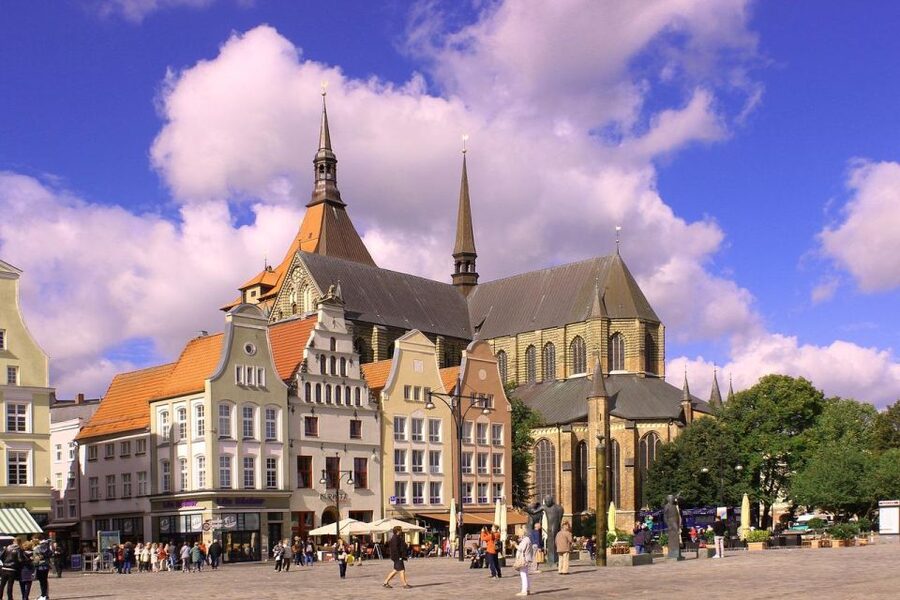
This is a straightforward, city-center walking tour designed to help you get your bearings fast. You meet at the Seagulls’ Fountain in New Market Square, then your guide moves you through the most meaningful stops in the old part of town. The total time is 2 hours, so you will cover a lot of ground without feeling rushed.
You are also traveling with a local professional guide, and it is a private group, up to 15 people. English and German are offered, which is a big deal in a place like Rostock where you may want clear explanations rather than guessing at history through signs.
The best part, though, is the connection between “pretty buildings” and “why they matter.” Rostock is a Baltic port city, and the tour keeps reminding you that trade, learning, and rebuilding are the city’s real story.
New Market Square and the Seagulls Fountain Start Point
Your tour kicks off at the Seagulls’ Fountain in the Neuer Markt, New Market Square, and it is a smart place to begin. It is central, visually distinctive, and it sets a tone that feels both historic and lived-in.
From there, you take in the Town Hall with its mix of baroque and Gothic style and its seven towers. Even if you just glance up, the towers do the work of telling you Rostock had money and ambition. Your guide also connects the fountain figures to Neptune, the sea god, and his sons, which matters because Rostock is tied to the Baltic Sea and maritime trade.
Practical tip: stand where you can see the fountain figures and the Town Hall at the same time. The square can be busy, but if you position yourself well at the start, you will get better photos and fewer “wait, where are we standing” moments later.
St. Mary’s Church and Its 15th-Century Astronomical Clock
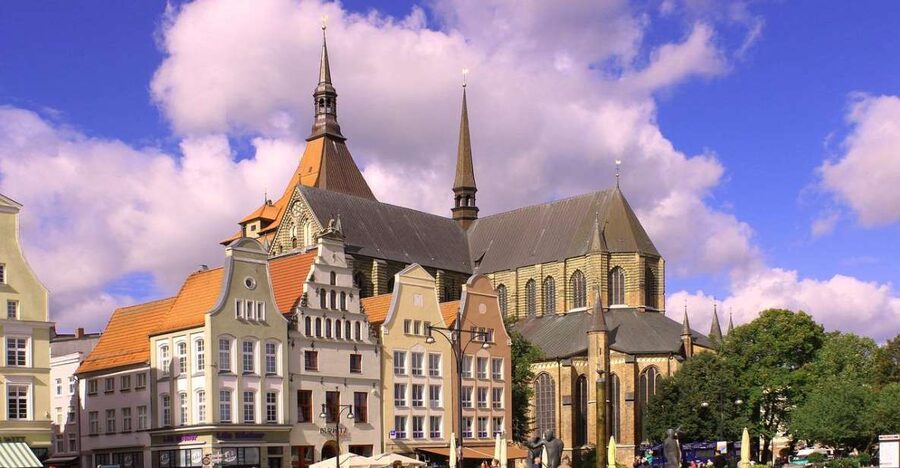
Next comes St. Mary’s Church, and this stop has a built-in emotional angle. It is the only main church in Rostock that survived the WWII air raids, so even before you talk details, the building itself feels like evidence.
The famous feature here is the astronomical clock, built in the 15th century. What makes this more than a novelty is that a clock like this turns timekeeping into public knowledge. Your guide helps you understand what you are seeing in the context of the era, when religion, science, and daily life were closely linked.
A quick heads-up: the tour includes the sights, but entrance fees are not included. So treat this as a “see and learn” church stop, mostly from the outside and in the immediate area. If you want to go inside, plan for separate ticket time.
St Petri’s Tower, Fishermen, and the WWII Rebuild Story
St Petri Church brings you back to the people who made Rostock function. Your guide points out the tower of St Petri Church, described as a gothic landmark for the fishermen in the area.
This is also where WWII enters in a clearer, less abstract way. The tower was destroyed during WWII, then rebuilt later. That sequence, destruction and rebuilding, is the theme running through the tour, and St Petri shows it in a very literal form.
If you like history that connects to daily work, you will appreciate this stop. Instead of only focusing on nobles or universities, you see how fishing communities shaped the city’s identity, and how the city kept restoring what it depended on.
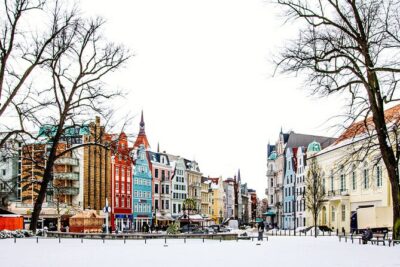
Other walking routes through Rostock
Old Fortifications, Ramparts, Guard Houses, and a Wooden Wall Walk
Then you move to the parts of Rostock’s defensive system that are still visible. You see sections of old city fortifications, including ramparts with built-in guard houses and a section of the wooden wall walk.
This is one of the most useful stops for anyone who wants to understand how medieval and early modern cities protected trade routes. You can walk past the physical features and think, okay, this is how someone would have watched for trouble, controlled movement, and protected the people and goods that kept the city alive.
One drawback with fortification areas is that the viewing points can be a bit spread out. The tour keeps it efficient, but you might need to slow down and really look when you stop, rather than snapping a quick photo and moving on. Your guide’s job is to point out what you would otherwise miss.
Stone Gate and the Dutch Renaissance Motto About Harmony
The Stone Gate is where your tour adds one more layer of European influence. Your guide highlights it as a Dutch Renaissance city gate, which makes it feel like Rostock was part of a broader conversation, not just a regional port.
You also get the motto written on the walls: Sit intra te concordia et publica Felicitas, meaning may harmony and prosperity reign within your walls. It is the kind of line that sounds ceremonial, but in a city like Rostock it fits a practical reality. Cities survive when trade stays steady and communities can function.
Since the tour is only 2 hours, you will likely get a short, focused moment here. That is actually good. A short interpretation can make the gate’s details stick in your mind longer than a long stop.
Rostock’s Name Origins, Hanseatic League Clout, and University Pride
A good walking tour should explain why you are seeing what you are seeing. Here, you learn about the intriguing origins of Rostock’s name and its historical significance, then you zoom out to the Hanseatic League.
The Hanseatic League connection matters because Rostock was not just a pretty harbor. It was part of a trade network that shaped laws, wealth, and city status across Northern Europe. Your guide frames Rostock’s role in that influential league so the architecture, the port energy, and the city’s pride all make more sense.
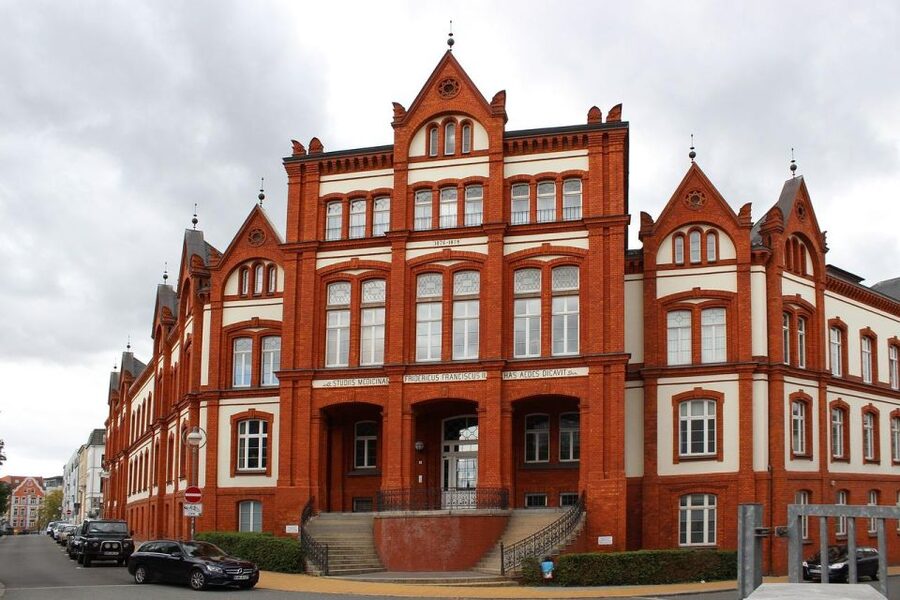
And then you shift to learning, because Rostock University dates from 1419. The tour includes a reference to the university and even the Fountain of Happiness. It’s a nice counterweight to the WWII parts of the story. You end up with a sense that Rostock rebuilds not only its buildings, it rebuilds its identity.
If you want a city you can understand in themes, not just landmarks, you will like how this tour balances three threads: trade, learning, and survival.
WWII Bombings, Resilience, and What Reconstruction Means Here
The tour’s emotional spine is WWII. You learn about the impact of WWII bombings on the city’s resilience and reconstruction, and you see that theme play out across multiple stops rather than getting stuck on one “big memorial moment.”
St. Mary’s Church is the survival anchor. St Petri’s tower shows what was lost and what returned. Fortifications point to the longer timeline of protection and recovery. Even the way the tour strings these things together helps you feel the city as a living place that had to reinvent itself.
A practical way to enjoy this section: slow down your interpretation. If you treat it only as a checklist of sites, it can feel heavy. If you treat it as a story of continuity, the tour lands better, especially in a city that looks old but is clearly still moving forward.
And yes, the tour description calls Rostock like a Phoenix from the ashes. You do not need the myth to get the point. You can see rebuild work in the mixture of what endured and what was restored.
Price and Value for a Private Group Up to 15
The price is $280 per group, up to 15 people, for 2 hours. That is not the cheapest sightseeing option per person if you are traveling solo, but the value can get strong fast if you have a small group.
Here is a simple way to judge it. If you are traveling as a couple or small family, paying for a private guide can be cheaper than booking separate tours, and you get a route that stays coherent rather than everyone wandering off. If your group is larger and split across ages, the private format can also work better because the guide can adjust your pace on the spot.
Entrance fees are not included, so the price covers guiding and route time, not museum entry costs. If you plan to enter buildings, budget a bit extra.
Also note the “English, German” option. If your group mixes languages, the private setup often saves time and misunderstandings. That is real value, even when it is not obvious on the price line.
Who This Tour Is Best For
You will probably love this tour if you like walking tours that are more than postcard views. It is built for people who want architecture explained, and who also want the WWII resilience angle handled in a direct but practical way.
It is also a good fit if you are short on time. Two hours is enough to touch the big highlights, especially if you are planning the rest of your day around harbor strolls or Baltic Sea views on your own.
If you are traveling with mixed interests, this tour stays flexible thanks to possible customization with your guide on the spot. That can help if some people want extra time on churches and others want more on fortifications or the university connection.
A Word on Guides and What the Reviews Emphasize
The tour rates very well, with a rating of 5 from 4 reviews. The feedback points to one big theme: the guidance feels personal and locally informed.
One review specifically praises Jana for leading the group wonderfully and for having insider ideas ready. Another review keeps it simple and positive, calling it a nice tour. That combination, “insider touch” plus “smooth and pleasant,” is exactly what you want in a two-hour walk where every stop counts.
Should You Book This Rostock Private Guided Walking Tour?
Book it if you want a tight, meaningful walk that covers Rostock’s main landmarks and explains why they matter, especially for trade, learning, and WWII resilience. The private group format is a good match for couples, friends, and small groups that want clarity and flexibility, not a crowded scramble.
Skip it or plan extra time if you expect long stays inside buildings, because entrance fees are not included and the tour is built around key highlights in limited time. Also, if you already know Rostock deeply and want only one niche topic, this may feel broad. But if you are trying to understand the city fast and well, this is a very practical way to do it.
If your goal is to leave Rostock able to connect the streets, churches, and walls to one coherent story, this tour is an easy yes.
FAQ
Where does the tour meet?
You meet by the Seagulls’ Fountain in the New Market Square (Neuer Markt), 18055 Rostock.
How long is the walking tour?
The tour lasts 2 hours.
Is this tour private?
Yes. It is a private group experience.
How many people are included in a group?
The price is per group up to 15 people.
What languages are available?
The live guide offers English and German.
What is included in the price?
A local professional guide is included. The guide is with your group only.
Are entrance fees included?
No. Entrance fees are not included.
Can the tour be adjusted on the spot?
Yes. There may be possible customizing with your local guide on the spot.
Is there a cancellation option if my plans change?
Yes, free cancellation is available if you cancel up to 24 hours in advance for a full refund.
Can I reserve without paying right away?
Yes. It is available as reserve now and pay later.
Pavements of Rostock
Along the Baltic Shore
Everything else we filed on Rostock
- Rostock Like a Local: Customized Private Tour
★ 4.5 · 3 reviews - Rostock: Private Guided Walking Tour
★ 5.0 · 4 reviews - Private Warnemuende Shore Excursion: Third Reich Berlin
★ 5.0 · 4 reviews - Warnemünde Shore Excursion: Private Highlights Tour of Berlin with Minivan
★ 5.0 · 5 reviews - Half-Day Rostock & Warnemünde Private Shore Excursion for Cruise Ship Passengers
★ 4.5 · 6 reviews - Surprise Walk of Rostock with a Local
★ 5.0 · 7 reviews
Baltic Coast and Island Tours, side by side.
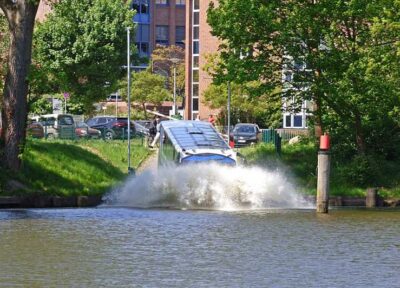 ★ 4.0Lübeck: 1-Hour Splash Bus City TourFrom $352,626 reviews
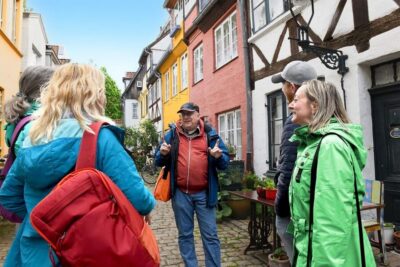 ★ 4.7Lübeck: entertaining guided tour to old town highlightsFrom $16594 reviews
 ★ 4.7Schwerin: City Highlights Guided TourFrom $12541 reviews
 ★ 4.8Lübeck: Entertaining Tour Through Hidden CourtyardsFrom $20483 reviews
 ★ 4.5Schwerin: Tour with the Night WatchmanFrom $15366 reviews
 ★ 4.6Stralsund: 1-Hour Harbor CruiseFrom $15365 reviews
 ★ 4.5Rostock: Guided tour of the historic city centerFrom $17311 reviews
 ★ 4.5All-in-One Berlin Shore Excursion from WarnemundeFrom $83293 reviews
Other lists this tour is on