
REVIEW · THURINGIA
Weimar: Old Town Tour Classical Weimar
Weimar is a shortcut to Germany’s literary core. In just 90 minutes, this Old Town Tour helps you connect the dots between the classical period and the places where Goethe, Schiller, Herder, and Wieland worked. You stay in the old town and get a guided overview that makes the names feel real, not like textbook headings.
I like two things a lot. First, the pace is tight and efficient, so you get the major stops without dragging your feet. Second, the guide style tends to be clear and animated, and you usually get real chances to ask questions and get answers in German.
One consideration: it is an outdoor tour, so you are looking mostly from the outside, and it is not suitable for people with mobility impairments. If you need indoor time, you will want to pair this with a little self-guided exploring afterward.
In This Review
- Key highlights to watch for on this Classical Weimar walk
- Finding the tour start at the Neptune Fountain (and getting your bearings fast)
- Markt and Market Square: town hall, Cranach House, and Hotel Elephant
- Herderplatz and the church-school area you will remember
- Democracy Square: where institutions and power talk to each other
- City Palace and Princely House: understanding the city’s “who mattered” map
- Goethe’s House and Schiller’s residence, plus the Ilm park reset
- Theaterplatz and the Goethe-Schiller monument moment
- Price and group size: good value if you like focused storytelling
- Who should book this Classical Weimar tour, and who might skip
- Should you book this Old Town Tour: Classical Weimar?
- FAQ
- How long is the Old Town Tour Classical Weimar?
- Where does the tour start?
- Where does the tour end?
- What language is the live guide?
- Is this tour inside or outside?
- How many people are in the group?
- Which sights are included?
- Is it suitable for people with mobility impairments?
- What is the price?
- Is free cancellation available?
Key highlights to watch for on this Classical Weimar walk
- Market Square details: town hall views plus Cranach House and Hotel Elephant in the same square
- Democracy Square stops: photo opportunities around the Duchess Anna Amalia Library and Princely House
- Church and school landmarks: St. Peter and Paul’s Church area and the Wilhelm Ernst Gymnasium setting
- Goethe and Schiller at Theaterplatz: the monument moment that frames the whole theme
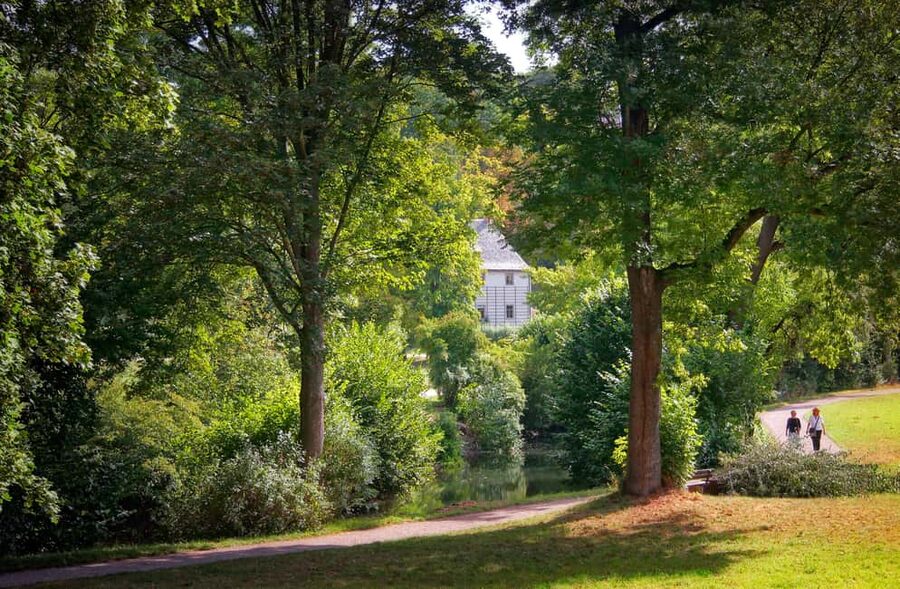
- Ilm River breathing space: the flanking park area plus Goethe’s garden house spot along the way
- Small-group feel: limited group size, and when demand is higher, it may get split into subgroups
Other Thuringian towns we have written up
- Weimar: Old Town Guided Walking Tour★ 4.7 · 1,080 reviews
- Weimar: Scavenger Hunt Self-Guided Walking Tour★ 4.3 · 108 reviews
- Weimar: Old Town Tour Classical Weimar★ 4.4 · 26 reviews
- Weimar: “Illuminati”, unique Escape Room, Goethe’s secret★ 4.6 · 17 reviews
Finding the tour start at the Neptune Fountain (and getting your bearings fast)
You meet at the Weimar Tourist Information Office at the Neptune Fountain. It is a good anchor point because it keeps everyone together before you fan out through the core old town streets. From there, the walk focuses tightly on the classical sights, so you do not end up spending energy figuring out where to go next.
Even if you arrive a few minutes early, use the waiting time to look around the immediate area. You will soon be in the kind of compact historic core where a small change in street direction brings you to a new landmark fast. That matters here, because the tour only gives you about 90 minutes, and the guide works to keep momentum.
Practical tip: wear shoes you can walk in comfortably. The stops are mostly outside, but you still cover enough ground to feel it by the end, especially if you stop for photos at multiple squares.
Markt and Market Square: town hall, Cranach House, and Hotel Elephant
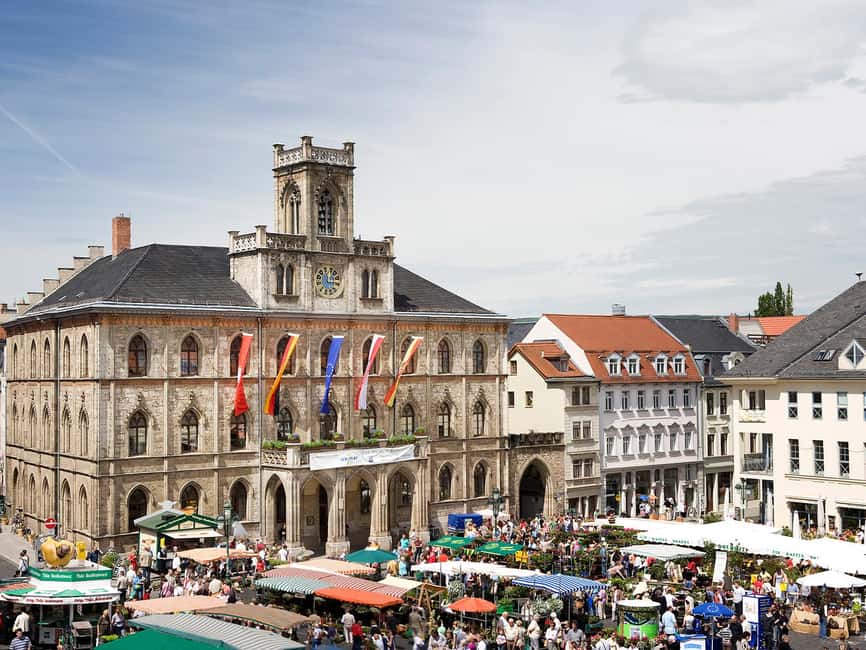
The tour’s early momentum matters, and the Market Square is where it clicks. This is where you get the classic Weimar “stage set” feeling: the town hall area, the Cranach House connection, and Hotel Elephant all clustered in the same visual orbit.
Because the tour is guided, you do not just see buildings. You learn what they represent in the context of a city shaped by the writers and thinkers of the classical era. That is why this opening stop works. It gives you reference points before the tour moves into the more literary and cultural landmarks.
What I like about the Market Square here is how it sets up a theme. You start with a civic center, then you move toward cultural institutions and residences. It is the kind of sequence that helps your brain build a map quickly.
Herderplatz and the church-school area you will remember
Next comes Herderplatz, built around St. Peter and Paul’s Church area and the Wilhelm Ernst Gymnasium setting. This part of town adds another layer. It is not only about famous writers and monuments. It is also about the social and cultural infrastructure that helped a literary city function.
You will get guided context while the group pauses for photo moments. The “outside views only” format can be a positive here, because you can look at how the church and surrounding institutions sit in the street pattern. Even if you do not go inside anywhere, the exterior viewpoint tells you a lot about prominence and layout.
One small drawback: if you strongly prefer to go inside buildings, you may feel slightly exposed to the weather. In that case, bring a light layer, and plan to take your photos efficiently.
Democracy Square: where institutions and power talk to each other
Democracy Square is a key stop because it connects the city’s public life with its cultural identity. The Duchess Anna Amalia Library area and the Princely House are the main anchors, and the guide helps you understand why these names matter to classical Weimar.
You are not just collecting sights. You are building a sense of what kind of environment these writers lived in. Libraries and princely residences are not random landmarks here. They signal patronage, learning culture, and the kind of intellectual community that made the classical period possible.
Photo pauses at this stage matter too. This is where you can stop, look back at street views, and orient yourself for the next phase. After this, the walk shifts more directly toward writer-linked homes and theater-related spaces.
City Palace and Princely House: understanding the city’s “who mattered” map
Along the way, you also pass the City Palace and the Princely House area. This section helps you connect the dots between power structures and cultural output. If you have ever wondered why certain eras produced so many big names in literature and thought, the answer usually involves more than talent. It involves institutions, people with influence, and spaces that support work.
The tour keeps everything in the old town loop and views these places from outside. So you are not going for a museum-style experience. You are learning how the city itself organizes status and access.
If you like walking tours that explain context, this is a good match. The guide’s job is to give meaning to what you see, and this part is designed to do exactly that.
Goethe’s House and Schiller’s residence, plus the Ilm park reset
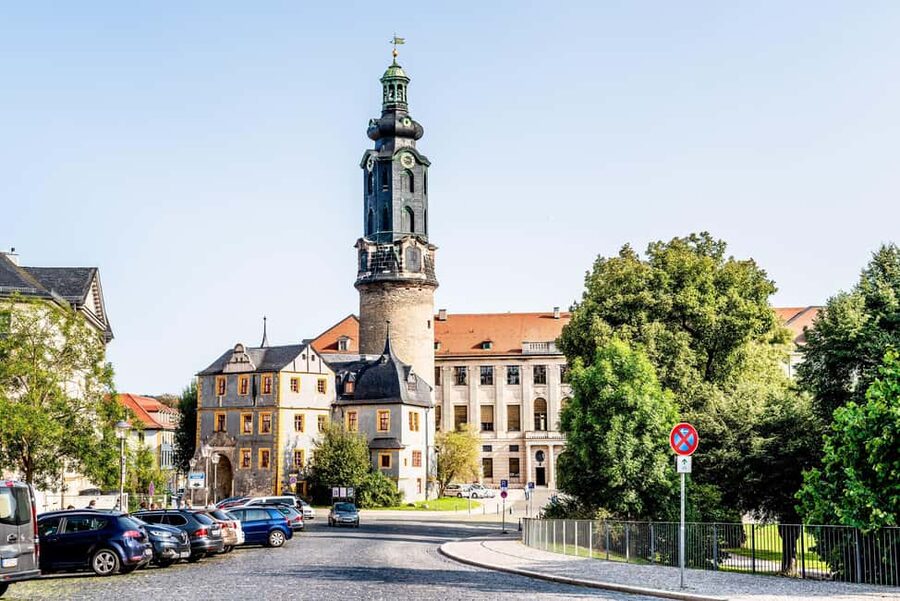
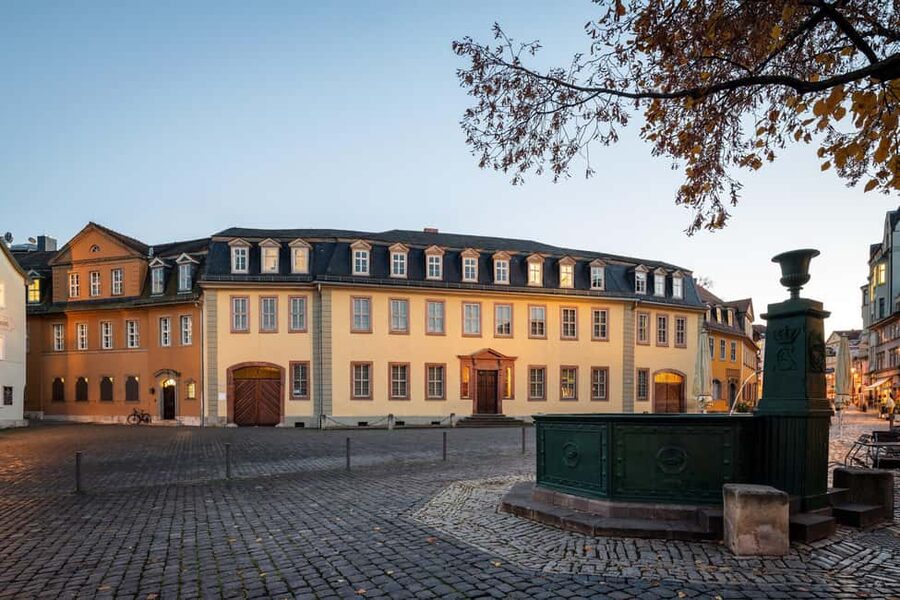
This is the emotional center of the route. You will reach Goethe’s House area and then Schiller’s residence area, with photo stops and guided notes along the way. This is where the classical names stop being abstract. The locations help you picture the everyday geography behind the writing.
A special feature of this tour is that it does not treat the writers as only indoor figures. You also get the flanking park on the Ilm and a stop area connected to Goethe’s garden house. That break in the urban rhythm matters because it gives you a calmer pause during the 90 minutes. It also reinforces the idea that classical creativity was often tied to observing nature, walking routines, and daily surroundings.
Here is how to make the most of this section:
- When you reach each residence area, look up from street level. Exterior details can help you understand how the building presents itself.
- Take one photo from a step or two back. It is easier to frame the surrounding streets so you remember where everything sits.
This part of town is also where the guide’s question-and-answer style can help most. If you want to know how Goethe and Schiller fit together in Weimar, ask. The tour is structured for this, and the guide tends to be engaged and happy to answer.
Theaterplatz and the Goethe-Schiller monument moment
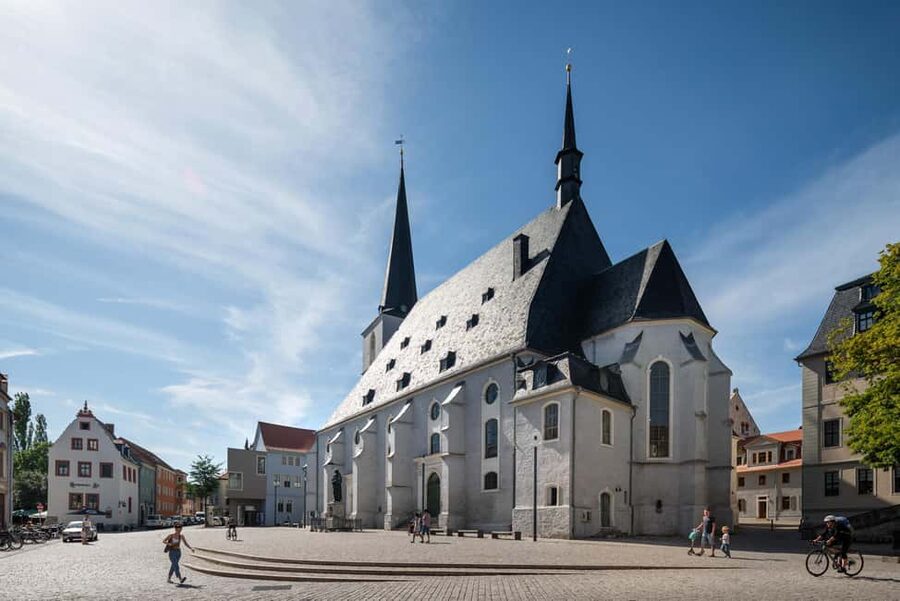
The tour finishes at Theaterplatz. This is where the theme becomes visible in a single place: the Goethe and Schiller monument area, plus the theater square context that ties literature to public culture.
Ending here is smart for your memory. You start with civic life, you move through learning and residences, and you close with a cultural stage. If you want a mental “anchor image” for your Weimar visit, Theaterplatz does the job.
Since this is outside viewing only, you will not be getting a long sit-down museum experience at the end. Instead, you can linger if you have time, take a few final photos, and then decide how you want to continue on your own.
Price and group size: good value if you like focused storytelling
The price is $11 per person, which is a strong value for a guided walk that covers multiple anchor sites tied to the classical period. The main reason it is good value is simple: you are paying for a guided thread that connects the stops. Without guidance, you can still walk these areas, but you would likely miss the “why” that makes the sights click.
Group size is labeled as small, limited to 6 participants. One practical note from experience in this category: if the day is busy, the group can get bigger than you expect and may be split into subgroups. That usually still keeps the tour manageable, but it can affect how much back-and-forth you get at each stop.
Best value tip: this is ideal if you are in Weimar for a short time. If you have only a day and you want the highlights tied to the big names, this format helps you make that day count.
Who should book this Classical Weimar tour, and who might skip
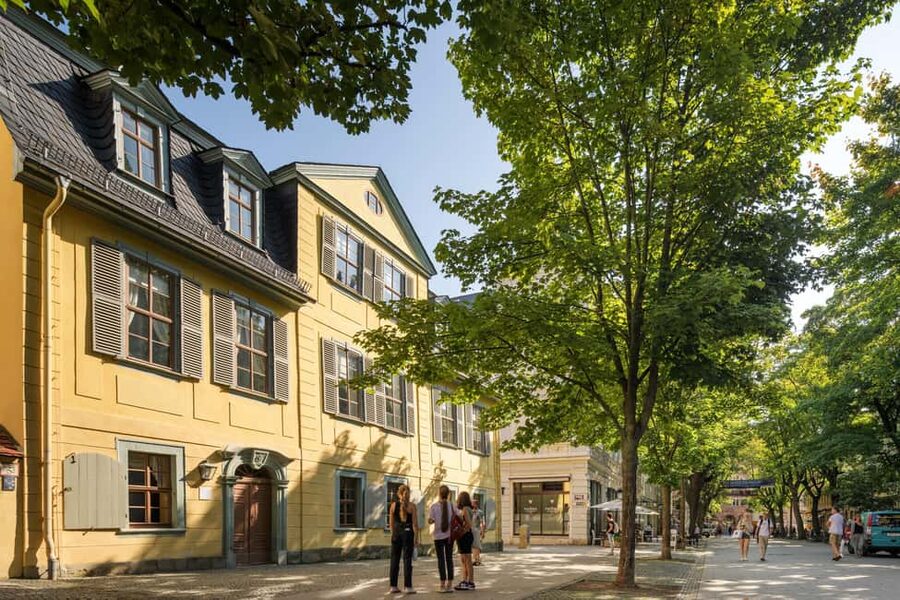
Book it if you:
- Want an efficient old town orientation with guided context
- Like your history explained through real places linked to Goethe and Schiller
- Prefer walking tours that stay outdoors and keep a steady rhythm
Skip it or plan alternatives if you:
- Need indoor access during the tour, since sights are viewed from outside
- Have mobility limitations, since it is marked as not suitable for people with mobility impairments
- Only speak English, because the guide language is German
If you want a low-stress first day, this works well. If you already know a lot and want deep museum time, you might treat it as a warm-up and then add targeted self-guided visits.
Should you book this Old Town Tour: Classical Weimar?
Yes, if you want a quick, guided walk that makes classical Weimar feel connected rather than scattered. The $11 price is especially fair for what you get: a structured route through major squares and institutions, with a guide who tends to present information clearly and respond to questions.
I would especially recommend it as your first Weimar activity. You will leave with a map in your head, and that makes your later exploring far easier.
FAQ
How long is the Old Town Tour Classical Weimar?
The tour lasts about 90 minutes, with the exact starting times depending on availability.
Where does the tour start?
You start at the Weimar Tourist Information Office at the Neptune Fountain.
Where does the tour end?
The tour ends back at the meeting point, after finishing at Theaterplatz.
What language is the live guide?
The live tour guide speaks German.
Is this tour inside or outside?
All sights are viewed from outside.
How many people are in the group?
It is a small group, limited to 6 participants.
Which sights are included?
The tour covers Market Square, City Palace, St. Peter and Paul’s Church, Theater Square, Schiller’s residence, Goethe’s residence, the Ilm park area, Goethe’s garden house area, Democracy Square, Duchess Anna Amalia Library, and Princely House.
Is it suitable for people with mobility impairments?
No, it is marked not suitable for people with mobility impairments.
What is the price?
The price is listed as $11 per person.
Is free cancellation available?
Yes, you can cancel up to 24 hours in advance for a full refund.
Through Thuringia and the Harz
Everything else we filed on Weimar
- Weimar: “Illuminati”, unique Escape Room, Goethe’s secret
★ 4.6 · 17 reviews - Weimar: Old Town Tour Classical Weimar
★ 4.4 · 26 reviews - Weimar: Scavenger Hunt Self-Guided Walking Tour
★ 4.3 · 108 reviews - Weimar: Old Town Guided Walking Tour
★ 4.7 · 1,080 reviews
Weimar Erfurt and Thuringia Tours, side by side.
 ★ 4.7Erfurt: Old Town Guided Walking TourFrom $151,617 reviews
 ★ 4.7Weimar: Old Town Guided Walking TourFrom $111,080 reviews
 ★ 4.5Night Watchman Tour through QuedlinburgFrom $131,040 reviews
 ★ 4.8Erfurt: Guided Tour of The Petersberg CitadelFrom $12674 reviews
 ★ 4.7Goslar: Tausend Schritte durch die AltstadtFrom $16417 reviews
 ★ 4.5Quedlinburg: Guided City Highlights Walking TourFrom $11353 reviews
 ★ 4.7Erfurt: With Night Watchman Schwalbe through the Old Town, including tastingFrom $18297 reviews
 ★ 4.5Fulda: Night Watchman TourFrom $23167 reviews
Other lists this tour is on