
REVIEW · THURINGIA
Weimar Private Guided Walking Tour
Weimar makes ideas walkable. In a short private guided stroll, you connect famous names to the actual streets and buildings that shaped German culture. It’s the kind of tour where history feels personal, not dusty.
Two things I really like: the clear focus on Goethe and Schiller and the way the guide ties their creative friendship to what you can see in town. I also enjoy the human touch you get in the commentary, and one guide you may encounter, Herr Letetzki, is noted for combining big historical and cultural knowledge with a funny, lively delivery.
One consideration: at $280 per group (up to 15), it can feel steep if you are traveling solo or as a couple, and entrance tickets are not included. You’ll likely keep most visits outside unless you buy tickets separately.
In This Review
- Key things you will notice on this Weimar walk
- Weimar Classicism to the Bauhaus, in Two Hours
- Meet at Markt 20 and Get a Private, Adjustable Pace
- National Theater and the Goethe-Schiller Memorial
- Goethe’s House on Frauenplan and the Making of Faust
- Schiller’s House, Liszt Haus, and the Friendly Network of Culture
- Saint Peter and Paul Church, Luther, and Anna Amalia’s Legacy
- House of the Weimar Republic, 1919, and Political Turning Points
- Walter Gropius, the Bauhaus Angle, and How Design Becomes History
- Lucas Cranach, the Market Square Start, and Seeing More Than One Era
- Price and Logistics Reality for a $280 Private Group Tour
- Who This Weimar Walk Suits Best
- Should You Book the Weimar Private Guided Walking Tour?
- FAQ
- Where is the meeting point for the tour?
- How long is the Weimar private guided walking tour?
- Is this tour private, and what is the group size?
- What languages are offered on the tour?
- Are entrance fees included in the price?
- Is free cancellation available?
Key things you will notice on this Weimar walk
- Goethe and Schiller memorial by the National Theater, framed in context, not just as a photo stop
- Goethe’s House on Frauenplan, tied directly to work on Faust
- Saint Peter and Paul Church, connected to Martin Luther and the resting place of Johann Gottfried Herder and Duchess Anna Amalia
- House of the Weimar Republic, where the future of post-World War I Germany was decided in 1919
- Bauhaus influence, including Walter Gropius, woven into the bigger cultural story
Other Thuringian towns we have written up
- Weimar: Old Town Guided Walking Tour★ 4.7 · 1,080 reviews
- Weimar: Scavenger Hunt Self-Guided Walking Tour★ 4.3 · 108 reviews
- Weimar: DunkelWeimar, true crime citytour and game★ 4.0 · 64 reviews
- Weimar: Old Town Tour Classical Weimar★ 4.4 · 26 reviews
Weimar Classicism to the Bauhaus, in Two Hours
Weimar’s reputation is well earned, but it can also feel like a blur of “big names.” This tour helps you sort the names into relationships and timing, which is where most value lies. You’re not just seeing landmarks, you’re understanding how ideas traveled from writers to thinkers to politics, and later into modern design.
The tour also connects different eras without turning into a history lecture that never ends. You start with the classic writers people associate with Weimar Classicism, and you end with the Bauhaus thread, including Walter Gropius and the movement’s influence. For many visitors, that link is the surprise. Weimar is often sold as a literary town, but you leave seeing it as a place where culture kept reinventing itself.
Because the format is only 2 hours, expect a fast but guided rhythm: quick context, then a site, then a meaning you can carry forward as you walk. If you like turning corners and learning what changed and why, you’ll probably find this pace satisfying.
Meet at Markt 20 and Get a Private, Adjustable Pace
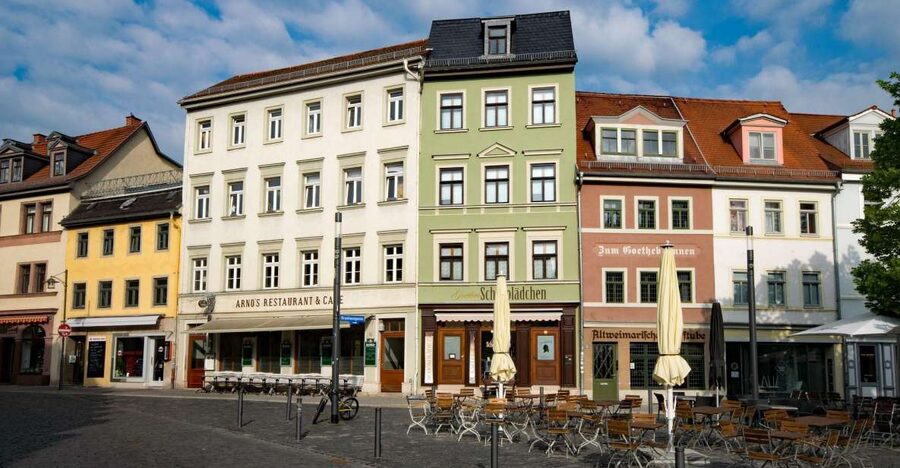
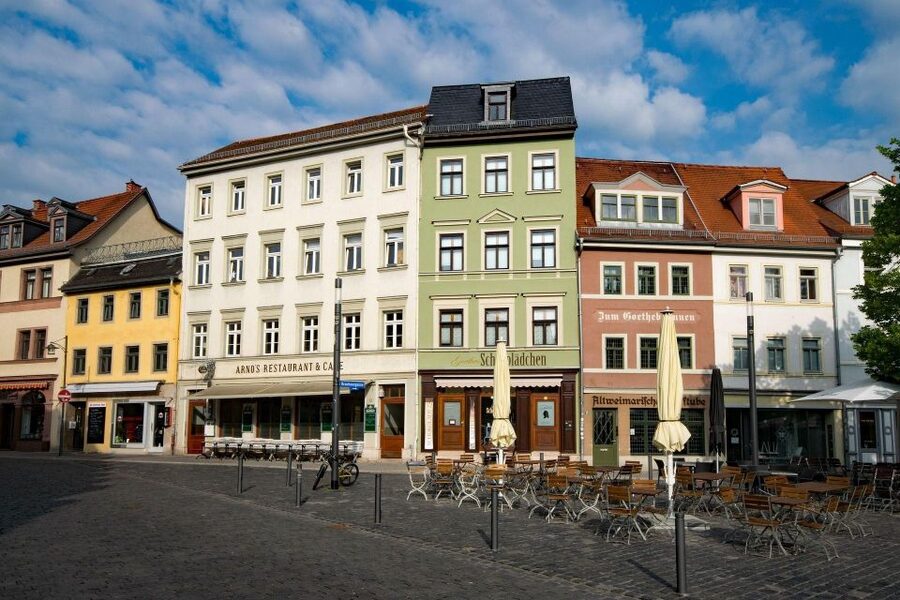
You meet at Markt 20, 99423 Weimar, which puts you near the center of action. From there, you can expect a straightforward walking route through key historic spots tied to major figures. The tour is a private group, and the group size can be up to 15 people, with a local professional guide who stays with your group the entire time.
What that means for you in practice: you can ask targeted questions without feeling like you are competing with a crowd. It’s also easier for the guide to adjust the emphasis, because customization is possible on the spot. If you care more about writers than architecture, you should be able to steer the conversation. If the Bauhaus angle feels most interesting, your guide can give it more airtime.
A small but real drawback to consider is time. Two hours goes quickly, especially if you stop to read every plaque. Wear comfortable shoes, and keep your expectations realistic: this is a guided walk with context, not a full museum day.
National Theater and the Goethe-Schiller Memorial
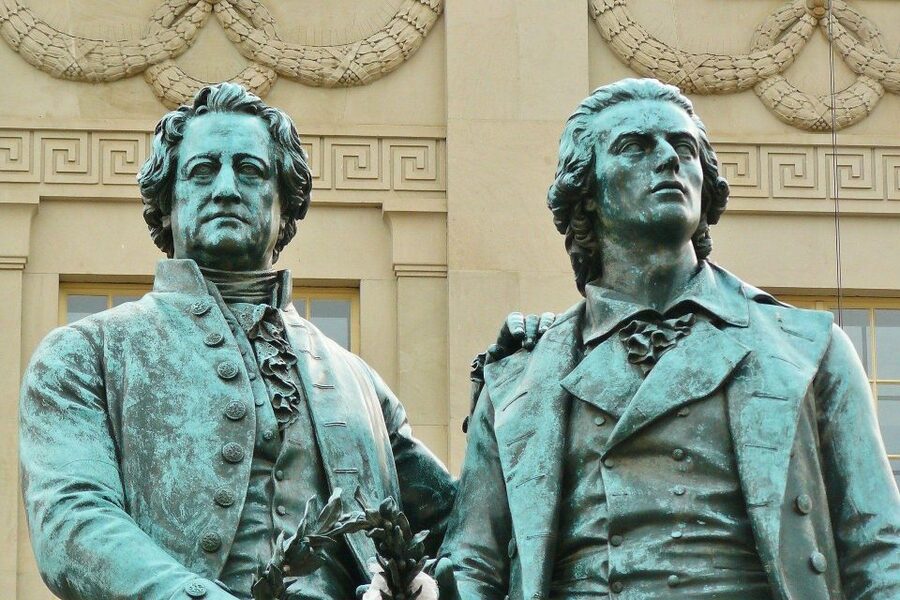
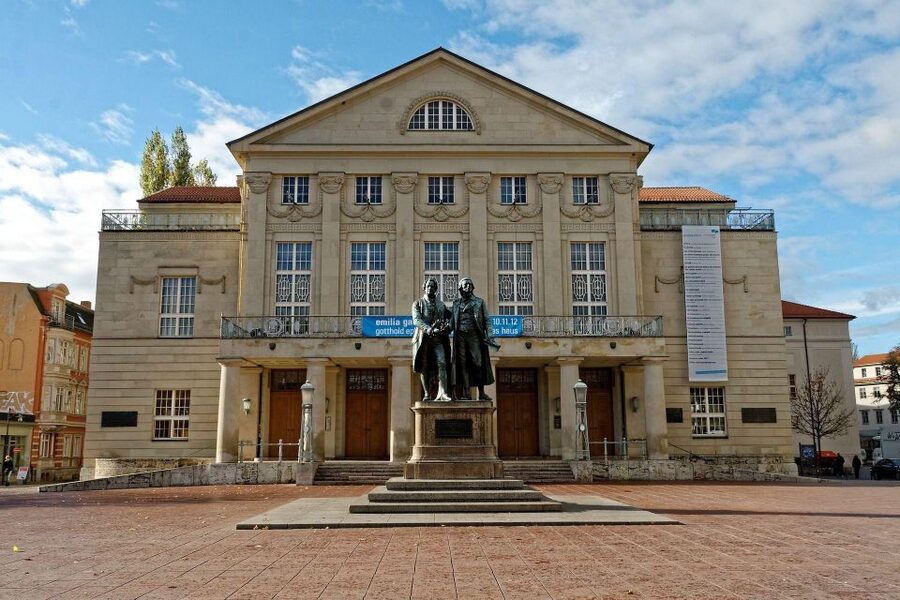
One stop that defines the tour’s tone is the Goethe and Schiller memorial standing in front of the National Theater. Even if you know the names, the setting helps you understand why they mattered publicly. These weren’t only writers living quietly in their rooms. They were cultural leaders with visible influence in a city that treated art as part of civic life.
This is also where the tour’s big theme starts to click: the creative friendship between Goethe and Schiller. Their collaboration wasn’t random. It was an engine. Their ideas and drafts were shaped by a back-and-forth that pushed each other harder than either could alone.
If you like your history with a human backbone, pay attention to how the guide explains that relationship. When you understand the friendship, the rest of Weimar starts to feel less like a list and more like a network. You start to see why other figures, including composers and philosophers, fit naturally into the same story.
Photo tip: treat this as more than a landmark shot. Stand back, take in the theater frontage and the memorial’s position, then let your guide’s explanation anchor what you are looking at.
Goethe’s House on Frauenplan and the Making of Faust
Next, you get a direct connection to Goethe’s House on Frauenplan, where he worked on his major masterpiece, Faust. This stop matters because it turns an enormous literary work into something grounded in place and routine.
Your guide’s job here is to keep you from turning it into a museum scavenger hunt. The point is to understand what it means for a city to preserve the everyday working environment of a writer who changed European literature. You’re not only seeing a famous address, you’re getting a sense of how long-form thinking happened in real rooms.
This is also a good moment to think about why Faust is such a natural match for a Weimar walking tour. The city’s intellectual life was not separate from politics and philosophy. Goethe’s writing reflects questions people were wrestling with across German society, from morals to modern life to belief and doubt. Even without going inside, the guide’s framing can make this stop feel like a turning point rather than a set piece.
If you have a short attention span, focus on one thing: where Goethe lived and worked, and what that means for understanding his output. If you like literature, you’ll probably want to linger on how the guide connects the themes of Faust to the broader intellectual climate of the city.
Other walking routes through Weimar
Schiller’s House, Liszt Haus, and the Friendly Network of Culture
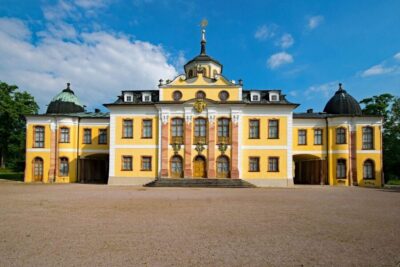
Weimar’s greatest strength is that it doesn’t limit culture to one genre. The tour brings you to Friedrich Schiller’s House, where Schiller came to Weimar at the invitation of his friend Goethe. That fact alone is worth remembering. It’s the tour’s friendship theme made physical. People moved, relationships formed, and creative projects followed those ties.
Then you move to Liszt Haus, tied to composer Franz Liszt, who lived and taught in Weimar. This matters because it widens your lens beyond literature. You start to see Weimar as a place where teaching, performance, and writing all fed each other. Even the mention of other composers, like Bach, helps you sense how music and ideas were part of the same cultural ecosystem.
Here’s the practical value of these stops: if you only visit writer sites, you can miss why Weimar became famous in the first place. The city’s reputation grew because it felt like a living workshop for art and thought. Liszt’s teaching connection reinforces that Weimar wasn’t only about fame. It was also about mentorship and craft.
Potential drawback: if you’re expecting lavish interior access at every stop, you may be disappointed. Entrance fees are not included, so most of your experience may be exterior viewing plus explanation. That’s fine for the storyline, but if you want deep museum time, plan to add ticketed visits separately.
Saint Peter and Paul Church, Luther, and Anna Amalia’s Legacy
The tour also includes Saint Peter and Paul Church, a gothic landmark tied to some heavyweight names. You’ll hear that Martin Luther preached here, and you’ll also learn that Johann Gottfried Herder is buried here, along with Duchess Anna Amalia.
This stop is special because it links faith, philosophy, and politics in one place. When you learn that Luther spoke here, it’s easy to see the church not just as architecture, but as a stage for major public ideas. When you add Herder and Anna Amalia, it becomes clear that Weimar’s influence was built by people who supported thinking, education, and cultural leadership.
Anna Amalia’s connection is a big deal for understanding why Weimar earned its reputation for high culture. The duchess is tied to enlightened patronage, the kind that makes a city attractive to artists and intellectuals. That means Weimar’s cultural life wasn’t only bottom-up. It was also made possible by top-down support, which shaped what could flourish.
If you want to get the most from this church stop, don’t rush. Let your guide connect the dots between names, then look up. Gothic churches reward slow glances, even from outside, because the proportions and design feel like they’re pointing you toward something larger than one person’s life.
House of the Weimar Republic, 1919, and Political Turning Points
One of the most important sites on the walk is the House of the Weimar Republic, tied to 1919, when the future of post-World War I Germany was decided. This is where the tour stops being only about art and starts tackling governance and consequence.
Why this matters to you: Weimar can be easy to romanticize as a cultural brand. This stop forces the real-world context back into focus. The city’s writers, philosophers, and musicians lived in a period that soon collided with political upheaval. Learning that the post-war future was decided here gives emotional weight to the earlier cultural stops.
Think of it as two layers of Weimar. One layer is the classic era of authors and ideas. The other layer is the political reality that followed the war. A good guide will show you why the two layers are not separate. Cultural life and political life were happening to the same people, in the same rooms of history.
If you want a takeaway, it’s this: by the time the Republic was being shaped, the intellectual culture of the city had already trained people to debate, interpret, and argue publicly. Weimar’s reputation for ideas was not an accident.
Walter Gropius, the Bauhaus Angle, and How Design Becomes History
The tour doesn’t stop at the writers. It reaches forward to the Bauhaus movement and the influence of Walter Gropius. That part of the story often surprises people, because they expect Weimar to stay in the 18th and 19th century.
Here’s what makes the Bauhaus angle valuable for your trip: it shows cultural continuity. The Bauhaus was about rethinking design and making modern forms. By linking it to Weimar, the tour suggests that the city kept evolving its intellectual identity instead of freezing it for tourism photos.
You probably won’t feel like you’re studying design theory on this walk. Instead, you’ll likely get a narrative: the city’s tradition of ideas and artistic influence set the stage for new ways of seeing. It’s a reminder that movements like Bauhaus did not appear from nowhere. They grew out of existing habits of creativity, teaching, and experimentation.
If you are a design nerd, ask your guide how they connect Gropius and Bauhaus to what you’ve seen on the earlier stops. If you’re not, don’t worry. You can still enjoy this segment as a story that helps you place modern Germany’s cultural shifts on a map.
Lucas Cranach, the Market Square Start, and Seeing More Than One Era
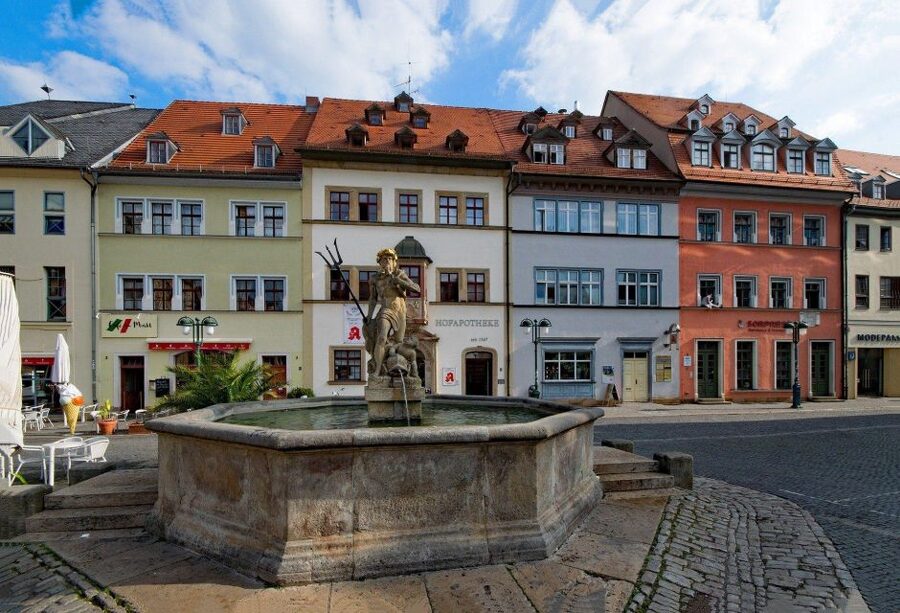
Starting at Markt 20 also sets you up to catch a lesser-known thread. The tour notes that Lucas Cranach lived near the Market Square. That detail is small, but it helps you avoid the all-or-nothing view of Weimar as only Goethe and Schiller.
Cranach is a reminder that Weimar’s cultural importance spans beyond classic writers. Even in brief mentions like this, you start to notice how the city has had artistic presence across centuries, not just one celebrated era. That makes your overall understanding more stable. You don’t walk away feeling like Weimar is a one-jump theme park.
As you move through the center, you can also use this idea to guide your own attention. When you pass a facade or a courtyard, ask yourself what kind of people would have gathered there historically. The guide’s story helps you frame those spaces as stages for real lives.
This is also where customization can help. If you want more on earlier Renaissance art, you can ask, and if you want more on the 20th century political story, you can ask again.
Price and Logistics Reality for a $280 Private Group Tour
The price is $280 per group up to 15 for a 2-hour walking tour. That structure is important. If you are traveling as a solo traveler, you will feel the total price more strongly. If you are traveling with a small group, the cost spreads out and the value gets more obvious.
So, is it worth it? I think it often is if you care about interpretation. The guide is local and professional, you get a private group experience, and the tour is short enough that you are not giving up a whole day. Also, because entrance fees are not included, you control your budget. You can buy tickets only where they truly matter to you.
If you’re comparing costs, don’t only compare dollars. Compare how you use your time. Two hours with a skilled guide can save you from wandering between sites without understanding why they connect. For history and culture towns like Weimar, that connection is the whole point.
One drawback to keep in mind is that the tour is intentionally time-limited. If you love reading everything and going inside historic houses, you may want to schedule additional independent time after the walk.
Who This Weimar Walk Suits Best
This tour is a strong match if you want three things at once:
- A tight overview of Weimar’s cultural figures, especially Goethe and Schiller
- Context that connects art to politics, including 1919 in the Weimar Republic
- A modern thread that reaches toward Bauhaus and Walter Gropius
It’s also a good choice for couples who like history but hate slow, aimless museum time. And it can work for families with older kids who can follow a conversation, since the guide can keep you moving while explaining the big ideas.
If you are traveling with limited mobility, you should treat this as a walking tour first and plan carefully. The tour data does not list accessibility details, so you’ll want to ask the provider about comfort and pacing for your group.
Should You Book the Weimar Private Guided Walking Tour?
If you want a guided shortcut through Weimar’s key ideas, I would book it. The focus on relationships, especially the Goethe and Schiller creative friendship, plus the contrast between cultural sites and the House of the Weimar Republic makes the two hours feel purposeful.
I would hesitate only if you are traveling alone and strict about budget, or if you expect most stops to include paid interior access. With that in mind, this tour shines when you treat it as the foundation and then add tickets or extra time where you personally care most.
FAQ
Where is the meeting point for the tour?
The tour meets at Markt 20, 99423 Weimar.
How long is the Weimar private guided walking tour?
The tour lasts 2 hours.
Is this tour private, and what is the group size?
It is a private group tour. The group can include up to 15 people.
What languages are offered on the tour?
The live guide offers English and German.
Are entrance fees included in the price?
No. Entrance fees are not included.
Is free cancellation available?
Yes. You can cancel up to 24 hours in advance for a full refund.
Pavements of Weimar
Through Thuringia and the Harz
Everything else we filed on Weimar
- Weimar Private Guided Walking Tour
★ 4.5 · 6 reviews - Weimar: “Illuminati”, unique Escape Room, Goethe’s secret
★ 4.6 · 17 reviews - Weimar: Old Town Tour Classical Weimar
★ 4.4 · 26 reviews - Weimar: DunkelWeimar, true crime citytour and game
★ 4.0 · 64 reviews - Weimar: Scavenger Hunt Self-Guided Walking Tour
★ 4.3 · 108 reviews - Weimar: Old Town Guided Walking Tour
★ 4.7 · 1,080 reviews
Weimar Erfurt and Thuringia Tours, side by side.
 ★ 4.7Erfurt: Old Town Guided Walking TourFrom $151,617 reviews
 ★ 4.7Weimar: Old Town Guided Walking TourFrom $111,080 reviews
 ★ 4.5Night Watchman Tour through QuedlinburgFrom $131,040 reviews
 ★ 4.8Erfurt: Guided Tour of The Petersberg CitadelFrom $12674 reviews
 ★ 4.7Goslar: Tausend Schritte durch die AltstadtFrom $16417 reviews
 ★ 4.5Quedlinburg: Guided City Highlights Walking TourFrom $11353 reviews
 ★ 4.7Erfurt: With Night Watchman Schwalbe through the Old Town, including tastingFrom $18297 reviews
 ★ 4.5Fulda: Night Watchman TourFrom $23167 reviews
Other lists this tour is on