
REVIEW · 2-HOUR EXPERIENCES
Berlin: Backyards of Berlin 2-Hour Tour
Berlin’s courtyards tell stories you miss on streets. This 2-hour Backyards of Berlin tour focuses on what’s hidden behind facades in an old neighborhood, with Jewish history woven into the architecture and street life. You’ll see how the area around Hackesche Höfe and Spandauer Vorstadt developed, why some places were repurposed, and how daily Berlin keeps layering new uses onto older walls.
Two things I really like about this experience are the guide’s witty, high-energy explanations and the way the route is built around real places you can recognize later. The tour keeps moving through named courtyards and streets, from Sophienstraße through Oranienburger Straße, instead of turning into a general lecture. One drawback to keep in mind: the tour runs the full 2 hours, and if you’re not interested in small side stops or storefront-style courtyard details, it may feel a bit long.
In This Review
- Key highlights you’ll notice right away
- Hackesche Höfe meeting point and the courtyard mindset
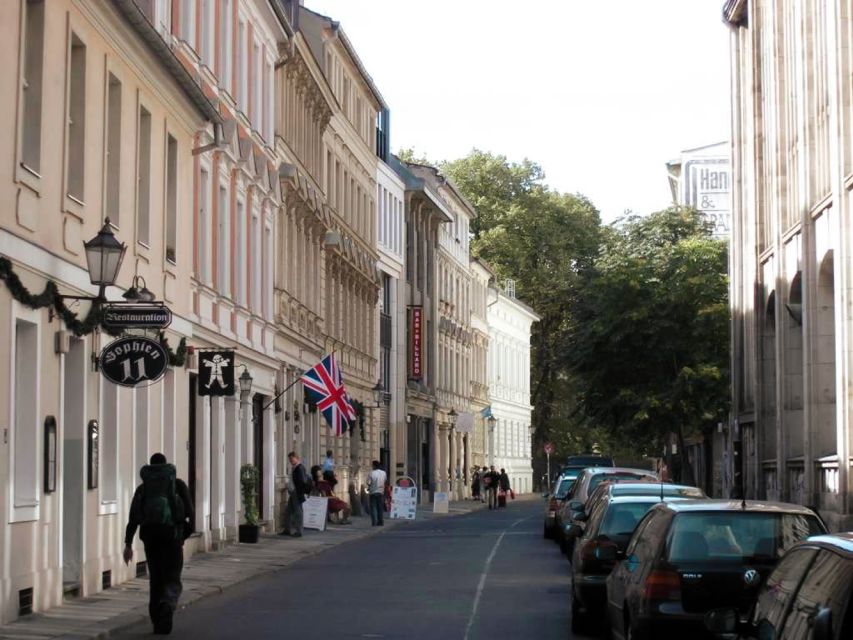
- Sophienstraße courtyards: artisan life, Sophie-Gips-Höfe, and real street texture
- Große Hamburger Straße and the “road of tolerance” story
- Jewish Berlin footprint: the first cemetery and street-level remembrance
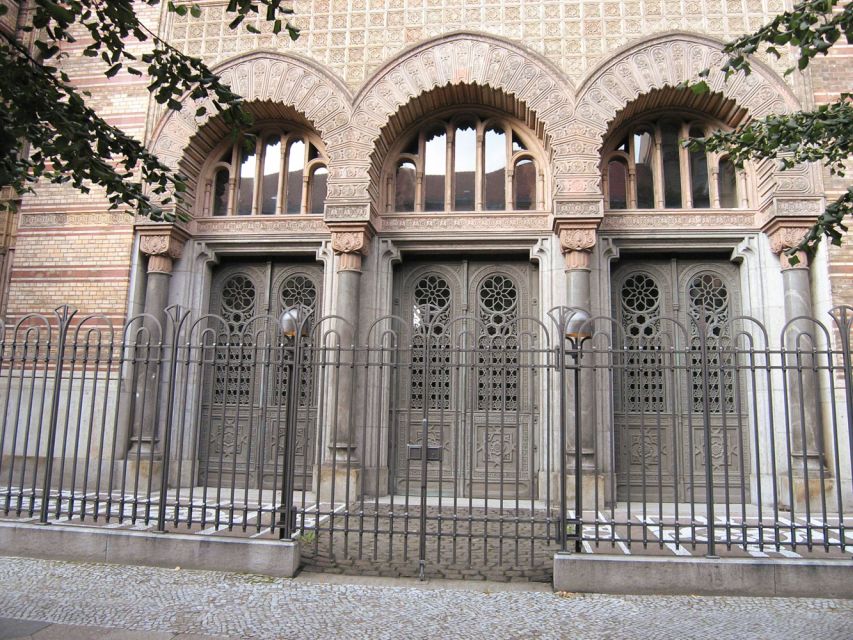
- Oranienburger Straße: New Synagogue details and Postfuhramt next door
- Heckmann Höfe at the end: one last courtyard lesson
- Price and logistics: is $21 worth it for 2 hours?
- What you’ll get from the guide, based on what works
- Who this tour is best for
- Tips so courtyards feel rewarding, not cramped
- Should you book Berlin: Backyards of Berlin (2-Hour Tour)?
- FAQ
- How long is the Berlin Backyards of Berlin tour?
- Where do I meet the guide?
- How much does the tour cost?
- What is included in the tour?
- What is not included?
- What languages is the tour offered in?
- What can I expect to see during the walk?
- Can I request a focus on special interests like Jewish history?
- What is the cancellation policy?
- Is there a way to book without paying immediately?
Key highlights you’ll notice right away
- Hackesche Höfe first courtyard start so you begin in the middle of the action, not at a distant landmark
- Named courtyards on the route like Sophie-Gips-Höfe and Heckmann Höfe, which make the walk feel concrete
- Street-by-street context explaining why Große Hamburger Straße is often described as a road of tolerance
- Jewish Berlin touchpoints tied to what you can see today, including the first cemetery
- New Synagogue area focus on Oranienburger Straße and the Postfuhramt next door
- Guide style that keeps it moving with lots of information delivered in a fun, question-friendly way
Undecided? The closest Berlin write-ups we have are these.
- Berlin: Reichstag, Dome and Government District Guided Tour★ 4.7 · 18,288 reviews
- Berlin: 1-Hour City Tour by Boat with Guaranteed Seating★ 4.3 · 16,993 reviews
- Berlin: Boat Tour Along the River Spree★ 4.4 · 11,252 reviews
- Discover Berlin Half-Day Walking Tour★ 5.0 · 9,624 reviews
Hackesche Höfe meeting point and the courtyard mindset
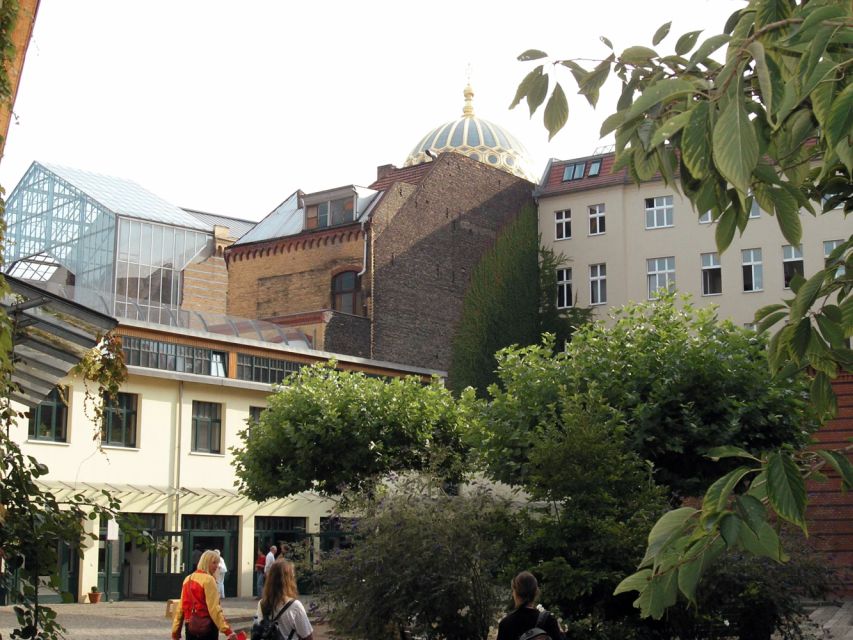
You start at Hackesche Höfe, first courtyard, at the cash counter of Chamäleon. That matters because Hackesche Höfe is not just a pretty cluster of passages. It’s a working example of how older city fabric can be revitalized, and how courtyards function like rooms for the street.
Before you even step deep into the route, train your eyes for the “courtyard logic.” In Berlin, facades often do the street-selling part, while the real personality shows up inside. You’ll be taught to look for transitions: entry points, changes in scale, and how different buildings meet in shared space. It’s a quick mental switch, and once you have it, you’ll start spotting the same pattern across the neighborhood even after the tour ends.
Sophienstraße courtyards: artisan life, Sophie-Gips-Höfe, and real street texture
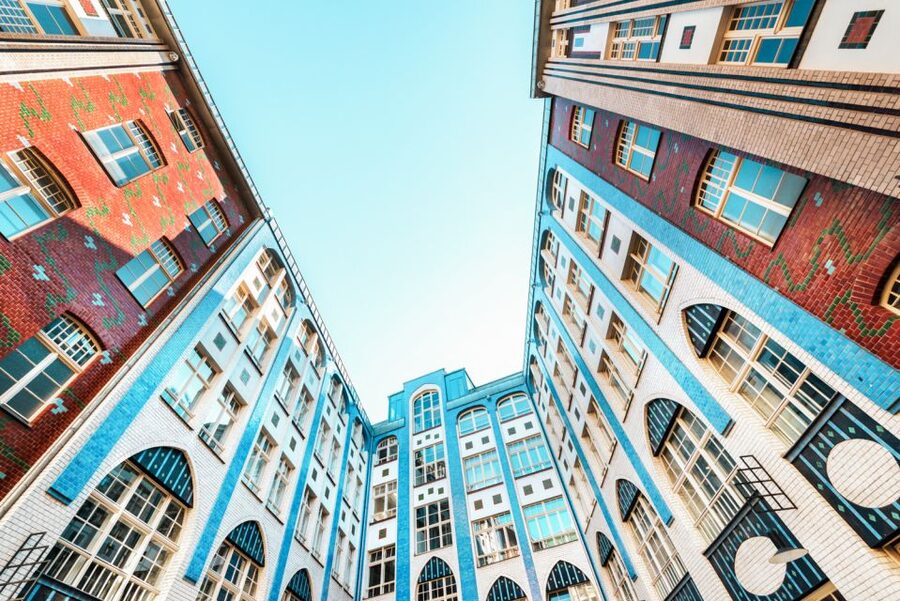
One of the most useful parts of this tour is how it treats Sophienstraße as a living corridor, not a dead postcard street. You’ll walk through the area with an emphasis on colorful multicultural life, which gives the courtyards meaning beyond architecture.
From there, you’ll shift into the courtyards and look at how space supports community use. The tour includes a stop at the courtyard of the artisan association and then continues toward the Sophie-Gips-Höfe. These are the kinds of places where it helps to think practically: what kind of foot traffic does this space attract, how do people linger, and how do buildings change from public street to more protected interior zones?
A small but important tip for this section: slow down at transitions. Courtyards can look similar from the sidewalk, but inside you’ll notice details like the building rhythm, where the light lands, and how the interior openings frame the sky. This is also where the guide’s style really earns its keep. The explanations are specific to what you’re standing in front of, not general history you might forget ten minutes later.
Große Hamburger Straße and the “road of tolerance” story
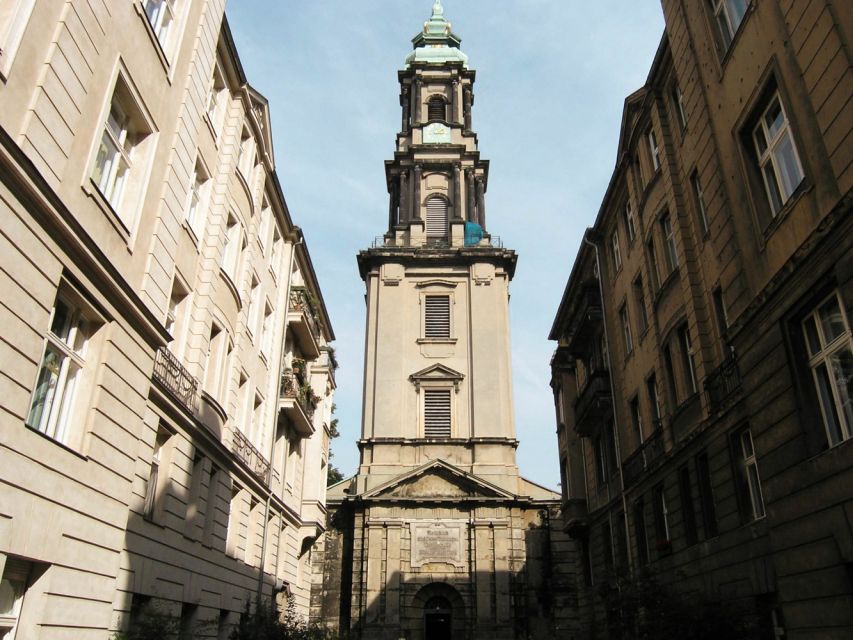
Next comes Große Hamburger Straße, described here as a road of tolerance. That label isn’t just poetic wording. It’s a framing device for what you’re about to see: overlapping cultural and religious institutions sharing space in the urban fabric.
You’ll get a look behind the facades of a major Catholic institution. Then the tour turns toward views of what’s described as the city’s most important Baroque church. Even if you’ve seen a lot of churches in Europe, this is still valuable because the guide helps you connect style to place. Baroque architecture often aims for impact, but the real question for you as a visitor is: why does it sit where it sits, and how does it relate to nearby streets with different histories?
What makes this section worth your time is the pairing: institution on one side, street context on the other. It trains you to stop treating sights as isolated objects. In Berlin, so much of the meaning is in how neighbors coexist, and the tour shows you that through an actual walking route.
Jewish Berlin footprint: the first cemetery and street-level remembrance
The tour doesn’t treat Jewish history as a single stop. Instead, it threads it into the route through the neighborhood’s changing community patterns.
You’ll learn more about the fate of the Jewish community in Berlin and you’ll connect that story to the first cemetery associated with the community. You’re not just hearing names. You’re standing in a district where layers of city life have changed over time, so the historical context lands with more weight.
This is one of the clearest value points for you if you like history that stays grounded. A lot of tours throw big dates at you. Here, the approach is more practical: you learn what happened, then you’re reminded of it through specific locations tied to daily geography.
If you have special interests, the operator notes that Jewish history, urban planning, and city history can be arranged in advance with the tour provider. That’s a good option if you want the story tuned to what you care about most.

Oranienburger Straße: New Synagogue details and Postfuhramt next door
Then you reach Oranienburger Straße, which is where the tour leans into iconic architecture with immediate neighborhood context.
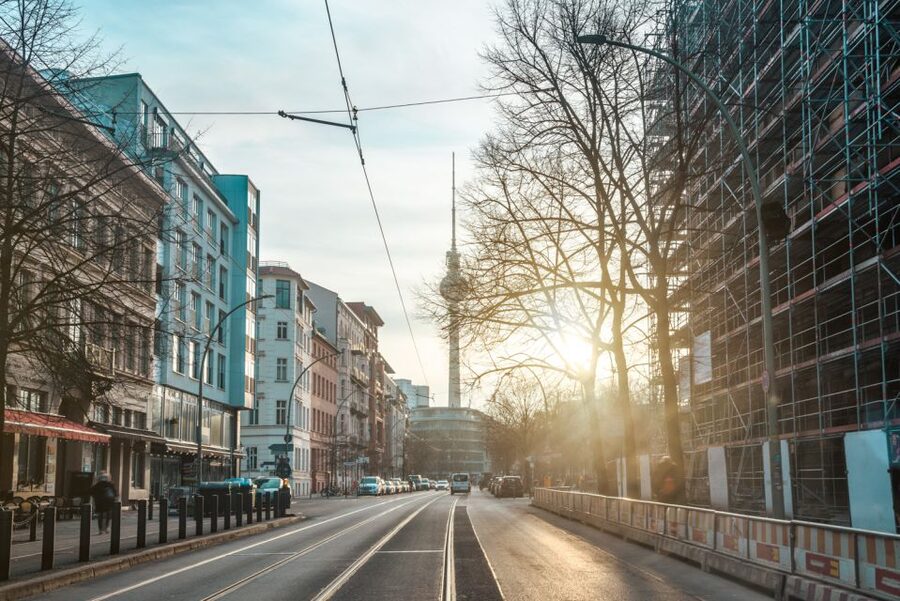
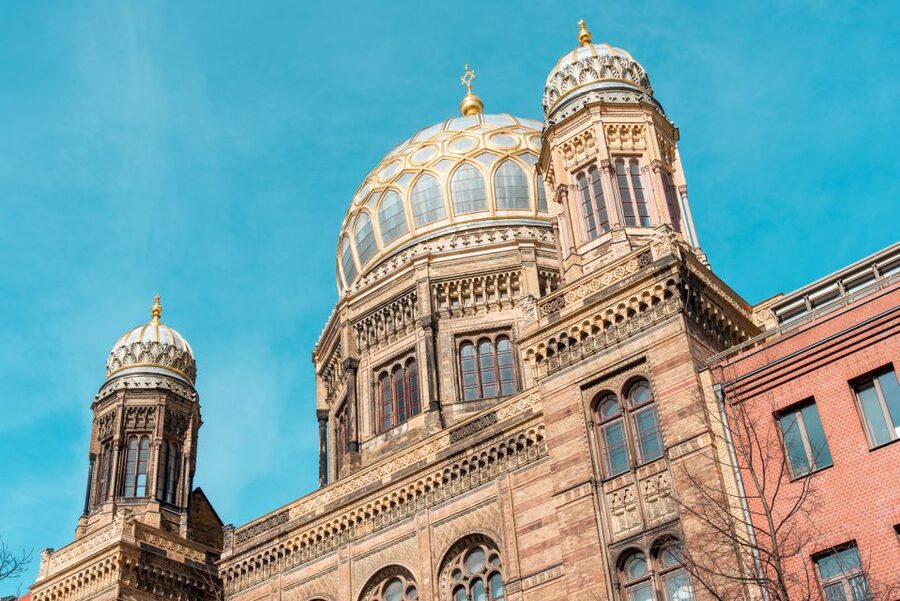
You’ll learn about the history of the imposing New Synagogue, and you’ll also look at the adjacent Postfuhramt. This pairing is smart. Synagogues are powerful symbols, but the Postfuhramt helps you understand the surrounding urban machinery, how streets supported movement, business, and public life.
As you walk, watch how the guide connects architectural presence with historical meaning. You’ll come away with a better sense of why certain buildings became anchors, and why they matter in a city where neighborhoods constantly reinvent themselves.
If you’re the type who likes to take photos, this is also your best zone. The architecture is prominent, and the streets give you angles that make the buildings feel connected rather than randomly spaced.
Heckmann Höfe at the end: one last courtyard lesson
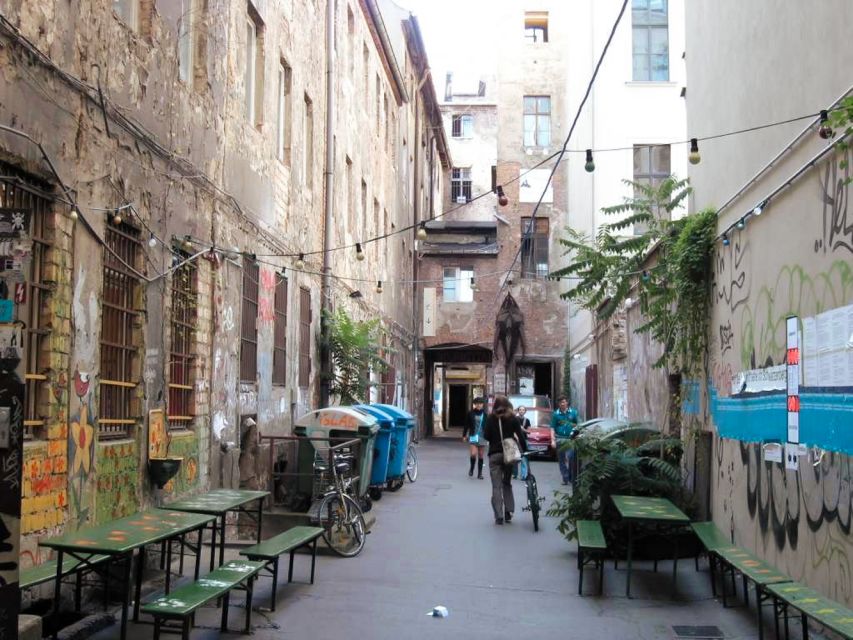
The tour finishes with a visit to Heckmann Höfe, described as one of the most interesting back courtyards in the neighborhood. By the time you get here, you’re already trained to read courtyards as spaces with rules: entry, privacy level, how the interior holds sound, and how people move through.
This ending stop works well because it reinforces the whole theme of the walk. You started at Hackesche Höfe with the idea that courtyards hold stories. Now you’re closing with another courtyard that lets you compare how different building blocks create different atmospheres.
If you want to extend the day, use the ending as your launch point. You’ll leave with a stronger map in your head of this part of Berlin, and you’ll be better at choosing what to revisit on your own.
Price and logistics: is $21 worth it for 2 hours?
At $21 per person for a 2-hour walking tour, this is the kind of value that makes sense if you want orientation plus depth without committing to a long half day.
Here’s the practical way to judge the price: you’re paying for a live guide plus a structured route through multiple specific courtyards and named street areas. That saves you the time of hunting for the “good inside” spaces yourself. You also get context that you can’t reliably guess just by looking at buildings.
One more angle: your time. Two hours goes fast when the guide is organized and entertaining, and the reviews you provided reflect that the pacing can feel smooth even in cold weather. Still, there’s a real consideration from the feedback: some people felt 2 hours was a bit long and would prefer 1.5 hours if they’re not into every side detail. If that sounds like you, decide to focus your attention on the core history stops, not the smaller shop-style moments you might encounter along the way.
What you’ll get from the guide, based on what works
The strongest praise points line up in a clear pattern. You should expect a guide who:
- delivers a lot of information with humor and quick wit
- keeps the tour well planned and easy to follow
- stays open to questions
- makes the time feel shorter because the conversation stays active and relevant
That matters because back courtyards can otherwise turn into a passive sightseeing walk. If the guide is lively and specific, you’ll leave with names, connections, and a better understanding of why the district is the way it is.
The tour is also available in English and German, which is a plus if you want clarity without relying on translations you’re improvising.
Who this tour is best for
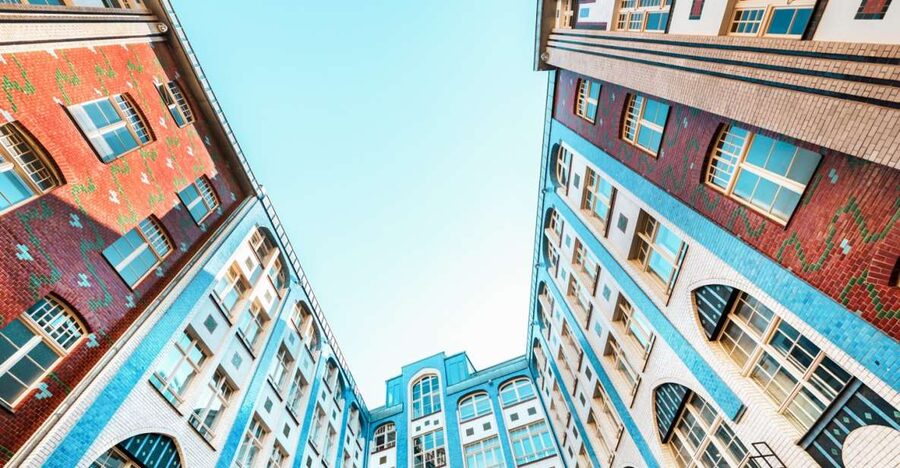
This tour fits you well if you want:
- architecture with context, not just pretty interiors
- a route focused on courtyards, streets, and institutions
- Jewish history and neighborhood history tied to real locations you’ll recognize later
- a guide-driven walk that helps you see a district differently
You might want to think twice if:
- you prefer very fast, destination-heavy sightseeing
- you don’t care about smaller courtyard details or storefront-style stops
- you only want a short overview and plan to pack in multiple neighborhoods the same day
Tips so courtyards feel rewarding, not cramped
Courtyards can be cold, and the route includes walking between specific street areas. Bring practical gear for Berlin weather, especially if you’re going in winter. One review in January noted that even the cold couldn’t slow the experience down, which is a good sign that the tour rhythm works. Still, your comfort helps your attention span.
Also, try this simple strategy during the tour: pick one theme for your brain. For example, focus on religious institutions and tolerance stories, or focus on how courtyards turned into community spaces. When you choose a theme, you’ll remember more because your mind has a filter.
Finally, if you have special interests, contact the operator in advance. The activity info explicitly says those interests can be arranged, including Jewish history, urban planning, and city history.
Should you book Berlin: Backyards of Berlin (2-Hour Tour)?
I’d book this tour if you want a guided way to see behind facades in central Berlin, with specific stops like Hackesche Höfe, Sophienstraße, the New Synagogue area, and Heckmann Höfe. The price is reasonable for the amount of place-based context you get, and the guide style you’ll experience is clearly a major strength.
Skip it or shorten your expectations if 2 hours feels too long for you, especially if you’d rather keep your focus tightly on the biggest landmarks only. In that case, treat this as a curated neighborhood walk where the core story comes from the architecture and the courtyard sequence, not from optional side details.
If your goal is to understand how Berlin neighborhoods actually work, this one is a strong match.
FAQ
How long is the Berlin Backyards of Berlin tour?
It lasts 2 hours.
Where do I meet the guide?
You meet at Hackesche Höfe, first courtyard, at the cash counter of Chamäleon.
How much does the tour cost?
The price is listed as $21 per person.
What is included in the tour?
It includes a tour guide and a private walking tour.
What is not included?
Food and drink are not included, and there is no hotel pickup or drop-off.
What languages is the tour offered in?
The live tour guide is available in English and German.
What can I expect to see during the walk?
You’ll explore Hackesche Höfe, courtyards connected to Sophienstraße and artisan associations, stops along Große Hamburger Straße and Oranienburger Straße, the area around the New Synagogue, and the Heckmann Höfe at the end.
Can I request a focus on special interests like Jewish history?
Yes. Special interests such as Jewish history, urban planning, and city history can be arranged with the tour operator in advance.
What is the cancellation policy?
Free cancellation is available up to 24 hours in advance for a full refund.
Is there a way to book without paying immediately?
Yes. The info states reserve now & pay later, so you can book your spot and pay nothing today.
Everything else we filed on Berlin
- East Berlin: City of Shadows Walking Tour
★ 5.0 · 11 reviews - Berlin: Die Stachelschweine – Frank Lüdecke – Träumt Weiter
★ 4.7 · 11 reviews - Potsdam Day Trip from Berlin with a Local: Private & Personalized
★ 4.0 · 11 reviews - An Introduction to Berlin Walking Tour
★ 5.0 · 11 reviews - DJ for a Day: Learn to Mix Like a Pro in Berlin
★ 5.0 · 11 reviews - 2-H Segway Sightseeing Tour Berlin
★ 4.5 · 11 reviews
2-Hour Experiences, side by side.
 ★ 4.7Hamburg: 2-Hour XXL Port of Hamburg Cruise TourFrom $476,979 reviews
 ★ 4.9Berlin: Third Reich and Cold War 2 Hour Walking TourFrom $236,830 reviews
 ★ 5.0Berlin’s Best: 2 Hour Walking Tour Third Reich and the Cold WarFrom $245,486 reviews
 ★ 4.8Leipzig: 2-Hour Guided Walking Tour in GermanFrom $181,612 reviews
 ★ 4.8Hamburg: Speicherstadt and HafenCity 2-Hour TourFrom $2821,063 reviews
 ★ 4.6Koblenz: 2-Hour Sightseeing Cruise on the RhineFrom $20839 reviews
 ★ 4.3Cologne: 2-Hour Evening Cruise on the Rhine RiverFrom $34797 reviews
 ★ 4.6Cologne: Kölsch Beer and Brew House 2-Hour TourFrom $22651 reviews