

REVIEW · BERLIN
Berlin: Decolonial Berlin Castle/ Humboldt Forum Guided Tour
Berlin stops feeling neutral after this tour. You get the Humboldt Forum framed through an Afrocentric lens, and the guide keeps the ethnological collection in view with a critical read of colonial collecting.
I especially liked how the tour ties the stories behind the Berlin Palace to how museum display works today, not just to dates and facts. One possible drawback is time: the whole tour is 2 hours, and a good chunk happens outside first, so the museum portion can feel brief if you’re the type who wants to linger over every object and label.
In This Review
- Key things to know before you go
- Finding the tour start at the reconstructed Sanchi Gate
- Berlin Palace and the Humboldt Forum, seen through a decolonial lens
- The Humboldt brothers and the science stories behind collecting
- A critical look at the ethnological collection, with an audio walk
- Where colonialism shows up: objects, missions, and museum symbolism
- Time management reality: what a 2-hour format means inside
- The guide and provider style: deSta, decolonial city walking energy
- Price and value: is $41 fair for this Humboldt Forum experience?
- Who should book this tour, and who might want to skip it
- Should you book Decolonial Berlin at the Humboldt Forum?
- FAQ
- FAQ
- Where is the meeting point for the tour?
- How long is the tour?
- What language is the live tour guide in?
- What’s included in the ticket price?
- How much time do you spend outside before entering the museum?
- Is the tour wheelchair accessible?
- What should I bring?
- Is there anything I cannot bring into the tour?
- Is the ethnological collection part of the visit included?
- Can I cancel if plans change?
- Is there a pay later option?
Key things to know before you go

- Afrocentric, decolonial framing of the Humboldt Forum and the Berlin Palace story
- Critical analysis of the ethnological collection, guided with an audio walk format
- Colonial connections made concrete, including missionaries and the museum building symbolism
- Humboldt brothers context on why they matter in German history and science
- Meeting at the reconstructed Sanchi Gate, with a chance to sit before entering
Still more Museum Island tickets to compare
- Berlin: Madame Tussauds Admission Ticket★ 4.6 · 3,941 reviews
- Berlin: Charlottenburg Palace Entry Ticket★ 4.4 · 2,076 reviews
- Berlin: Museum Island Multiple Museum Entry Ticket★ 4.4 · 2,007 reviews
- DDR Museum Berlin Admission Ticket★ 4.0 · 352 reviews
Finding the tour start at the reconstructed Sanchi Gate

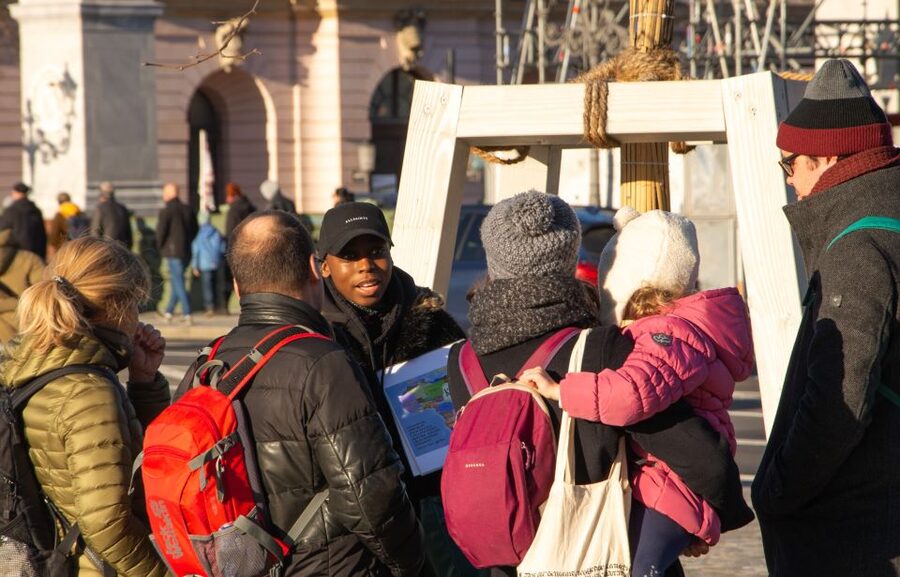
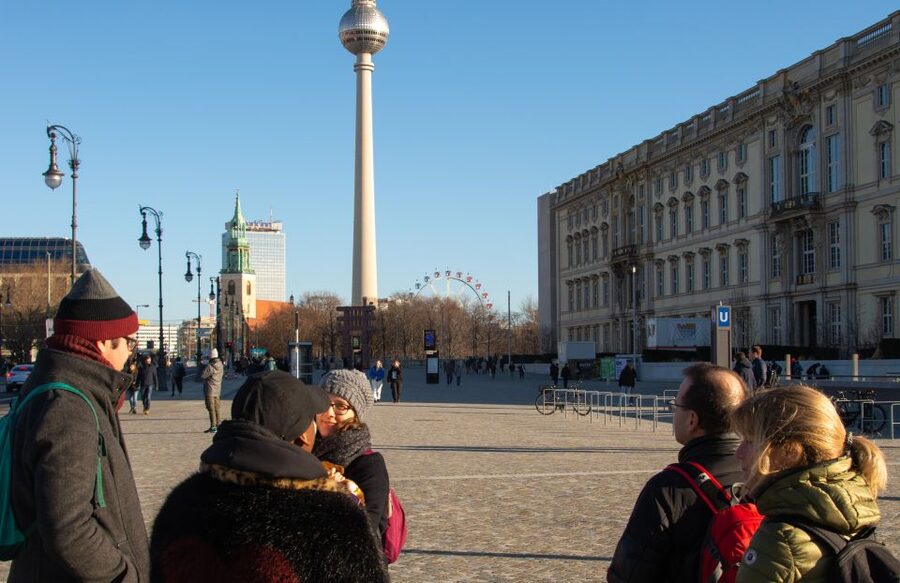
Plan on meeting near the reconstructed Sanchi Gate, where you’ll see the white chairs and a clear, calm spot to wait. The tour starts with you and the group getting oriented, then you settle outside for roughly an hour before heading into the museum spaces. That outside time matters more than you might expect, because you’re not just waiting, you’re being taught how to look.
If you’re visiting Berlin for the first time, this is a smart way to get your bearings fast. The Humboldt Forum is an attention magnet, and without context you can get pulled into surface impressions. Starting outside gives the guide room to set the lens for what you’ll see later inside.
Bring comfortable shoes. Even if the outside portion is mostly standing and sitting, you’ll appreciate shoes that can handle Berlin weather and museum forecourts. Dress for conditions, since you’re outdoors before going in.
Berlin Palace and the Humboldt Forum, seen through a decolonial lens
Once you’re inside the tour narrative, the big theme is clear: the Berlin Palace building and the Humboldt Forum are not just architectural landmarks. They carry meaning through how their collections were assembled, how stories were told, and how symbols on and around the building got interpreted.
The tour uses the palace’s long timeline, with its roughly 500 years of history, as a way to show how power gets written into culture. You’ll hear the tour connect the colonial period to what ended up displayed in an ethnological context, and you’ll also learn how the museum’s present-day mission language can still carry older assumptions.
One detail that stands out here is the discussion of the cross on the roof of the museum and what that symbol communicates. Even if you don’t agree with every interpretation you hear, it’s a useful prompt: symbols do not sit quietly. They signal values, and they can shape how people read the building, who feels welcome, and who feels judged or explained away.
You’ll also get a decolonial framing for the palace history itself. That means the goal is not only to learn what happened, but to understand how interpretations get argued over in public space.
The Humboldt brothers and the science stories behind collecting
The Humboldt Forum’s name is your hint, but the tour goes beyond the basic idea of famous scientists. You’ll learn why the Humboldt brothers are treated as important figures in German history, specifically because of their scientific status, not just because of travel.
Here’s why that matters to your experience. The tour pushes you to connect the prestige of science with the machinery of empire. When exploration and classification are celebrated without context, it can hide the fact that many collections were built through unequal relationships, forced or coerced access, and missionary-backed colonial networks.
The guide also points you toward the role different missionaries played in establishing colonial structures. That piece helps you connect dots between religion, power, and knowledge production. You start to see that the ethnological collection is not only about artifacts. It is about how European institutions learned to label, sort, and display people and cultures.
A useful takeaway is that you get a clearer sense of why the Humboldt brothers are politically meaningful today. It’s not about tearing down every detail. It’s about asking what their legacy includes and what gets left out.
A critical look at the ethnological collection, with an audio walk
Inside the museum, the tour format shifts. You’ll do an audio walk through part of the ethnological collection, then discuss what you’re seeing with the guide from a critical perspective. The “audio plus guide” approach is practical for a topic like this, because objects can be dense, and labels alone might not give you the context you need to read them fairly.
As you move through galleries, you’ll be encouraged to analyze how colonial history shows up in the display choices. That includes how museum narratives can frame objects as timeless or disconnected from the circumstances of acquisition. The guide’s job is to help you notice how perspective gets built into the exhibit itself.
If you like learning from interpretation and not just from facts, this part will feel especially useful. One of the strongest themes from the tour feedback is that the guide teaches you to read between the lines, meaning you don’t just memorize content, you learn how to question it.
If you’re the kind of visitor who expects a quiet, traditional museum tour, adjust your expectations. This is not only about seeing collections. It’s about seeing how collections were formed and how meaning gets assigned.



Where colonialism shows up: objects, missions, and museum symbolism
The tour’s decolonial approach stays grounded by tying colonialism to specific museum-linked themes. You’ll hear about the legacy of colonialism and how that legacy lands in cultural heritage today. It’s less about abstract guilt, more about tracing mechanisms: how missionaries helped build colonial structures, how science offered a framework for classification, and how European institutions turned those processes into collections and public narratives.
That’s why the discussion of the palace building and the museum roof symbol is not random. The tour treats museum architecture and museum display as part of the same story. Symbols, names, and presentation style all influence how people understand whose histories count and how those histories are told.
One reason I think this approach is valuable is that it helps you avoid the trap of thinking decolonial work is only about the past. You get a sense of why these debates matter now, because museums still shape public understanding, school narratives, and what feels normal to visitors.
Another reason is that the tour gives you tools. Even if you leave with questions, you’ll likely carry a better “critical eye” for how exhibits frame origins, movement, and ownership.
Time management reality: what a 2-hour format means inside
Here’s the practical catch. You get an experience built around two phases: about 1 hour outside for orientation and framing, then the museum time for the ethnological collection with the audio walk and guided analysis. With only 2 hours total, you will not see every room in a thorough, slow museum crawl.
That’s why some people may feel the Forum portion is a little short. If your ideal museum day is hours of reading, taking notes, and going back, you’ll probably want to pair this tour with your own follow-up time after.
Still, for many visitors, this pacing is exactly the point. It gives you a fast, guided lens so you can later explore the parts that grabbed you. Think of it as setting your interpretive glasses before you start browsing.
If you’re visiting in winter, like December or early spring, plan for weather. Since you’ll be outside at the start, warm layers and shoes you can trust matter.
The guide and provider style: deSta, decolonial city walking energy

This tour is run by deSta- Dekoloniale Stadtführung and is offered in English with a live guide. Based on what people appreciated most, the guide’s clarity and competence are a big part of the value. Multiple reviews highlight that you learn a lot without boredom, helped by how the guide explains the perspective shift.
One thing to note from the range of feedback is that the topic can feel intense depending on your baseline expectations. If you prefer museums to present history in a strictly neutral, traditional voice, a decolonial approach can feel like it takes a firm stance. That’s not a flaw. It’s the product. The tour is built to offer a new narrative and defend the way it interprets colonial structures.
Also, while most reviews praise the guide, one review reports a guide did not show up for the planned time and location. For that reason, if you book, take a moment before the tour to confirm details for your specific slot. Even a strong concept tour needs basic execution.
Price and value: is $41 fair for this Humboldt Forum experience?
At $41 per person for a 2-hour guided experience, the value is strongest if you want context, not just access. Your entry to the ethnological collection is included, and the structure also saves you time on the thinking part. You’re not only paying for museum entry. You’re paying for an interpretive guide who frames colonialism, missions, and collecting practices in a decolonial, Afrocentric way.
Where $41 feels especially reasonable is if you’d otherwise struggle to read the collection critically on your own. A traditional audio guide gives you facts, but this tour pushes you to ask better questions: why the story is told the way it is, what gets emphasized, and what gets missing.
If you’re the type who always reads labels carefully and already knows Berlin’s colonial museum controversies, you might feel the museum portion is short for the price. But you’re still likely to leave with new angles, especially around how the palace history and building symbolism tie back to colonial legacy.
Who should book this tour, and who might want to skip it
Book it if you want the Humboldt Forum experience to be more than a photo stop. You should be excited by discussions that connect the ethnological collection to colonial history and modern cultural heritage. You’ll likely enjoy the format if you like interactive learning, audio prompts, and guide-led discussion.
This tour also suits you if you like tours that help you interpret the environment. Starting at the reconstructed Sanchi Gate and getting framing outside first is a practical way to learn how to read the site.
I’d be cautious if you strongly dislike confrontational historical interpretation or prefer a strictly conventional presentation. One piece of feedback specifically mentioned discomfort with how the modern interpretation is defended with strong insistence. That tells you the emotional tone may not be soft.
Also skip it if you want a long, slow museum day. The time is fixed and the focus is interpretive, not exhaustive.
Should you book Decolonial Berlin at the Humboldt Forum?
Yes, if you want a clear, guided, Afrocentric decolonial lens on the Humboldt Forum and the Berlin Palace story. This tour is most valuable as an entry point, especially because it connects colonial collecting, missionaries, and symbolic cues like the roof cross to what you see inside the ethnological collection.
I would book it if you’re curious about how museums shape public understanding and you want tools to read exhibits critically, not only to see them. If you enjoy learning from how a guide frames interpretation, you’ll likely feel satisfied even with the 2-hour pace.
I’d think twice if you only want a quiet, neutral museum visit, or if you know you want to spend long hours reading every label yourself. In that case, you might be happier doing a self-guided museum plan first, then adding a shorter contextual tour later.
FAQ
FAQ
Where is the meeting point for the tour?
You meet your guide near the reconstructed Sanchi Gate, with white chairs available to sit on.
How long is the tour?
The duration is 2 hours.
What language is the live tour guide in?
The tour is offered in English.
What’s included in the ticket price?
The tour includes a guide, entry to the ethnological collection, and the audio walk through the collection as part of the experience.
How much time do you spend outside before entering the museum?
You sit outside for approximately 1 hour before heading into the museum.
Is the tour wheelchair accessible?
Yes, it is listed as wheelchair accessible.
What should I bring?
Wear comfortable shoes and bring weather-appropriate clothing.
Is there anything I cannot bring into the tour?
Food and drinks are not allowed, and you should not bring luggage or large bags.
Is the ethnological collection part of the visit included?
Yes, entry to the ethnological collection is included.
Can I cancel if plans change?
Free cancellation is available up to 24 hours in advance for a full refund.
Is there a pay later option?
Yes, you can reserve now and pay later.
Museum Island, Ticket by Ticket
Everything else we filed on Berlin
- 2-H Segway Sightseeing Tour Berlin
★ 4.5 · 11 reviews - Daily First Rickshaw promotion in Combi Vehicle public Group 90€
★ 5.0 · 11 reviews - Berlin: One-Hour Segway Signature Tour
★ 5.0 · 11 reviews - Berlin: Street Food Tour with 10 Tastings
★ 5.0 · 11 reviews - Private Third Reich Walking Tour of Berlin
★ 5.0 · 12 reviews - In Search of Jewish Berlin Walking Tour
★ 5.0 · 12 reviews
Berlin Museum Island and Gallery Tickets, side by side.
 ★ 4.6Berlin: Madame Tussauds Admission TicketFrom $253,941 reviews
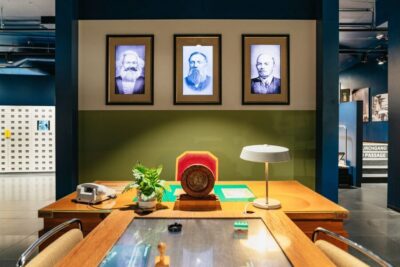 ★ 4.3Berlin: DDR Museum TicketsFrom $153,443 reviews
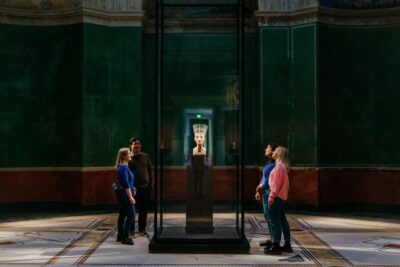 ★ 4.6Berlin: Neues Museum Entry TicketFrom $163,261 reviews
 ★ 4.4Berlin: Charlottenburg Palace Entry TicketFrom $222,076 reviews
 ★ 4.4Berlin: Museum Island Multiple Museum Entry TicketFrom $272,007 reviews
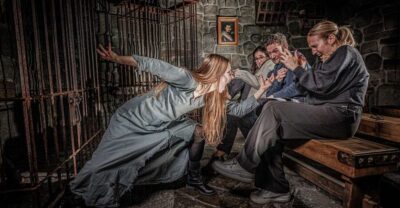 ★ 4.5Berlin Dungeon: Entrance TicketFrom $281,918 reviews
 ★ 4.4Berlin: Panoramapunkt Skip-the-Line Elevator TicketFrom $151,219 reviews
 ★ 4.7Berlin: Neue Nationalgalerie Entry TicketFrom $231,212 reviews
Other lists this tour is on