

REVIEW · TICKETS
Berlin: Deutschlandmuseum – Flexible Entrance Ticket
Two thousand years, told in hands-on scenes. Deutschlandmuseum in Berlin makes German history feel active, with interactive turning-point stagings paired with period exhibits. I especially like the separate entrance that helps you avoid the line, and I also like how the setup uses lots of different ways to explain what happened, not just text on a wall. One thing to consider, though, is that if you come at a busy time, the museum can feel crowded, and that can cut down on the fun.
The ticket is straightforward for a one-day visit, and the experience is built for variety across twelve historical eras. The downside is also part of the trade-off: it may not satisfy everyone who wants strict, ultra-detailed historical depth in every moment.
In This Review
- Key Highlights You Should Know Before You Go
- Deutschlandmuseum in Berlin: What You’re Really Buying With This Ticket
- Your 1-Day Route Through Twelve Eras of German History
- Starting Point: Battle of Varus
- The Middle Eras: How Each Turning Point Is Presented
- Final Stop: 2006
- What Makes the Experience Feel Different From a Typical Museum
- Skip-the-Line Entry and Flexible Timing: How to Plan Your Visit
- Best Times, Best Visitors, and Family-Friendliness
- Ticket Value: Is $30 Worth It for a 1-Day Museum Visit?
- What to Focus On Inside the Museum (So You Leave With More Than Photos)
- Should You Book Deutschlandmuseum in Berlin?
Key Highlights You Should Know Before You Go
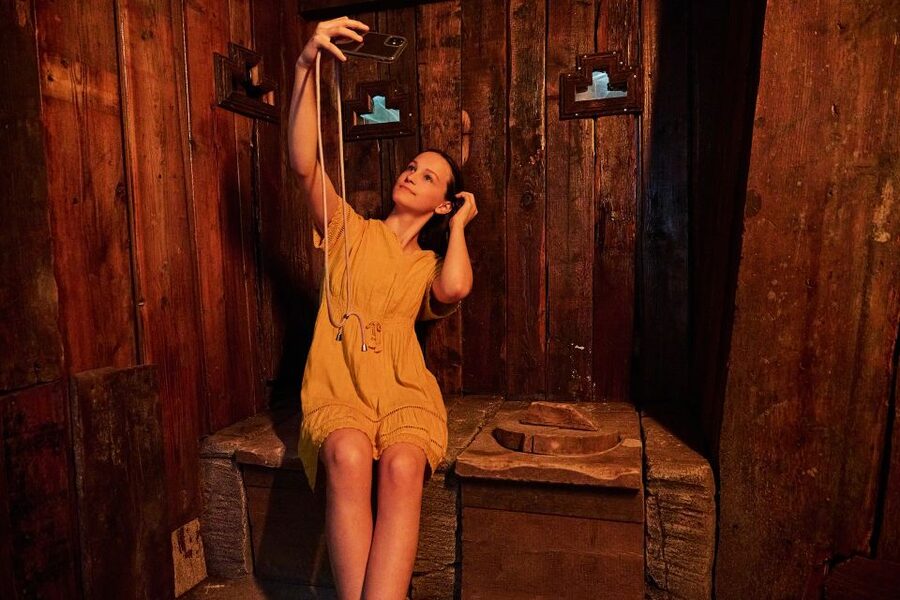
- 2,000 years, twelve eras, from the Battle of Varus to 2006
- Interactive media plus period exhibits tied to each turning point
- Skip-the-line entry through a separate entrance
- Designed to feel fun, not just instructional
- Works well for kids too, with history explained in an easier way
Undecided? The closest Berlin write-ups we have are these.
- Berlin: Reichstag, Dome and Government District Guided Tour★ 4.7 · 18,288 reviews
- Berlin: 1-Hour City Tour by Boat with Guaranteed Seating★ 4.3 · 16,993 reviews
- Berlin: Boat Tour Along the River Spree★ 4.4 · 11,252 reviews
- Discover Berlin Half-Day Walking Tour★ 5.0 · 9,624 reviews
Deutschlandmuseum in Berlin: What You’re Really Buying With This Ticket

For $30 per person, you’re not just paying to walk into a museum. You’re buying a one-day entry to an experience that focuses on storytelling through interactive displays and physical staging of historical turning points. The big practical win is the “no waiting in line” approach, using a separate entrance, so you can spend your time inside instead of standing around outside.
This is also a good way to understand German history without treating it like homework. The museum organizes the past into twelve eras, each tied to important moments. You start with the Battle of Varus and end with 2006, so you get a clear sweep across centuries rather than getting stuck in one period.
What I like most about that approach is that it helps you build a timeline in your head. Even if you do not know much going in, the museum gives you structure first, then you can “zoom in” with the interactive elements and the period items.
Your 1-Day Route Through Twelve Eras of German History
The Deutschlandmuseum is set up as a walk-through journey. Instead of one single grand gallery, you move through staged areas representing major turning points across twelve eras. Each era includes a dramatic display of the moment, then supports it with historical exhibits from the period, plus interactive media that changes how you learn.
Starting Point: Battle of Varus
You begin at the Battle of Varus, which anchors the early part of the story. This is a smart opening because it signals that the museum is not only about modern Germany. It is about earlier layers too, which matters if you want the long view rather than just the 20th century.
In practical terms, this is where you should slow down. Look closely at the staging, then use the interactive parts if they are available. Early on, your brain is calibrating. If you rush right away, later sections will feel less connected.
The Middle Eras: How Each Turning Point Is Presented
After the opening, you go through intervening eras that each highlight a historical turning point. The museum’s key formula stays consistent:
- a detailed staging of the moment
- exhibits connected to the period
- interactive media that adds another way to understand what you are seeing
I like this repeated pattern because it reduces confusion. You do not have to figure out how the museum works while you are already in the middle of the story. It’s also a good format if you are visiting with mixed interests, because some people gravitate to the objects, others to the interactive screens or media.
One practical tip: if you find your attention drifting, switch tactics. Spend two or three minutes reading what is presented in the era, then jump to the interactive element and come back. That back-and-forth helps keep the learning active.




Final Stop: 2006
The endpoint is 2006, described as a summer fairy tale. Ending here helps because it brings the timeline closer to recent memory. You are not leaving with only old-world vibes. You leave with a sense that modern Germany also has moments people lived through, discussed, and remembered.
If you tend to get tired in museums, this is a good place to pick up energy. You likely will feel less “cultural distance” in the closing section than in the early centuries.
What Makes the Experience Feel Different From a Typical Museum
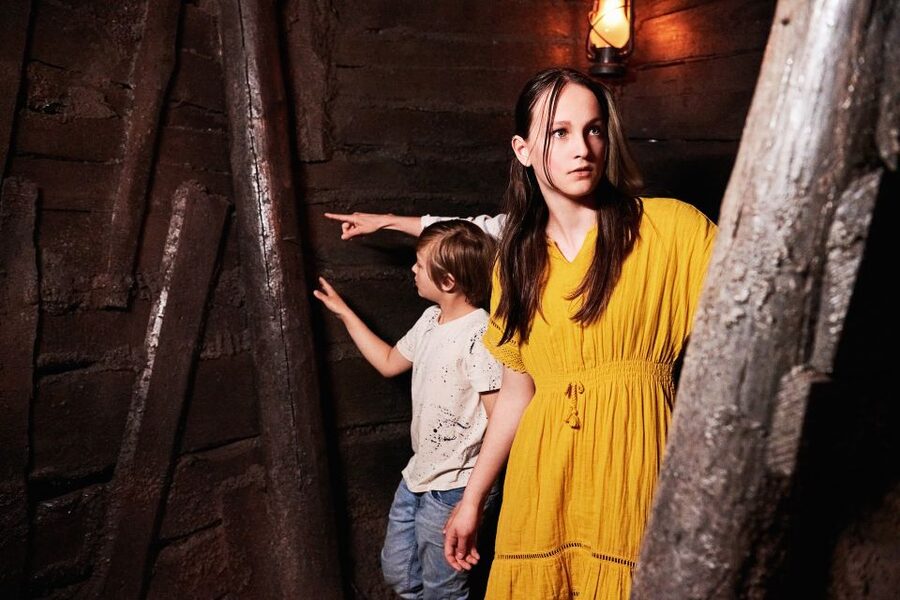
Deutschlandmuseum does not rely purely on glass cases and wall labels. The museum pairs physical reenactments or stagings with period exhibits and interactive media. That combo matters because it gives you multiple learning angles in one place.
One person’s idea of fun is another person’s “too simplified,” so you should know where this sits. Based on the most positive feedback, the displays are seen as vivid and varied, and the history feels easier to grasp. One review specifically calls the idea interesting and varied, with history explained in a way that works for kids too. Another positive point is the atmosphere, which makes it feel more like an activity than a lecture.
At the same time, one mixed review hints at the trade-off: it may not feel historical in deep, academic detail to everyone. If you are the type who wants scholarly nuance at every step, you might finish wishing for more depth in the interpretation. In that case, treat the museum as a strong starting map, then follow up with your own reading later.
Skip-the-Line Entry and Flexible Timing: How to Plan Your Visit
This ticket is designed around convenience. You get entry to Deutschlandmuseum with no waiting in line by using a separate entrance, and you do not need pre-registration. It is also valid for 1 day, so you can choose a time that fits your Berlin schedule.
Here’s how to use that flexibility well:
- Pick a starting time when you are less likely to be stressed. If you are already running late in Berlin, this museum will not magically fix that.
- If you prefer a calmer experience, consider visiting at a quieter hour rather than peak times. One review complains about it being too full and not enjoyable, which is a hint that crowding can affect the vibe.
- Give yourself real time. Even though it’s a one-day ticket, you should not treat it like a 45-minute stop. The interactive media and the period exhibits reward a slower walk.
If you want a smooth day, pair this museum with other nearby activities in your itinerary rather than stacking it right after a long, exhausting commute. The museum experience is better when you have enough mental energy to switch between “look” and “interact.”
Best Times, Best Visitors, and Family-Friendliness

This is a Berlin history stop that tends to work for a wide range of travelers. The strongest feedback points to an atmosphere that can include children, and to history that is easy to understand. So if you are traveling with kids, this is one of those places where you do not have to keep translating the past yourself.
It also works well for adults who:
- want a clear overview of German history across centuries
- prefer interactive learning over purely reading panels
- like variety, not just one era
Where it might be less ideal:
- If you expect deep scholarly detail at every turning point, the format may feel more like an approachable interpretation than a heavyweight history course.
- If you hate crowds, do not gamble on peak hours. One negative review directly mentions too many people and lower enjoyment.
My practical recommendation: match your expectations to the format. If you want history presented clearly, with lots to see and do, you will likely be happy. If you want textbook-level detail, plan to pair the visit with extra reading afterward.
Ticket Value: Is $30 Worth It for a 1-Day Museum Visit?
At $30 per person, the value question comes down to what you get beyond the door entry.
You get:
- entry to Deutschlandmuseum
- skip-the-line entry via a separate entrance
- flexible appearance without pre-registration
- a 1-day validity window
That matters in real life. Skip-the-line is not just a convenience perk. It protects your time. In a city like Berlin, the ability to start when you want is part of the value.
Then there is the content value. You are getting twelve eras and a wide historical range, from early Roman-era conflict to a modern reference point in 2006. If that broad sweep is what you came for, this price can feel reasonable because you are not paying for a narrow exhibit.
Where value might feel lower:
- If you expected a deeper, more academic approach, you may feel you wanted more interpretive detail. That is not a fault of the museum, it’s a mismatch of expectations.
What to Focus On Inside the Museum (So You Leave With More Than Photos)
If you do not want this to turn into a quick “walk-through,” use a simple strategy.
1) Pick one or two eras to really study
In the big timeline, you do not need equal attention everywhere. Choose the sections that connect to your interests. For example, the starting point at Battle of Varus and the ending at 2006 are both anchors worth extra time.
2) Switch between exhibits and interactive parts
The museum blends period exhibits with interactive media. If you only do one mode, you lose half the learning. When you get bored with screens, look at objects. When objects feel slow, use the interactive element and then return to the staging.
3) Read the context once, not repeatedly
If you re-read every label, you will burn time. Instead, read the main context, then let the interactive media reinforce it.
4) If you feel crowded, shorten your stops
One mixed review mentions it being too full and not enjoyable. If crowding hits, do not fight it. Pick the most interesting displays for you and keep moving.
Should You Book Deutschlandmuseum in Berlin?
Yes, I think this is a strong booking choice if you want an easy, active way to understand Germany’s timeline. It is a good fit for families, for adults who learn best through visuals and interaction, and for anyone who wants a structured overview across twelve eras.
Hold back if you are chasing deep, detailed historical interpretation at every moment, or if you are very sensitive to crowds. In that case, consider visiting at a quieter starting time if you can, or use the museum as a first step and then plan additional reading afterward.
If your goal is clarity, variety, and a museum that feels like an activity, Deutschlandmuseum is the kind of place that makes Berlin history click.
Everything else we filed on Berlin
- East Berlin: City of Shadows Walking Tour
★ 5.0 · 11 reviews - Berlin: Die Stachelschweine – Frank Lüdecke – Träumt Weiter
★ 4.7 · 11 reviews - Potsdam Day Trip from Berlin with a Local: Private & Personalized
★ 4.0 · 11 reviews - An Introduction to Berlin Walking Tour
★ 5.0 · 11 reviews - DJ for a Day: Learn to Mix Like a Pro in Berlin
★ 5.0 · 11 reviews - 2-H Segway Sightseeing Tour Berlin
★ 4.5 · 11 reviews
Tickets, side by side.
 ★ 4.7Dresden: Semperoper Tickets and Guided TourFrom $1812,102 reviews
 ★ 4.5Berlin: Jewish Museum Berlin Entrance TicketFrom $08,393 reviews
 ★ 4.6Berlin: Berlin Story Bunker Entry TicketFrom $216,759 reviews
 ★ 4.7Hamburg: Hamburg Dungeon Admission TicketFrom $335,745 reviews
 ★ 4.3Munich Hop-On Hop-Off Tour: 1-Day or 2-Day TicketFrom $274,161 reviews
 ★ 4.1Berlin: Illuseum Berlin Entrance TicketFrom $183,970 reviews
 ★ 4.6Berlin: Madame Tussauds Admission TicketFrom $253,941 reviews
 ★ 4.3Berlin: DDR Museum TicketsFrom $153,443 reviews