
REVIEW · BERLIN
Berlin: Guided Walking Tour around the Reichstag
Berlin’s government district tells a story in real space. I love how this 2-hour walk links today’s power to Berlin’s old Wall line along the Spree, right where politics happens in plain sight. Reichstag-area buildings come alive through guide-led explanations, so you don’t just see landmarks, you understand why they’re there and how they function.
I also really like the range of topics the guide brings up along the route, from how the Bundestag works to how the Chancellor meets guests. You may even hear examples from guides such as Stefan, who shared a personal East Berlin perspective before the Wall came down, with humour that kept the group engaged. One drawback to plan for: there is no interior tour of the Reichstag or the Chancellery, so your visit stays focused on exteriors and the surrounding government district.
In This Review
- Key highlights to look for
- A 2-hour government district walk that connects old Berlin and today
- Finding your start point at Paul-Löbe-Allee and Konrad-Adenauer-Straße
- German Chancellery: power explained from the sidewalk
- Swiss Embassy and the logic of the neighborhood
- Paul Löbe House: the parliament you can sense, even from outside
- White Crosses and Marshall-Brücke: symbols near the Spree
- ARD Hauptstadtstudio Berlin: where politics meets media
- Verwaltung des Deutschen Bundestages and Jakob-Kaiser-Haus: how the work actually runs
- Reichstag exterior time: architecture, representation, and what you can see
- Timing and pace: why 10 minutes per stop works
- Price and value: $234 per group up to 30
- Who this tour is best for
- Should you book this Reichstag government district walking tour?
- FAQ
- How long is the guided walking tour around the Reichstag?
- Where do I meet the guide?
- Is this tour private?
- What is the group size limit?
- Is there an interior tour of the Reichstag or the Chancellery?
- Which languages are available?
- What stops are included on the walk?
- Does the tour include a guide?
- Is the tour wheelchair accessible?
- Is cancellation allowed, and how far in advance?
Key highlights to look for
- Government district storytelling on the street: how politics is made and communicated around the Reichstag
- Wall strip and Spree viewpoints: the route ties Berlin’s division past to present-day institutions
- Many short, focused stops: about 10 minutes per landmark to keep momentum in a 2-hour window
- Art and daily-work details: the guide connects culture, representation, and real parliamentary routines
- Exteriors only, by design: you get context without entering the Reichstag or Chancellery
Other ways into the Reichstag and the government quarter
- Berlin: Reichstag, Dome and Government District Guided Tour★ 4.7 · 18,288 reviews
- Berlin: Government District around the Reichstag Guided Tour★ 4.7 · 8,447 reviews
- Berlin: Reichstag, Plenary Chamber, Cupola & Government Tour★ 4.6 · 8,422 reviews
- Berlin: Government District Tour and Reichstag Dome Visit★ 4.6 · 4,254 reviews
A 2-hour government district walk that connects old Berlin and today
This tour works because it is built for understanding, not sightseeing. You walk through Berlin’s central decision-making zone and get the context for what you’re seeing, including how the institutions fit into modern Germany.
I like the pace because it respects your attention span. With a duration of 2 hours and multiple short stops, you get a steady rhythm of answers to the big questions people usually have: how the Bundestag operates, what “representation” looks like in parliament architecture, and why this area feels both official and human.
The route is also emotionally grounded. You’re not just in an office district, you’re near the older Berlin Wall line along the Spree, which gives the stories more weight as you move from one building to the next.
Finding your start point at Paul-Löbe-Allee and Konrad-Adenauer-Straße
You’ll meet at the intersection of Paul-Löbe-Allee and Konrad-Adenauer-Straße, next to the subway exit Bundestag (U5) exit D, in front of the elevator. That matters, because this area can feel confusing if you’re walking in from the wrong side.
This is a live guided tour in English or German, and it is offered as a private group. Private group format usually means less waiting around and more chance for your guide to adjust explanations to your group’s pace and interests.
Also, take note of the “no interior” rule. Since you won’t go inside the Reichstag or the Chancellery, plan your expectations around exteriors, exterior perspectives, and the guide’s storytelling that connects buildings, institutions, and symbolism.
German Chancellery: power explained from the sidewalk
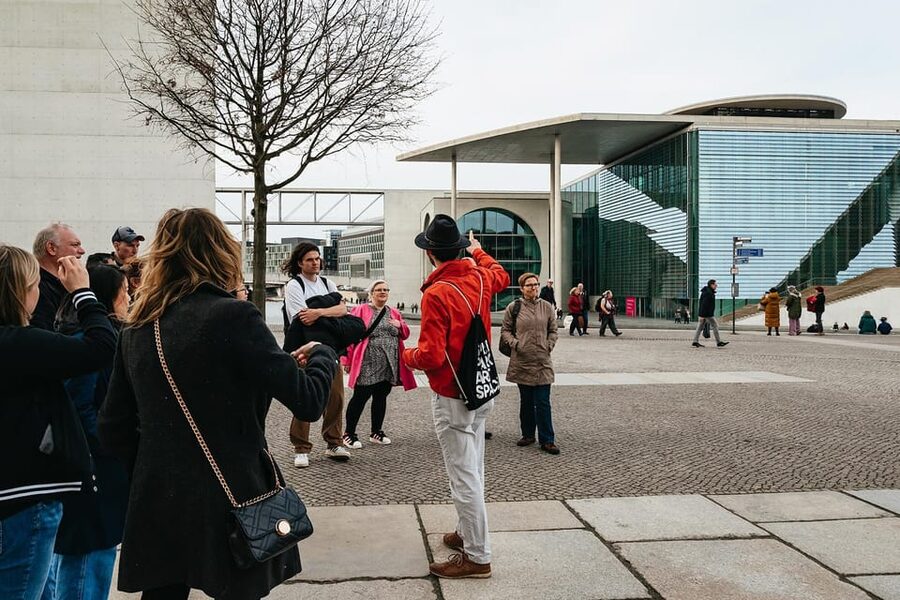
The tour begins with a stop at the German Chancellery, where you get a short guided introduction. Even in those 10 minutes, the focus is practical: what happens here and what the building represents in how Germany communicates leadership.
This is where the guide’s job starts to feel different from basic monument talk. Instead of listing facts, the guide connects roles to space, including questions like where the Chancellor meets with guests and how state work gets carried out in this setting.
If you like understanding how governments actually function, this opening leg is a strong start. You’re given context early, so later stops about parliamentary operations and communication make more sense.
Swiss Embassy and the logic of the neighborhood
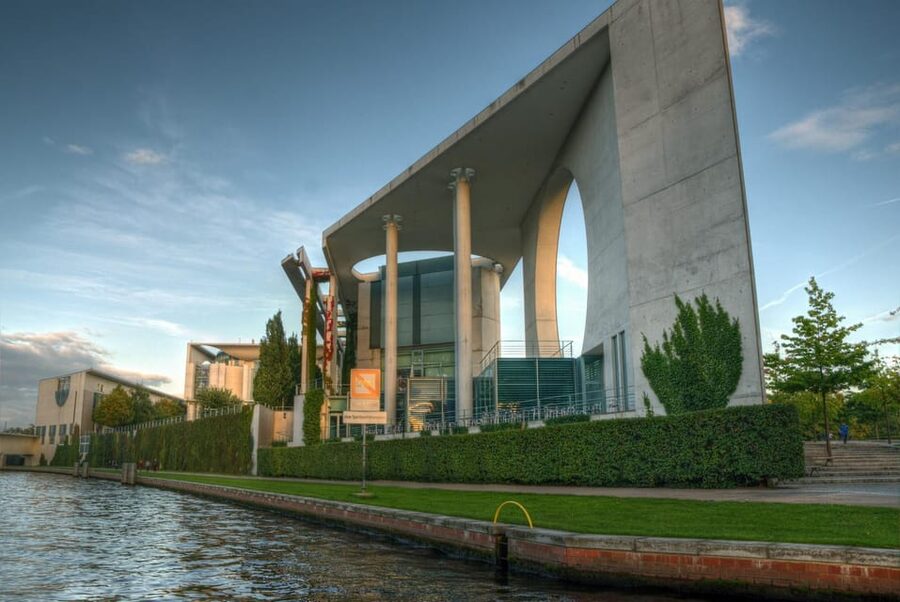
Next you’ll pass the Swiss Embassy as part of the government-district flow. On paper, it can sound like just another building, but the value here is how the guide uses it to frame the neighborhood.
Government districts are rarely only about one institution. They’re networks: diplomacy, media, administration, and law all sit close enough that you can feel the concentration of national decision-making. This stop supports that idea, even though you’re not going in anywhere.
I like that the tour keeps you moving, because it helps you read the whole layout. You’re learning how the area functions as a system, not just collecting separate sights.
Other walking routes through Berlin

Paul Löbe House: the parliament you can sense, even from outside
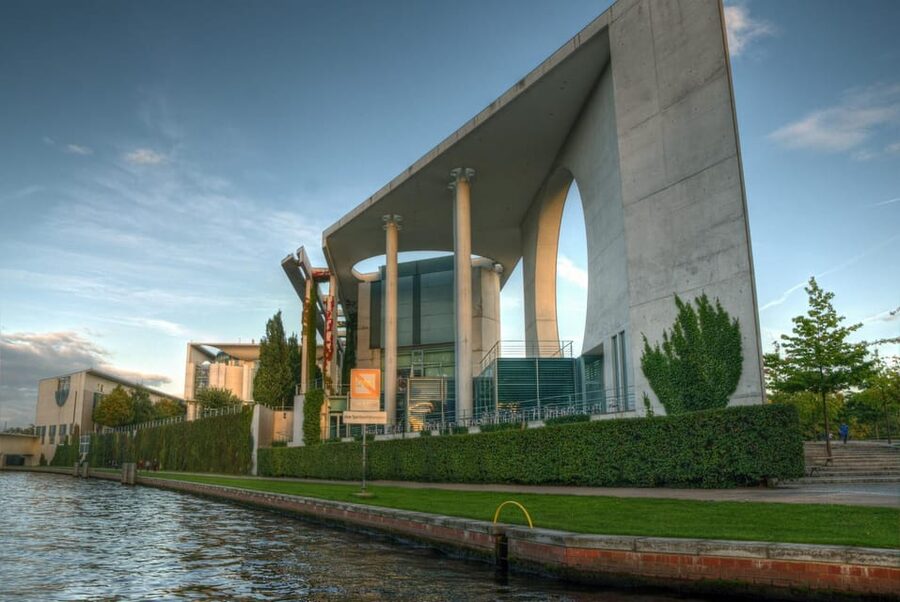
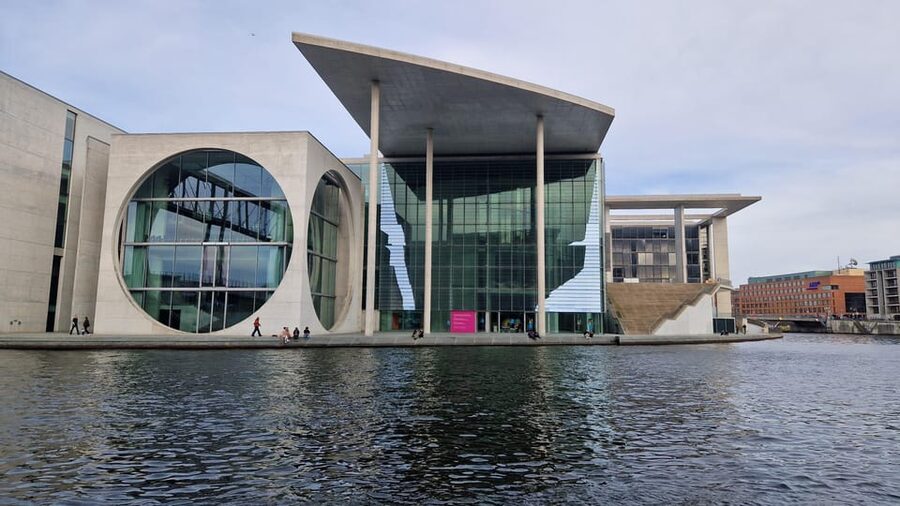
The Paul Löbe House is next, again with a guided segment. This building is part of the larger parliamentary complex, and the guide uses it to explain where parliamentary work happens and how it relates to the Reichstag area.
What I appreciate here is the emphasis on “how things work,” not just “what it is.” The tour description highlights explanations about how the Bundestag works and how politics is communicated, and the Paul Löbe House stop is a natural place for that conversation.
Even without entering, the guide can still connect the dots. You get a better sense of the everyday parliamentary reality, not just the ceremonial side people often associate with the word Reichstag.
White Crosses and Marshall-Brücke: symbols near the Spree
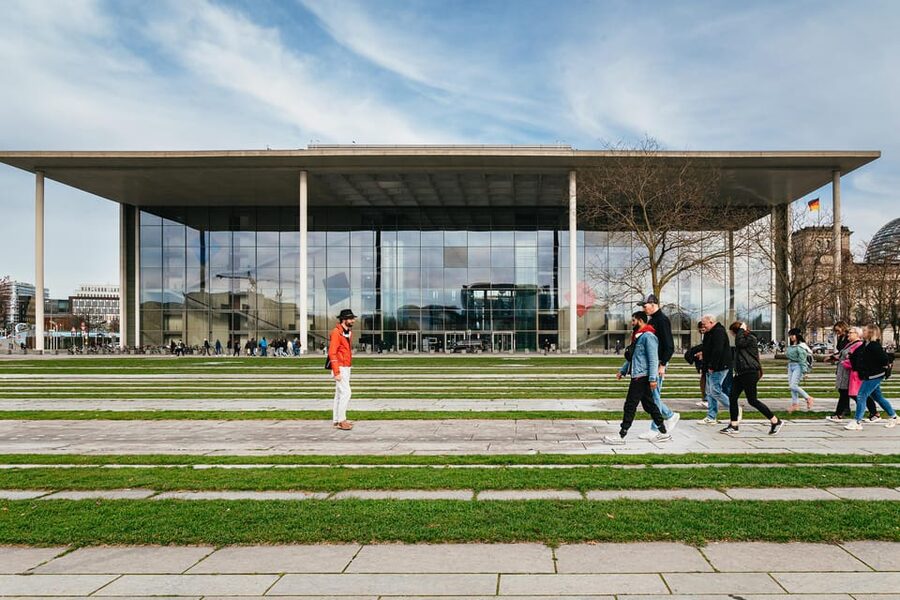
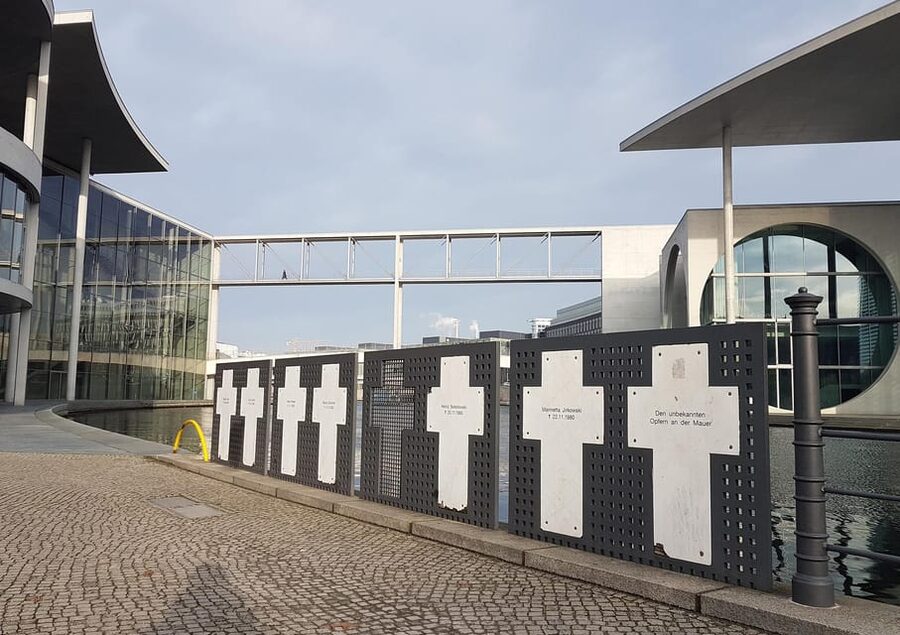
When the route hits the White Crosses and then continues toward Marshall-Brücke, the mood shifts from administrative to symbolic. This is also where the Spree and the Wall strip connection becomes more than a phrase.
The guide’s job here is to attach meaning. You’ll hear stories behind the buildings and the environment, including how Berlin’s division shaped the area and how the present institutions sit with that past.
The Marshall Bridge stop is useful for orientation, too. Bridges in these districts tend to act like visual connectors, helping you understand how different parts of the government zone relate to the water and the surrounding city grid.
ARD Hauptstadtstudio Berlin: where politics meets media
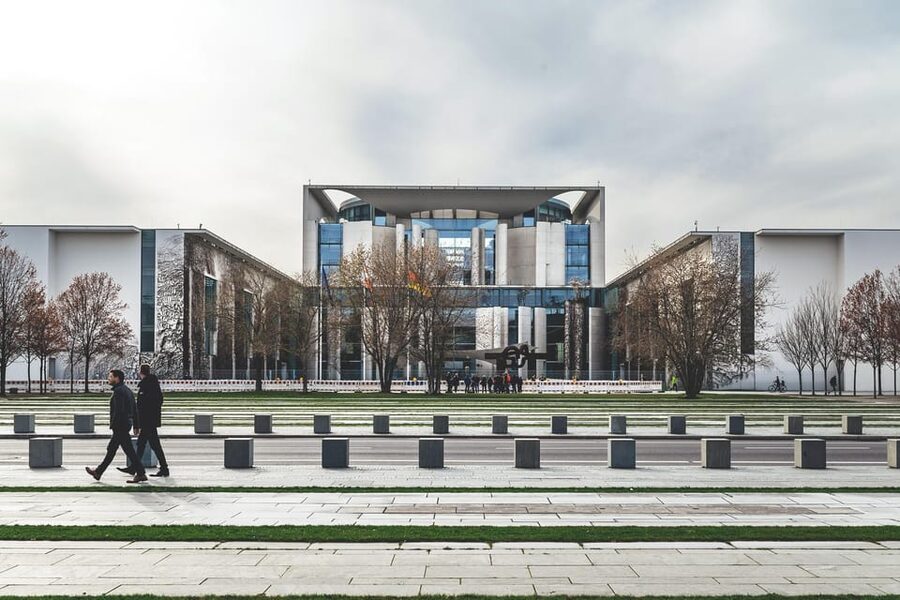
One of the most interesting stops is the ARD Hauptstadtstudio Berlin. This is where the tour acknowledges a reality people often forget: politics is not just made in rooms, it is also broadcast, explained, and debated through media.
The guide uses the area around the studio to talk about how politics is communicated. If you’ve ever wondered how parliamentary decisions turn into news stories you recognize, this kind of stop helps you see the machinery behind the scenes.
It also changes the tone of the walk. You’re not only thinking about government buildings, you’re thinking about the public-facing side of power, and how images and messages move outward.
Verwaltung des Deutschen Bundestages and Jakob-Kaiser-Haus: how the work actually runs
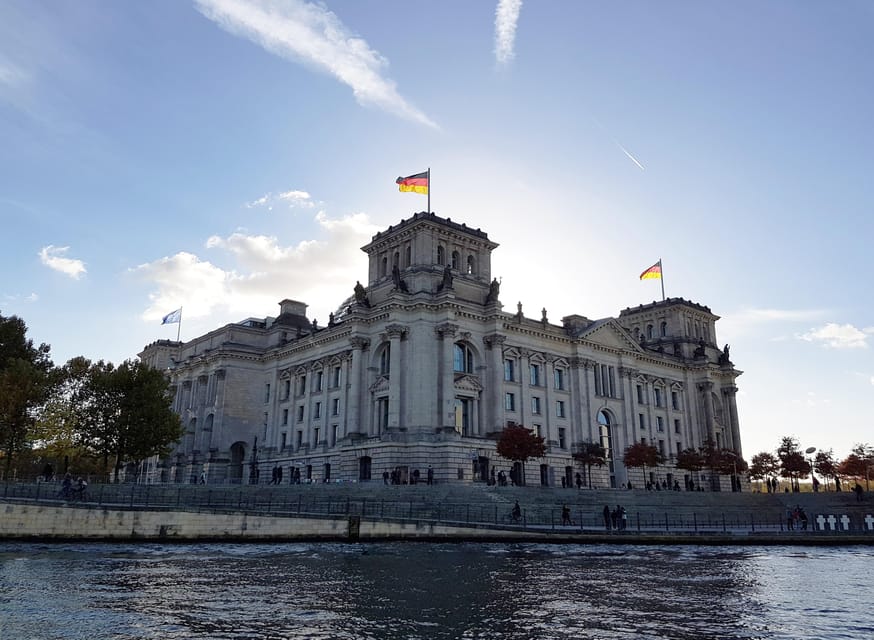
Later, you’ll pass by the Verwaltung des Deutschen Bundestages and then the Jakob-Kaiser-Haus. These stops matter because they represent the administrative and operational backbone of parliament.
From the outside, it’s easy to assume a big institution is mostly offices and ceremonies. The guide’s perspective corrects that by tying these buildings to practical questions: how parliamentary processes keep running, where daily responsibilities fit in, and how architecture supports function.
This is also where the tour’s more human details come in. The tour description mentions stories about art in the government district, and even points like where MPs go to eat. Those kinds of specifics may sound small, but they make the area feel less like a distant symbol and more like a lived workplace.
Reichstag exterior time: architecture, representation, and what you can see
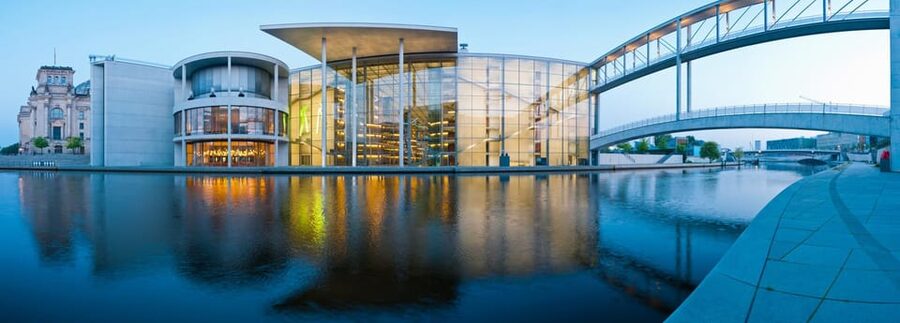
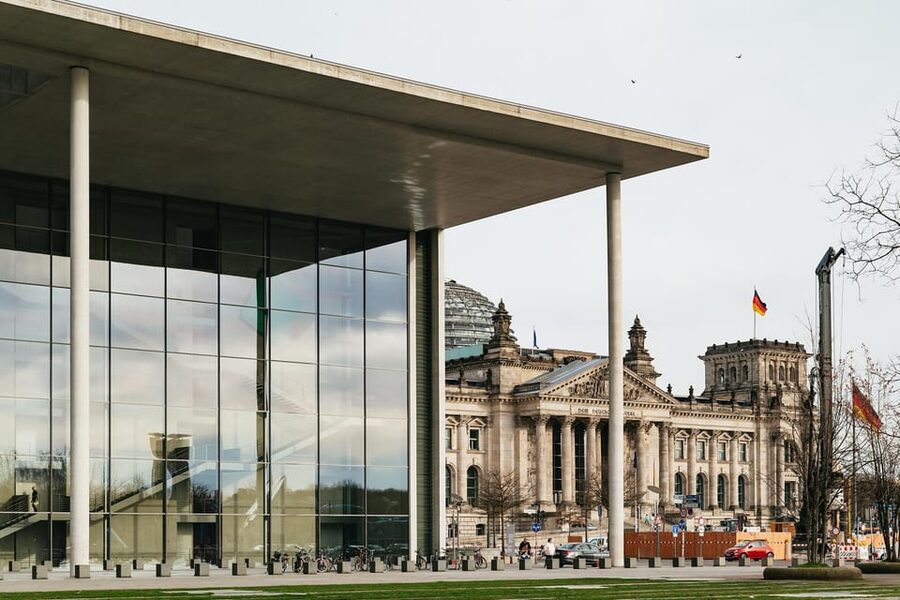
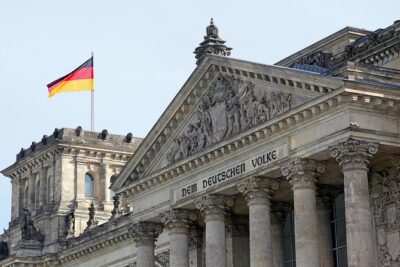
The final big stop is the Reichstag, with a guided look from outside. Because you won’t enter the building, you’ll want to focus on what the guide helps you notice: how parliament architecture communicates ideas about a working democracy.
The tour description points toward big interpretive themes, like whether a parliament has to be representative and what typical architecture for a working parliament looks like. The guide also connects the Reichstag to how politics unfolds around it, so the building becomes part of a broader explanation, not a stand-alone postcard.
If you’re the type of visitor who likes context, this last segment tends to land well. The earlier stops give you the vocabulary, and then the Reichstag gives you the scale.
One more thing to keep in mind: while there is no interior tour as part of the standard experience, you might hear about special situations on certain dates. For example, one recent guide experience included access to more rooms during a 75 Democratie feest occasion. Don’t count on it every day, but it shows the tour can sometimes connect to larger civic moments.
Timing and pace: why 10 minutes per stop works
The tour breaks the route into short, guided segments, with about 10 minutes per major stop and a total duration of 2 hours. That structure is there for a reason.
In a place like the Reichstag government district, attention can drift. Short stops keep you from zoning out in front of another impressive facade, and it makes it easier to absorb the guide’s explanation while your brain still remembers what you just saw.
It also means you get a lot of ground in a short time, including a walk along the Spree and the Wall strip. That’s a big part of the value: you’re seeing a connected area, not isolated monuments.
Price and value: $234 per group up to 30
The price is $234 per group for up to 30 people, with a 2-hour duration. So the math depends on your group size.
At the top end of 30 people, the cost works out to about $7.80 per person, which is strong value for a live guide in a central government district. Even if your group is smaller, you’re still paying for one guide to lead multiple perspectives, and the tour includes the guide throughout.
What makes this good value is not only the number of stops. It’s the type of content: explanations about how the Bundestag works, where the Chancellor meets guests, whether there are tunnels, and how art and architecture fit into political life. Those are the kinds of stories you can’t easily assemble by yourself just from signage.
If you’re coming with family, friends, or a small group that wants context without spending a full day, this is a sensible way to make the most of a limited time window.
Who this tour is best for
This is a great fit if you want more than photos. You’ll likely enjoy it if you like political context, architectural meaning, and human stories tied to real places.
It also works for different learning styles. Some visitors prefer straightforward facts, others want narrative. The guide format leans into entertaining storytelling, and reviews specifically highlight how guides like Stefan combined humour with personal East Berlin context to keep people engaged.
If you strongly prefer museum-style access, though, you might feel limited. Since there is no interior tour of the Reichstag and Chancellery, this is best approached as an exterior walking explanation of the government district.
Should you book this Reichstag government district walking tour?
Yes, I think you should book it if you want an efficient, guide-led way to understand Berlin’s government district in about 2 hours. The strongest reasons are the exterior storytelling on a meaningful route along the Spree and the Wall strip, plus the range of topics that goes beyond headlines.
If your top goal is inside access to iconic rooms, then this probably won’t satisfy you, since the standard experience keeps things outside. But if you’re curious about how Germany’s political system is organized, how media and parliament connect, and what buildings communicate about democracy, this is a smart, good-value choice.
FAQ
How long is the guided walking tour around the Reichstag?
It lasts 2 hours.
Where do I meet the guide?
Meet at the intersection of Paul-Löbe-Allee and Konrad-Adenauer-Straße, next to the subway exit Bundestag (U5) exit D, in front of the elevator.
Is this tour private?
Yes, it is listed as a private group tour.
What is the group size limit?
The price is per group up to 30 people.
Is there an interior tour of the Reichstag or the Chancellery?
No. There is no interior tour of the Reichstag and Chancellery.
Which languages are available?
The live guide is available in English and German.
What stops are included on the walk?
The tour includes stops at the German Chancellery, Swiss Embassy, Paul Löbe House, White Crosses, Marshall Bridge, ARD Hauptstadtstudio Berlin, Verwaltung des Deutschen Bundestages, Jakob-Kaiser-Haus, and the Reichstag.
Does the tour include a guide?
Yes, the guide is included.
Is the tour wheelchair accessible?
Yes, it is listed as wheelchair accessible.
Is cancellation allowed, and how far in advance?
Free cancellation is available up to 24 hours in advance for a full refund.
Pavements of Berlin
Around the Reichstag
Everything else we filed on Berlin
- Private Photo Tour in Kreuzberg
★ 5.0 · 3 reviews - Kreuzberg Private Walking Tour: Immigrants, Artists & Hipsters
★ 5.0 · 3 reviews - Berlin’s Jewish Heritage: Private Tour of the Vibrant Jewish District
★ 5.0 · 3 reviews - Individual city tour Berlin for max. 8 persons
★ 5.0 · 3 reviews - Berlin & The Third Reich Private Guided Tour
★ 5.0 · 3 reviews - Private Analogue Photography Experience in Berlin
★ 5.0 · 3 reviews
Reichstag and Government Quarter Tours, side by side.
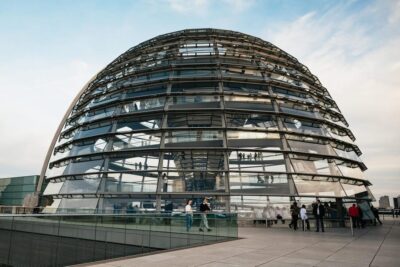 ★ 4.7Berlin: Reichstag, Dome and Government District Guided TourFrom $1818,288 reviews
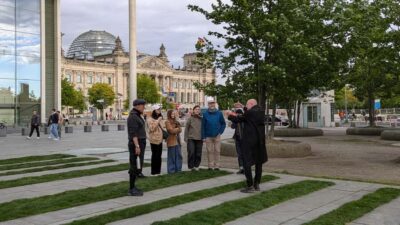 ★ 4.7Berlin: Government District around the Reichstag Guided TourFrom $2848,447 reviews
 ★ 4.6Berlin: Reichstag, Plenary Chamber, Cupola & Government TourFrom $188,422 reviews
 ★ 4.6Berlin: Government District Tour and Reichstag Dome VisitFrom $454,254 reviews
 ★ 4.7Berlin: Government Quarter Tour and Reichstag Dome VisitFrom $193,893 reviews
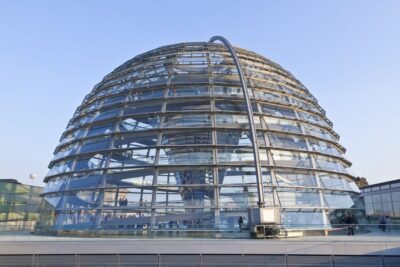 ★ 4.8Berlin: Private Reichstag and Glass Dome TourFrom $2882,226 reviews
 ★ 4.6Berlin: Rooftop Breakfast at Käfer Restaurant ReichstagFrom $461,828 reviews
 ★ 4.6Rooftop Aperitif at Reichstag Käfer RestaurantFrom $501,370 reviews
Other lists this tour is on