
REVIEW · 2-HOUR EXPERIENCES
Berlin Highlights in 2 Hours: Express Walking Tour
Berlin can feel heavy fast. This 2-hour express walk turns the center of Berlin into a clear, guided story from the Cold War to the Holocaust. You start at Pariser Platz and end at Checkpoint Charlie, hitting major landmarks you would otherwise zigzag for on your own.
I love how much ground you cover without feeling rushed, especially with a small group capped at 25. I also love the way the guides bring structure to the hard topics, with names like Ryan, Gregor, Dylan, and Giles showing up repeatedly for being clear, friendly, and willing to answer questions.
One thing to consider: this route is intense. You will spend meaningful time at memorials and Nazi sites, and each stop is brief, so you will want to be ready for a fast, reflective pace.
In This Review
- Key highlights worth your time
- A fast walk that connects Cold War lines to Holocaust remembrance
- Meeting at Pariser Platz, then walking into central history
- Stop 1: Brandenburger Tor and Pariser Platz, unity in stone
- Stop 2: The Reichstag building, from Weimar to today
- Stops 3 and 4: Sinti and Roma memorial, then the Memorial to the Murdered Jews of Europe
- Stop 5: Fuhrerbunker, Hitler’s last days and Germany’s facing of the past
- Stop 6: The former Aviation Ministry, Nazi-era architecture repurposed
- Stop 7: Niederkirchnerstraße and the Berlin Wall escape stories
- Stop 8: Topography of Terror, where SS and Gestapo worked
- Stop 9: Checkpoint Charlie, Cold War border drama and espionage
- Price and value: what $21.77 really buys you
- The guides make it work, and you will notice the difference
- Who should book this express Berlin highlights walk
- What to do after: turning the remaining hours into your own day
- Should you book Berlin Highlights in 2 Hours?
- FAQ
- How long is the Berlin Highlights in 2 Hours express walking tour?
- Where does the tour start and where does it end?
- Is the tour offered in English, and do I get a mobile ticket?
- Do the stops require paid admission?
- How large is the group?
- Is free cancellation available?
Key highlights worth your time
- Nine major stops in two hours, from Brandenburger Tor to Checkpoint Charlie
- Free admission listed at each stop, so you are not paying extra to see the sights along the way
- English narration with a guide who keeps the pace workable and answers questions
- Small group feel, so you get more attention than on huge coach tours
- A guided story that connects Cold War divisions to Nazi-era persecution and remembrance
- Mobile ticket that makes it easy to start without fuss
Other walking routes through Berlin
- Berlin: Third Reich and Cold War 2 Hour Walking Tour★ 4.9 · 6,830 reviews
- Berlin: Discover Berlin Walking Tour★ 4.9 · 5,998 reviews
- Berlin’s Best: 2 Hour Walking Tour Third Reich and the Cold War★ 5.0 · 5,486 reviews
- Berlin: Hidden Backyards Guided Walking Tour★ 4.8 · 5,360 reviews
A fast walk that connects Cold War lines to Holocaust remembrance

If Berlin is your first stop in Germany, you can end up with a pile of photos and no clear storyline. This tour fixes that. It is built like a timeline you can walk, with stops that move you through German history’s hardest chapters without making you hunt for context.
The express format matters. In two hours, you still get the big landmarks, but you also keep your afternoon free. That is a real value in a city where the museums and memorials can eat an entire day if you let them.
The best part is not just what you see. It is how the guide ties the places together, so each stop feels like a piece of one larger story. You will look at buildings and squares and understand why they mattered, and why Germany remembers them the way it does today.
Meeting at Pariser Platz, then walking into central history
You meet at Pariser Platz 1, right by the Brandenburg Gate area. This is a smart start because it puts you in the thick of central Berlin, with easy access to public transportation and room to regroup before the walk begins.
The tour uses a mobile ticket, which is practical in a city where you may already be juggling transit tickets, museum tickets, and a pocket full of receipts. Service animals are allowed, and the walk is described as possible for most travelers, which helps if you want something that is not overly complicated.
One practical tip for your comfort: Berlin sidewalks can be uneven around older buildings and memorial areas. Wear shoes you can walk in for two hours, not just photos in. The tour is short, but your feet will still do the work.
Stop 1: Brandenburger Tor and Pariser Platz, unity in stone
You begin at Brandenburger Tor, a site that people use as shorthand for Berlin’s shifting identity. It is more than a famous photo spot. The guide helps you read it as a symbol tied to unity and peace, then contrasts that idea with how the city later split and how Germany faced its past.
From there, you stroll through Pariser Platz, with its neoclassical architecture shaping the atmosphere. This is a good warm up. Before you hit memorial ground, you get a sense of how central squares and government-adjacent streets were designed to project order and meaning.
Why this stop works on an express tour: it gives you a visual anchor. When you later see memorials and border-era points, you will be able to connect them to where the city thinks it came from and where it went.
Stop 2: The Reichstag building, from Weimar to today
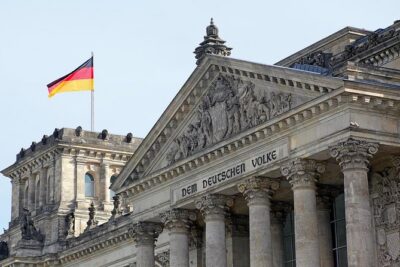
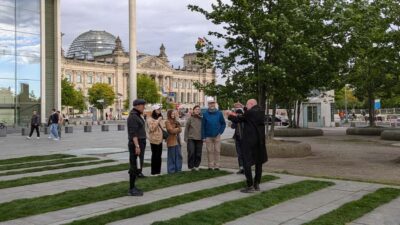
Next comes the Reichstag building, Germany’s parliamentary home. Even if you do not go inside, seeing it from the outside tells you a lot. It is the kind of architecture that looks permanent, which makes it easier for your guide to explain how political life has changed around it.
This stop is also where you start getting the “why now?” framing. The guide links the Reichstag’s role across time, including the shifts from the Weimar period to the present. You will learn to look at the building not as a single era’s symbol, but as a stage where Germany’s political story has been rewritten again and again.
A consideration here: because this is a two-hour tour with short segments, you only get a snapshot. If you want to spend a long time absorbing the parliamentary and architectural layers, you can treat this stop as a map, then add a separate visit later.
Stops 3 and 4: Sinti and Roma memorial, then the Memorial to the Murdered Jews of Europe
The walk turns somber quickly, and that is the point. You move toward the memorial honoring the Sinti and Roma victims of National Socialism, then continue to the Holocaust Memorial, the Memorial to the Murdered Jews of Europe.
These two stops are not just “see and move on” moments. The design of the sites pushes you into reflection. At the Sinti and Roma memorial, you learn why remembrance must include people targeted for reasons rooted in persecution and racist ideology, not only the most widely known narratives.
Then you enter the Holocaust Memorial experience itself, known for its concrete slabs that form a maze-like space. Your guide helps you understand why wandering through the installation can feel unsettling, because it is meant to communicate scale, disorientation, and loss in a way that plain explanations cannot.
If you are someone who processes emotions at your own pace, you might wish for more time. On an express tour, you do get the guidance to help you make sense of what you are feeling, but you do not get an extended sit-down moment. Still, the guide’s framing makes the brief time count.
Stop 5: Fuhrerbunker, Hitler’s last days and Germany’s facing of the past
After the memorials, you reach the area tied to Fuhrerbunker, the bunker associated with Hitler’s final days. Your guide explains what happened in the last phase of World War II, including Hitler’s suicide on April 30, 1945, and how that end played out around Berlin.
This stop can feel paradoxical, because it is about a place tied to violence and dictatorship, yet Berlin today treats the past as something to confront honestly, not cover up. Your guide connects the bunker story to the broader theme of how Germany reflects on devastating history in public memory.
One useful reason this stop belongs in an express walk: it bridges memorials and documents into a “how it ended” timeline. You leave with a clearer sense of what the Nazi era’s end looked like on the ground, even if you cannot and should not try to picture everything that happened.
Stop 6: The former Aviation Ministry, Nazi-era architecture repurposed
Next up is the former Reich Air Ministry and Luftwaffe headquarters, a striking reminder of how the Nazi regime used architecture for power. You then learn how the same location was later used by East Germany’s government, and how it is now home to the Federal Ministry of Finance.
This stop is easy to miss if you are only chasing iconic landmarks. On this tour, it becomes a lesson in repurposing, which is a big theme in Berlin. Buildings often outlast governments, and the city becomes a living document of which regimes rose, fell, and left traces behind.
You might find this part especially valuable if you like noticing how governments leave fingerprints on the urban environment. It is history you can touch with your eyes, not only history you read in a book.
Stop 7: Niederkirchnerstraße and the Berlin Wall escape stories
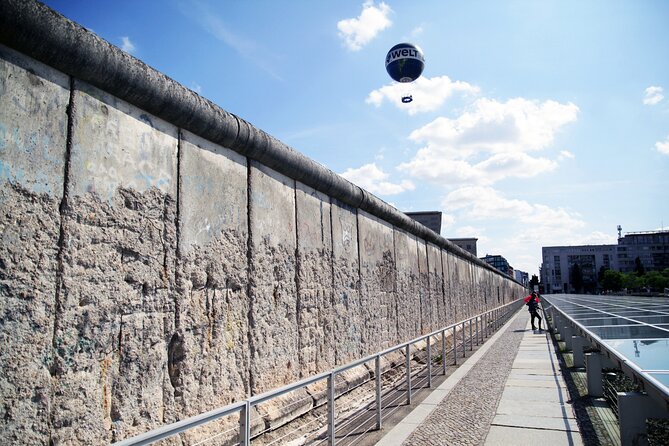
Now you reach Niederkirchnerstraße, where you see a preserved section of the Berlin Wall. This is one of the most human stops on the walk, because you hear stories about daring escape attempts, including successes and tragic failures.
The guide helps you understand daily life on both sides of a divided Berlin. It is not just about the dramatic escapes. It is about how division shaped what people could do, where they could go, and what risks they had to accept just to live a normal life.
Because this section of the tour is brief, you get the core emotional context rather than every detail. But it still gives you enough to make sense of what you might see later in Berlin, including more Wall sections, checkpoints, and memorial plaques.
Stop 8: Topography of Terror, where SS and Gestapo worked
The tour continues to Topography of Terror, a site connected to the headquarters of the SS, Gestapo, and SD in Nazi Germany. Today, it is home to the Topography of Terror exhibition, which offers powerful insights into atrocities committed during World War II.
Even if you have visited other dark-history museums before, this location tends to land differently because it is tied to where the systems ran. Your guide’s explanations help you understand that these institutions were not abstract ideas. They were organizations that operated in specific places and structures.
On an express walking tour, you might not do the full exhibition. Still, the guided stop helps you know what the exhibition is pointing to, so when you later decide to go deeper, you have a sharper sense of what to look for.
Stop 9: Checkpoint Charlie, Cold War border drama and espionage
You wrap up at Checkpoint Charlie, the famous Cold War border crossing point. This is a strong ending because it is both a symbol and a story hub. The guide shares tales of espionage and escape attempts, which connects back to what you learned about the Wall and division.
It also helps you transition from the heavy Nazi-era stops to a Cold War setting where people still risked everything. The atmosphere at the end feels like Berlin trying to explain itself through markers and memory, and Checkpoint Charlie is the most famous one in the center.
From a practical standpoint, ending here is convenient. You finish near a well-known landmark area, so it is easy to regroup, grab lunch, or move on to whatever you planned next.
Price and value: what $21.77 really buys you
The price is $21.77 per person for about two hours. On paper, that sounds like “just a walk,” but the value is in the structure.
You get a guided timeline that links major sites without you doing the work of researching on the spot. You also avoid additional admission costs at the stops, since each stop is listed as free admission. That matters, because many Berlin sightseeing days involve ticket stacks, and your budget gets eaten fast.
The express duration is also part of the deal. You spend limited time walking through key areas, but you do not lose your whole day. In a city full of serious museums, having free time afterward can be the difference between a good trip and an overloaded one.
And because the tour runs with a maximum of 25 people, you get a small-group feel compared to big bus crowds. In the reviews, the strongest praise points are about guides keeping the tour interesting and readable at an appropriate walking pace, plus being approachable when you have questions.
The guides make it work, and you will notice the difference
This tour earns its high rating because the guide role is more than narration. The guides highlighted by name, like Ryan, Gregor, Dylan, and Giles, are praised for being engaging, clear at communicating, and responsive when people ask things.
I like that approach because German history can turn into a blur if someone just lists dates. Here, the guide turns the stops into a chain of cause and effect. You end up with a mental map of why each place matters, instead of a collection of separate attractions.
You also get human pacing. Even with an express format, the guides keep the walk moving at a level that works for mixed ages, from people in their 20s to people in their 70s. That is a quiet but important detail, because it makes the tour feel more welcoming for a wide range of visitors.
Who should book this express Berlin highlights walk
This is a great match if you want:
- A big overview in a short time and you like walking
- History focus, especially the arc from Cold War division to Holocaust remembrance
- A guide to translate complicated periods into something you can actually carry in your head
It may not be your best choice if you want a slow, museum-style pace or if you get easily overwhelmed by intense subjects. The memorial and Nazi-era topics are central here, and the tour is designed to move through them quickly but thoughtfully.
It also fits well for first-time Berlin visitors. It gives you bearings in central areas, so later visits feel more grounded. You can return to any stop you want to spend more time on, armed with context.
What to do after: turning the remaining hours into your own day
Since the tour is about two hours, you will likely have the rest of the day free. That is the advantage of the express format. After you finish near Checkpoint Charlie, you can decide what you want next based on what hit you hardest.
If memorial topics left you wanting more, you might choose a deeper museum visit on your own. If architecture and political history are more your thing, you can spend time around government and landmark areas with better context than before. If you just want a break, you can use the downtime to explore nearby neighborhoods at a slower pace.
Either way, having the story in your head helps you enjoy the rest of Berlin more, because you notice connections.
Should you book Berlin Highlights in 2 Hours?
Book it if you want a smart, time-saving way to understand central Berlin’s biggest historical sites. At this price, with guided interpretation and stops that are free to access, you are paying mainly for clarity and flow, not for entry fees.
Skip it or consider a longer option if you want lots of quiet time at memorials or you are looking for a deep museum experience in one go. This is a sprint with meaning, not a day-long study session.
If your goal is to get your bearings fast and leave with a clearer story, this walk is a strong bet.
FAQ
How long is the Berlin Highlights in 2 Hours express walking tour?
The tour lasts about 2 hours.
Where does the tour start and where does it end?
It starts at Pariser Platz 1, 10117 Berlin, Germany and ends at Checkpoint Charlie, Friedrichstraße 43-45, 10117 Berlin, Germany.
Is the tour offered in English, and do I get a mobile ticket?
Yes, the tour is offered in English, and you receive a mobile ticket.
Do the stops require paid admission?
Each stop on the route is listed as admission ticket free.
How large is the group?
The maximum group size is 25 travelers.
Is free cancellation available?
Yes, you can cancel for a full refund up to 24 hours in advance. If you cancel less than 24 hours before the start time, the amount paid is not refunded.
Pavements of Berlin
Everything else we filed on Berlin
- East Berlin: City of Shadows Walking Tour
★ 5.0 · 11 reviews - Berlin: Die Stachelschweine – Frank Lüdecke – Träumt Weiter
★ 4.7 · 11 reviews - Potsdam Day Trip from Berlin with a Local: Private & Personalized
★ 4.0 · 11 reviews - An Introduction to Berlin Walking Tour
★ 5.0 · 11 reviews - DJ for a Day: Learn to Mix Like a Pro in Berlin
★ 5.0 · 11 reviews - 2-H Segway Sightseeing Tour Berlin
★ 4.5 · 11 reviews
2-Hour Experiences, side by side.
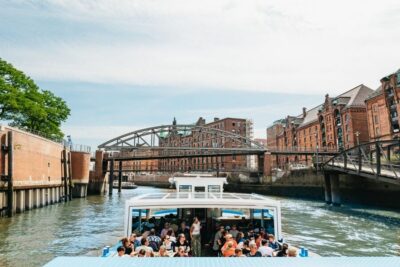 ★ 4.7Hamburg: 2-Hour XXL Port of Hamburg Cruise TourFrom $476,979 reviews
 ★ 4.9Berlin: Third Reich and Cold War 2 Hour Walking TourFrom $236,830 reviews
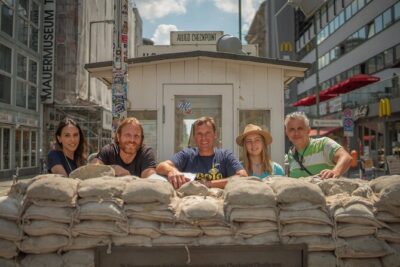 ★ 5.0Berlin’s Best: 2 Hour Walking Tour Third Reich and the Cold WarFrom $245,486 reviews
 ★ 4.8Leipzig: 2-Hour Guided Walking Tour in GermanFrom $181,612 reviews
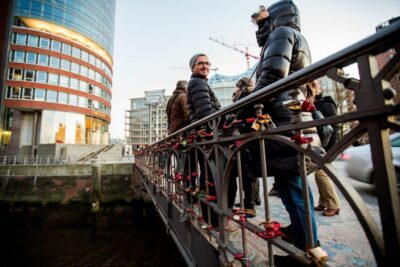 ★ 4.8Hamburg: Speicherstadt and HafenCity 2-Hour TourFrom $2821,063 reviews
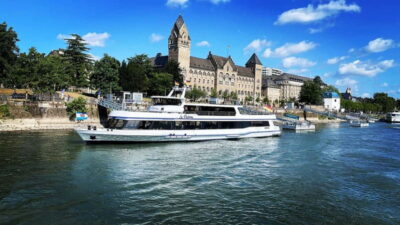 ★ 4.6Koblenz: 2-Hour Sightseeing Cruise on the RhineFrom $20839 reviews
 ★ 4.3Cologne: 2-Hour Evening Cruise on the Rhine RiverFrom $34797 reviews
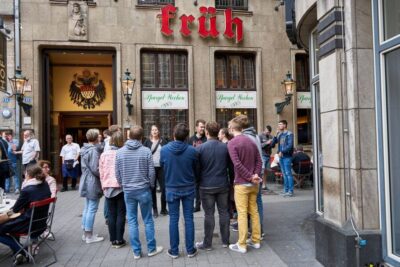 ★ 4.6Cologne: Kölsch Beer and Brew House 2-Hour TourFrom $22651 reviews