
REVIEW · SACHSENHAUSEN
Berlin: Sachsenhausen Concentration Camp Memorial Tour
Sachsenhausen is heavy ground, and this tour gives it shape. I like that the visit is led start to finish by a licensed guide, not a last-minute handoff, and that you travel together from Berlin for an easier, calmer day. You’ll cover key areas like Tower A and the famous entrance sign, with Barracks 38 and 39 included. One drawback to flag up front is that the site involves a lot of walking and is not suitable for wheelchair users or people with mobility impairments.
This is also the kind of history that can feel overwhelming, but the best thing about this format is the pacing. Guides such as Walid and Peter are praised for keeping the tone respectful while still making the events clear and understandable. The main consideration is emotional and content-heavy subject matter, so build in time to pause and breathe, especially around the execution area.
In This Review
- Key things that make this Sachsenhausen tour worth your time
- From Alexanderplatz to Sachsenhausen, the ride that sets your mindset
- What you’ll see in a 5-hour guided visit, in a respectful order
- Tower A and the entrance sign, where orientation matters
- Barracks 38 and 39, and why the details hit so hard
- Punishment cells plus the infirmary and morgue, where control becomes cruelty
- Station Z remains and the Soviet memorial, how the site tells time after WWII
- Guide impact in real life, why names like Walid and Richard come up often
- Price and value, what $21 includes and what you still need to plan
- Practical tips so you can focus on the meaning, not the discomfort
- Who should book this, and who might want a different plan
- Should you book the Berlin to Sachsenhausen memorial tour?
- FAQ
- Where do I meet for the Sachsenhausen tour?
- How long is the tour?
- What does the price include?
- Do I need to buy train tickets in advance?
- Does the tour offer a skip-the-line entrance?
- Which languages are available for the live guide?
- What should I bring with me?
- Is the tour suitable for wheelchair users or people with mobility impairments?
- What are the main stops during the visit?
- What happens after the tour ends?
- Is free cancellation available?
Key things that make this Sachsenhausen tour worth your time
- Train transfer with a guided group from Alexanderplatz so you are not figuring everything out cold and tired
- Main entrance and Tower A to orient you before you go deeper into specific buildings
- Barracks 38 and 39 to understand prisoner life and the cramped conditions Jewish prisoners faced
- Punishment cells plus infirmary and morgue to see how control and cruelty worked day to day
- Station Z remains where many executions took place
- Soviet memorial (1961) to show how the site’s story continued after WWII
Other guided visits to Sachsenhausen Memorial
- Berlin: Sachsenhausen Concentration Camp Tour in English★ 5.0 · 5,711 reviews
- Berlin: Sachsenhausen Concentration Camp Memorial Tour★ 4.7 · 3,716 reviews
- Sachsenhausen Concentration Camp Bus Tour in English from Berlin★ 5.0 · 1,962 reviews
- Berlin: Sachsenhausen Concentration Camp Tour in English★ 4.8 · 1,889 reviews
From Alexanderplatz to Sachsenhausen, the ride that sets your mindset
Most day trips need a plan, but this one quietly handles the biggest part for you. You meet at Alexanderplatz, next to the World Time Clock, and your guide is there wearing Buendía accreditation. That matters more than it sounds. On a long, serious outing, you want a clear start point and one person steering the group.
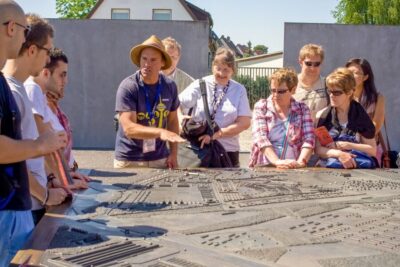
Then you head toward Sachsenhausen by train. The schedule is built for a 5-hour total tour, so the day stays practical. During the train ride, the guide provides the historical background that helps the memorial make sense. You get the camp’s origins and purpose, plus how it operated as part of the Nazi system of concentration camps. This setup is not just trivia. It gives you a framework so the buildings you later see do not feel like random stops.
If you are the type who likes your history in chronological order, the pacing here helps. And even if you do not, you still benefit because you’ll hear what each section was used for before you stand in front of it.
What you’ll see in a 5-hour guided visit, in a respectful order
This tour is designed to maximize the right highlights without turning the memorial visit into a sprint. It takes you through major points across different parts of the site, so you can piece together how the camp functioned and how the memorial was later interpreted.
Here is how the experience generally flows:
First, you start at the camp entrance area, beginning at Tower A, the main entry point. From there, you move through prisoner areas and key structures. You’ll then cover punishment and detention spaces, and you also visit sites connected to medical cruelty. After that, you see execution-related remains at Station Z. Finally, the tour ends with a look at the Soviet memorial, which reflects what happened at the site after the war.
The value of this structure is that it keeps you from making the common mistake of focusing only on one theme. Sachsenhausen was not only about confinement. It was also about discipline, punishment, exploitation, and killing. The tour’s sequence makes that harder to miss.
Tower A and the entrance sign, where orientation matters
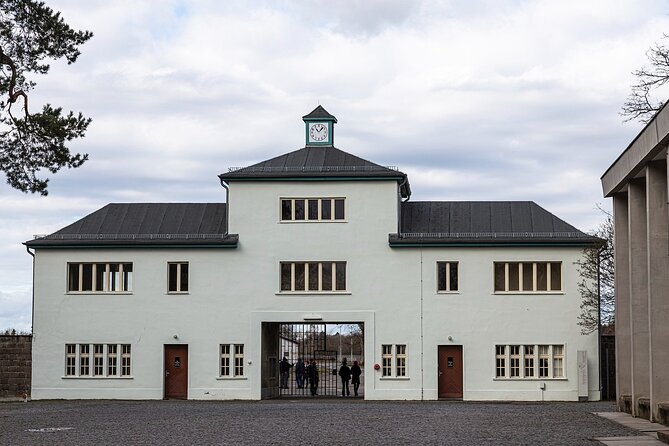
The first real moment for many people is the walk up to Tower A and the main entrance. This is where you slow down naturally. The camp layout is not intuitive, and the guide’s job is to help you orient quickly so you do not waste your time guessing what you are looking at.
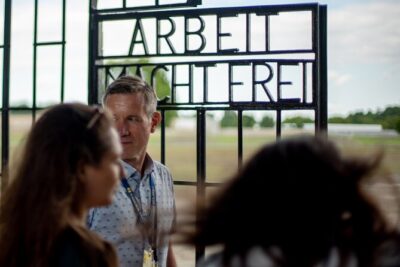
At the entrance you’ll encounter the famous sign that reads Arbeit macht frei. The guide’s framing here is important, because you need the context to understand how propaganda language sat beside real suffering. You are not just seeing an object. You’re seeing how the Nazi system tried to control perception while it imprisoned and abused people.
The biggest benefit of starting here is that the rest of the tour becomes easier to follow. As you move to barracks, cells, and other spaces, you can connect what you hear to what you see.
Barracks 38 and 39, and why the details hit so hard
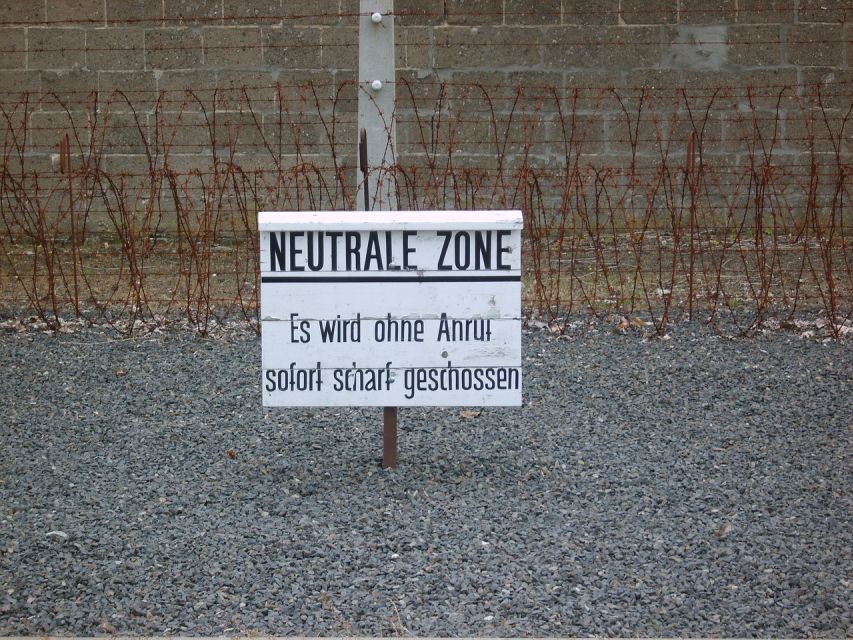
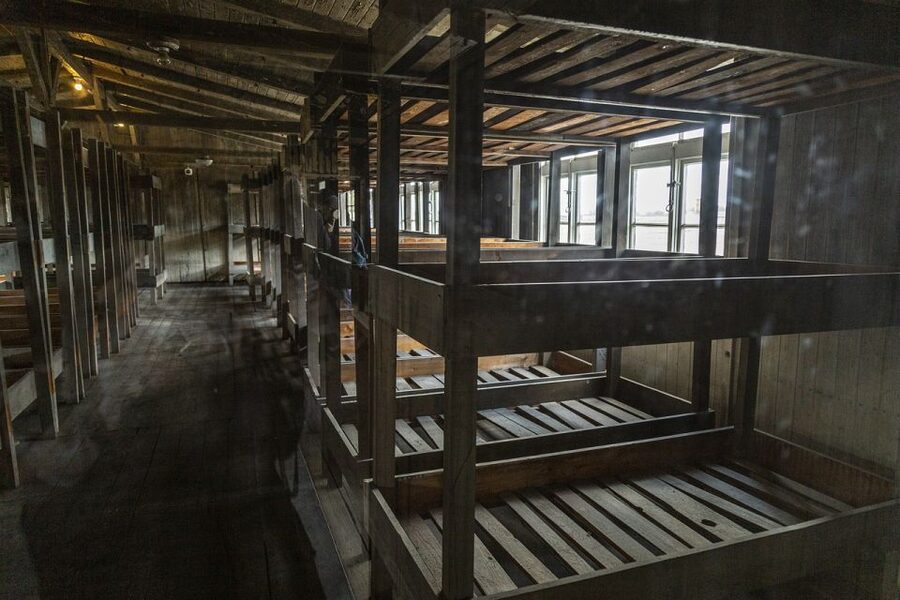
Next up are Barracks 38 and 39. These are not abstract history rooms. They are specific spaces with specific functions. You’ll learn that Jewish prisoners were held in extremely cramped conditions, and the guide explains what those conditions meant in daily life.
Barracks 38 is now a museum that focuses on prisoner daily lives. That approach can feel more personal than some other memorial displays, because you start to understand the rhythm of life under forced confinement. Barracks 39 is also part of the core visit, and together they give you a grounded sense of what the camp’s residential areas were like.
What I like most about including these barracks is that the tour does not stay trapped in one kind of horror. You see how human beings were warehoused, separated, and controlled, not only how the camp ended in punishment or execution.
Practical note: you will likely want good footwear here. The terrain and walking add up during a 5-hour route.

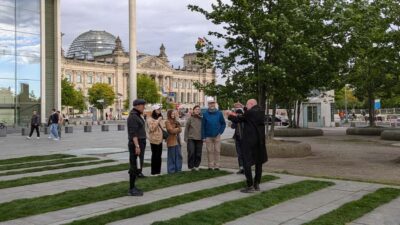
Punishment cells plus the infirmary and morgue, where control becomes cruelty
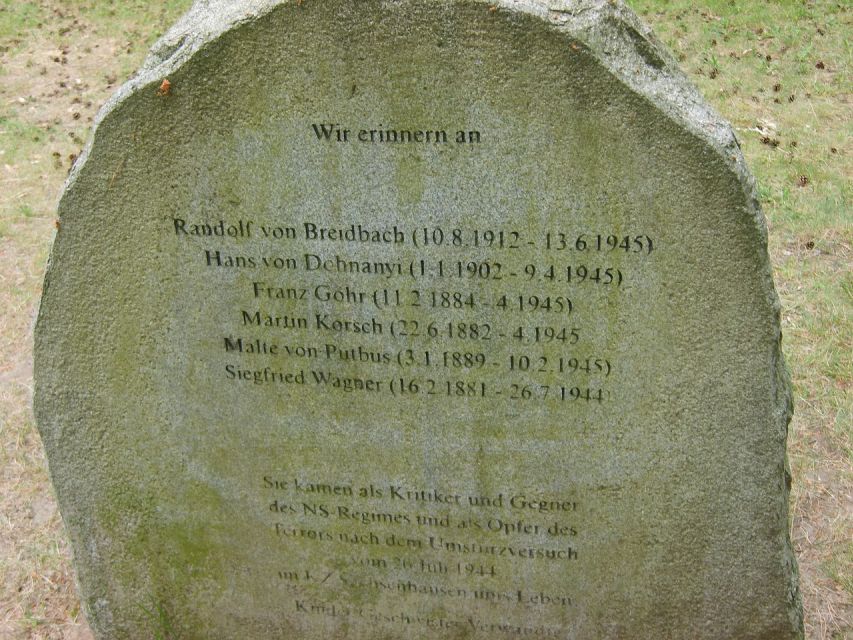
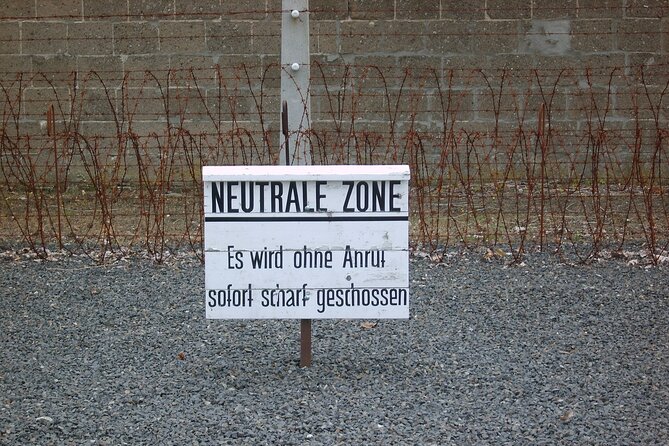
The tour includes the original punishment cells used to detain prisoners for minor offenses. This is one of the places where a guide makes a big difference. Without explanation, you might think you are looking at generic cells. With the right framing, you understand the mechanism: a system where even small acts of resistance or minor infractions could trigger brutal consequences.
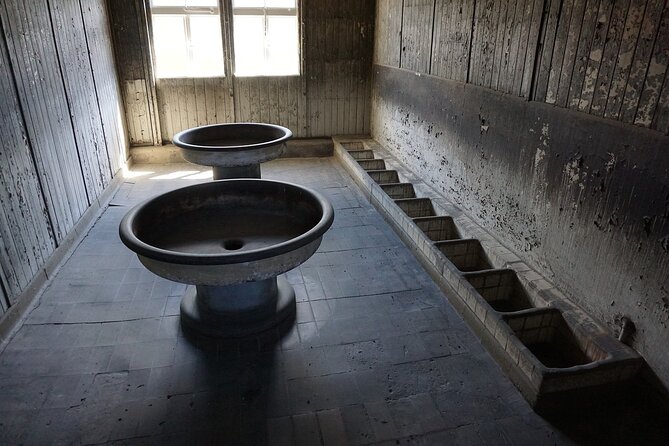
Then you visit areas connected to medical cruelty, including the infirmary and morgue. The guide provides insights into cruel medical experiments and the broader misuse of medicine under the Nazi regime. This is not comfortable content, but it is historically essential. It also explains why the memorial does not treat medical abuse as an isolated crime, but as part of a larger structure of dehumanization.
I recommend mentally preparing for this section by going slow in your own head. Give yourself permission to step back, take a breath, and let the guide’s words land without rushing.
Station Z remains and the Soviet memorial, how the site tells time after WWII
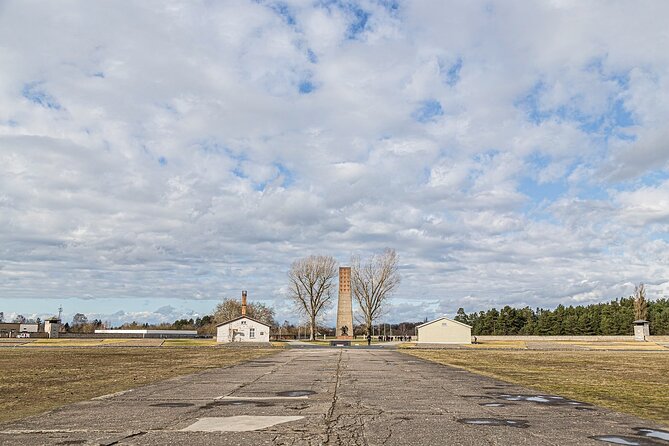
One of the most significant stops is Station Z, where many executions took place. You’ll see remains tied to that grim purpose, and the guide places it in the camp’s operational logic. This is where the tour’s earlier orientation helps most. Because you’ve already been guided through buildings and functions, Station Z does not feel like a random tragedy spot. It feels like a system.
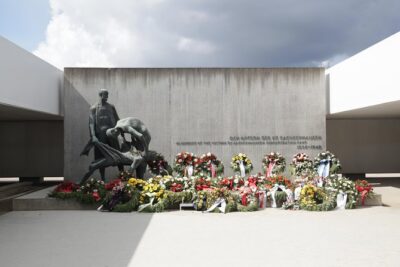
After that, you visit the Soviet memorial built in 1961. This part matters for a different reason. It reminds you that the camp’s story did not end with liberation. The memorialization itself reflects postwar politics and how different groups sought to record the site’s meaning.
I like that the tour includes this. It helps you see how memory gets shaped over time, not only what happened in 1945.
Guide impact in real life, why names like Walid and Richard come up often
A tour like this is not only about facts. It is about tone. The guides mentioned in the experience are frequently praised for being respectful, organized, and for keeping explanations clear even when the topic is emotionally intense.
For example, guides such as Walid and Richard are described as careful with how they present events, answering questions, and maintaining a respectful pace. Peter is also highlighted for being helpful and kind, and for keeping the experience informative without flattening the tragedy into something cold and distant. People also mention guides using a balanced approach, sometimes including gentle humor to keep attention without disrespect.
Also, pay attention to a practical skill that comes through in the reports: some guides help with train logistics on the way back. That is not glamorous, but it’s real value. When you leave a memorial, your brain is tired and your navigation instincts are weaker. A guide who helps the group board the right train keeps the day from becoming stressful.
Price and value, what $21 includes and what you still need to plan
The price is $21 per person for a 5-hour experience. At this length, what you want to look for is whether the price buys more than “someone walks you around.”
Here, a big chunk of value comes from the included professional guide who accompanies you from Berlin and the guided memorial visit itself. The ticket also includes an entrance fee to Sachsenhausen Concentration Camp Memorial, with 3€ included. That means you are not paying extra on top for entry once you reach the site.
What’s not included is the train ticket. You must buy an ABC zone train ticket in advance. That’s a small extra step, but it is the one you should not leave to the last second. If you show up without it, you will slow down the whole group experience.
One more small detail: the activity includes a skip-the-line separate entrance. For many people, saving time matters less than getting inside calmly, and this helps the tour start without a stressful bottleneck.
Practical tips so you can focus on the meaning, not the discomfort
You’ll get the most out of this tour if you plan for the basics.
Wear comfortable shoes. You are on your feet through multiple stops, and the memorial grounds are not designed as a casual stroll. If it’s cold, dress for it. Many people note that winter conditions can be harsh, and a warm layer makes the day easier to handle.
Bring snacks. The tour is long enough that hunger can get in the way of focus, and snacks help you stay steady emotionally too.
One logistics tip that I strongly recommend: before you go, decide where you’ll buy your ABC ticket. You can get it at station machines or online on the Berliner Verkehrsbetriebe website. If you can, do it before you meet the guide so you do not have to hunt around for a machine while the group waits.
Finally, know that the content is intense. People often want the restroom when the tour pauses. If the guide gives you a chance, use it.
Who should book this, and who might want a different plan
This tour fits best if you:
- Want a structured guided visit with key stops and context
- Prefer to travel from Berlin with someone managing timing and group movement
- Appreciate explanations that help you understand the Nazi camp system as a whole
It may not fit if:
- You need wheelchair-friendly access. The tour is not suitable for people with mobility impairments or wheelchair users based on the provided info.
- You are looking for a light, casual sightseeing day. This is emotionally serious, and it’s built to be.
If you like control, you’ll appreciate the wrap-up option. After the tour, you can either return to Berlin by train with the guide’s help or stay longer to explore at your own pace.
Should you book the Berlin to Sachsenhausen memorial tour?
I think you should book if you want a guided, well-organized way to visit one of the most important WWII memorial sites connected to Nazi concentration camps. The value is strong because you get the licensed guide from Berlin, you cover the key memorial stops in a logical order, and the entrance fee is included. At $21 for a 5-hour outing, it’s also one of the more efficient ways to do Sachsenhausen without adding extra planning stress.
I’d say book with extra care if you are emotionally sensitive to historical content. This is not a “quick look” experience. It takes attention and a respectful pace.
If you are planning a Berlin trip and want one day that truly connects the city’s WWII-era story to real places, this is a practical, meaningful choice. Just go prepared, wear good shoes, and let the guide’s calm structure do its job.
FAQ
Where do I meet for the Sachsenhausen tour?
You meet at Alexanderplatz, next to the World Time Clock, and your guide will be waiting there wearing Buendía accreditation.
How long is the tour?
The tour duration is 5 hours.
What does the price include?
The price includes a professional guide who accompanies the group from Berlin, entrance fee to Sachsenhausen (with 3€ included), and a guided tour of the memorial site with historical explanations.
Do I need to buy train tickets in advance?
Yes. Train tickets are not included, and you need an ABC zone train ticket before the activity. You can buy it at ticket machines or online on the Berliner Verkehrsbetriebe website.
Does the tour offer a skip-the-line entrance?
Yes. It includes skip the line through a separate entrance.
Which languages are available for the live guide?
The live guide is available in Spanish, English, German, French, and Italian.
What should I bring with me?
Bring comfortable shoes and snacks.
Is the tour suitable for wheelchair users or people with mobility impairments?
No. The tour is listed as not suitable for people with mobility impairments or wheelchair users.
What are the main stops during the visit?
You start at Tower A and the entrance sign, then visit Barracks 38 and 39, punishment cells, the infirmary and morgue, the former prisoner kitchen museum, Station Z remains, and the Soviet memorial built in 1961.
What happens after the tour ends?
At the end, you can choose to return to Berlin by train with help from the guide or stay longer to explore the memorial at your own pace.
Is free cancellation available?
Yes. Free cancellation is offered up to 24 hours in advance for a full refund.
Visiting Sachsenhausen Memorial
Everything else we filed on Berlin
- East Berlin: City of Shadows Walking Tour
★ 5.0 · 11 reviews - Berlin: Die Stachelschweine – Frank Lüdecke – Träumt Weiter
★ 4.7 · 11 reviews - Potsdam Day Trip from Berlin with a Local: Private & Personalized
★ 4.0 · 11 reviews - An Introduction to Berlin Walking Tour
★ 5.0 · 11 reviews - DJ for a Day: Learn to Mix Like a Pro in Berlin
★ 5.0 · 11 reviews - 2-H Segway Sightseeing Tour Berlin
★ 4.5 · 11 reviews
Sachsenhausen Memorial Site Tours, side by side.
 ★ 5.0Berlin: Sachsenhausen Concentration Camp Tour in EnglishFrom $365,711 reviews
 ★ 5.0Sachsenhausen Concentration Camp Bus Tour in English from BerlinFrom $681,962 reviews
★ 4.8Berlin: Sachsenhausen Concentration Camp Tour in EnglishFrom $221,889 reviews
★ 5.0Sachsenhausen Concentration Camp Bus Tour in English from BerlinFrom $681,962 reviews
★ 4.8Berlin: Sachsenhausen Concentration Camp Tour in EnglishFrom $221,889 reviews
 ★ 5.0Sachsenhausen Concentration Camp Memorial Tour (Max. 15 Guests)From $351,516 reviews
 ★ 4.6Berlin: Sachsenhausen Concentration Camp and Potsdam TourFrom $651,334 reviews
 ★ 5.0Sachsenhausen concentration camp.From $341,189 reviews
 ★ 5.0Visita en español al campo de concentración SachsenhausenFrom $341,170 reviews
 ★ 4.9Berlin: Sachsenhausen Concentration Camp Bus Tour in EnglishFrom $49709 reviews
Other lists this tour is on