
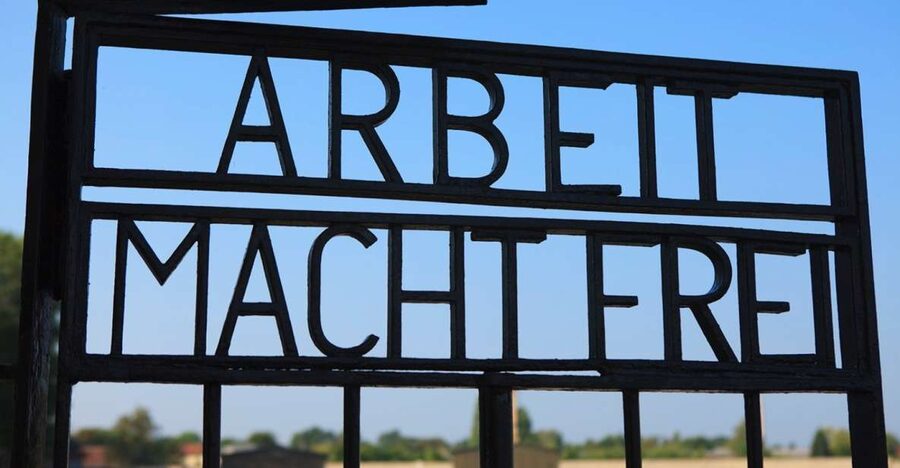
REVIEW · SACHSENHAUSEN
Berlin: Sachsenhausen Memorial 6-Hour Tour in Spanish
Berlin has a way of making history feel real. This Spanish-speaking Sachsenhausen tour brings the camp’s system into focus, with the roll-call A Tower and the horrifying Station Z as anchors. I especially like how the guide explains both the Nazi and later Soviet use of the site, and I like that you get context for what prisoners experienced and what work they were forced to do. The main drawback is the subject matter is heavy, and you need to plan for cold, outdoor time and limited options for food.
What makes this experience stand out is the way the day is structured around key locations you can actually see, not just vague “camp history.” You’ll also have access to survivor accounts, photographs, and official documents as part of the storytelling, which helps the information land with clarity. In the real world, guides matter, and here you’ll often get praised for explaining the camp with no soft edges, including a guide named Héctor.
One more practical note: Sachsenhausen has no shop on site, so you should bring snacks and drinks. If you forget, you’ll be tempted to buy whatever you can find later, and that can break the flow of a day that should stay focused and respectful.
In This Review
- Key things to know before you go
- Alexanderplatz to Sachsenhausen, how the route actually plays out
- The A Tower roll-call, what you’re seeing and why it matters
- Station Z, where killing became a procedure
- The museum and exhibits, learning how prisoners lived and worked
- GDR memorial and the camp’s afterlife in memory
- Price and practical tips so you’re ready for the day
- Should you book this Spanish Sachsenhausen tour?
- FAQ
- Where is the meeting point for the tour?
- How long is the Sachsenhausen tour?
- Is the guide speaking Spanish?
- What are the main highlights I’ll see?
- What is included in the price?
- Do I need public transport tickets?
- Is there a shop at Sachsenhausen where I can buy snacks?
- Is the tour wheelchair accessible?
- Is there free cancellation?
- Can I pay later when I reserve?
Key things to know before you go
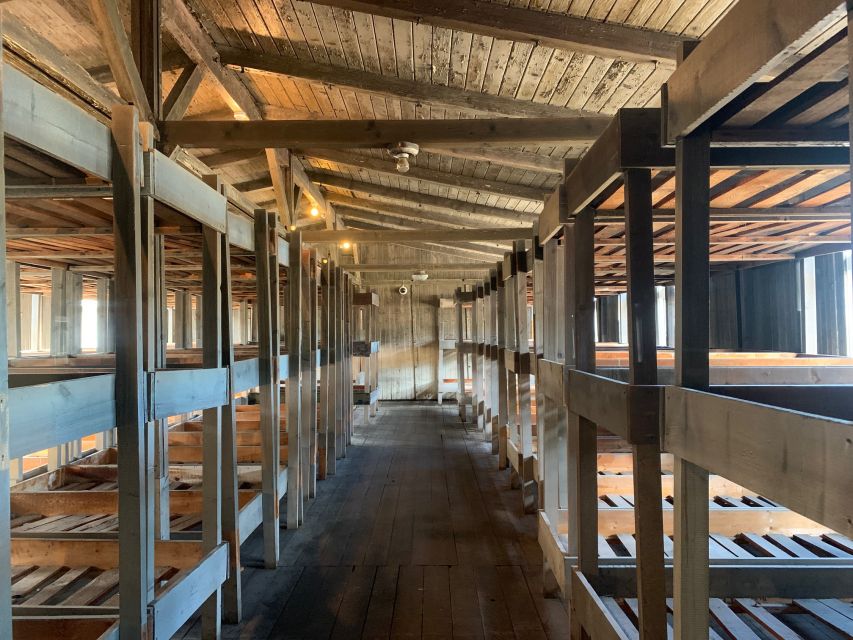
- A Tower roll-call logic: You’ll see where prisoners were counted and controlled.
- Station Z is central: It was added in 1942 for rapid, clinical killing.
- Nazi to Soviet changeover: The camp was later used as a gulag-style prison by the Soviets.
- Learn the mechanics, not just the horror: Expect explanations of daily life and forced labor.
- GDR memorial stop: You’ll also connect the site to the German Democratic Republic’s remembrance.
Other guided visits to Sachsenhausen Memorial
- Berlin: Sachsenhausen Concentration Camp Tour in English★ 5.0 · 5,711 reviews
- Berlin: Sachsenhausen Concentration Camp Memorial Tour★ 4.7 · 3,716 reviews
- Sachsenhausen Concentration Camp Bus Tour in English from Berlin★ 5.0 · 1,962 reviews
- Berlin: Sachsenhausen Concentration Camp Tour in English★ 4.8 · 1,889 reviews
Alexanderplatz to Sachsenhausen, how the route actually plays out
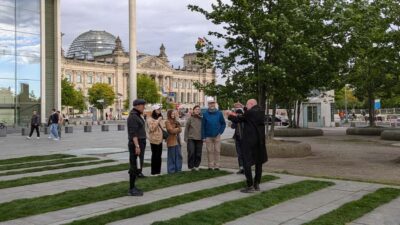
This is a true half-day trip, 6 hours from start to finish, with travel time built in. You meet at the front of the Alexanderplatz TV Tower (Fernsehturm), right next to the entrance. Your handoff point is clear: a green flag with the text tours en español, beside Espresso House and between the TV tower and Alexanderplatz train station.
Then you head north on the outskirts of Berlin. The train ride takes about 50 minutes, so you’ll have time to settle in, check your water, and look over what you want to pay attention to before you arrive. Practically speaking, this timing helps you avoid the classic mistake of rushing through a memorial when you’re still mentally catching up.
Because the tour is Spanish, it’s a great pick if you want the history explained directly instead of “getting by” with a few words. It also helps you follow the details, like how Sachsenhausen functioned as a model camp and an administration center for other Nazi concentration camps. You’ll hear it as a connected story, not as isolated facts.
Value-wise, the price is reasonable for a guided memorial visit that includes a specialist camp guide plus a required foundation surcharge. The tour cost is listed around $41 per person, and you also pay a €3 concentration camp foundation surcharge included with the tour. You’re not just paying for transport, you’re paying for interpretation at the site where details matter.
If you want a “fast history hit,” this may feel long. If you want understanding, 6 hours is a good balance. You have enough time to visit multiple sections of the camp grounds and museum, without turning it into a sprint.
The A Tower roll-call, what you’re seeing and why it matters
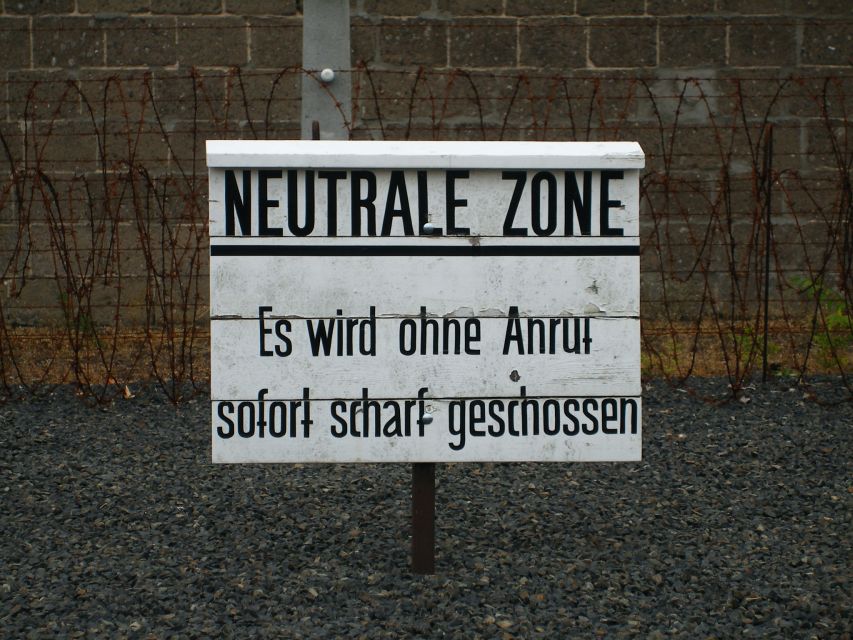
The A Tower is not just an old structure. It’s the camp’s “counting and control” mindset made physical. As part of the tour, you’ll visit this roll-call location, and the guide uses it to explain how prisoners were organized and managed.
Here’s the key point for your understanding: the horror of Sachsenhausen isn’t only about specific punishments. It’s about the daily system that made suffering routine. Roll-call meant bodies were processed, presence was enforced, and the camp machinery kept moving even when individuals had no real power.
When you stand at the A Tower area with the guide’s explanation, the camp feels less like a historical picture and more like an administrative machine. You learn how Sachsenhausen was intended as a model camp, and how it also served as the center for administering other camps. That matters because it explains why Sachsenhausen was both a workplace and a template for a wider network of persecution.
You’ll also get a sense of scale. Over 200,000 people passed through Sachsenhausen, and at least 50,000 died. Even if you don’t memorize the numbers, the guide helps you connect them to what it meant on the ground: large-scale transfers, constant monitoring, and forced labor.
This is where a good Spanish guide pays off. Camp history includes terms tied to procedure and legal structure, and you’ll follow the logic better when explanations are in your language. One review highlights how the guide explained how the camp worked from a legal perspective, which is exactly the kind of framing that helps you understand what Nazi control looked like in practice.
Station Z, where killing became a procedure
If you only remember one place from this tour, make it Station Z. It was added in 1942 specifically for killing victims quickly and clinically, and it’s presented as one of the camp’s most sobering sections.
What to know before you reach Station Z: you’re not just viewing a site. You’re facing the idea that mass murder was turned into procedure. That’s a brutal concept, and the guide’s job is to make sure you understand the purpose of the space, what was happening there, and how it fit into the broader system of control.
This stop is also where the tour’s era-to-era context becomes essential. Sachsenhausen didn’t end with Nazi Germany. After Hitler’s fall, the Soviets transformed Sachsenhausen into a gulag for their own prisoners. So the memorial tells two intertwined stories: the camp’s role in Nazi terror, and its later use under Soviet imprisonment.
That connection can feel uncomfortable because it collapses time into one place. But it also helps you see how post-war power structures reused existing infrastructure. The tour handles this as part of the site’s educational purpose, which is important because it keeps the conversation from becoming only one-sided or purely chronological.
The emotional atmosphere is intense here, and it can be windy and cold depending on the season. One guide is even praised for helping the group adjust to hard conditions, since the environment contributes to what the day feels like. For you, the takeaway is simple: dress for weather, not for comfort.
At Station Z, the guide’s focus on clarity is a gift. Don’t treat this section like a photo stop. Instead, let the explanation guide how you look at the space, because the point is comprehension, not spectacle.
The museum and exhibits, learning how prisoners lived and worked
Sachsenhausen also has a museum and multiple exhibits, and this is where the tour becomes more than “spot the location.” You’ll get guided context about the camp’s origins, what life in the camp would have been like, and the type of work prisoners were forced to perform.
The museum portion matters because it turns the grounds into a narrative you can follow. You’ll hear about origins, daily routine, and how control worked. You’ll also use personal accounts of survivors, photographs, and official documents as part of the explanation. That mix is useful: documents help you anchor facts, photographs help you visualize the system, and survivor accounts give the human dimension.
When you’re at this stage, you may notice how the tour keeps returning to the same theme, how bureaucracy and labor were tied together. Forced work was not random. It was part of how the camp’s purpose was carried out, and it shaped what prisoners experienced hour after hour.
Another value of this museum time is that it helps you understand the camp beyond the most notorious elements. Many memorial visits focus only on the worst parts, which is understandably important. But here, the tour also emphasizes how the camp functioned as a whole, including administration and prisoner life. That makes the experience more educational, and it helps you avoid the mental shortcut of seeing only one kind of suffering.
This is a good moment to slow down and let the guide’s structure work for you. If you try to skim or treat exhibits as background, you miss the links between what you saw outside and what you learn inside. In practice, that’s why a guided format works well at Sachsenhausen, since the site includes many moving parts.
If you want to take notes, do it lightly. Your eyes will catch details as the guide explains them, and those cues are easier to remember than a list of facts scribbled in a hurry.
GDR memorial and the camp’s afterlife in memory
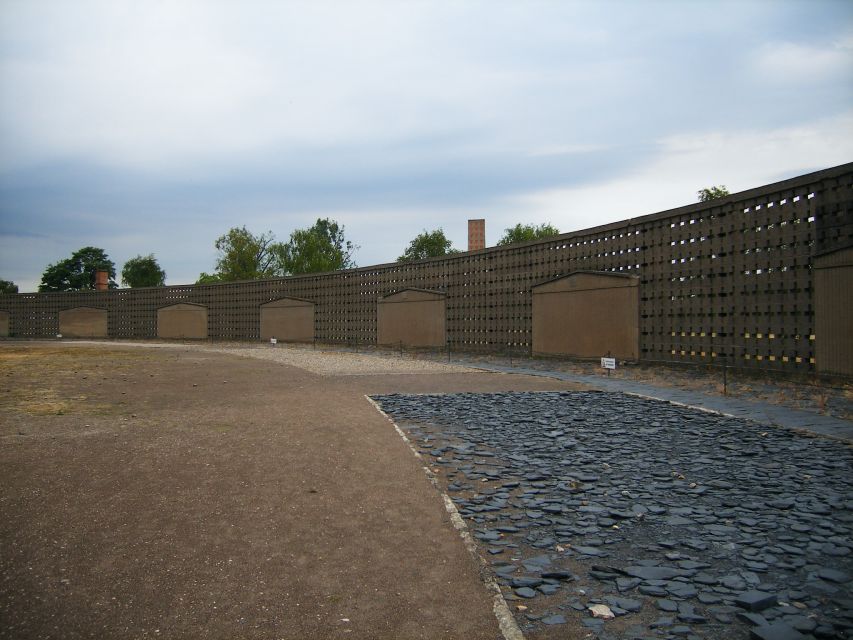
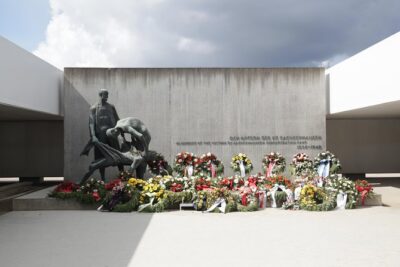
Sachsenhausen doesn’t only sit inside World War II. The memorial today is also tied to later German remembrance, including a GDR memorial stop as part of this tour.
This part of the visit helps you understand how the site was preserved for educational purposes and for remembering people who were killed. It also shows that memory is not fixed. Different eras, including the GDR, shaped how the camp’s meaning was taught and understood.
For you, that matters because it changes how you interpret the physical space. The grounds aren’t only a historical artifact. They’re part of a living educational landscape, meant to prevent forgetting and to teach how systems of terror functioned.
And that brings you back to the broader context the guide provides. Sachsenhausen was both a Nazi concentration camp site and later a Soviet gulag for their prisoners. Seeing the memorial framing makes the lesson clearer: history is not only a set of events, it’s how societies decide what to do with the evidence afterward.
This is also where the tour’s Spanish format helps again. If you’re learning in your language, you’ll be better equipped to process what the memorial tries to communicate. It’s one thing to hear dates and names. It’s another to understand the message the memorial wants you to walk away with.
Price and practical tips so you’re ready for the day
Let’s talk value first, because 6 hours is a commitment, and memorial visits reward preparation. The tour is priced around $41, and it includes the full guided visit with Spanish interpretation plus the concentration camp foundation surcharge of €3. The big thing you’re buying is expertise and structure at a place where details matter.
What’s not included is equally important: you need a public transport ticket covering zones ABC. That means you should plan this before the day starts, so you don’t lose time at the station or scramble at the last minute.
Then there’s the food problem. The tour advises bringing snacks and drinks because there is no shop at Sachsenhausen. This is practical, but it’s also respectful. If you show up hungry, you’ll spend the day thinking about food instead of absorbing the history.
What I’d pack for a cold day:
- A warm layer, since the grounds can feel exposed.
- A small bottle of water and a snack you can eat without fuss.
- Comfortable shoes that handle walking across memorial grounds.
- A charged phone or small notebook, so you can jot key points as the guide explains them.
Also consider how long you’ll want to stay emotionally focused. The tour covers multiple intense sections, including the roll-call area and Station Z. If you’re easily overwhelmed, you might want to take a short pause during transitions, like when the group moves between sections.
You’ll get the best experience if you treat the day like a guided class, not like a checklist. The places are sobering, and the tour works because it gives you context for each one.
Should you book this Spanish Sachsenhausen tour?
I think you should book it if you want a Spanish-led memorial visit that explains the camp as a system, with stops at the A Tower and Station Z plus museum and exhibit time. The value is strong because you’re getting guided interpretation where it counts, not just a general ticket to walk around.
Book it also if you care about understanding both the Nazi and Soviet use of the site, including the later GDR memorial framing. That bigger picture helps you avoid a one-era-only view and makes the lessons more usable.
Skip it if you want a lighter, sightseeing-style day. This isn’t that. It’s a serious educational visit, and your comfort will come from preparation and pacing, not from comfort amenities.
FAQ
Where is the meeting point for the tour?
You meet next to a green flag that says tours en español, beside the only entrance to the Fernsehturm at Alexanderplatz, between the TV tower and Alexanderplatz train station, next to Espresso House.
How long is the Sachsenhausen tour?
The tour lasts 6 hours.
Is the guide speaking Spanish?
Yes, the live guide speaks Spanish.
What are the main highlights I’ll see?
You’ll visit the A Tower and Station Z, plus the national memorial Sachsenhausen, including the GDR memorial.
What is included in the price?
Included is the full Sachsenhausen tour with a Spanish-speaking guide, plus the concentration camp foundation surcharge of €3.
Do I need public transport tickets?
Yes. You need a public transport ticket covering zones ABC.
Is there a shop at Sachsenhausen where I can buy snacks?
No. It is advisable to bring snacks and drinks because there is no shop at Sachsenhausen.
Is the tour wheelchair accessible?
Yes, the tour is listed as wheelchair accessible.
Is there free cancellation?
Yes. You can cancel up to 24 hours in advance for a full refund.
Can I pay later when I reserve?
Yes. The listing offers reserve now & pay later, so you can book your spot and pay nothing today.
If you want, tell me your travel dates and how comfortable you are with cold outdoor walking. I can suggest what time of day tends to feel easiest for this kind of memorial visit.
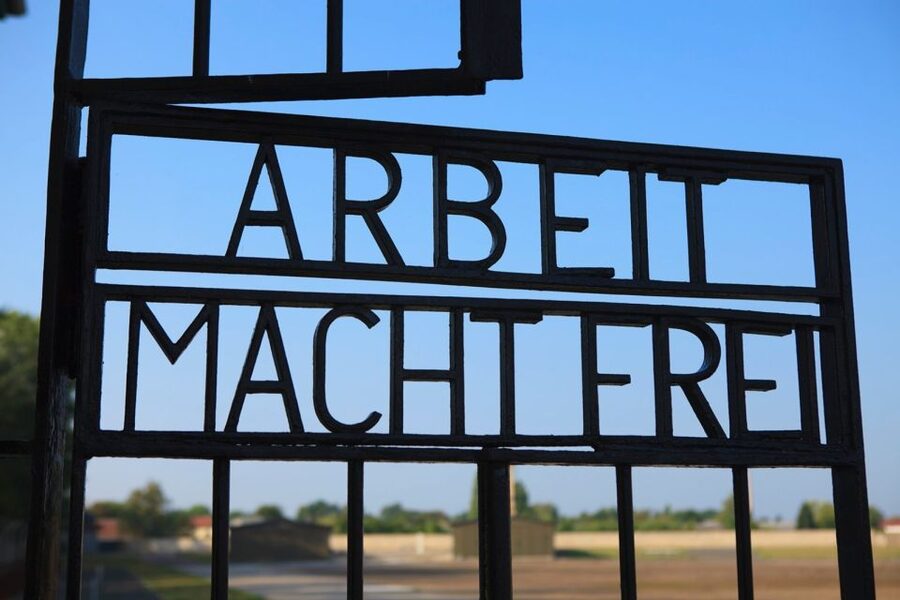
Visiting Sachsenhausen Memorial
Everything else we filed on Berlin
- East Berlin: City of Shadows Walking Tour
★ 5.0 · 11 reviews - Berlin: Die Stachelschweine – Frank Lüdecke – Träumt Weiter
★ 4.7 · 11 reviews - Potsdam Day Trip from Berlin with a Local: Private & Personalized
★ 4.0 · 11 reviews - An Introduction to Berlin Walking Tour
★ 5.0 · 11 reviews - DJ for a Day: Learn to Mix Like a Pro in Berlin
★ 5.0 · 11 reviews - 2-H Segway Sightseeing Tour Berlin
★ 4.5 · 11 reviews
Sachsenhausen Memorial Site Tours, side by side.
 ★ 5.0Berlin: Sachsenhausen Concentration Camp Tour in EnglishFrom $365,711 reviews
 ★ 4.7Berlin: Sachsenhausen Concentration Camp Memorial TourFrom $213,716 reviews
 ★ 5.0Sachsenhausen Concentration Camp Bus Tour in English from BerlinFrom $681,962 reviews
★ 4.8Berlin: Sachsenhausen Concentration Camp Tour in EnglishFrom $221,889 reviews
★ 5.0Sachsenhausen Concentration Camp Bus Tour in English from BerlinFrom $681,962 reviews
★ 4.8Berlin: Sachsenhausen Concentration Camp Tour in EnglishFrom $221,889 reviews
 ★ 5.0Sachsenhausen Concentration Camp Memorial Tour (Max. 15 Guests)From $351,516 reviews
 ★ 4.6Berlin: Sachsenhausen Concentration Camp and Potsdam TourFrom $651,334 reviews
 ★ 5.0Sachsenhausen concentration camp.From $341,189 reviews
 ★ 5.0Visita en español al campo de concentración SachsenhausenFrom $341,170 reviews
Other lists this tour is on