
REVIEW · DACHAU
Dachau Memorial Public Tour
Dachau hits hard, in the best way. This 5-hour, small-group public tour brings you face-to-face with the camp’s layout and key sites, explained by a local guide who ties it all back to what happened between 1933 and 1945. I like that you are not just looking at plaques, you are walking through places such as the main gate, the roll call area, and the former prison spaces.
Two things I really like: the tour is led by pros with real command of the subject, including guides such as Charlotte and Michael. And it stays structured, moving from administration areas to the museum setting, then into the bunker and reconstructed barracks so you can connect the dots.
One drawback to consider: the topic is heavy and the pace can feel intense. If you want a light, casual outing, this is not it, and you should mentally plan for a sober experience.
In This Review
- Key points worth knowing before you go
- Dachau Memorial Public Tour: what the experience really feels like
- Price and value: what you get for $118.74
- Meeting at Marienplatz: starting your day without chaos
- Entering the memorial: main gate, Jourhaus, and how guides set the tone
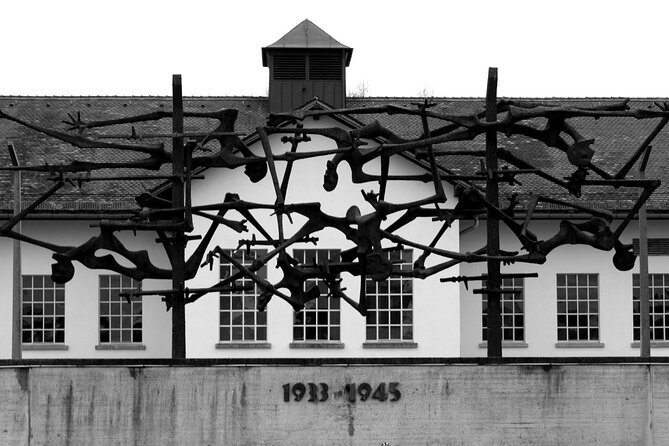
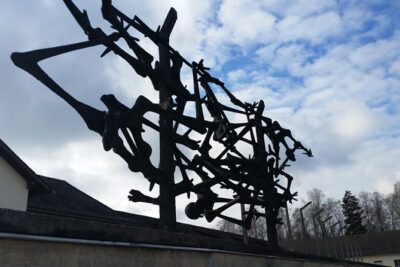
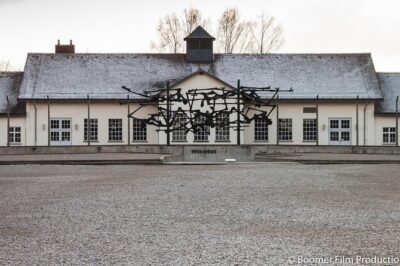
- The roll call area and the International Monument
- Museum time in the Former Maintenance Building
- The bunker and what reconstructed barracks teach you
- Religious memorials: remembering beyond one narrative
- Security installations: guard towers and the outer wall
- A respectful pause outside the crematorium
- Guide matters: Charlotte and Michael as examples of what good guidance sounds like
- Timing and pacing: how to survive five hours at a solemn site
- Who should book this tour?
- Should you book this Dachau Memorial Public Tour?
Key points worth knowing before you go
- Small group size, max 15 keeps the focus on the sites and the guide’s explanations.
- A guided route through core camp spaces such as the Jourhaus, roll call area, bunker, and reconstructed barracks.
- Museum learning in the Former Maintenance Building with exhibits and documentaries to give you context.
- Built-in moments of respect, including a minute of silence outside the crematorium area with the group.
- You see the camp’s security layout with guard towers and remaining or reconstructed outer walls.
- Multi-faith remembrance spots via the diverse religious memorials, so the place is not only about one narrative.
The other Dachau Memorial visits we reviewed
- Dachau Concentration Camp Memorial Site Tour from Munich by Train★ 4.5 · 5,637 reviews
- From Munich: Dachau Memorial Site Day Tour★ 4.8 · 2,723 reviews
- From Munich: Dachau Memorial Site Half-Day Trip★ 4.7 · 2,526 reviews
- From Munich: Dachau Memorial Site Full-Day Tour★ 4.9 · 1,406 reviews
Dachau Memorial Public Tour: what the experience really feels like
Dachau is not the kind of stop you can skim. It is big on meaning, and the physical spaces are part of the message. What I appreciate about this public guided format is that it gives you a clear path through the memorial site, instead of leaving you to piece it together on your own.
This tour runs about five hours and is capped at 15 people. That matters because the camp is laid out in sections, and understanding how they connect takes attention. A smaller group also means questions are more likely to land, and you are not just part of a silent stampede.
You are paying $118.74 per person, and the memorial admission ticket is listed as free. So in practical terms, your money is mainly going toward the guided portion and the organization of a route that covers the most important areas without you getting lost in the weeds.
Price and value: what you get for $118.74
At first glance, $118.74 for a half-day tour can look steep. But here is where the value shows up.
You get a local professional guide leading a public guided tour. The route is designed to walk you through specific parts of the memorial, including areas that many visitors might miss if they only follow the biggest photo spots. The guide also helps you connect the history to what you are seeing in front of you, from administration buildings to the spaces where prisoners were held.
The pricing structure also helps: the memorial admission ticket is listed as free. That means you are not paying again for entry on top of the tour cost. And because the tour is near public transportation with a mobile ticket, you can keep your logistics simpler once you are in central Munich.
One more value point: the group size is small enough that the guide can actually keep a sense of order and flow. For a site as sensitive as this, that structure is not just convenient, it is respectful.
Meeting at Marienplatz: starting your day without chaos
You meet at Fischbrunnen, Marienplatz 8, 80331 München and the tour ends back at the same meeting point. It starts at 10:00 am, and the whole thing runs roughly 5 hours.
Starting at Marienplatz is a smart move because it is one of those central Munich anchors where you can usually get there with public transport without too much fuss. The listing also notes confirmation at booking time, so you are not left guessing.
Since it is a memorial, I suggest you plan your morning like you would for a serious appointment. Give yourself a little buffer to arrive calmly. Once the tour begins, the group stays focused on the sites and the guide’s pacing.
Entering the memorial: main gate, Jourhaus, and how guides set the tone
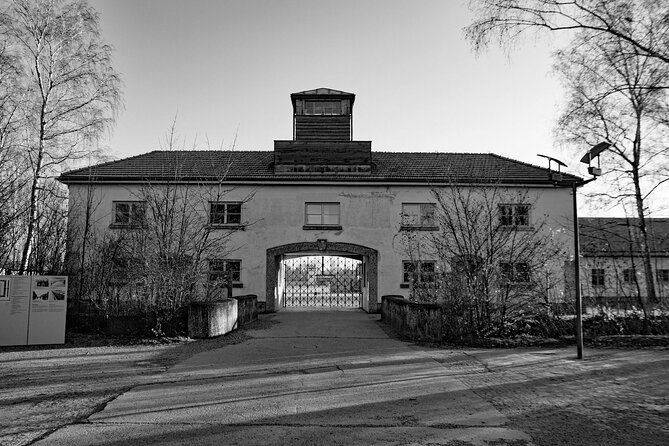
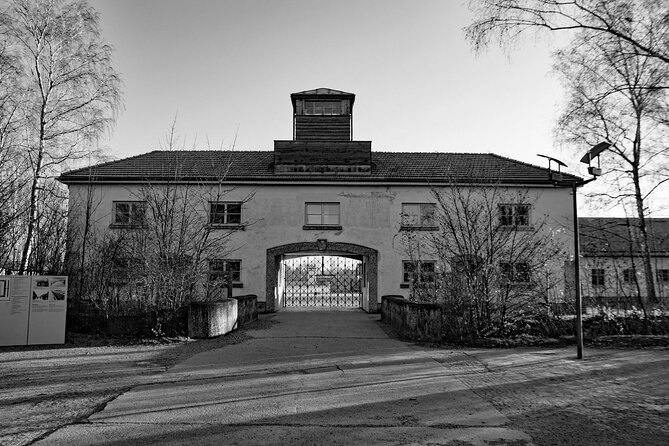
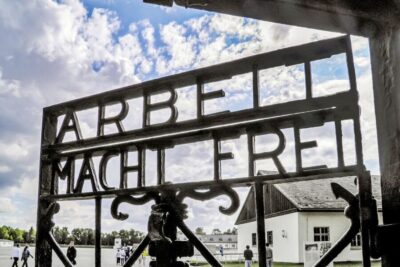
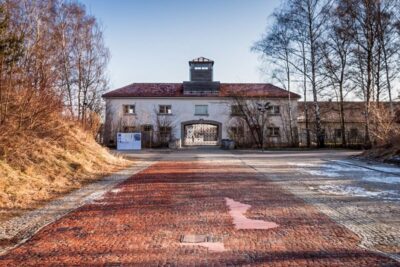
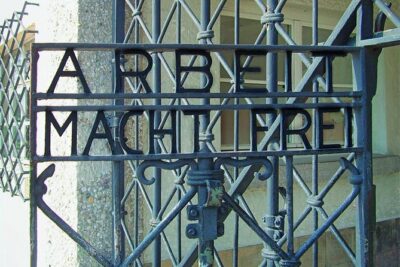
The tour starts at the camp memorial site with the main gate and key structures around it. One of the most meaningful early stops is the Jourhaus, once used as a central administrative point. Seeing it early helps you understand that this was not only a prison space. It was also an organized system run with bureaucracy and procedures.
From there, the guide brings you into the camp’s rhythm through the spaces that define it. You are not just reading history. You are learning the site’s logic, how people moved through it, and where the power sat.
This is also where the guide’s style matters. In the feedback you are given, Charlotte and Michael are specifically praised for strong guidance and clear history ties. In my view, that is exactly what you need at Dachau, because the site is large and details matter.


The roll call area and the International Monument
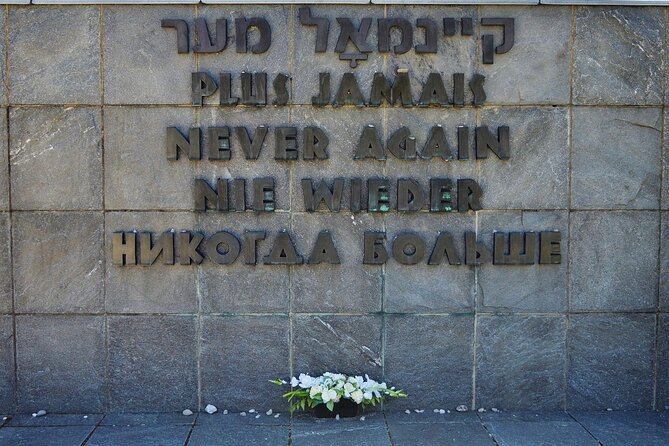
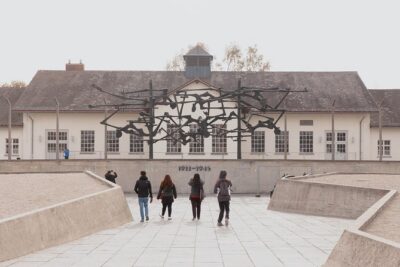
Next you reach the roll call area, a key location tied to how prisoners were managed. Today it is marked with the International Monument, which shifts the emphasis from one national story to a shared loss across countries.
This stop is powerful because it turns a physical platform into a human reality. You see the space as it exists now, but the guide helps you understand how it functioned then. If you tend to get overwhelmed at memorials, this guided framing can help. It gives your brain hooks to hold onto, so you can process what you see instead of drifting.
A tip for this part: keep your phone away unless your guide is pausing and allowing it. The tone is solemn. A quiet watch is usually better than constant filming.
Museum time in the Former Maintenance Building
One of the best practical moves on this tour is including time in the Former Maintenance Building, where a museum explains the camp’s history through exhibits and documentaries.
This is where you get the bridge between the visuals outside and the larger timeline of what Dachau became over its operating years. It is also the place where you can steady yourself emotionally. Looking at curated exhibits is not a distraction from the site. It can actually help you understand the scale.
The museum setting also gives your attention a break from walking. Even though the tour continues after this, having that controlled indoor segment helps a lot on a five-hour day.
The bunker and what reconstructed barracks teach you
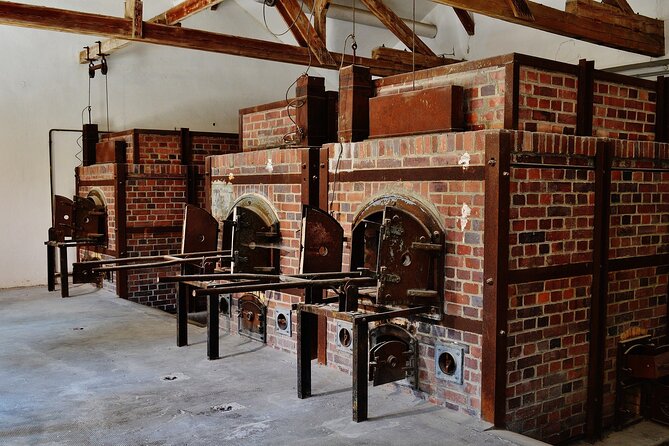
After the museum learning, the tour moves into the site’s more prison-like spaces, including the bunker, a former prison area. This is the kind of stop where you feel the edges of the system, not just its structure.
Then you visit two reconstructed barracks. Reconstruction can be tricky at memorials, but here it is useful because it supports interpretation. You can compare the idea of daily life, confinement, and space to what is preserved versus what is rebuilt. The guide’s role is crucial here, because reconstruction without explanation can lead to misunderstandings.
Also, seeing the bunker first and then stepping into reconstructed barracks can help your brain form a sequence. You start to connect discipline, punishment, and living conditions instead of treating each building as an isolated exhibit.
Religious memorials: remembering beyond one narrative
Dachau includes diverse religious memorials. On this tour, you do not just pass them. They are part of the route.
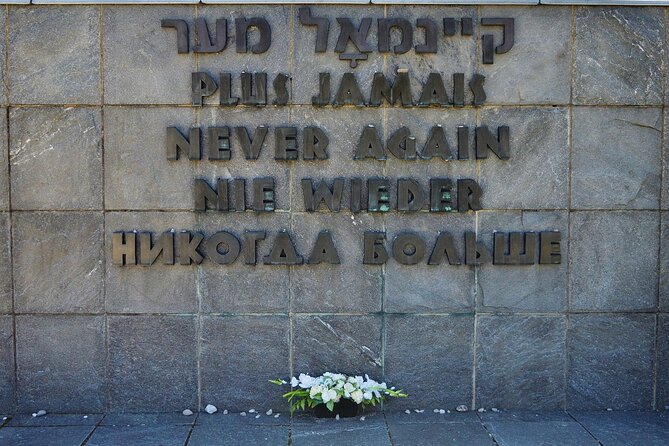
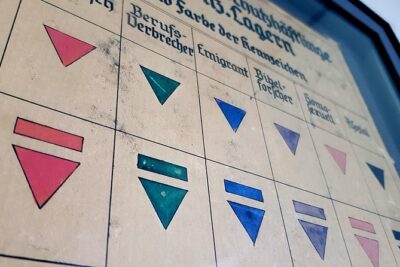
I value this stop because it broadens remembrance. The camp imprisoned people for many reasons and from many backgrounds, and the memorial reflects that diversity. It also reminds you that religion, identity, and humanity did not vanish inside the camp machinery.
If you find it hard to process the scale of suffering, the religious memorials offer a more intimate entry point. You are looking at remembrance designed for real people, not abstract numbers.
Security installations: guard towers and the outer wall
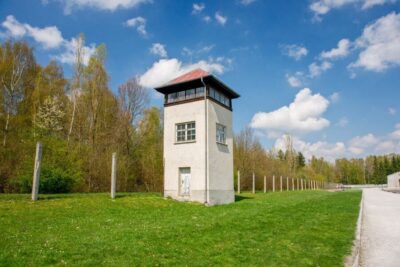
As you continue, the tour shows security installations, including guard towers and parts of the outer wall that are partially reconstructed.
This part is practical in a different way. It helps you understand the camp’s physical control. You see where guards could watch and where barriers shaped movement. That context matters, because it explains why the site does not feel open or accessible in any modern sense.
This is also where the tour’s structure shines again. If you visited Dachau on your own, you might look at the tower and think in general terms. With a guide, the tower becomes part of a whole system, one that connected to administration, roll calls, prison areas, and daily routines.
A respectful pause outside the crematorium
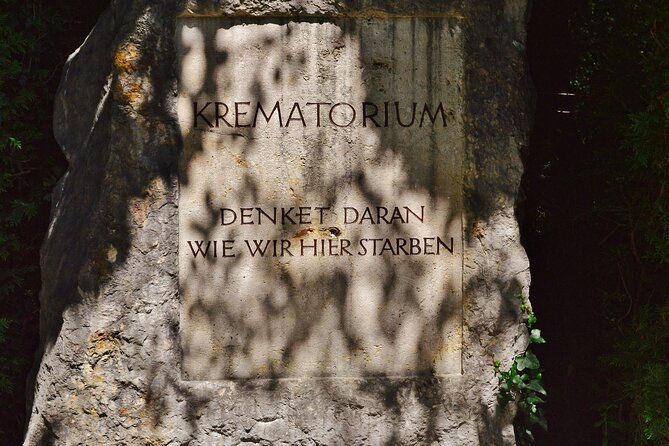
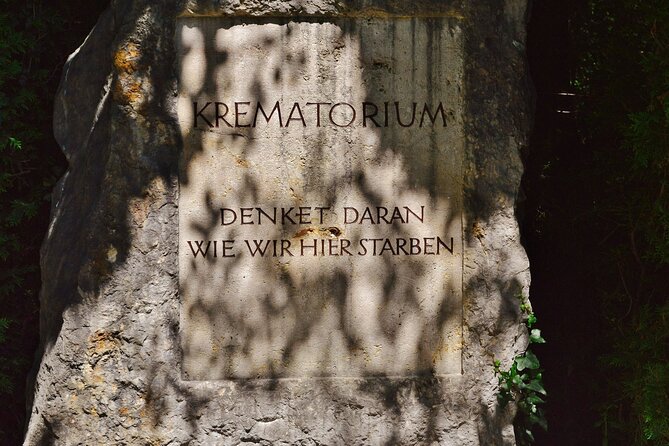
One deeply moving moment described in the tour experience is a minute of silence outside the crematorium area. That small ritual can change the entire tone of the visit.
This is one of those details that makes a guided group tour feel more grounded than a self-guided visit. Even if you know the history, the silence gives you space to recognize the reality of loss and the intent of remembrance.
If you want to be ready for this, I recommend wearing something comfortable enough to stand quietly. Also, keep your attention on the group. Moments like this work best when everyone follows the lead.
Guide matters: Charlotte and Michael as examples of what good guidance sounds like
The strongest praise in the experience centers on the guides. Charlotte is credited with command of the history of Dachau and the broader WW2 context in Germany and Europe. Michael is described as informative and passionate, with a clear connection between facts and respectful action, including the group silence.
What this tells you as a booking decision maker is simple: the tour’s value is not only the route. It is the person speaking through it. You want a guide who can explain the timeline clearly, point you toward what to notice, and keep the group respectful without turning the experience into a lecture marathon.
When I think about memorial tours, I think about clarity and pacing. The guide is there to manage both.
Timing and pacing: how to survive five hours at a solemn site
This tour is about five hours long. You will likely spend that time moving between indoor and outdoor areas, and you will be listening most of the way. Plan for a steady day, not a sprint.
Practical advice:
- Wear comfortable shoes for walking on memorial grounds.
- Keep a light layer in case Munich weather turns.
- Eat beforehand, since food and beverage are not included.
Even if you do not feel nervous, the emotional weight can build slowly. If you need a moment, your best move is to step slightly aside during a pause rather than trying to wander off. A guided route keeps everyone safe and on track.
Who should book this tour?
This tour fits best if you want structure, context, and respect built into the day. It is a strong option if you:
- Want a guided walkthrough of key locations rather than a self-directed checklist.
- Prefer learning with a local professional guide who can connect the site to the broader war period.
- Like small groups, since the cap is 15 travelers.
It might be less ideal if you need a more casual, flexible pace, or if you know you struggle with very heavy content. Dachau is serious. This tour leans into that seriousness, and it does it thoughtfully.
Should you book this Dachau Memorial Public Tour?
Yes, if you want a guided, coherent route through the key spaces and you value a respectful group tone. The five-hour format works well because it includes museum time plus multiple on-site stops, including the bunker, reconstructed barracks, religious memorials, and security installations.
If you are specifically hoping for a small-group experience with a guide you can count on, this one has an advantage with its maximum of 15 people. And if you like hearing history framed clearly, the praise for Charlotte and Michael is a strong sign that the explanations are a central part of why people feel satisfied.
If you think you might feel overwhelmed and want total independence, you may prefer a self-guided option. But if you want clarity, pacing, and meaning organized into one route, booking makes sense.
In short: this tour is not a sightseeing detour. It is a serious, guided visit that helps you see Dachau as a system, not just a set of buildings.
Visiting Dachau Memorial Site
Everything else we filed on Munich
- Paul’s Private Tour Munich Highlights
★ 5.0 · 3 reviews - Private Linderhof Castle, Entry-Ticket – optional Toboggan Run
★ 5.0 · 3 reviews - Paul’s Private Tour in the Alte Pinakothek Munich
★ 5.0 · 3 reviews - Private Tour at Neuschwanstein And Linderhof Palaces From Munich
★ 4.5 · 3 reviews - Private Highlights of Munich Bike Tour with Beer Garden Stop
★ 5.0 · 3 reviews - Munich WWII and Dachau Concentration Camp Private Tour with Licensed Guide
★ 5.0 · 3 reviews
Dachau Memorial Site Tours, side by side.
 ★ 4.5Dachau Concentration Camp Memorial Site Tour from Munich by TrainFrom $645,637 reviews
 ★ 4.8From Munich: Dachau Memorial Site Day TourFrom $492,723 reviews
 ★ 4.7From Munich: Dachau Memorial Site Half-Day TripFrom $622,526 reviews
 ★ 4.9From Munich: Dachau Memorial Site Full-Day TourFrom $511,406 reviews
 ★ 4.5Dachau Concentration Camp Memorial Tour with Train from MunichFrom $56955 reviews
 ★ 5.0Early-Start Dachau Memorial Half-Day Tour from MunichFrom $62942 reviews
 ★ 5.0Guided Dachau Concentration Camp Memorial Site Tour with Train from MunichFrom $90920 reviews
 ★ 5.0Full-Day Dachau Concentration Camp Memorial Site Tour from MunichFrom $48897 reviews
Other lists this tour is on