
REVIEW · PRIVATE
Dresden: Private Guided Walking Tour
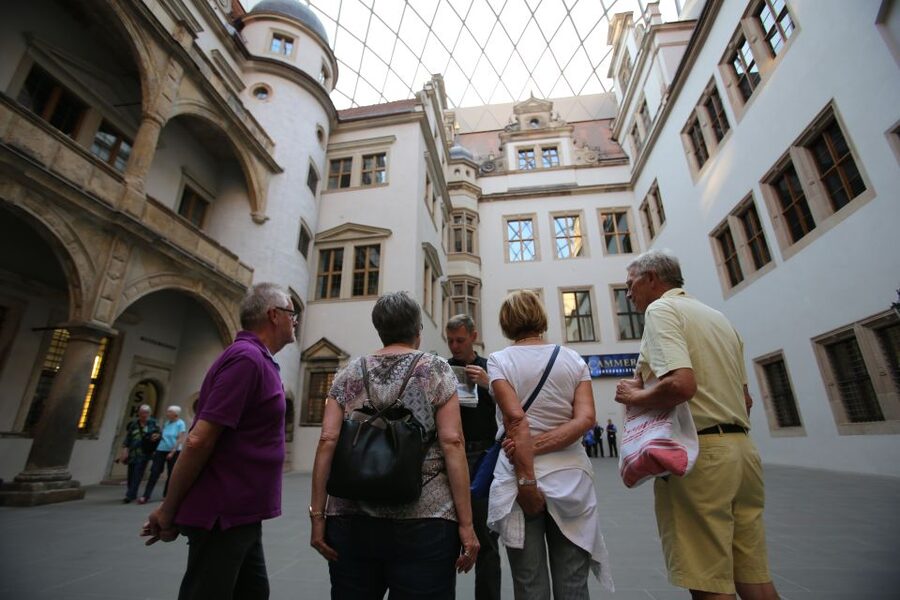
Dresden’s history is right on the sidewalk. This private guided walk stitches together the Baroque look of the city with the darker and brighter chapters that shaped it. I especially like the small group feel, plus the way a licensed guide turns stops like Frauenkirche and the Zwinger into clear stories you can actually follow. One thing to consider is that the tour runs in English or German only, so you’ll want to match your language before you go.
You start at Neumarkt, then work your way across major landmarks in about 2 hours, finishing near Frauenkirche. It is a great setup for first timers who want the big “must-see” sights, without feeling rushed. The one catch is that because it is a walking tour through the historic core, you’ll want comfortable shoes, especially if you visit in warmer or wetter weather.
In This Review
- Key things I’d plan around
- Neumarkt Meeting Point and the Smart 2-Hour Route
- Frauenkirche and Semperoper: Why Dresden’s Baroque Feels Theatrical
- The Dresden Baroque Zwinger: Architecture With a Point
- Dresden Castle Area, Brühl’s Terrace, and the Procession of Princes
- Dresden Cathedral and Taschenbergpalais: Seeing the Story Across Centuries
- Augustus Bridge and the Finish Near Frauenkirche
- 1000 Years in 2 Hours: How the Guide Makes the Timeline Click
- Insider Tips You’ll Actually Use After the Walk
- Price and Value for a Private Group Up to 25
- Who This Walking Tour Suits Best
- A Balanced Note About Reliability
- Should You Book This Dresden Private Guided Walking Tour?
- FAQ
- How long is the Dresden private guided walking tour?
- Where do we meet the guide?
- What is the group size limit?
- What languages are available for the tour?
- Is the tour wheelchair accessible?
- Is this tour private?
- Will we need to buy tickets or stand in line?
- What sights are included on the walking route?
- What type of guide will we have?
- Can I cancel or adjust my booking plans?
Key things I’d plan around
- Licensed guide stories that connect medieval Dresden, Renaissance energy, and Baroque splendor
- Neumarkt to Frauenkirche route that hits the headline sights in a tight, smart loop
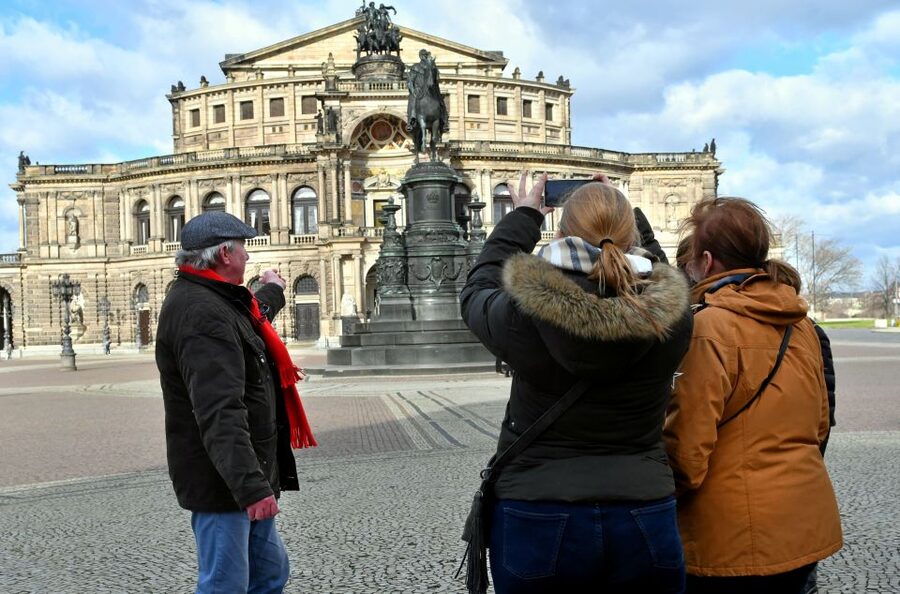
- Baroque Zwinger + Semperoper views that explain why Dresden looked the way it did
- Old-town courtyards and terraces such as Brühl’s Terrace and Stallhof, where details matter
- Peaceful Revolution of 1989 context tied to how people in former East and West lived
Other walking routes through Dresden
- Dresden: City & Semperoper Guided Walking Tour★ 4.8 · 2,293 reviews
- Dresden: Guided City Walk with a Cup of Coffee★ 4.7 · 1,568 reviews
- Dresden: Complete Walking Tour with Frauenkirche Visit★ 4.8 · 700 reviews
- Dresden: Walking Tour with a Night Watchman and Meal★ 4.4 · 487 reviews
Neumarkt Meeting Point and the Smart 2-Hour Route
The tour begins at Dresden Information at Neumarkt 2, in the QF Passage basement floor. I like this choice because Neumarkt is already the heart of the action, so you can get your bearings fast. Also, having the meeting point inside a passage area tends to make meetups easier when you’re navigating a crowded old town.
At 2 hours, this is not a “slow museum day.” It is a walking highlights tour with enough context to make the streets feel meaningful. The route is designed to start with the showstoppers, then flow into the surrounding Baroque ensembles, and finally circle back toward Frauenkirche. For you, that means less guessing and more time standing where the best architectural angles are.
Group size is capped at 25, and it is a private group. That matters because it gives your guide flexibility to adjust pacing and answer questions, rather than treating you like a line item. You’ll feel the difference when the guide can keep an eye on the whole group, including people who drift to read details.
Frauenkirche and Semperoper: Why Dresden’s Baroque Feels Theatrical
From Neumarkt, you’ll head straight into Dresden’s most iconic visual rhythm: churches, palaces, and opera-class architecture all playing to drama. The walk is set up so you can see how the city looks when it is treated like a stage.
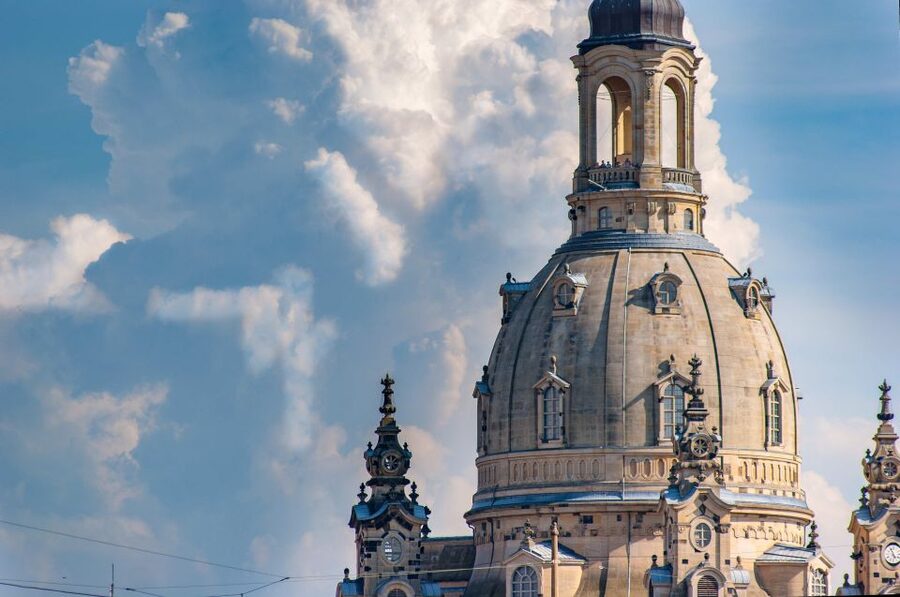
Frauenkirche is often the headline stop, but what makes it more than a photo moment is the way your guide frames it in Dresden’s bigger story. You’ll get the sense that this is not just a pretty facade. It’s a symbol tied to identity, history, and the long arc of rebuilding and change.
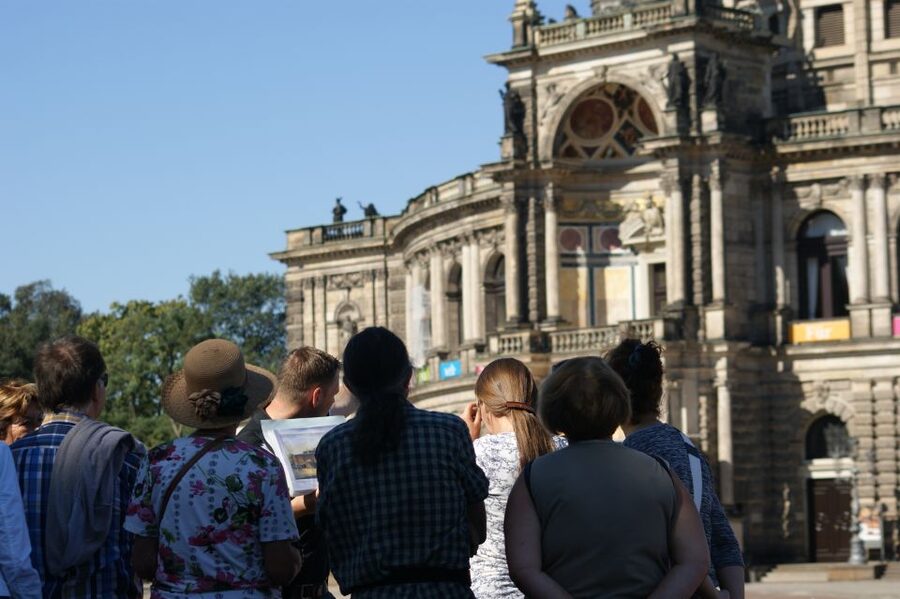
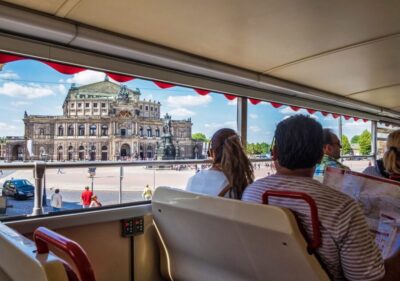
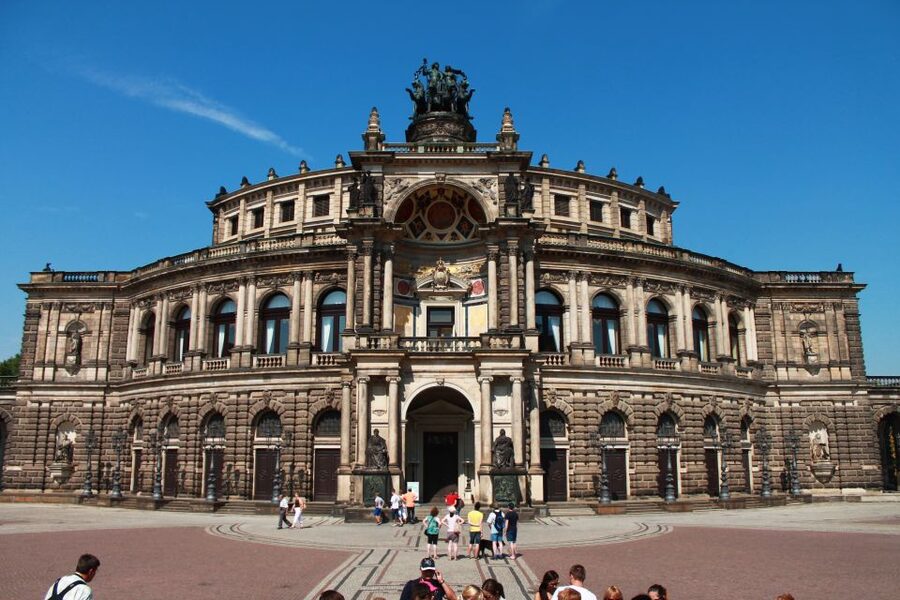
Semperoper sits in the same conversation. Even if you’ve never been inside, you can still read what the building represents. Your guide will point out the details that help you understand why opera and civic prestige belonged together in this period. This is where a good guide earns their fee, because they can explain the “why” behind ornament and massing, not just point at shapes.
Practical tip: if you want photos, pause at the natural open spots where the street widens. Inside the tight alleys, you can end up standing in a spot where you see only part of the view. The tour pace usually gives you just enough time to step into the angle and then keep moving.
The Dresden Baroque Zwinger: Architecture With a Point
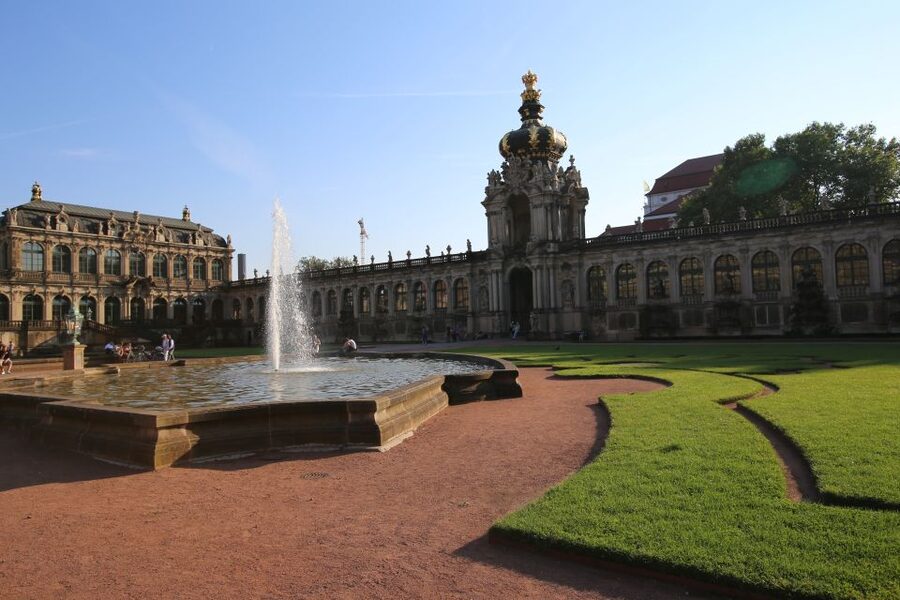
Next, the route brings you to the Baroque Zwinger, one of Dresden’s most recognizable ensembles. This is where the tour’s Baroque focus really earns its keep. The guide’s job here is to help you look past “pretty buildings” and notice patterns: symmetry, movement, and the way each element supports the next.
The Zwinger area is especially helpful for first-time visitors because it teaches you how Baroque design works. You learn to spot the building logic instead of getting lost in the decorative overload. That sounds small, but it changes everything. After your guide explains it, you start seeing structure under the decoration.
If you like architecture, you’ll also appreciate how a walking format helps. You can look up, step back, and catch different perspectives as you move. With a bus tour, you often miss those micro-changes. On foot, you catch the building’s “sentence flow,” where each section leads to the next.
And because you’re learning Dresden’s timeline as you go, it’s easier to connect this Baroque brilliance to earlier medieval roots and later political shifts. This tour treats architecture like a historical document, not just a backdrop.
Dresden Castle Area, Brühl’s Terrace, and the Procession of Princes
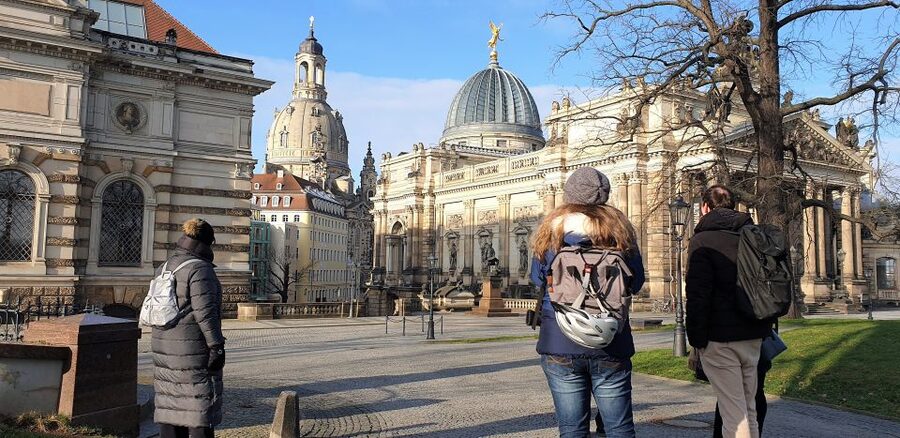
Once you move toward Dresden Castle, the vibe shifts from street-level highlights into a more commanding view of the city. This is one of the strongest parts of the route because it gives you scale. You start to see how Dresden’s power and prestige played out in space.
From there, you’ll visit Brühl’s Terrace, a spot famous for its views and for the way it frames the Elbe-side cityscape. I like this stop because it breaks the run of close-up details and gives you a calmer sense of orientation. You can finally connect the buildings you’ve been seeing with the geography around them.
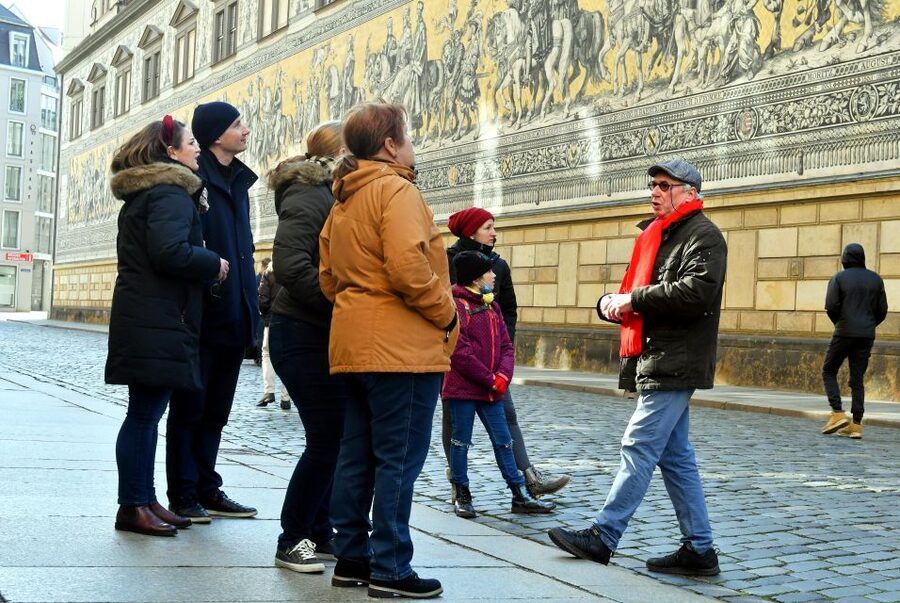
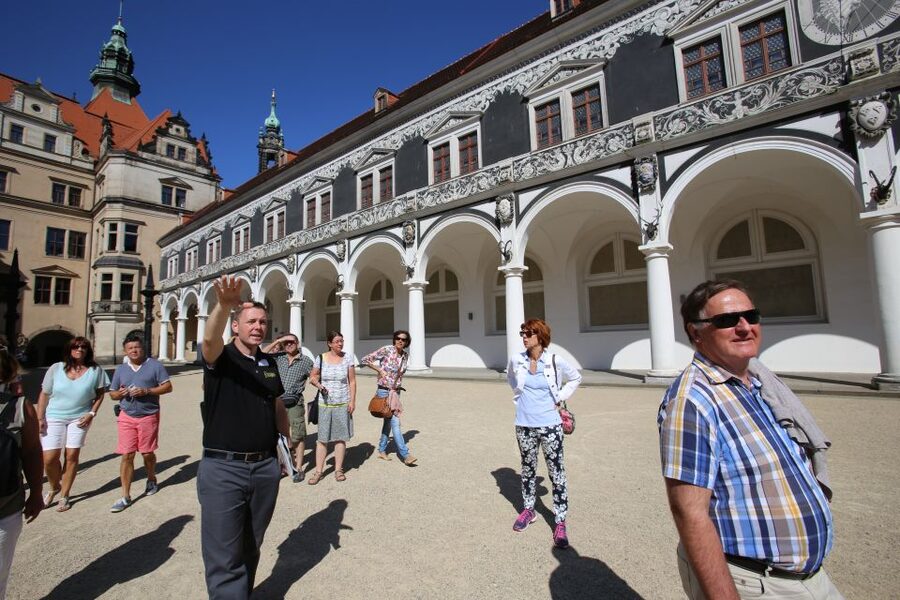
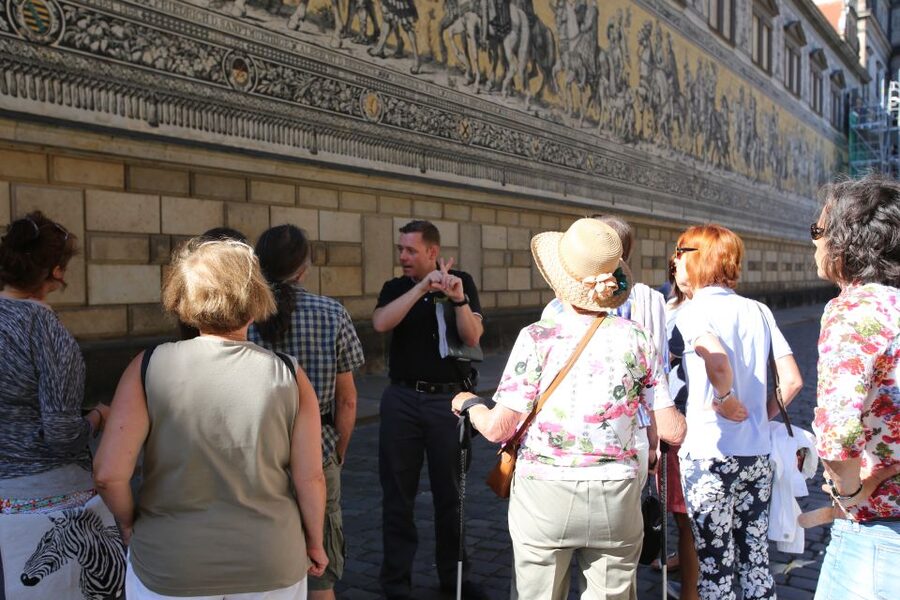
Then comes the Procession of Princes and nearby historic spaces such as the Stallhof. These stops are perfect for people who like to know what they are looking at. Your guide can explain symbolism and how the city projected authority through art and sculpture, not just through walls.
Stallhof, in particular, is the kind of place you might walk past on your own without understanding what it is. In a guided setting, you learn why courtyards and passages matter. They weren’t only decorative. They shaped movement, social life, and how power presented itself to visitors.
Practical note: expect to spend a bit of time standing and looking. If you’re bringing a mobility device, ask your guide about the best spots to pause, since the old town has uneven surfaces and tight turns in places.
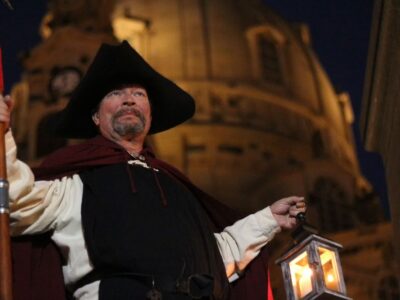



Dresden Cathedral and Taschenbergpalais: Seeing the Story Across Centuries
As the route continues, you’ll reach Dresden Cathedral and then head toward Taschenbergpalais. This portion is valuable because it helps you feel the timeline, not just memorize buildings. Your guide connects the city’s long history, explaining shifts from medieval life to later eras and the cultural energy that shaped what you see today.
Taschenbergpalais is a good mid-walk anchor. It is close enough to keep your momentum, but it also gives you a chance to shift your attention from the biggest headline monument style to a different architectural mood. Your guide’s commentary matters here, because without it you might focus only on what’s visible from the street and miss why the building matters in the larger ensemble.
This is also a section where you can ask questions. If the guide has already explained how Baroque design works, you can follow up with something like: how did different eras change building priorities in Dresden? That’s the kind of question a licensed guide can answer with confidence.
Augustus Bridge and the Finish Near Frauenkirche
The walking route ends near Frauenkirche, and one of the key steps right before that is Augustus Bridge. Crossing or viewing from a bridge always helps you read a city differently. You see how streets align, where sightlines open, and how landmarks connect visually.
Augustus Bridge gives you a “movement view,” which makes it easier to remember the tour as a loop rather than a set of disconnected stops. You also get that satisfying feeling of closing the circle, since the tour concludes back toward the landmark that anchors the start of your walk.
When I think about what makes a tour like this worth booking, ending near Frauenkirche is smart. It gives you an obvious final point for lingering photos, and it helps you keep your bearings if you plan to continue exploring on your own afterward.
1000 Years in 2 Hours: How the Guide Makes the Timeline Click
This tour is more than a list of monuments. It’s built around the idea that Dresden’s streets carry the weight of time. Your guide frames the city’s history across over 1000 years, from medieval periods all the way to the present.
The most important context is how the guide handles the more difficult chapters. You’ll hear about the dark times of the Middle Ages, the shift into Renaissance vigor, and then the Baroque grandeur that shaped the city’s visual identity. That arc is helpful because it gives you a sense of continuity. Dresden’s story isn’t random. It has cause and effect.
Then your guide adds the political and human side, including the Peaceful Revolution of 1989, and what it might have felt like for people living in what had been former East and West Germany. This is where a local, licensed guide can do real work. They can translate big political events into human scale, tied directly to places you can stand in front of.
One small note: in a 2-hour walk, the timeline is necessarily selective. The value is that the guide chooses the moments that help you understand what you’re seeing. If you want a book-level history course, you’d need a longer format. But for connecting the dots quickly, this does the job.
Insider Tips You’ll Actually Use After the Walk
The tour includes insider tips, especially for restaurants and events. I love this detail because Dresden is one of those places where your best day often comes from local suggestions. After a walk like this, you’re already in the center. So the tips become actionable right away, whether that means where to eat that night or what to check out while you’re still nearby.
You’ll also benefit from the guide’s ability to point out what to notice next if you continue on your own. With Baroque cities, the fun comes from pattern recognition. Once your guide teaches you how to look at the buildings, you keep that skill as you wander.
The review highlights fit this: people praised guides for sharing both historical and humorous information, and they liked how guides adjusted to the group and showed special corners of Dresden. One guide named Frau Schulz was singled out for making the tour work for young and old, and another named Idiko was described as sensational. That tells me the best outcome is not just facts, but pacing, tone, and how the guide keeps a mixed group engaged.
Price and Value for a Private Group Up to 25
The price is $212 per group for up to 25 people, with a 2-hour duration. On paper, that can sound like a “big number.” In practice, it can be excellent value because it’s priced per group, not per person.
Here’s the practical way to think about it. If you are traveling as a family or a small group, your effective cost per person can be higher. If you have a group closer to the maximum size, the cost per person drops quickly and the experience becomes a bargain for the level of guidance you get.
Also, you get a licensed, enthusiastic guide, plus insider restaurant and event tips. That’s not a tiny add-on. A good guide helps you avoid the common first-timer problem, which is wandering into the wrong areas or spending time on stops that do not connect to your interests.
Finally, the tour notes that it includes skipping the ticket line. That can matter for your day planning, because it reduces friction. Even if you’re not visiting every stop inside a building, saving time tends to improve the overall flow of a short walk.
Who This Walking Tour Suits Best
This is a strong fit if you want a guided Baroque overview of Dresden without a full-day schedule. It’s also ideal if you like stories that connect art and architecture to real events, including the political shock of 1989.
You’ll probably enjoy it most if:
- You are a first time Dresden visitor who wants the major sights efficiently
- You like architecture and want help reading it instead of just photographing it
- You want history with human context, not just dates
- Your group includes different ages, since guides have been praised for keeping both young and older participants engaged
If you already know Dresden deeply and want a slower, more academic format, you might prefer a longer specialized tour. With only 2 hours, this is intentionally a “high-impact highlights” approach.
A Balanced Note About Reliability
Like any live tour, the biggest risk is not the content. It’s whether the session runs smoothly. There is at least one report of a no-show situation, plus another complaint that a refund did not happen as expected. I’m not going to pretend that’s your likely experience, but it is a reminder to keep an eye on your confirmation and timing.
If you want to reduce stress, plan to arrive early at the meeting point at Dresden Information in QF Passage, basement level at Neumarkt 2. Then stay reachable in case the guide needs to coordinate. If your schedule is tight, build a small buffer so a delay does not wreck your day.
Should You Book This Dresden Private Guided Walking Tour?
Book it if you want a guided, Baroque-forward walk that connects key sights like Frauenkirche, Semperoper, the Zwinger, and Dresden Cathedral to a larger timeline ending with the meaning of 1989. You’ll also like it if you care about local tips for food and events, because those often improve the rest of your trip.
Skip it or look for an alternative if language mismatch is a concern, or if you want a deeper, slower history session. And if your group is very large, remember the tour cap is up to 25, and it is a walking format through the old center.
If your goal is to get oriented fast, see the most important sights, and walk away with a clear sense of why Dresden looks the way it does, this private 2-hour plan is a practical choice.
FAQ
How long is the Dresden private guided walking tour?
It lasts 2 hours.
Where do we meet the guide?
Meet at Dresden Information, Neumarkt 2, 01067 Dresden, Germany, in the QF Passage basement floor.
What is the group size limit?
The maximum group size is 25 persons.
What languages are available for the tour?
The tour is offered in English and German only.
Is the tour wheelchair accessible?
Yes, it is listed as wheelchair accessible.
Is this tour private?
Yes, it is a private group.
Will we need to buy tickets or stand in line?
The tour notes that you can skip the ticket line.
What sights are included on the walking route?
You’ll see major attractions including Frauenkirche, Semperoper, the Baroque Zwinger, Dresden Castle, Brühl’s Terrace, the Procession of Princes, Stallhof, Dresden Cathedral, Taschenbergpalais, and Augustus Bridge, with the walk concluding near Frauenkirche.
What type of guide will we have?
You get a professional, licensed, enthusiastic guide.
Can I cancel or adjust my booking plans?
Free cancellation is offered up to 24 hours in advance for a full refund, and there is also a reserve now and pay later option.
Pavements of Dresden
Everything else we filed on Dresden
- Outdoor escape game – the magical portal
★ 5.0 · 11 reviews - City Tour and Guided Tour in the New Green Vault – Program C – The Festive
★ 5.0 · 11 reviews - Bohemian and Saxon Switzerland Day Trip All inclusive-Winter Tour
★ 5.0 · 11 reviews - Escape Game Outdoor: Operation Mindfall
★ 5.0 · 12 reviews - Moritzburg: Scavenger Hunt Self-Guided Walking Tour
★ 4.8 · 12 reviews - Dresden: Bike Rental – City Bike with Option Children Seat
★ 4.5 · 13 reviews
Private, side by side.
 ★ 4.8Berlin: Private Reichstag and Glass Dome TourFrom $2882,226 reviews
 ★ 5.0Berlin Private Complete History All Day Walking TourFrom $253474 reviews
 ★ 5.0Munich Private Tour with a Local – Highlights & Hidden GemsFrom $112469 reviews
 ★ 5.0Private Walking Tour Berlin Third Reich Hitler and World War IIFrom $192360 reviews
 ★ 5.0Your private 3-hour Hamburg driving tour with a former policemanFrom $337304 reviews
 ★ 5.0Private Berlin: Iconic Sights and Hidden Gems Walking TourFrom $192292 reviews
 ★ 4.8Nuremberg: 1.5-Hour Private Tour through Historical Old TownFrom $140283 reviews
 ★ 5.0Berlin Private Half-Day Walking Tour: Discover the German Capital’s HistoryFrom $180244 reviews