
REVIEW · WARTIME HISTORY
Third Reich Berlin: Hitler and WWII Walking Tour
Berlin gets dark fast. This 3-hour walk through the end of WWII uses real locations, from Hitler’s bunker area to the Reichstag, to explain how Nazi power collapsed. I especially like the small-group pace and the way guides make places like Goebbels’ propaganda headquarters make sense, even when the topic is heavy. One heads-up, you cover serious ground on foot, so plan for cold weather and comfy shoes.
At around $24.07 for a local expert guide and an English route, it’s strong value for a half-day commitment. You get a mobile ticket, start at Reichstagufer 17 near the Reichstag area, and finish near Topography of Terror by Checkpoint Charlie, which makes it easy to keep exploring afterward.
In This Review
- What Makes This Tour Worth Your Time in Berlin
- Friedrichstraße and Reichstagufer Start, You Get the Map Early
- Trains to Life, Trains to Death, The Holocaust Story Through Transport
- Reichstag Building, From 1933 Fire to Soviet Victory in 1945
- Tiergarten Soviet Memorial, A Direct Reminder of WWII’s Human Cost
- Brandenburg Gate and the Nazi Propaganda Backdrop
- Holocaust Memorial to the Murdered Jews of Europe, Walking the Disorientation
- Wilhelmstrasse and Niederkirchnerstraße, The Admin Behind the Atrocities
- Goebbels, Arts, and Propaganda’s Physical Footprint
- Hitler’s Bunker Area, The Final Days at the Place It Happened
- Topography of Terror Finish Near Checkpoint Charlie
- Shoes, Steps, and Weather, Your Real Trip Essentials
- Price and Value: What $24.07 Buys You in Berlin
- Should You Book the Third Reich Berlin Tour?
- FAQ
- How long is the Third Reich Berlin walking tour?
- What is the price per person?
- What language is the tour offered in?
- Where do we meet and where does the tour end?
- Is the ticket mobile?
- What is included in the tour price?
- Is hotel pickup or drop-off included?
- Are there admission fees at the stops?
- How big is the group?
- Is there free cancellation?
- Is the tour entirely outdoors?
What Makes This Tour Worth Your Time in Berlin
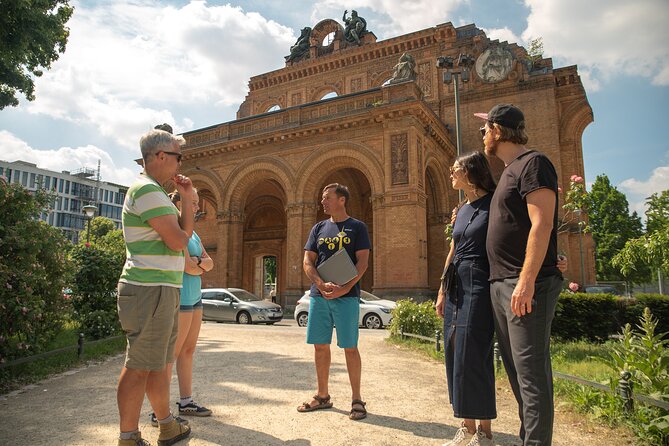
- Places you can actually point to: Hitler’s bunker location area, the Reichstag, and major government sites along Wilhelmstrasse keep the story anchored in real geography.
- Memorials that connect dots: You visit Holocaust-focused sites like Trains to Life, Trains to Death and the Memorial to the Murdered Jews of Europe.
- WWII endgame told on the sidewalk: The Battle of Berlin comes alive with stops tied to the Soviet assault and Red Army remembrance in Tiergarten.
- Clear storytelling from guides with real personality: Reviews highlight guides such as Maria, RU, Tom, Canadian Chris, Paul, and Ciarán for calm, engaging delivery and strong question handling.
- A practical, central route: You’re close to major transit corridors and finish near Checkpoint Charlie, so it fits well with other Berlin sightseeing plans.
Further wartime history walks we have written up
- Berlin: Third Reich and Cold War 2 Hour Walking Tour★ 4.9 · 6,830 reviews
- Berlin’s Best: 2 Hour Walking Tour Third Reich and the Cold War★ 5.0 · 5,486 reviews
- Third Reich Berlin: Hitler and WWII Walking Tour★ 5.0 · 3,301 reviews
- Berlin: Third Reich, Hitler, and WWII Walking Tour★ 4.9 · 1,133 reviews
Friedrichstraße and Reichstagufer Start, You Get the Map Early
Most people walk into Berlin thinking it’s just monuments and neighborhoods. This tour starts by giving you a framework so the rest of the route clicks together fast. You meet at Reichstagufer 17, and the early orientation sets up what you’ll be seeing next around the Reichstag, Wilhelmstrasse, and the memorial zones.
I like how the early stage is about context, not just a list of names. It helps you understand why Nazi leadership offices were clustered here, and why 1933 and 1945 mattered so much to Berlin’s political story. Also, you get a simple rhythm for the walk, which matters because the route is outdoors and you’ll be moving for the full 3 hours.
If weather is brutal, this is the point where you’ll feel it most. Berlin winters can mean wind and cold for the whole session, and reviews specifically call out dressing for the elements and bringing the right footwear.
Trains to Life, Trains to Death, The Holocaust Story Through Transport
One of the most powerful stops is Trains to Life, Trains to Death, which focuses on the deportation of Jews from Berlin to Nazi concentration camps during WWII. It’s short in time, but it hits hard because it explains the machinery of persecution through the act of transport itself.
What I like here is the clarity of purpose. This memorial is not about vague guilt or general suffering. It’s about the specific process, the forcible removal from homes, and the train system that made mass murder industrial.
Because the topic is so serious, you should expect a solemn tone. If you need a break, you can take it there, but the stop is designed to be brief, not diluted. It’s also free entry, so you’re not stuck weighing extra tickets while the story is at peak intensity.
Reichstag Building, From 1933 Fire to Soviet Victory in 1945
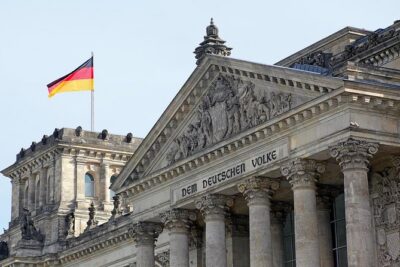
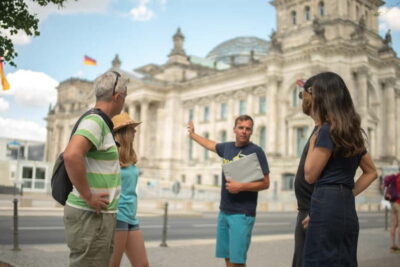
Then you reach the Reichstag, one of Berlin’s most symbolic buildings. In 1933, a fire damaged the building, and the Nazis used it as a pretext to dismantle democratic freedoms. In 1945, after the Battle of Berlin, a Soviet flag was raised over the Reichstag, marking a major symbolic moment in the fall of Nazi Germany.
This stop is special because it compresses two turning points into one place. You’ll understand how the Nazis used crisis to seize power, and how the end of WWII in Berlin became a public, visible defeat. The building itself is a clear reminder that propaganda and power can be built with images as well as laws.
Important practical note: Reichstag building admission is not included. So if you plan on going inside, you’ll want to budget time and money accordingly. Even if you mainly take it as an exterior stop, the context your guide gives makes the surrounding area feel less like sightseeing and more like history you can read.
Tiergarten Soviet Memorial, A Direct Reminder of WWII’s Human Cost
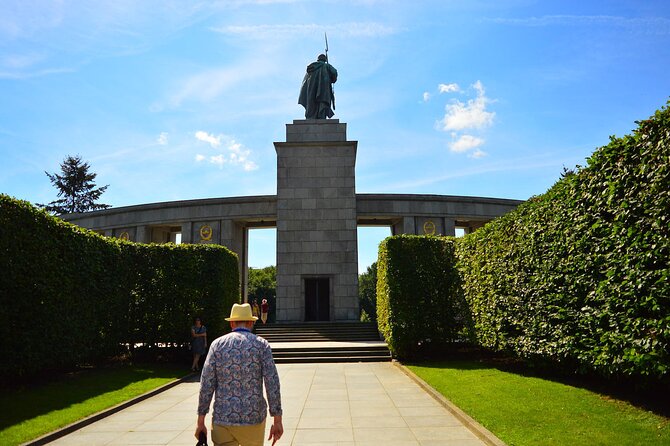
Next is the Soviet War Memorial in Tiergarten, a tribute to Soviet soldiers who fought and died in the Battle of Berlin in 1945. You’ll see a large statue of a Soviet soldier holding a flag, with the composition designed to show defeat of Nazism.
This stop works well because it balances the story. Many Berlin WWII tours focus only on the Nazi side or the German experience. Here you get the Allied perspective in a visible, permanent form, and it doesn’t read like propaganda. It’s about remembrance and the cost in lives.
Admission is free, and the setting is central enough that it doesn’t feel like a detour. You can also use this stop as a mental reset. After the intensity of Holocaust memory, and the political symbolism of the Reichstag, Tiergarten puts your attention back on the war’s aftermath and how Berlin was physically and emotionally shaped by it.
Other walking routes through Berlin
Brandenburg Gate and the Nazi Propaganda Backdrop
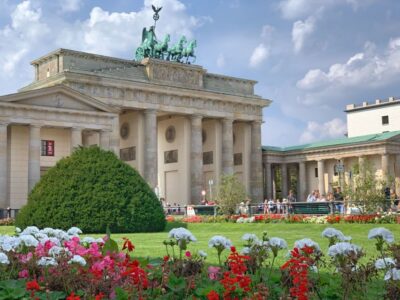
The Brandenburg Gate is one of Berlin’s big postcard sights, but the tour asks you to look at it with sharper eyes. During the Nazi era, it became a stage for public events and rallies, and it was decorated with swastikas. Today it’s associated with German reunification, yet its Nazi-era use is part of what’s embedded in the place.
I like that the guide keeps it grounded in meaning. You’re not just told it was important. You’re shown how the regime used architecture and ceremony to project authority and militaristic ideals to crowds.
This stop is quick, free entry, and ideal if you want an iconic landmark without losing the historical thread. It’s also a reminder that in Berlin, even the famous photospots have second and third layers.
Holocaust Memorial to the Murdered Jews of Europe, Walking the Disorientation
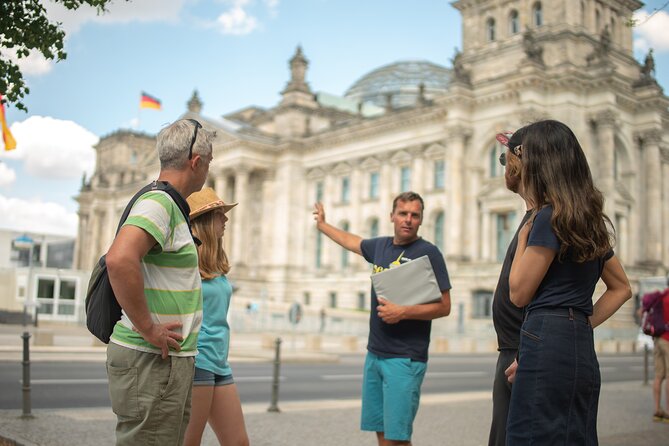
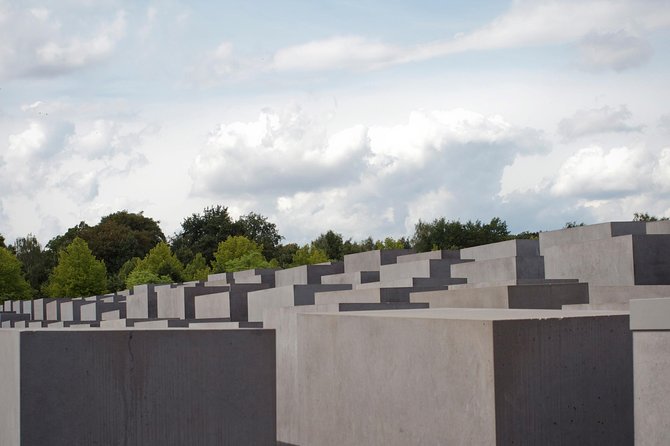
The Holocaust Memorial to the Murdered Jews of Europe is a stop that requires your full attention. It consists of 2,711 concrete slabs of varying heights, creating an undulating space that can feel intentionally disorienting as you walk through it.
This memorial hits differently than a traditional museum because it’s designed for physical experience. You don’t just look at the subject. You move through it, and the geometry does part of the emotional work.
It’s free entry, and it’s one of those places where it helps to pause and not rush. The tour gives you time to absorb it, and the context your guide provides makes it easier to connect the memorial to the broader deportation and extermination story you already heard at Trains to Life, Trains to Death.
Wilhelmstrasse and Niederkirchnerstraße, The Admin Behind the Atrocities
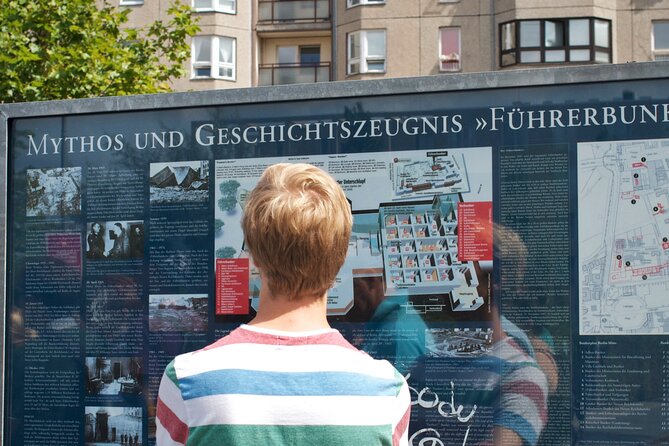
Later, the tour shifts to Wilhelmstrasse, a central hub for Nazi governance. Here you connect the dots between the offices that managed war and persecution and the public narratives used to keep control. The street housed key ministries and high-ranking officials, including Joseph Goebbels, and it’s the kind of setting where bureaucracy becomes a weapon.
Your guide also points you toward the Luftwaffe leadership presence at the former Air Ministry, tied to Hermann Göring’s role. This matters because air power and war planning were not side stories to the regime. They were central tools to push Hitler’s agenda.
One reason I value this section is that it turns Berlin’s government buildings into evidence. You start to see how policy, propaganda, and military operations lived in the same city blocks. The tour also helps you understand why it was so effective to centralize power in a walkable area.
Everything here is free entry in the stops listed, but you should expect to take in a lot of information. If you’re prone to sensory overload, pace yourself and ask your guide to repeat a key point. Reviews repeatedly highlight guides who handle questions well, including RU and Paul, and that makes a difference when the material is emotionally dense.
Goebbels, Arts, and Propaganda’s Physical Footprint
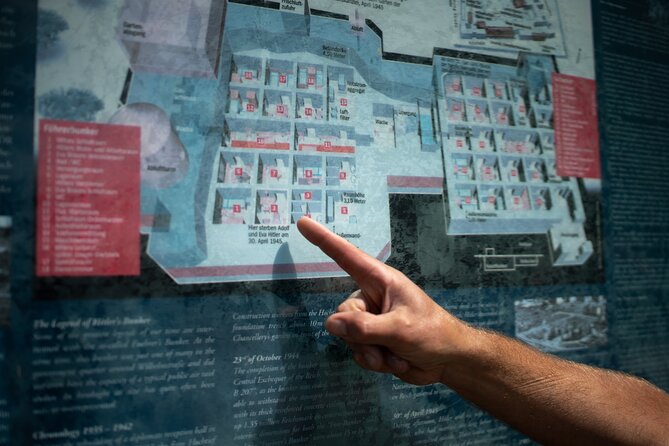
The tour also brings in sites tied to propaganda and the regime’s cultural reach. You’ll stop near the Ministry of Propaganda, where Joseph Goebbels composed famous speeches, and you’ll also encounter discussion around Albert Speer’s architectural influence connected to the Akademie der Künste.
I like this angle because it prevents a common mistake. It’s easy to treat Nazi power as only military or only political. Berlin shows it was also aesthetic and institutional. Speer’s monumental, neoclassical design approach and the regime’s use of space fed the idea of authority and destiny, and the arts world had to wrestle with that legacy after the war.
Admission is free for these stops. The value here is the interpretation your guide provides, especially if you’re the type of traveler who wants to understand how ideology can be made to feel normal through design and repetition.
Hitler’s Bunker Area, The Final Days at the Place It Happened
The tour then gets very direct with the end of WWII. You’ll stand near the location of Hitler’s bunker and Reich Chancellery area built by Albert Speer, tied to the final days and death in April 1945.
This is one of the stops where good guiding style really shows. One review notes how guide Eran timed the reveal of the bunker site by pointing it out only after reaching the exact location, which makes the moment land harder. That kind of staging is not just dramatic. It helps your brain process the significance while you’re actually standing in the right spot.
It’s also a reminder that this story is not abstract. It has coordinates. For many people, this stop is the emotional peak of the route.
Keep in mind the tour is outdoors, and this is also the time you’ll likely feel the cold most. Dress for it. Multiple reviews emphasize warm layers, and the walking pace can be brisk.
Topography of Terror Finish Near Checkpoint Charlie
The tour ends at Topography of Terror at Niederkirchnerstraße 8, near Checkpoint Charlie. This museum and memorial sits on the site of former SS and Gestapo headquarters and focuses on Nazi repression, persecution, and the Holocaust.
This ending is smart for two reasons. First, it ties the earlier stops about government ministries and propaganda to the organizations that enforced terror. Second, it gives you an anchored place to process what you’ve heard across the walk.
Admission is not listed as included for this stop, but the focus of Topography of Terror as a museum makes it a strong final chapter. Even if you only skim, the transition is clear: from the public face of the regime to the machinery behind it.
Because you finish near a major tourist corridor, it’s easy to continue your Berlin day afterward without scrambling for transport.
Shoes, Steps, and Weather, Your Real Trip Essentials
This tour is 3 hours of walking outdoors, with a maximum of 25 people. That small group size keeps it manageable, but it also means you should be ready to keep moving.
A review specifically mentions expecting around 5,000 steps briskly between points of interest. That’s not a slow stroll. If you’re coming from another long Berlin day, plan lighter. If you’re traveling with someone who struggles with walking, consider that reality before you book.
Weather matters. Reviews include examples of very cold conditions, including subzero temps, and the advice is consistent: layer up and wear comfortable shoes you can rely on. Also, the tour meets at a central transit area, so you can build a simple route around it, but you still need to dress for the outdoors part of the program.
Price and Value: What $24.07 Buys You in Berlin
At $24.07 per person for about 3 hours, the value is strong, mainly because your guide connects sites that are otherwise easy to treat like separate attractions. You get a local expert guide and a structured route that makes the city’s Nazi-era footprint readable.
Many of the stops here are free, so your main potential cost beyond the tour is the Reichstag building admission, which is listed as not included. If you’re trying to keep your spending controlled, this is a budget-friendly way to see a lot of ground without museum-by-museum ticket stacking.
Also, because English is offered and you receive a mobile ticket, it’s easy to use day-of. And since the tour is typically booked about a month in advance, it’s smart to reserve early if your dates are fixed.
The biggest value, though, is interpretive. In reviews, guides like Tom, Canadian Chris, and Ciarán get praise for clear explanations and for keeping the pace understandable even with difficult subject matter. That kind of delivery turns a hard topic into something you can actually follow.
Should You Book the Third Reich Berlin Tour?
Book it if you want Berlin’s WWII and Third Reich story anchored to specific places, not just names on a sign. It’s a good fit for history lovers, and it also works well for people who want context about why democracy failed and how persecution became policy.
Skip it or think twice if you have limited mobility or you know you struggle with 3 hours of brisk walking in cold weather. The route also deals with heavy topics, so if you need a lighter day emotionally, you might choose a different theme.
If you’re aiming for a well-paced half day that ends near Checkpoint Charlie and helps you understand the city beyond the usual highlights, this is a strong choice.
FAQ
How long is the Third Reich Berlin walking tour?
It runs for about 3 hours.
What is the price per person?
The price is $24.07 per person.
What language is the tour offered in?
The tour is offered in English.
Where do we meet and where does the tour end?
You start at Reichstagufer 17, 10117 Berlin, Germany, and the tour ends near Topography of Terror at Niederkirchnerstraße 8, 10963 Berlin, Germany.
Is the ticket mobile?
Yes, it includes a mobile ticket.
What is included in the tour price?
It includes a local expert guide and the 3-hour walking tour.
Is hotel pickup or drop-off included?
No, hotel pickup and drop-off are not included.
Are there admission fees at the stops?
Most stops listed have free admission, but Reichstag building admission is not included.
How big is the group?
The group has a maximum of 25 travelers.
Is there free cancellation?
Yes. You can cancel for a full refund up to 24 hours in advance. If you cancel less than 24 hours before the start time, the amount paid is not refunded.
Is the tour entirely outdoors?
The tour is described as a walking tour with multiple outdoor sites, so you should plan for being outside during the full time.
Pavements of Berlin
Wartime History Walks We Have Reviewed
Everything else we filed on Berlin
- East Berlin: City of Shadows Walking Tour
★ 5.0 · 11 reviews - Berlin: Die Stachelschweine – Frank Lüdecke – Träumt Weiter
★ 4.7 · 11 reviews - Potsdam Day Trip from Berlin with a Local: Private & Personalized
★ 4.0 · 11 reviews - An Introduction to Berlin Walking Tour
★ 5.0 · 11 reviews - DJ for a Day: Learn to Mix Like a Pro in Berlin
★ 5.0 · 11 reviews - 2-H Segway Sightseeing Tour Berlin
★ 4.5 · 11 reviews
Third Reich and Wartime History Tours, side by side.
 ★ 4.9Berlin: Third Reich and Cold War 2 Hour Walking TourFrom $236,830 reviews
 ★ 4.6Munich: Third Reich & WWII Walking TourFrom $316,181 reviews
 ★ 5.0Berlin’s Best: 2 Hour Walking Tour Third Reich and the Cold WarFrom $245,486 reviews
 ★ 4.5Third Reich Walking Tour MunichFrom $454,291 reviews
 ★ 4.7Nuremberg: Walking Tour of Former Nazi Party Rally GroundsFrom $151,665 reviews
 ★ 4.9Berlin: Third Reich, Hitler, and WWII Walking TourFrom $201,133 reviews
 ★ 4.8Nuremberg: Historischer Kunstbunker WWII Art Bunker TourFrom $14921 reviews
 ★ 5.0Berlin Third Reich Sites: Half-Day Walking TourFrom $21835 reviews
Other lists this tour is on