
REVIEW · WARTIME HISTORY
Third Reich Walking Tour Munich
Munich has a second, darker map. This 2.5-hour English walking tour traces the Nazi propaganda machine across real city streets, with major stops that include Königsplatz and the route down toward Marienplatz. I love how the guide connects what you see on the ground to how power was built step by step.
My favorite part is the focus on what followed, with memorial tributes that honor people who opposed the regime. You also get a sense of how Munich looked during the rise of Hitler and the Nazis, not just a list of names and years. Guides mentioned in recent group experiences, including Michael, Jake, and Nicola, are praised for answering tough questions openly and keeping the tone respectful.
One thing to plan for: this is a street walk, so you are outside a lot. On chilly days, you’ll want warm layers and comfortable shoes.
In This Review
- Key Things to Know Before You Go
- Munich’s Third Reich Tour, What Makes It Worth Your Time
- Meeting at Radius Tours, Then Getting Oriented Fast
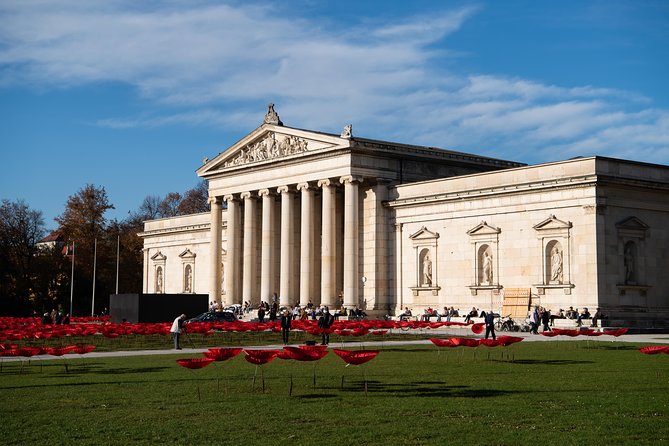
- Königsplatz: Where the Nazi Party Built Its Public Image
- Odeonsplatz: March Routes, Memorials, and the Tone Shift
- Hofbräuhaus Stop: When Even a Beer Hall Played Politics
- Old Town Hall: Munich’s Civic Face in the Nazi Era
- Marienplatz Finish: A Strong Ending Point for the Rest of Your Day
- Price and Value: What $45.95 Buys You in Real Terms
- Pacing and Foot Comfort: The Practical Side You Should Not Ignore
- Who This Tour Suits, and When It Might Not
- Should You Book This Third Reich Walking Tour in Munich?
- FAQ
- How long is the Third Reich Walking Tour in Munich?
- What does the tour cost?
- Is the tour offered in English?
- Where does the tour start?
- Where does the tour end?
- How big is the group?
- Is there a mobile ticket?
- Do I need good weather?
- What is the cancellation policy?
- Are service animals allowed?
Key Things to Know Before You Go
- Six purposeful stops in 2.5 hours: start at Radius Tours and finish at Marienplatz
- Königsplatz sets the stage: you’ll learn why it mattered to Nazi public visibility
- Odeonsplatz explains mass politics: marches and memorials in one meaningful area
- Hofbräuhaus gets its political context: how even famous beer-hall spaces were used
- Guides bring it to life: photos, question time, and a mid-tour break when possible
Further wartime history walks we have written up
- Munich: Third Reich & WWII Walking Tour★ 4.6 · 6,181 reviews
- Third Reich Walking Tour Munich★ 4.5 · 4,291 reviews
- Munich: Birthplace of the Third Reich Guided Walking Tour★ 4.6 · 771 reviews
- Munich World War II Sites Including Dachau Concentration Camp★ 4.5 · 570 reviews
Munich’s Third Reich Tour, What Makes It Worth Your Time
This walking tour is designed for one goal: help you read Munich the way it was read in the years leading up to World War II. You move through locations tied to Nazi propaganda, political organizing, and the route the movement took to gain power in the city. The key is that it is not only about Hitler. It is also about how propaganda worked, how crowds were organized, and how hate was sold as a future.
I like that the guide keeps your attention on cause and effect. You are not just standing in front of historic buildings wondering why they matter. You’re hearing why specific sites were useful to the Nazi Party, and how those same ideas caused real harm later. That connection between street-level signs and human consequences is what turns sightseeing into understanding.
If you want a first pass through this subject without getting lost in research rabbit holes, this tour gives you structure. You’ll get a clear arc, from early Nazi beginnings through catastrophic rise and wartime devastation. Then you end in the city center, so you can keep exploring with a better framework.
Meeting at Radius Tours, Then Getting Oriented Fast
The tour starts at Radius Tours, Dachauer Str. 4, just inside Munich’s central area. Check-in is quick, and it typically takes only a few minutes before you’re walking. If you want an easy start, show up a bit early so you can settle in, use the restroom if you need it, and be ready to go.
This is a mobile ticket experience. That means you’re not hunting for printed vouchers while you’re trying to find a small office entrance in a busy neighborhood. Also, it’s near public transportation, which matters because Munich’s transit can save you time if you’re staying a little outside the center.
Group size caps at 25 people, which makes the walking format feel manageable. You’re in a city where sites are close enough to connect by foot, but not so close that you waste time standing around. The pacing is built around moving, listening, and taking short breaks at the most important spots.
Königsplatz: Where the Nazi Party Built Its Public Image
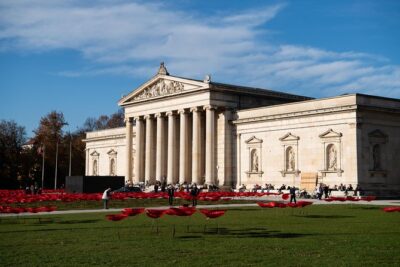
Königsplatz is one of the tour’s anchor stops, and it is there for a reason. The Nazi Party treated public spaces like tools, and you’ll learn how this landmark became part of their visibility and influence in Munich. This is the kind of place where architecture and symbolism can feel like they’re doing half the work for propaganda.
You’ll spend time here, enough to get more than a surface explanation. The point is to understand how the movement used spectacle and ideology together. You’ll also hear about the lead-up to World War II, which helps the images and stories connect to the bigger picture rather than feeling isolated.
What I found valuable is that the guide doesn’t treat the site like a museum piece. You’re learning how such locations supported the Nazi narrative in real time. That matters because it changes how you see the square once you’ve got the context.
Odeonsplatz: March Routes, Memorials, and the Tone Shift
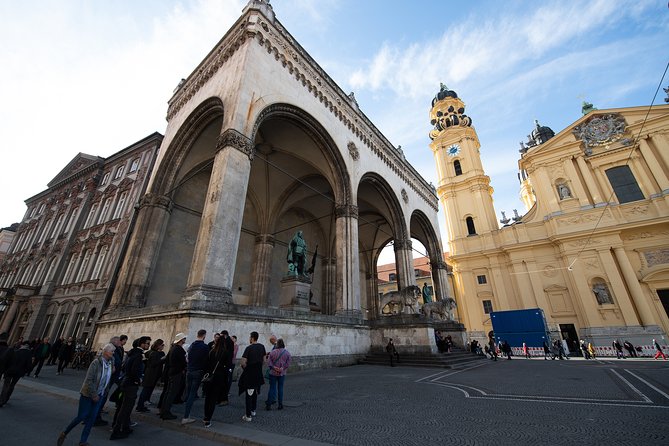
Next comes Odeonsplatz, where you’ll hear how the Nazi Party used the area for marches and memorials. This stop is often where the story gets emotionally heavier, because marches are not passive. They are public performance. They tell people who has power, what is normal now, and who must be excluded.
You’ll also see why memorials belong in this conversation. The tour doesn’t treat resistance like a footnote. You are guided toward remembrance for those who died opposing the ideology and the regime. That balance can be a relief if you worry a history tour will only focus on the perpetrators.
The time here is longer than some stops, which gives you a chance to slow down. If you like asking questions, this is where your guide can likely answer in a way that brings clarity to the entire arc. Several guides who have led this tour are praised for being open with uncomfortable questions, which can help you avoid leaving with blank spots.
Other walking routes through Munich
Hofbräuhaus Stop: When Even a Beer Hall Played Politics
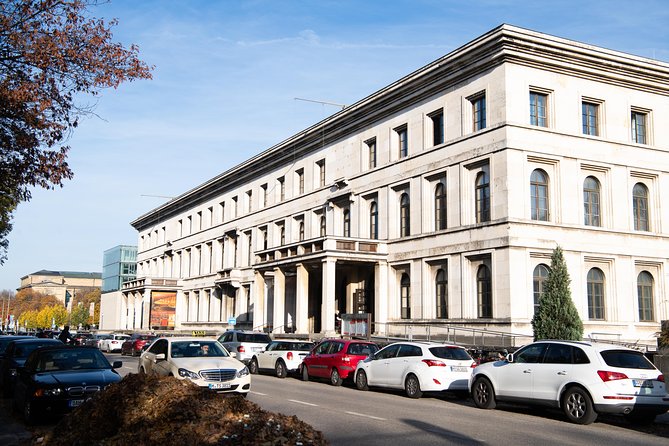
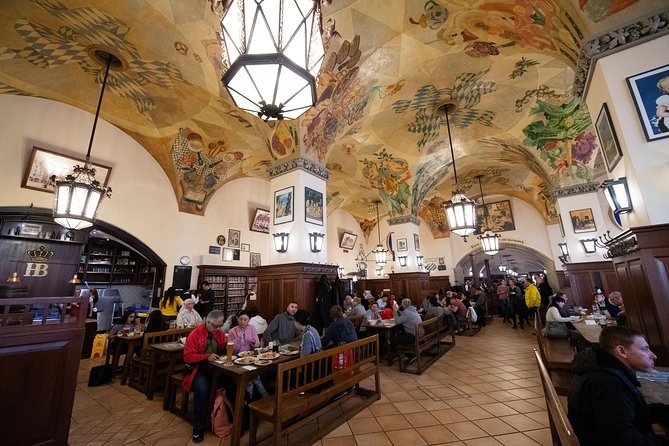
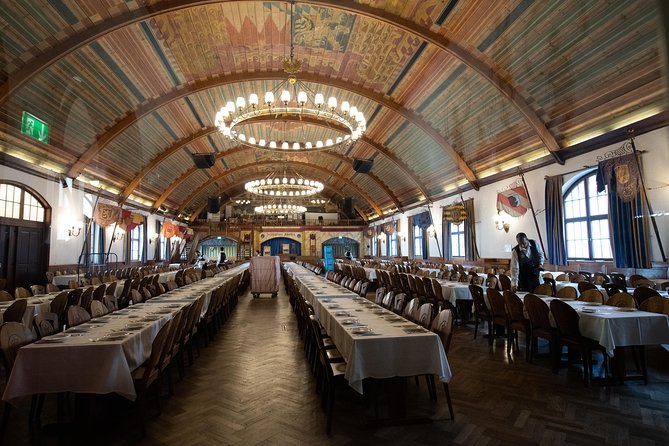
You then stop by the Staatliches Hofbräuhaus area. On this tour, the famous beer-hall setting is not treated as a fun detour. You get the political angle, including the fact that even the Hofbräuhaus became important for Nazi Party activities and political gathering spaces.
This is a striking lesson in how ideology can work through everyday settings. People often think political power only shows up in government buildings or official ceremonies. Here, the story shows how social spaces were repurposed, how crowds could be guided, and how a familiar cultural venue could help spread an ugly message.
The time here is set for a short, focused stop, not a long break for food. If you want to keep your day smooth, I’d treat it as a listening moment. You can always plan your real beer-hall visit for another time, once the tour has done its job.
Old Town Hall: Munich’s Civic Face in the Nazi Era
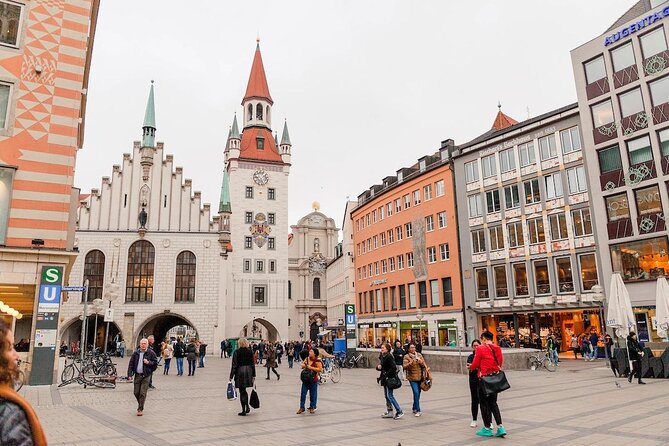
The tour moves to the Old Town Hall for another quick but meaningful stop. This is a place tied to Munich’s civic identity, and the guide uses it to show how the regime’s rise was not just about one person or one rally. It involved the city’s public life, the way officials and institutions were portrayed, and how authority could be staged.
Because the stop is short, it works best if you’re paying attention to how the guide connects it to the previous areas. Königsplatz gives you the stage, Odeonsplatz shows the marches and memorial tone, and the Old Town Hall adds the layer of official civic symbolism. It becomes a route through different kinds of power, all connected.
If you feel yourself wanting more time for this stop, you’re not alone. The whole tour is built to cover several major locations in a compact window. That can feel fast if you love taking notes, but it’s also why the tour works as an efficient overview.
Marienplatz Finish: A Strong Ending Point for the Rest of Your Day
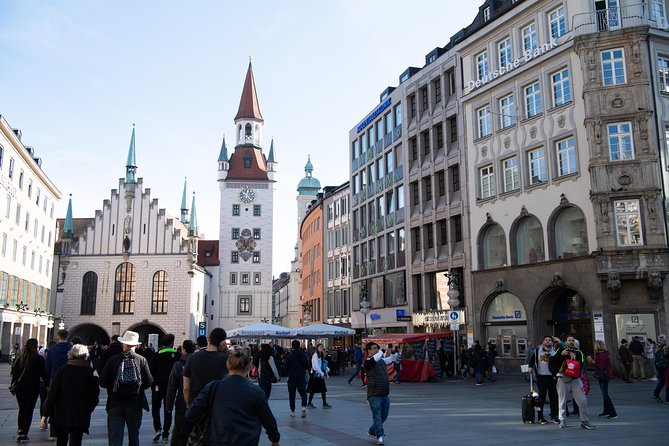
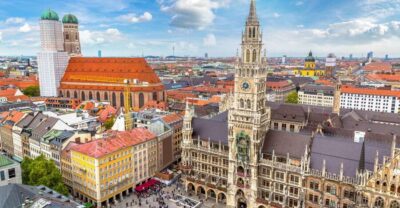
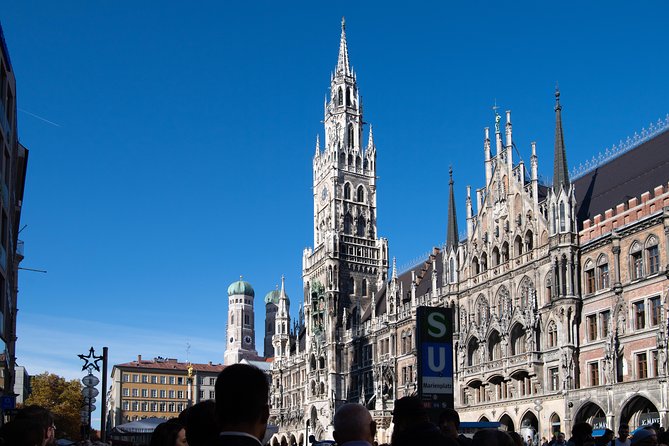
You finish back at Marienplatz in the center of Munich. That’s a practical choice because it puts you right in the heart of the city, with easy access to transit and plenty of nearby things to do after the tour ends.
What makes the finish point smart is the contrast. You spend the morning or afternoon moving through sites tied to propaganda, political gatherings, and remembrance. Then you step out at one of Munich’s busiest central squares. It’s a reminder that history is not locked away, even when the streets look normal.
Once you’re done, give yourself a little time before rushing into more sightseeing. The subject matter is intense, and the guide’s timeline is meant to stick. Even if you don’t want to process emotionally, you’ll likely want to process mentally, because you’ve just added a second layer to the city you’re standing in.
Price and Value: What $45.95 Buys You in Real Terms
At $45.95 per person for roughly 2 hours 30 minutes, this tour sits in the mid-range for guided walking experiences. The value comes from how the time is used. You are paying for a local guide who can interpret the sites, connect propaganda and politics, and include memorial context, all while keeping the route tight enough to stay within a half-day window.
Another value point is that admissions are listed as free for the stops on the route. That matters because it keeps the tour from turning into a ticket-and-wait schedule. You spend your energy on walking and listening rather than managing entrances.
Also, the schedule makes it easy to plan around. You get a clear start and finish, plus a duration that’s long enough for real context but short enough to keep your Munich day flexible. If you’re the type who likes to build a history foundation early, this is a strong way to do it.
Finally, the tour gets booked fairly far ahead on average. That’s usually a sign of steady demand, so if this is high on your list, don’t wait until the last minute to lock it in.
Pacing and Foot Comfort: The Practical Side You Should Not Ignore
This walking tour is outdoors between stops. That’s normal for Munich, but the details matter here because the history is heavy and the pacing is structured. If you are cold, you’ll rush the listening. If you’re comfortable, you’ll actually absorb more.
Several people emphasize dressing for cold weather. I’d add one practical rule: wear shoes you trust. Cobblestones and uneven sidewalks are part of Munich. You want to spend your attention on the story, not on your feet.
The good news is that the tour format stays considerate. Guides are described as making space for questions and even checking in mid-tour for a bathroom or coffee break. If your guide does a quick vote or short pause, take it. You’ll come back fresher and you’ll catch more of what’s being explained.
Who This Tour Suits, and When It Might Not
This is a great fit if you:
- want context for what you’re seeing in Munich, not just facts
- prefer a guided route that ties together propaganda, politics, and consequences
- like asking questions and getting straight answers from a guide
It might be less ideal if you:
- dislike walking in cold weather and prefer indoor, shorter stops
- only want casual sightseeing with minimal emotional weight
- feel that a 2.5-hour overview is too short for a topic this big
That last point is worth mentioning. The tour packs a lot into a short time. If you’re the kind of traveler who needs to re-read your notes later, bring your phone notes app and plan to spend a few minutes after the tour to organize what you heard.
Should You Book This Third Reich Walking Tour in Munich?
I’d book it if you want a structured, respectful way to understand Munich’s role in the rise of the Nazi movement, with real stops and memorial context built into the route. You’ll get the kind of city reading that textbooks do not give you, because you’re seeing how ideology used the streets, squares, and social spaces.
If you do book, come prepared in two ways. First, bring your questions, even the uncomfortable ones. Second, dress for weather and comfort, because the tour is a true walk. Do that, and this will be one of those Munich experiences that stays with you longer than the photo.
FAQ
How long is the Third Reich Walking Tour in Munich?
The tour lasts about 2 hours 30 minutes.
What does the tour cost?
The price is $45.95 per person.
Is the tour offered in English?
Yes, it is offered in English.
Where does the tour start?
You meet at Radius Tours at Dachauer Str. 4, 80335 München, Germany.
Where does the tour end?
The tour ends at Marienplatz in Munich.
How big is the group?
The tour has a maximum of 25 travelers.
Is there a mobile ticket?
Yes, it includes a mobile ticket.
Do I need good weather?
Yes, the experience requires good weather. If it is canceled due to poor weather, you will be offered a different date or a full refund.
What is the cancellation policy?
You can cancel for free up to 24 hours in advance for a full refund. Within 24 hours, the paid amount is not refunded.
Are service animals allowed?
Service animals are allowed, and the tour is near public transportation. Confirmation is received at the time of booking.
Pavements of Munich
Wartime History Walks We Have Reviewed
Everything else we filed on Munich
- Munich Beer and Bavarian Bites Private Tour
★ 5.0 · 11 reviews - Private Day Trip from Munich to Neuschwanstein and Linderhof
★ 4.0 · 11 reviews - Private Munich Old Town Walking Tour – with optional Breakfast
★ 5.0 · 11 reviews - Festive Concert in the All-Saints Court Church
★ 4.6 · 11 reviews - Private Castle Tour from Munich: Neuschwanstein, Hohenschwangau, and Linderhof
★ 4.5 · 12 reviews - Munich: Oktoberfest Big Beer Tent Evening including table reservation
★ 4.8 · 12 reviews
Third Reich and Wartime History Tours, side by side.
 ★ 4.9Berlin: Third Reich and Cold War 2 Hour Walking TourFrom $236,830 reviews
 ★ 4.6Munich: Third Reich & WWII Walking TourFrom $316,181 reviews
 ★ 5.0Berlin’s Best: 2 Hour Walking Tour Third Reich and the Cold WarFrom $245,486 reviews
 ★ 5.0Third Reich Berlin: Hitler and WWII Walking TourFrom $243,301 reviews
 ★ 4.7Nuremberg: Walking Tour of Former Nazi Party Rally GroundsFrom $151,665 reviews
 ★ 4.9Berlin: Third Reich, Hitler, and WWII Walking TourFrom $201,133 reviews
 ★ 4.8Nuremberg: Historischer Kunstbunker WWII Art Bunker TourFrom $14921 reviews
 ★ 5.0Berlin Third Reich Sites: Half-Day Walking TourFrom $21835 reviews
Other lists this tour is on