
REVIEW · WALKING TOURS
Dresden Small Group Walking Tour
Dresden tells its story in stone and porcelain. This 2 hours 15 minutes English small-group walk strings together the big sights of the city, from the Reformation-era Martin Luther Statue to the Baroque drama of the Fürstenzug and the Zwinger, with a local guide who keeps the facts clear and the pace easy. I love the storytelling from a local expert and the fact that you’re mostly viewing iconic landmarks for free from the street. The main thing to consider is that this is set up like a pay-as-you-wish style tour, so plan for tipping expectations and avoid getting surprised by the conversation at the end.
I especially liked how the route feels designed to help you connect what you see. You’ll hear why the city rebuilt itself after World War II, why Saxony’s rulers are shown in porcelain, and how churches, palaces, and opera all fit together in Dresden’s style. Expect a moderate walking level, and bring comfy shoes because you’ll be on your feet most of the time.
One more practical note: food and drinks are not included, so you may want to grab a quick bite before you start at 11:00 am.
In This Review
- Key highlights at a glance
- A 2-hour route that hits Dresden’s most photographed landmarks
- Price and the pay-as-you-wish setup behind the scenes
- Martin Luther Statue to Frauenkirche, starting with Reformation and rebuilding
- Neumarkt square and the Fürstenzug, where Saxony turns into porcelain
- Dresden Castle and Altmarkt, mixing royal power with daily life
- Brühlsche Terrasse, the Hofkirche, and the Elbe view that locks in the city
- Semper Opera House and the Zwinger, Baroque drama from street level
- What I’d watch for based on real guest experiences
- Who should book this Dresden walking tour
- Should you book this Dresden small-group walking tour?
- FAQ
- How long is the Dresden small-group walking tour?
- What language is the tour in?
- Is food or drinks included?
- Will we enter paid attractions during the tour?
- Where does the tour start?
- Where does the tour end?
- What time does the tour begin?
- Is the tour suitable for people with moderate physical fitness?
Key highlights at a glance
- Small group size up to 35 so you can actually hear the guide and ask questions.
- Free-to-view, no paid entrances as part of the tour means less time stuck on ticket lines.
- A focused route that ends near the Zwinger if you want to keep exploring on your own.
- English narration with clear context tying Reformation, Baroque art, and WWII rebuilding together.
- WWII history handled with care in the way the guide explains the February 1945 bombing.
- A pay-as-you-wish structure that means you should consider tipping from the start, not at the end.
Other walking routes through Dresden
- Dresden: City & Semperoper Guided Walking Tour★ 4.8 · 2,293 reviews
- Dresden: Guided City Walk with a Cup of Coffee★ 4.7 · 1,568 reviews
- Dresden: Complete Walking Tour with Frauenkirche Visit★ 4.8 · 700 reviews
- Dresden: Walking Tour with a Night Watchman and Meal★ 4.4 · 487 reviews
A 2-hour route that hits Dresden’s most photographed landmarks
This is not a big bus tour where you barely get out of your seat. It’s a compact walking loop through Dresden’s center, timed at about 2 hours 15 minutes, with an English local expert guiding you from stop to stop. The group limit is 35, which helps keep the vibe practical instead of chaotic.
The tour starts at 11:00 am at the Martin Luther Statue in Neumarkt (01067 Dresden) and ends near the Zwinger area on Sophienstraße (01067 Dresden). That ending point matters. After you finish, you’re in the right neighborhood to keep going with museums, gardens, and more Baroque architecture without needing a whole new plan.
Because the tour operates in all weather, you should dress for rain or cold if you need to. Also, no food is included, so you’re basically sightseeing first, eating later.
Price and the pay-as-you-wish setup behind the scenes
At $35.89 per person, this looks like a straightforward walking tour price. The catch is the structure: when you book, you’re joining a general pay-as-you-wish style tour, where the amount you pay covers a reservation fee and the guide’s payment. If you want a smaller private option, you’re supposed to ask ahead.
This matters for your planning in two ways.
First, you’ll likely hear a tipping request. Reviews describe a “hard sell” or guilt-tripping feeling when it’s handled clumsily. That doesn’t mean the tour is bad. It means you should go in with your expectations set: this is not a no-tipping, fixed-price-only experience.
Second, make peace with the idea that part of what you pay is an administrative layer. If you prefer a clean, one-price model with no side conversations at the end, you might feel friction here. If you’re okay with that style, you’ll probably find the guide experience is the real value.
My advice: decide your tip budget before you meet the guide. If you have cash ready, it keeps the mood calm.
Martin Luther Statue to Frauenkirche, starting with Reformation and rebuilding
The tour’s first stretch sets up Dresden’s story fast. You begin at the Martin Luther Statue in Neumarkt. The guide typically uses this as a launch point into the Protestant Reformation and how religious change shaped German cultural life. It’s a good start because Luther is recognizable, even if you don’t know Dresden yet.
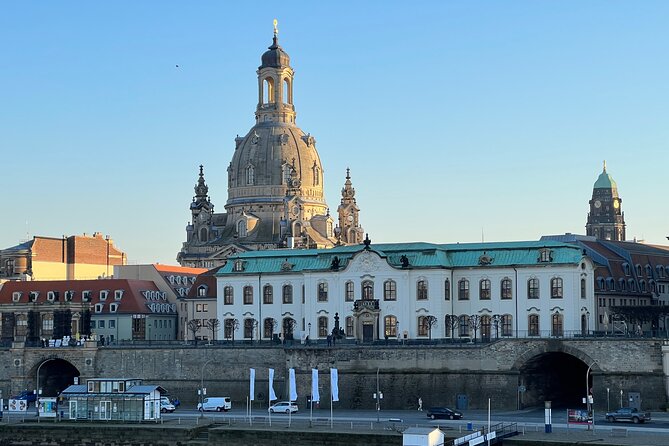
Next is the Frauenkirche Dresden, the city’s famous church with its Baroque look and iconic dome. What makes this stop more than just a photo moment is the theme of survival and restoration. After World War II destroyed the building, the church was reconstructed, and the guide usually connects that rebuilding to the city’s modern identity.
Practical tip: this early in the route, you’ll get your bearings. If you’re trying to find the group, one review mentions a guide using a yellow umbrella to be easy to spot at the start, which is a nice small touch when you’re in a busy square.
Neumarkt square and the Fürstenzug, where Saxony turns into porcelain
After Frauenkirche, you move to Neumarkt, a historic square that was heavily damaged during World War II and then rebuilt. This stop is a lesson in how cities choose what to recreate. You’ll see restored Baroque buildings framing shops and cafes, and it gives you a feel for how Dresden balances old and new.
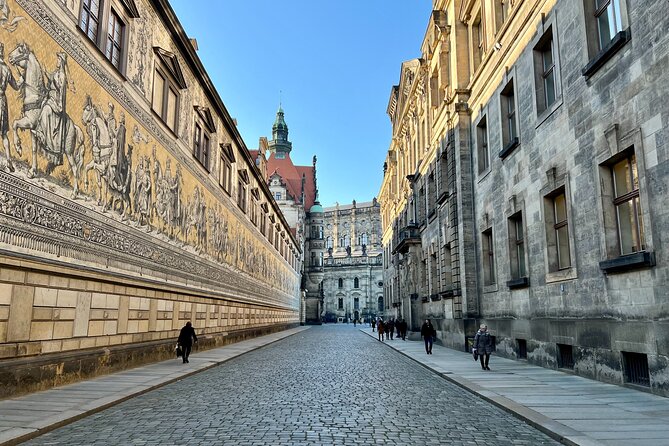
Then comes the Fürstenzug, one of Dresden’s most unusual attractions: the largest porcelain mural in the world. It shows a long procession of rulers from the House of Wettin, stretching over 100 meters. The guide’s job here is to help you read what you’re seeing. Once you understand that it’s basically a visual timeline of power, the mural becomes more than decorative art.
Why this matters for you: Dresden can look “beautiful and dramatic” on the surface, but the Fürstenzug is one of the best ways to understand why the city looks the way it does. The porcelain rulers explain the patronage behind the architecture you’ll see later.


Dresden Castle and Altmarkt, mixing royal power with daily life
You’ll then head to Dresden Castle, also called the Royal Palace of Dresden. Even if you’re not going deep into interiors as part of the tour, you’ll get context for why this building was the seat of electors and kings for centuries. It’s a big signal in stone and scale: Dresden was a political center, not just a pretty destination.
After that, you visit Old Market Square (Altmarkt). This stop gives you the counterpoint to royal buildings. It’s one of Dresden’s oldest squares and the guide typically frames it as a place where ordinary life and public events happened. You’ll hear why squares like this mattered socially, economically, and politically over time.
This pairing works well. Royal palace one minute, market square the next. Your brain starts sorting Dresden into systems: who ruled, how people gathered, and why the city’s center looks like it does.
Brühlsche Terrasse, the Hofkirche, and the Elbe view that locks in the city
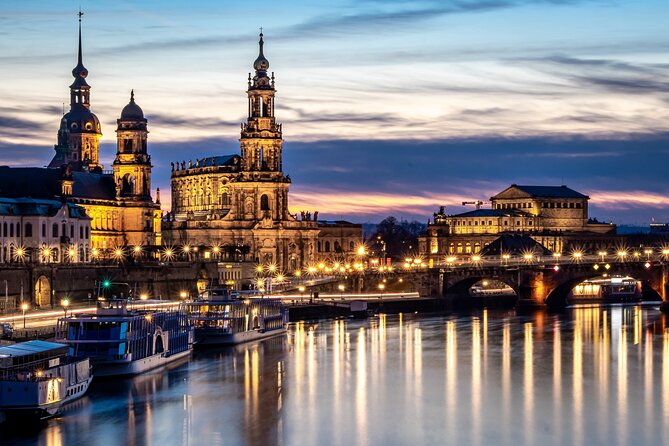
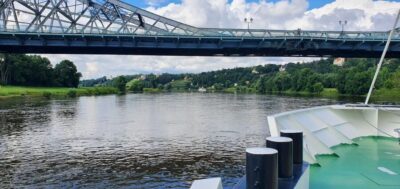
Next you reach Brühlsche Terrasse, sometimes called the Balcony of Europe. Here the tour shifts from “explain the past” to “look at the whole picture.” You’ll get panoramic views of the Elbe River and Dresden’s historic skyline.
This stop is worth it even if you’re not a big architecture person. The guide uses the view to connect landmarks into one mental map. After this, you’ll usually feel like you can place everything you’ve seen earlier in the tour.
Then you go to Katholische Hofkirche (the Hofkirche, also known as Dresden Cathedral). The key feature is its Baroque presence in the skyline. The guide also highlights why it’s known for the Silbermann organ. Even if you’re not going inside as part of the tour, hearing about the organ helps you understand why this church mattered musically as well as visually.
Semper Opera House and the Zwinger, Baroque drama from street level
The last major cluster brings you to two of Dresden’s most famous cultural landmarks.
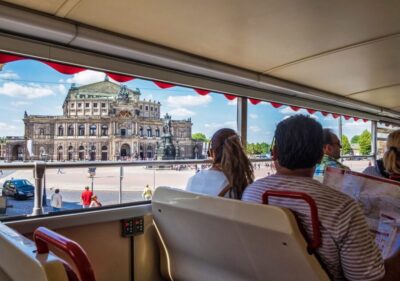
First is the Semper Opera House (Semperoper). This is the opera side of Dresden’s Baroque theater. The guide typically ties the architecture to the fact that Dresden built major stages for arts and performance, not just churches and palaces. You also get the sense that the city’s identity is tied to what happens inside those walls, even when this tour mostly keeps you outside.
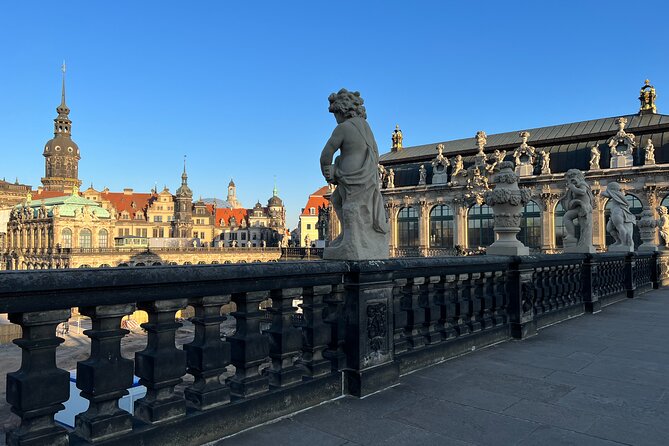
Then you finish at The Dresden Zwinger, a masterpiece of Baroque design with well-known gardens and major art and historical collections. On this walking tour, you’ll take it in as a landmark stop rather than a paid-entry museum experience, so think of it as a strong visual and historical wrap-up. Ending here is smart because you can keep going on your own if you want to spend more time in the gardens or galleries.
What I’d watch for based on real guest experiences
The overall rating is solid, and the strongest theme in reviews is the guide quality. Many people praise guides like Nicola or Nicolas for being fun, engaging, and good at connecting history to architecture. There’s also mention of a guide named Dominique delivering a detailed presentation, and another guide named James keeping things personal and engaging.
Also, one recurring high point is how the guide handles sensitive history. Several reviews specifically mention the February 1945 bombing being explained carefully, even emotionally. If that kind of topic affects you, you might want a moment to decompress at the Zwinger or on the Elbe view afterward.
The main drawbacks are not about the sights. They’re about the way the pay-as-you-wish piece is communicated. Some reviews complain that it feels confusing or unfair when the booking platform looks like a normal paid tour. Another review notes inappropriate modern political commentary. That can happen on any walking tour when guides connect current events to history.
So here’s the balanced approach:
- If you want history plus architecture with a human voice, this tour can be a great fit.
- If you prefer strict neutrality and zero tipping talk, you may find the format a little uncomfortable.
Who should book this Dresden walking tour
This tour is best for you if:
- You want a guided overview of Dresden in a short window.
- You like city history explained in a way that connects buildings to events.
- You’re comfortable walking at a moderate level for about 2 hours plus.
- You’re visiting in English and want a local expert narrative.
It’s also a solid option when you’re trying to decide what to study next. After you finish, you’ll likely know whether you want to spend more time in church interiors, museums, or just repeat the skyline and river views on your own.
Families can do it too, but children must be with an adult. If you’re traveling with a stroller, the data only says moderate physical fitness, so you should judge the sidewalks and pacing for your specific child.
Should you book this Dresden small-group walking tour?
Yes, I’d book it if you want your first Dresden experience to make sense fast. The route covers the kinds of landmarks that let you understand Dresden’s big themes: Reformation context, Baroque grandeur, and the rebuilding after WWII, all laid out in a walkable center.
Before you book, do two things to make it smooth:
- Decide your tipping plan so the pay-as-you-wish format doesn’t catch you off guard.
- Come prepared to snack and hydrate, since food and drinks are not included.
If you hate any hint of end-of-tour tipping talk, or if you strongly dislike modern political commentary, you might prefer a fixed-price tour from a different style of provider. But for most people, the guide quality and the efficient sight coverage are exactly what make this kind of walk worth it.
FAQ
How long is the Dresden small-group walking tour?
It’s approximately 2 hours 15 minutes.
What language is the tour in?
The tour is offered in English.
Is food or drinks included?
No, food and drinks are not included.
Will we enter paid attractions during the tour?
No. During the tour, the group will not enter any paid attractions.
Where does the tour start?
The tour starts at the Martin Luther Statue in Neumarkt, 01067 Dresden, Germany.
Where does the tour end?
The tour ends near the Dresden Zwinger, Sophienstraße, 01067 Dresden, Germany.
What time does the tour begin?
It starts at 11:00 am.
Is the tour suitable for people with moderate physical fitness?
The tour is intended for travelers with a moderate physical fitness level, and it operates in all weather conditions.
Pavements of Dresden
Everything else we filed on Dresden
- Outdoor escape game – the magical portal
★ 5.0 · 11 reviews - City Tour and Guided Tour in the New Green Vault – Program C – The Festive
★ 5.0 · 11 reviews - Bohemian and Saxon Switzerland Day Trip All inclusive-Winter Tour
★ 5.0 · 11 reviews - Escape Game Outdoor: Operation Mindfall
★ 5.0 · 12 reviews - Moritzburg: Scavenger Hunt Self-Guided Walking Tour
★ 4.8 · 12 reviews - Dresden: Bike Rental – City Bike with Option Children Seat
★ 4.5 · 13 reviews
Walking Tours, side by side.
 ★ 5.0Discover Berlin Half-Day Walking TourFrom $249,624 reviews
 ★ 4.9Berlin: Third Reich and Cold War 2 Hour Walking TourFrom $236,830 reviews
 ★ 4.6Munich: Third Reich & WWII Walking TourFrom $316,181 reviews
 ★ 4.9Berlin: Discover Berlin Walking TourFrom $235,998 reviews
 ★ 5.0Berlin’s Best: 2 Hour Walking Tour Third Reich and the Cold WarFrom $245,486 reviews
 ★ 4.8Berlin: Hidden Backyards Guided Walking TourFrom $235,360 reviews
 ★ 4.5Third Reich Walking Tour MunichFrom $454,291 reviews
 ★ 5.0Third Reich Berlin: Hitler and WWII Walking TourFrom $243,301 reviews