
REVIEW · TRIER
Koblenz: Old Town Tour with the Ehrenbreitstein Fortress
Three hours can change how you see a city. This private Koblenz tour pairs Ehrenbreitstein Fortress views over the Rhine Valley with a tight walk through the old town and its most meaningful squares and churches. I love the way the day starts with a big, UNESCO-level viewpoint, then switches gears to smaller details like Münzplatz and the story behind the fountains. One thing to plan for is that the fortress entrance fee is not included, so you will likely pay a bit extra once you are there.
The pacing is built for getting your bearings fast, without feeling rushed. You meet at the cable car station on the Koblenz side, and the fortress is right next door in the practical sense, since it is connected to the city by cable car. Your guide works in English, German, or Italian, so you get explanations that actually fit.
Because it is a private group, your guide stays with you the whole time. That also means you can ask questions on the spot and adjust the pace to your group, which matters when you are stacking a viewpoint and several church stops into one half-day.
In This Review
- Key Highlights You Will Actually Feel
- Ehrenbreitstein First: Why This Order Makes Koblenz Click
- From Koblenz Cable Car Area to Ehrenbreitstein Fortress Views
- Byron, War, and Why Ehrenbreitstein Was Rebuilt
- Münzplatz: Coins, Romans, and the Birth of the City Name
- Liebfrauenkirche and St Castor Along the Romantic Street
- Schängel at City Hall, Then Deutsches Eck and Kaiser Wilhelm
- Price and What You Get for $430 Per Group Up to 20
- Who This Koblenz Tour Fits Best
- Should You Book This Private Koblenz Tour?
- FAQ
- How long is the Koblenz Old Town Tour with the Ehrenbreitstein Fortress?
- How much does the tour cost?
- Where do we meet, and where does the tour end?
- Are entrance fees for Ehrenbreitstein Fortress included?
- Is this tour private?
- What languages are available for the live guide?
- Is pickup available from a cruise ship or hotel?
- Is free cancellation available?
Key Highlights You Will Actually Feel
- Ehrenbreitstein Fortress first, so the Rhine views set the tone before you walk the old town
- UNESCO World Heritage setting with a clear explanation of why the fortress mattered in multiple eras
- Münzplatz to Roman confluence roots, including how Koblenz got its name
- Two major church stops along the romantic street, with wartime and rebuilding context
- Schängel fountain and city hall symbolism, tied to Koblenz history with France
- Kaiser Wilhelm memorial at Deutsches Eck, finishing with a classic Rhine headland scene
More Roman stone and river corners
- Koblenz: Rhine Valley Castles and Palaces Boat Tour★ 4.4 · 1,824 reviews
- Koblenz: 2-Hour Sightseeing Cruise on the Rhine★ 4.6 · 839 reviews
- Koblenz: Old Town Sightseeing Cruise along the Rhine★ 4.5 · 305 reviews
- Koblenz: Panoramic Cruise on Moselle River to Winningen★ 4.4 · 283 reviews
Ehrenbreitstein First: Why This Order Makes Koblenz Click
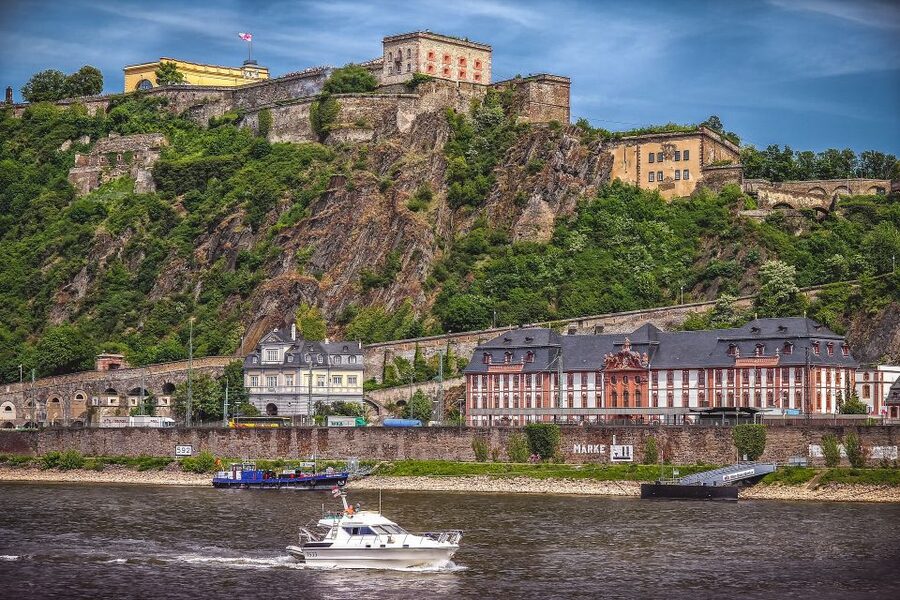
I like this tour’s sequence because it gives you perspective before the details get complicated. You start with the fortress area, which sits high above the Rhine, then you descend into the old town where the city’s layers make more sense. If you start in the streets first, you can miss the “why” behind the buildings and monuments. Start with the viewpoint, and the rest feels like it belongs together.
Your guide keeps the “big picture” moving while still giving you concrete stops to anchor the story. You will walk through central Koblenz landmarks that are recognizable and easy to remember later, even if you only have a short time in town. This is a good choice when you want a guided route that still leaves room to wander after.
Also, three hours is enough to see the highlights, not enough to treat this like a slow museum day. That is not a problem, it is the point. You will leave with a clear map in your head and the confidence to explore on your own.
From Koblenz Cable Car Area to Ehrenbreitstein Fortress Views
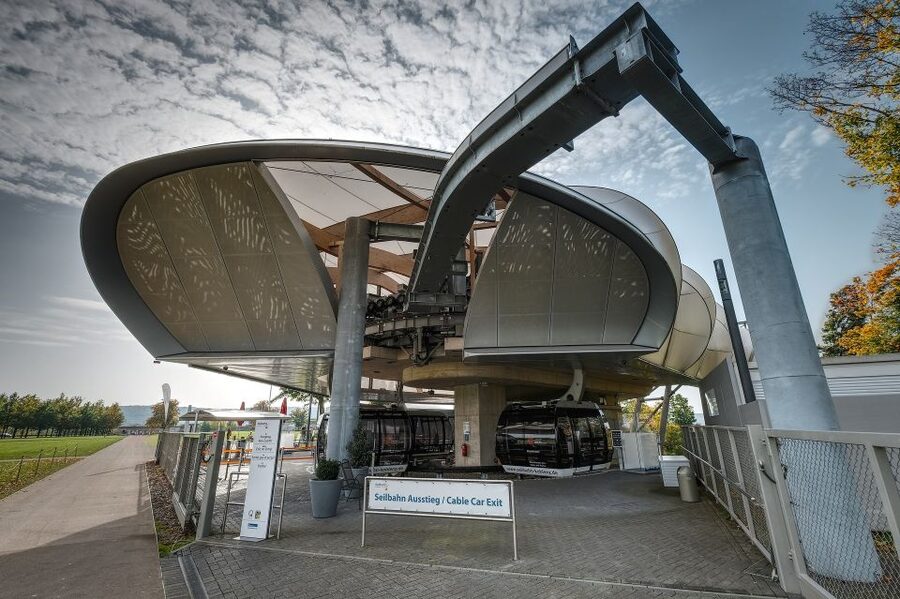
The tour meets at the cable car station on the Koblenz side. That is a smart place to start because the fortress is connected to the city by cable car, so you are not fighting your way across town just to reach the main viewpoint.
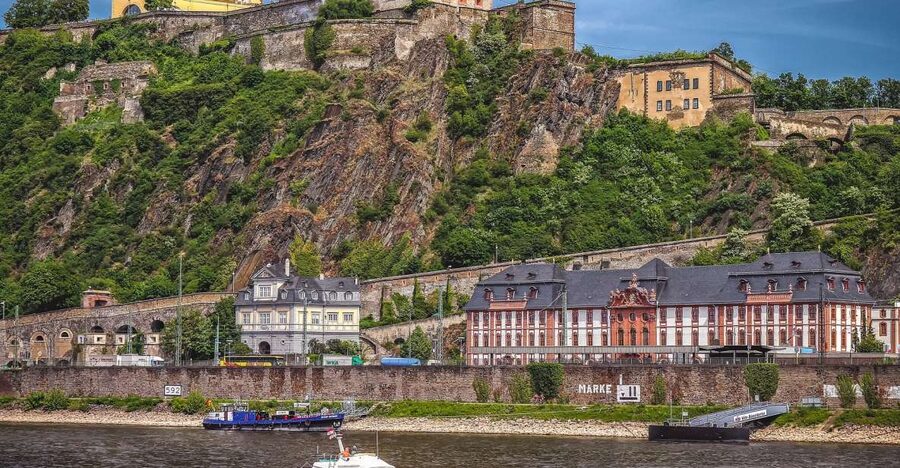
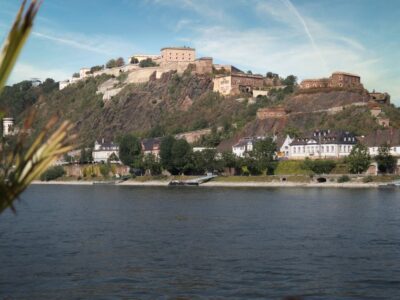
Ehrenbreitstein Fortress is one of those places where numbers help you understand scale. It rises about 118 meters above the Rhine and was built as a fortification to guard the middle Rhine region. Construction took place between 1817 and 1828, and the fortress is described as the second largest fortress in Europe. Even if you are not a fortress-history person, those facts help you appreciate why this place looks the way it does.
Then comes the practical value: once you are up there, the Rhine Valley views are the kind you remember. This is where you understand the geography that shaped the city’s role for centuries. When you later stand in Koblenz’s old town, you will notice how the river, the bridges, and the headland spots connect.
Finally, it is a UNESCO World Heritage site, so the guide’s framing matters. Ehrenbreitstein is not just a scenic stop. It is part of a broader historical picture of the Rhine region, which your guide ties to events that changed borders and defenses.
Byron, War, and Why Ehrenbreitstein Was Rebuilt
Fortresses often feel like pure stone until someone gives you the human timeline. Here, the story connects conflict, power, and decisions made on either side of the Rhine.
One event your guide likely walks you through: in 1672, during war between France and Germany, the Archbishop refused requests from both sides for troops to pass the Rhine. That detail matters because it shows how the Rhine was not only a physical boundary, it was also a political chokepoint.
Another part of the story is about destruction and rebuilding. The fortress was destroyed by French troops in 1801. After that, the site was rebuilt, and the guide connects this to Lord Byron, the British poet. Byron wrote verses describing the fortress’s battered condition, describing shattered walls and a sense of strength despite damage. Those words came from what the fortress looked like after the 1801 destruction, and they helped frame the fortress’s later rebuilding narrative.
Even if you skip the poetry-as-literature angle, the emotional angle lands. You start to see the fortress as something that kept absorbing history. It is not frozen in time. It responds to war, politics, and rebuilding efforts.
One consideration: entrance fees are not included in the tour price. So plan your budget accordingly if you want the full fortress access, not just the outer viewpoint. If you are trying to keep costs tight, you will still get major value from the guided explanation and the Rhine views, but you will likely still want to step inside.
Münzplatz: Coins, Romans, and the Birth of the City Name
After the fortress viewpoint, the tour transitions into Koblenz’s old town core, starting at Münzplatz. This square is small, but it carries a surprising amount of meaning for such a central stop.
The name Münzplatz comes from “Münz,” an electoral coin. The coins were minted as far back as the 11th century, so the square is tied to long-running economic identity, not just modern branding. On the 2000-year anniversary in 1992, a fountain was built there by Wili Heinzen. Your guide also notes it was a gift to the city and citizens from Sparkasse Koblenz, which gives the square a local, civic touch.
Then comes the Roman thread, and it is one of the coolest anchors on the whole route. This is described as the spot where Romans first founded a Castellum apud confluentes, a fort at the confluence. That confluence is part of how Koblenz got its name. So when you are standing at Münzplatz, you are not only looking at medieval and modern layers. You are also standing in the logic of the river junction that drew settlements in the first place.
This is where you start to understand why the tour feels balanced. You are not just seeing pretty buildings. You are tracing how the city made choices because of geography, power, and trade.

Liebfrauenkirche and St Castor Along the Romantic Street
From Münzplatz, you move into the old-town core along the romantic street between two churches. The idea here is not romantic fluff. It is about location: one church sits at the highest point of the city, so it becomes both a visual anchor and a historical one.
Your guide focuses on Liebfrauenkirche, known for its onion domes. The church was built in the 17th century, and your guide connects it to the French Revolution era when it was one of the main parish churches. Like so many European sites, the war years left scars. It was destroyed in 1944 and rebuilt again in 1955. That sequence changes how you look at the architecture. You realize the domes are not only aesthetic. They are a postwar statement of continuity.
Then you come to the Basilica of St. Castor, which is described as the oldest church in Koblenz. The story here goes back early medieval times: construction was carried out by the Archbishop of Trier between 817 and 836, with support from Emperor Louis the Pious. Your guide frames it as a Carolingian proprietary church. That label helps you understand why the church carries weight beyond local parish life.
Here is the main value for you: in a short tour, you see two churches that represent two very different time scales. One is tied to early medieval power and early Christianity in the region, and the other is tied to more modern civic life and the shock of the 20th century. Put together, the churches give you a believable sense of time passing.
A practical note: churches often mean standing still and looking up. Dress for it. Comfy shoes help, since you will also have walking time between stops.
Schängel at City Hall, Then Deutsches Eck and Kaiser Wilhelm
The tour keeps one foot in symbolism. Next up is the Schängel fountain at city hall. The guide explains where the name comes from: Koblenz had 20-year allegiance to France from 1794 to 1813, and the term Schängel reflects that period. That is not just trivia. It explains why the city uses identity and language as a kind of historical marker.
The fountain itself is tied to people. In 1940, it was designed by Carl Burger and dedicated to poet Josef Cornelius. When you understand that, you look at the figure in the fountain differently. It becomes a message the city chose to place in public space decades after the fact.
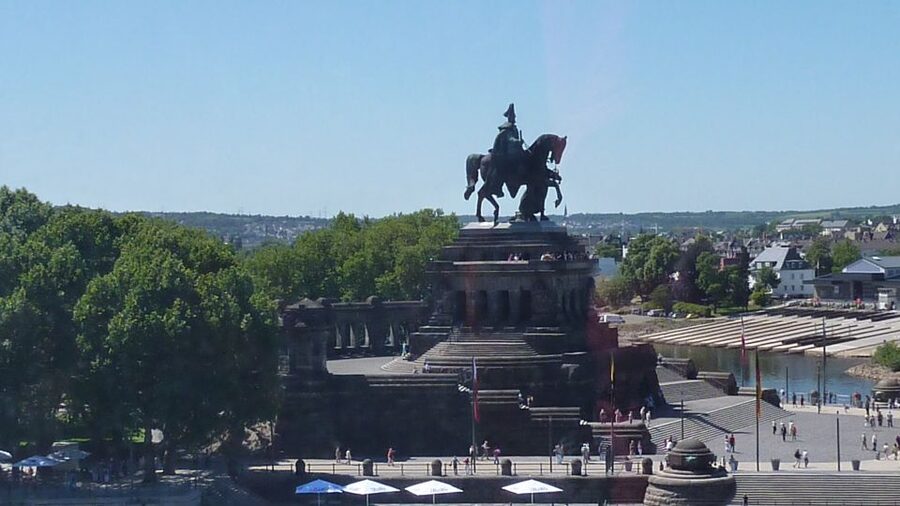
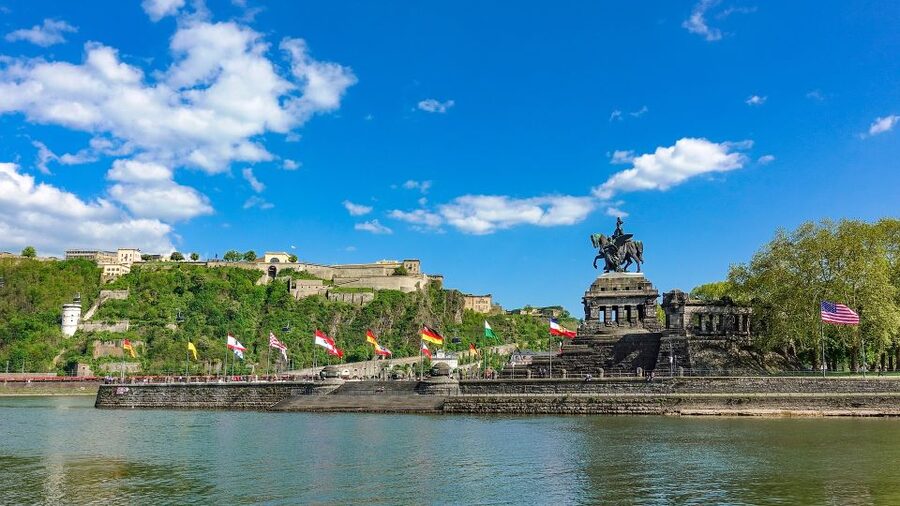
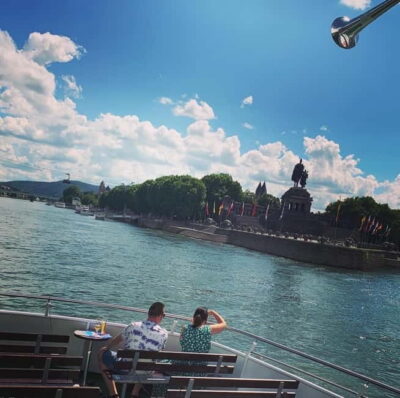
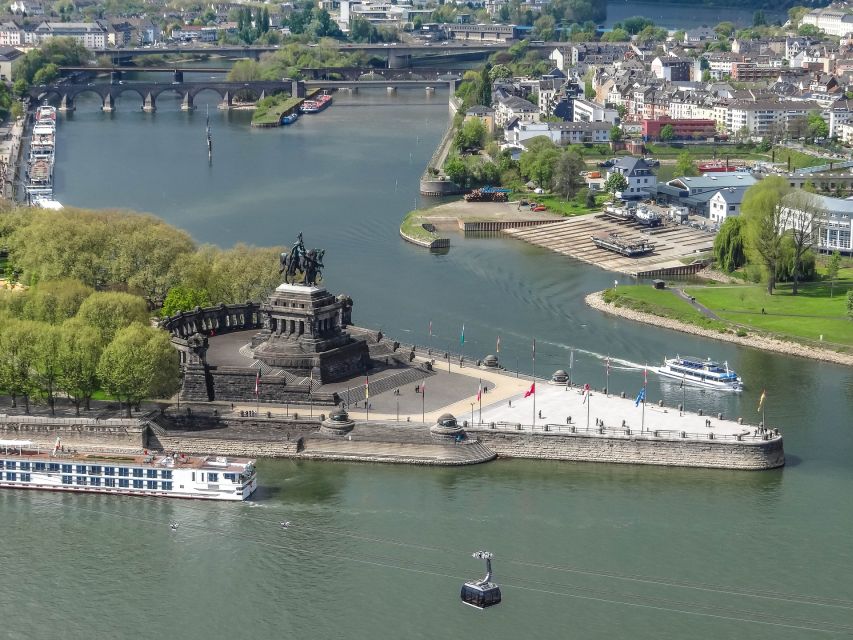
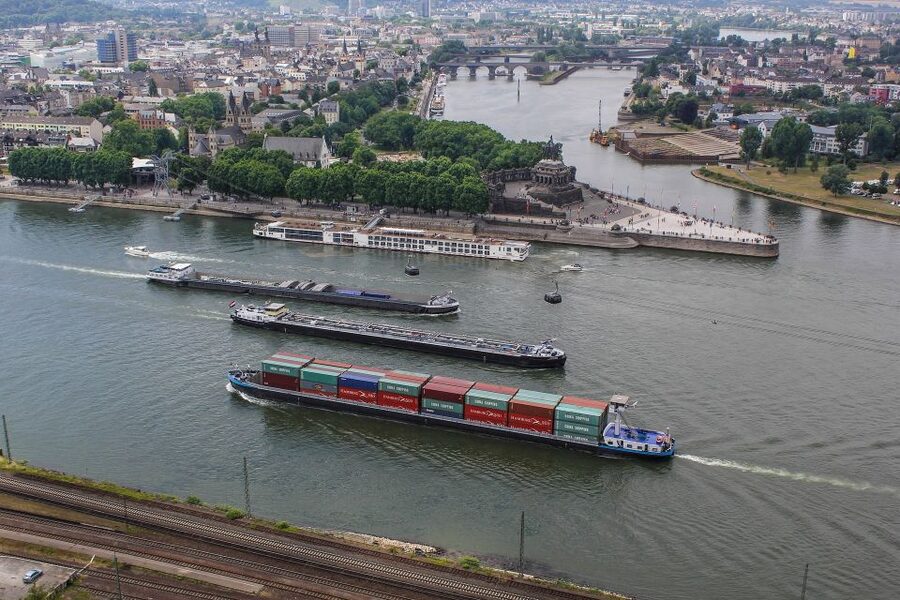
Then the tour ends with the classic Koblenz headland: Deutsches Eck. This is where the Kaiser Wilhelm memorial comes in. The headland is described as Deutsches Eck, and Kaiser Wilhelm was the first German emperor. The memorial was erected in 1897, so it connects Koblenz to the national narrative of late 19th-century Germany.
This is also a moment of visual payoff. The Rhein context you got from the fortress now snaps into place with the river view and the headland setting. If you like ending tours with a clear “final scene,” this works.
Price and What You Get for $430 Per Group Up to 20
Let’s talk value, because the price is not small. The cost is $430 per group up to 20, and it is a private guided tour. That means the real question is not the total price alone, it is how many people are in your group and how much you want a guide to shape your experience.
If you are traveling as a family, a couple of friends, or a small party, the math often works well because you are effectively sharing one guided service. For up to 20 people, this can also be good for groups who want a tailored route without turning it into a crowded bus day.
The tour includes an official tour guide and a pickup point at your cruise docking location or your hotel if it is centrally located. That can save time if you are coming off a ship or if your hotel is in the core. It also helps you avoid the stress of figuring out where to start on your own.
One more detail that affects value: the fortress entrance fees are not included. Your total cost per person will be higher if you plan to enter Ehrenbreitstein. Still, the guided structure is what you are paying for here: learning how the fortress fits into the Rhine region and then understanding the city landmarks as a set.
And yes, it is wheelchair accessible, which is important if mobility is a factor. The tour is designed with access in mind, so you are not locked out from the main sightseeing flow.
Who This Koblenz Tour Fits Best
I think this tour is a strong match if you want three things at once: a big Rhine viewpoint, key old-town landmarks, and a guide who keeps the story clear. The fortress portion gives you the dramatic start, and the old town stops keep it grounded.
It is also a great pick if you do not have much time in Koblenz. Three hours is enough for the highlights, including the fortress, Münzplatz, two major churches, the Schängel fountain, and the Deutsches Eck ending. If you had a full day and loved museums, you might add self-guided time afterward. But for a half-day orientation, this hits the mark.
Because it is private and your guide stays with you, it suits groups who want to ask questions without feeling like you are interrupting a big group. It also works well for travelers who like their history tied to visible places, not just dates.
Should You Book This Private Koblenz Tour?
If you are wondering whether this is worth your time, I would book it if you value a guided route that connects view plus meaning. Ehrenbreitstein Fortress gives you scale and UNESCO context, and the old-town stops like Münzplatz, Liebfrauenkirche, St Castor, and the Schängel fountain give you stories you can actually see in front of you.
I would pass or adjust your plan if you are trying to minimize extra costs, since fortress entrance fees are not included. Also, if you hate walking between central stops, keep in mind that this is a sightseeing loop rather than a sit-and-watch experience.
My advice: if your schedule allows, wear comfortable shoes and plan for indoor church time. This is the kind of tour where you will finish with a better sense of where Koblenz “starts,” why the river mattered, and how the city chose its landmarks. That is a lot of payoff for three hours.
FAQ
How long is the Koblenz Old Town Tour with the Ehrenbreitstein Fortress?
The tour lasts about 3 hours.
How much does the tour cost?
The price is $430 per group, up to 20 people.
Where do we meet, and where does the tour end?
You start at the Cable Car station on the Koblenz side. The tour ends back at the same meeting point.
Are entrance fees for Ehrenbreitstein Fortress included?
No. Entrance fees for the Ehrenbreitstein Fortress are not included.
Is this tour private?
Yes, it is a private group tour.
What languages are available for the live guide?
The live guide is available in English, German, and Italian.
Is pickup available from a cruise ship or hotel?
Yes. Pickup is available from your cruise docking location or from your hotel if it is centrally located.
Is free cancellation available?
Yes. You can cancel up to 24 hours in advance for a full refund.
Trier, Koblenz and the Saarland
Everything else we filed on Koblenz
- Koblenz: Private pub crawl with insider guide & free shots
★ 5.0 · 5 reviews - Koblenz Guided tour of the Ehrenbreitstein Fortress
★ 4.5 · 7 reviews - Koblenz – Old Town with the Ehrenbreitstein Fortress
★ 4.0 · 7 reviews - Koblenz: The Living Vineyard, Nature & Wine Enjoyment
★ 5.0 · 14 reviews - Koblenz – Old Town including the Deutsches Eck
★ 4.5 · 16 reviews - e-Scavenger hunt Koblenz: Explore the city at your own pace
★ 4.0 · 20 reviews
Trier Koblenz and the Saarland, side by side.
 ★ 4.4Koblenz: Rhine Valley Castles and Palaces Boat TourFrom $211,824 reviews
 ★ 4.8Trier: Guided City Walk with Wine TastingFrom $43979 reviews
 ★ 4.6Koblenz: 2-Hour Sightseeing Cruise on the RhineFrom $20839 reviews
 ★ 4.7Trier: Guided Old Town Highlights and History Walking TourFrom $16687 reviews
 ★ 4.5Koblenz: Old Town Sightseeing Cruise along the RhineFrom $16305 reviews
 ★ 4.4Koblenz: Panoramic Cruise on Moselle River to WinningenFrom $22283 reviews
 ★ 4.7Trier: Discovery Tour – Germany’s Oldest Wine CellarFrom $20218 reviews
 ★ 4.6Trier: City Walking TourFrom $17118 reviews
Other lists this tour is on