
REVIEW · RHINE-MAIN
Mannheim, guided walking tour: Industrial culture at the commercial port
Mannheim’s port tells stories you can walk through. This 2-hour guided walk takes you from Teufelsbrücke into the industrial heart of one of Europe’s biggest inland ports, then carries you onward to Jungbusch, where the old working-class area has turned into a creative, multicultural nightlife spot. I especially like how the tour connects industrial culture to the way people actually lived and worked near the waterways. One drawback to plan for: it runs in all weather, and it is not suitable for wheelchair users, so you need solid, comfortable walking shoes.
For $17, you get a live German guide and a tight route that keeps moving but still explains what you are looking at. You will cross waterways more than once, study bridge and industrial architecture, and get context for why Mannheim’s port mattered for trade and now also for tourism.
In This Review
- Key highlights to notice on the walk
- Getting your bearings at Devil’s Bridge (Teufelsbrücke)
- The inland port zone: containers, warehouses, and a working-city feel
- Crossing waterways and reading bridge architecture in motion
- Teasing out port history through daily worker life
- Jungbusch: from port-adjacent housing to art district and nightlife
- Price and time: is $17 really worth it?
- What to bring and how to handle a 2-hour outdoor walk
- Should you book the Mannheim port tour?
- FAQ
- How long is the Mannheim guided walking tour?
- How much does the tour cost?
- Where does the tour meet?
- What language is the guide?
- Does the tour run in bad weather?
- What is included in the price?
- Is food or transportation included?
- Is the tour suitable for wheelchair users, and are pets allowed?
- Is there a cancellation option if my plans change?
Key highlights to notice on the walk
- Teufelsbrücke as a starting point, including why it matters in the city’s bridge story
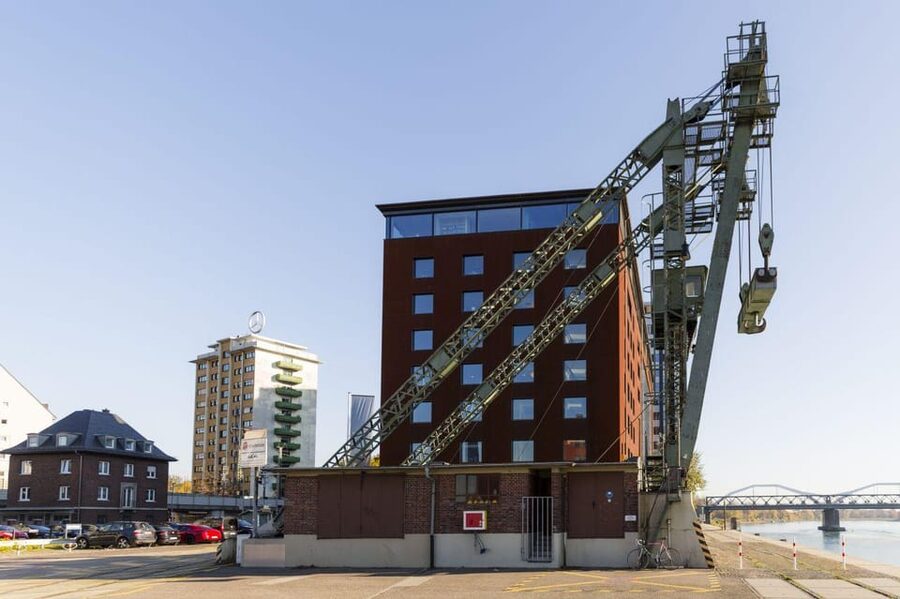
- Inland port scale, with containers, loading areas, and warehouse architecture shaping the view
- Bridge and industrial architecture details, not just big-picture talking points
- Port worker life, including the beginnings of industrial culture and daily conditions near the water
- Jungbusch transformation, from port-adjacent housing to a bohemian art district with nightlife
More Rhine-Main city walks
- Mannheim, guided Walking Tour: Discover Mannheim★ 4.5 · 62 reviews
- Mannheim: Guided Street Art Walking Tour★ 4.7 · 57 reviews
- Mannheim, guided costume tour: Tour with Night Watchman★ 4.9 · 26 reviews
- Mannheim: Public Night Watchman Tour with Night Watchwoman Marie★ 5.0 · 23 reviews
Getting your bearings at Devil’s Bridge (Teufelsbrücke)
Your tour starts at Devil’s bridge, the Teufelsbrücke. It is a strong choice for a meetup point because it is already part of the story. From the beginning, you are thinking about how Mannheim’s waterways shaped the city, how people crossed them, and how bridges became practical tools for industry and movement.
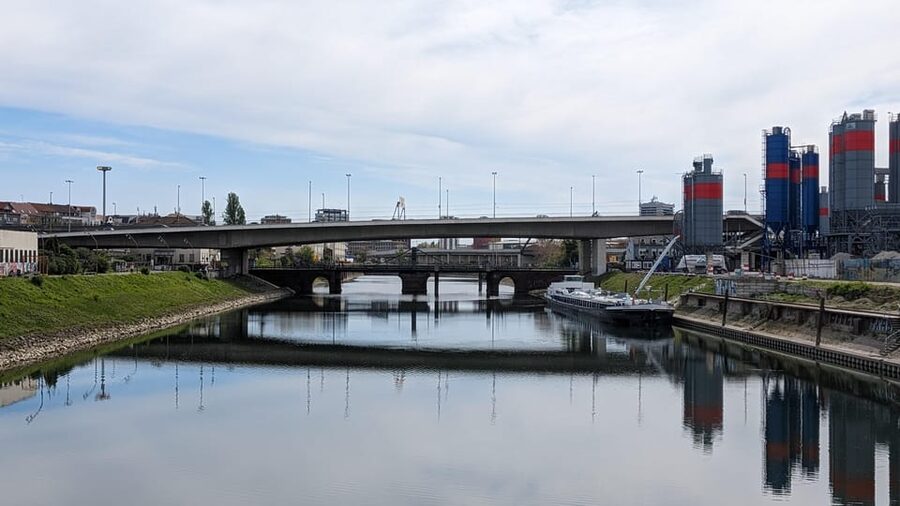
This is also where you get your first dose of bridge context. The Teufelsbrücke is described as the oldest preserved bridge in Mannheim, so it works like an anchor in time. Even if you are not a bridge-nerd, it helps you read what comes next. You will be better at spotting the differences between older infrastructure and the industrial systems that grew around the port.
Practical note: arrive a few minutes early and make sure you have the right group. One traveler shared that two groups started around the same time, one private and one organized through a booking platform, which can cause confusion if you show up at the last second.
The inland port zone: containers, warehouses, and a working-city feel
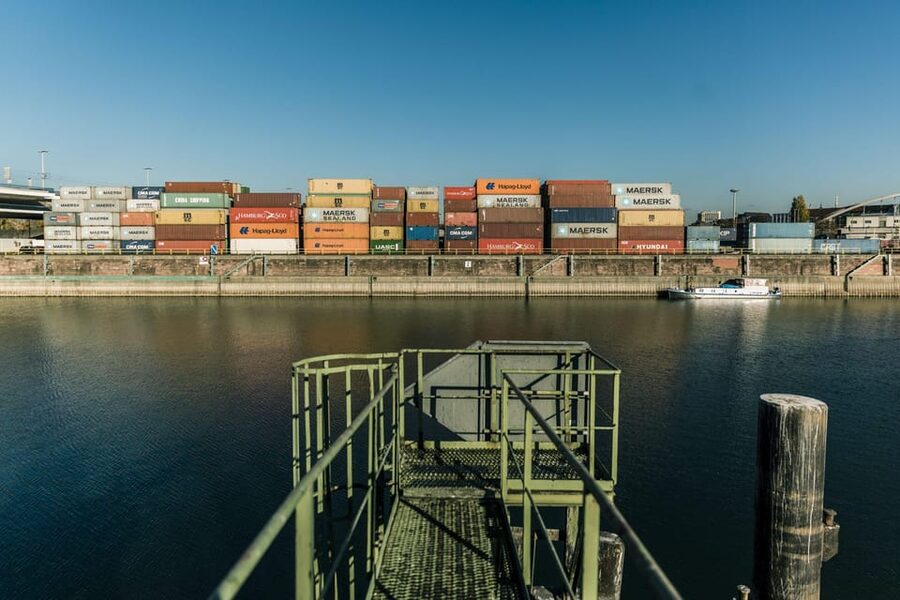
Once you move from the bridge into the port area, Mannheim’s character turns industrial fast. Shipping has been central here for centuries, because Mannheim sits where the Neckar flows into the Rhine. That geographical detail is not just trivia. It explains why the city grew around trade routes and why the port became a major inland hub.
This tour focuses on the port’s scale and everyday functions. You will see huge shipping infrastructure such as loading stations and warehouses, and the setting includes the kind of commercial activity that gives the port area a cosmopolitan feel. In other cities, you might have to imagine the industrial past. Here, the present still looks like work: modern transport infrastructure laid over older river logistics.
I like that the walk does not treat the port as an abstract concept. It points you toward the visible logic of trade: where goods move, how facilities cluster, and how the port shapes city edges. If you enjoy cities where industry is not hidden behind museums, you will get a lot out of this section.
Crossing waterways and reading bridge architecture in motion
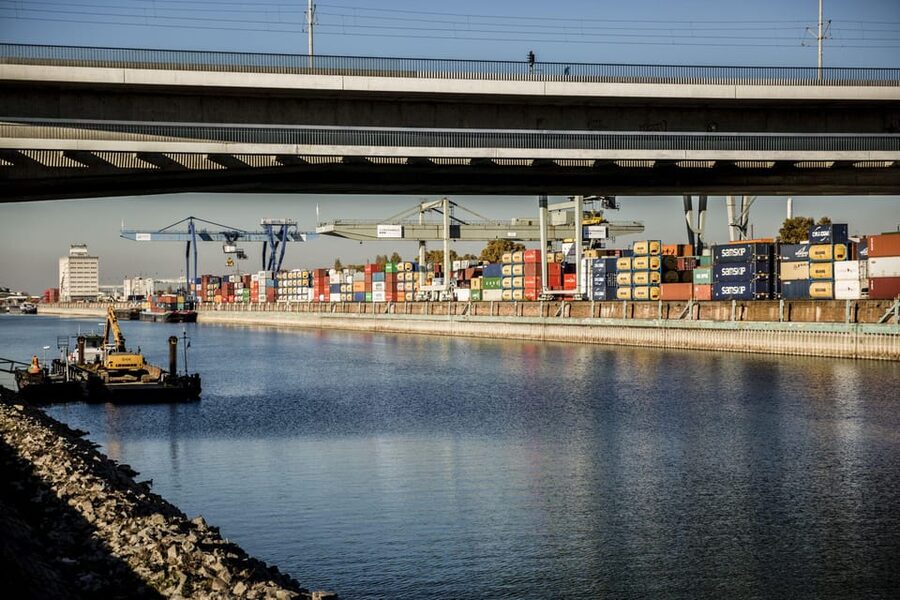
A big part of the experience is how often you cross water. The route brings you past multiple waterways, so you keep switching viewpoints. That matters, because Mannheim’s port culture is all about connections: between river systems, between neighborhoods, and between people and jobs.
You will learn about bridge and industrial architecture as you walk. The tour highlights objects of Mannheim’s bridge and industrial structures, not just broad statements like bridges are important. In practice, that means you start noticing patterns, like how bridge design supports traffic and how industrial buildings relate to water access.
The value for you is simple: you get a walking lesson you can actually use later. After the tour, you can look at the port edges without feeling lost, because you understand what you are seeing and why it is placed where it is.
Possible consideration: if you dislike routes that involve frequent crossings and outdoor exposure, plan your clothes accordingly. The tour runs in all weather, so you should dress for rain, wind, or chilly river air.
Teasing out port history through daily worker life
Industrial Mannheim is not only about big ships and modern container logistics. The walk also brings the focus back to people, especially port workers. You will hear about the beginnings of industrial culture and learn about life and living conditions of those who worked the port and the surrounding transport work.
That human layer is what helps the tour feel more than a photo walk. Instead of treating the port as a backdrop, the guide connects the city’s infrastructure to the kinds of jobs that depended on it. Port culture is one of those topics where it is easy to get stuck in facts and forget people. This tour tries to avoid that by connecting infrastructure to daily reality.
You will also hear how the port’s importance has changed. The tour covers both the former and current importance of the port for trade and tourism. That balance is useful. It keeps the story grounded in how the port functions today, without pretending the past was identical.
Other walking routes through Mannheim
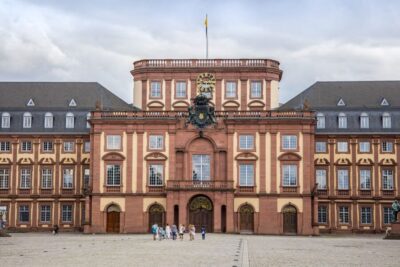
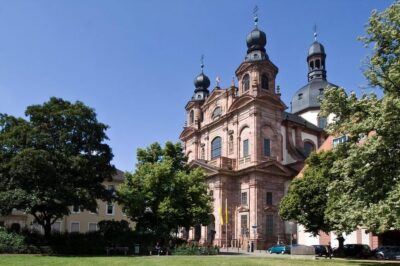
Jungbusch: from port-adjacent housing to art district and nightlife
The final detour takes you to Jungbusch, which sits just next to the port zone, separated by the connecting canal. You are basically walking from the working edge of the city into a different kind of scene.
This is where you see a major Mannheim contrast. In the past, workers and sack carriers lived in this area. Today, the same district is described as a creative pulse of the city, a multicultural trendy district, and a bohemian art area. The tour frames it as an evolution driven by the way neighborhoods transform when the functions around them change.
I like that this section gives you something to do with your evening plans, because it is not just history. Jungbusch is presented as a local nightlife hotspot. Even if you do not stay out long afterward, knowing where that energy is tends to make Mannheim feel more like a real city and less like a stop you just drove through.
One practical thought: this part of the walk is still outdoors and still weather-dependent, because the tour is a continuous walk. If your day has you dressed for comfort, this ending zone is a good payoff.
Price and time: is $17 really worth it?
$17 for a 2-hour guided walking tour is strong value, mainly because the tour is structured around interpretation. You are not just walking beside interesting buildings. You are getting a live guide who explains what you are seeing: port development, bridge architecture, and the shift from port worker neighborhoods to today’s Jungbusch scene.
Two hours can feel short for a city tour, but here it works because Mannheim’s story is concentrated. The route is compact: Teufelsbrücke, the port area with its industrial infrastructure, and then Jungbusch near the connecting canal. If your goal is to get oriented and understand the city’s industrial logic, this timing is ideal.
Who might feel less satisfied? If you want a long, unbroken sightseeing day with lots of free time to wander on your own, you might want to pair this with additional independent exploration afterward. But as a “get the city’s keys and directions” tour, it is priced and timed to fit.
What to bring and how to handle a 2-hour outdoor walk
The essentials are already spelled out for a reason.
Bring:
- Comfortable shoes (you will be walking outside and moving between viewpoints)
- Weather-appropriate clothing (it runs in all weather)
Not allowed:
- Pets
Also check your comfort level if you are sensitive to cold or wet conditions, because the route is outdoors and tied to bridges and waterways. If you are planning day-of photos, the port area can have lots of good angles, but your comfort matters more than one extra picture.
Finally, since the guide language is German and some content is shown in original language, you will enjoy the tour most if you understand basic German phrases or you are comfortable letting the visuals do the heavy lifting.
Should you book the Mannheim port tour?
Book it if:
- You want a guided walking tour that explains how a city’s industry actually works, not just how it used to look.
- You care about the link between infrastructure, architecture, and everyday life.
- You want your visit to include both the port side of Mannheim and the creative, nightlife side in Jungbusch.
Skip it or choose another option if:
- You need wheelchair accessibility, because this tour is not suitable for wheelchair users.
- You dislike outdoor walking in all weather, since the schedule does not pause for conditions.
If you are visiting Mannheim for the first time, I think this is one of the quickest ways to understand why the city has this distinctive industrial edge, and why Jungbusch feels like the city’s cultural release valve afterward. The Teufelsbrücke start gives you a clear timeline, and the port-to-Jungbusch shift gives you a clear city map in your head.
FAQ
How long is the Mannheim guided walking tour?
It lasts 2 hours.
How much does the tour cost?
The price is $17 per person.
Where does the tour meet?
The meeting point is Devil’s bridge (Teufelsbrücke).
What language is the guide?
The live tour guide speaks German, and some content may be shown in its original language.
Does the tour run in bad weather?
Yes, it takes place in all weathers.
What is included in the price?
A city tour is included.
Is food or transportation included?
No. Food and drinks are not included, and transportation to and from the meeting point is also not included.
Is the tour suitable for wheelchair users, and are pets allowed?
No, it is not suitable for wheelchair users. Pets are not allowed.
Is there a cancellation option if my plans change?
You can cancel up to 24 hours in advance for a full refund.
Pavements of Mannheim
Around the Rhine-Main Cities
Everything else we filed on Mannheim
- Mannheim, guided costume tour: Hangmen, Witches, Huguenots
★ 5.0 · 4 reviews - Public tour With Bertha Benz through the city of inventors Costume tour
★ 5.0 · 5 reviews - Explore Mannheim in 60 minutes with a Local
★ 5.0 · 5 reviews - Mannheim: Express Walk with a Local in 60 minutes
★ 4.7 · 5 reviews - Segway Tour of Mannheim: Rhein, Waldpark, and Lindenhof
★ 5.0 · 13 reviews - Mannheim: Segway Tour along the Neckar River
★ 5.0 · 15 reviews
Mainz Wiesbaden and the Rhine-Main Tours, side by side.
 ★ 4.4Karlsruhe: 24-Hour Hop-On Hop-Off Sightseeing Bus TicketFrom $28362 reviews
 ★ 4.7Speyer: Technik Museum Speyer Ticket with an IMAX Dome FilmFrom $35360 reviews
 ★ 4.8Wiesbaden: Sparkling Winemaking Tour with 3-Glass TastingFrom $34155 reviews
 ★ 3.5SEA LIFE Speyer Admission TicketFrom $26131 reviews
 ★ 4.7Darmstadt: Mathildenhöhe UNESCO Site Guided VisitFrom $17124 reviews
 ★ 4.9Guided tour in Mainz on the Rhine in german and englishFrom $23106 reviews
 ★ 4.2Sea Life Speyer TicketFrom $2299 reviews
 ★ 5.0Rhine Valley Wine Tasting Tour from Frankfurt and MainzFrom $47687 reviews
Other lists this tour is on