
REVIEW · RHINE-MAIN
Mannheim: Public Night Watchman Tour with Night Watchwoman Marie
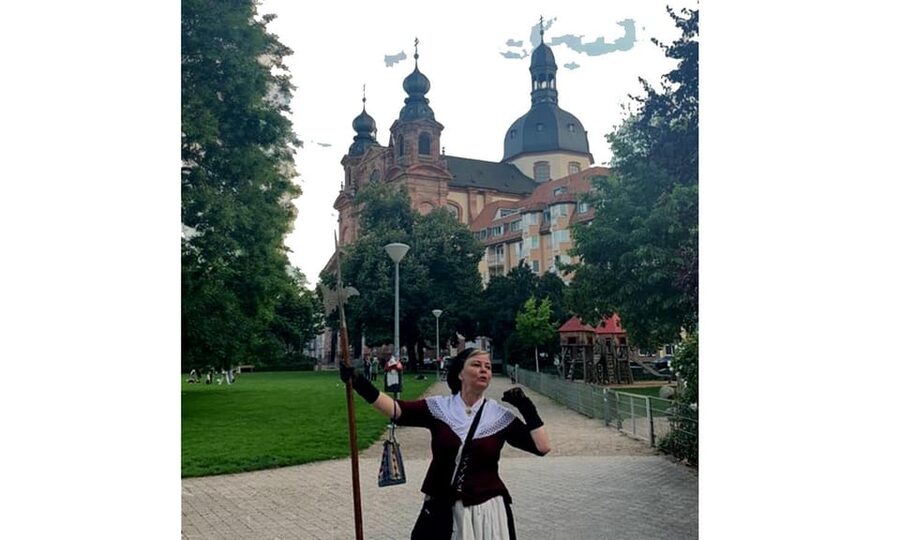
Mannheim at night, with a lantern voice calling orders. That is the spell of a public night watch tour led by Night Watchwoman Marie, turning ordinary streets into a living story, with her halberd and costume setting the mood from the first minutes. I especially like how the route mixes humor with grimmer details about life on duty, so it stays entertaining and not just lecture-y.
You also get a real dose of place, including Elector Carl Theodor’s Musenhof and the “dishonest professions” talk, tied to the sites you pass. One possible drawback is that the tour is guided in German, so if you prefer lots of English explanations, this might feel limiting.
In This Review
- Key things I’d plan around
- Barockschloss Mannheim, where the night tour begins
- Meeting Night Watchwoman Marie, costume rules the storytelling
- Mannheim Elector and Musenhof, power explained through story
- Stop 1: Mannheim Baroque Palace, Court of Honor
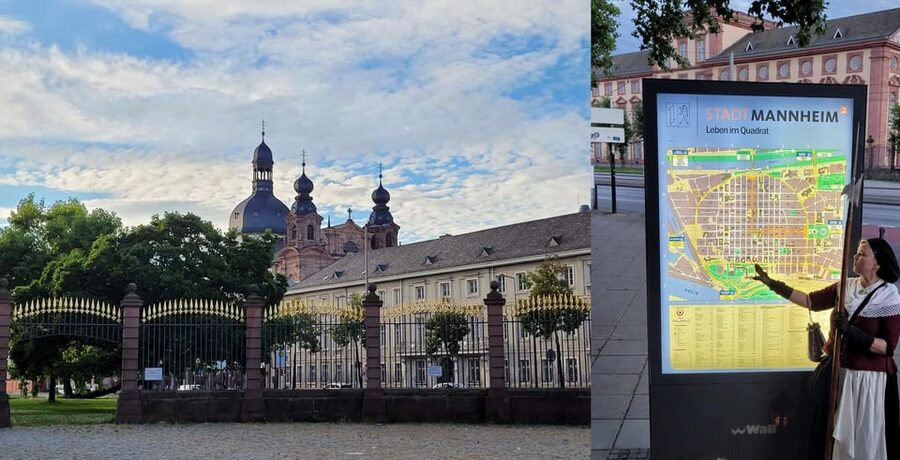
- Stop 2: Palais Bretzenheim, turning court walls into stories
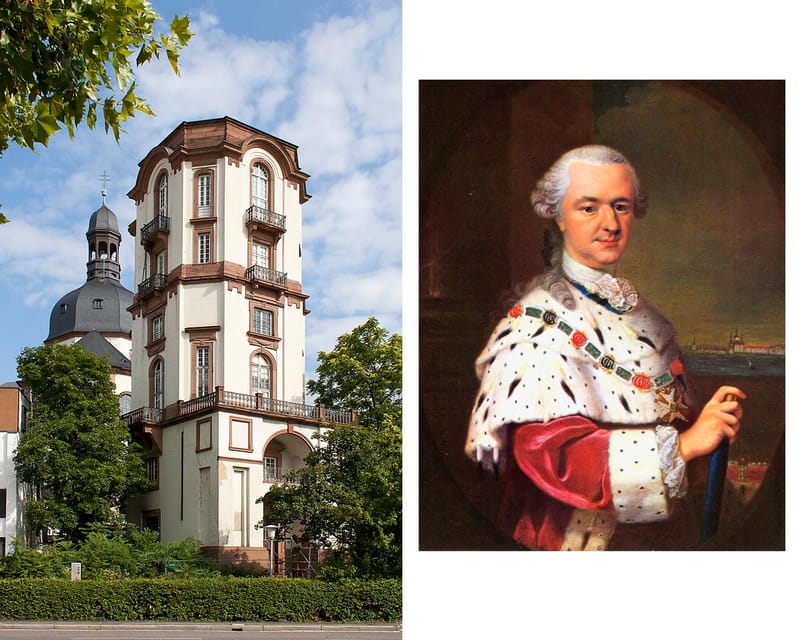
- Stop 3: Alte Sternwarte, science and the night watch mindset
- Stop 4: Schillerhaus Mannheim, living culture meets the street
- Stop 5: Schillerplatz, a square built for viewpoints
- Stop 6: Jesuit Church, discipline, faith, and nighttime order
- Stop 7: Paradeplatz, where public life lines up with night duty
- Stop 8: Dalberghaus, closing the loop with Mannheim identity
- The stories that stick: lightning rod, horseless carriage, and stinking air
- Value check: is $17 per person worth it?
- Who this tour suits best
- Should you book this night watch tour with Marie?
Key things I’d plan around
- Costumed night watch storyteller, Marie: you follow the city through her point of view
- 1.5-hour route through baroque-era landmarks: multiple guided stops, not just one street loop
- Mannheim Elector and Musenhof references: stories connect to named power and court culture
- Eerie-but-funny night duty tales: thieves, drunken rabble, and what “keeping peace” really meant
- Stops tied to specific structures: palace, church, and public squares along the way
More Rhine-Main city walks
- Mannheim, guided Walking Tour: Discover Mannheim★ 4.5 · 62 reviews
- Mannheim: Guided Street Art Walking Tour★ 4.7 · 57 reviews
- Mannheim, guided costume tour: Tour with Night Watchman★ 4.9 · 26 reviews
- Mannheim, guided walking tour: Pulsating Jungbusch★ 3.9 · 21 reviews
Barockschloss Mannheim, where the night tour begins
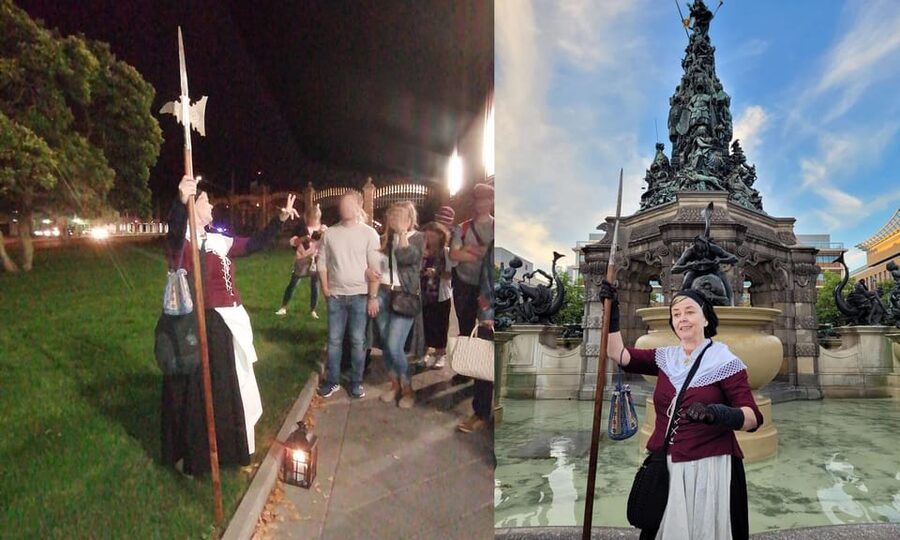
The meeting point is the Mannheim Baroque Palace, in the Court of Honor. Even before the story gets going, you get a nice sense of scale. This isn’t a tiny back-alley start. It’s formal, open, and built for visitors to gather, which makes it a good setting for a character-led tour.
From here, the pace makes sense for a 1.5-hour evening experience. The tour doesn’t try to cover every corner of Mannheim. Instead, it strings together a set of meaningful stops, each one giving the night watch theme a new backdrop: palace power, court culture, practical urban life, and the public buildings that shaped daily routines.
If you’re the kind of traveler who likes history you can see in front of you, this structure works well. You do not just hear “old Mannheim.” You walk between landmarks that help explain how the city looked and functioned.
Meeting Night Watchwoman Marie, costume rules the storytelling
This tour is performed by Night Watchwoman Marie, and the role matters. She does not treat the night watch as an abstract job. She frames it as a lived reality: keeping order, protecting people, and dealing with the messy sides of town after dark.
The best part is how the atmosphere stays consistent. In the lantern light, she guides you through alleys of the former old town, with a mix of humorous anecdotes and gruesome, cautionary details from times long past. The “dishonest professions” theme also adds variety. It sounds dark, but it’s delivered in a way that keeps the tone lively, the kind of storytelling where you feel like you’re overhearing a city legend in person.
And yes, she comes with the props. With her halberd and her “on duty” presence, the tour feels like it has a backbone. That helps you track the story as you move, instead of zoning out during longer descriptions.
Mannheim Elector and Musenhof, power explained through story
One of the standout threads is the role of Mannheim Elector Carl Theodor, especially via his Musenhof, the “house of muses.” Even if you don’t know much about the man or the concept, the tour gives you a way to picture what a court could mean for a city.
Why I like this approach: it turns big names into something you can stand next to. Instead of treating Elector Carl Theodor as a distant historical footnote, the tour ties him to the cultural image of Mannheim during its Golden Age. You get references to the Golden Age as a theme, and it gives the night watch tales another layer. The city is not just nighttime trouble. It’s also ambition, patronage, and status.
In practical terms, this helps you “read” the city while you walk. You start noticing how certain buildings and squares fit a court-centered image, and how that contrasts with the night watch’s daily reality of managing disorder and risk.
Stop 1: Mannheim Baroque Palace, Court of Honor
The first stop is also your baseline. The Baroque palace sets the tone and establishes the stakes. Baroque architecture tends to do two things at once: impress you and remind you that power had a physical address.
Expect a guided tour element here, before the character narration fully pulls you into night-time Mannheim. This works because you get context early. When Marie later references palace life or court culture, you already have an anchor in your head.
If you’re sensitive to long standing, arrive a moment early. This kind of starting stop often includes waiting for everyone to gather and for the guide to explain the first framing details.
Stop 2: Palais Bretzenheim, turning court walls into stories
Next is Palais Bretzenheim. A palace is a palace, but the value on a night watch tour is the contrast. You start out in grand surroundings, then you move into the idea of people living, working, and sometimes misbehaving under those same monumental buildings.
At this stop, think of it as a story “checkpoint.” The tour keeps layering history onto the places you pass. Even if you cannot pinpoint every architectural detail, you’ll understand why Marie’s tales can jump from politics to street life without losing momentum.
What makes this leg worthwhile is the guided component. You’re not left alone to interpret. The tour uses the buildings as stage directions for the narration.
Stop 3: Alte Sternwarte, science and the night watch mindset
After the palaces, the tour shifts to the Alte Sternwarte, an old observatory. This is a smart move for a night tour. Night watch stories belong in darkness, and observatories belong in the same hours of the day when people looked up for answers.
You’ll likely hear connections that make the night feel purposeful rather than only dangerous. And you’ll also get a sense of how Mannheim’s “big picture” life, including institutions and expertise, sat alongside street-level realities.
Even if the observatory details are brief, it adds variety. Your brain gets a new kind of landmark to attach the narrative to, instead of repeating the same palace theme again and again.
Stop 4: Schillerhaus Mannheim, living culture meets the street
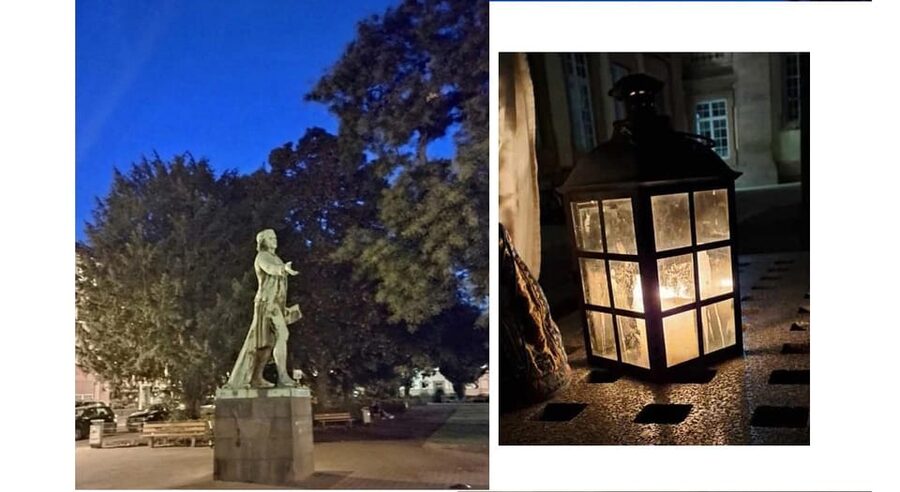
Then comes the Schillerhaus Mannheim. This stop shifts you from the Elector’s court aura to cultural identity more broadly. Schiller is a name that many visitors recognize, and the presence of the Schillerhaus helps the tour balance out its court references with a more public-facing sense of who shaped the city’s cultural reputation.
For you, this is one of the moments where the tour may feel less “gothic night watch” and more “Mannheim as a place people were proud of.” The story can broaden, and Marie’s character can use that to talk about what kind of city she’s describing, not just what kind of job she’s doing.
Stop 5: Schillerplatz, a square built for viewpoints
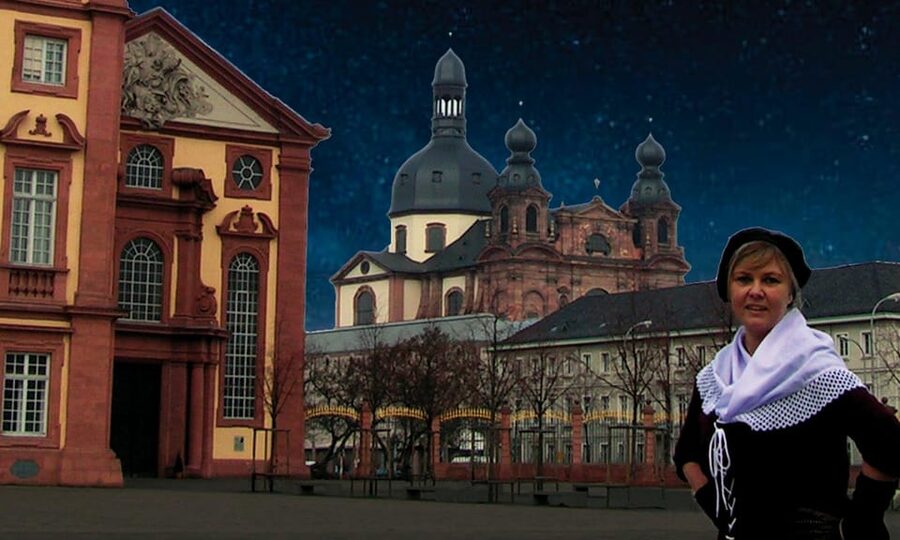
From Schillerhaus, you head to Schillerplatz. Squares are perfect for this kind of walking show. They create natural pauses, and Marie can shift between the practical duties of a night watch and the punchlines of her anecdotes.
A square is also where you can regroup mentally. The tour has enough variety in themes, from stinking air to tormented watch life. Having open space helps you process without constantly craning your neck down alleys.
If you’re traveling in colder months, this is where you might feel the chill more. Plan to wear layers you can keep on even when the story pauses outside.
Stop 6: Jesuit Church, discipline, faith, and nighttime order
Next up is the Jesuit Church, Mannheim. Churches give a different angle to the night watch concept. The job is about keeping peace, but peace has social and moral dimensions in how cities organized themselves.
In the tone of this tour, you might find the discussion of order ties back into how communities viewed proper behavior. You’ll also feel the difference in atmosphere that comes with sacred architecture, even on a lively tour.
The practical value of this stop is that it gives you a new “type” of landmark, so the entire experience doesn’t become one-note. Palaces tell one story. A church tells another. Marie’s narration helps connect them into one picture of Mannheim after dark.
Stop 7: Paradeplatz, where public life lines up with night duty
Paradeplatz comes next. A place name like this hints at public rituals and civic presence. That matters because the night watch role is essentially about what happens when civic order breaks down.
Expect Marie to keep moving between historical references and character-driven details. In a good night tour, the narrative doesn’t just decorate the route. It explains why the route matters.
You’ll probably notice the way she uses details from her “on the job” life to make you look at the city differently. That includes the grim elements, like thieves and drunken rabble, but also the less serious parts that keep it from becoming heavy.
Stop 8: Dalberghaus, closing the loop with Mannheim identity
The final stop is Dalberghaus before you return to the Barockschloss Mannheim. Dalberghaus is the kind of building that helps wrap up the tour’s overall theme: Mannheim as a city with court influence, cultural signals, and an urban spine that held everything together.
This is where the tour tends to feel most satisfying. By now, you have a mental map of how Marie’s story fits the streets and landmarks. You’ve heard about Elector Carl Theodor’s Musenhof, the Golden Age theme, and the night watch’s protective role. The last leg gives you a chance to feel how the pieces connect.
And then you are back where you started, in the palace grounds. That loop effect helps the whole experience feel complete rather than like a random walk.
The stories that stick: lightning rod, horseless carriage, and stinking air
What makes this tour memorable is not one single fact. It’s the way the narration mixes odd details into a coherent sense of “then and there.”
Marie’s tour includes references to:
- a lightning rod
- a horseless carriage, basically an automobile
- stinking air
- the tormented life of a night watchman
- dishonest professions
- protection from thieves and drunken rabble
I like this mix because it keeps history from becoming only about costumes and dates. The lightning rod and horseless carriage especially do a good job of showing how everyday people encountered new technology and new anxieties. Even without exact technical detail, you understand the idea: the city changed, and the night watch had to adapt.
And the stinking air and grim life details keep the job grounded. You do not get a sanitized version of night watch life. You get the rough edges, told in a way that stays entertaining.
Value check: is $17 per person worth it?
For $17 per person for a 1.5-hour costume tour, the value is solid. You’re not paying for a two-minute photo moment. You’re paying for a guided, themed walk with multiple guided stops built into the time.
The price also makes it accessible compared to a lot of niche character tours that can run higher. At this cost, you can justify going even if your evening is tight, especially if you like night storytelling and you want a different way to understand Mannheim.
Two things help the value feel even better:
- the tour has a clear structure across landmark stops, not just one location
- Marie’s character-driven delivery shows up repeatedly in the narrative, not as a gimmick at the start
If you’re traveling with kids or you prefer lighter history, the humor and theatrical tone can work well. If you speak limited German, you should think about how you’ll handle a German guide, since the guide language is German.
Who this tour suits best
This is a great fit if:
- you like walking tours that feel like a story
- you want to connect palace culture to street life
- you enjoy night-time settings and character narration
- you are okay with German as the main guide language
It might be less ideal if:
- you need a lot of English during the tour
- you dislike gruesome or cautionary anecdotes, even when told with humor
Wheelchair accessibility is listed as supported, which is a plus. Still, night walking routes can vary in comfort depending on the exact streets and sidewalks. If you have mobility needs, I’d plan to wear supportive shoes and consider asking about the route details before you go.
Should you book this night watch tour with Marie?
Yes, I think you should book it if you want a quick but memorable way to see Mannheim at night and connect landmarks to story. For $17, you get a structured route, costume storytelling by Marie, and named historical anchors like Mannheim Elector Carl Theodor and the Musenhof theme. The multiple stops, plus the mix of eerie, funny, and practical details about night duty, make it feel like more than a basic city walk.
If your German is limited, go in with the right expectation: this is a German-led experience. You’ll still get plenty from the atmosphere, the costume, and the way Marie stages the tale. But if language is your main requirement, you may find another option more comfortable.
Bottom line: for an easy 1.5-hour evening plan in Mannheim, this is a fun, story-first tour that makes the city feel alive after dark.
The Night Watchman Goes Again
Around the Rhine-Main Cities
Everything else we filed on Mannheim
- Segway Tour of Mannheim: Rhein, Waldpark, and Lindenhof
★ 5.0 · 13 reviews - Mannheim, guided walking tour: Pulsating Jungbusch
★ 3.9 · 21 reviews - Segway Tour: Old Town Hall, Water Tower & Ehrenhof
★ 5.0 · 21 reviews - Mannheim: Public Night Watchman Tour with Night Watchwoman Marie
★ 5.0 · 23 reviews - Mannheim, guided costume tour: Tour with Night Watchman
★ 4.9 · 26 reviews - Mannheim: Guided Street Art Walking Tour
★ 4.7 · 57 reviews
Mainz Wiesbaden and the Rhine-Main Tours, side by side.
 ★ 4.4Karlsruhe: 24-Hour Hop-On Hop-Off Sightseeing Bus TicketFrom $28362 reviews
 ★ 4.7Speyer: Technik Museum Speyer Ticket with an IMAX Dome FilmFrom $35360 reviews
 ★ 4.8Wiesbaden: Sparkling Winemaking Tour with 3-Glass TastingFrom $34155 reviews
 ★ 3.5SEA LIFE Speyer Admission TicketFrom $26131 reviews
 ★ 4.7Darmstadt: Mathildenhöhe UNESCO Site Guided VisitFrom $17124 reviews
 ★ 4.9Guided tour in Mainz on the Rhine in german and englishFrom $23106 reviews
 ★ 4.2Sea Life Speyer TicketFrom $2299 reviews
 ★ 5.0Rhine Valley Wine Tasting Tour from Frankfurt and MainzFrom $47687 reviews
Other lists this tour is on