
REVIEW · HISTORICAL TOURS
Munich: National Socialism Historical Tour in GERMAN
Munich keeps receipts from its darkest years. On this 2-hour National Socialism walking tour, a professional guide talks you through how National Socialism took root near Königsplatz and around key landmark sites. I like that the facts connect directly to street corners, not just a lecture that floats above the city.
You stop at multiple places tied to major Nazi-era events, moving from the Führerbau to today’s Documentation Centre and onward to Feldherrnhalle. I especially appreciated the black-and-white visuals, since the guide brings photos from the 1920s and 30s that help you picture what the city looked like before and during the regime. One consideration: the tour is live in German, and it runs rain or shine on a walking route, so plan for steady outdoor time.
In This Review
- Key things to know before you go
- A 2-hour walk that links Nazi ideology to real streets
- Meeting point at Staatliche Antikensammlungen, and how to spot the guide
- Königsplatz: where the “City of the Movement” begins to make sense
- The Führerbau stop, and why 1938 matters
- Briennerstrasse: a street segment that keeps the timeline readable
- The Munich Documentation Centre area, and looking at the present through the past
- Passing the former Gestapo headquarters: when terror becomes part of the route
- Feldherrnhalle at Odeonsplatz: November 9, 1923 and the Beer Hall Putsch
- Black-and-white photos: why the guide brings images with the walk
- Private vs group tour, and how that affects your experience
- Price and value: what $34 buys you, and what it does not
- Practical tips for this German history walk
- Who this Munich National Socialism tour is best for
- Should you book this Munich National Socialism historical tour?
- FAQ
- Where do I meet for the tour?
- How long is the National Socialism historical tour?
- What language is the live tour guide?
- What is the price per person?
- Is food and drinks included?
- Are entrance fees included?
- Is there a choice between private and group tours?
- What should I bring, and does the tour run in bad weather?
- Is the tour wheelchair accessible?
- How do I recognize the guide at the meeting point?
Key things to know before you go
- Königsplatz is your starting point, a central stage for the so-called City of the Movement.
- Führerbau and the 1938 Munich Agreement are part of the route, not just background.
- Briennerstrasse helps link sites, keeping the walk coherent and easy to follow.
- You pass the former Gestapo headquarters, which sharpens the story beyond politics.
- Historic black-and-white photos from the 1920s and 30s tie events to what you see now.
- Choose group or private, so you can pick the vibe that fits your travel style.
More history walks in Munich
- Munich: Guided Tour of the historic Town Hall on Marienplatz★ 4.8 · 63 reviews
- Munich Craft Beer & Cultural Tour With Snack★ 5.0 · 46 reviews
- Munich History Tour: Private & Personalized with a Local Guide★ 4.5 · 33 reviews
- Munich and Nazi History Combination Day Tour Small Group★ 5.0 · 31 reviews
A 2-hour walk that links Nazi ideology to real streets
This tour focuses on Munich, the city where National Socialism gained momentum in the 1920s and 1930s. You will walk a route that deliberately traces the regime’s rise, then its presence in daily life and power structures, using the city itself as the “textbook.”
The format matters. Two hours is long enough to build context, but short enough that you do not get lost in details. Instead, you move from one emblematic location to the next, with a guide using visuals and explanations to keep the timeline clear.
I think the most practical part is how your eyes start doing history work. Standing where speeches, agreements, or intimidation took place is a different experience than reading a paragraph. You leave with a stronger mental map of why Munich mattered, and how the city’s symbols were used to shape public life.
Meeting point at Staatliche Antikensammlungen, and how to spot the guide
You meet in front of the main entrance of the Staatliche Antikensammlungen. It sounds simple, but in a big city, meeting points can still be tricky when you arrive early or a bit confused.
The easiest trick is your guide’s big visual marker: they wear a BIG BLUE BAG with the white words Weis(s)er Stadtvogel. Once you notice it, you will have no guessing game. Bring your comfortable shoes, because the experience is a walking tour, and you will be on your feet for the full route.
Also plan for weather. The tour runs rain or shine, so a light layer and clothes you can move in make a real difference.
Königsplatz: where the “City of the Movement” begins to make sense
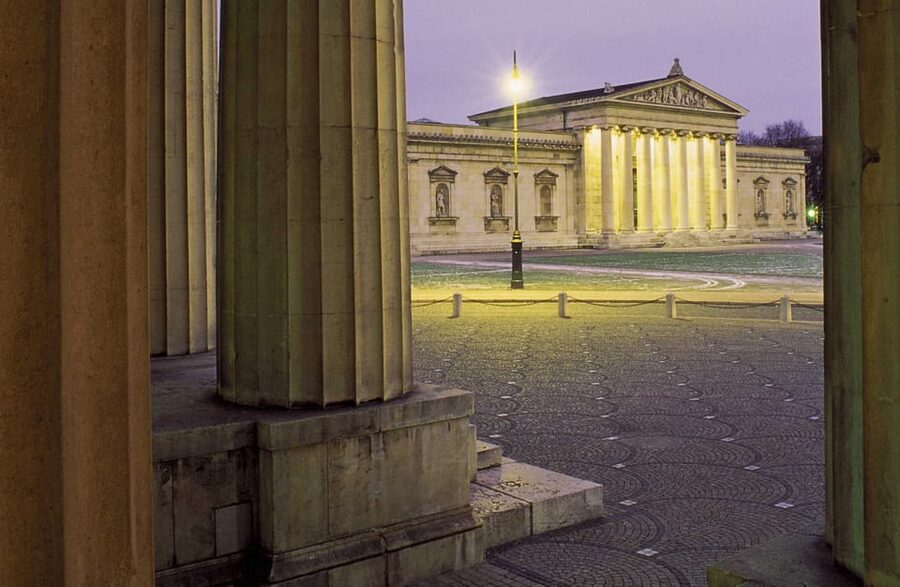
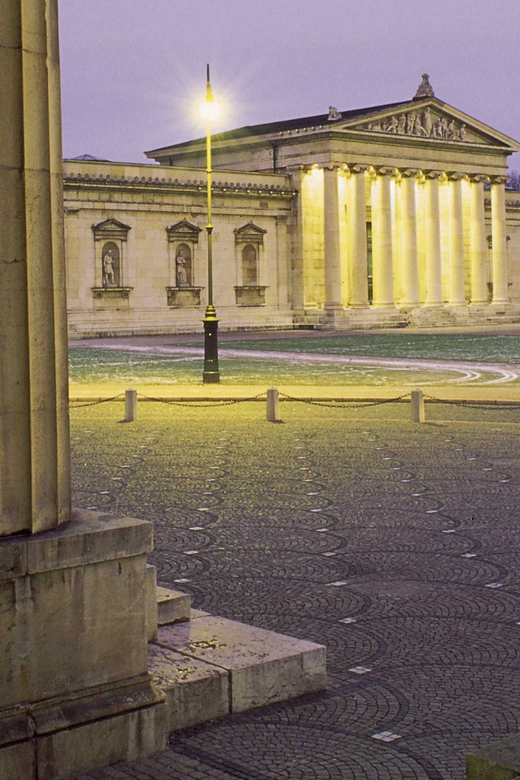
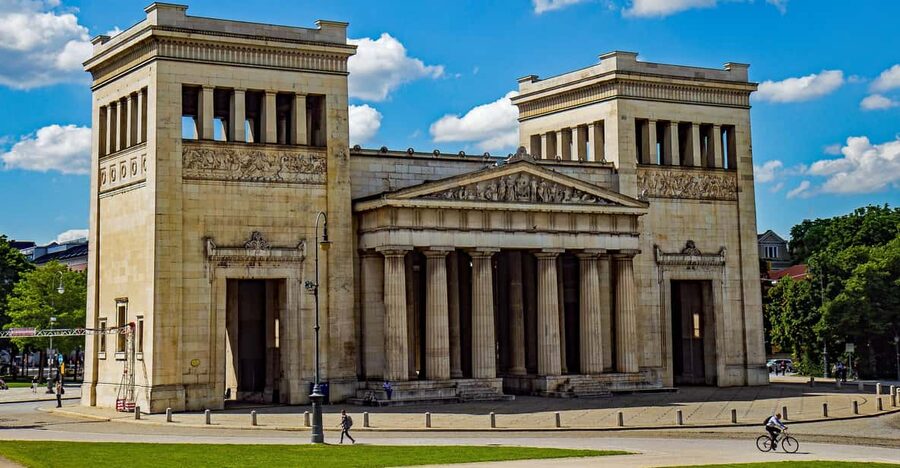
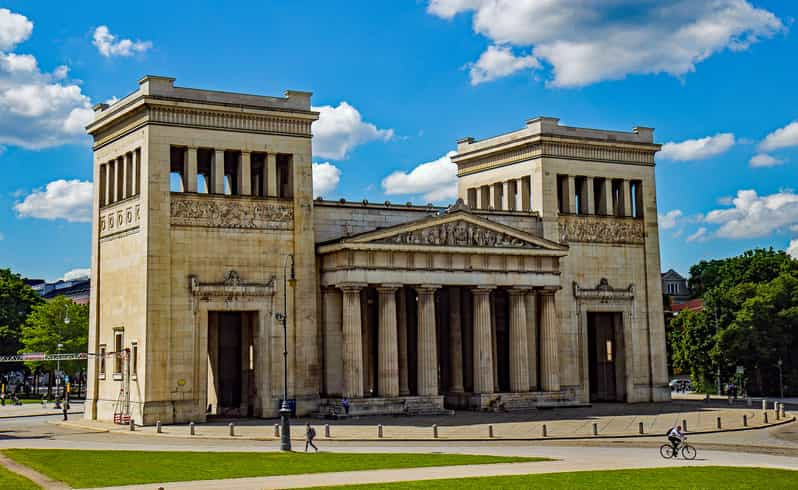
Your walk starts at Königsplatz, a location tightly connected to Munich’s political theater in the early Nazi period. This is where you set the frame for the rest of the tour, because Munich’s reputation as the City of the Movement did not come from nowhere.
As you stand there, you learn how National Socialism began to gain traction in Munich in the 1920s and 1930s. The guide’s job is to connect the dots: how ideas become organized movements, how propaganda finds an audience, and how public spaces become part of that strategy.
I like this first stop because it gives you orientation fast. You are not jumping straight to the most infamous moments without understanding the setup. You can still feel how the city’s “look” mattered, even when you are not an architecture expert.
The Führerbau stop, and why 1938 matters
After Königsplatz, you walk to the former Führerbau, often described as the Führer’s building. This is a key hinge point in the story because it connects Munich’s political rise with the regime’s later power and diplomacy.
Here, the guide points out that the Munich Agreement was signed in 1938. That detail expands the tour beyond slogans and rallies, because it shows how Nazi-era influence reached into major European decisions. You are not only learning about street-level intimidation; you are also seeing how political power translated into international events.
One practical tip: expect the guide to use the space around you to explain why specific locations were meaningful. Try to look up and around instead of only focusing on the ground. These sites were designed to be seen.


Briennerstrasse: a street segment that keeps the timeline readable
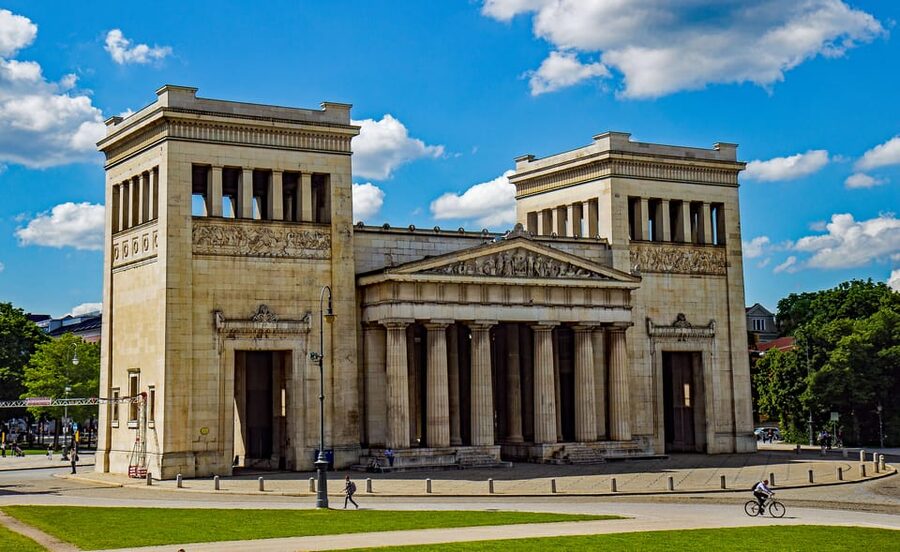
You then continue along Briennerstrasse. This part of the walk may sound like a simple transit stretch, but it has a purpose: it helps you move between major sites in a logical line.
A good walking tour is not just about where you stop, it is also about how you connect stops. Briennerstrasse acts like a spine for the route. You can start to recognize the pattern the guide is building, where each location supports the next point in the rise and consolidation of power.
If you tend to get distracted while walking, slow down here. Ask yourself what the guide is emphasizing, because this is when you can lock in the timeline. You will thank yourself later when the story reaches the intimidation and spectacle of the November events.
The Munich Documentation Centre area, and looking at the present through the past
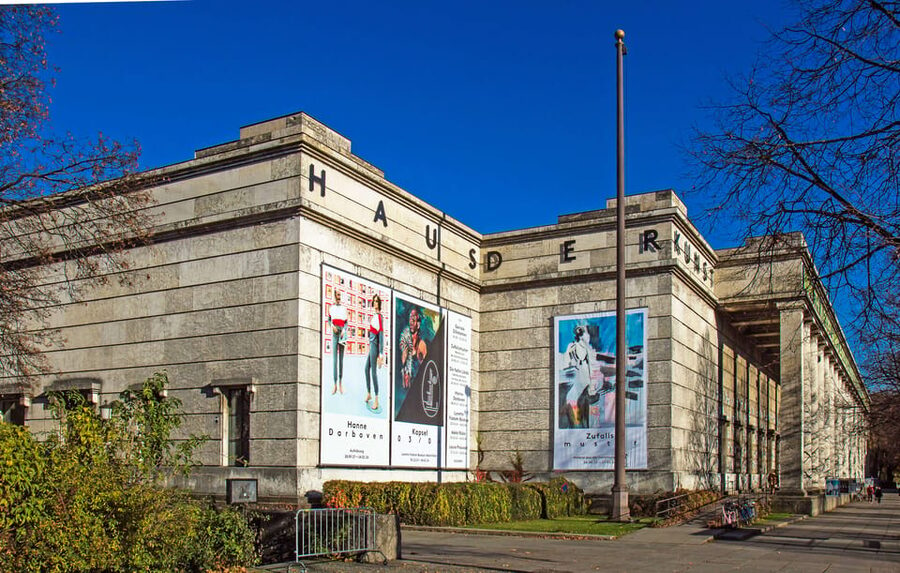
From the Führerbau area, you move toward what is today the Munich Documentation Centre for the History of National Socialism. Even without going inside, the stop matters because it frames how Munich chose to remember, document, and interpret this period.
The value for you is perspective. Learning about Nazi history is heavy, but it becomes more useful when you see how later generations turned painful events into documentation and public learning. This does not erase the harm. It helps prevent forgetting and makes the city’s role harder to sanitize.
Pay attention to what the guide highlights around this area. The tour is designed so the present functions as a tool for understanding the past. You are learning how a modern city can face its history in public, instead of hiding it.
Passing the former Gestapo headquarters: when terror becomes part of the route
Next, you pass the former Gestapo headquarters. This is one of those stops where the tour shifts tone, because it moves from public political performance into the machinery of repression.
The Gestapo role is not explained as an abstract concept. The guide ties the institution to the broader Nazi system, helping you understand that the regime did not rely only on speeches. It relied on fear, surveillance, and enforcement.
This stop is also a reminder that the city is still carrying traces of what happened. You might feel a bit uncomfortable looking at ordinary streets, and that reaction can be useful. It signals that the story is landing in the real world, not staying locked inside a museum label.
Feldherrnhalle at Odeonsplatz: November 9, 1923 and the Beer Hall Putsch
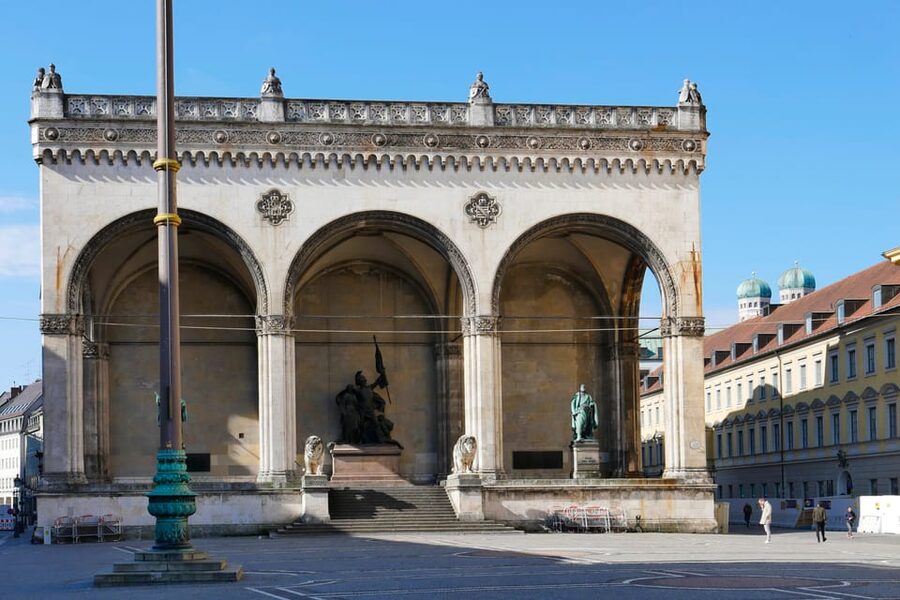
Your route continues to Feldherrnhalle at Odeonsplatz. This location is closely tied to the Beer Hall Putsch and the Nazi movement’s violent early efforts.
The guide brings up events of November 9, 1923 and also points to November 9, 1933, the date connected with Hitler’s Beer Hall Putsch at this site. Having both dates in the same walk helps you see how the regime treated earlier actions as foundational mythology.
Standing here, it is easier to understand why symbolism mattered so much to the Nazi project. Locations like this were not neutral backdrops. They were used to stage authority, recruit followers, and build emotional momentum.
I suggest slowing down and taking in the space before your brain tries to rush to the next stop. The timing and the connections are the point, and Feldherrnhalle is a place where you can feel the weight of those choices.
Black-and-white photos: why the guide brings images with the walk
One of the most practical and praised parts of this tour is the use of historic black-and-white photographs. The guide brings photos depicting Munich in the 1920s and 30s, and they help you connect specific events to what the city looked like then.
This works because your brain is great at visual comparison. When the guide shows you an older street view or building-era image, you can mentally overlay it on what is around you now. That is when the story becomes more than a sequence of dates.
If you are a visual learner, you will probably find this element especially valuable. Even if you are not, it breaks up the walking rhythm and gives you moments to focus fully on the narrative.
Private vs group tour, and how that affects your experience
You can choose between a private or group tour. With group tours, you tend to get more energy and a shared pace. With private tours, you can often ask more questions and get the guide’s attention without waiting for a group moment.
For a subject like this, that difference matters. If you want extra clarity on a specific date, or you need a slower explanation to process what you are hearing, a private format can be easier. If you are okay keeping pace and just want the route, group can be a good fit.
Either way, the German language guide stays the same, so your comfort with German still counts.
Price and value: what $34 buys you, and what it does not
The price is $34 per person for a 2-hour guided walking tour. At this cost, you are paying mainly for a professional city guide who can explain the Nazi rise and its key Munich landmarks in context.
Food and drinks are not included, and there are no hotel pickup and drop-off services. Entrances fees are also not included. That means you should plan on handling your own meals and transit around the tour.
Where the value really shows is in the structure. Instead of hopping between random sites, you get a focused route that matches the story the guide is telling, from Königsplatz to Führerbau, the Munich Documentation Centre area, the former Gestapo headquarters, and onward to Odeonsplatz and Feldherrnhalle.
Practical tips for this German history walk
Bring comfortable shoes, because this is a walking tour. Also dress for weather since it happens rain or shine. If Munich weather shifts quickly, you will feel it during a two-hour outdoor walk, so layer up.
Language is another key point. The live tour guide is German, so if you only understand basic phrases, you might want to think carefully about whether you will keep up. You can still follow the landmarks, but the depth will depend on comprehension.
Finally, take the accessibility note seriously. The activity says it is wheelchair accessible, but it also says it is not suitable for people with mobility impairments. If mobility is a factor for you, your best move is to confirm with the provider before booking so you can avoid surprises on the ground.
Who this Munich National Socialism tour is best for
I think this tour is a strong choice if you want a guided route through Munich’s Nazi-era sites with real historical context built around specific stops. You will enjoy it most if you like learning from a live guide, and especially if you appreciate visuals like the guide’s black-and-white photos.
It is also a good fit if you are short on time. Two hours gives you a coherent story arc without taking over your whole day.
If you want a family-style, light overview, this is not that. The topic is heavy, and the route includes sites linked to repression and violence. But if you are looking for a serious, organized walk that helps you understand why Munich mattered, this is right in its lane.
Should you book this Munich National Socialism historical tour?
Book it if you want a focused, street-level understanding of Munich’s role in the rise of National Socialism, with a German guide and historic photos to connect the timeline to what you see. The route is structured around emblematic locations, from Königsplatz to Feldherrnhalle, so your visit stays purposeful.
Skip it, or at least ask questions before booking, if German is a barrier for you or if you need to avoid walking for long periods outdoors. And because the topic is serious, choose this one when you have the mental space to listen and absorb.
If you are the kind of visitor who likes to understand the “how and why,” this tour delivers that, stop by stop.
FAQ
Where do I meet for the tour?
Meet in front of the main entrance of the Staatliche Antikensammlungen.
How long is the National Socialism historical tour?
The tour lasts 2 hours.
What language is the live tour guide?
The live tour guide speaks German.
What is the price per person?
The price is $34 per person.
Is food and drinks included?
No. Food and drinks are not included.
Are entrance fees included?
No. Entrances fees are not included.
Is there a choice between private and group tours?
Yes. You can choose between a private or group tour.
What should I bring, and does the tour run in bad weather?
Bring comfortable shoes. The tour takes place rain or shine.
Is the tour wheelchair accessible?
The activity information says wheelchair accessible, but it also notes it is not suitable for people with mobility impairments.
How do I recognize the guide at the meeting point?
The guide will be wearing a BIG BLUE BAG with the white words Weis(s)er Stadtvogel written on it.
The Longer History of Munich
Everything else we filed on Munich
- Paul’s Private Tour Munich Highlights
★ 5.0 · 3 reviews - Private Linderhof Castle, Entry-Ticket – optional Toboggan Run
★ 5.0 · 3 reviews - Paul’s Private Tour in the Alte Pinakothek Munich
★ 5.0 · 3 reviews - Private Tour at Neuschwanstein And Linderhof Palaces From Munich
★ 4.5 · 3 reviews - Private Highlights of Munich Bike Tour with Beer Garden Stop
★ 5.0 · 3 reviews - Munich WWII and Dachau Concentration Camp Private Tour with Licensed Guide
★ 5.0 · 3 reviews
Historical Tours, side by side.
 ★ 4.7Leipzig: City History Canal Sightseeing Tour on a MotorboatFrom $186,232 reviews
 ★ 4.6Berlin: Natural History Museum Entrance TicketFrom $123,382 reviews
 ★ 4.7Leipzig: 1.5-Hour Historical Walking Tour in GermanFrom $172,217 reviews
 ★ 4.5Berlin: World Heritage Cruise to PotsdamFrom $251,435 reviews
 ★ 4.7Heidelberg: Night Watchman Historic Adventure TourFrom $3051,186 reviews
 ★ 5.0The Local Tour of Hamburg Historic CentreFrom $31,058 reviews
 ★ 4.8Elbfloren: Historical city tourFrom $15819 reviews
 ★ 4.6Bamberg: Guided Beer History Tour with Optional TastingFrom $21772 reviews
Other lists this tour is on