
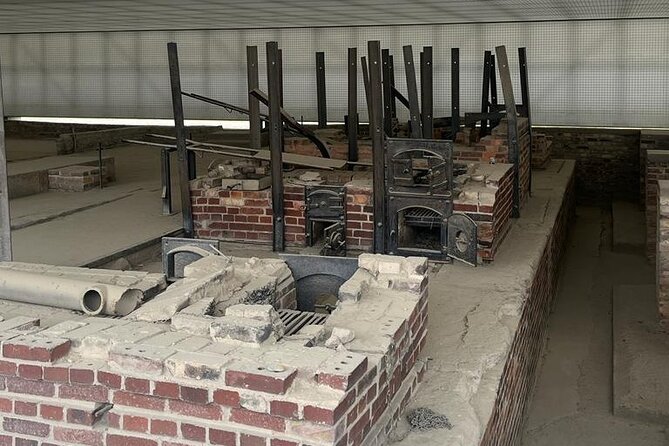
REVIEW · SACHSENHAUSEN
Never Again Sachsenhausen Concentration Camp
A short trip, a heavy place. Sachsenhausen is one of those memorials that teaches you how control works, and why it still matters. You get a small-group visit that moves at a human pace, with a guide who keeps the focus on evidence, not theatrics, and links what happened then to what still shows up now.
What I like most is the balance: you learn the camp in clear chunks, and you also feel the guide watching the room for the right tone. The other big plus is the guiding style, Siobhán’s commentary comes with a feminist lens and a respectful, steady hand. A possible drawback, if you prefer a strictly neutral approach, is that some of the connections to today are openly political.
In This Review
- Key things to know before you go
- Walking in from Berlin, then stopping time at Sachsenhausen
- The visitors center: models that make the machine of control click
- Prisoner barracks and the kitchen: your own eyes, guided by context
- The camp across regimes: Nazi, Soviet, and propaganda use
- The infirmary stop: where racism, eugenics, and gender control are spelled out
- How Siobhán’s style keeps it respectful, not numb
- The price, what you get, and why it can feel fair
- Logistics that actually affect your experience
- Who this tour suits best
- Should you book Never Again Sachsenhausen?
- FAQ
- How long is the Sachsenhausen tour?
- Is admission to the memorial included in the price?
- What is included besides admission?
- What language is the tour offered in?
- What is the meeting point?
- Do I need to buy a public transport ticket?
- Are snacks or bottled water provided?
- What group size should I expect?
- What is the cancellation policy?
Key things to know before you go
- A 4-hour format that includes both guided context and time to look around on your own
- Models and physical layout at the visitors area, so the site makes sense fast
- A direct focus on cruelty as a system, including racism, eugenics, and control over women’s bodies
- Small group size (maximum 15), which helps the tone stay careful
- English mobile ticket and a memorial donation included in the price
- What you bring matters since snacks and bottled water are not included
Other guided visits to Sachsenhausen Memorial
- Berlin: Sachsenhausen Concentration Camp Tour in English★ 5.0 · 5,711 reviews
- Berlin: Sachsenhausen Concentration Camp Memorial Tour★ 4.7 · 3,716 reviews
- Sachsenhausen Concentration Camp Bus Tour in English from Berlin★ 5.0 · 1,962 reviews
- Berlin: Sachsenhausen Concentration Camp Tour in English★ 4.8 · 1,889 reviews
Walking in from Berlin, then stopping time at Sachsenhausen
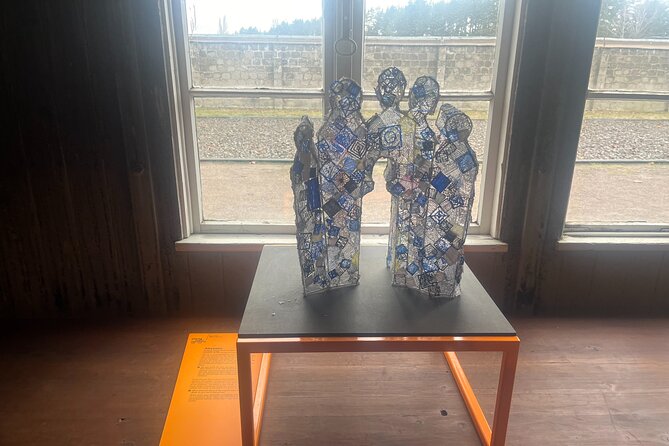
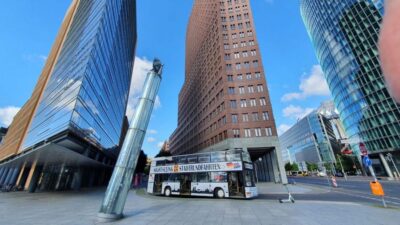
Sachsenhausen sits outside central Berlin, but your experience starts in the city. The meeting point is Potsdamer Platz 10, and the activity ends back there after about four hours. That framing matters because it keeps the day simple: you are not spending your trip hunting for where to go, or juggling complicated routes for the last leg.
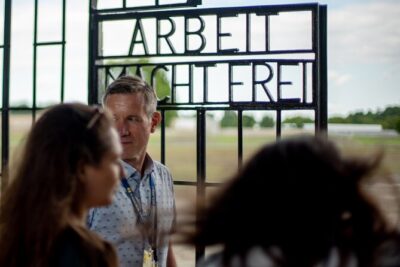
Once you’re on site, the mood changes fast. This is not the kind of museum where you can skim your way through. You feel it in your feet and in your breathing, and you’ll notice how the guide shapes the tempo, pausing when the details get too sharp, then moving again when it’s time to understand.
The visitors center: models that make the machine of control click
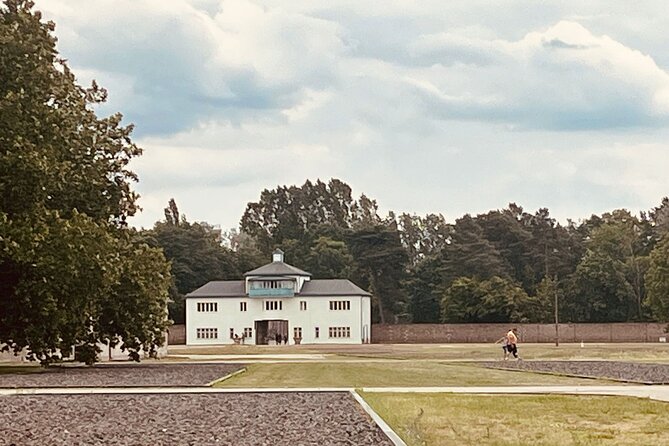
The first stop is the Memorial and Museum Sachsenhausen, where you start at the visitors area rather than launching straight into the grounds. I love this approach because it gives your brain a reference map. The memorial uses detailed models that show how the camp’s physical layout worked as a tool for control and hierarchy.
That’s the key benefit of the visitors area: it turns the site from a list of buildings into a functioning system. You start to see how visibility, barriers, and assigned spaces were meant to dominate people psychologically as much as physically. You also get context about how the place changed over time, which helps you avoid the common trap of thinking the story is frozen in 1945.
You’ll also hear that the location did not stay in one form. The site was once an SS training camp, and later it was transformed into today’s Brandenburg police academy. That shift is unsettling, but it’s also important, because it forces you to notice how institutions can reuse space even after the moral meaning is shattered.
Prisoner barracks and the kitchen: your own eyes, guided by context
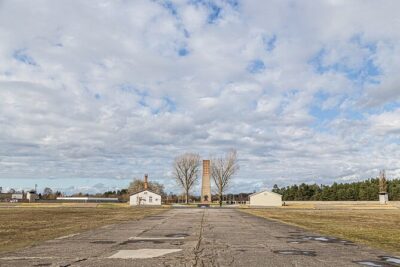
After the visitors area, you move into areas where you can explore more autonomously, including the prisoners’ barracks and the camp kitchen. This is a valuable design choice. A scripted lecture can make you pass through the site like it’s a stage set. Giving you time to look lets you slow down and actually register the scale.
You’ll likely feel the contrast between what you imagine before you arrive and what you actually see. The barracks are not there to impress you. They are there to show you the conditions, the cramped reality, and the way suffering was built into daily life.
The tour also raises an uncomfortable point that reaches beyond the past. It highlights that there have been attacks connected to Neo-Nazi Holocaust denial, linking the memorial to the fact that extremist propaganda is still active in Germany. The guide goes further, connecting this ongoing pressure to modern far-right politics, including the rise of the AfD. For many people, that connection is the moment the memorial stops being only about history and becomes about current civic life.
The camp across regimes: Nazi, Soviet, and propaganda use
One part of this experience that stands out is the way it treats Sachsenhausen as more than one chapter. You’ll hear that the camp was used under the Nazi regime as a concentration camp, and later it functioned as a Soviet special camp. After that, it was used as part of pro-communist, anti-fascist propaganda.
Why does that structure matter? Because it stops you from thinking the memorial is only about one ideology. You see instead how power can be repurposed. The place becomes a warning about systems that treat humans as objects, whether the labels on the outside change or stay the same.
It also helps you interpret what you see on the ground. Different periods left different traces, and understanding the camp’s changing role keeps you from oversimplifying what you’re looking at. You do not just remember dates. You learn how the same physical location can be used to enforce very different narratives, including narratives meant to recruit support.

The infirmary stop: where racism, eugenics, and gender control are spelled out
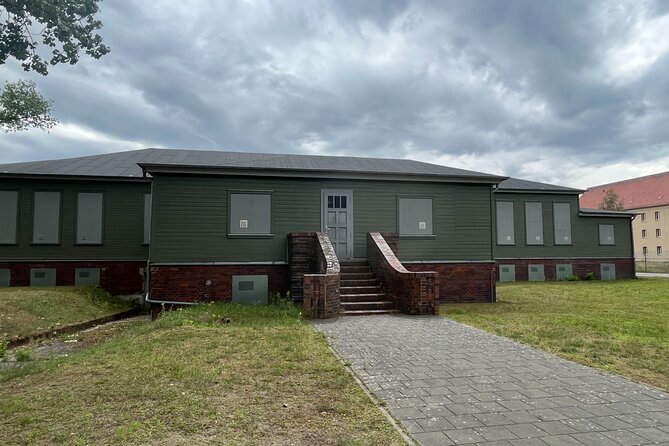
The last major area is the infirmary, and this is where the tour becomes the most emotionally heavy. The guide explains the role of medical experiments and the cruelty behind them, including how Nazi doctors used prisoners as lab rats for their professional advancement.
You’ll also learn how the abuse was not one-track violence. The tour addresses racism, eugenics, and the brutal reality of control over women’s bodies. That combination makes the history feel painfully specific, not generic. It’s not only about being in the wrong place. It’s about being targeted as unwanted, unwanted enough to justify experimentation and degradation.
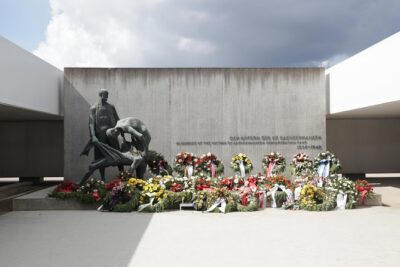
A respectful memorial visit can sometimes feel emotionally chaotic. Here, the guide appears to manage that risk by choosing what to emphasize and by keeping the tone careful. You may feel disturbed, but you’re also given enough structure to understand what you’re seeing and why it was done.
How Siobhán’s style keeps it respectful, not numb
The tour’s most praised element is the guiding. The name you’ll hear is Siobhán, and her approach comes through in how she talks, how she sets the tone, and how she handles the emotional weight.
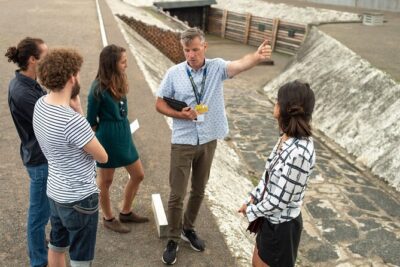
A big part of what people love is that the tour is not dense or scripted in a textbook way. You get explanations that help you understand the site, but you are not stuck listening through a monologue. The guide adapts to the group, including different ages, and you can ask questions if something is unclear.
Another detail I’d flag is the emotional pacing. The tour makes room for the fact that this is extraordinary suffering. At the same time, Siobhán manages to avoid turning the experience into a continuous wall of misery. If you need a moment to breathe, you tend to get it, without minimizing what happened.
And yes, there is a political lens. The commentary connects the past to the present with a progressive and feminist viewpoint. If that style annoys you, this might be uncomfortable. If it’s your preferred way of learning, you’ll probably find it clarifying rather than preachy.
The price, what you get, and why it can feel fair
The price is $31.29 per person for roughly four hours, including admission and a donation for the memorial. For Berlin, that’s a reasonable structure for a site that many people find hard to interpret on their own.
Here’s how I think about value with tours like this: the cost is not just for transportation or entry. It’s for turning a painful site into something you can actually process. The visitors center models and the guided context help you understand what you’re looking at, so you don’t leave with only vague impressions.
Also, the group size cap at 15 matters. Sachsenhausen is intense. A smaller group helps keep the tone steady, helps questions get answered, and makes it easier to pay attention without getting swept along.
Logistics that actually affect your experience
This is an English tour with a mobile ticket. It also notes that it’s near public transportation, and it starts at Potsdamer Platz. There’s no mention of a provided public transport ticket, and that’s worth planning for, especially if you’re traveling from other parts of Berlin.
Snacks and bottled water are not included. That sounds basic, but it matters in practice. When the subject is heavy, you forget to drink until you feel your energy dropping. I’d bring a bottle and something small to eat in advance, then keep your energy steady.
Comfort and clothing are also worth thinking about. The tour notes a moderate physical fitness level. You’ll be walking and standing around areas of the memorial, so good shoes and a weather plan are smart.
Finally, the tour offers free cancellation up to 24 hours before the start time, which gives you room to adjust if your Berlin schedule shifts. If it’s canceled due to a minimum traveler requirement, you’d be offered a different date or a full refund.
Who this tour suits best
This experience is best for people who want real context, not just photos and facts. If you prefer a guided visit that explains the site’s logic, covers how the camp evolved, and connects the dots to modern extremism and gender-based harm, you’ll likely feel satisfied.
It’s also a strong choice if you want respectful pacing and a guide who manages the emotional temperature. The site is heavy, but the tour approach aims to educate without leaving you wrecked.
If you prefer a purely neutral, strictly historical narrative with no modern connections, the feminist and progressive lens may feel like too much. You should treat that as a fit question, not a quality question.
If you’re bringing kids or teens, it can still work well, since the guide can adapt to mixed ages. Still, this is not a light outing. You should go in ready for difficult subject matter.
Should you book Never Again Sachsenhausen?
I’d book it if you want the best chance of understanding Sachsenhausen quickly and clearly, while still handling the emotional weight with care. The combination of visitors center models, time in key parts of the camp, and a focused explanation of medical and gender-based abuses is exactly what many people need to leave with real comprehension, not just sadness.
I’d skip it if you know you only want a strictly non-political presentation, or if you expect a casual museum vibe. This is a serious visit. You should choose it when you’re ready to learn how cruelty was organized, and how extremist thinking can keep reappearing.
If you’re in Berlin and you’re on the fence, consider this your practical path forward: small group, English guide, memorial entry included, and a structure that helps you see the site as a system.
FAQ
How long is the Sachsenhausen tour?
The tour is about 4 hours.
Is admission to the memorial included in the price?
Yes. The memorial admission ticket is included.
What is included besides admission?
A donation for the memorial is included.
What language is the tour offered in?
The tour is offered in English.
What is the meeting point?
The meeting point is Potsdamer Platz 10, 10785 Berlin, Germany, and the tour ends back at the meeting point.
Do I need to buy a public transport ticket?
A public transport ticket (ABC zone) is not included, so you’ll need to arrange your own transit.
Are snacks or bottled water provided?
No. Snacks and bottled water are not included.
What group size should I expect?
The maximum group size is 15 travelers.
What is the cancellation policy?
You can cancel up to 24 hours in advance for a full refund. Free cancellation is allowed if you cancel at least 24 hours before the start time.
Visiting Sachsenhausen Memorial
Everything else we filed on Berlin
- Private Photo Tour in Kreuzberg
★ 5.0 · 3 reviews - Kreuzberg Private Walking Tour: Immigrants, Artists & Hipsters
★ 5.0 · 3 reviews - Berlin’s Jewish Heritage: Private Tour of the Vibrant Jewish District
★ 5.0 · 3 reviews - Individual city tour Berlin for max. 8 persons
★ 5.0 · 3 reviews - Berlin & The Third Reich Private Guided Tour
★ 5.0 · 3 reviews - Private Analogue Photography Experience in Berlin
★ 5.0 · 3 reviews
Sachsenhausen Memorial Site Tours, side by side.
 ★ 5.0Berlin: Sachsenhausen Concentration Camp Tour in EnglishFrom $365,711 reviews
 ★ 4.7Berlin: Sachsenhausen Concentration Camp Memorial TourFrom $213,716 reviews
 ★ 5.0Sachsenhausen Concentration Camp Bus Tour in English from BerlinFrom $681,962 reviews
★ 4.8Berlin: Sachsenhausen Concentration Camp Tour in EnglishFrom $221,889 reviews
 ★ 5.0Sachsenhausen Concentration Camp Memorial Tour (Max. 15 Guests)From $351,516 reviews
 ★ 4.6Berlin: Sachsenhausen Concentration Camp and Potsdam TourFrom $651,334 reviews
 ★ 5.0Sachsenhausen concentration camp.From $341,189 reviews
 ★ 5.0Visita en español al campo de concentración SachsenhausenFrom $341,170 reviews
Other lists this tour is on