
REVIEW · 3-HOUR EXPERIENCES
Private 3-Hour Walking Tour of Berlin
Berlin can feel like a puzzle of time. This private 3-hour walking tour strings it together with landmarks like the Reichstag and Brandenburg Gate, plus Wall remnants at multiple stops. I also like the private setup, because your guide can keep the pace calm and answer your questions on the spot.
What I love most is the guide-led storytelling, and the fact you can customize the tour to your liking, not just march through a script. One consideration: it is a walking tour, so if you hate moving between sites, you might want a more stop-and-cafe style plan.
In This Review
- Key highlights that make this tour worth your time
- A smart way to understand Berlin in only 3 hours
- Price and group value for up to six (or eight)
- Getting picked up, then walking with a real plan
- Reichstag Building: from Weimar hope to dictatorship power
- Brandenburg Gate and Unter den Linden: the symbolic spine of Berlin
- Potsdamer Platz and the Wall’s leftover fingerprints in modern Berlin
- Topography of Terror: seeing foundations and the Documentation Center
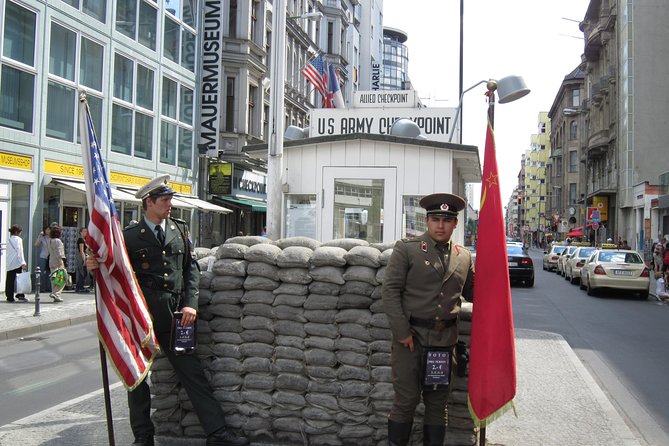
- Checkpoint Charlie: a Cold War gateway, not just a reenactment
- Gendarmenmarkt and the dome contrast that shapes the square
- Museum Island: UNESCO status and how to plan your next hour
- How customization actually helps on a history-heavy walk
- What the guides do well, and why it shows at the stops
- Who this Berlin walking tour fits best
- Should you book this private Berlin walking tour?
- FAQ
- How long is the Private 3-Hour Walking Tour of Berlin?
- What is the price of the tour?
- Is pickup included?
- What language is the tour offered in?
- Is this a private tour?
- Does the tour run in bad weather?
- What is included, and what is not included?
- Can I cancel for a full refund?
Key highlights that make this tour worth your time
- Private guide attention for real back-and-forth, not head-bobbing silence
- Wall history in multiple locations, with remnants showing up more than once
- Free-entry stops at the listed sights, so you are not constantly hunting ticket booths
- English-language guidance plus pickup from your hotel or private residence
- A route that covers major Berlin anchors in only about 3 hours
- Museum Island as a payoff, with suggestions to extend your visit after the walk
Other walking routes through Berlin
- Berlin: Third Reich and Cold War 2 Hour Walking Tour★ 4.9 · 6,830 reviews
- Berlin: Discover Berlin Walking Tour★ 4.9 · 5,998 reviews
- Berlin’s Best: 2 Hour Walking Tour Third Reich and the Cold War★ 5.0 · 5,486 reviews
- Berlin: Hidden Backyards Guided Walking Tour★ 4.8 · 5,360 reviews
A smart way to understand Berlin in only 3 hours
Berlin’s story is not linear. It is layers, interruptions, rebuilds, and reinvention, and that is exactly what you feel on this walk. Instead of trying to read every plaque on your own, you get a local guide who explains what you are looking at and why it matters.
The format is ideal for first timers and return visitors alike. You cover major landmarks that tend to anchor every Berlin itinerary, but you also get the connective tissue: how politics shaped the city, how the Cold War carved daily life, and how reunification changed what the skyline means. In practice, this tour helps you get your bearings fast, then gives you reasons to care beyond the postcard view.
You also get the benefit of a private tour (up to your group size), so the guide can slow down when something clicks or speed up when you are itching to keep going. That is a real upgrade over larger group tours where you often feel like you are just following the leader.
Price and group value for up to six (or eight)
The price is $432.55 per group, and it is listed as up to 6 people. At the same time, the experience information says a maximum of 8 people per booking, so the practical takeaway is this: you are paying for a group experience, not a solo guided lecture. Either way, the value is strongest when you split the cost with friends, family, or a small travel party.
To judge value fairly, think about what you are paying for:
- A professional guide who handles the history for you
- A 3-hour route that hits multiple key sites
- Pickup offered, which saves time and hassle in a city where transit connections can be quick but planning still takes effort
If you are traveling as two to four people, this can land in a sweet spot for cost versus convenience. If you are traveling alone, it is still workable, but it is more of a premium option. In that case, I would ask yourself if you want a guided walk to compress Berlin’s context for you, or if you would rather go lighter and cheaper with transit and audio.
Also, this is booked about 35 days in advance on average, so it can help to lock in a time early, especially if you have a tight schedule.
Getting picked up, then walking with a real plan
Pickup is offered from your hotel or private residence in Berlin, and that changes the feel of the morning or afternoon. You do not have to coordinate a meeting spot, and you are less likely to start late because you got turned around.
This is also designed to run in all weather conditions, so you should dress for Berlin’s mood swings. Comfortable walking shoes matter more than you think, especially because this route moves through several central districts where crowds can slow you down.
The tour is offered in English, and it is a private activity where only your group participates. That means you are not stuck listening to a different language group’s questions, and the guide can steer the conversation toward what your group cares about, whether that is politics, architecture, or everyday life during the Cold War.
From the guide-quality angle, there’s a pattern in how people describe their experience. Guides such as Sven and Thomas have been praised for being prepared and very personable, and Tomas is mentioned for bringing the stories to life with sensitivity. That kind of delivery matters on a history-heavy route, because it keeps facts from turning into a cold lecture.
Reichstag Building: from Weimar hope to dictatorship power
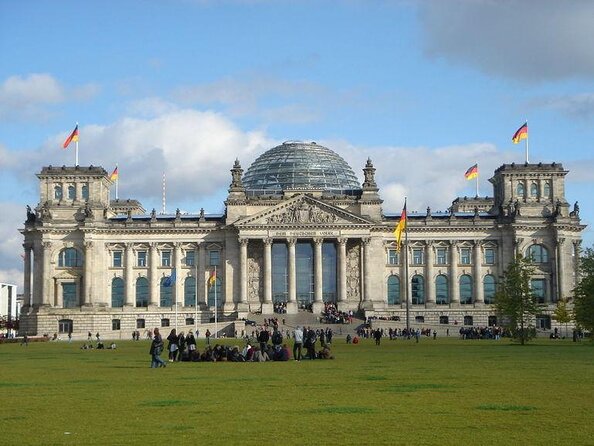
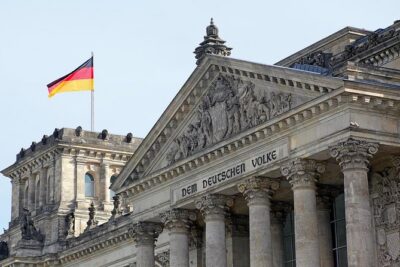
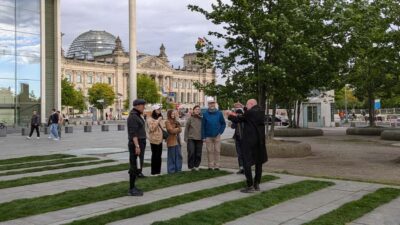
The walk begins at the Reichstag Building, a site that basically explains why Berlin’s 20th-century history is so intense.
Here is the core story you will hear:
- Built in 1894 for the German parliament
- After World War I, it became the home of the Weimar Republic parliament
- In 1933, shortly after Hitler rose to power, a fire destroyed much of the interior and the building was closed
- Hitler did not need a parliament, so the building’s political role shifted dramatically
- After reunification, the building was restored and the new German Parliament was ready to move in
What makes this stop valuable is how the guide connects building to power. It is easy to think of architecture as just scenery. But this place shows how institutions can be repurposed or sidelined when a regime changes direction.
A small drawback to keep in mind: the tour time at each stop is short, so this is not a deep museum visit. If you want to spend hours here, you will likely do that on your own later, but as a first orientation stop, it is an excellent start.
Brandenburg Gate and Unter den Linden: the symbolic spine of Berlin
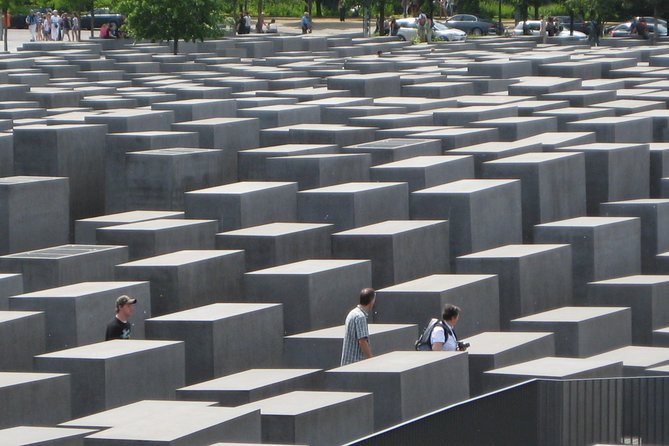
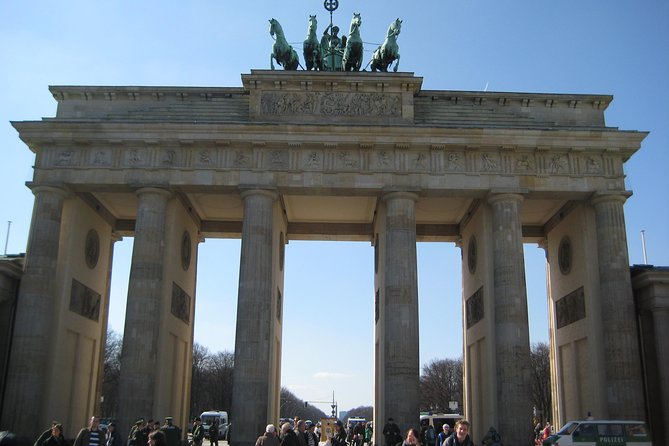
Next up is the Brandenburg Gate, and yes, it is one of those landmarks you will recognize instantly. But it is worth the stop because it is more than a big photo spot. The guide uses it as a marker to talk about Berlin as a city of symbols, where political shifts are reflected in what gets emphasized, protected, or staged.
From there, you walk along Unter den Linden, described as beginning at the Hohenzollern Palace and ending at the Brandenburg Gate. This is a classic axis in Berlin, lined with some of the city’s older buildings, including the Opera and the Kronprinzenpalais.
I like this portion because it gives you a visual rhythm. You stop, you look, you listen, then you move again. It helps you understand why people often call certain streets the face of a capital. You are not just passing buildings, you are learning to read what they signal.
Potsdamer Platz and the Wall’s leftover fingerprints in modern Berlin
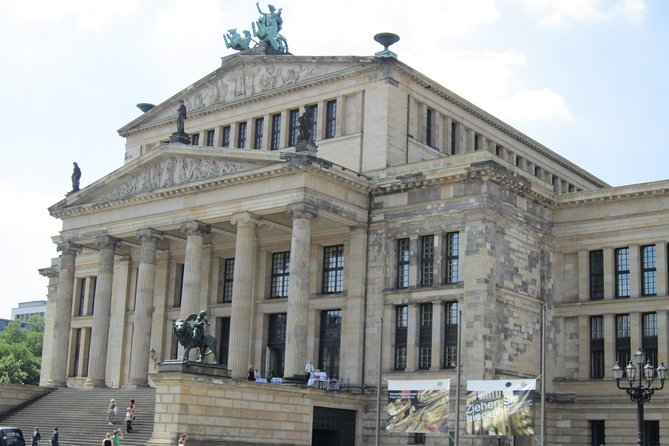
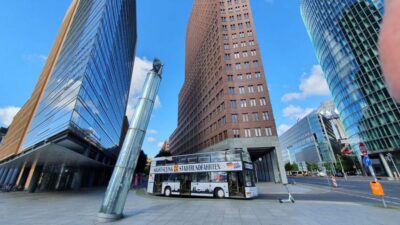
The tour then reaches Potsdamer Platz, where Berlin’s history and its newer architecture share the same frame. This is one of those areas where the city looks entirely new at first glance, but the past is still present if you know where to look.
You will check out the Sony Center and its architecture, plus you will see Germany’s oldest traffic light. That combination is the point. Berlin does not keep history in a museum only. It also threads it into everyday city life, even when the buildings look futuristic.
You also get to see remains of the Berlin Wall at this stop. The mental effect is strong: you see the boundary in the past, then you realize you are standing in the redeveloped space built around it. That contrast is a powerful way to understand how reunification reshaped more than politics. It reshaped geography.
Potential drawback: because Potsdamer Platz is popular and very central, you might hit crowd density depending on your time of day. Your guide will keep things moving, but if you are sensitive to people in your photos, plan for a bit of patience.
Topography of Terror: seeing foundations and the Documentation Center
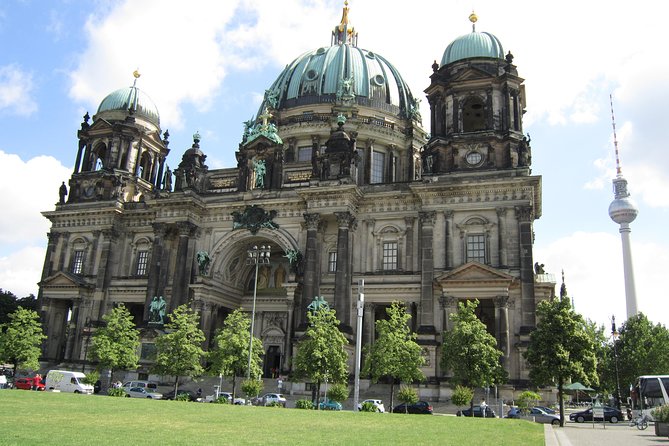
At Topography of Terror, the focus shifts to the infrastructure of repression. This site is on the location of the former SS and Gestapo headquarters. What you see here is not just a monument, it is a way of showing the ground where power operated.
The stop is explained through:
- excavated building foundations
- a Documentation Center added to the site
- the remains of the Berlin Wall
This is one of the most serious stops on the route, so the guide’s tone matters. It helps when your guide handles the subject with intelligence and sensitivity, and that kind of approach is specifically praised by people who have done the tour.
Is it a drawback? Only if you expect a light, funny walking tour. This stop is heavy. If you want Berlin history but in a more upbeat style, you may want to mentally prepare yourself here, then balance the rest of the walk with the more “architecture and city squares” sections.
Checkpoint Charlie: a Cold War gateway, not just a reenactment
The next anchor is Checkpoint Charlie, historically the most famous checkpoint of the Berlin Wall.
What the guide explains is the role it played:
- It was reserved for military personnel and foreign visitors, mostly American, who wanted to enter the Eastern part of the city during the Cold War.
The value of this stop is that it puts checkpoints into context. You are not just looking at a famous name. You are learning that cross-border travel was regulated, and that rules were part of daily reality, not just abstract geopolitics.
Also, because this is a short visit, your guide’s interpretation becomes the real “tour.” You get a clean narrative point, then you move on.
If you are hoping for a long, independent exploration here, you might feel the clock, because the tour keeps a steady pace across multiple stops. Still, as a guided introduction to why this crossing mattered, it is very effective.
Gendarmenmarkt and the dome contrast that shapes the square
Then comes Gendarmenmarkt, widely described as one of Berlin’s most beautiful squares, framed by two domes and anchored by the Konzerthaus.
The guided focus typically includes:
- the German Dome on one side
- the French Dome on the other
- Schinkel’s Konzerthaus in the center
This is a welcome change of tempo. After sites tied to conflict and border control, you get architecture that feels more ceremonial. It is a chance to appreciate Berlin as a place that built culture and institutions, not only fortifications and boundaries.
You will also hear about the Berlin Dome, described as Germany’s largest Protestant church modeled after St. Peters. The tour notes that the Hohenzollern used to worship here, and many family members including King Friedrich Wilhelm I and his wife are buried there.
A practical consideration: squares are open, so weather can hit you more here than on museum walls. If it is cold or rainy, wear layers and keep your outer layer handy.
Museum Island: UNESCO status and how to plan your next hour
Finally, the tour reaches Museum Island, where five museums are recognized as a UNESCO World Heritage Site. The idea here is smart: you finish with a place that can expand into a longer self-guided visit.
The tour also encourages you to stay after the walking portion to visit the Pergamon and/or the Neues Museum. That is useful if you want to turn your guide’s stories into something you can see at full depth with artifacts and galleries.
If you want to keep the whole day efficient, here is what I recommend: use the tour to understand the big picture, then pick one museum to avoid decision fatigue. Museum time can expand quickly, and you will enjoy it more if you do not try to cram everything.
How customization actually helps on a history-heavy walk
The tour highlights that you can customize the tour to your own liking, and in a route like this, customization is not just a nice perk. It changes what you remember.
Here are the common ways this helps:
- If you care more about politics, you can ask for extra context around the Reichstag and what happened in 1933
- If you care more about the Wall, you can focus attention on the places where remnants show up, including Potsdamer Platz and Topography of Terror
- If you care about architecture, you can spend a bit more time on Unter den Linden, Gendarmenmarkt, and the dome story at the Berlin Dome
I also like that private tours make it easier to ask “why does this look like this?” You stop thinking of Berlin as a list of sites and start thinking of it as a set of choices people made, often under pressure.
What the guides do well, and why it shows at the stops
The highest praise on this experience is about the guide experience. People talk about guides being prepared with facts and delivering the story in a way that is intelligent but still human.
You’ll see names like Sven, Tom, Thomas, and Tomas connected to strong experiences. That matters because Berlin’s history can get complicated fast, and your guide needs to:
- keep the timeline straight
- explain the symbolism behind the architecture
- handle sensitive topics with care
When a guide does that well, you walk away with more than “I saw a gate.” You understand what the gate meant, what the border meant, and what reunification changed.
That is the difference between reading about Berlin and actually learning how to look at it.
Who this Berlin walking tour fits best
This is a strong match if:
- you want a guided overview without feeling like you are trapped on a bus
- you care about Berlin Wall history, but you also want major city landmarks
- you prefer a private guide who can set the pace and answer questions
It can be less ideal if:
- you dislike walking for 3 hours
- you want a very museum-heavy tour, since the stops are short by design
- you only want casual sightseeing and no serious historical content
If you are a first-time visitor, this tour is a great way to build your internal map. If you already know some Berlin basics, it can still sharpen your understanding by connecting sites that are easy to treat as separate.
Should you book this private Berlin walking tour?
I would book it if you want Berlin history explained in plain language, tied directly to the places you will stand in. The combination of private attention, the Wall-linked stops, and major anchors like the Reichstag, Brandenburg Gate, and Museum Island makes it a high-efficiency way to learn.
I would hesitate only if you want a purely fun, low-context walk. This route includes serious Cold War and Nazi-era subject matter, especially around Topography of Terror and Checkpoint Charlie.
If you do book, pack walking comfort first, and arrive ready to ask questions. With the right guide, this is the kind of tour that helps Berlin stop being overwhelming and start making sense.
FAQ
How long is the Private 3-Hour Walking Tour of Berlin?
It runs for about 3 hours.
What is the price of the tour?
The tour is priced at $432.55 per group.
Is pickup included?
Yes, pickup is offered from your hotel or private residence in Berlin.
What language is the tour offered in?
The tour is offered in English.
Is this a private tour?
Yes. It is a private tour, and only your group participates.
Does the tour run in bad weather?
It operates in all weather conditions, so you should dress appropriately.
What is included, and what is not included?
Included are taxes, fees and handling charges, a local guide, and a professional guide. Food and drinks are not included.
Can I cancel for a full refund?
Free cancellation is available. You can cancel up to 24 hours in advance for a full refund.
Pavements of Berlin
Everything else we filed on Berlin
- East Berlin: City of Shadows Walking Tour
★ 5.0 · 11 reviews - Berlin: Die Stachelschweine – Frank Lüdecke – Träumt Weiter
★ 4.7 · 11 reviews - Potsdam Day Trip from Berlin with a Local: Private & Personalized
★ 4.0 · 11 reviews - An Introduction to Berlin Walking Tour
★ 5.0 · 11 reviews - DJ for a Day: Learn to Mix Like a Pro in Berlin
★ 5.0 · 11 reviews - 2-H Segway Sightseeing Tour Berlin
★ 4.5 · 11 reviews
3-Hour Experiences, side by side.
 ★ 4.5Munich 3-Hour Guided Bike TourFrom $401,731 reviews
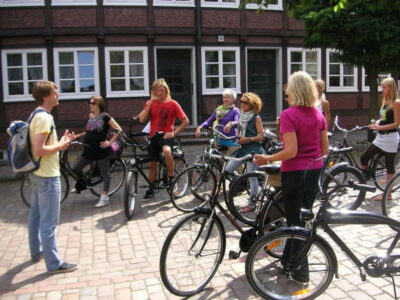 ★ 4.8Hamburg 3-Hour Bike TourFrom $441,353 reviews
 ★ 4.6Bremen: 3-Hour Beck’s Brewery TourFrom $281,091 reviews
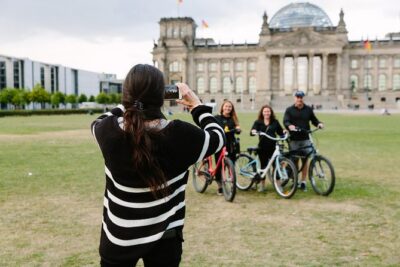 ★ 5.0Berlin Highlights 3-Hour Bike TourFrom $42948 reviews
 ★ 4.6Munich’s Beer Halls and Breweries: 3-Hour Guided TourFrom $50928 reviews
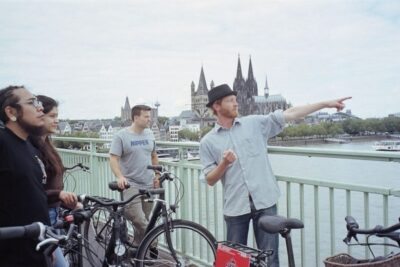 ★ 4.8Cologne: 3-Hour Guided Bike TourFrom $50878 reviews
★ 4.9Berlin Highlights: 3-Hour Bike TourFrom $37809 reviews
★ 4.8Cologne: 3-Hour Guided Bike TourFrom $50878 reviews
★ 4.9Berlin Highlights: 3-Hour Bike TourFrom $37809 reviews
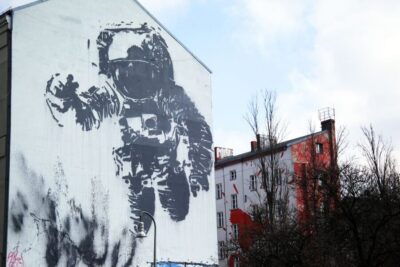 ★ 4.7Berlin: 3-Hour Street Art TourFrom $23778 reviews