
REVIEW · CITY TOURS
Private Berlin City Center Walking Tour
Berlin has a way of teaching fast. This private Berlin city center walking tour strings together the meaning behind big-name sights, so you walk away with a clear story instead of a pile of photos. I especially like the hotel lobby pickup option and the way the guide keeps the route flexible for your interests and pace.
The main thing to consider is that you cover a lot of ground in about four hours, so each stop is brief and you will want to come back later if you want museum-style depth.
If you like your history organized into cause-and-effect chunks, this is a strong first step. It is also a smart choice when you want to get your bearings fast and avoid the awkward moment of being lost in Berlin’s center.
In This Review
- Key highlights worth knowing before you go
- Price and value for a private group up to 15
- What “private” means here, and why it affects your experience
- Hotel lobby pickup and the Scheidemannstraße start point
- Brandenburg Gate and the Reichstag: the quickest route to understanding Berlin’s modern identity
- Holocaust Memorial and Neue Wache: learning how remembrance works in real places
- WWII to Cold War signals: Fuhrerbunker, Göring’s aviation building, and Topography of Terror
- Checkpoint Charlie, Gendarmenmarkt, Bebelplatz, and the parade of central Berlin streets
- Deutsches Historisches Museum, Lustgarten, Humboldt Forum, Berliner Dom, and Museum Island
- How to get the most out of a fast, story-heavy 4 hours
- Should you book this private Berlin city center walking tour?
Key highlights worth knowing before you go
- Hotel lobby pickup keeps you from wrestling the city map
- A tight 4-hour route built for orientation, not lingering
- Private, small-group format (up to 15) with a flexible itinerary
- Constant context at WWII, the Cold War, and modern remembrance sites
- Museum Island-area architecture with quick, practical sight-reading tips
Other walking routes through Berlin
- Berlin: Third Reich and Cold War 2 Hour Walking Tour★ 4.9 · 6,830 reviews
- Berlin: Discover Berlin Walking Tour★ 4.9 · 5,998 reviews
- Berlin’s Best: 2 Hour Walking Tour Third Reich and the Cold War★ 5.0 · 5,486 reviews
- Berlin: Hidden Backyards Guided Walking Tour★ 4.8 · 5,360 reviews
Price and value for a private group up to 15
The price is $397.38 per group for up to 15 people, for about four hours. That is not cheap in the headline number, but it can be a good deal if you are traveling with a small group or family and want a guide who moves you efficiently across the center.
Here is the simple math: if you max out the group at 15 people, the cost works out to about $26.50 per person (397.38 divided by 15). If you have fewer people, your per-person cost goes up, but you still get the value of a private guide, a custom-feeling route, and a big-picture narrative that you can’t get from a self-guided walk.
Also, most of the listed stops are admission ticket free for viewing, so you are paying for interpretation and time, not separate museum tickets stacked on top of your walking plan. That matters when you are on a schedule.
What “private” means here, and why it affects your experience
This is a private tour/activity, so only your group participates. That changes everything if you have different interests in the same group, like one person who wants politics, another who cares about architecture, and someone else who just needs the story told clearly.
The tour is offered in English, and the format is designed for a broad range of travelers, with service animals allowed. You will also get a mobile ticket, which keeps the start smooth when you are coordinating meeting points.
Your guide also meets you at your hotel lobby if you choose pickup. In a city like Berlin, that is not a small perk, it is the difference between starting the day confident and starting it in problem-solving mode.
Hotel lobby pickup and the Scheidemannstraße start point
The tour meeting point is Scheidemannstraße 5, 10557 Berlin, Germany. The good news is that pickup is offered, and the guide meets you from the lobby of your hotel, so you can skip the “where exactly is the right place” stress.
The tour ends back at the meeting point. That makes planning the rest of your day easier, especially if you have dinner reservations or you want to hop to another neighborhood right after.
Timing-wise, the tour runs during 8:00 AM to 8:00 PM, and it is offered on Monday through Sunday. For most people, booking well ahead helps, and this one is typically reserved about 41 days in advance.
Brandenburg Gate and the Reichstag: the quickest route to understanding Berlin’s modern identity
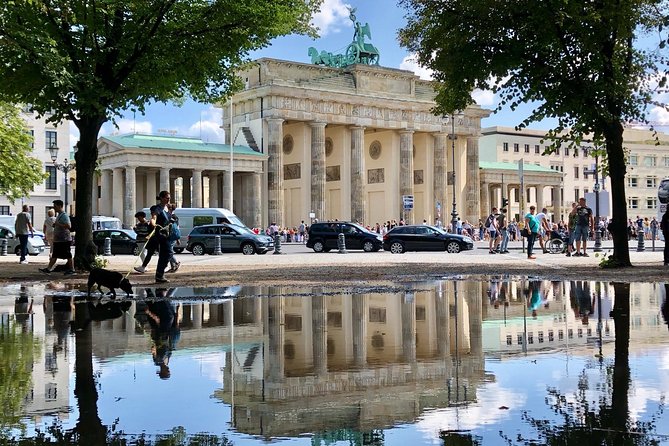
You start with the Brandenburg Gate, one of those sights that everyone recognizes but few people fully understand without context. Here is the key payoff: you are not just told what it looks like, you get the significance behind it and how Berlin uses this kind of landmark to mark political change over time.
Next comes a view of the Reichstag Building. The guide focuses on history across the years, which helps you see why this building is more than an office or a photo spot. It is a symbol that gets reinterpreted as Germany’s political story changes.
Each stop is about 10 minutes, so think of this section as your “big picture briefing.” If you walk away with a clearer timeline, the rest of Berlin will make more sense.
Practical note: wear shoes you can stand in easily. This is a walking tour, and the pace assumes you are comfortable covering short distances without needing long breaks at every landmark.
The wider Berlin sightseeing pile
Holocaust Memorial and Neue Wache: learning how remembrance works in real places
The Memorial to the Murdered Jews of Europe is not a place for casual wandering. You walk through and the guide explains its significance, including the context for when it was built and the different ways people interpret it.
This matters because Berlin’s remembrance culture is not one-note. It is complicated, and different regimes shaped public memory in different ways. You feel that complexity in how the memorial is discussed, not in just the physical experience of being there.
Later, you reach Neue Wache, Berlin’s central memorial for victims across German history. This stop is especially valuable if you are trying to understand how countries process difficult pasts. The guide places the building in its context and shows how each regime used it for its own purposes.
That shift in framing is the lesson. You stop viewing memorials as static monuments and start seeing them as parts of an ongoing conversation, shaped by who is in power and what a society wants to emphasize.
One consideration: if you are sensitive to heavy history, you may want to mentally pace yourself. This tour includes multiple WWII and Holocaust-related stops, and the time at each one is short, but the topics are intense.
WWII to Cold War signals: Fuhrerbunker, Göring’s aviation building, and Topography of Terror
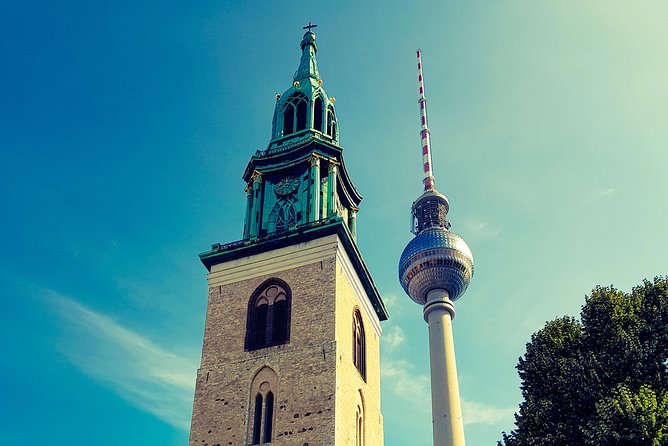
No Berlin overview that moves fast avoids the darkest chapters. You visit the Fuhrerbunker area, where the guide discusses the last days of the war and the question of whether Hitler did or did not commit suicide. The key is that it is framed as what happened and why it still matters, not as trivia.
Then you see the Aviation Ministry of Berlin. The story here is architecture tied to power. The building was built as Hermann Göring’s Aviation Building, then later served as House of Ministries under the GDR government in East Germany.
Even in a quick stop, that kind of transformation is a strong lesson. Berlin reuses structures, and the meaning of a building can flip when political control flips.
After that, you spend time at Topography of Terror. The tour includes it in two segments, so you get one moment focused on an original section of the Berlin Wall and how it came up, then another moment on the site’s history and what led to the division of Berlin and Germany after WWII.
If you want one theme that connects the stops, it is this: Berlin’s geography became politics you could walk through. You can see that in how the guide explains the wall and then ties it to the broader division story.
Checkpoint Charlie, Gendarmenmarkt, Bebelplatz, and the parade of central Berlin streets
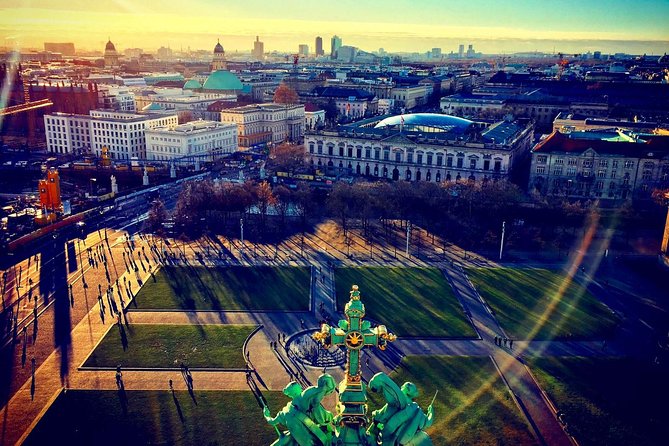
Once you move into the center proper, the vibe changes from “history lesson through solemn sites” to “history lesson you can walk around and see in the city fabric.”
You stop at Checkpoint Charlie, where the guide points out the site. This is a classic Berlin crossroads moment, and it works best when you pair it with what you heard just before about division and the Cold War atmosphere.
Next is Gendarmenmarkt, one of Berlin’s most photogenic squares. Here, you get a guided look that helps you read the square as more than a pretty backdrop. It becomes part of the story of how Berlin presents itself in public space.
Then you reach Bebelplatz, where the guide discusses what happened there. Even without extra museum time, the discussion gives you a reason to pay attention to what you see on the ground.
You also walk along Unter den Linden, the famous avenue. This kind of street stop is about orientation. You get a sense for where the city’s major energy concentrates, and you connect the avenue to the larger political and cultural shifts you already discussed.
A practical tip: on a street-and-square day, you will be tempted to stop for photos at every corner. Keep moving, and let the guide pick the moments that matter. You’ll get more out of the walk.
Deutsches Historisches Museum, Lustgarten, Humboldt Forum, Berliner Dom, and Museum Island
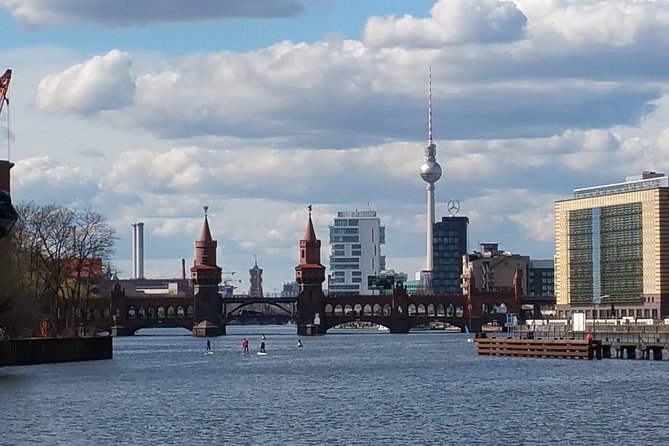
The last stretch clusters some of Berlin’s most recognizable landmarks around the Museum Island and central palace area. You get a sequence that teaches you how power, culture, and architecture get displayed in public.
You start with the Deutsches Historisches Museum. The guide discusses the history of the building and its architecture, so you learn how the structure fits into the larger story of national memory and public presentation.
Then you stop at Lustgarten to talk about the history of the site. This is where the city starts to feel like a “set” for history, but in a good way. You can understand why the surrounding buildings and the open space matter together.
After that, you visit Humboldt Forum im Berliner Schloss. You get a discussion of the Berlin City Palace history. This is a stop that helps you connect the present-day complex look to the layers of what stood there before and why it is symbolically important.
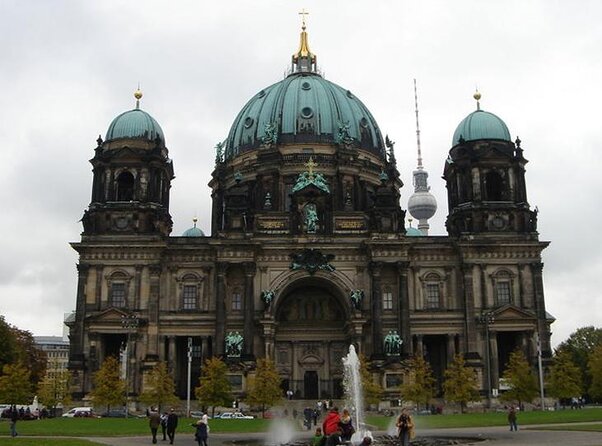
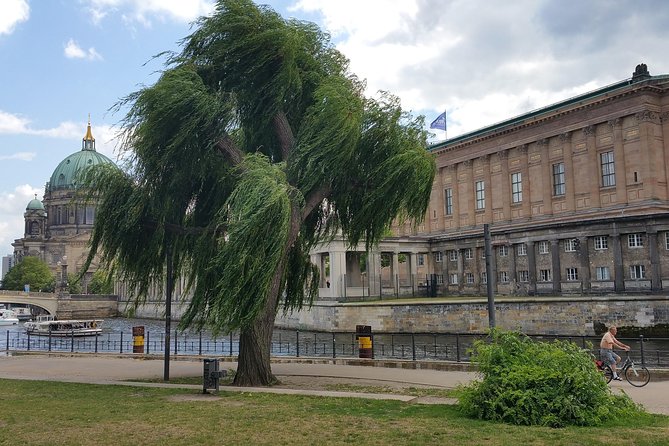
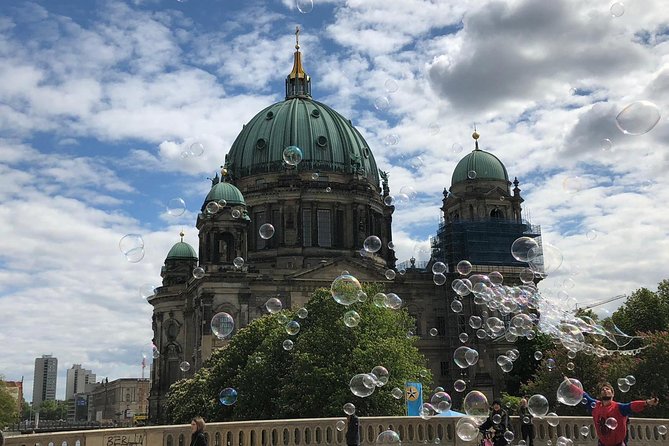
You also see Berliner Dom and discuss its history. Even a short viewpoint can turn into a better experience when you know what to look for beyond the obvious dome and towers.
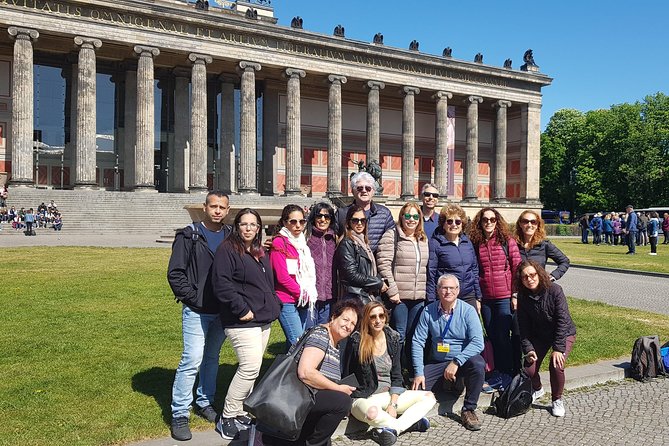
Finally, you reach Museum Island, with time to see the area and hear its history. This is a great capstone because the guide helps you understand why this cluster became a cultural magnet in the first place.
One drawback to note: because each stop is short, you might not get enough time to go inside any of the major buildings (if you were hoping for that). This tour is built for meaning and orientation, not ticketed interior time.
How to get the most out of a fast, story-heavy 4 hours
To enjoy this tour, I’d plan to treat it like a guided timeline on foot. The guide is giving you context for famous landmarks, but you still control your experience by how you pace yourself mentally.
Bring a plan for photo breaks. Take your shots when the guide is speaking, then keep walking. If you wait to take photos later, you might miss your window, because the schedule assumes constant motion.
Dress for comfort and weather. The tour runs in a wide window from morning until evening, so you can end up with changing conditions. If you are cold or uncomfortable, the heavy topics hit harder than they need to.
Finally, think about who this works for. The private setup and flexible itinerary make it a good match for groups with mixed interests, including families spanning generations. When one person wants a big theme and another wants the practical “what is this and why should I care,” the guide’s structure helps everyone stay on the same page.
Should you book this private Berlin city center walking tour?
Book it if you want a fast, guided orientation to Berlin’s biggest sights with real context behind them. It is a strong choice for first-timers, time-crunched schedules, and groups who would rather spend a few hours learning the story than wandering without direction.
Consider skipping or pairing it with a longer plan if you are hoping for lots of museum interior time or slow, deep stays at each site. This tour’s power is in its overview. It is excellent for building understanding quickly, then letting you decide what deserves a return visit.
If your goal is to leave Berlin’s center feeling you actually understand what you saw, not just that you saw it, this one is an easy yes.
Seeing Berlin in One Go
Pavements of Berlin
Everything else we filed on Berlin
- East Berlin: City of Shadows Walking Tour
★ 5.0 · 11 reviews - Berlin: Die Stachelschweine – Frank Lüdecke – Träumt Weiter
★ 4.7 · 11 reviews - Potsdam Day Trip from Berlin with a Local: Private & Personalized
★ 4.0 · 11 reviews - An Introduction to Berlin Walking Tour
★ 5.0 · 11 reviews - DJ for a Day: Learn to Mix Like a Pro in Berlin
★ 5.0 · 11 reviews - 2-H Segway Sightseeing Tour Berlin
★ 4.5 · 11 reviews
City Tours, side by side.
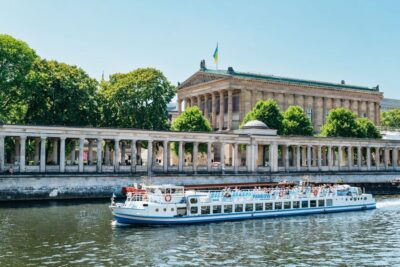 ★ 4.3Berlin: 1-Hour City Tour by Boat with Guaranteed SeatingFrom $2516,993 reviews
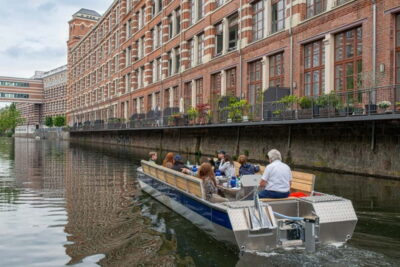 ★ 4.7Leipzig: City History Canal Sightseeing Tour on a MotorboatFrom $186,232 reviews
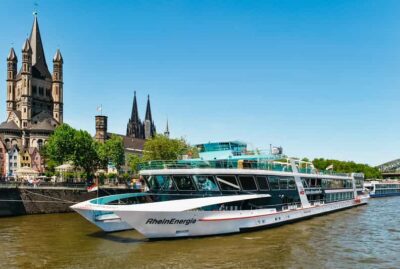 ★ 4.3Cologne: Panoramic City CruiseFrom $235,698 reviews
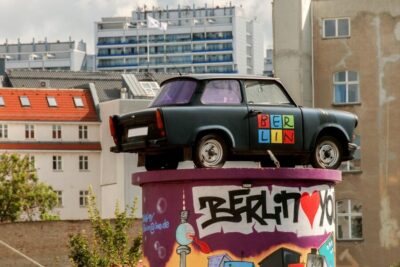 ★ 4.1Berlin: City Sightseeing Hop-On Hop-Off Bus TourFrom $254,233 reviews
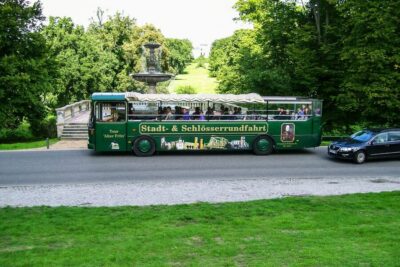 ★ 4.7Potsdam: City and Castles TourFrom $293,721 reviews
 ★ 4.1Düsseldorf: City Sightseeing Cruise on the RhineFrom $232,954 reviews
 ★ 4.5Bremen: City Center Guided Walking TourFrom $142,709 reviews
 ★ 4.7Freiburg: Gässle, Bächle and More City TourFrom $132,632 reviews
Other lists this tour is on