
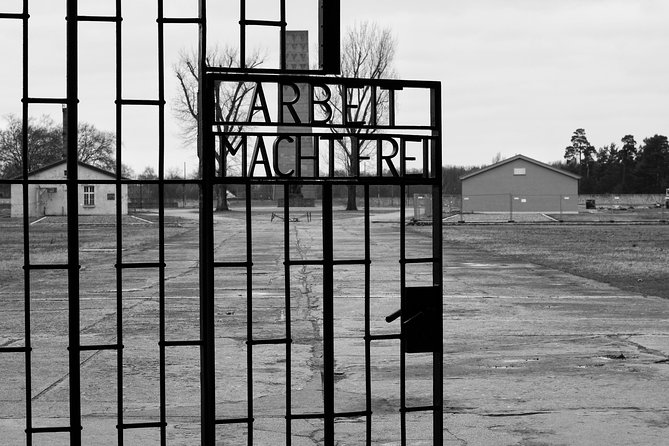
REVIEW · SACHSENHAUSEN
Private Berlin Tour to Sachsenhausen Concentration Camp Memorial
One train ride, heavy history. This private Berlin tour to Sachsenhausen is a practical way to see the camp site with a licensed guide and make sense of what you’re looking at. I especially love that the guide is trained and licensed for Sachsenhausen, not a generic sightseeing host. I also like that the visit is structured around museum and memorial spaces, with admission included so you can focus on the experience. One thing to consider: you need an ABC day pass for the train to and from Oranienburg, and the visit has entry windows that can affect pacing.
Sachsenhausen is not a quick photo stop. You’ll walk through key parts of the memorial, including places tied to punishment and death, while your guide connects the locations to the wider Nazi system and its timeline from 1936 to 1945. It’s emotionally intense, so it helps to know your limits ahead of time.
Logistically, the setup is straightforward: meet near Neue Promenade in central Berlin, use pickup if offered, then take the train to Oranienburg. Expect moderate walking and stairs. Bring food and plan for a long, serious half day.
In This Review
- Key points to know before you go
- Why Sachsenhausen needs more than a self-guided map
- From Berlin to Oranienburg: the train ride, the ABC day pass, and timing
- Inside the memorial grounds: how the museum and memorial portions fit together
- Punishment and death spaces: what you’ll see and why the guide matters
- The timeline you’ll carry home: 1936 through the April 1945 evacuation
- Private attention in a small group: how guides tailor the experience
- Pace, walking, and what to bring for a 6-hour visit
- Price and value: $541.86 per group, what you’re really paying for
- Who should book this tour, and who might want a different format
- Should you book this private Berlin tour to Sachsenhausen?
- FAQ
- Where is the meeting point for this Sachsenhausen tour?
- Is pickup available?
- Do I need a train ticket or pass to get to Sachsenhausen?
- Is admission to the memorial included?
- How long is the tour?
- Is the guide only for the Sachsenhausen site?
Key points to know before you go
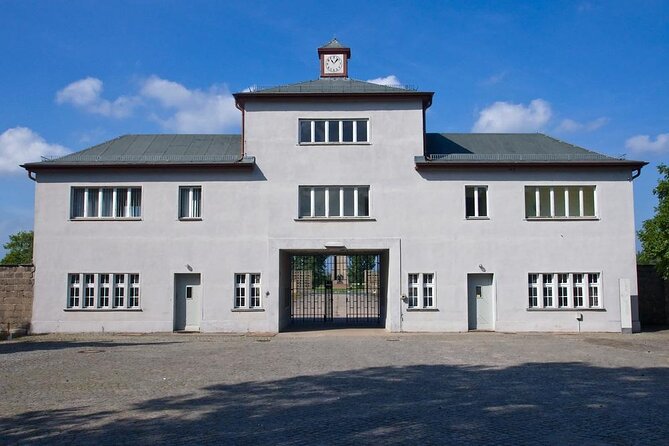
Licensed Sachsenhausen guide for real context
You get a guide who’s specifically trained for this site, which makes a big difference when the grounds feel repetitive but the history does not.
Admission ticket included for the memorial and museum areas
You’re not juggling ticket counters or figuring out what’s covered. The time is the product.
Train requires an ABC day pass, not included
The tour handles the tour, but Berlin transit is on you, so budget for the pass before you set out.
Entry timing constraints shape your morning or afternoon
You enter only between set morning hours or after a set afternoon time, so build your day around that.
Small group format with personal attention
It’s priced per group and geared to feel private, with a stated cap that keeps things from turning into a herd.
Other guided visits to Sachsenhausen Memorial
- Berlin: Sachsenhausen Concentration Camp Tour in English★ 5.0 · 5,711 reviews
- Berlin: Sachsenhausen Concentration Camp Memorial Tour★ 4.7 · 3,716 reviews
- Sachsenhausen Concentration Camp Bus Tour in English from Berlin★ 5.0 · 1,962 reviews
- Berlin: Sachsenhausen Concentration Camp Tour in English★ 4.8 · 1,889 reviews
Why Sachsenhausen needs more than a self-guided map
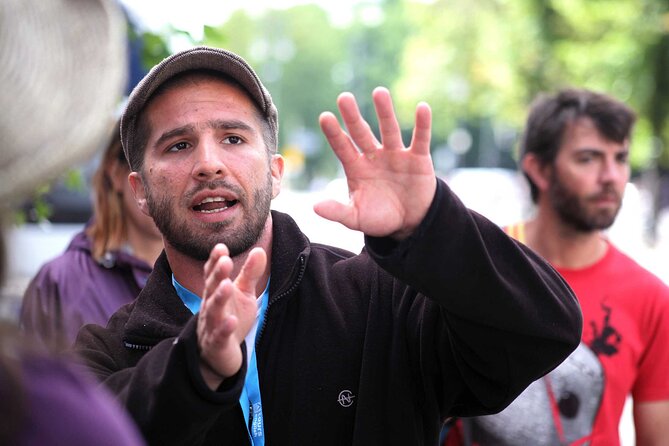
Sachsenhausen is one of those places where a normal museum visit can feel confusing fast. The site is spread out, and the meaning of each area is not always obvious just by looking at buildings and paths. A guide who’s licensed for Sachsenhausen matters here, because they can translate what you see into a clear story.
I like how this tour is built for understanding, not just attendance. You don’t just pass through. You get explanations tied to the camp’s evolution over time, including which groups were imprisoned first and how the prison population expanded as the war and Nazi ideology escalated.
You also get a safer pace for absorbing difficult material. The tour includes sites associated with punishment and killing, so you need someone who can keep the visit grounded in facts and context rather than leaving you to interpret everything on your own. That’s where a trained guide earns its keep.
From Berlin to Oranienburg: the train ride, the ABC day pass, and timing
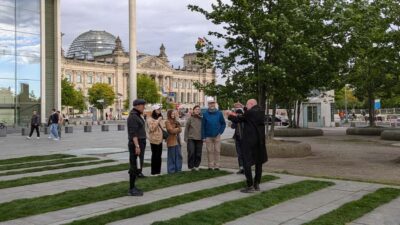
The day starts with a meeting point in central Berlin, near Neue Promenade. If pickup is offered and you’re in a centrally located address zone, you’ll be collected there. Either way, the goal is to keep the start easy so you’re not stressed before a hard visit.
Then comes the train to Oranienburg, where the Sachsenhausen Memorial is. Here’s the practical catch: public transport costs are not included, and you need an ABC day pass for the train. Tickets for the ride aren’t part of the package. If you’re used to buying transit as you go, this is one place where you should plan ahead so you don’t lose time on the morning.
Also note the site entry rule. Entry is allowed only between a set morning window or after a set afternoon time. That means your tour flow could feel different depending on your start time. If you’re early, you’ll likely have more of the morning light and cooler temperatures. If you’re starting later, expect a different rhythm and plan your own Berlin day around the seriousness of the visit.
Inside the memorial grounds: how the museum and memorial portions fit together
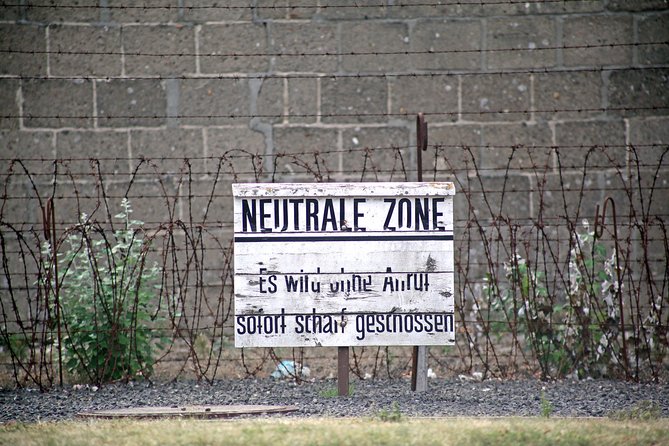
The tour is structured around the memorial site, spending about three hours in the memorial and museum areas, then another three hours in the Sachsenhausen memorial and museum spaces. Even though both blocks are within the site, the experience usually feels like two linked parts: first, you get oriented and learn the core facts tied to specific areas; then you follow the story deeper into how the camp functioned.
Admission is included, which sounds small until you’re there. When you’re spending hours on difficult history, it helps not to stop for extra logistics. You can keep your head in the material, rather than juggling paper or payment while the day turns heavy.
What you’ll be doing on the grounds is not random wandering. The guide’s job is to connect what each section means. You’ll hear how the camp operated and how Nazi persecution escalated, including the fact that by 1939 prisoners came from many occupied European states. That “who, when, and why” clarity is one of the biggest reasons to choose a guided format.
Punishment and death spaces: what you’ll see and why the guide matters
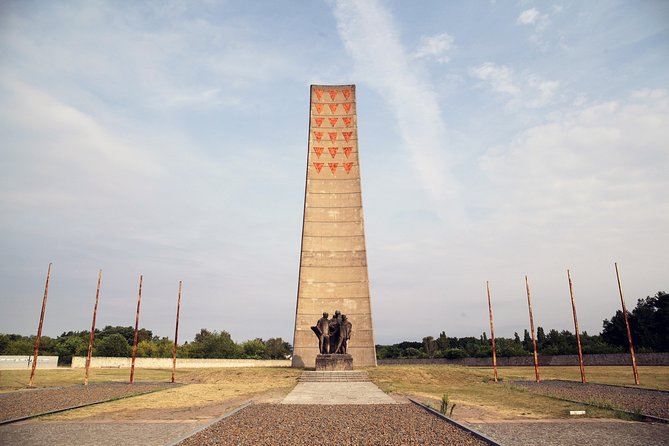
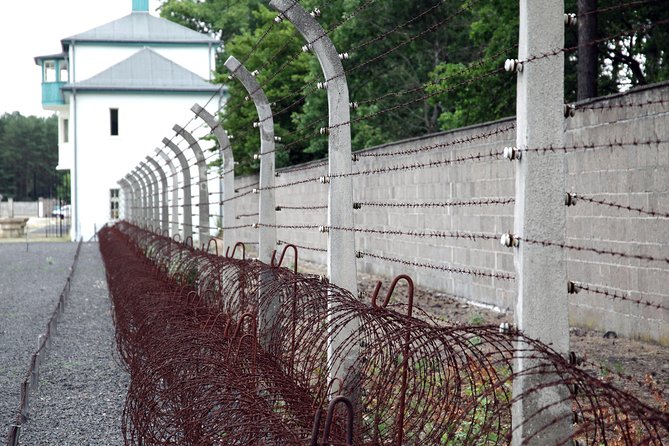
This tour is not for the faint of heart. It includes a visit to places tied to punishment and killing within the prison grounds, including punishment cells, gallows, gas chambers, and burial pits.
Even for people who consider themselves well-prepared, these locations hit differently than a classroom video. The power of the guide is not in making it less painful, it’s in giving you a factual frame. You’ll hear stories of prisoner bravery alongside the systematic atrocities that took place.
That balance matters. Without context, these spaces can feel like scattered evidence. With a trained guide, you get the cause-and-effect story behind the spaces and what the camp represented inside the Nazi system. And because the guide can pace the group, you get a controlled tempo for processing what you’re seeing.
One practical tip: if you think you might want breaks, you should ask early in the visit. Even if the tour doesn’t advertise “break time” as a theme, a good guide can usually adjust pacing when you set expectations.

The timeline you’ll carry home: 1936 through the April 1945 evacuation
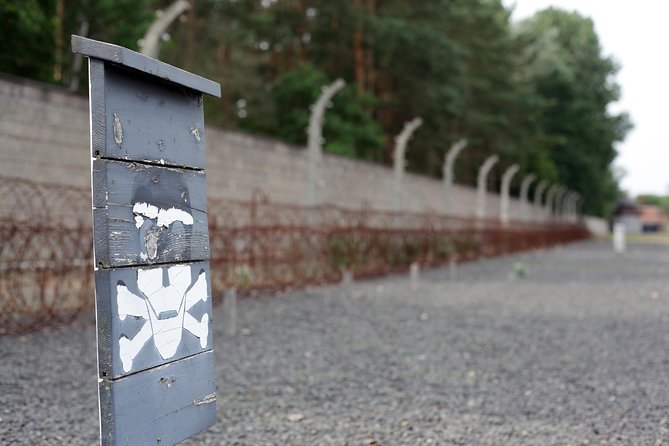
Sachsenhausen was used for imprisonment for most of World War II. One reason I recommend a structured guided visit is that the story has layers, and it’s easy to mix them up when you’re walking around.
Here’s the arc the tour is designed to teach:
- Between 1936 and 1945, more than 200,000 people were imprisoned.
- Early prisoners were often political opponents of the Nazi regime.
- Later, people defined by Nazi racial and “biological inferiority” ideas were also imprisoned.
- By 1939, many prisoners were citizens from occupied European states.
- Thousands died from starvation, disease, forced labor, and mistreatment.
- Some were victims of systematic extermination connected to the SS.
- After evacuation in April 1945, thousands died during so-called death marches.
- Toward the end, about 3,000 sick prisoners, plus doctors and nurses who stayed behind, were freed by Soviet and Polish soldiers.
Those details aren’t just trivia. They help you read the site as part of a system, not as isolated “historical ruins.” When you understand the shifting prisoner categories and the camp’s role over time, the grounds stop feeling like a list and start feeling like an explanation.
Private attention in a small group: how guides tailor the experience
This is sold as a private Berlin tour, and the whole point is personal attention. You’re not stuck waiting for the slowest person in the group or losing the thread when someone has questions. The structure supports adapting to different interests.
In past tours, the guides have handled very different audiences. One group had Rick, an American living in Berlin for about seven years, who gave clear commentary while also making sure everyone navigated the public transport correctly for the return. Another group had a different guide, Sam, who focused on history tied to each area and made time to view museum segments rather than rushing only through the outdoor parts.
There’s also an example of Jonny, described as experienced and able to share a lot of emotional and historical context for a very serious topic. In plain terms, you’re getting someone who knows where the “story” lives on the grounds, and how to communicate it without turning it into a lecture marathon.
If you’re visiting with kids or students, this kind of tailoring can be the difference between a visit that feels overwhelming and one that feels educational. The key is still honesty about what happened, but the pacing and emphasis can be adjusted.
Pace, walking, and what to bring for a 6-hour visit
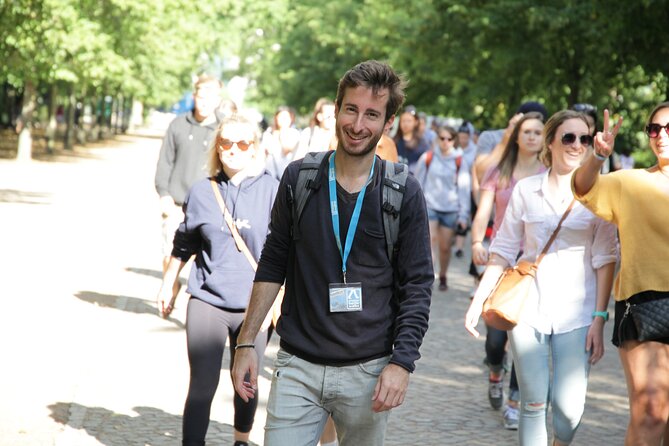
Plan on a long half day. The tour runs about six hours total, including the train ride. Once you arrive, the visit is almost entirely spent at the memorial site, and that means a fair amount of walking.
You should have moderate physical fitness. There may be stairs and you’ll be on your feet for stretches. If you have mobility limits, this is still doable for many people, but you should think hard about your comfort level for extended walking at a memorial site.
Bring:
- Food and drink. They’re not included, and you don’t want hunger to distract you from what you’re learning.
- Your transit pass. The ABC day pass is essential for the train.
- Comfortable shoes. You’ll be on outdoor paths.
Also, if you need a service animal accommodation, service animals are allowed.
Price and value: $541.86 per group, what you’re really paying for
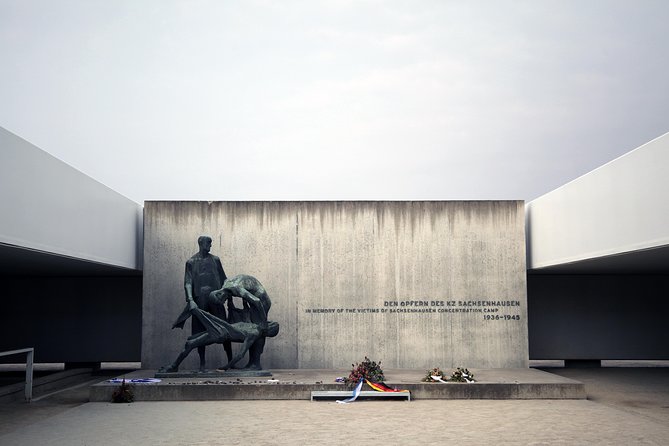
At $541.86 per group for up to 15 people, this isn’t “cheap.” But it’s not overpriced in a way that feels random either. You’re paying for a licensed guide prepared specifically for Sachsenhausen, plus a private format with pickup offered from central Berlin addresses, plus the structure of a memorial visit that typically takes a long time on-site.
The two big value drivers:
- You’re buying interpretation, not just entry. The guide training for this specific site matters because the story is heavy and the grounds can be hard to read without help.
- Admission ticket is included, which reduces friction.
The main cost consideration is transit. Public transport is not included, and the ABC day pass is an extra expense (listed as 9.60 EUR, subject to change). Even if that seems small relative to the tour price, it’s still a real add-on. If you’re traveling as a couple or a small group, transit can feel annoying because it’s a separate purchase you’re asked to handle.
Bottom line: this is best value if you care about understanding and you want your time on-site to feel purposeful.
Who should book this tour, and who might want a different format
This tour fits best if you:
- Want a private guide for a site with complex context.
- Prefer a structured path through the memorial rather than piecing it together alone.
- Appreciate clear historical framing, including details about groups imprisoned and how the camp changed over time.
- Want a format that can include children or students, with guides able to adjust focus when needed.
It may be less suitable if you:
- Struggle with extended walking and stairs.
- Get overwhelmed easily by graphic, emotionally intense history.
- Want a fully self-paced experience where you can wander without guidance.
If you do book, go in prepared to be affected. This is one of those places where the meaning sticks long after the day ends.
Should you book this private Berlin tour to Sachsenhausen?
I think you should book this tour if your priority is context and careful interpretation. The licensed guide focus, included admission, and the structured time inside the memorial make it a practical choice. The train pass requirement is the one clear “you handle it” item, so plan that ahead and you’ll avoid the most common logistical headache.
If you’re only after a quick overview, or if you know you’ll want to stop often to process quietly on your own, you might consider a different approach. But if you want to leave Oranienburg with a clearer timeline and a better read on what you saw, this is the kind of tour that justifies its price with guidance that fits the site.
FAQ
Where is the meeting point for this Sachsenhausen tour?
The tour meets at Neue Promenade, 10178 Berlin, Germany. The experience also ends back at this meeting point.
Is pickup available?
Yes. Pickup is offered from any centrally located address in Berlin.
Do I need a train ticket or pass to get to Sachsenhausen?
You need an ABC day pass for public transport. Public transport costs are not included, and train tickets are not included in the tour price.
Is admission to the memorial included?
Yes. Admission tickets for the memorial and museum areas are included.
How long is the tour?
The tour lasts about 6 hours.
Is the guide only for the Sachsenhausen site?
Yes. The tour takes place at the memorial site for the museum and memorial time blocks, and it ends with a return train trip to Berlin.
Visiting Sachsenhausen Memorial
Everything else we filed on Berlin
- East Berlin: City of Shadows Walking Tour
★ 5.0 · 11 reviews - Berlin: Die Stachelschweine – Frank Lüdecke – Träumt Weiter
★ 4.7 · 11 reviews - Potsdam Day Trip from Berlin with a Local: Private & Personalized
★ 4.0 · 11 reviews - An Introduction to Berlin Walking Tour
★ 5.0 · 11 reviews - DJ for a Day: Learn to Mix Like a Pro in Berlin
★ 5.0 · 11 reviews - 2-H Segway Sightseeing Tour Berlin
★ 4.5 · 11 reviews
Sachsenhausen Memorial Site Tours, side by side.
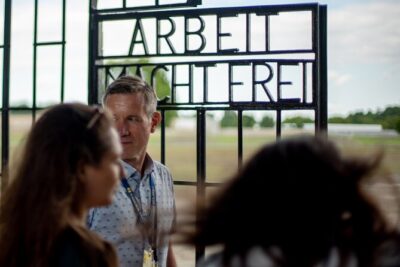 ★ 5.0Berlin: Sachsenhausen Concentration Camp Tour in EnglishFrom $365,711 reviews
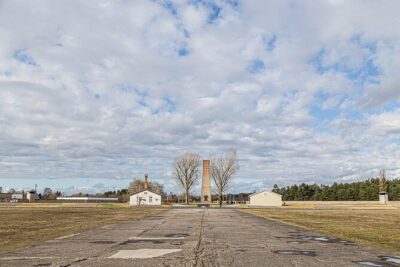 ★ 4.7Berlin: Sachsenhausen Concentration Camp Memorial TourFrom $213,716 reviews
 ★ 5.0Sachsenhausen Concentration Camp Bus Tour in English from BerlinFrom $681,962 reviews
★ 4.8Berlin: Sachsenhausen Concentration Camp Tour in EnglishFrom $221,889 reviews
★ 5.0Sachsenhausen Concentration Camp Bus Tour in English from BerlinFrom $681,962 reviews
★ 4.8Berlin: Sachsenhausen Concentration Camp Tour in EnglishFrom $221,889 reviews
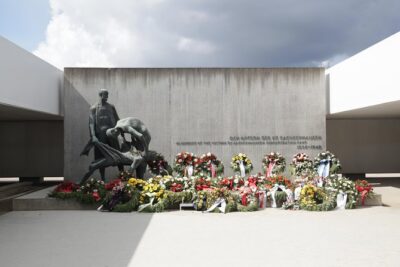 ★ 5.0Sachsenhausen Concentration Camp Memorial Tour (Max. 15 Guests)From $351,516 reviews
 ★ 4.6Berlin: Sachsenhausen Concentration Camp and Potsdam TourFrom $651,334 reviews
 ★ 5.0Sachsenhausen concentration camp.From $341,189 reviews
 ★ 5.0Visita en español al campo de concentración SachsenhausenFrom $341,170 reviews
Other lists this tour is on