
REVIEW · THE BALTIC
Rostock: Tour with the Rostocker Executioner
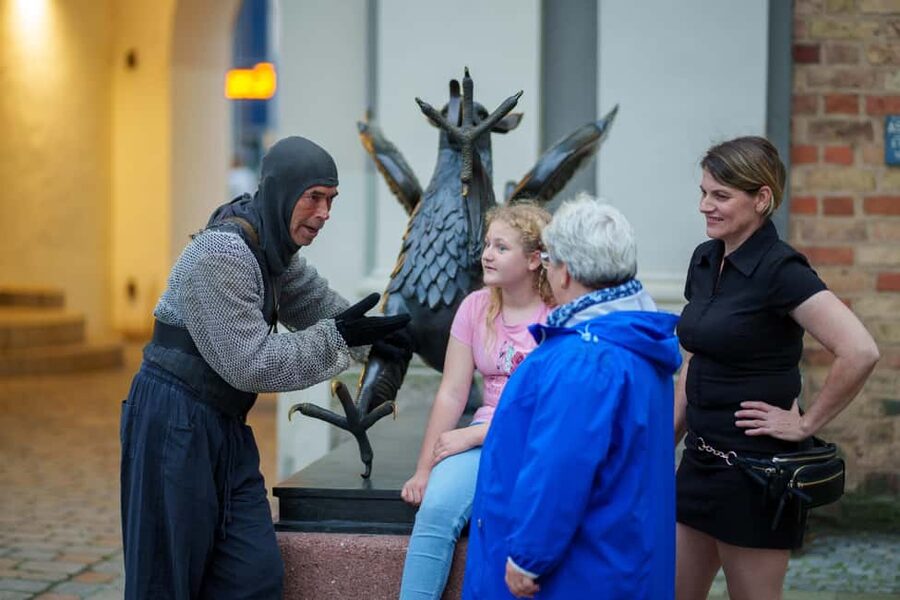
One of the darkest storytellers in town. This 1.5-hour walk turns old Rostock into a living stage, led by the Rostocker executioner and trained actor Tobias Hamann. You get scary and funny anecdotes, plus the historical facts behind his work and the city’s legal system.
I especially like how the tour ties street corners to specific duties and punishments, not just vague medieval mood. You also end up noticing how everyday German turns of phrase still carry medieval violence, tax rules, and street rules.
The one drawback to consider is that the tour runs in German, and at least one guest noted the guide can speak quickly, so it helps to be comfortable with listening.
In This Review
- Key Highlights You Should Actually Care About
- Meeting Tobias Hamann Under the Town Hall Arcades
- Why This Tour Works So Well in 90 Minutes
- The Executioner as a Storyteller, Not a History Lecture
- Town Hall to the Old District: Civic Power in Stone and Square
- Kerkhoff and Krahnstöverhaus, Then Kuh and Steintor
- New Market and St. Mary’s Church: Public Life Meets Public Consequences
- The Heiligengeisthof and the Language of the Street
- What Makes the Stories Scary and Funny (Instead of Just Grim)
- Price, Group Energy, and Who This Tour Fits
- Practical Tips Before You Go
- Should You Book Rostock: Tour with the Rostocker Executioner?
- FAQ
- What is the duration of the Rostock executioner tour?
- How much does it cost?
- Where do I meet the guide?
- What language is the tour in?
- Is the tour suitable for children?
- Is it suitable for people with mobility impairments?
- Can I cancel for a refund?
- Is pay later available?
Key Highlights You Should Actually Care About
- Executioner storytelling in real locations, from the town hall area to St. Mary’s Church and Heiligengeisthof
- Practical historical context on jurisdiction, tasks, and punishments, not just spooky legends
- Language you use every day connected to medieval practices, including the sparrow tax and street hair rules
- Local flavor that even long-time Rostock residents found new and surprising
- Architecture gets a role, so you are not stuck only on grim topics
- Short, efficient time on your feet, with lots of information packed into 1.5 hours
More Baltic harbours and island days
- Rostock: Guided tour of the historic city center★ 4.5 · 311 reviews
- Rostock: Full-Day, Half-Day, or Sunset Sailing Experience★ 4.7 · 174 reviews
- Rostock: Electric Boat Rental on the Warnow River★ 4.8 · 106 reviews
- Lovely Rostock and Warnemünde Shore Excursion for Cruise Ships★ 5.0 · 44 reviews
Meeting Tobias Hamann Under the Town Hall Arcades

You start under the arcades in front of Rostock’s town hall. That matters because the guide launches from a central civic point, which is exactly how this kind of history should be told. It sets the tone fast: this was a city where legal power had visible, public consequences.
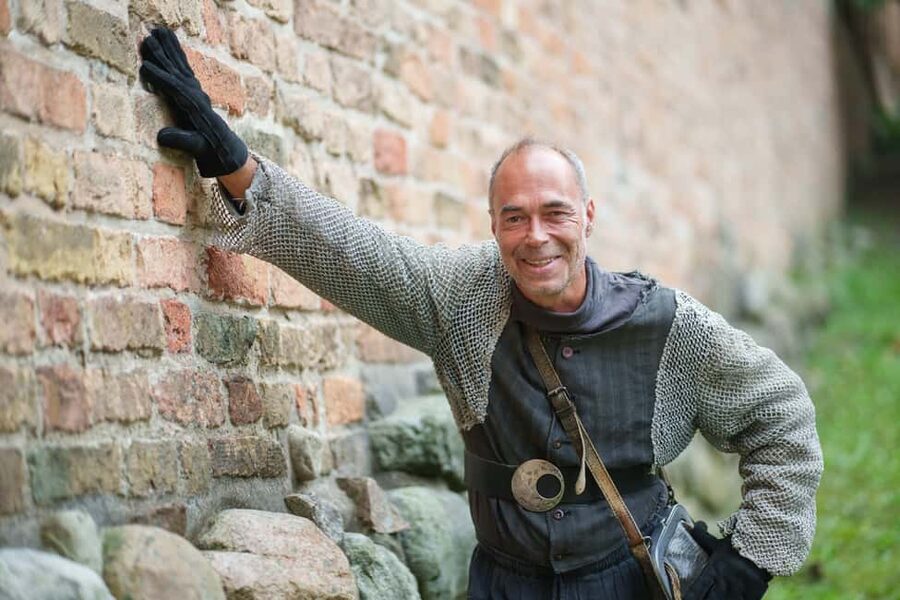
Tobias Hamann plays the executioner. There is only one hangman on the tour, so the experience stays focused and theatrical without feeling like a crowded gimmick. Since the tour is live and in German, you are meant to listen closely, follow the references, and ask questions as you go.
And yes, the style is dark, but it is also playful. Guests repeatedly describe it as entertaining and funny, not grim for grim’s sake. The goal is to make history understandable, even when the subject matter is uncomfortable.
Why This Tour Works So Well in 90 Minutes
A lot of history tours wander. This one is compact. At $16 per person, the price feels low for how much narrative and local detail you get in 1.5 hours, especially with a trained actor carrying the show. You are paying for interpretation and performance, not just for walking past buildings.
You also get a clear structure: civic power, legal power, and the city’s oldest districts. By the time you reach the religious and public spaces later on, the executioner’s role makes more sense. The tour is designed to help you build a map in your head, so the dark topic does not feel random.
The pacing does mean you should expect constant talking and frequent context shifts. If you like to stop and read every plaque, this might feel fast. If you like guided storytelling, it is a strong match.
The Executioner as a Storyteller, Not a History Lecture
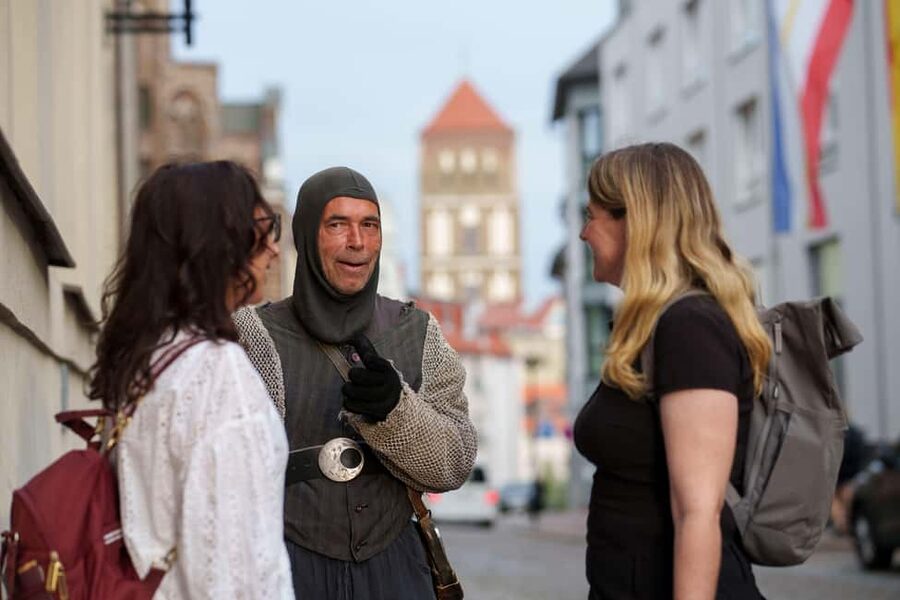
One reason guests rate this so highly is the balance between facts and attitude. You are given historical information about the executioner’s tasks, jurisdiction, and punishments, but the guide also uses scary and funny anecdotes to keep you engaged. That approach helps when the subject is complex, because you remember stories better than lists.
Another practical win: the guide can answer follow-up questions. More than one review highlights that the executioner was friendly and took the time to respond. That matters because you are not just watching from a distance, you are participating.
If you are curious about medieval justice, you get explanations that connect the executioner’s job to how the city functioned. If you are more interested in language, you get those connections too, like phrases that slipped into modern speech and sound harmless until you trace the origin.
Town Hall to the Old District: Civic Power in Stone and Square
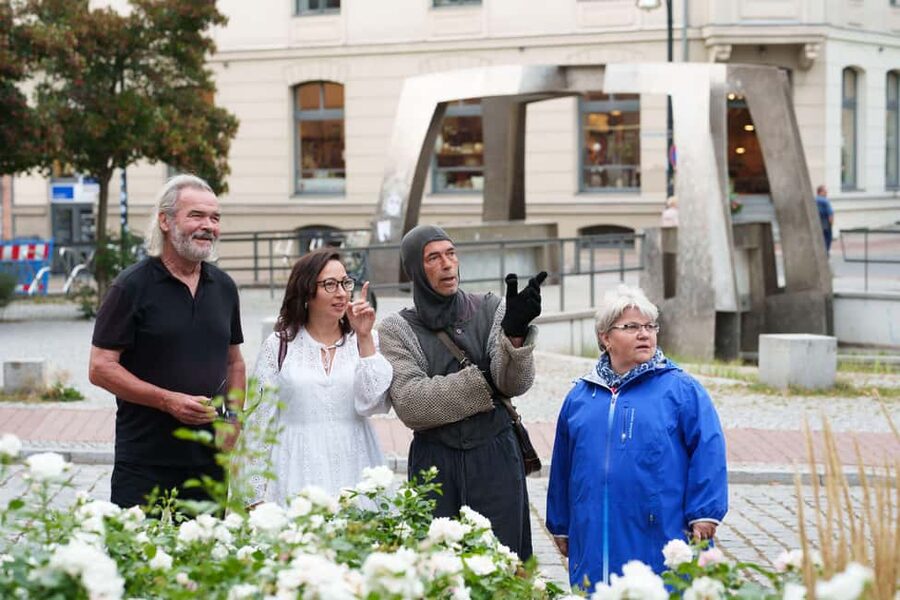
The route begins at the town hall area, then moves through Rostock’s older district. Starting at the seat of civic authority is not accidental. In this kind of system, justice was public power. The executioner was part of the city’s ability to enforce rules.
From there, the tour links the executioner’s world to key landmarks, so you understand where authority was displayed and how people would have experienced it in daily life. You are not just learning what happened. You are learning where it happened, and why those places mattered.
As you walk, you also start picking up architectural context. One guest specifically mentions that the tour included architecture in a satisfying way. That is a big plus: you finish with both story and visuals in mind.
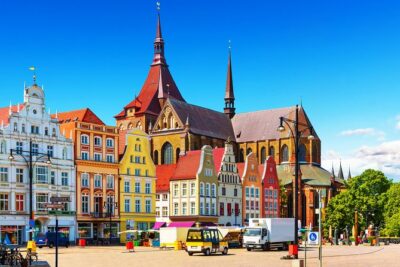
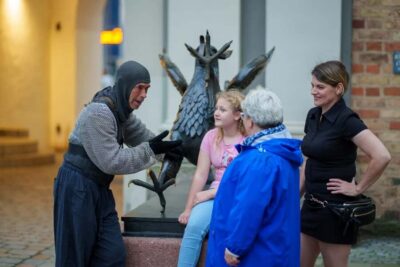



Kerkhoff and Krahnstöverhaus, Then Kuh and Steintor
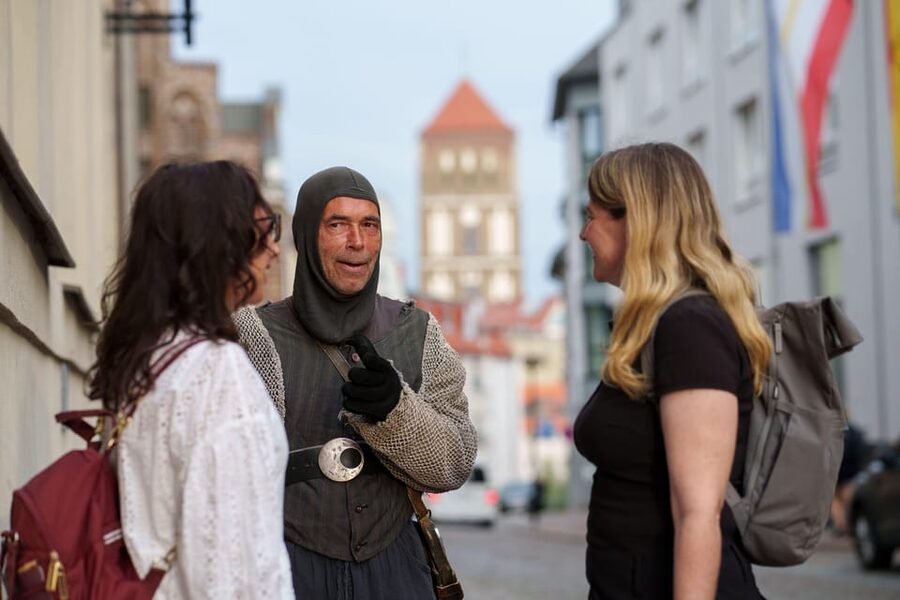
The middle stretch of the tour is built around named locations that anchor the narrative. You pass by the Kerkhoff and Krahnstöverhaus, then continue toward Kuh and Steintor. Each stop works like a checkpoint for a new piece of the puzzle.
Here is what you should listen for at these points. The guide does not treat buildings like background. He ties them to the executioner’s tasks, the legal framework, and the kinds of punishments used in the period being discussed. That helps you understand the city as an enforcement space, where street life and law constantly intersected.
Even if some of the historical detail is heavy, the narration stays lively. Reviews call the tour launige, meaning spirited and fun in a very German way. That tone keeps the content from turning into a grim lecture.
New Market and St. Mary’s Church: Public Life Meets Public Consequences
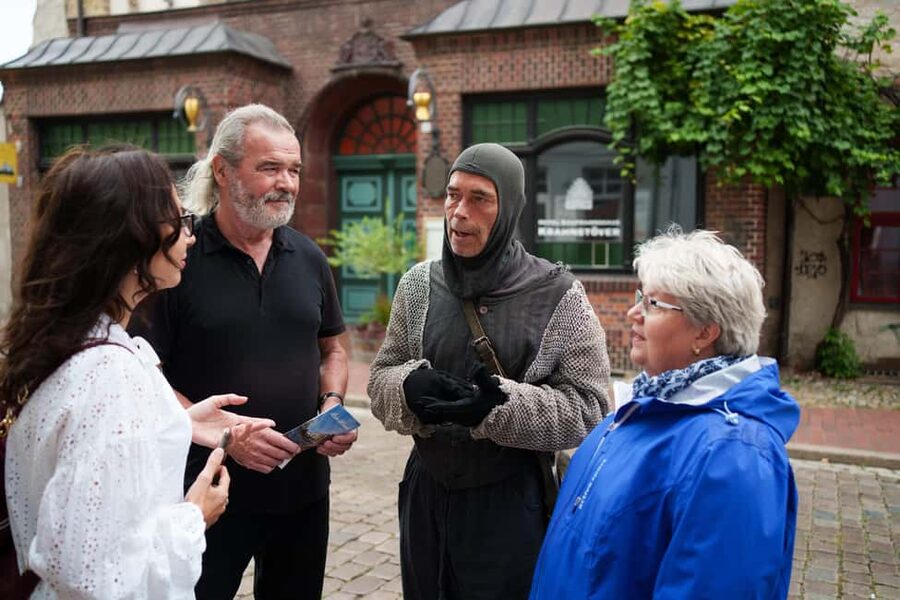
You then reach the new market area and St. Mary’s Church. This portion is important because markets and churches were core points of public life. When punishments or legal measures were part of the city’s routine, people encountered them in places where they went to buy, pray, and socialize.
This is where the executioner stories often land hardest, because you can picture the setting more easily. The guide talks about jurisdiction and punishment in a way that helps you see why enforcement had to be visible. Even when the details are shocking, the tour frames them as part of a system, not random cruelty.
Staying in public civic spaces also gives you time to think about language. The tour includes examples of medieval practices and terms that filtered into modern speech. When you are standing in a public location, those linguistic echoes feel less like trivia and more like a clue to how deeply law and daily life were connected.
The Heiligengeisthof and the Language of the Street
The walk ends in the Heiligengeisthof area. This is where the tour’s language angle can really click, because you are near a space that feels distinctively Rostock, the kind of place where older layers of the city still read clearly.
The guide spends time on specific historical curiosities, including the sparrow tax. He also addresses what was meant by Ausbringen der Priveten, and why hair had to come off the streets. These sound strange at first, and that is exactly the point. You learn what these rules meant and how they connected to public order and enforcement.
You will probably notice how many medieval forms of torture and death have entered modern language. The tour gives you the background so these expressions stop being abstract. You start thinking about how language carries old ideas forward, even when we no longer understand the original context.
What Makes the Stories Scary and Funny (Instead of Just Grim)
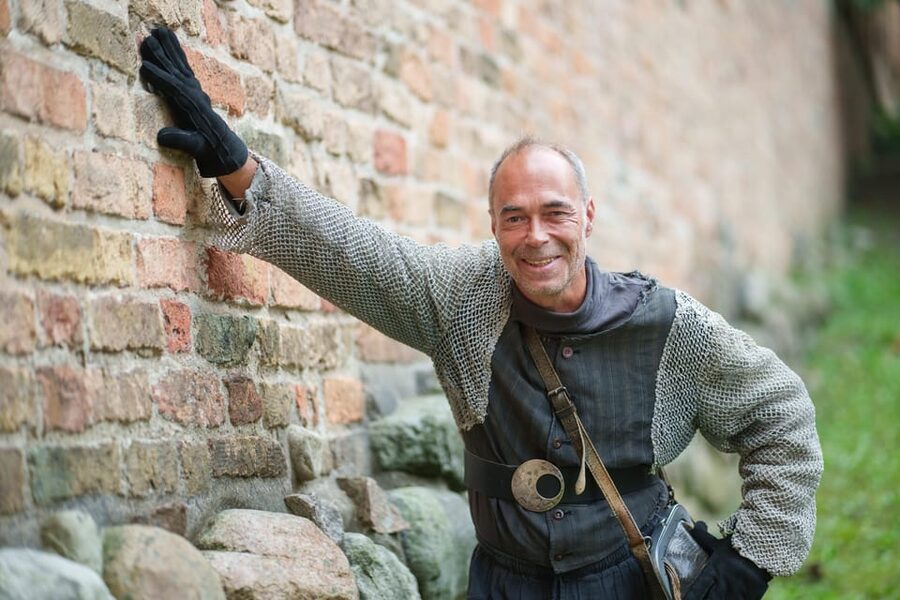
This tour earns its fun factor through contrast. The executioner character is clearly performing, and the guide mixes dread with humor so you stay engaged. At the same time, the tour does not treat everything as a joke. The historical facts about the executioner’s role and the city’s punishments are part of the storytelling, not decoration.
One review highlights that the guide was originell. Another says the tour was engaging and very informative. Put those together and you get a style that respects both entertainment and education.
For your brain, the method is effective. When you hear a scary anecdote, you relax because the guide keeps things moving and adds humor. Then you regain clarity when he explains what the system actually was.
Price, Group Energy, and Who This Tour Fits

At $16 for 1.5 hours, you are paying for an actor-led historical experience with a clear theme and a tight route. For a specialty topic like this, that is solid value. You are not buying a long museum day. You are buying focused storytelling plus landmark context in a short window.
This tour is in German, so it fits best if you understand spoken German comfortably. It is not designed for children under 14, and it also is not suitable for people with mobility impairments. Plan around that, including the fact that you are walking through older streets where surfaces may be uneven.
Who it suits well:
- Adults who like local history with personality
- People who want dark humor plus real context
- Anyone who enjoys learning how old legal systems shaped language
Practical Tips Before You Go
If you want the best experience, treat it like a conversation, not a lecture.
- Arrive ready to listen closely. This tour moves fast for information density.
- If your German is good but not perfect, focus on names and location references, then ask questions when you need clarification.
- Wear comfortable shoes. You are outdoors for the full 1.5 hours, across several stops in the old district.
Also, bring curiosity. The most memorable moments are usually the ones that sound weird at first, like the sparrow tax or street hair rules. Those details are weird for a reason, and the guide explains why.
Should You Book Rostock: Tour with the Rostocker Executioner?
I think you should book it if you want history with voice, not history with silence. If you like compact tours that connect people, law, language, and landmarks, this one makes that connection in a very Rostock way.
Skip it if you cannot handle the subject matter. This is openly about the dark side of the city. Also, be honest about language and mobility. If you need step-free access or you rely on translated audio, this setup is not listed as suitable.
If you are on the fence, use this simple rule: if you like stories that explain why things were done, not just what happened, you will likely enjoy this a lot. At $16 and 1.5 hours, you get a high-hit-rate experience that leaves you with both facts and a changed way of hearing medieval references in everyday language.
FAQ
What is the duration of the Rostock executioner tour?
The tour lasts 1.5 hours.
How much does it cost?
The price is $16 per person.
Where do I meet the guide?
Meet under the arcades in front of the town hall. The tour notes there will be only one hangman and only one executioner there.
What language is the tour in?
The tour is in German.
Is the tour suitable for children?
No. It is not suitable for children under 14.
Is it suitable for people with mobility impairments?
No. It is not suitable for people with mobility impairments.
Can I cancel for a refund?
Yes. Free cancellation is available up to 24 hours in advance for a full refund.
Is pay later available?
Yes. The booking option includes reserve now and pay later, so you can book your spot and pay nothing today.
Along the Baltic Shore
Everything else we filed on Rostock
- Distillery tour with guide!
★ 4.7 · 14 reviews - Rostock: Hot Rod Harbor City Tour
★ 4.9 · 16 reviews - Warnemünde Shore Excursion: Private Tour of Berlin’s World War II and Cold War Sites
★ 5.0 · 17 reviews - Rostock: Hot Rod Sightseeing Tour to Warnemünde
★ 5.0 · 19 reviews - Rostock: Tour with the Rostocker Executioner
★ 4.7 · 28 reviews - Lovely Rostock and Warnemünde Shore Excursion for Cruise Ships
★ 5.0 · 44 reviews
Baltic Coast and Island Tours, side by side.
 ★ 4.0Lübeck: 1-Hour Splash Bus City TourFrom $352,626 reviews
 ★ 4.7Lübeck: entertaining guided tour to old town highlightsFrom $16594 reviews
 ★ 4.7Schwerin: City Highlights Guided TourFrom $12541 reviews
 ★ 4.8Lübeck: Entertaining Tour Through Hidden CourtyardsFrom $20483 reviews
 ★ 4.5Schwerin: Tour with the Night WatchmanFrom $15366 reviews
 ★ 4.6Stralsund: 1-Hour Harbor CruiseFrom $15365 reviews
 ★ 4.5Rostock: Guided tour of the historic city centerFrom $17311 reviews
 ★ 4.5All-in-One Berlin Shore Excursion from WarnemundeFrom $83293 reviews
Other lists this tour is on