
REVIEW · WALKING TOURS
Walking Through Dresden’s Past with Dr. Fraser Macdonald
Dresden clicks when you walk its timeline. In a 2-hour outing led by Dr. Fraser Macdonald, you move from the Elbe landing area at Köpckestraße into the Altstadt, and the story keeps tightening until the city feels readable, not random. I especially like the tight route that connects big landmarks with lesser-visited religious sites, and I like how the guide makes the past human, including how Dresden’s 20th-century trauma and the later GDR era shaped what you see today.
One thing to plan for: the tour usually stays outside. You will not enter several key buildings and museums as part of the guided time, and optional climbs or entrances cost extra.
In This Review
- Key things you should know before you go
- Why this 2-hour Dresden timeline walk works so well
- From the Elbe to permanent roots at Köpckestraße
- Puppets, monasteries, and the Museum für Sächsische Volkskunst stop
- Dreikoenigskirche and the Baroque lesson you can see from the street
- Frauenkirche without the museum time, and why that is smart
- Holy Cross Church and Sophienkirche: Reformation-era clues in plain view
- Augustus Bridge and the medieval-to-royal shift you feel right away
- Dresden Castle and Residenzschloss: from small town to empire level importance
- Price and value: what you get for about $60.34
- Pacing, walking distance, and when the route feels easy
- Practical details that can change your experience
- Who should book this tour, and who might skip it
- Should you book Walking Through Dresden’s Past with Dr. Fraser Macdonald?
- FAQ
- How long is the Dresden walking tour?
- What language is the tour offered in?
- Where do I meet and where does the tour end?
- Is a mobile ticket used?
- What is included in the price?
- What entrance fees are not included?
- Will the guide take you inside the churches or museums?
- What is the maximum group size?
- Is it suitable if I have a service animal, and can I get there easily?
- What happens if the weather is bad?
Key things you should know before you go
- Short walk, strong orientation: A manageable pace that helps you map Dresden quickly for the rest of your day.
- Neustadt to Altstadt in one arc: You cross from earlier riverside settlement to the medieval core via the Augustus Bridge.
- Churches as history books: You learn what each site meant, even when the tour does not go inside.
- Monastery and Reformation storylines: The stops trace shifts from religious wealth to political power.
- Extra options, not included by default: Some towers, museums, and the royal palace are paid add-ons if you want more.
- Small-group feel: Maximum of 30 people, with time to ask questions along the way.
Other walking routes through Dresden
- Dresden: City & Semperoper Guided Walking Tour★ 4.8 · 2,293 reviews
- Dresden: Guided City Walk with a Cup of Coffee★ 4.7 · 1,568 reviews
- Dresden: Complete Walking Tour with Frauenkirche Visit★ 4.8 · 700 reviews
- Dresden: Walking Tour with a Night Watchman and Meal★ 4.4 · 487 reviews
Why this 2-hour Dresden timeline walk works so well
Dresden has a talent for looking beautiful while hiding the hard parts of its story. This tour is built to fix that. Instead of doing a scattershot highlights sprint, you follow a path that connects the Elbe setting, medieval roots, Baroque rebuilding, and the later centuries that turned Dresden into a major European stage.
The value here is the way the guide turns architecture into cause-and-effect. You are not just seeing names on stone. You are learning why that church or palace matters, and what changed when power shifted, wars hit, or religions reshaped daily life. That makes your second day in Dresden easier, because you start to recognize patterns.
From the Elbe to permanent roots at Köpckestraße
The tour starts in Neustadt near the Golden Rider at Neustädter Markt 14. From there, you begin at Köpckestraße on the banks of the Elbe, where Dresden was first permanently settled. The point is simple but powerful: you are learning to see geography as the first chapter of city history.
This is where the guide sets up themes you will keep hearing throughout the walk, like how culture and language formed in one place and how displacement later fractured communities. Even if you only catch a few key ideas at the start, you will feel them again when you reach the churches and the palace. That is why I like the ordering of the stops, it helps your brain organize what you see next.
Puppets, monasteries, and the Museum für Sächsische Volkskunst stop
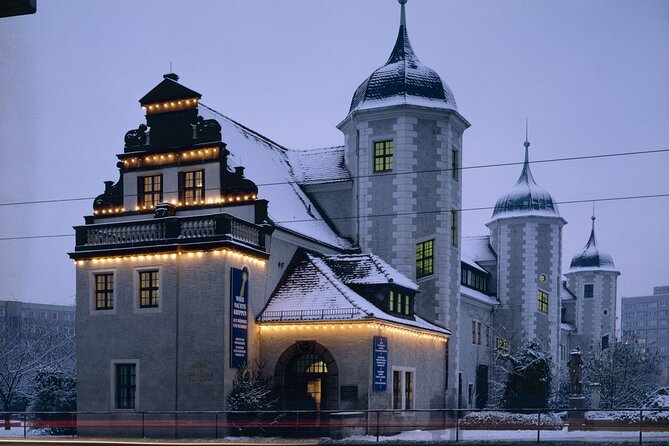
One of the more interesting stops is the Museum für Sächsische Volkskunst mit Puppentheatersammlung. Here, the story runs through big historical pivots: the site began in the 15th century as a wealthy Augustinian monastery, then it was demolished, and in the 16th century it became a royal hunting lodge after Luther’s Reformation changed the religious climate.
As part of the tour, you do not enter the building. But the time outside is useful because it frames what the museum represents, so if you choose to visit later on your own, you walk in with context instead of just looking at displays.
If you want the option, it helps to know the museum admission is not included. You can check the official visit info ahead of time, and decide if puppets and folk art are your thing or if you want to spend that money on another Dresden highlight.
Dreikoenigskirche and the Baroque lesson you can see from the street
At Haus der Kirche, you focus on the Dreikoenigskirche. You will learn how this Baroque church connects back to the early 15th century and the former Altendresden. The tour stays outward here too, and you will not enter the building or climb the tower during the guided portion.
That said, this is still a great stop for first-time visitors. Churches in Dresden can look like pure architecture from the outside, but this one is tied to older layers of settlement and religious life. The guide helps you read those layers without needing to spend extra time in lines or ticketed spaces.
If you want more, climbing the tower costs extra. The fact that the climb is optional is a good setup. You can do the full story in two hours and then choose how far you want to go with paid entries afterward.


Frauenkirche without the museum time, and why that is smart
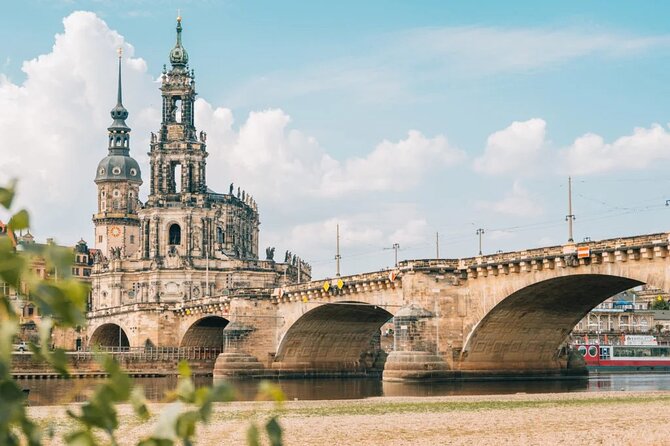
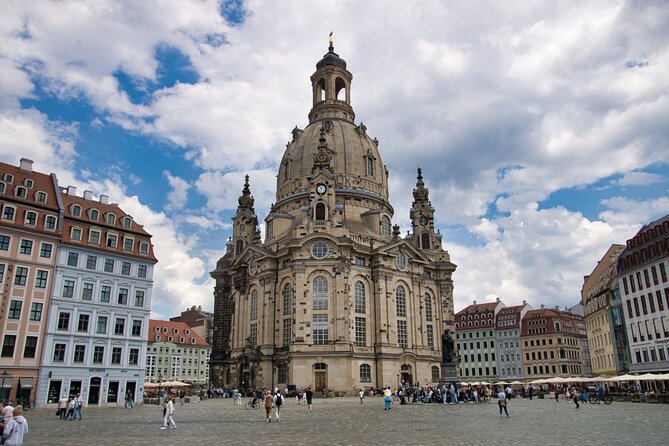
The Frauenkirche Dresden is an obvious anchor stop, and this tour treats it as more than a photo op. You learn about its roughly 700-year arc, including that its construction and later changes reflect the Baroque period and shifting religious needs over time.
During the guided time, you will not enter the building or the museums. However, the free stop still works because the guide uses the exterior to explain what you are looking at and why the structure matters historically.
If your priority is interior time, you might add a separate visit later. But if your priority is understanding how all of Dresden’s eras connect, this approach keeps you moving and prevents the tour from turning into a full-day museum marathon.
Holy Cross Church and Sophienkirche: Reformation-era clues in plain view
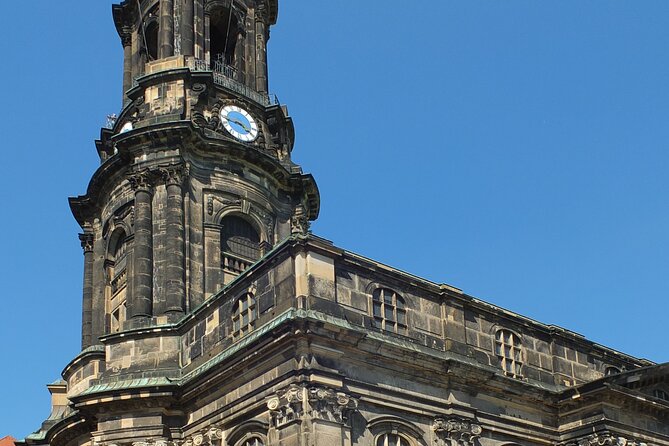
After crossing into the broader Altstadt atmosphere, the walk focuses on churches that function like historical evidence. At the Holy Cross Church, you hear how the church was originally built in the 13th century, destroyed multiple times, and later witnessed crucial moments of the Reformation.
This is one of the tour’s best strengths: it gives you the timeline without drowning you in lectures. You can stand where the building sits and understand why it mattered, even if you do not go inside during the guided segment.
Next comes Denkraum Sophienkirche. Here the story goes to the first Franciscan monastery in Dresden, constructed in the 13th century. You learn about its demise and later resurrection as the iconic yet sadly lost Sophienkirche. This stop is especially useful for understanding how political and religious currents can erase buildings and still leave lasting fingerprints on a city’s identity.
Augustus Bridge and the medieval-to-royal shift you feel right away
At this point you cross the famous Augustus Bridge to enter the Altstadt and continue exploring Dresden’s deeper medieval history. Even if you have seen the bridge in photos, the tour gives it a job: it is the transition marker between eras.
Bridges in cities like Dresden are more than infrastructure. They signal where the city expands and where the power centers want to connect. Once you have crossed, you are primed to see the difference between the earlier layers of settlement and the later focus on political authority.
Dresden Castle and Residenzschloss: from small town to empire level importance
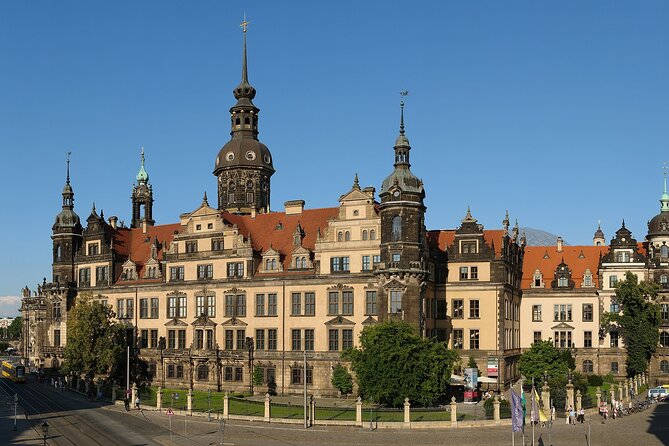
Your final stop is Dresden Castle, the Residenzschloss. The guide frames it as a major power shift. You learn how Dresden went from a smaller city that was not especially important, to one of the key players in the Holy Roman Empire.
This is royal residence history, focused on the Electors and Kings of Saxony, and the incredible transformations the palace represents. During the guided portion, you do not enter the building and you will not tour the museums.
If you want to go in, that entrance is separate and costs extra. But even without the interior, the guided story helps you understand what you are looking at: this is where Dresden’s political ambition becomes visible in stone and layout.
Price and value: what you get for about $60.34
For around $60.34 per person, you are paying for a professional guided walk that connects many different kinds of sites in about two hours. That matters because Dresden is one of those cities where seeing only the biggest attractions can leave big gaps in your understanding.
What’s included is the guided experience itself. What is not included are optional paid entrances for some stops, including:
- A paid tower option at Dreikönigskirche
- Admission to Residenzschloss
- Admission to Museum für Sächsische Volkskunst mit Puppentheatersammlung
- Entrance fees tied to Haus der Kirche – Dreikoenigskirche and the volkskunst museum site (listed as specific per-person amounts)
From a value angle, the pricing works best if you treat the tour as your orientation plus story foundation. Then you selectively add paid entries on your schedule, rather than trying to buy everything up front.
Pacing, walking distance, and when the route feels easy
The tour lasts about 2 hours. It is designed to be paced so you can keep moving while still absorbing stories at each stop. One review even described the walking as about a mile long, which fits the general feel: it is a city stroll, not a hike.
You also get a smart benefit from the stop timing. Each location is given a short, focused window, usually around 15 to 20 minutes. That means you are not stuck too long in any one spot, but you also do not feel rushed. You get the main context, then you can choose what to investigate next.
Group size is capped at 30, so it is not a massive herd. With that kind of cap, it is easier to ask questions when something sparks your interest, especially if you have the kind of curiosity that shows up when you learn about Dresden’s wars and religious transitions.
Practical details that can change your experience
The tour is offered in English and uses a mobile ticket. That is helpful because you can plan around it easily while you are walking between stops.
It also runs near public transportation, and service animals are allowed. Most travelers can participate, which usually signals the route is not built for extreme uneven terrain or marathon walking.
Weather matters. This is an outdoor-walk style experience, so plan for good conditions, and bring what you need for comfort.
Finally, you end at Theaterplatz (01067 Dresden). That is convenient because it is a natural launching point for the Zwinger area, the Semperoper area, and tram connections back into the Altstadt.
Who should book this tour, and who might skip it
Book it if you want a fast, structured understanding of Dresden. It is ideal for:
- First-time visitors who feel overwhelmed by how many churches and palaces they see
- History buffs who care about religion, politics, and how war reshapes cities
- Short-stay travelers who want a two-hour foundation and then freedom afterward
You might skip it if you only want interior museum time or if you dislike exterior-only storytelling. Since several major sites are not entered during the guided portion, you will get less if your main goal is being inside the buildings for the whole visit.
Should you book Walking Through Dresden’s Past with Dr. Fraser Macdonald?
Yes, if you want Dresden to make sense fast. The route is short, the stop order builds a clear timeline, and Dr. Fraser Macdonald’s style focuses on connecting the past to what you can actually see on the street. You also get flexibility: you do not have to commit to paid entrances during the guided time.
I would especially book it early in your trip. It helps you spot what matters and decide where you want to spend money and time later, whether that is a tower climb, museum entry, or the royal palace interior.
If your schedule allows, plan a little extra time after the tour around Theaterplatz. It is a smooth way to keep the momentum going while the stories from the walk are still fresh in your mind.
FAQ
How long is the Dresden walking tour?
It is approximately 2 hours.
What language is the tour offered in?
The tour is offered in English.
Where do I meet and where does the tour end?
You start at Golden Rider, Neustädter Markt 14, 01097 Dresden, Germany. You end at Theaterplatz, 01067 Dresden, Germany.
Is a mobile ticket used?
Yes, the tour uses a mobile ticket.
What is included in the price?
The professional guided tour is included.
What entrance fees are not included?
Entrance is not included for Dreikönigskirche tower climbing (listed as 5 Euro), Residenzschloss (listed as 14 Euro), Museum für Sächsische Volkskunst (listed as 5 Euro), and entrance fees listed as 5 Euro per person for Haus der Kirche – Dreikoenigskirche and for Museum für Sächsische Volkskunst mit Puppentheatersammlung.
Will the guide take you inside the churches or museums?
For several stops, the guided time is outside only, with instructions that the group will not be entering the building or climbing certain areas. Some locations note that participants are free to visit on their own leisure at additional cost where applicable.
What is the maximum group size?
The tour has a maximum of 30 travelers.
Is it suitable if I have a service animal, and can I get there easily?
Service animals are allowed, and the meeting area is near public transportation.
What happens if the weather is bad?
The experience requires good weather. If it is canceled due to poor weather, you will be offered a different date or a full refund.
Pavements of Dresden
Everything else we filed on Dresden
- Outdoor escape game – the magical portal
★ 5.0 · 11 reviews - City Tour and Guided Tour in the New Green Vault – Program C – The Festive
★ 5.0 · 11 reviews - Bohemian and Saxon Switzerland Day Trip All inclusive-Winter Tour
★ 5.0 · 11 reviews - Escape Game Outdoor: Operation Mindfall
★ 5.0 · 12 reviews - Moritzburg: Scavenger Hunt Self-Guided Walking Tour
★ 4.8 · 12 reviews - Dresden: Bike Rental – City Bike with Option Children Seat
★ 4.5 · 13 reviews
Walking Tours, side by side.
 ★ 5.0Discover Berlin Half-Day Walking TourFrom $249,624 reviews
 ★ 4.9Berlin: Third Reich and Cold War 2 Hour Walking TourFrom $236,830 reviews
 ★ 4.6Munich: Third Reich & WWII Walking TourFrom $316,181 reviews
 ★ 4.9Berlin: Discover Berlin Walking TourFrom $235,998 reviews
 ★ 5.0Berlin’s Best: 2 Hour Walking Tour Third Reich and the Cold WarFrom $245,486 reviews
 ★ 4.8Berlin: Hidden Backyards Guided Walking TourFrom $235,360 reviews
 ★ 4.5Third Reich Walking Tour MunichFrom $454,291 reviews
 ★ 5.0Third Reich Berlin: Hitler and WWII Walking TourFrom $243,301 reviews