
REVIEW · BERLIN
Berlin: Prenzlauer Berg District Guided Walking Tour
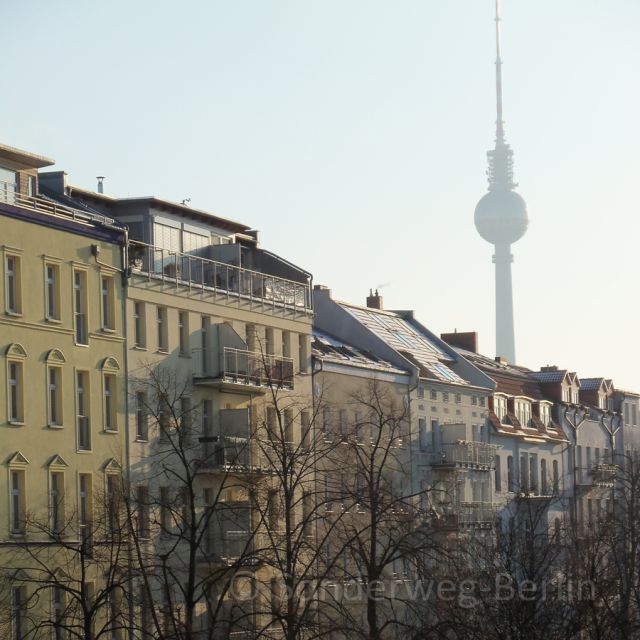
A walk here feels like reading Berlin in real time. This Prenzlauer Berg guided stroll mixes standout sights with clear talk about how the neighborhood’s past and present fit together. You’ll see major landmarks like the Wasserturm and spend time in places that feel like Berlin’s living room, not a postcard.
Two things I really like: the guide’s explanations connect history, architecture, and today’s changes in a way that actually sticks, and you get time to ask questions instead of just hearing facts and moving on. One consideration: it’s a 2.5 hour walking tour with no food or drinks included, so plan on bringing your own water and eating before or after.
In This Review
- Key things to look for on this Prenzlauer Berg walk
- Prenzlauer Berg’s story, told block by block
- Starting on Schönhauser Allee: cemetery and Wasserturm
- Kollwitzplatz and the feel of the neighborhood
- Mauerpark, Sunday energy, and Bernauer Straße history
- Rykestraße synagogue and Oderberger Straße public pool
- The guide experience: why the commentary makes it worthwhile
- Price and timing: does $23 make sense for 2.5 hours?
- Should you book this Prenzlauer Berg guided walking tour?
- FAQ
- What is the duration of the Berlin Prenzlauer Berg guided walking tour?
- How much does the tour cost?
- What is included in the price?
- Are food and drinks included?
- What sights will we see during the walk?
- What languages are available for the guide?
- Where do we meet the guide?
- Is free cancellation available?
- Is there an option to reserve and pay later?
Key things to look for on this Prenzlauer Berg walk
- Schönhauser Allee focus: the walk covers the key street and stretches outward in both directions
- Jewish Cemetery and Wasserturm: two big, memorable landmarks with context
- Kollwitzplatz area: a good sense of local squares and everyday city life
- Mauerpark on a Sunday-style vibe: flea market energy and live music atmosphere
- Bernauer Straße and Messel House: wall-era area plus architectural detail
- Rykestraße synagogue and Oderberger Straße pool: major institutions in public view
Deeper into the painted backstreets
- Berlin: Alternative Berlin Walking Tour★ 4.6 · 1,204 reviews
- Berlin: City Street Art Guided Walking Tour★ 4.8 · 886 reviews
- Berlin: 3-Hour Street Art Tour★ 4.7 · 778 reviews
- Kreuzberg: Culinary Food Tour★ 4.5 · 770 reviews
Prenzlauer Berg’s story, told block by block
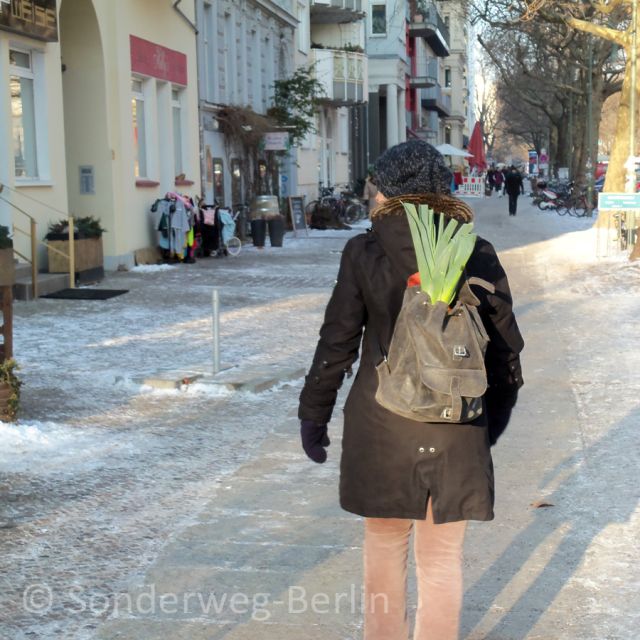
Prenzlauer Berg is one of those Berlin neighborhoods where you can’t really separate eras. The streets look calm now, but the area has carried decades of change, and the tour helps you see that layering instead of treating it like one flat theme.
What makes this walking format work is the pace. It’s not a speed-run of highlights. You stop at points of interest, then the guide connects them to what the neighborhood used to be, what it became, and what it’s still becoming. That is what turns a collection of buildings into an actual story you can walk through.
You’ll also learn to notice the contrasts. Prenzlauer Berg can feel stylish and prosperous, but you’ll be pointed to where the earlier character still matters, both in what’s standing and what people built their lives around. It’s a great choice if you like Berlin, but you also want something more grounded than a typical sightseeing checklist.
Starting on Schönhauser Allee: cemetery and Wasserturm
The route builds around Schönhauser Allee, the neighborhood’s key artery. Starting there makes sense because it’s one of the easiest ways to understand how this part of Berlin developed: major street life, institutions along the way, and views that help you track what you’re seeing.
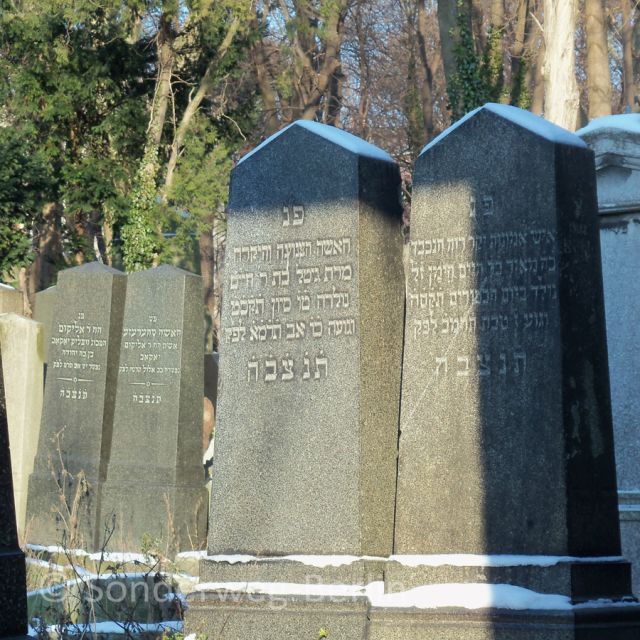
One of the first stops is the Jewish Cemetery on Schönhauser Allee. Even if cemeteries are not usually the highlight of a tour for you, this stop is valuable because the guide frames what you’re looking at in a respectful, factual way. You’ll come away with a clearer sense of how different communities shaped the area over time.
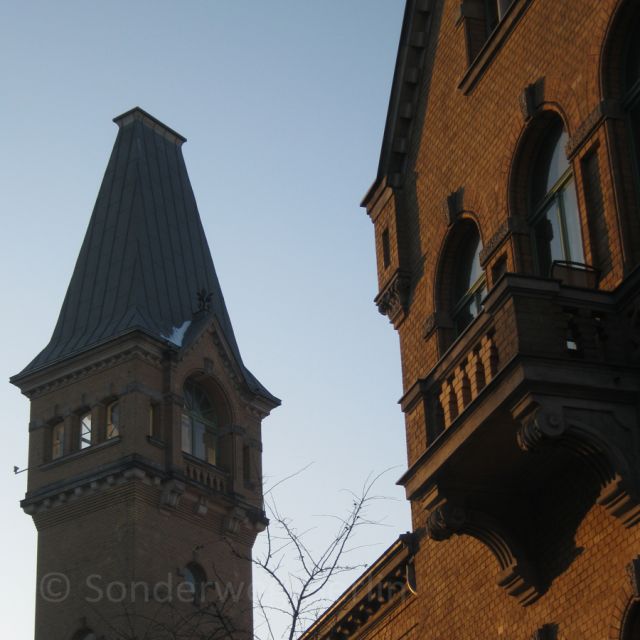
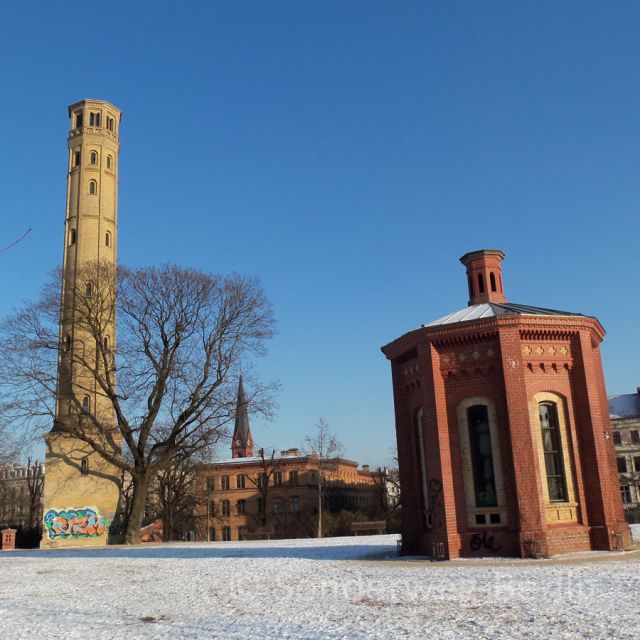
Then you’ll head to the Wasserturm (Water Tower). A water tower sounds like a random landmark until you learn to treat it like a piece of the city’s practical history. It’s the kind of structure you can spot from a distance and then appreciate more once you understand why it matters.
Practical tip: bring your phone camera ready, because the water tower area and the street sightlines are easy to frame. Also, expect some time spent just standing and looking while the guide talks. That pause is part of the value.
Kollwitzplatz and the feel of the neighborhood

You also pass through the Kollwitzplatz area. This is where Prenzlauer Berg starts to feel less like a museum walk and more like a real neighborhood. Squares and park-adjacent spots like this are how you read a city’s rhythm, where people pause, meet, and spend time outdoors.
The guide’s explanations here are usually what make this segment click. Instead of just naming things, you’ll hear how the area’s evolution changed daily life. That matters because modern Prenzlauer Berg has a distinct atmosphere, but it did not appear out of thin air. The tour helps you understand what kind of community the neighborhood supported, and what changed as new residents and businesses moved in.
If you’re the type who likes to understand why a place feels the way it does, you’ll appreciate this part. It’s also a nice breather between bigger, more intense stops.
Mauerpark, Sunday energy, and Bernauer Straße history
Mauerpark is a central moment on the tour, and you’ll see why so many people talk about it. The park is famous for its Sunday flea market and live music shows, and the atmosphere is one of the reasons Prenzlauer Berg feels like a creative district rather than just a residential one.
Even when you’re not shopping or attending a performance, being there gives you the neighborhood’s current pulse. The guide uses it to talk about the area’s shifts, including how spaces once tied to older realities are now used for community and public life. You’ll walk through the park area with your eyes open, noticing where people gather and how the environment supports that.
Then the tour moves along Bernauer Straße and toward the Messel House. This is where you start feeling how close the modern street experience sits to heavier historical context. The walk route is set up so you can connect the outdoor energy of the park with the grounded reality of what was happening in this region in earlier decades.
Architecturally, the Messel House stop gives you something to look at beyond scenery. It’s one of those places where taking a second to really see the building makes the story feel more concrete.
One practical note: Mauerpark can be busy depending on when you go. If you prefer quieter walking, pick your expectations accordingly and focus on the guide’s wayfinding and explanations rather than trying to control the crowd scene.
Other walking routes through Berlin

Rykestraße synagogue and Oderberger Straße public pool
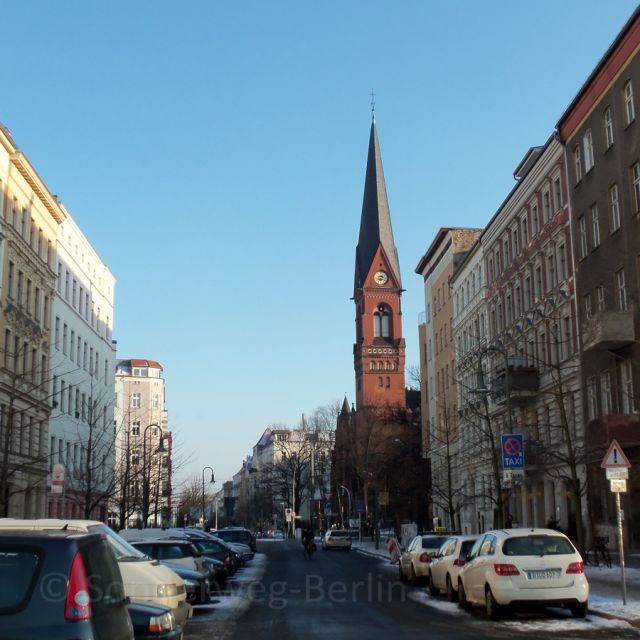
The tour highlights two public, community-facing spaces on different levels: the grand synagogue on Rykestraße and the public pool on Oderberger Straße.
The synagogue stop is important because it points to how the neighborhood has long been shaped by institutions that served real social and religious needs. This is not a stop for a quick glance. The guide’s talk helps you understand what makes the building significant in the context of the area, so you’re not just ticking off a landmark.
Then you’ll see the public pool, which brings the story back to everyday life. Pools and other civic facilities are a useful lens for understanding a neighborhood because they show what city planning prioritized and what residents could access. Even if you don’t go inside, seeing it on the route helps you connect institutions to daily rhythms.
I like that this pairing works. A synagogue represents a community anchor, while a public pool represents local life. Together, they show how Prenzlauer Berg’s character is built from both major landmarks and regular public spaces.
The guide experience: why the commentary makes it worthwhile
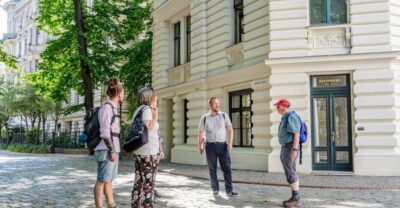
This is a walking tour, but the guide is the engine. The standout feedback pattern is consistent: the best guides here mix history and architecture with humor and real answers. You’re not stuck listening to a monologue.
In previous groups, guides like Tobias have a background in museums and history, and it shows. He tends to explain what you’re seeing and then go further, answering questions about Berlin, inhabitants, urbanism, and even politics. That makes the tour feel like a guided conversation instead of a lecture.
Group size can vary. Some departures have been small enough to feel close to a private tour, while others can include larger groups that the guide manages confidently. If you do well with walking in a group, that’s a non-issue. If you prefer more personal attention, arrive ready with your questions and expect the guide to handle them as time allows.
How to get more out of it:
- Ask one or two follow-up questions, not five. That keeps the flow going.
- If you like architecture, ask what to look for in a building facade or layout when the guide points something out.
- If you like political context, ask how the neighborhood changed and why those changes took the shape they did.
Price and timing: does $23 make sense for 2.5 hours?
At $23 per person for a 2.5 hour guided walking tour, you’re paying mostly for expert interpretation plus the route logic that connects the stops. The walking component is the delivery system. The guide turns the streets into something you can understand, not just something you pass through.
This price tends to be good value if you want more than a self-guided wander. You get the specific sights on your list, but you also get commentary that helps you connect them. If you’re the kind of traveler who likes reading plaques but would rather have a human explain the bigger picture, this tour fits your style.
What you should budget for: there’s no food and drinks included, so plan your meal timing. You might also want to carry water and a light layer because walking outdoors can change how you feel during the full 2.5 hours.
If you have limited time in Berlin and you want one neighborhood that shows how the city works, Prenzlauer Berg is a solid pick. Doing it with a guide makes the hours more efficient.
Should you book this Prenzlauer Berg guided walking tour?
I think you should book if you want a relaxed but meaningful neighborhood walk that connects landmarks like the Jewish Cemetery, the Wasserturm, Mauerpark, the Messel House, the synagogue on Rykestraße, and the public pool on Oderberger Straße into one story.
Skip it only if you want a purely casual stroll with zero context, or if you strongly dislike walking for 2.5 hours without built-in breaks for food. For most people who like Berlin, this is the kind of tour that improves how you see the district right after you finish.
FAQ
What is the duration of the Berlin Prenzlauer Berg guided walking tour?
The tour lasts 2.5 hours.
How much does the tour cost?
The price is listed at $23 per person.
What is included in the price?
The tour includes a walking tour and a live guide.
Are food and drinks included?
No. Food and drinks are not included.
What sights will we see during the walk?
You’ll see highlights such as the Jewish Cemetery on Schönhauser Allee, the Wasserturm, Mauerpark, Kollwitzplatz, and stops along Bernauer Straße including the Messel House. The tour also includes the grand synagogue on Rykestraße and a public pool on Oderberger Straße.
What languages are available for the guide?
The guide is available in German and English.
Where do we meet the guide?
The meeting point may vary depending on the option booked.
Is free cancellation available?
Yes, you can cancel up to 24 hours in advance for a full refund.
Is there an option to reserve and pay later?
Yes, you can reserve now and pay later, keeping your travel plans flexible.
Pavements of Berlin
More Painted Walls and Backyards
Everything else we filed on Berlin
- East Berlin: City of Shadows Walking Tour
★ 5.0 · 11 reviews - Berlin: Die Stachelschweine – Frank Lüdecke – Träumt Weiter
★ 4.7 · 11 reviews - Potsdam Day Trip from Berlin with a Local: Private & Personalized
★ 4.0 · 11 reviews - An Introduction to Berlin Walking Tour
★ 5.0 · 11 reviews - DJ for a Day: Learn to Mix Like a Pro in Berlin
★ 5.0 · 11 reviews - 2-H Segway Sightseeing Tour Berlin
★ 4.5 · 11 reviews
Street Art and Alternative City Tours, side by side.
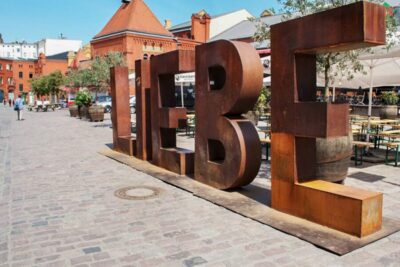 ★ 4.6Berlin: Alternative Berlin Walking TourFrom $291,204 reviews
 ★ 4.8Berlin: City Street Art Guided Walking TourFrom $23886 reviews
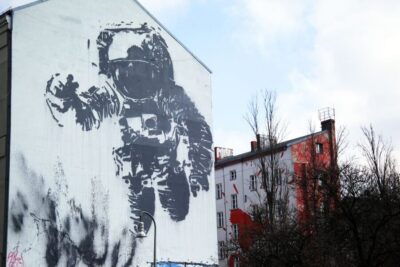 ★ 4.7Berlin: 3-Hour Street Art TourFrom $23778 reviews
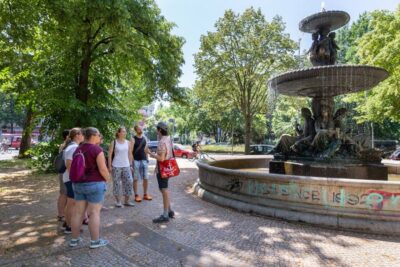 ★ 4.5Kreuzberg: Culinary Food TourFrom $589770 reviews
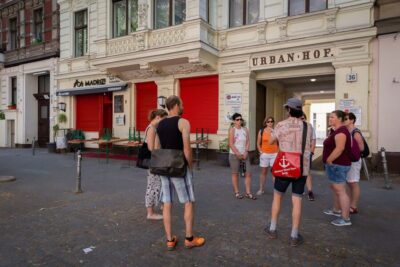 ★ 4.7Berlin: Kreuzberg Guided Walking Evening TourFrom $27555 reviews
 ★ 4.7Berlin: Alternative Bike Tour of Kreuzberg & FriedrichshainFrom $41548 reviews
 ★ 4.9Berlin: 2.5-Hour Walking Tour through Kreuzberg 61From $23525 reviews
 ★ 5.0Berlin Off-the-Beaten-Path Walking Tour: Kreuzberg, Mitte and FriedrichshainFrom $30412 reviews
Other lists this tour is on