
REVIEW · WALKING TOURS
Cologne classic walking tour
Cologne history fits in two hours, from Roman arches to the perfume trail. You start in the cathedral area, then you move through squares and streets where every stop points to a different chapter of the city.
I love how guide Sara keeps the story human with anecdotes and the use of historical photos. I also love that the route is built around major sights you can actually orient yourself with, especially the cathedral square and the town center landmarks.
One thing to consider: the tour is Italian, so if you want explanations in English, this may be a frustrating choice. It is also a compact walk, so you will cover a lot, with only limited time for linger-and-stare stops.
In This Review
- Key things to know before you go
- A Two-Hour Cologne Story You Can Walk Out With
- Meeting Near the Cathedral’s Big Pinnacle Copy, Then Looking Up
- Cathedral Square and the Roman Origins: When Cologne Starts Counting
- Roman Arch, Cathedral, and Town Hall Tower: Power at Every Scale
- Alter Markt, Groß Sankt Martin, and Fischmarkt: Squares That Tell You How People Lived
- Rhine Promenade, Breweries, and Colourful Houses: Seeing Cologne Through Water
- Salzgasse and Heumarkt: Small Streets, Big Atmosphere
- Eau de Cologne Farina and 4711: Cologne Water as a Cultural Story
- Kolumba and the Opera District: Reconstruction and WWII Memory
- Why Guide Sara Makes This Work in Real Life
- Price and Value: 23 Dollars for a Lot of Orientation
- Should You Book This Classic Walking Tour of Cologne?
- FAQ
- How long is the Cologne classic walking tour?
- How much does the tour cost?
- What language is the live guide?
- Where is the meeting point?
- Is the tour wheelchair accessible?
- Which sights and monuments are included?
- Can I cancel or pay later?
Key things to know before you go
- Italian guide Sara tells the story with clear, prepared explanations and room for your questions
- 2,000 years of Cologne are presented as a smooth timeline, from Roman origins to today
- Cathedral square first, with the last Gothic cathedral as the main “look up” moment
- Market squares and church stops connect medieval power and everyday city life
- Eau de Cologne Farina and 4711 make perfume feel like a local cultural idea, not a sales pitch
- Kolumba and the Opera area highlight post-war reconstruction and memory
Other walking routes through Cologne
- Cologne: The Night Watchman Old Town Walking Tour in German★ 4.6 · 1,395 reviews
- Cologne: Old Town Highlights Walking Tour★ 4.6 · 1,093 reviews
- Cologne: Südstadt Guided Foodie Walking Tour★ 4.6 · 624 reviews
- Guided Brewhouse Walking Tour in Cologne★ 5.0 · 482 reviews
A Two-Hour Cologne Story You Can Walk Out With
This is the kind of tour that works when you only have a morning or afternoon in town and you want your bearings fast. The idea is simple: Cologne did not happen in one era. You will see how Romans, medieval merchants, and modern life all share the same streets.
What makes this format especially useful is that it is not just “look at a building.” It is “why that place matters.” You will be nudged to notice details, then you get the context right away so things click while you are still standing there.
And yes, you will get the big-ticket Cologne moments, but you will also get the in-between stops that help you understand why Cologne feels like a real city, not a museum set.
Meeting Near the Cathedral’s Big Pinnacle Copy, Then Looking Up
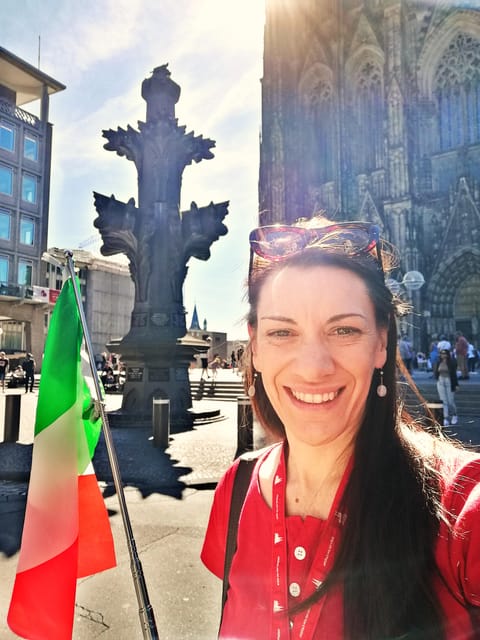
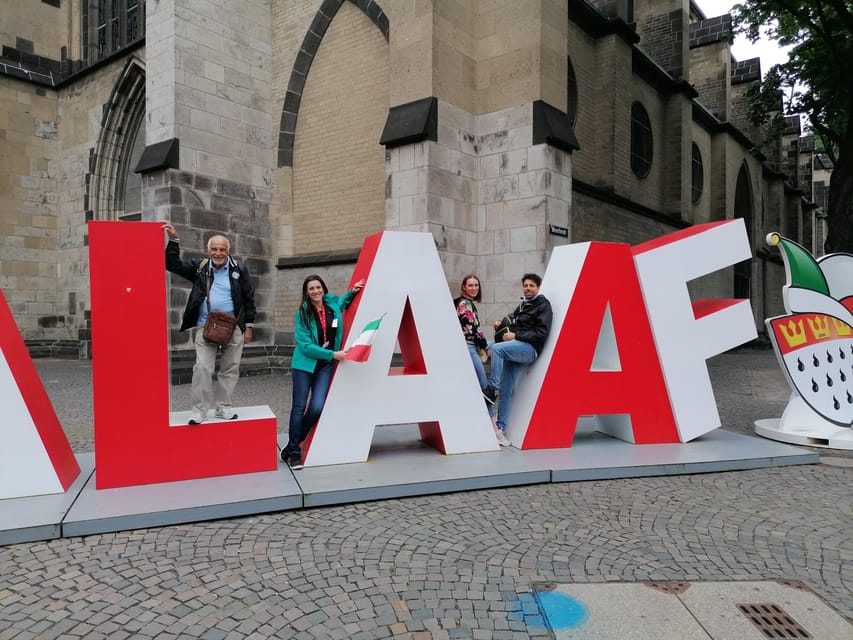
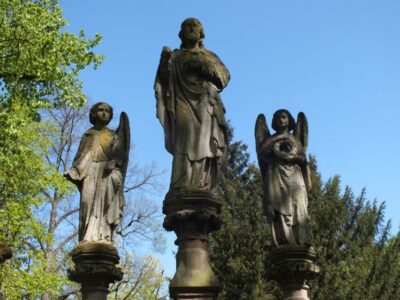
You meet at the copy of the big pinnacle of the cathedral. That’s a specific landmark, which is great, because it reduces the classic walking-tour panic of trying to match street signs in a crowd.
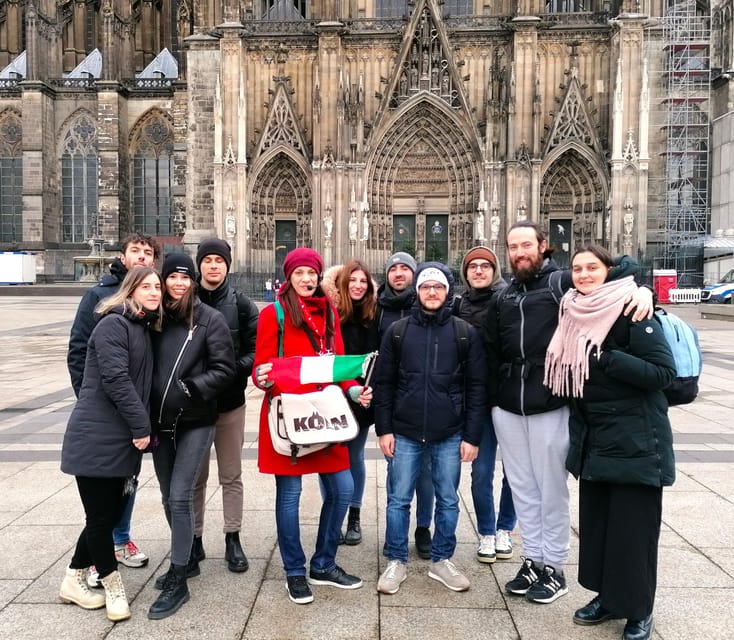
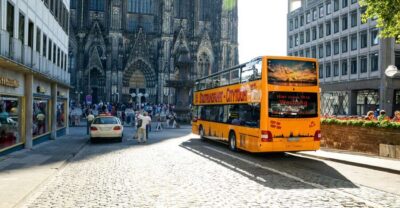
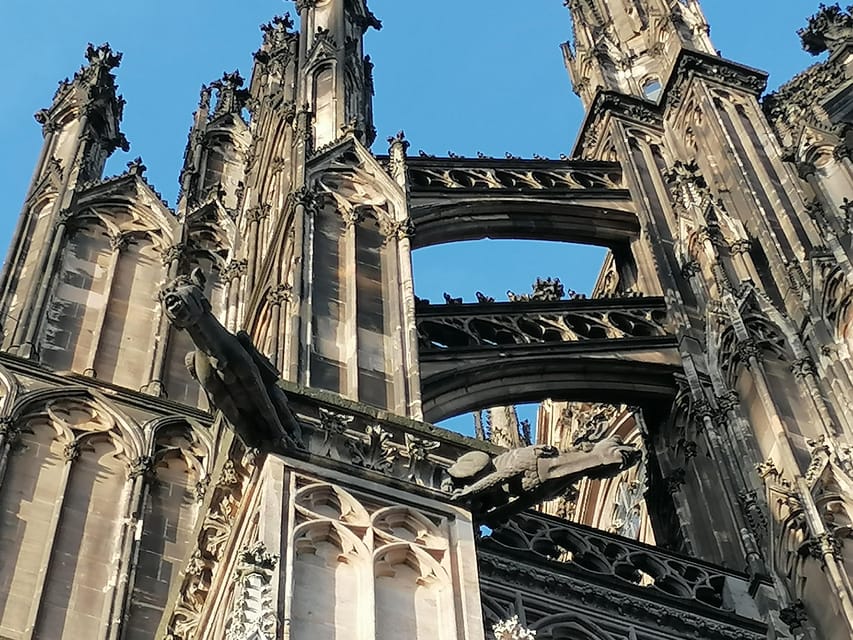
From there, the tour’s best trick starts immediately: you look up. Cologne Cathedral is a main focus, and the whole experience is framed around that scale. Standing in the cathedral area, you get a sense of why this city has long used monumental architecture as a statement.
If you are sensitive to long standing, plan to bring water. You will spend some time oriented at viewpoints, and the story flows from those points. It is not a sit-down lecture, it is a “stand, notice, understand” route.
Cathedral Square and the Roman Origins: When Cologne Starts Counting
The walking route begins in the cathedral square area, then moves into the Roman thread of the city’s timeline. You are pointed toward the Roman beginnings of Cologne, and then you are shown the Roman Arch as part of the connection between ancient roots and the later city that grew around it.
This is a smart way to start. When you begin with the Roman layer, you stop treating Cologne as if it was always medieval or always modern. The city becomes a long story with visible chapters.
One practical tip: give yourself a second before you move on. Look at the buildings and streets around each stop. The point is to notice what survived, what changed, and what was rebuilt, while you can still compare eras in your head.
Roman Arch, Cathedral, and Town Hall Tower: Power at Every Scale
After the Roman anchor, the tour shifts into Cologne’s Gothic landmark moment with the cathedral, described as the last Gothic cathedral. Even if you do not consider yourself an architecture person, the guide’s pacing helps. You get the big visual, then you get the why behind it.
Next comes the town hall area, with the tower at the center of the medieval merchant pride story. In your walk, you will connect the civic power represented by a town hall tower to the wider medieval idea of Cologne as a free city of merchants, with pride visibly stamped into the city’s public spaces.
This part is where the tour really starts to feel like a guided orientation. You are learning how to “read” the city by function. A cathedral dominates religious life. A town hall tower signals civic identity. Then the squares and alleys fill in the daily reality.
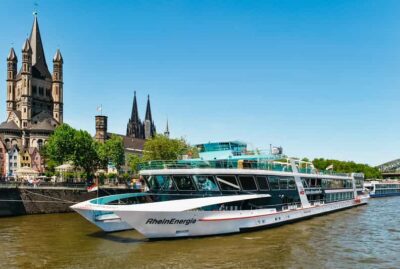
Alter Markt, Groß Sankt Martin, and Fischmarkt: Squares That Tell You How People Lived
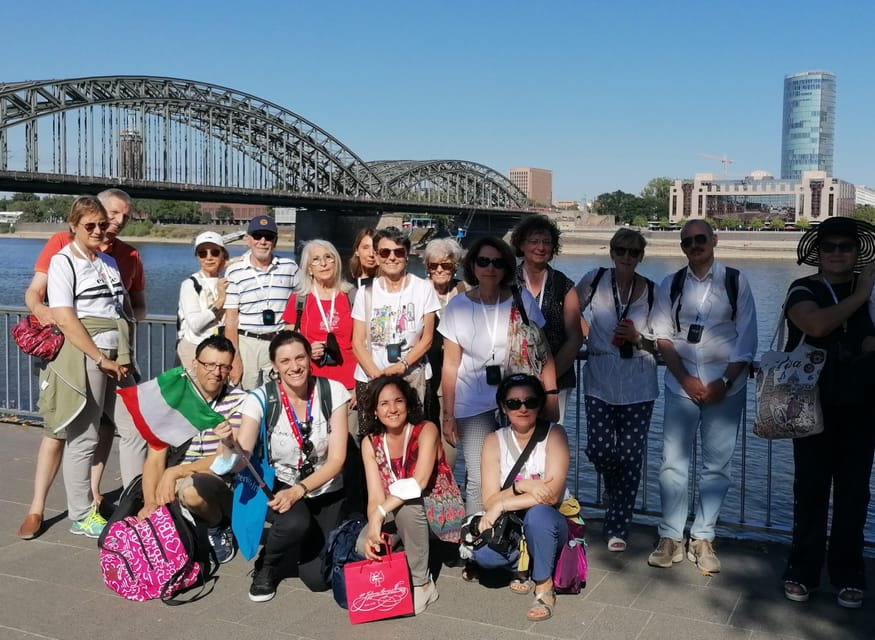
Once you step into the old town squares and lanes, you get a steady rhythm of “place plus purpose.” Alter Markt is one of those name-brand medieval-sounding squares that can feel vague until you get the context, and this tour does that job.
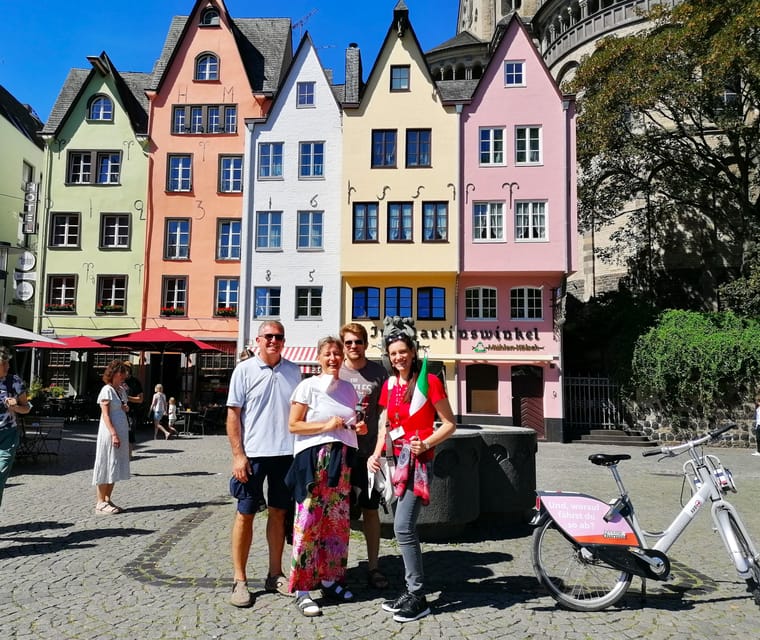
You also visit Groß Sankt Martin and Fischmarkt. Church stops on this route are not just photo ops. They are part of how Cologne’s social map worked, where religion and daily life overlapped in the same neighborhoods.
If you like trivia and street-level detail, you will enjoy the way the guide threads stories together. You are not only told facts. You also get anecdotes and trivia that make the buildings feel less like scenery and more like landmarks with roles.
A small consideration: this is a compact 2-hour format. That means fewer long pauses at each spot. If you want slow photography time at one church façade, you may need to trade off a bit elsewhere.
Rhine Promenade, Breweries, and Colourful Houses: Seeing Cologne Through Water
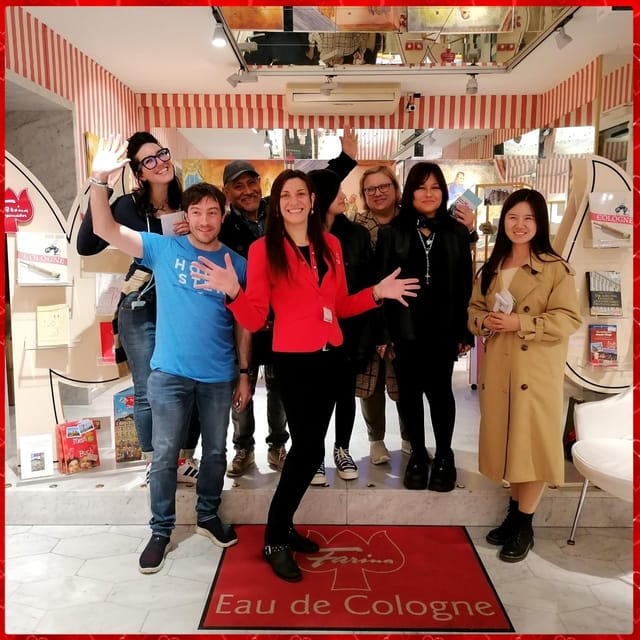
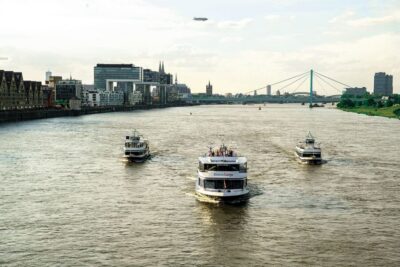
Then the tour turns toward the Rhine promenade. This is a key shift, because it changes how you experience the city. Along the river, you get a different angle on Cologne’s identity, and you can better understand why the Rhine mattered for trade, movement, and daily life.
You pass historic breweries and see Cologne’s most colourful houses. That combination is clever: it links the river to the city’s industries and culture. Even if you do not go inside any brewery, the walk helps you picture where stories like commerce and craftsmanship would have fit into everyday schedules.
Look for the details the guide points out, especially the contrasts between older structures and what you see today. The tour includes historical images that you can compare against the present scene, and that really helps you understand which parts of the city endured, and which had to be remade.
Salzgasse and Heumarkt: Small Streets, Big Atmosphere
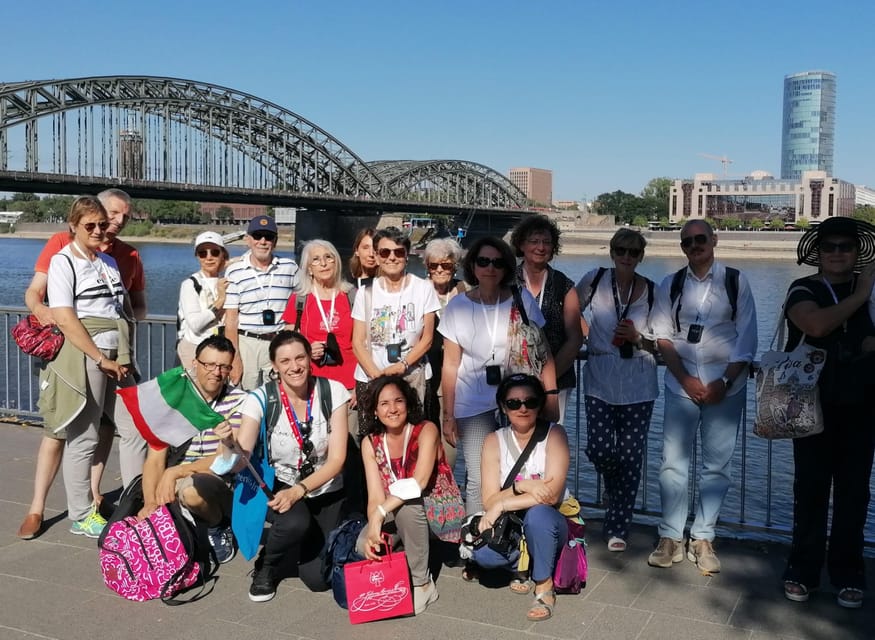
Salzgasse and Heumarkt are the kind of stops that make a walking tour worth it. They are not just “more streets.” They are places where the city’s character comes through in the way the route connects different districts.
You will likely find yourself paying attention to the street scale and the feeling of the alleys. That is where you get the sense of medieval and post-medieval continuity, even when the buildings are not from the same exact era.
If you are prone to rushing, this is the moment to slow down for 30 seconds. The tour’s best learning happens when you let the place register. Then the guide’s explanations land better.
Eau de Cologne Farina and 4711: Cologne Water as a Cultural Story
One of the surprises in this tour is that Cologne’s perfume shows up as a major storyline, not an optional add-on. You visit Eau de Cologne Farina, then later Eau de Cologne 4711 at Wallrafplatz.
The way this is framed helps a lot. It turns Cologne water into a local cultural idea: something tied to the city’s identity. You get to see how Cologne became associated with scent, and why that matters beyond shopping.
Practical advice here is simple: if perfume is a topic that interests you, be ready to ask questions. The guide is clearly comfortable with anecdotes and explanations, and that makes these stops more engaging than a quick pass.
If perfume is not your thing, you can still enjoy it. Think of it as a lens. It is how you learn the city without only relying on churches and monuments.
Kolumba and the Opera District: Reconstruction and WWII Memory
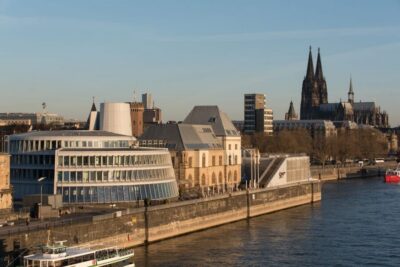
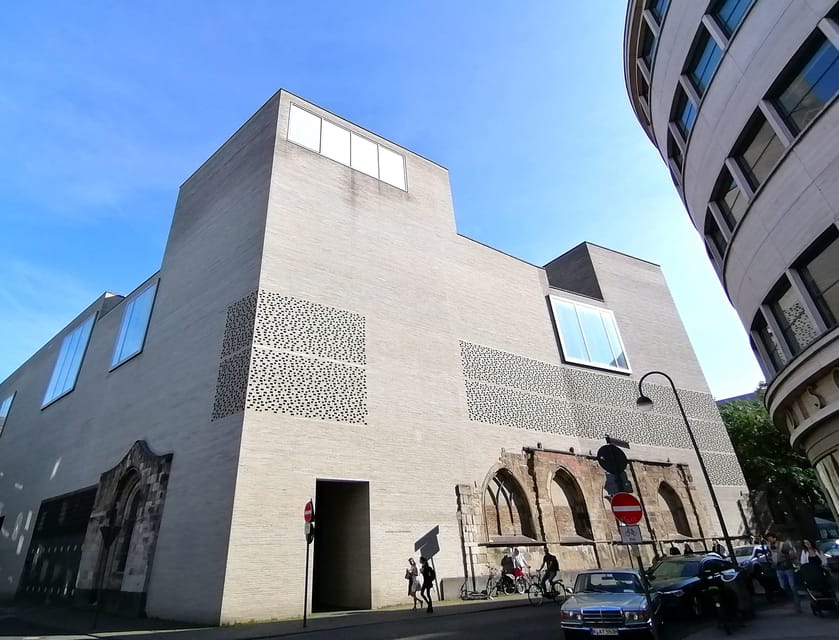
The later part of the walk addresses something heavier: the wounds of the Second World War and the effort of reconstruction. You will see this theme in the Opera and Kolumba districts, where post-war memory and later developments shape the modern city.
Kolumba is one of the stops that helps the story stay honest. It is not only about what was built, but about what changed and what was remembered. The tour’s use of historical images reinforces this, letting you compare past and present in your own field of view.
This section is also where the tour feels especially meaningful for first-timers. You do not just learn dates. You learn how a city carries the impact forward, in architecture, districts, and public memory.
One consideration: if you prefer upbeat-only sightseeing, this part may feel emotionally intense. It is presented in the tour context, so it does not take over the full experience, but you should know it is included.
Why Guide Sara Makes This Work in Real Life
What stands out from the experience is the guide style. Sara is described as prepared, friendly, and very approachable, and she brings historical photos along to support the story. That matters more than it sounds.
Historical images help you connect abstract eras to actual corners of the city. Instead of hearing a fact and moving on, you get a quick visual comparison while you are standing in the right place. It is an easy way to make Cologne feel like one continuous timeline.
You will also benefit if you like asking questions. Sara’s tone is practical, and she is clearly comfortable answering curiosity about what you are seeing, from squares to churches to the perfume-related stops.
If you are traveling with family or friends, this kind of guide-driven pacing works well, because it keeps the group moving while still offering context that different interests can latch onto.
Price and Value: 23 Dollars for a Lot of Orientation
At about $23 per person for 2 hours, this is strong value if you want structure. The price is low enough that you can treat it like a smart “start here” plan for your day.
The real value is not just the number of stops. It is the way the route groups places into themes: Roman origins, medieval civic pride, river life, Cologne water, and post-war reconstruction. That makes the city easier to revisit afterward on your own.
Also, because the tour is wheelchair accessible, it checks a box that many classic walks ignore. If you can handle a two-hour walking route, you get a compact overview that does not require you to plan museum tickets or read a guidebook cover to cover.
The main tradeoff is language. The tour is live and Italian. If your Italian is basic, you may catch the structure and a few key points, but you might not get everything. If your Italian is solid, you will likely enjoy the anecdotes and trivia even more.
Should You Book This Classic Walking Tour of Cologne?
I think you should book it if you want a fast, landmark-based introduction to Cologne that connects the Roman beginning, the cathedral era, the medieval merchant identity, Cologne water, and the post-war rebuilding story. The Italian guide Sara approach, with photos and room for questions, is especially good if you like learning by seeing.
Skip it if you need English for most of the explanation, or if you prefer very long stops at just a couple of monuments. This tour is designed to move through the city efficiently, not to linger for hours in one spot.
If you are on a tight schedule, or you want one confident way to understand the city before you explore on your own, this is a practical choice.
FAQ
How long is the Cologne classic walking tour?
The tour lasts 2 hours.
How much does the tour cost?
The price is $23 per person.
What language is the live guide?
The live tour guide speaks Italian.
Where is the meeting point?
You meet at the copy of the big pinnacle of the cathedral.
Is the tour wheelchair accessible?
Yes, the tour is listed as wheelchair accessible.
Which sights and monuments are included?
The tour includes Roman Arch, Cathedral, Town Hall, Alter Markt, Groß Sankt Martin, Fischmarkt, Rhine promenade, Salzgasse, Heumarkt, Eau de Cologne Farina, Kolumba, Opera, Eau de Cologne 4711, and Wallrafplatz.
Can I cancel or pay later?
You can reserve now & pay later, and free cancellation is available up to 24 hours in advance for a full refund.
Pavements of Cologne
Everything else we filed on Cologne
- Aachen Private Walking Tour With A Professional Guide
★ 5.0 · 11 reviews - e-Scavenger hunt Aachen: Explore the city at your own pace
★ 4.0 · 13 reviews - Aachen Scavenger Hunt and Sights Self-Guided Tour
★ 5.0 · 14 reviews - Cologne: Fables, Fairy Tales, and Legends Tour in German
★ 4.9 · 15 reviews - Cologne: Virtual escape game adventure at 7th Space
★ 4.3 · 15 reviews - Roman Cologne: A Self-Guided Audio Tour
★ 4.0 · 15 reviews
Walking Tours, side by side.
 ★ 5.0Discover Berlin Half-Day Walking TourFrom $249,624 reviews
 ★ 4.9Berlin: Third Reich and Cold War 2 Hour Walking TourFrom $236,830 reviews
 ★ 4.6Munich: Third Reich & WWII Walking TourFrom $316,181 reviews
 ★ 4.9Berlin: Discover Berlin Walking TourFrom $235,998 reviews
 ★ 5.0Berlin’s Best: 2 Hour Walking Tour Third Reich and the Cold WarFrom $245,486 reviews
 ★ 4.8Berlin: Hidden Backyards Guided Walking TourFrom $235,360 reviews
 ★ 4.5Third Reich Walking Tour MunichFrom $454,291 reviews
 ★ 5.0Third Reich Berlin: Hitler and WWII Walking TourFrom $243,301 reviews