
REVIEW · SCAVENGER HUNTS AND CITY GAMES
Love and War in Berlin: Self-Guided Story Puzzle Walk
Berlin feels different when you solve the story. This self-guided puzzle walk uses story puzzles and a self paced route to connect big WWII themes to real street corners, monuments, and buildings in Berlin’s center. I like that you can stop, think, and keep going when you want.
I also like the mix of famous landmarks and less obvious context, so the walk gives you more than just photos. The stop at Bebelplatz, for example, links you directly to the Nazi book burning on 10 May 1933, and the Memorial to the Murdered Jews of Europe has clear design background you can read into as you play. One possible drawback: every step asks you to look around closely for an answer, so if you prefer your sightseeing to be mostly passive, this format may feel a bit workmanlike.
In This Review
- Key moments that make this walk work
- A self guided puzzle walk through Berlin’s center
- How the puzzle format keeps you in control
- Start at Alexanderplatz, then read the Urania World Clock
- From the Rathaus to Neptunbrunnen, history in plain architecture
- Marx and Engels to the Lustgarten on Museum Island
- Neue Wache: a memorial setting with Prussian neoclassical roots
- Bebelplatz and the Nazi book burning site
- Gendarmenmarkt to the Konzerthaus Berlin
- State politics in Berlin, Hamburg’s presence at Jägerstraße
- Memorial to the Murdered Jews of Europe: Eisenman’s design and the timeline
- Walking route, timing, and what you should bring
- Value for the price, and who this fits best
- Should you book Love and War in Berlin?
Key moments that make this walk work
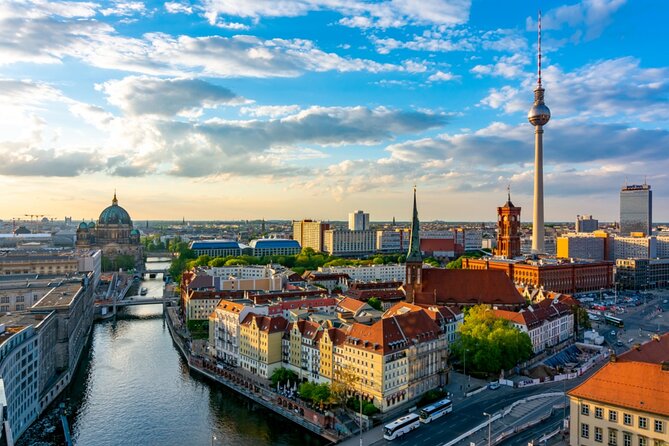
- Alexanderplatz Urania World Clock as your first real clue, with times for 148 cities
- Rathaus building details that let you spot why the architecture was chosen
- Bebelplatz book burning site tied to the events of 1933, not just a plaque
- Neue Wache as a Prussian neoclassical memorial setting on Unter den Linden
- Gendarmenmarkt and Konzerthaus Berlin history in the space between two churches
- Memorial to the Murdered Jews of Europe with the Eisenman design timeline behind it
More puzzles to walk a city with
- Escaping and spying on the Berlin Wall Scavenger hunt★ 4.5 · 128 reviews
- Berlin: Self-Guided Family and School Class Scavenger Hunt★ 4.6 · 128 reviews
- Berlin: “Shadow of the Rubber Duck” Escape Room Experience★ 4.7 · 95 reviews
- Berlin: Scavenger Hunt Self-Guided Tour★ 4.6 · 79 reviews
A self guided puzzle walk through Berlin’s center
This is a “you do the pace” experience built for city walking. You start with a mobile ticket and then follow a chain of stops where each one has a question that pushes you to read what’s in front of you. The payoff is that you end up with a mental map of central Berlin that’s organized around WWII era themes, not just landmarks.
The style is what I call street level history. Instead of sitting in a classroom, you’re constantly tying story to location. And because it’s private and built to avoid crowds, you can take your time at the places that hit hardest.
It also helps that the route is designed to be manageable. The overall duration is about 1 hour, and it flows through a concentrated part of Mitte and adjacent areas. Even if you’re not a fast walker, you should be able to keep it within that timeframe if you pause briefly for puzzles and photos.
How the puzzle format keeps you in control
I like the control you get here. You can start at any hour, pause whenever you want, and resume later. That matters in Berlin because plans are rarely perfect. Maybe you stop for coffee, maybe you have to duck around construction, maybe you run into a busy square.
It is also offline friendly. You do not need internet access to play. That’s a genuine comfort in a city with sketchy cell signal in some spots, and it means you can stay present and not fight your phone while reading details on buildings and memorials.
The puzzle structure is consistent too. At each stop, you look around for an answer, then you move to the next location. The questions vary in difficulty, with some that feel straightforward and others that demand careful reading. That mix is part of the fun, but it also explains why this works best if you are willing to slow down for a minute at each location.
Start at Alexanderplatz, then read the Urania World Clock
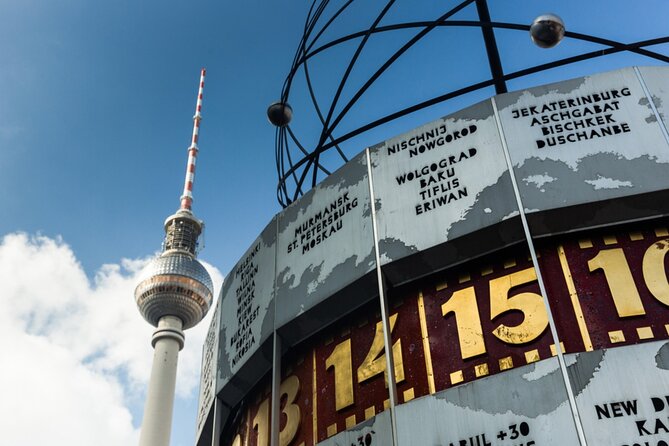
You kick off at Alexanderplatz (Alexanderpl. 1). The first major landmark is the Urania World Clock, a turret style clock in the public square.
What makes this stop a smart opening is that it gives you something concrete to focus on right away. Instead of starting with a heavy topic, you begin by learning how the clock shows the current time in 148 major cities. Then the puzzle nudges you to scan the metal rotunda markings and find the answer hidden in plain sight.
This matters for the rest of the walk. By the time you reach the darker memorial stops later, you have already trained your eye to read Berlin’s details like a clue.
Practical note: Alexanderplatz is busy compared with quieter streets. The upside is transit access, and the downside is noise. Give yourself extra patience for your first puzzle, then the rest of the walk feels smoother.
From the Rathaus to Neptunbrunnen, history in plain architecture
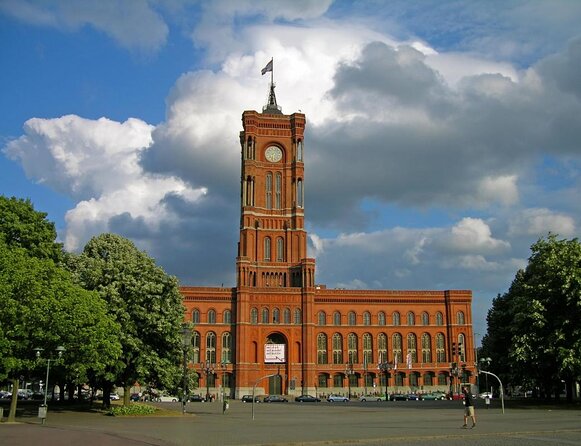
Next up is the Rathaus, built between 1861 and 1869. You’re dealing with a Northern Italy High Renaissance style design by Hermann Friedrich Waesemann. The stop is also tied to influences you can actually see: it was modeled on the Old Town Hall of Thorn (today Toruń, Poland), and the tower echoes a cathedral tower in France, Notre Dame de Laon in Laon.
Your puzzle at this stop asks you to look around and find the answer to move forward. That’s a good use of time. You’re not just passing a landmark, you’re learning how designers borrowed styles across borders to create a statement in Berlin.
From there, you hit Neptunbrunnen, the Neptune Fountain built in 1891 by Reinhold Begas. The Roman god Neptune sits at the center, which gives the stop a clear visual anchor. The short puzzle break here keeps the walk from becoming one long march of seriousness.
If you like architecture, this pair of stops is a nice rhythm. The Rathaus teaches you how power used design language, and the fountain gives you a moment where the city shows its decorative confidence.
Other walking routes through Berlin

Marx and Engels to the Lustgarten on Museum Island
Then the route shifts to the Marx Engels Forum, a public park in Mitte named for Karl Marx and Friedrich Engels, authors of The Communist Manifesto from 1848. The site connects to East German history too, because the park was created by authorities of the former German Democratic Republic in 1986.
This part is valuable because it adds political context without requiring a lecture. You see how ideology shaped public space long after the 1800s, and you also get a sense of how Berlin layers meanings over the same ground year after year.
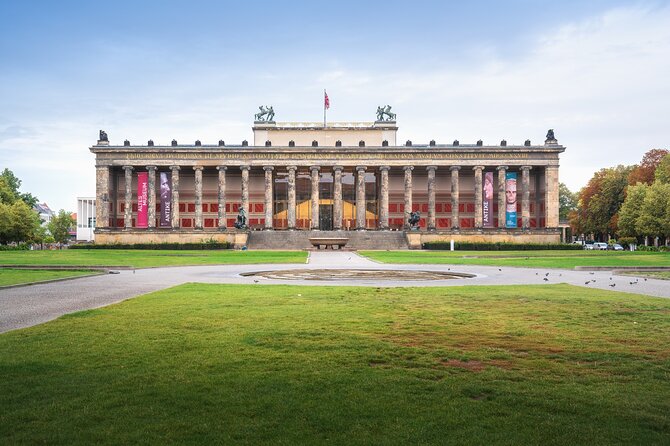
After that comes the Lustgarten, a park on Museum Island near the former Berliner Stadtschloss, the Berlin City Palace. This space has served many roles over time, from parade ground to mass rally space to public garden.
Here’s the practical value for your brain: it’s easier to understand modern Berlin when you remember the site used to be something else. The puzzle format pushes you to slow down and look at the setting as a stage that has been used by different regimes and causes.
Neue Wache: a memorial setting with Prussian neoclassical roots
The walk then brings you to Neue Wache on Unter den Linden. This building is connected to Prussian neoclassical architecture and sits in one of Berlin’s most historic corridors.
You get context that matters. It was erected from 1816 to 1818 based on plans by Karl Friedrich Schinkel, and it originally served as a guardhouse for the Royal Palace. It later became a memorial to the Liberation Wars. That dual identity, from military structure to memorial, is a theme that echoes through the whole walk.
Your puzzle here again requires careful looking. That’s how the experience turns architecture and symbolism into something you can interpret, not just something you pass by.
If you are sensitive to war related sites, this is likely the stop where you feel the weight most. The good news is that it is also an open place where you can take a break, stand back, and pace yourself.
Bebelplatz and the Nazi book burning site
Bebelplatz is short on distance but heavy on meaning. The story behind it is specific: it’s known as a site of one of the infamous Nazi book burning ceremonies held on the evening of 10 May 1933 in many German university cities.
The event was initiated and hosted by the nationalist German Student Association, which was described as stealing a march from the National Socialist German Students League. That detail adds nuance to what could otherwise become a one note label.
Your puzzle at Bebelplatz turns this into a guided reading exercise. Instead of only looking at a sign, you hunt for the answer that keeps you engaged with the historical framing.
I like that this stop is early enough in the route that the story doesn’t wait until the very end to become serious. It also helps your later visit to the memorial feel like part of a continuum, not a sudden shift.
Gendarmenmarkt to the Konzerthaus Berlin
Next you reach Gendarmenmarkt, the square named after the Gens d’armes cuirassier regiment. The stables were demolished by Friedrich II, and the space between the two churches became a place for a major cultural building.
Your puzzle ties you into the square’s layout and its name origin. The new theatre, now known as the Konzerthaus Berlin, was built between those two churches.
This stop works because it shows Berlin’s tradition of civic spaces that combine worship, culture, and public life. It gives your mind a breather after heavy memorial meaning, and it also reminds you that Berlin has always been about more than one era at a time.
If you are photo heavy, this is a good place to slow down and shoot from a few angles. The square’s geometry makes it easy to frame your shot without walking too far.
State politics in Berlin, Hamburg’s presence at Jägerstraße
One of the most interesting additions to this walk is the stop related to Hamburg’s state representation in Berlin. It’s in a classicist town house on Jägerstraße in the government district.
The description makes the role clear. It’s used for everyday political life in Berlin, with more than 500 events and encounters each year. It’s also tied to federal legislation work through the Federal Council.
Why I like including this stop in a WWII themed walk: it quietly reminds you that history isn’t just old stone. Germany’s modern political structure depends on institutions and civic processes that exist now, and they are happening in buildings you can reach on foot.
Your puzzle at this location keeps you connected to the site’s current function, not only its past relevance. That makes the walk feel less like museum touring and more like reading a living city.
Memorial to the Murdered Jews of Europe: Eisenman’s design and the timeline
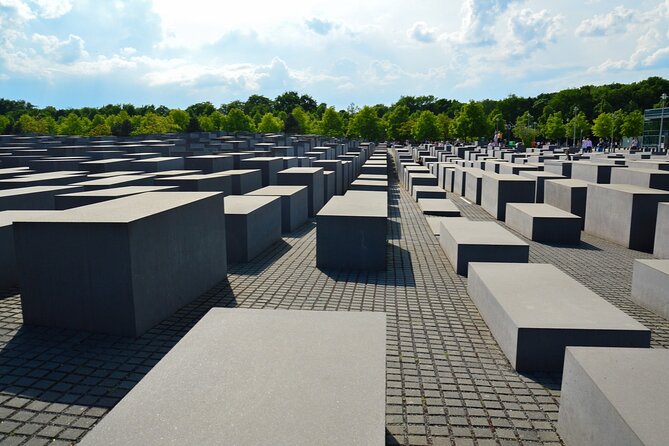
The final major stop is the Memorial to the Murdered Jews of Europe. In 1999, after lengthy debates, the German parliament decided to establish a central memorial site. The design competition was won by New York architect Peter Eisenman, and the memorial was ceremonially opened in 2005.
This is the stop where the walk earns its title. You arrive having already practiced “looking for answers” at multiple locations, so you’re ready to treat this site as something you read and interpret, not something you rush through.
Your puzzle requires you to look around to find the answer before you move on. That is the key. The memorial is designed for reflection, and the format nudges you to slow down and notice details.
Practical tip: give yourself extra minutes here if you can. This memorial can take more emotional bandwidth than the short 10 minute label your route might imply for other stops.
Walking route, timing, and what you should bring
Plan for roughly an hour total, but remember that puzzles can stretch that. The experience is flexible, and you can pause and resume whenever you want, so you’re not boxed in.
Start location is Alexanderpl. 1, 10178 Berlin, Germany. The walk ends at Cora-Berliner-Straße 1, 10117 Berlin, Germany.
Opening hours are listed as 5:00 AM to 9:00 PM, Monday to Sunday. While booking availability is described as always open, your actual playing time in the city may follow that daily window.
What you should bring:
- Comfortable shoes, because even a “one hour” walk adds up when you pause often
- A charged phone, since you’ll use the mobile ticket and play via an app
- Patience with reading tasks. Several stops clearly ask you to look around carefully to find the answer
If you visit in winter, pay attention to seasonal foot traffic. One experience note said the quest led them near Christmas markets, which meant they had to make a few maneuvers to stay on route. That’s a smart expectation for Berlin in cold months.
Value for the price, and who this fits best
At $6 per person, this is priced like a light activity rather than a full guided tour. That can be a great thing. You’re not paying for a human to walk you through every stop, so the value is in the self paced format plus the puzzle driven historical prompts.
This is best for you if:
- You like hands on history that makes you pay attention to details
- You want to avoid crowds and don’t want to coordinate with a group
- You prefer flexible timing, especially if you’re juggling museum tickets and dinner reservations
- You want a route that covers key central landmarks in a short time
It might not be the best fit if:
- You strongly dislike solving puzzles
- You want a purely explanatory narrative with no looking around
- You need a fully guided experience at every step
The sweet spot is a curious walker who enjoys reading a city like a clue trail.
Should you book Love and War in Berlin?
I think you should book it if you want WWII era context built into a walk you control. For the cost, you get a well paced loop through major Mitte sights, with specific stops tied to real 20th century events and memorial design history. The private, self guided setup also makes it easy to fit into a busy Berlin day.
If you’re unsure, here’s the simple test: would you enjoy a sightseeing scavenger hunt that forces you to look closely? If yes, this is a great use of an hour. If your ideal Berlin day is mostly passive viewing, choose a traditional guided tour instead.
Unguided Around Berlin
Pavements of Berlin
Play the City, Reviewed
Everything else we filed on Berlin
- Private Photo Tour in Kreuzberg
★ 5.0 · 3 reviews - Kreuzberg Private Walking Tour: Immigrants, Artists & Hipsters
★ 5.0 · 3 reviews - Berlin’s Jewish Heritage: Private Tour of the Vibrant Jewish District
★ 5.0 · 3 reviews - Individual city tour Berlin for max. 8 persons
★ 5.0 · 3 reviews - Berlin & The Third Reich Private Guided Tour
★ 5.0 · 3 reviews - Private Analogue Photography Experience in Berlin
★ 5.0 · 3 reviews
Scavenger Hunts and City Games, side by side.
 ★ 4.5Hamburg: Scavenger Hunt Self-Guided Tour for ChildrenFrom $47319 reviews
 ★ 4.5Dresden: Old Town Self-Guided Scavenger Hunt TourFrom $41151 reviews
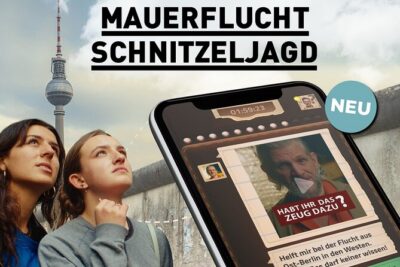 ★ 4.5Escaping and spying on the Berlin Wall Scavenger huntFrom $22128 reviews
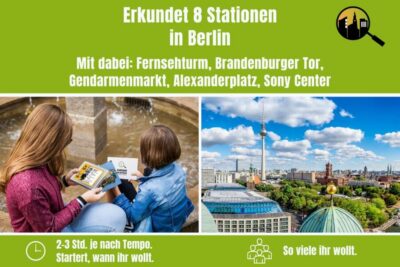 ★ 4.6Berlin: Self-Guided Family and School Class Scavenger HuntFrom $47128 reviews
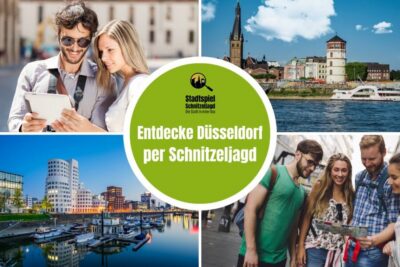 ★ 4.6Düsseldorf: Scavenger Hunt Self-Guided TourFrom $47127 reviews
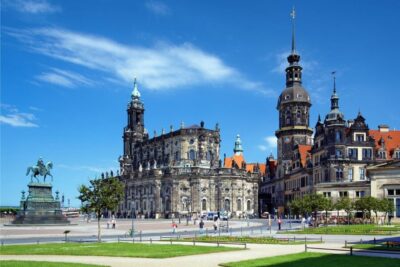 ★ 4.6Dresden: Old Town Scavenger Hunt for ChildrenFrom $41117 reviews
 ★ 4.4Leipzig City Centre: Scavenger Hunt Self-Guided TourFrom $47114 reviews
 ★ 4.3Weimar: Scavenger Hunt Self-Guided Walking TourFrom $40108 reviews
Other lists this tour is on