
REVIEW · MUNICH
Munich City Walking Tour, includes Third Reich & Viktualienmarkt
Munich makes more sense on foot. I love how this route connects famous landmarks to the Third Reich era in a respectful, explanatory way, and I like the mid-walk meal at Viktualienmarkt, where Bavarian food tastes like Munich, not like a theme park.
My one heads-up is weather and pacing. A lot of the time is spent outdoors while the guide talks, so bundle up if it is cold, windy, or snowing.
In This Review
- Key highlights you will feel right away
- Starting point to Frauenkirche: finding your bearings fast
- The German Hunting and Fishing Museum: odd, specific Munich character
- Hofbräuhaus: beer hall energy, explained so it makes sense
- Isartor to Marienplatz: medieval gate to the city square that runs the day
- Max-Joseph-Platz, Maximilianeum, and Platzl: three flavors of “Munich center”
- St. Michael and Alter Peter: churches that teach you how the city thinks
- Wolfsbrunnen to Odeonsplatz: art nouveau and the squares tied to the 20th century
- Karlsplatz and Viktualienmarkt lunch: a market stop you can build your day around
- Finishing at Odeonsplatz: take the tour lessons and keep walking
- Price and value: why $31.78 can feel like a steal
- Should you book this Munich walk?
- FAQ
- What is the duration of the Munich City Walking Tour?
- Is the tour offered in English?
- How much does it cost per person?
- Where do we start and where does the tour end?
- Is lunch included in the tour price?
- What food is available during the Viktualienmarkt lunch break?
- Are tickets required for the stops?
- How large is the group?
Key highlights you will feel right away
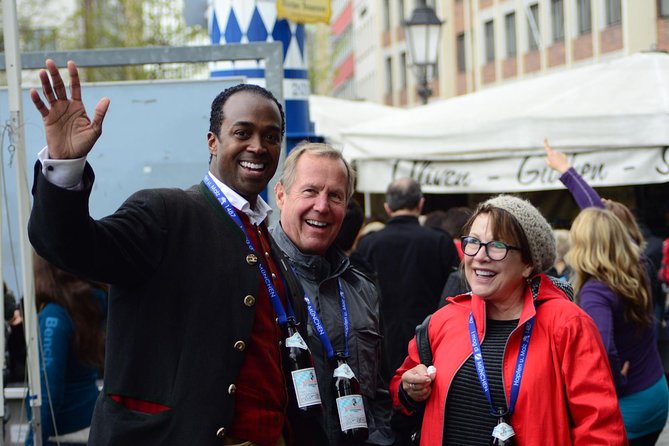
- Small group vibe (max 20 people): easier questions, less waiting, and you actually hear the guide.
- Local wayfinding help: you get practical tips on moving through Munich, not just photo stops.
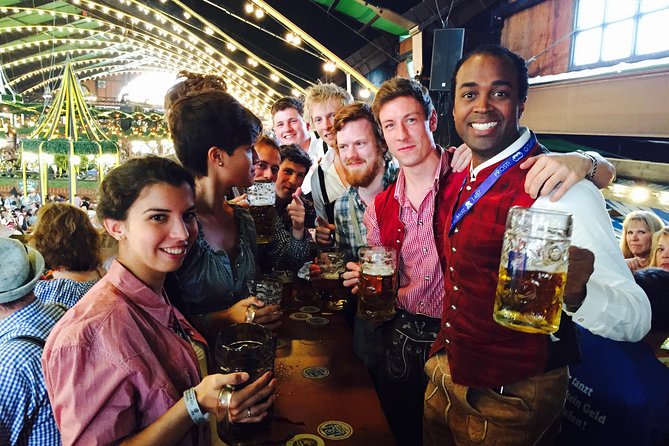
- Beer hall culture, not just beer: Hofbräuhaus shows you why this city treats beer like a civic event.
- A lunch break with standards: the Viktualienmarkt pause comes with a freshly made Bavarian snack, plus a beer option.
- Old churches with surprising details: places like Frauenkirche, St. Michael, and Alter Peter offer real context, not generic sightseeing.
- Third Reich context in central Munich: the walk uses key squares and buildings to explain the darker 20th century story.
Further wartime history walks we have written up
- Munich: Third Reich & WWII Walking Tour★ 4.6 · 6,181 reviews
- Third Reich Walking Tour Munich★ 4.5 · 4,291 reviews
- Munich: Birthplace of the Third Reich Guided Walking Tour★ 4.6 · 771 reviews
- Munich World War II Sites Including Dachau Concentration Camp★ 4.5 · 570 reviews
Starting point to Frauenkirche: finding your bearings fast
The day begins in central Munich, at Schützenstr 11 (80335). It is an efficient start, because you are already close to the core sights. The tour runs about 3 hours 15 minutes, and the pace is built for walking plus frequent short stops, so you should be able to follow even if you arrive jet-lagged.
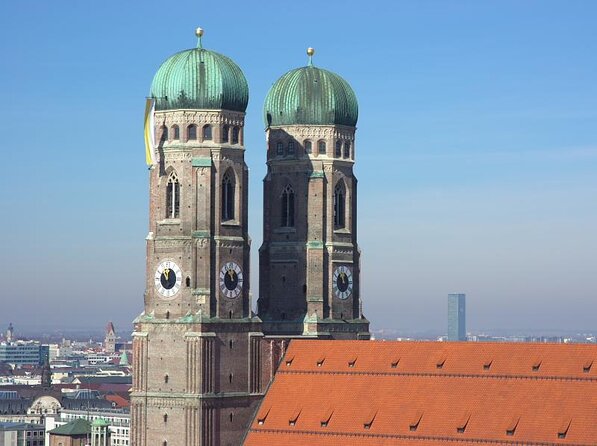
Early on, you hit Frauenkirche, Munich’s iconic twin-towered cathedral. Built in the 15th century and tied to the Archbishop of Munich and Freising, it is the kind of landmark that helps you orient your mental map. The big draw here is not just the exterior silhouette. You also get time for the vast interior, the historic crypt, and that legendary Devil’s Footstep story that people mention for a reason: it gives the building a memorable, human detail.
Practical note: Frauenkirche is listed as admission ticket free on this route, so you can spend your money on food and beer later instead of line items.
The German Hunting and Fishing Museum: odd, specific Munich character
Next up is the German Hunting and Fishing Museum, set inside a former Augustinian church. This stop is a great palate cleanser after cathedrals and plazas, because it is so distinctly Bavarian and German. You get 3,000 square meters of exhibits, including stuffed wildlife, antique weapons, and the legendary Bavarian Wolpertinger creatures.
What I like about this stop is how it broadens your understanding of local culture. Munich is not only royal buildings and beer halls. It is also craft traditions, rural life, and a taste for the strange and specific. If you are the type who enjoys museum details, this is one of the better “not just another church” moments on the walk.
One consideration: museum time can feel like a pause in the flow. If you prefer nonstop outdoor sightseeing, treat this as your chance to slow down and learn something unusual without rushing.
Hofbräuhaus: beer hall energy, explained so it makes sense
The tour then rolls into Hofbräuhaus, the famous beer hall dating back to 1589. It started as a royal brewery and today it is known for home-brewed Bavarian beer, hearty food, and live traditional music. On this walk, you get a short stop rather than a long sit-down, but it still works because you are learning what you are actually looking at.
The value here is the context. Munich beer culture can look like a costume show if you only see it from inside a guided party. This route treats the beer hall like a social institution, so when you later return on your own time, you will know what matters: the traditions, the rhythm of the space, and why people come back.
Hofbräuhaus is listed as admission ticket free on this route, which means you can enjoy the atmosphere without adding another cost.
Isartor to Marienplatz: medieval gate to the city square that runs the day
At Isartor, you see one of Munich’s last medieval city gates, built in 1337 as part of the city’s fortifications. It is a quick stop, but it lands well because it connects the past city layout to the way Munich works now. Even in a short walk, you begin to understand why the center became so important.
From there, you move to Marienplatz, Munich’s central square since 1158. This is where the tour turns into pure orientation power. You get time to see the New Town Hall, plus the famous Glockenspiel, and you can also spot the Mariensäule. There is usually plenty going on around Marienplatz, but the key takeaway is how the guide helps you understand what you are seeing and where to go next.
Marienplatz is listed as admission ticket free on this route, and the stop length is longer than most, which means you can actually absorb it instead of sprinting through.
More laps of the Munich old town
Max-Joseph-Platz, Maximilianeum, and Platzl: three flavors of “Munich center”
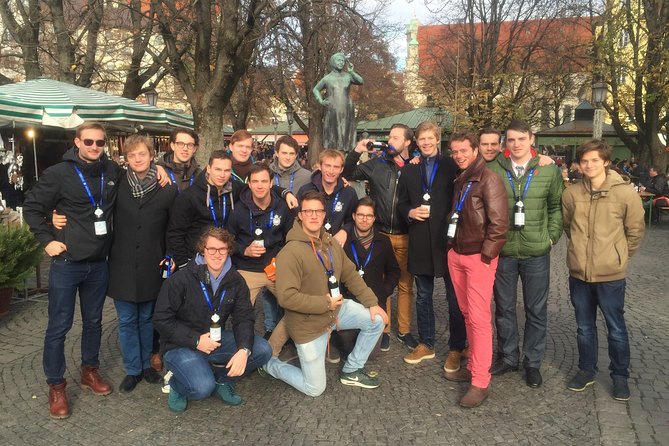
Max-Joseph-Platz is your next anchor point. Named after King Maximilian Joseph, it sits near the National Theatre and the Munich Residenz. Even if you do not go inside, the square gives you a sense of Munich’s serious architectural side, especially the neoclassical feel and the way public space is designed around big institutions.
Then you come across the Maximilianeum, a palatial building founded in 1852 to support gifted students. Since 1949 it has housed the Bavarian State Parliament. The location above the Isar River is part of why it looks so dramatic, and it is the kind of sight that makes you notice how Munich uses terrain and scale to shape civic identity. This stop is listed without an explicit ticket note, so treat it as a “see it from where you stand” kind of moment.
You also pass Platzl, a charming square in the historic center tied closely to traditional Bavarian atmosphere. This is a good place to notice details like cobblestone streets, historic façades, and how restaurants cluster around the old core. If you are hungry later, you will thank yourself for learning where this area sits.
St. Michael and Alter Peter: churches that teach you how the city thinks
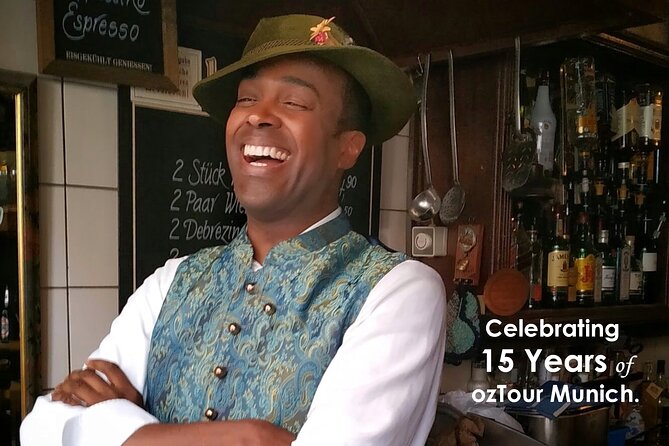
St. Michael München is Munich’s largest Renaissance church, built in the late 16th century as a center for the Jesuit order. The guide’s explanation helps you see the early Baroque influences in the facade and the barrel-vaulted ceiling. Inside, you can also explore the royal crypt, where Bavarian rulers are housed. That royal-crypt detail matters, because it turns a church from a pretty stop into a story about who held power and how that power was displayed.
Then comes St. Peter’s Church, Munich’s oldest parish church, known as Alter Peter. The 91-meter tower can give stunning city views, but the real value on a walking tour is the mix of architectural layers inside, including Gothic, Baroque, and Rococo elements. The high altar is the kind of detail that rewards a few minutes of looking instead of snapping one quick photo and moving on.
Both St. Michael and St. Peter’s are listed as admission ticket free on this route, which is a nice way to keep costs down while still getting major “wow” moments.
Wolfsbrunnen to Odeonsplatz: art nouveau and the squares tied to the 20th century
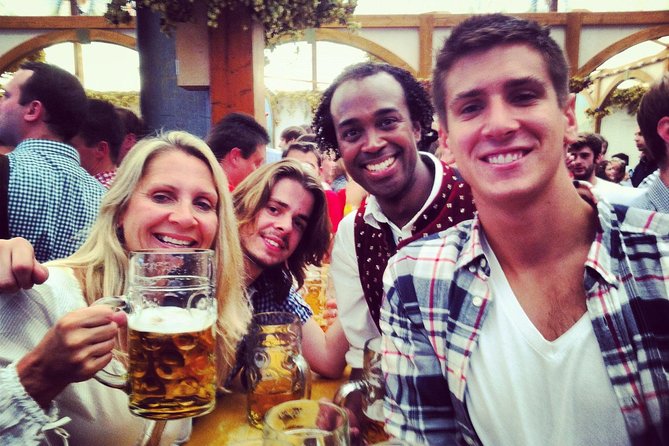
Wolfsbrunnen is a striking Art Nouveau fountain built in 1904 by sculptors Heinrich Düll and Georg Pezold. It features a bronze depiction of Little Red Riding Hood and a wolf, commissioned by the Wolf family. This stop is short, but it adds personality. It also keeps the tour from becoming all stone and solemn sermons.
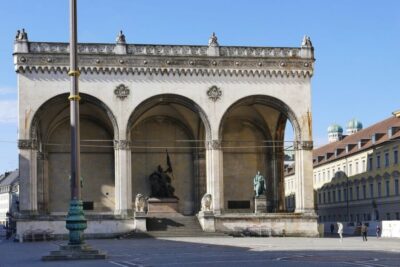
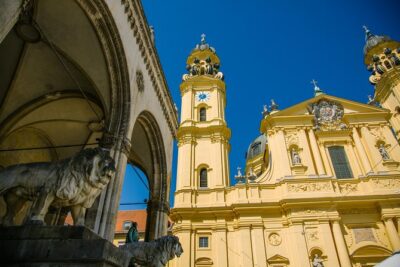
Odeonsplatz is one of the biggest squares on the route, designed in the early 19th century by Leo von Klenze. You will see the Theatine Church, the Feldherrnhalle, and the Residenz, and you are at the start of Ludwigstraße. This is where the tour’s promise about the Third Reich era is particularly useful, because the guide can connect what you see in the square to how political power shaped public space.
I like this approach. Rather than treating 20th-century history as an abstract chapter, you get it tied to places you can point at on the ground. It makes the story easier to follow, and it helps you notice how monuments, buildings, and streets can communicate ideology.
Odeonsplatz is listed as admission ticket free on this route, so again, the value is in explanation and context, not ticketing.
Karlsplatz and Viktualienmarkt lunch: a market stop you can build your day around

Karlsplatz, known locally as Stachus, is one of Munich’s most famous squares. Built in the 18th century after medieval city walls were demolished, it is a great “transition stop” between major monuments. In summer it has the historic Karlstor gate and a lively fountain vibe, while in winter there is an ice rink. Even if your trip is in a different season, the square helps you understand how Munich reshapes space for everyday life.
Then the tour hits Viktualienmarkt, Munich’s historic open-air market. This is the star of the walk for food lovers. It has been a vibrant hub since the early 19th century, and the market includes fresh produce, Bavarian delicacies, artisanal goods, and its iconic Maypole. The route also schedules a mid-tour lunch break here.
What I really like: the lunch break is designed around real Bavarian basics. The sample menu focuses on simple, classic choices, like a Bavarian Bratwurst (with options like spicy or cheese) OR Bavarian potato salad and a pretzel, plus a Bavarian beer and a reusable beer bottle holder. There is also a clear message that the selections avoid artificial flavors and additives, plus preservatives and fillers, and the menu is positioned as GMO-free.
And because Viktualienmarkt is an open-air market, you get to watch daily life unfold for a while. You can also use this stop strategically. Grab a bite, refuel, and then head out afterward knowing exactly where you are in the center.
One consideration: it is a market. That means you might have to navigate around stalls and people, especially at peak lunch time.
Finishing at Odeonsplatz: take the tour lessons and keep walking
The tour ends at Odeonsplatz, at Odeonspl. 3 (80539). Ending here makes sense, because it puts you back in a central, transit-friendly area where you can keep exploring right away. If you have ever done a tour that dumps you somewhere inconvenient, you will appreciate this.
Here is how I would use what you learn on this walk. First, rely on the guide’s city-navigation tips to choose your next neighborhood rather than guessing. Second, revisit one of the “story stops” you liked most, like Frauenkirche or the squares around Odeonsplatz, once you are calm and can look longer on your own time. Third, treat the lunch area as a planning tool. Knowing where Viktualienmarkt sits makes it easier to schedule a second meal or snack later without backtracking.
Price and value: why $31.78 can feel like a steal
At $31.78 per person, this is priced like an intro tour, not an expensive ticket-based attraction day. And that is the point. Most stops are listed as admission ticket free, so your money mostly goes toward what you cannot buy with a pass: the guide’s explanations and the way the route helps you understand Munich’s layout.
The other value factor is time. At about 3 hours 15 minutes, you get a dense set of highlights without turning the day into a full marathon. And because the group is capped at 20 people, the guide can still manage questions and keep everyone together.
Your one extra cost is food. The lunch break at Viktualienmarkt is not included, but the options are clearly laid out, and the choices are straightforward Bavarian classics. In other words, you are not forced into a pricey set meal. You can eat what you actually want.
Should you book this Munich walk?
Yes, if you want a first-pass Munich orientation that goes beyond the usual photos. This route is especially good for you if you care about understanding how a city works, from old fortifications and cathedrals to civic squares and how major 20th-century events connect to real locations.
Book it if:
- you want Third Reich context handled with explanation, not rumor
- you like beer hall and church stops, plus one genuinely useful market lunch break
- you prefer a small group with time for questions
Skip it if:
- you hate outdoor walking and long standing while someone talks
- you only want museum time and prefer fewer plaza-style stops
If you match the first set of conditions, you will finish the tour with a clearer map of Munich and a better sense of what to do next. And you will likely feel like you are repeating a well-written script, only this time you know where the scenes are.
FAQ
What is the duration of the Munich City Walking Tour?
The tour lasts about 3 hours 15 minutes.
Is the tour offered in English?
Yes, it is offered in English.
How much does it cost per person?
The price is $31.78 per person.
Where do we start and where does the tour end?
The tour starts at Schützenstr 11, 80335 München, Germany, and ends at Odeonsplatz, Odeonspl. 3, 80539 München, Germany.
Is lunch included in the tour price?
No. Snacks and lunch are not included. The tour pauses mid-way for a freshly made Bavarian lunch in Viktualienmarkt.
What food is available during the Viktualienmarkt lunch break?
A sample menu includes a Bavarian Bratwurst (such as spicy, cheese, or regular) or Bavarian potato salad and a pretzel, plus a Bavarian beer and a reusable beer bottle holder.
Are tickets required for the stops?
Many of the listed stops are marked as admission ticket free (for example, Frauenkirche, Hofbräuhaus, Marienplatz, St. Michael, St. Peter’s, Odeonsplatz, and Karlsplatz).
How large is the group?
The tour has a maximum of 20 people.
Pavements of Munich
Munich Old Town, Street by Street
Wartime History Walks We Have Reviewed
Everything else we filed on Munich
- Munich Beer and Bavarian Bites Private Tour
★ 5.0 · 11 reviews - Private Day Trip from Munich to Neuschwanstein and Linderhof
★ 4.0 · 11 reviews - Private Munich Old Town Walking Tour – with optional Breakfast
★ 5.0 · 11 reviews - Festive Concert in the All-Saints Court Church
★ 4.6 · 11 reviews - Private Castle Tour from Munich: Neuschwanstein, Hohenschwangau, and Linderhof
★ 4.5 · 12 reviews - Munich: Oktoberfest Big Beer Tent Evening including table reservation
★ 4.8 · 12 reviews
Munich Old Town and Marienplatz Tours, side by side.
 ★ 4.7Munich: Old Town & Viktualienmarkt City Walk in GermanFrom $232,304 reviews
 ★ 4.5Munich Old Town Walking TourFrom $271,287 reviews
 ★ 3.5Munich City Hop-on Hop-off TourFrom $311,233 reviews
 ★ 4.5Munich: Viktualienmarkt Food TourFrom $501,127 reviews
 ★ 4.7Munich: Walking Tour Old Town and ViktualienmarktFrom $282839 reviews
 ★ 5.0Lunch Like a Local: Munich’s ORIGINAL Viktualienmarkt Food TourFrom $163416 reviews
 ★ 4.7Munich: Viktualienmarkt Food Tasting Tour in GermanFrom $647394 reviews
 ★ 5.0Munich City Bike Tour + Beer Garden Lunch StopFrom $48283 reviews
Other lists this tour is on