
REVIEW · MUNICH
Private Munich Old Town and Third Reich Walking Tour
Munich has two faces, and this walk reads both. Private guide plus major Old Town landmarks like Marienplatz makes the first part easy to love, and the focus on Third Reich sites turns the Nazi-era story from a textbook into street-level reality. The main trade-off is time: it moves fast, and if the start runs late or you get slowed down by heat, some church areas may be hard to see.
I like that you can choose a start time and get a small-group feel, with up to 9 people and a route that can be customized. You’ll start by meeting at München Hauptbahnhof or getting picked up from a central hotel, and you finish back at the starting point.
If you want a tour that’s equal parts practical Munich orientation and honest historical context, this one fits. It’s also in English, so you can ask questions as you go, not just listen.
In This Review
- Key highlights worth planning around
- Old Town and Third Reich Munich, compressed into 2 hours
- Meeting points and hotel pickup: how you start without stress
- Marienplatz and the Rathaus-Glockenspiel: Munich’s showpiece square
- Frauenkirche and St. Peter’s Church: iconic churches, explained in context
- The Hofbräuhaus pause and the Town Hall facades
- Third Reich walking route: the places where power took hold
- Customization, guide style, and how guides change the whole experience
- Price and value: is $239.65 per person worth it?
- Who should book this Munich walking tour
- Should you book the Private Munich Old Town and Third Reich Walking Tour?
- FAQ
- How long is the Munich Old Town and Third Reich walking tour?
- Is this a private tour and how many people can join?
- Where do I meet for the tour?
- Is hotel pickup included?
- Is the tour offered in English?
- Do I need to pay for admission at the stops?
- What is included in the price?
- Does the tour include food or drinks?
- How does the tour handle the return after it ends?
Key highlights worth planning around
- Marienplatz and the Rathaus-Glockenspiel area give you Munich’s center in one compact stop
- Frauenkirche and St. Peter’s Church cover the big-name sights without making you chase tickets all day
- Hofbräuhaus (Staatliches Hofbräuhaus) puts you in the setting of a world-famous beer hall dating to the 1500s
- Third Reich routing follows sites tied to Hitler’s rise, the Gestapo, and the 1923 Beer Hall Putsch
- Private pacing can be adjusted, with some guides praised for skipping extra church lecture time when you prefer more city flow
Further wartime history walks we have written up
- Munich: Third Reich & WWII Walking Tour★ 4.6 · 6,181 reviews
- Third Reich Walking Tour Munich★ 4.5 · 4,291 reviews
- Munich: Birthplace of the Third Reich Guided Walking Tour★ 4.6 · 771 reviews
- Munich World War II Sites Including Dachau Concentration Camp★ 4.5 · 570 reviews
Old Town and Third Reich Munich, compressed into 2 hours
This tour is built for people who want real context fast. In about two hours, you get the “classic Munich” look and feel, then you switch gears to the darker material tied to Nazi power in the city. The trick is balance, and the best tours manage to keep you moving while still giving you enough explanation to connect the dots.
You also benefit from the private format. Instead of being stuck with one rigid script, you can guide the conversation. Some guides are praised for adjusting the pace so you spend more time where you care most, even cutting down on extra church talk if that’s not your thing.
One word of caution: two hours is short for a topic as heavy as this. If you’re hoping for a long, museum-style treatment of the Third Reich, you may feel the walking format is inevitably limited. Still, it’s an excellent way to see the main places and understand why Munich matters in this story.
Meeting points and hotel pickup: how you start without stress
You’ve got two straightforward ways to begin. You can meet at München Hauptbahnhof, Munich’s main railway station, or you can arrange hotel pickup from any central Munich accommodation. That pickup option matters, especially if you’re on your first day and you don’t want to figure out transit and walking routes yet.
The tour also ends back where you started. That makes planning easier. You can slot it before lunch, right after you arrive, or as your “get oriented” block on day one.
Small group size also changes the vibe. With a maximum of 9 people per tour, you’re more likely to ask questions and get direct answers, rather than hearing a one-way lecture. For families and mixed-age groups, that can be a big win.
Marienplatz and the Rathaus-Glockenspiel: Munich’s showpiece square
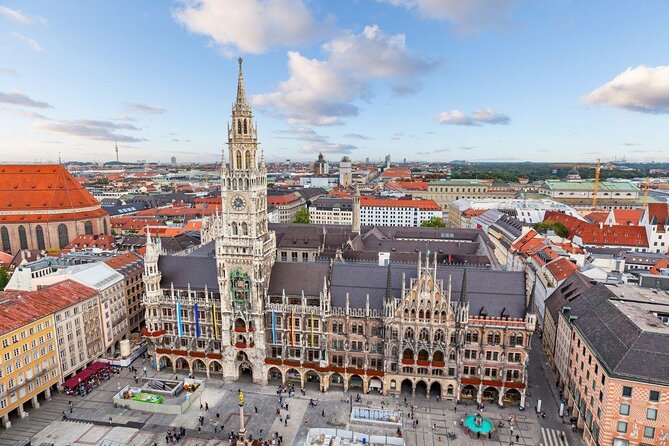
Marienplatz is Munich in miniature. It’s the central square that has been around since 1158, and even if you’ve only seen it on postcards, being there in person gives it scale. You’ll spend about 15 minutes in the area, which is enough time to understand what you’re looking at and why the square kept its importance.
A key moment here is the Rathaus-Glockenspiel area. You’ll get to see the famous carillon and understand what it is and how it fits into Munich’s city rhythm. This stop is also a good place to ask your guide, what should I notice on my next walk? You often get practical guidance on which streets feel most “old Munich” and which you can skip.
One practical consideration: Marienplatz is central and can feel crowded. In a walking tour that lasts only two hours, that crowd pressure can steal minutes. If you’re sensitive to congestion, go in expecting to share space and accept that you’ll be using your eyes more than your feet for a few minutes.
Frauenkirche and St. Peter’s Church: iconic churches, explained in context
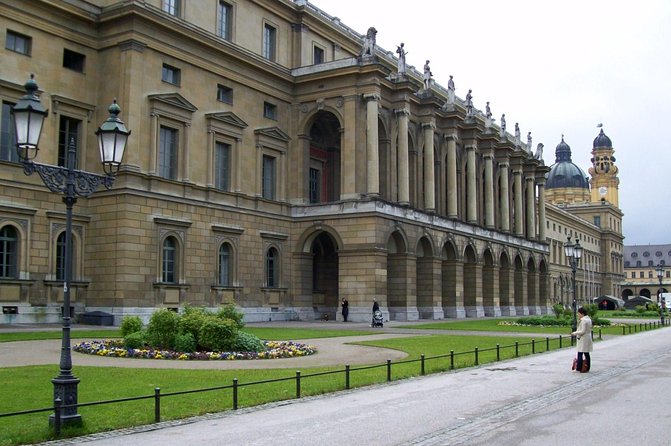
You’ll see Frauenkirche next, and it’s one of those landmarks that looks immediately “Munich.” It’s described as the largest church of Munich, and your guide uses the stop to anchor the story of the city through its most recognizable architecture. You’ll also get a quick window into what the building means for the city today, not just what it looks like from the outside.
Then comes St. Peter’s Church, noted as the oldest structure of Munich. That label matters because it gives you a sense of how long the city has been shaping itself around this spot. Even if you’re not a church person, this stop helps you build a chronological map: what’s newer, what’s older, and how the city’s identity developed.
Keep expectations realistic here. The itinerary includes short stop times at both churches, so you’re not doing a slow interior visit. The tour format is more about orientation and interpretation from the sidewalk and immediate surroundings. If you want deeper time inside, plan to return later on your own.
Also, timing matters. One unfortunate experience highlighted that when the start runs late, some church-related access can be limited. If your tour is scheduled for midday in summer, wear comfortable shoes and bring a bit of water, because even short stops can feel long in heat.
More laps of the Munich old town
The Hofbräuhaus pause and the Town Hall facades
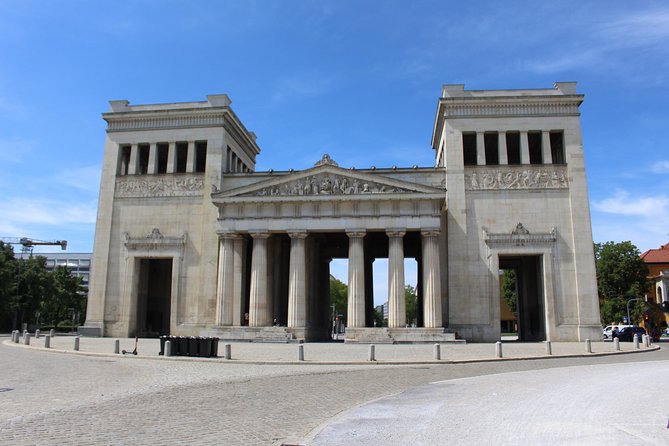
After the churches, you’ll swing to the “yes, this is Munich” moment: Hofbräuhaus. The tour calls it the most famous restaurant in the world and notes it as a festive three-floor beer hall dating back to the 16th century. Even if you skip an actual beer, the building’s presence changes how you picture Munich’s social life. It’s a place where the city’s traditions are not abstract.
This is a good time to ask your guide how locals treat the place, and what to notice in the building. A strong tour guide can also steer you toward an ideal moment later, like when the atmosphere feels least chaotic for photos.
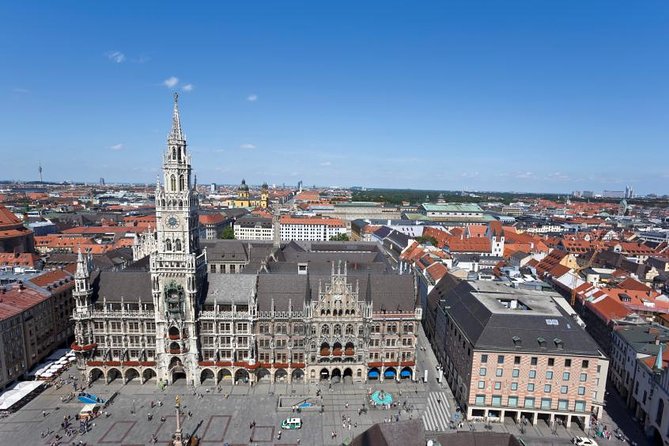
Next you’ll get the Old and New Town Hall area, including the New Town Hall, also called Neus Rathaus. That stop ties the city’s identity together, from medieval roots to later civic grandeur. You’ll see how Munich presents itself as both historic and administrative, and the architecture becomes part of the story instead of just a backdrop.
If you’re the kind of traveler who loves details, you’ll likely enjoy this stretch. The stops are visually dense, and your guide can point out what to focus on in just 10 to 15 minutes.
Third Reich walking route: the places where power took hold
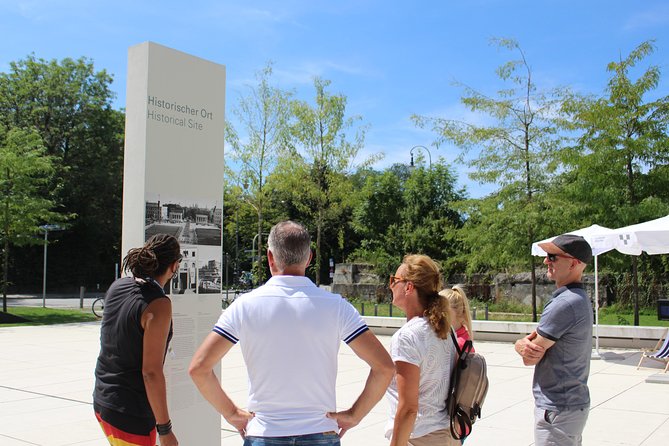
This is the heart of the tour, and it’s handled with a clear goal: show you where the Nazi story played out in Munich’s streets. You’ll learn about the rise and fall of Adolf Hitler and Nazi Germany’s Third Reich while visiting locations key to that period.
You’ll also hear why Munich was central to Hitler’s rise to power. That point matters because it reframes your mental map of World War II. Instead of starting with the war years, you start with the earlier political construction, party momentum, and how public events and institutions shaped influence.
Key sites you may encounter include:
- the building where Hitler first joined the Nazi party
- the former headquarters of the Gestapo
- the place where the Beer Hall Putsch, also called the Munich Putsch, took place in 1923, described as a failed coup attempt
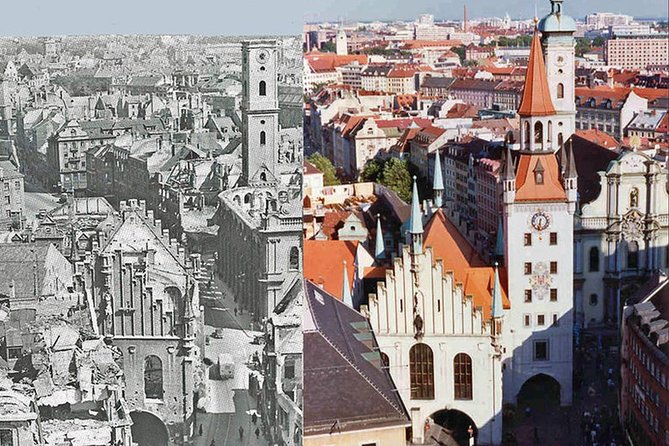
This kind of tour is emotionally intense. It helps to have a guide who can explain what you’re seeing without rushing or sugarcoating. Many past participants have praised guides for clarity and for making the history feel immediate, sometimes with added materials like old photographs that bring the story to life.
One caution from a practical perspective: because this is a short walking format, the level of time spent on the Third Reich focus can vary by guide and by your pacing. If you’re coming specifically for the darkest details, you might want to ask your guide at the start, can we spend more time on the Nazi-era stops, and less on extra church explanation?
Customization, guide style, and how guides change the whole experience
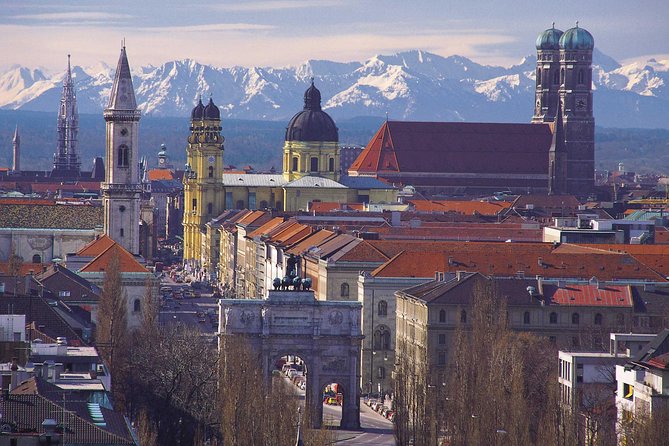
The private nature of this tour is not just marketing. It’s how you turn a fixed 2-hour route into your kind of tour. If you prefer street-level stories over interior church facts, you can steer the guide that way. If you want broader context, you can ask follow-up questions.
You may meet guides by name, depending on the date. For example, Ian, Jax, Mark, Anja, Daniel, Franz, and Steve Whitehall have been cited in guide feedback. People particularly appreciated certain styles: a friendly, conversational approach that feels more like a chat than a monologue, a good walking pace, and guides who tailor what to skip so you do not burn minutes on topics you do not care about.
Some guides also add personality that makes the history easier to take in. There are reports of a guide traveling with a dog named Bernard, and of guides sharing old photographs to make scenes feel less abstract. Those details are not guaranteed, but they point to the overall experience level you might be choosing.
Price and value: is $239.65 per person worth it?
At $239.65 per person for about two hours, this is not a bargain-basement tour. But you are paying for three concrete things: a private guide, pickup and drop-off from central Munich, and a structure that packs together both famous Old Town landmarks and Nazi-era interpretation.
That value equation improves if:
- you want personalization, not a group herd
- you’re on your first day and need fast orientation
- you care about understanding Munich’s role in the Third Reich, not just taking photos at landmarks
It’s less appealing if you mostly want to take in architecture at your own speed. In that case, self-guided walking can cover Marienplatz, Frauenkirche, St. Peter’s Church, and the town halls with less cost. But it won’t give you the same guided explanation of why the Nazi story is tied to specific places in the city.
Also remember what’s not included: food and drinks. The tour is basically your guided walk plus access to the stops listed as free entry. If you plan to linger afterward for lunch, build in time.
Who should book this Munich walking tour
This tour is a strong fit if you:
- want a first-day orientation through Munich’s Old Town and key civic landmarks
- want Nazi-era sites explained in a guided, city-street context
- prefer asking questions and getting direct answers in English
- travel in a smaller group or as a family and want less walking crowd pressure
It might feel like the wrong tool if:
- you are looking for a museum-depth treatment of the Third Reich over several hours
- you strongly prefer unhurried time inside churches and monuments
- your schedule is fragile and a delayed start would break your day
If you do book it, one smart move is to tell your guide what you want most at the start. The tour is described as customizable, so asking early can shape what you actually get in the time you pay for.
Should you book the Private Munich Old Town and Third Reich Walking Tour?
Yes, if you want Munich in one package: classic sights first, then the hard history that sits behind them. I like that this tour is built to connect places to meaning, not just locations to photos, and the private format helps you control the pacing.
I would hesitate only if you need a long, museum-level Nazi-era experience, or if you’re traveling with strict timing where a late start would cause you to lose access at church stops. If you can be flexible, bring comfortable shoes, and communicate what you want your guide to prioritize, this is one of the more practical ways to understand Munich beyond the postcard version.
FAQ
How long is the Munich Old Town and Third Reich walking tour?
The tour runs about 2 hours.
Is this a private tour and how many people can join?
Yes, it is private. The group size is capped at a maximum of 10 travelers, with a stated maximum of 9 people per tour.
Where do I meet for the tour?
You can start at Dachauer Str. 4, 80335 München, Germany, or meet at München Hauptbahnhof depending on the option you choose.
Is hotel pickup included?
Yes. The tour includes hotel pickup and drop-off from any central Munich accommodation.
Is the tour offered in English?
Yes, the tour is offered in English.
Do I need to pay for admission at the stops?
The stops listed in the schedule show free admission tickets for the visits.
What is included in the price?
Hotel pickup and drop-off, a private tour, and a professional guide.
Does the tour include food or drinks?
No. Food and drinks are not included.
How does the tour handle the return after it ends?
The tour ends back at the starting point, with the option to return to the office or conclude in the city center.
Pavements of Munich
Munich Old Town, Street by Street
Wartime History Walks We Have Reviewed
Everything else we filed on Munich
- Munich Beer and Bavarian Bites Private Tour
★ 5.0 · 11 reviews - Private Day Trip from Munich to Neuschwanstein and Linderhof
★ 4.0 · 11 reviews - Private Munich Old Town Walking Tour – with optional Breakfast
★ 5.0 · 11 reviews - Festive Concert in the All-Saints Court Church
★ 4.6 · 11 reviews - Private Castle Tour from Munich: Neuschwanstein, Hohenschwangau, and Linderhof
★ 4.5 · 12 reviews - Munich: Oktoberfest Big Beer Tent Evening including table reservation
★ 4.8 · 12 reviews
Munich Old Town and Marienplatz Tours, side by side.
 ★ 4.7Munich: Old Town & Viktualienmarkt City Walk in GermanFrom $232,304 reviews
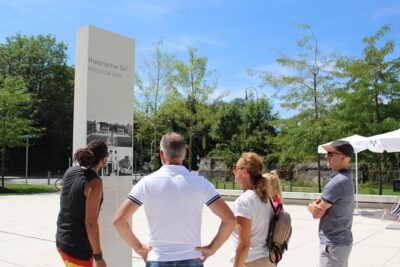 ★ 4.5Munich Old Town Walking TourFrom $271,287 reviews
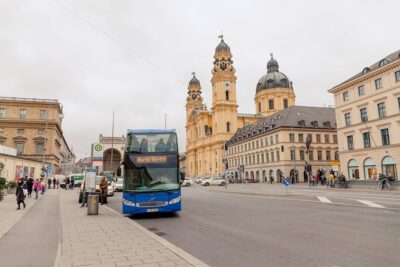 ★ 3.5Munich City Hop-on Hop-off TourFrom $311,233 reviews
 ★ 4.5Munich: Viktualienmarkt Food TourFrom $501,127 reviews
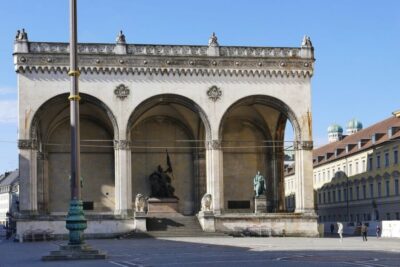 ★ 4.7Munich: Walking Tour Old Town and ViktualienmarktFrom $282839 reviews
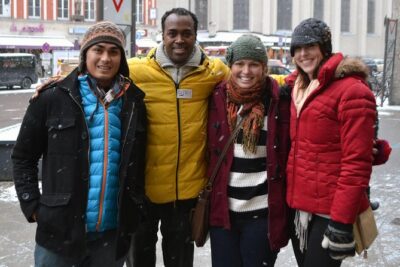 ★ 5.0Munich City Walking Tour, includes Third Reich & ViktualienmarktFrom $31458 reviews
 ★ 5.0Lunch Like a Local: Munich’s ORIGINAL Viktualienmarkt Food TourFrom $163416 reviews
 ★ 4.7Munich: Viktualienmarkt Food Tasting Tour in GermanFrom $647394 reviews
Other lists this tour is on