
REVIEW · SACHSENHAUSEN
Private Sachsenhausen Concentration Camp tour with train
A train ride that changes how you see humanity. I like the licensed memorial-trained guide who can answer questions, and I like that you get hotel pickup and drop-off instead of playing transit roulette. The tradeoff is a long, mostly walking day with some uneven ground and limited places to buy food.
This is a private, English tour from Berlin (6 hours, with a wide range of departure times), aimed less at surface sightseeing and more at understanding how Nazi power worked, day after day. You’ll start in Oranienburg, then move to Sachsenhausen, including the Memorial and Museum area plus the deeper grounds walk where the camp’s brutality becomes impossible to ignore.
In This Review
- Key things I’d plan around
- A private Sachsenhausen day, built around context (not speed)
- Price and value: what $338 buys you for a grave, complex site
- Getting there by train from Berlin, with real-world walking
- Oranienburg first: how Nazi exploitation reached into everyday business
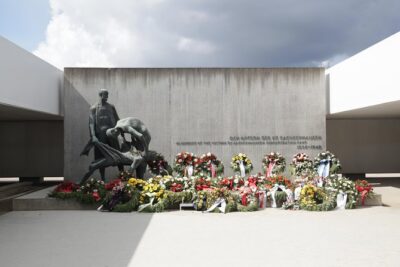
- Sachsenhausen Memorial and Museum: learning the system behind the cruelty
- Gedenkstätte grounds walk: the layout matters, especially Tower A and Station Z
- Guides make or break this kind of tour
- What you should bring, and what to expect emotionally
- Who this tour fits well, and who should reconsider
- Book or skip: my straight advice
- FAQ
- How long is the Sachsenhausen private tour from Berlin by train?
- Is this a private tour or a group tour?
- Do you offer hotel pickup and drop-off?
- What language is the tour offered in?
- How do we travel from Berlin to the Sachsenhausen area?
- Are admission tickets included?
- Is food and drinks included?
- How much walking should I expect?
- Is the tour recommended for people with limited mobility?
- Can I cancel for a full refund?
Key things I’d plan around
- Private, so the day can move at your pace and your questions do not get rushed into the margins
- Memorial-trained guide for careful, historically grounded interpretation
- Oranienburg town context links the camp to local businesses and forced labor
- Sachsenhausen grounds walk with attention to layout and how prisoners were processed
- Train-based logistics from Berlin, plus time on foot, so wear real walking shoes
Other guided visits to Sachsenhausen Memorial
- Berlin: Sachsenhausen Concentration Camp Tour in English★ 5.0 · 5,711 reviews
- Berlin: Sachsenhausen Concentration Camp Memorial Tour★ 4.7 · 3,716 reviews
- Sachsenhausen Concentration Camp Bus Tour in English from Berlin★ 5.0 · 1,962 reviews
- Berlin: Sachsenhausen Concentration Camp Tour in English★ 4.8 · 1,889 reviews
A private Sachsenhausen day, built around context (not speed)
Sachsenhausen is not a place you should rush through. What makes this private train tour worth your time is the structure: you spend real time with a guide who can connect the dots between Nazi ideology, the prison system, and what happened on the ground.
In a lot of Berlin history days, you end up with facts stacked like postcards. Here, the focus tends to be on cause and mechanism. One guide might spotlight how the camp’s design and routines worked to control human beings. Another might focus on what the town and region contributed. Either way, you leave with a sharper sense of how the system ran, not just what happened.
Also, this is truly private. If your group has questions about timelines, leadership, or how different regimes used the site, your guide can slow down. That matters a lot at a memorial, where the emotional weight can make you want to ask things, not just absorb them.
Price and value: what $338 buys you for a grave, complex site
At $338.15 per person for about 6 hours, this is not a budget day. But you’re paying for four things that are hard to recreate on your own:
1) Door-to-door convenience
Hotel pickup and drop-off remove a chunk of stress, especially when you’re commuting out of Berlin.
2) A properly trained guide
You’re not just getting someone who likes history. You’re getting a guide trained by the memorial authority. That signals a careful approach to interpretation, pacing, and the boundaries that a site like this deserves.
3) Time inside the memorial experience
The day includes structured time at both the Memorial and Museum space and the grounds walk.
4) You get answers in real time
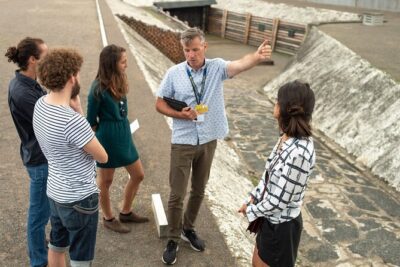
In feedback from multiple guides, the standout praise is how well they handle questions and how they pace the visit so you can linger where it lands hardest.
If you’re the type who wants to understand what you’re seeing, this price starts to feel more reasonable. If you only want the highlights quickly, you might feel it’s more than you need. The site itself is powerful, but the extra cost is really for interpretation plus logistics.
Getting there by train from Berlin, with real-world walking
The day is designed around public transit: you travel by train to Oranienburg and then continue toward the memorial area on foot. Some groups report roughly 20 minutes of walking from Oranienburg station toward the site.
Then it’s camp walking. Sachsenhausen is large. Expect a lot of steps. One visitor estimated around 11,000 steps, and another reported about 16,000 by the time they were back at the hotel. Even when your guide handles the flow well, you still need to be ready for long stretches outdoors.
A few practical notes from real experiences:
- Uneven pavement and ground changes can slow you down.
- Weather can matter. Guides have handled heavy rain and storms, but you will still be outside.
- If your group has mobility concerns, this tour is not recommended for limited mobility or walking impairments.
For most people with moderate physical fitness, this works fine with the right prep. For anyone who struggles with long outdoor walking, plan carefully or consider a different format.
Oranienburg first: how Nazi exploitation reached into everyday business
You start in Oranienburg, and the point of that stop is not scenery. It’s accountability.
Oranienburg was tightly intertwined with the Nazi regime because of its proximity to Sachsenhausen and the involvement of local businesses in forced labor. The day explains how companies, including those tied to war production, relied on prisoners from the camp. The uncomfortable takeaway is that suffering was not happening somewhere far away. It was outside people’s doors, and many locals were either aware, complicit, or willing to look the other way in exchange for economic gain.
This is a useful opener because it changes how you read the camp later. Once you’ve seen the town link, the memorial grounds stop feeling like an isolated horror and start feeling like a system that needed local participation.
Expect a short walk through the town, about 25 minutes, with no admission fee noted for this stop.
More trips by rail from Berlin
Sachsenhausen Memorial and Museum: learning the system behind the cruelty
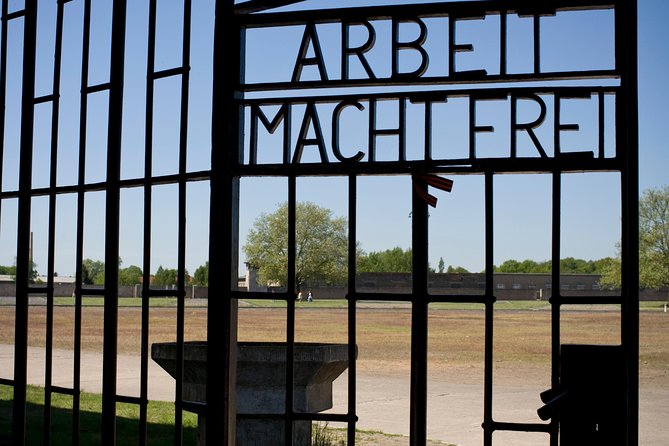
After Oranienburg, you move into the Memorial and Museum area for about 1 hour 30 minutes. The museum entry is included.
This part is where your guide helps you understand the structure of the camp:
- Sachsenhausen was established as a new concentration camp north of Berlin, built through slave labor during the 1936 Olympics hosted by Nazi Germany.
- It was intended to hold Nazi political enemies.
- In the following decade, roughly 200,000 people were imprisoned there.
- The site was evacuated by the Soviets in 1945, then used for another phase, when around 60,000 war criminals, including Nazis and collaborators, were held for roughly five more years.
Even if you already know the basics of World War II, this segment helps put names, dates, and camp functions into a single framework. One visitor feedback theme was that guides often keep the focus on the Nazis’ planning and intent, not only on victims, which can feel both harder and clearer.
A practical perk: if you find museum viewing easier at your own pace, you might spend a moment at the visitor center area, where there can be audio options. Your guide will likely keep you moving, but you can usually ask for a bit of breathing room.
Gedenkstätte grounds walk: the layout matters, especially Tower A and Station Z
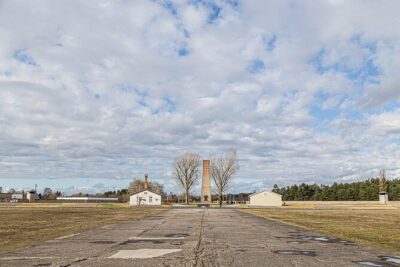
The grounds walk is another 1 hour 30 minutes, and you’re guided across the haunting structures and paths of Sachsenhausen.
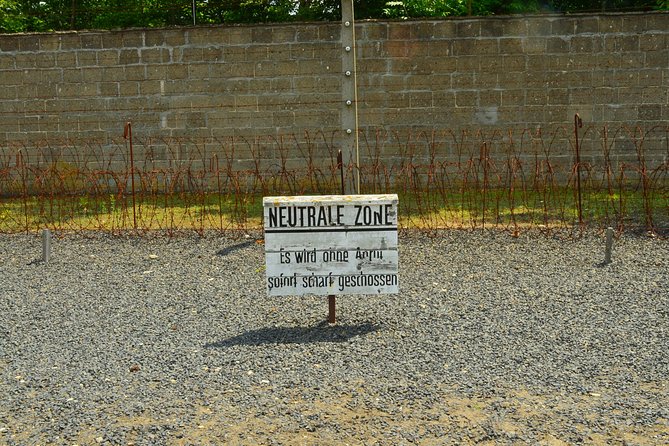
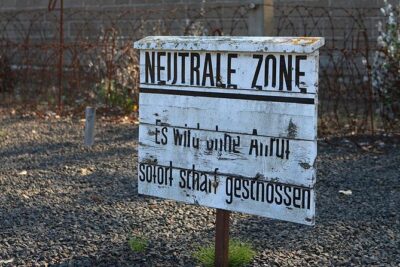
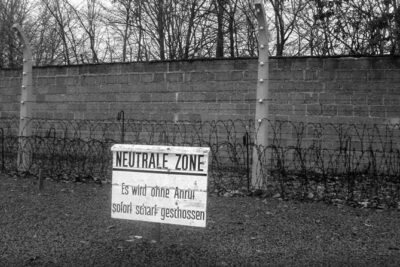
This is where many people feel the day shift from learning to bearing witness. Guides tend to explain how the camp was designed to control prisoners, including the famous layout points described by multiple guides:
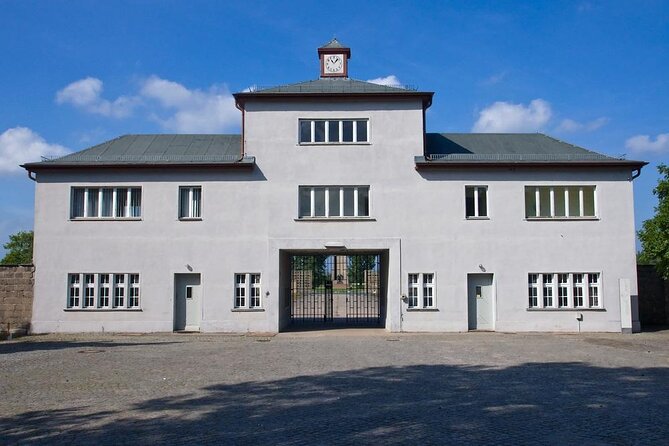
- a triangular layout
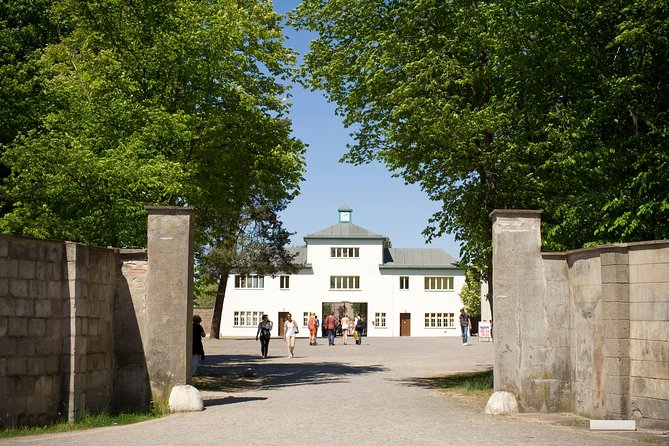
- Tower A as the only entrance
- Station Z as the “exit,” tied to industrialized killing
Your guide may also point you toward the meaning behind the spaces, like the roll call areas and how daily procedures worked to break people down. If they include survivor testimony, it often lands hard because the language is vivid and human, not abstract.
One chilling detail that shows up in guide explanations is how overcrowding and labor demands were used as part of the system. For example, a barrack built for far fewer people could end up holding far more, creating conditions designed to erode dignity and health. You don’t need graphic images to understand that, but the careful descriptions make it real.
Admission for this grounds experience is listed as free. The value is the guiding interpretation, not the ticket.
Guides make or break this kind of tour
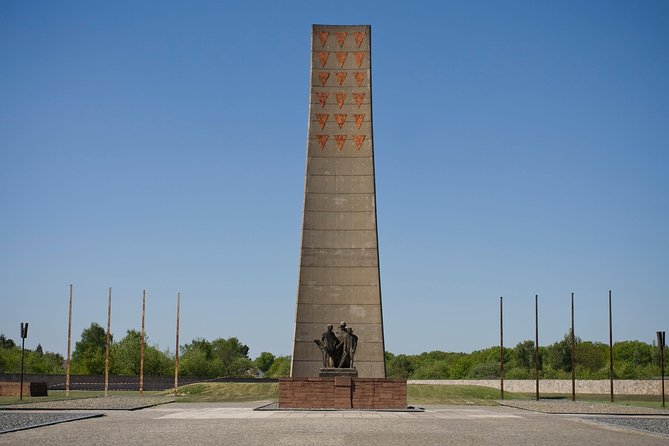
Sachsenhausen is intense. The best tours are the ones where the guide handles the tone with care, answers questions, and sets a pace that respects the site.
In the feedback, several guides earn repeat praise for different strengths:
- Maria and Xavier for clear structure and strong historical framing
- Natalie for patience, friendliness, and flexibility when someone in the group needed an accessible route
- Klaus for steady explanations and staying attentive to the group without dragging it out
- Ioana and Nickolai for strong professionalism and a “door-to-door” feel, including travel context en route
- Martin and Walid for turning complicated World War II and camp details into something you can actually follow
- Chloe for pacing that did not feel rushed, plus prepared return transportation tickets
- Pip and Taylor for strong explanation tied to the wider idea of remembering and warning against indifference
One reason this matters: a private tour lets your guide tailor the day. If your group cares more about Nazi policy, your guide can emphasize that. If you want links to other postwar uses of the site, you can ask.
What you should bring, and what to expect emotionally
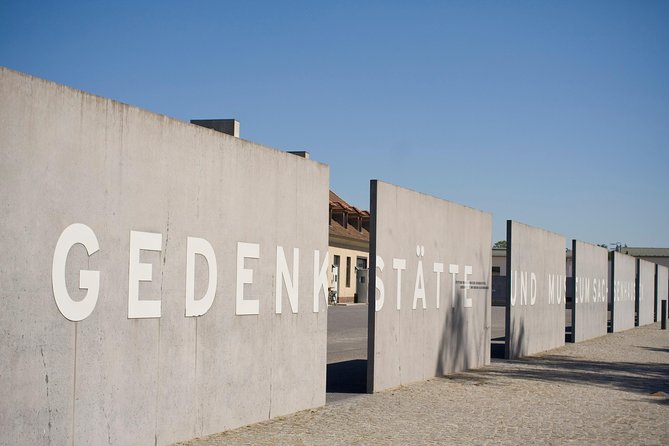
This is a sober day. Don’t schedule it when you’ll have to rush into nightlife or big dinners afterward. Instead, plan for decompression when you get back to Berlin.
Practical prep:
- Comfortable walking shoes. Uneven paths happen.
- Water. Food and drinks are not included.
- Consider packing a lunch or snacks. Amenities can be limited during the day, and you’ll appreciate having something ready.
Emotional prep:
- Expect a guided experience that explains daily routines, brutality, and prisoner dehumanization. That can be mentally exhausting.
- If your group includes teenagers or adults who are new to this subject, tell your guide what level of detail you can handle. Many guides can adjust how directly they describe events.
If you’re coming from another major memorial or museum visit in Germany, take care not to stack too many heavy stops in one week. Your mind processes these things at its own pace.
Who this tour fits well, and who should reconsider
This private Sachsenhausen tour fits best if you:
- want a guided interpretation rather than self-guided browsing
- like asking questions and having a real back-and-forth
- care about connecting the camp to Nazi governance and regional involvement
- can handle long walking, including uneven ground
It may be a poor fit if:
- you or your group has limited mobility or walking impairments, since it is not recommended for that
- your group can only tolerate short museum-style stops, because this is a long, outdoor-heavy day
That said, if you’re in a wheelchair or need accessibility adaptations, you’ll want to contact the operator before booking to see what route accommodations are possible. The tour does not promise accessibility, but individual guide flexibility can sometimes help.
Book or skip: my straight advice
Book this tour if you want the memorial to make sense, not just impress you. The combination of licensed guide training, a thoughtful route through Oranienburg and Sachsenhausen, and hotel pickup makes it a strong value for a day with serious emotional weight.
Skip it only if your priorities are different. If you want a quick bus stop, or if long walking is a problem, you may end up feeling frustrated by the physical reality of the site.
If you do book, do it with realistic expectations: you’re not buying a fun afternoon. You’re buying a careful, private way to understand a system that must never be treated like “just history.”
FAQ
How long is the Sachsenhausen private tour from Berlin by train?
It lasts about 6 hours.
Is this a private tour or a group tour?
It’s a private tour. Only your group participates.
Do you offer hotel pickup and drop-off?
Yes. Hotel pickup and drop-off are included.
What language is the tour offered in?
The tour is offered in English.
How do we travel from Berlin to the Sachsenhausen area?
The tour is by train from Berlin, with the day structured around stops that include Oranienburg and then Sachsenhausen.
Are admission tickets included?
Admission ticket for the Memorial and Museum Sachsenhausen stop is included. Oranienburg and the Gedenkstätte and Museum Sachsenhausen stop are listed as free admission.
Is food and drinks included?
No. Food and drinks are not included.
How much walking should I expect?
This is a moderate physical fitness experience, and you should expect significant walking during the day, including time on foot.
Is the tour recommended for people with limited mobility?
No. It is not recommended for individuals with limited mobility or walking impairments.
Can I cancel for a full refund?
Yes. You can cancel up to 24 hours in advance for a full refund.
By Rail From Berlin
Visiting Sachsenhausen Memorial
Everything else we filed on Berlin
- East Berlin: City of Shadows Walking Tour
★ 5.0 · 11 reviews - Berlin: Die Stachelschweine – Frank Lüdecke – Träumt Weiter
★ 4.7 · 11 reviews - Potsdam Day Trip from Berlin with a Local: Private & Personalized
★ 4.0 · 11 reviews - An Introduction to Berlin Walking Tour
★ 5.0 · 11 reviews - DJ for a Day: Learn to Mix Like a Pro in Berlin
★ 5.0 · 11 reviews - 2-H Segway Sightseeing Tour Berlin
★ 4.5 · 11 reviews
Sachsenhausen Memorial Site Tours, side by side.
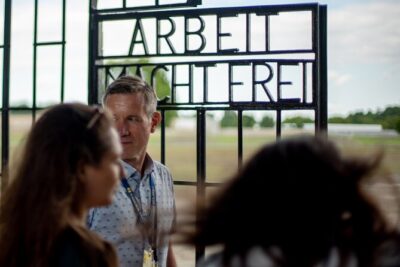 ★ 5.0Berlin: Sachsenhausen Concentration Camp Tour in EnglishFrom $365,711 reviews
 ★ 4.7Berlin: Sachsenhausen Concentration Camp Memorial TourFrom $213,716 reviews
 ★ 5.0Sachsenhausen Concentration Camp Bus Tour in English from BerlinFrom $681,962 reviews
★ 4.8Berlin: Sachsenhausen Concentration Camp Tour in EnglishFrom $221,889 reviews
★ 5.0Sachsenhausen Concentration Camp Bus Tour in English from BerlinFrom $681,962 reviews
★ 4.8Berlin: Sachsenhausen Concentration Camp Tour in EnglishFrom $221,889 reviews
 ★ 5.0Sachsenhausen Concentration Camp Memorial Tour (Max. 15 Guests)From $351,516 reviews
 ★ 4.6Berlin: Sachsenhausen Concentration Camp and Potsdam TourFrom $651,334 reviews
 ★ 5.0Sachsenhausen concentration camp.From $341,189 reviews
 ★ 5.0Visita en español al campo de concentración SachsenhausenFrom $341,170 reviews
Other lists this tour is on