
REVIEW · CYCLING TOURS
Small-Group Historical Bike Tour in Berlin
Berlin clicks into place on two wheels. This small-group ride connects major Cold War and WWII-era stops, with storytelling from your guide and bicycle gear included. The tradeoff is that many sights are intentionally quick, so you may want follow-up time if you love museums.
I like how the route keeps you moving through Berlin’s most important neighborhoods without turning your day into a bus tour. You’ll pedal past the Berliner Fernsehturm and the Brandenburg Gate area, then weave to places that explain division and unity in plain, human terms. If you’re picky about sitting longer at each site, you’ll need to plan extra time later.
In This Review
- Key Things You’ll Notice On This Berlin Ride
- Berlin in 3 to 4 Hours, With Major Stops Close Together
- Meeting At Panoramastraße 1, and Why Timing Matters
- Bike Comfort and the One Safety Detail You Should Know
- Berliner Fernsehturm, Alexanderplatz Views, and Why It’s a Good First Stop
- St. Nicholas Church, the Birth of Berlin Story, and Quick Roots
- Oranienburgerstraße and the Jewish New Synagogue Context
- The Berlin Wall Memorial: Bernauer Straße and What 1.4 Kilometers Teaches
- Reichstag Building, Weimar Germany, and the Nazi Seizure Story
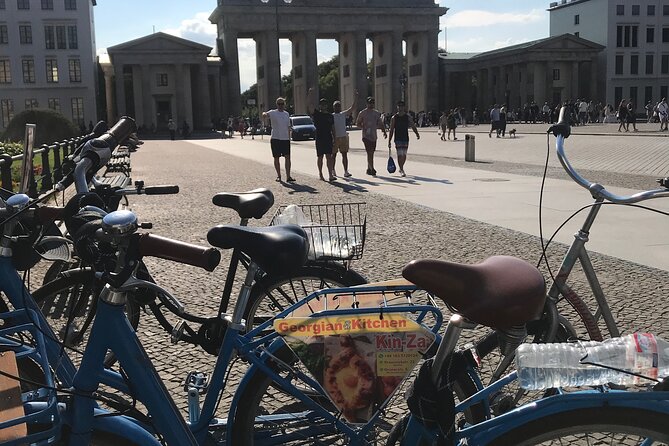
- Brandenburg Gate, Division and Unity in One Famous Frame
- Holocaust Memorial, Walking Space, and a Quiet Kind of Learning
- Topography of Terror, Gestapo Headquarters Footsteps, and Quick Photos
- Checkpoint Charlie: A Very Short Stop With Big Icon Energy
- Gendarmenmarkt and Bebelplatz: Squares, Symbols, and Places for Photos
- Museum Island Ride-Through: Museums and City Scale
- Price, Value, and What You Should Expect to Pay for
- Who This Tour Suits Best, and Who Might Want a Different Option
- Should You Book This Berlin Bike Tour?
- FAQ
- What is the duration of the Berlin bike tour?
- What time does the tour start, and where is the meeting point?
- What does the price include?
- Is food or drinks included?
- Is the tour offered in English?
- What ticket do I get?
- Are admission tickets needed for the stops?
- What are the age requirements for children?
- Is this a private tour?
- Is there free cancellation?
Key Things You’ll Notice On This Berlin Ride
- Flat, bike-friendly pacing that keeps the ride relaxed and the stops frequent
- Iconic sights without the long lines since many stops are exterior views or quick photo moments
- Cold War focus, especially along the former border area and Berlin Wall Memorial site
- A real Berlin orientation loop, including the Museum Island area by bike
- Guides like Jerry Strasburger, Pablo, and Demetrios who answer questions and keep the mood warm
More history walks in Berlin
- Berlin: Natural History Museum Entrance Ticket★ 4.6 · 3,382 reviews
- Berlin: World Heritage Cruise to Potsdam★ 4.5 · 1,435 reviews
- Berlin Historical Highlights Walking Tour★ 4.9 · 657 reviews
- Berlin Private Complete History All Day Walking Tour★ 5.0 · 474 reviews
Berlin in 3 to 4 Hours, With Major Stops Close Together
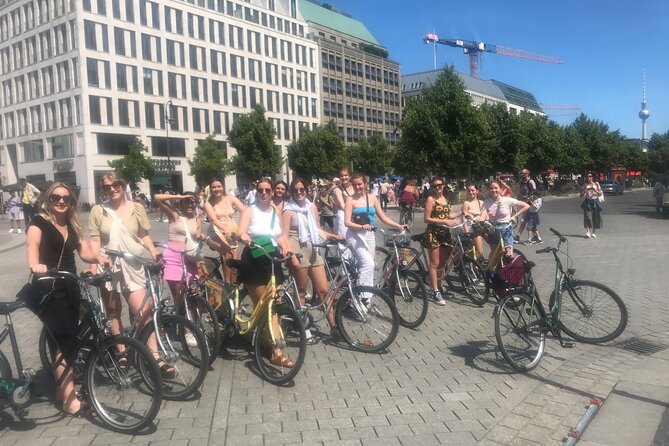
For first-time Berlin, time is your biggest problem. This tour is built to solve that fast, with a 3 to 4 hour window that pulls together some of the city’s best-known landmarks in one loop. The price, $54.42 per person, is basically paying for a professional local guide plus a bike and necessary equipment, not for food or entry-heavy museum time.
What makes it feel good is the balance of sights and explanations. You get the big photo backdrops, but you also get context you might miss if you just wander on your own. The Berlin Wall Memorial and Holocaust Memorial stops, for example, aren’t treated like checkboxes. They’re framed to help you understand what you’re looking at.
One possible consideration: the schedule is tight enough that you should expect short stops. If you want deep reading time or extended museum time, this is still a great sampler, not a substitute for a longer visit.
Meeting At Panoramastraße 1, and Why Timing Matters
The tour starts at 11:00 am at Panoramastraße 1, 10178 Berlin, and it ends back at the meeting point. It’s also a mobile-ticket tour, and it’s offered in English. Since it’s a private tour/activity, it’s set up so only your group participates, which helps keep the pacing smooth and the guide accessible.
This is one of those tours you plan for in advance. It’s often booked about 37 days ahead on average, so if you’re traveling during peak season or on a popular weekday, booking earlier is a smart move.
Also, keep your expectations realistic about the start area. One detail to watch: the Berliner Fernsehturm area has more than one side to it, and you’ll want to be at the correct meeting side near the main entrance. I’d arrive a few minutes early, check your phone map once, and then wait at the clearest landmark entrance you can spot.
Bike Comfort and the One Safety Detail You Should Know
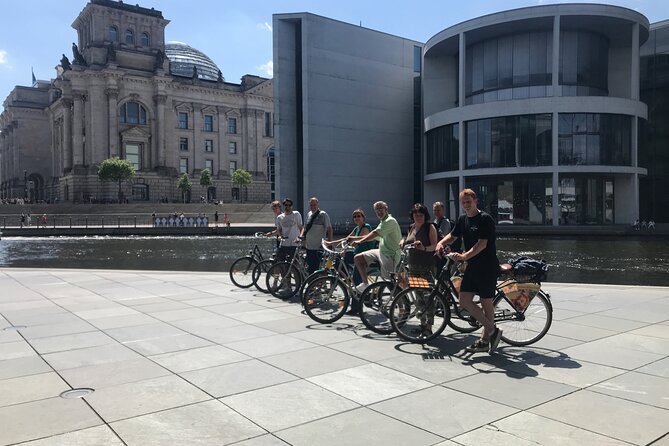
Berlin is famously flat, and that’s a huge part of why bike tours work here. Multiple guides in this operation are praised for making the ride feel safe, even for people who feel nervous about cycling.
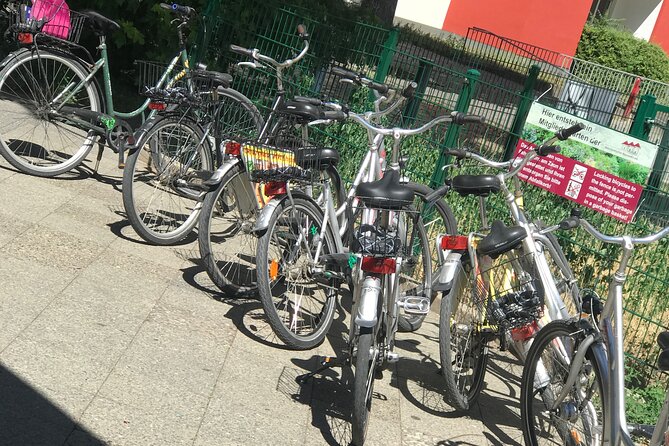
Still, read this part carefully: bikes in Berlin are sometimes equipped with three-speed systems and back pedal brakes. That means pedaling backward applies the rear brake, which can surprise you the first time. If you’re even slightly unsure, do a quick practice before you join the flow of the group. Take 30 seconds to test the braking on a quiet stretch, then you’ll ride with confidence.
On equipment quality, most feedback is positive about bikes being in good enough condition for an easy ride. But there is at least one outlier complaint about bike issues and delays. So I recommend a simple habit: once you’re issued your bike, do a quick check of brakes and seat position. If something feels off, tell the guide right away. The faster you speak up, the smoother the day stays.
Berliner Fernsehturm, Alexanderplatz Views, and Why It’s a Good First Stop
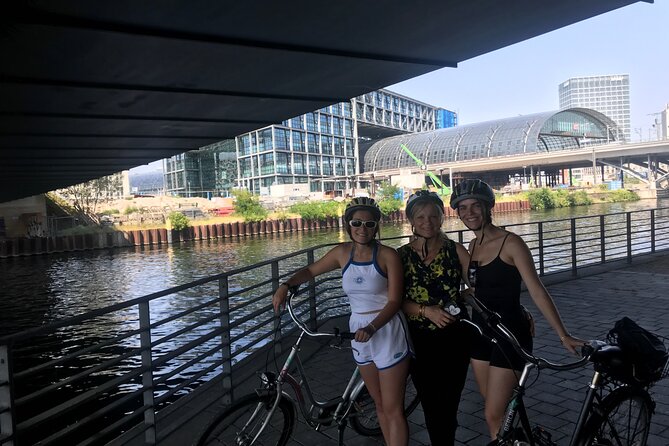
Your ride begins with a stop at Berliner Fernsehturm (TV Tower) near Alexanderplatz. The plan here is short, about 10 minutes, and the payoff is the view and the orientation. The TV tower is one of Berlin’s most recognizable vertical landmarks, and seeing it early helps you “lock in” the geography of the center.
It’s a smart opening because it sets a visual reference point before you move into the heavier themes. You’re not yet dealing with the wall line, memorials, or Cold War checkpoints. You’re building a mental map first.
More handlebar time in Berlin
St. Nicholas Church, the Birth of Berlin Story, and Quick Roots
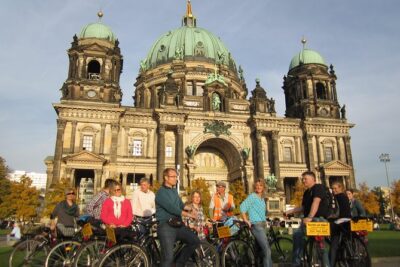
Right after the TV tower stop, the route includes St. Nicholas Church (Nikolaikirche), described as a landmark in Berlin’s center for over 800 years. You’ll also hear about the birth of Berlin as a city, which makes this quick stop more meaningful than a typical photo break.
This is a good reminder that Berlin is not only a story of division and 20th-century power struggles. It also has older layers, and Nikolaikirche is tied to the city’s early identity. Even if you don’t spend much time here, you come away with the idea that Berlin has always been a place where history stacks up in layers.
Oranienburgerstraße and the Jewish New Synagogue Context
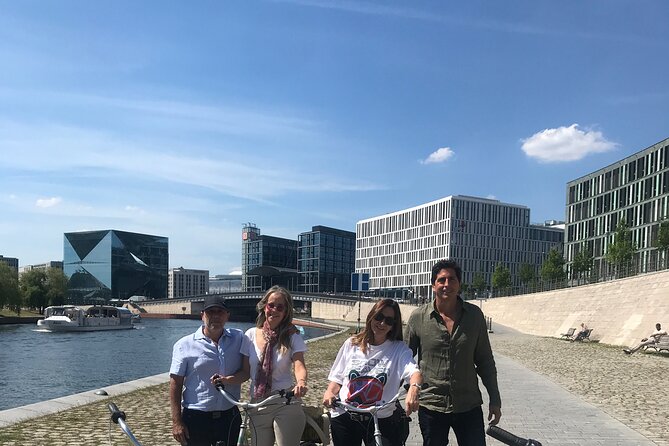
Next comes Oranienburgerstraße, with time set aside for the Jewish New Synagogue area and related background. The stop is about 15 minutes, and the focus is on Jewish history in Berlin.
This part works well on a bike tour because you’re moving through real neighborhoods instead of just looking at a single monument from afar. If you’ve never studied Berlin’s Jewish history, the guide’s explanation can give you a baseline so your later memorial and Holocaust Memorial visits land with more weight.
One practical note: since this stop is relatively brief, bring your curiosity but don’t assume you’ll walk away with a book-level understanding. Treat it like a guided start point, then decide if you want to go deeper later.
The Berlin Wall Memorial: Bernauer Straße and What 1.4 Kilometers Teaches
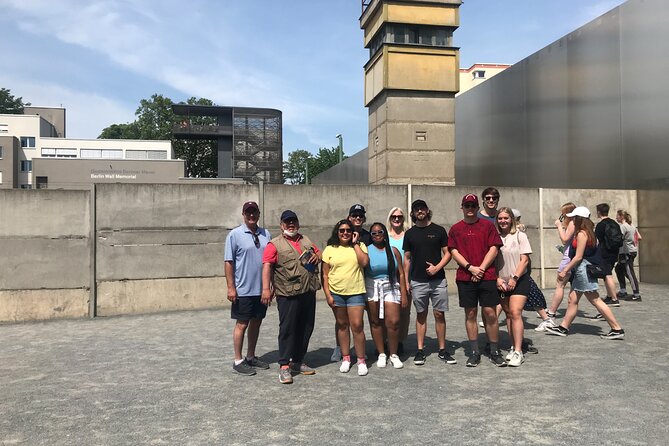
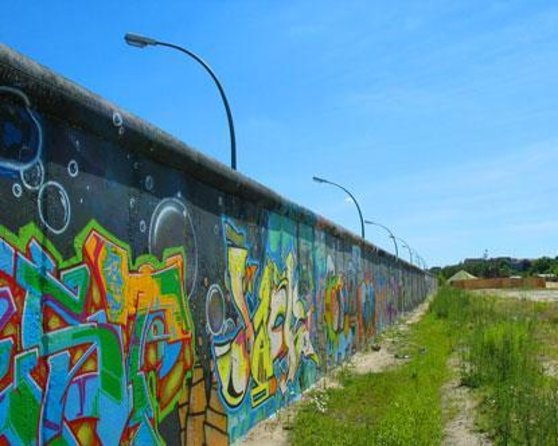
Then the tour moves into one of the most important sections: the Memorial of the Berlin Wall at Bernauer Straße. This stop is about 25 minutes, and it’s designed to make the border real.
Here’s the key idea you should keep in mind while you listen: the memorial runs along 1.4 kilometers of the former border strip. You’re not just seeing a wall remnant, you’re seeing preserved grounds that show how border fortifications developed until the late 1980s. The guide’s job is to connect those physical traces to what life looked like on either side.
You’ll likely notice how the memorial works on multiple layers: the preserved wall segment, the surrounding space behind it, and the story of German division you’re supposed to understand as you look. The memorial is connected to the Berlin Wall Foundation, which includes a refuge-center museum focused on flight and emigration in divided Germany. Even if you do not visit that museum on this tour, the link helps you understand the memorial as part of a bigger educational network.
Reichstag Building, Weimar Germany, and the Nazi Seizure Story
After the Wall Memorial comes the Reichstag Building, about 10 minutes. The stop centers on its role as the home of the German Parliament and as the seat of the Weimar Republic government until the Nazis seized power in 1933.
The building matters because it symbolizes how political systems can shift quickly, and the guide’s explanations are designed to connect architecture to turning points. You’ll also hear the story of how the Reichstag was burned, which is one of those events that changed the political climate dramatically.
Because this is a short stop, it’s best approached like a guided spark. You’ll get enough context to recognize the significance, but you won’t get the full political history lesson in 10 minutes.
Brandenburg Gate, Division and Unity in One Famous Frame
The tour also includes the Brandenburg Gate area, described as a monument built during the reign of Friedrich Wilhelm II and later shaped by the Cold War idea of no-man’s land between East and West Germany. This is one of those places where the same landmark can mean different things depending on the era.
The bike route makes the Brandenburg Gate easy to see alongside other major landmarks. You get to connect the story visually: the gate as a symbol, and the Cold War as a reality that physically separated daily life.
Since this is still a brief stop, focus on the meaning the guide gives you rather than trying to study every detail yourself. Once the story clicks, even a quick pass feels satisfying.
Holocaust Memorial, Walking Space, and a Quiet Kind of Learning
Next is the Holocaust Memorial (Memorial to the Murdered Jews of Europe), with around 15 minutes. You’ll be able to walk around it and take pictures.
That “walk around” detail matters. It’s not just a glance from a sidewalk. Even in a short time window, being able to move through the space helps you experience the memorial as something built to shape your perspective, not just a static object. Your guide’s explanations help you keep it grounded in meaning rather than turning it into a backdrop.
This is also a good stop for phone discipline. Take a few photos if you want them, but give yourself a moment without looking through the screen.
Topography of Terror, Gestapo Headquarters Footsteps, and Quick Photos
Then you’ll head to Topography of Terror, with a brief stop of about 10 minutes, where you’re shown the place once associated with Gestapo Headquarters. It’s short, but it has a powerful effect because it ties a physical location to a real machinery of terror.
Expect this stop to be more about the guide’s framing than about reading long displays. If this topic hits you hard, you may want to return later for a longer look at the exhibits.
Checkpoint Charlie: A Very Short Stop With Big Icon Energy
The route includes Checkpoint Charlie with about a 5-minute stop. It’s brief, which makes sense because the checkpoint theme is already well known from media.
But on this tour, the value is in the guide’s context. You’re not just seeing a tourist stop. You’re getting the Cold War story anchored to a site that has become an icon through repetition.
Gendarmenmarkt and Bebelplatz: Squares, Symbols, and Places for Photos
From checkpoints, you ride into Gendarmenmarkt, about 10 minutes, where you’ll pass through the square, take photos, and hear what makes it significant. This stop is lighter in tone compared to memorial sites, and that contrast can feel refreshing after heavier content.
Then you’ll reach the Book Burning Memorial at Bebelplatz for about 15 minutes. This is a memorial that works best when you understand its idea first, not just when you see it. The guide’s explanation is the point of the stop here.
Museum Island Ride-Through: Museums and City Scale
The final sightseeing section includes Museum Island, with about 15 minutes focused on riding through the island area and showing you the museums and their history. You won’t be doing full museum entry on this tour, but you’ll see the layout and get a sense of where to go later if you want to plan more time.
This is a useful closing chapter because it broadens your Berlin story beyond the 20th-century themes. It also helps you understand why this part of central Berlin feels like a cultural axis.
After that, you ride back toward the meeting point, including a final Berliner Fernsehturm return stop around 10 minutes.
Price, Value, and What You Should Expect to Pay for
At $54.42 per person, you’re paying for three things: a guide, a bike, and equipment. Food and drinks are not included, so you’ll likely want to grab snacks or a warm drink on your own.
From a value standpoint, the best reason to choose this tour is that it threads together major sights you’d otherwise need multiple days and multiple travel modes to connect. The time savings is real, and so is the benefit of having someone help you understand what you’re seeing as you ride past it.
The only real value risk is pacing. Since many stops are short, you should go into it with curiosity and flexible expectations. Think of it as a guided highlights reel with context, not an all-day class.
Who This Tour Suits Best, and Who Might Want a Different Option
This is a strong choice if you:
- want a first look at central Berlin without dealing with navigation stress
- like learning from a guide while moving through neighborhoods
- want a Cold War and WWII-focused route that includes major memorials and checkpoints
It may be less ideal if you:
- want long museum time at places like memorial exhibits
- prefer to linger quietly rather than keep moving through multiple stops
- are very sensitive to bike braking mechanics and would rather have a tour that provides more training time
Should You Book This Berlin Bike Tour?
Book it if you want to get your bearings fast and you like the idea of a guided route through some of Berlin’s most meaningful landmarks, from the Berlin Wall Memorial to the Holocaust Memorial and beyond. The small-group setup, included bike gear, and multiple photo-and-explanation stops make it a good way to start your Berlin trip.
Skip or choose a different format if you know you want extended time at memorials or museums, or if you’re worried about biking even with Berlin’s flat terrain. If you do book, bring a little patience for quick stops, practice your braking once on the bike, and ask questions. That’s where the tour tends to shine.
FAQ
What is the duration of the Berlin bike tour?
The tour lasts about 3 to 4 hours.
What time does the tour start, and where is the meeting point?
It starts at 11:00 am. The meeting point is Panoramastraße 1, 10178 Berlin, Germany.
What does the price include?
The local professional guide and use of the bicycle are included. Necessary biking equipment is also included.
Is food or drinks included?
No. Food and drinks are not included.
Is the tour offered in English?
Yes, it is offered in English.
What ticket do I get?
You receive a mobile ticket.
Are admission tickets needed for the stops?
The stops listed show admission ticket free.
What are the age requirements for children?
Children must be accompanied by an adult, and the minimum age is 2 years.
Is this a private tour?
Yes. It is a private tour/activity, and only your group will participate.
Is there free cancellation?
Yes. You can cancel up to 24 hours in advance for a full refund.
The Berlin Bike Lanes
The Longer History of Berlin
Everything else we filed on Berlin
- East Berlin: City of Shadows Walking Tour
★ 5.0 · 11 reviews - Berlin: Die Stachelschweine – Frank Lüdecke – Träumt Weiter
★ 4.7 · 11 reviews - Potsdam Day Trip from Berlin with a Local: Private & Personalized
★ 4.0 · 11 reviews - An Introduction to Berlin Walking Tour
★ 5.0 · 11 reviews - DJ for a Day: Learn to Mix Like a Pro in Berlin
★ 5.0 · 11 reviews - 2-H Segway Sightseeing Tour Berlin
★ 4.5 · 11 reviews
Cycling Tours, side by side.
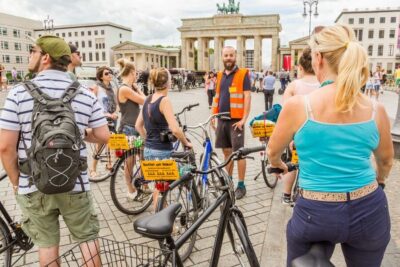 ★ 4.8Berlin: Sights and Highlights Bike Tour with a Local GuideFrom $412,698 reviews
 ★ 4.5Munich 3-Hour Guided Bike TourFrom $401,731 reviews
 ★ 4.8Hamburg 3-Hour Bike TourFrom $441,353 reviews
 ★ 5.0Classic Mike’s Bike Tour daily @ 11.30 incl Beer Garden & SurfersFrom $421,246 reviews
 ★ 5.0Berlin Highlights 3-Hour Bike TourFrom $42948 reviews
 ★ 5.0Berlin City Bike Tour with Beer Garden StopFrom $83917 reviews
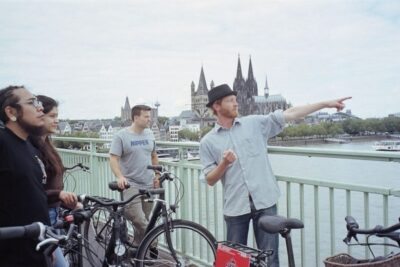 ★ 4.8Cologne: 3-Hour Guided Bike TourFrom $50878 reviews
★ 4.9Berlin Highlights: 3-Hour Bike TourFrom $37809 reviews
★ 4.8Cologne: 3-Hour Guided Bike TourFrom $50878 reviews
★ 4.9Berlin Highlights: 3-Hour Bike TourFrom $37809 reviews
Other lists this tour is on