
REVIEW · FULL-DAY
Berlin Private Complete History All Day Walking Tour
Berlin tells its story best on foot. This private all-day walk strings together WWII and Cold War landmarks with real street-level context. I love the undivided guide attention and the way you can cover major sights in one focused day, without riding around in vehicles. One drawback to plan for: it is a long walk and some stops are emotionally heavy, so wear comfy shoes and pace yourself.
The route hits the big names like the Brandenburg Gate, the Reichstag, Checkpoint Charlie, and the Memorial to the Murdered Jews of Europe, then keeps going into the places that make Berlin feel raw and complicated. The guides, including folks like Ciaran, Rhys, Eugen, Paul, and Beth, tend to answer questions in real time and adjust when you want to linger on a detail. Food and drinks are not included, so you will want to plan on stopping for your own lunch break.
This is designed for travelers who want direction on a first visit, or a second visit when you want to understand what you are seeing. You start in Mitte around Ebertstraße, and you end at Alexanderplatz, after about 6 hours of steady walking. The tour runs in English, uses a mobile ticket, and pickups are on foot with the guide.
In This Review
- Key things that make this Berlin private history walk worth it
- Why a private walking tour is the smartest way to understand Berlin
- The route plan, from Ebertstraße to Alexanderplatz
- Brandenburg Gate and the Reichstag, where symbols do the talking
- Quick note on pace
- Tiergarten, Victory Column, and the park side of politics
- Holocaust Memorial and Fuhrerbunker area, when the story gets real
- Topography of Terror and the Berlin Wall memory lane
- Checkpoint Charlie, Friedrichstraße, and the Cold War tourist zone that was not a game
- Bebelplatz and Humboldt University, where literature met catastrophe
- Unter den Linden stops: Neue Wache and the German History Museum
- Museum Island, Humboldt Forum, and St Mary’s Church
- Price and what you truly get for $253.95
- Who this tour fits best, and who should choose a different day
- Should you book this Berlin private complete history tour?
- FAQ
- How long is the Berlin Private Complete History All Day Walking Tour?
- How much does the tour cost?
- Is this tour private?
- Where does the tour start and end?
- What language is the tour offered in?
- Do you use vehicles during the tour?
- What’s included and what’s not included?
- Are service animals allowed?
- What is the cancellation policy?
Key things that make this Berlin private history walk worth it
- Private, fully guided pace so you can ask questions at the moments that matter (and stop for photos, like at Brandenburg Gate)
- WWII plus Cold War, linked together so Berlin does not feel like a list of unrelated stops
- Iconic sights plus hard history stops including the Holocaust Memorial, Topography of Terror, and the Wall memorial section
- No vehicle time sink because it is a true walking day, from Mitte landmarks through to Alexanderplatz
- Strong guide communication with guides such as Ciaran, Rhys, Eugen, Paul, Ken, Julian, Beth, and Francisco called out for keeping the story clear and human
- Major sites are marked admission free on the itinerary, which helps you control costs for a day of monuments
Other walking routes through Berlin
- Berlin: Third Reich and Cold War 2 Hour Walking Tour★ 4.9 · 6,830 reviews
- Berlin: Discover Berlin Walking Tour★ 4.9 · 5,998 reviews
- Berlin’s Best: 2 Hour Walking Tour Third Reich and the Cold War★ 5.0 · 5,486 reviews
- Berlin: Hidden Backyards Guided Walking Tour★ 4.8 · 5,360 reviews
Why a private walking tour is the smartest way to understand Berlin

Berlin is one of those cities where the “what happened here” part matters as much as the “what do I see” part. A private format changes everything. You are not trying to keep up with a group while your guide races on to the next stop. You can ask why a building looks the way it does, why a monument is placed where it is, or what a particular street corner used to mean.
I also like the structure of this tour for first-time orientation. It hits landmarks that act like anchors. Brandenburg Gate and the Reichstag help you understand Germany’s political arc. Then the day turns toward WWII aftermath and Cold War division, so the city starts to make sense as one long chain of decisions, not a set of random plaques.
One practical consideration: this is not a sit-and-snack experience. It is an all-day walk, with multiple stops meant to be visited on foot. If you tire easily or you want very slow museum pacing, you will need to plan breaks and keep expectations realistic.
The route plan, from Ebertstraße to Alexanderplatz
The day begins near Ebertstraße in Mitte (10117) and ends at Alexanderplatz (10178). That matters because you are walking through Berlin in the direction that groups naturally want to explore anyway, rather than doubling back constantly.
You do not use vehicles during the tour. Pickups are offered on foot, meaning the guide meets you and you start walking together from there. If you are comfortable navigating on foot and you like seeing the city at street level, this route is a nice fit. If you want a mostly indoor day, or you hate walking between sights, it might feel like too much.
At the end, you finish at Alexanderplatz, a fitting close because it is tied to the post-war Berlin story and the DDR era rebuilding. It gives you a sense of the city after the worst chapters, without pretending the past disappears when the skyline changes.
Brandenburg Gate and the Reichstag, where symbols do the talking
You start at Brandenburg Gate, one of Europe’s most instantly recognizable landmarks. The guide’s job here is not just to point and move on. You learn why it was built and how it became a focal point for the Germanys that formed, and later fell, after its construction. You also get why it became such a powerful symbol of divided Berlin during the Cold War.
Tip: ask your guide for a photo at the gate. It sounds basic, but it is exactly the kind of moment where a guide can help you get a better angle without wasting your time wandering around.
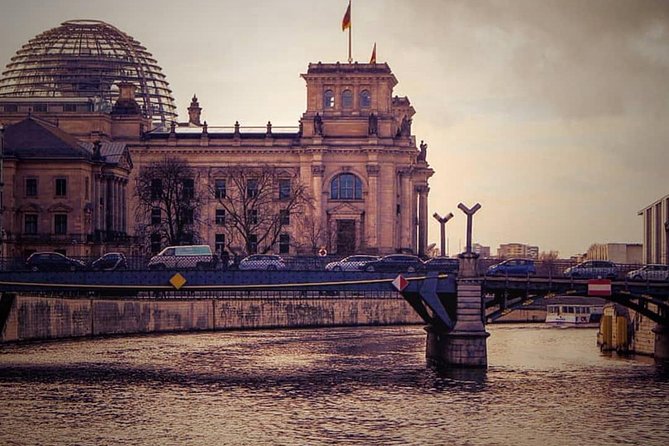
Next is the Reichstag Building, and this stop is a heavy one in the best way. You stand and take in the iconic facade while the guide explains Hohenzollerns and the building’s role in the early 1930s Nazi consolidation. Then the story moves to the fighting of the Soviet Battle of Berlin and what happened to the building through reunification. The key value here is continuity. You are not just hearing dates, you are seeing how power, violence, and politics left marks on the same place.
Quick note on pace
Two 15-minute stops back-to-back can feel fast if you are a photo-heavy person. The benefit of the private format is that you can usually slow down without feeling like you are slowing everyone else down.
More history walks in Berlin
Tiergarten, Victory Column, and the park side of politics
After the political buildings, the tour shifts toward Tiergarten, Berlin’s largest park. Parks can feel neutral, but in Berlin they often act like a living archive. You learn how Tiergarten developed from medieval times and how Berlin’s major events shaped the park itself.
From there, you get the Victory Column, usually viewed from a distance. The interesting part is that you hear the when and why of its construction, and you also get a surprising detail about where it used to be located. This is one of those “wait, what?” moments that makes history feel less like a lecture and more like detective work.
If you want a short reset between emotionally intense sites, this part does that job. Still, you are walking, so bring water and take your time.
Holocaust Memorial and Fuhrerbunker area, when the story gets real
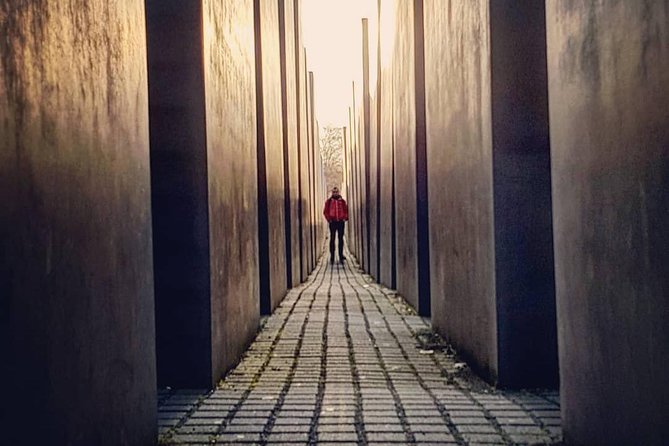
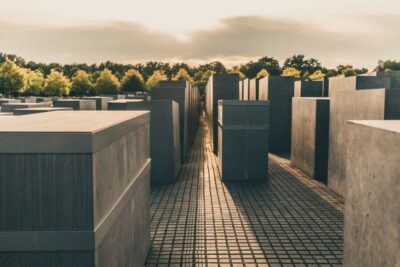
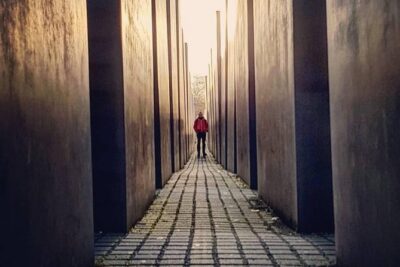
The Holocaust Memorial, or Memorial to the Murdered Jews of Europe, is the kind of place where the architecture forces silence. The guide treats it with the seriousness it deserves, and you come away understanding it as more than a photo stop.
Right after, the day turns toward the Fuhrerbunker site area. The tour calls it out as the most infamous parking lot or car park in the world, and the guide explains why it mattered as the place where Hitler spent his final days. The point is not shock value. It is how Berlin swallowed and concealed its most terrible decisions, and how the city’s physical landscape makes forgetting feel tempting.
A quick extra stop in this cluster is Johann Georg Elser’s sculpture, tied to the man who came painfully close to changing world history. Then you move to the Aviation Ministry building, in continuous use since 1936, framed as a witness to turbulent 20th century years.
This middle section is the most emotionally demanding part of the tour. If you are traveling with someone who gets overwhelmed by WWII details, you may want to communicate ahead of time that they need short pauses.
Topography of Terror and the Berlin Wall memory lane
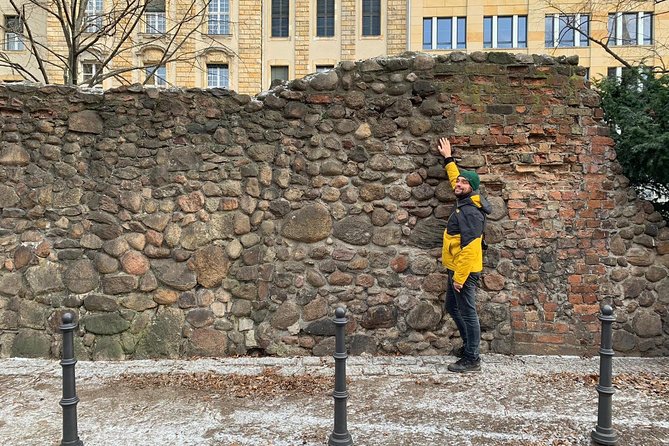
Topography of Terror is one of the day’s most important stops. You visit the site of the former SS, Gestapo, and SD headquarters in Berlin. The guide frames it as one of the points of evil with Nazi Berlin and then explains what happened post-war with the site.
Then you see a section of the Berlin Wall memorial. This is one of those moments where you stop seeing the Wall as a symbol and start understanding it as a system that created escapes, tragedies, and daily fear. The guide covers why and when it was constructed and shares stories tied to escapes and deaths.
If you are the kind of person who thinks history is better learned with context, this is where the tour earns your time. It takes abstract Cold War talk and pins it to the physical geography you can actually stand near.
Checkpoint Charlie, Friedrichstraße, and the Cold War tourist zone that was not a game
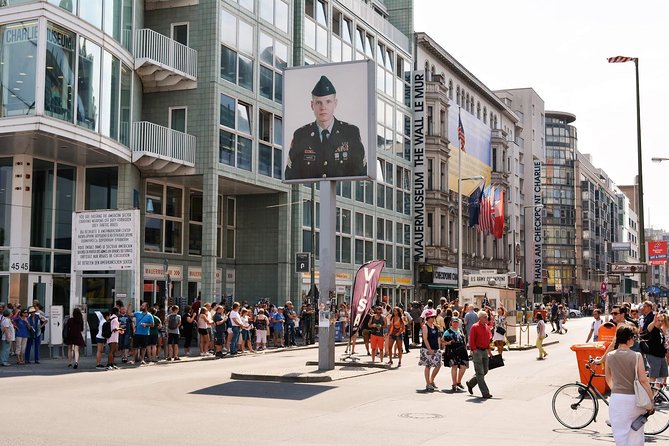
Checkpoint Charlie is the best-known checkpoint in Berlin, and it is also easy to misunderstand because it is now tourist famous. In this tour, it is treated as an iconic Cold War site first, and a photo backdrop second.
A stroll down Friedrichstraße follows, once known as Cabaret Mile. This is a nice change of tone, not because it makes things less serious, but because Berlin was never only one thing at a time. Even during division, the city had nightlife, movement, and contradictions.
Then you reach Gendarmenmarkt, often called one of the most beautiful squares in Berlin. Here you learn the origins of the square and how it developed into an architectural highlight. This is a breathing zone, and it also changes your brain’s pace from trauma history to visual history.
Bebelplatz and Humboldt University, where literature met catastrophe
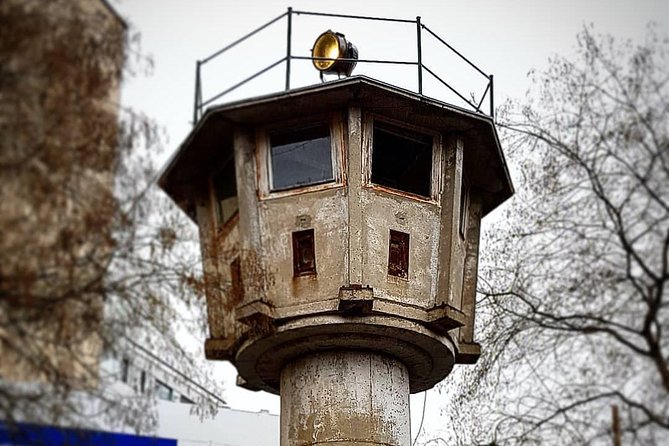
At Bebelplatz, you get 18th century surroundings plus a guided history of major institutions around the square, including St Hedwig’s Cathedral, Humboldt University’s law faculty, and the City Opera House. The guide also connects the location to the Nazi book burnings.
This is where the tour includes something thought-provoking: you do not just hear that books were targeted, you also see the memorial in the square tied to that act. It is a reminder that propaganda is not only about bodies and borders. It is about ideas and access to them.
From there, you visit Humboldt University (Humboldt Universität). You learn about the building and the university, and you get context on the Humboldts themselves. For me, this stop is a good counterweight after the darker chapters. It shows that Berlin’s intellectual identity did not appear out of nowhere, and it helps explain how the city became a stage for both education and destruction.
Unter den Linden stops: Neue Wache and the German History Museum
Next comes Neue Wache, inside one of the most remarkable buildings on Unter den Linden. The guide explains it as a political weathervane, then brings you to its current incarnation as a moving memorial. This stop helps you see how Germany’s monuments evolve as society’s values and interpretations evolve.
Then you look at the Deutsches Historisches Museum from outside and learn about the oldest surviving building on Unter den Linden, now the German History Museum. Even from outside, it sets up Museum Island later in the day.
If you are thinking, yes, this is a lot of museums, you are right. But the point here is that you are not doing these places randomly. Each one has a function in the storyline of Berlin explaining itself.
Museum Island, Humboldt Forum, and St Mary’s Church
Museum Island is the UNESCO story part of the day. You discuss how the island developed, the museums, the cathedral, and the architects behind them. You are seeing how Berlin built its reputation through art, learning, and preservation.
Then the route takes you to the Humboldt Forum, where you learn its complicated and surprisingly recent history. This stop matters because it shows how Berlin is still actively renegotiating memory and identity, not just displaying the past.
St Mary’s Church is next, and if it is possible to go inside, you do. The tour frames it as the oldest church in Berlin in continuous use, and an architectural survivor. The value of ending on a “still standing” note is that you leave with a sense of continuity, not just rupture.
Finally, you finish at Alexanderplatz, rebuilt post-war as the capital of the DDR. It lands the story where it logically ends for many visitors: after WWII and division, after political theater and conflict, Berlin keeps rebuilding.
Price and what you truly get for $253.95
At $253.95 per person for a private 6-hour walking tour, the cost is not cheap. But it can still feel fair if you are using it to replace multiple ticketed and guided stops, because you get a single narrative thread through a long day of major sites.
Here is the value equation that makes sense for most people:
- Private guide time rather than splitting attention across a group
- A long, organized walking route that saves you from researching how to connect the dots
- Admissions marked as free for the stops listed, which helps you avoid surprise fees
- No private transportation costs because it is walking only
What keeps it from being a bargain deal is what is not included: food and drinks. You will need to budget for your own lunch and water. Also, if you only want one or two Cold War stops, you might be paying for more than you need.
Who this tour fits best, and who should choose a different day
This tour fits best if you:
- Want to understand Berlin’s WWII and Cold War story fast
- Prefer a guide who can respond to your questions and adjust when you want to linger
- Are comfortable walking for most of a day and you like seeing a city in connected sections
It may not be ideal if you:
- Need a lighter day with fewer emotionally heavy stops
- Want mostly indoor time or very short walking legs
- Struggle with a full 6-hour schedule
Still, the tour says most travelers can participate, and service animals are allowed, which helps make it more flexible than many highly structured options.
Should you book this Berlin private complete history tour?
I think you should book it if you want a guided day that does not treat Berlin as a checklist. The big wins are the private attention, the way the story ties together WWII consequences and Cold War division, and the guide-led ability to connect places like Brandenburg Gate, the Reichstag, Topography of Terror, the Wall memorial, and Checkpoint Charlie into one coherent understanding.
I would skip it if your goal is only scenic highlights, or if you are trying to avoid heavy WWII topics. In that case, you might pick a shorter, lighter-themed route.
If you do book, come prepared for walking and plan your own meals. And do yourself a favor, when you reach a powerful site, ask your guide one good question and then take a minute to just stand there. The tour works best when you let the city do its part.
FAQ
How long is the Berlin Private Complete History All Day Walking Tour?
It runs for about 6 hours.
How much does the tour cost?
The price is $253.95 per person.
Is this tour private?
Yes. It is a private tour/activity, so only your group participates.
Where does the tour start and end?
It starts at 10117 Ebertstraße 24, Berlin, and it ends at Alexanderplatz, 10178 Berlin.
What language is the tour offered in?
The tour is offered in English.
Do you use vehicles during the tour?
No. It is a walking tour with no vehicles. Pickup, when offered, is on foot with the tour guide.
What’s included and what’s not included?
Included: an expert tour guide and visits to iconic historical sites. Not included: food and drinks, and private transportation.
Are service animals allowed?
Yes, service animals are allowed.
What is the cancellation policy?
You can cancel for a full refund up to 24 hours in advance. If you cancel less than 24 hours before the start time, the amount you paid is not refunded.
The Longer History of Berlin
Pavements of Berlin
Everything else we filed on Berlin
- East Berlin: City of Shadows Walking Tour
★ 5.0 · 11 reviews - Berlin: Die Stachelschweine – Frank Lüdecke – Träumt Weiter
★ 4.7 · 11 reviews - Potsdam Day Trip from Berlin with a Local: Private & Personalized
★ 4.0 · 11 reviews - An Introduction to Berlin Walking Tour
★ 5.0 · 11 reviews - DJ for a Day: Learn to Mix Like a Pro in Berlin
★ 5.0 · 11 reviews - 2-H Segway Sightseeing Tour Berlin
★ 4.5 · 11 reviews
Full-Day, side by side.
 ★ 4.5From Munich: Neuschwanstein & Linderhof Castle Full-Day Trip12,494 reviews
 ★ 4.7From Munich: Neuschwanstein Castle Full-Day TripFrom $933,977 reviews
 ★ 4.9From Munich: Dachau Memorial Site Full-Day TourFrom $511,406 reviews
 ★ 4.8From Munich: Neuschwanstein Castle Full-Day Trip by VanFrom $1471,177 reviews
 ★ 4.7From Prague: Bohemian and Saxon Switzerland Full-Day TourFrom $1501,033 reviews
 ★ 5.0Full-Day Dachau Concentration Camp Memorial Site Tour from MunichFrom $48897 reviews
 ★ 4.6From Dresden: Saxon Switzerland National Park Full-Day TripFrom $23648 reviews
 ★ 4.4Bottrop: Movie Park Full-Day Admission TicketFrom $47511 reviews
Other lists this tour is on