
REVIEW · FOOD
The Real Berlin Walking Tour: Art, Food and Counterculture
Berlin changes when you walk sideways. This private walking tour is built for you to see how Berlin culture works on the street, moving through Prenzlauer Berg, Mitte, Kreuzberg, and the Yaam Beach area. You’ll get the why behind the visuals, with counterculture context and street art you can actually look at up close.
I especially love the neighborhood mix, because it stops you from treating Berlin like a checklist. I also like that the guide connects everyday sights to big themes like underground creativity and the city’s attitude toward art and nonconformity.
One possible consideration: food and drinks are not included, and you may need an AB public transport ticket for some parts. It’s still a great deal for a private format, but you’ll want a plan for snacks and transit.
In This Review
- Key things you will like about this tour
- What makes this Berlin walk feel different, counterculture first
- Meeting at Alexanderplatz and how the 4.5-hour pace works
- Prenzlauer Berg: where the city looks calm, but still creative
- Mitte: the historical center, explained through what people do
- Friedrichshain: the neighbor that keeps Berlin’s edge visible
- Kreuzberg and its Turkish-influenced streets: food and art as culture
- Yaam Beach (Young and African Arts Market): multicultural Berlin in one stop
- Street art, graffiti, urban farms, and guerrilla gardens you can actually see
- Prater Garten Berlin and currywurst, a real pause in the middle of the city
- Custom private format: why it’s priced per group, not per person
- Language, mobile ticket, and the small planning items that help
- Should you book this art, food, and counterculture walking tour?
- FAQ
- How long is the walking tour, and what time does it start?
- Where do we meet, and where does the tour end?
- Is this a private tour, and how big is the group?
- Is the tour offered in English?
- Do I need an AB public transport ticket?
- Are food and drinks included?
- Are service animals allowed?
- What is the cancellation policy, and when will I get confirmation after booking?
Key things you will like about this tour
- Private walking format across Prenzlauer Berg, Mitte, Friedrichshain, Kreuzberg, and Yaam
- Art and counterculture context from your guide, not just photo stops
- Street art and graffiti viewing paired with explanations you can connect to history
- Prater Garten Berlin visit, plus the story behind Berlin’s currywurst obsession
- Customized experience where you can ask for specific stops or interests with the guide
Other walking routes through Berlin
- Berlin: Third Reich and Cold War 2 Hour Walking Tour★ 4.9 · 6,830 reviews
- Berlin: Discover Berlin Walking Tour★ 4.9 · 5,998 reviews
- Berlin’s Best: 2 Hour Walking Tour Third Reich and the Cold War★ 5.0 · 5,486 reviews
- Berlin: Hidden Backyards Guided Walking Tour★ 4.8 · 5,360 reviews
What makes this Berlin walk feel different, counterculture first
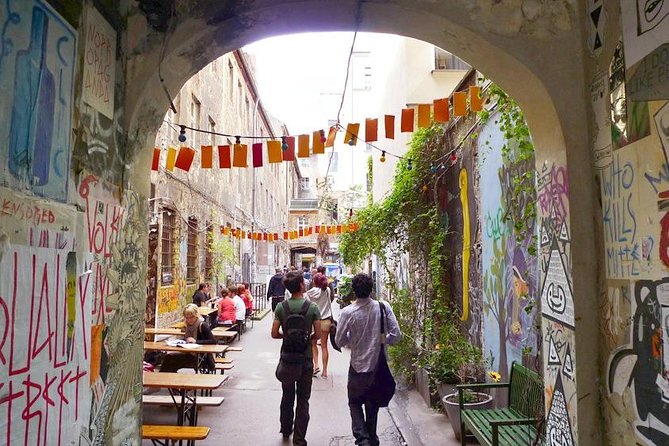
If you think Berlin is only museums and monuments, this tour redirects your attention fast. You’ll focus on how the city expresses itself through art, food culture, and neighborhood identity. The goal is simple, you walk, you look, and your guide puts the pieces together so the street scenes make sense.
Two things I like about the approach. First, the neighborhoods are chosen for contrast, residential charm in Prenzlauer Berg, the historical center in Mitte, and then the cultural push-pull of Kreuzberg and Friedrichshain. Second, the tour uses art as a thread. You do not just see murals and graffiti, you learn how Berlin’s countercultural movements shaped what people create and where they gather.
There’s also a built-in advantage that matters in Berlin. With a private format, you can ask for adjustments in real time, like shifting toward more art stops or more food-focused streets if that’s what you care about most.
Meeting at Alexanderplatz and how the 4.5-hour pace works
You start near Alexanderplatz at the Fernsehturm de Berlín TV Tower area, with the meeting point listed as Vapiano am Alex, Rathausstraße 6. The tour starts at 10:00 am, and it runs for about 4.5 hours of walking and stops.
The logistics are straightforward. You get a mobile ticket, and you meet the guide in person at the start location. There is no hotel pickup or drop-off, so you’ll want to get yourself to Alexanderplatz that morning.
For most people, it’s a manageable day on foot, but you should still expect steady walking. Also, bring comfortable shoes. Berlin sidewalks and curb cuts are fine, but the neighborhoods you’ll cover reward good footwork.
Prenzlauer Berg: where the city looks calm, but still creative
Prenzlauer Berg is the residential side of Berlin, and that changes the mood of the walk. Here, you get a more everyday feel, the kind of place where people actually live, not just visit. This matters because counterculture does not always look loud. Sometimes it looks like design, community space, and everyday creativity.
As you move through this area, you might spot a mix of contemporary art energy and street-level creativity. The tour is built to point out things like urban farms and guerilla garden type spaces, plus organic-market style street scenes. Even if you are not a plant person, these stops help you see how Berliners treat public space as something you can shape.
A small but useful tip: in neighborhoods like Prenzlauer Berg, slow down for a minute. The details are the point. You’ll get better photos and a clearer sense of what your guide is calling out when you pause instead of just walking past.
Mitte: the historical center, explained through what people do
Mitte is Berlin’s historical heart, and on this tour it’s treated like a living stage, not a museum hallway. You’ll see the central vibe while your guide frames what you see through the lens of counterculture and artistic movements.
This is where the tour can feel especially useful if you want context without being trapped in long lectures. You are walking the city while the guide links major themes in Berlin’s culture to the neighborhood streets around you. It’s the kind of explanation that makes it easier to understand what later you might notice on your own.
If you like cities where history shows up in everyday life, Mitte will click. It’s also a good place to ask questions. With a private group up to 12, you can steer the conversation toward what you want most.
More forks and glasses around Berlin
Friedrichshain: the neighbor that keeps Berlin’s edge visible
Friedrichshain shows up as part of the tour arc, with the walk ending in the Friedrichshain-Kreuzberg area. That positioning is smart, because it means you are not just hovering around one zone. You get that cross-neighborhood feeling where Berlin’s identity shifts block by block.
This part of the walk is about texture. You’ll be in streets where alternative culture shows up in art and street scenes, not only in big venues. Since the tour centers on countercultural movements, your guide will connect what you see to why Berlin has a reputation for pushing creative boundaries.
A practical note: Friedrichshain to Kreuzberg zones can feel more active in the late day. Starting at 10:00 am helps. You get the calmer light for photos and an easier pace for walking.
Kreuzberg and its Turkish-influenced streets: food and art as culture
Kreuzberg is one of Berlin’s best-known areas, and this tour uses that fame for a reason. The Turkish-influenced neighborhood is highlighted as a key part of Berlin’s cultural story, including how Kreuzberg moved from poorer beginnings toward a globally recognized alternative and counterculture scene.
What I like here is that the tour does not treat food as an afterthought. You learn how currywurst became a popular local snack, and you’ll get the dish described in a way that makes it easy to order later without second-guessing. Currywurst is a fried pork sausage with curry-seasoned ketchup. Even if you think you already know it, the story can change how you see it, from a casual bite to a symbol of local habits.
If you are into street life, Kreuzberg is where you’ll likely feel the most Berlin-per-block vibe. You’ll also get time for street art and graffiti spotting. The guide helps you read it instead of just photographing it.
Yaam Beach (Young and African Arts Market): multicultural Berlin in one stop
Yaam is presented as the Young and African Arts Market area, and the tour frames it as a direct example of Berlin’s multicultural side. Instead of treating cultural mix as a slogan, the walk points you to the kind of environment where different communities show up through art and public life.
This is also the part of the day that can shift your energy. After a morning of city context and neighborhood history, you get a more scene-like stop where the atmosphere feels more about gathering and expression.
If you want to remember Berlin as more than a cold, historical place, Yaam helps. It’s the kind of stop that makes your next evening plans easier, because you’ll know the city’s creative rhythm better.
Street art, graffiti, urban farms, and guerrilla gardens you can actually see
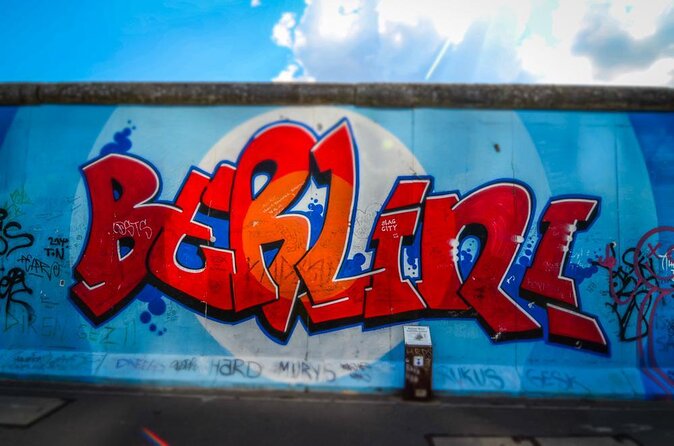
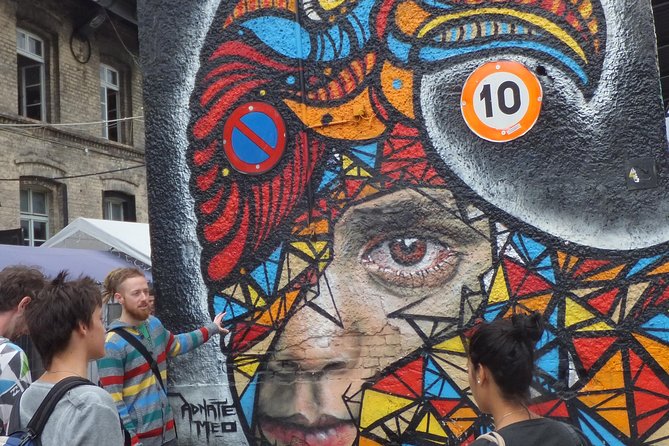
A big reason this tour earns its high rating is the art-focused walk. You’ll view street art and graffiti, and the guide will point out the ideas behind what’s on walls and street corners. You’re not just chasing murals. You’re learning how Berlin’s countercultural movements shaped what gets created and where it appears.
The tour also adds supporting “culture makers” to the art story. You might see contemporary and underground art galleries. You might also spot urban farms and guerilla garden type spaces, plus organic market style scenes. The point is to show that creativity in Berlin is not limited to museums.
My advice here is simple. If street art is your thing, bring a little patience. Let the guide pick the spots. Then take a slow walk through the immediate area after each stop so you can notice details on your own.
Prater Garten Berlin and currywurst, a real pause in the middle of the city
This tour includes Prater Garten Berlin, described as the city’s oldest beer garden, open April through September under chestnut trees since 1837. That’s a specific kind of Berlin charm, old enough to feel anchored, yet still part of the city’s day-to-day life.
Even if you do not drink beer, the setting helps. Chestnut shade, historic beer garden identity, and a chance to sit for a bit. In a walking tour, this matters because you get time to absorb what you’ve learned without constantly moving.
The currywurst story also gives you a concrete food takeaway. You’ll learn how the dish became popular, which makes it easier to order later with confidence. It’s one of those Berlin things that’s both casual and symbolic, and your guide helps you understand why.
One practical drawback to keep in mind: food and drinks are not included. So treat this as a chance to buy a snack or a drink on your own, especially during Prater Garten, instead of expecting it in the tour price.
Custom private format: why it’s priced per group, not per person
The price is $539.22 per group, up to 12 people. Because it’s private, you are paying for the guide time and the ability to tailor your route. It’s not the cheapest option if you travel solo, but it can be very reasonable if you split the cost with friends or you fill most of the group.
Here’s the math you can use without overthinking it. At the full group size of 12, the cost works out to about $45 per person. At fewer people, the per-person cost climbs, and you’ll want to decide whether the private attention is worth it for your group.
What justifies the price is the setup. You get a private guide, and your tour is customized. That means you can ask for desired attractions and adjust the balance between art stops, food stories, and neighborhood context. In Berlin, where neighborhoods have distinct vibes, that flexibility has real value.
The other value piece is pace. This is a one-day, 4.5-hour walking format. Instead of trying to plan multiple days of neighborhoods yourself, you get a structured route that still feels like wandering.
Language, mobile ticket, and the small planning items that help
The tour is offered in English, and you get a mobile ticket. That’s useful for a morning start, because you can keep everything on your phone instead of digging through printouts.
You also need an AB public transport ticket for certain parts. The guide can assist you with purchase if needed. The tour itself is “near public transportation,” which helps if you want to pair it with other plans before or after.
You end in the Friedrichshain-Kreuzberg area, so think about how you’ll get back to your lodging. Since there is no hotel pickup or drop-off, plan your route from the finish point rather than expecting a handoff.
Also note that service animals are allowed, and most people can participate.
Should you book this art, food, and counterculture walking tour?
Book it if you want Berlin through neighborhoods, not just monuments. This is a strong choice for people who like street art, food culture stories, and the idea that Berlin’s identity lives in what people create and gather around. The private format is especially worth it if you have a small group that will actually use the customization.
Skip it or look for another option if you want a tour that includes meals and drinks in the price. This one leaves food and drinks up to you. You should also be comfortable with walking and with the idea that you will spend time on less famous streets, where the payoff is atmosphere and meaning, not landmark scale.
My quick call: if you’re the type of person who reads a city through its walls, markets, and everyday food habits, this private Berlin walk is a very smart use of a morning.
FAQ
How long is the walking tour, and what time does it start?
The tour is about 4.5 hours long and starts at 10:00 am.
Where do we meet, and where does the tour end?
You meet at Vapiano am Alex, Rathausstraße 6, 10178 Berlin. The tour ends in the Berlin-Friedrichshain-Kreuzberg area.
Is this a private tour, and how big is the group?
Yes, it is private, and only your group participates. The group size is up to 12 people, with the price listed per group.
Is the tour offered in English?
Yes, the tour is offered in English.
Do I need an AB public transport ticket?
An AB public transport ticket is needed for certain parts of the tour. Your guide can assist you with purchase if needed.
Are food and drinks included?
No. Food and drinks are not included, and you will need to cover them on your own.
Are service animals allowed?
Yes, service animals are allowed.
What is the cancellation policy, and when will I get confirmation after booking?
You can cancel up to 3 days in advance for a full refund. Confirmation is received within 48 hours of booking, subject to availability. If the minimum number of participants is not met, you will be offered a different date or a full refund.
Plates and Steins in Berlin
Pavements of Berlin
Everything else we filed on Berlin
- East Berlin: City of Shadows Walking Tour
★ 5.0 · 11 reviews - Berlin: Die Stachelschweine – Frank Lüdecke – Träumt Weiter
★ 4.7 · 11 reviews - Potsdam Day Trip from Berlin with a Local: Private & Personalized
★ 4.0 · 11 reviews - An Introduction to Berlin Walking Tour
★ 5.0 · 11 reviews - DJ for a Day: Learn to Mix Like a Pro in Berlin
★ 5.0 · 11 reviews - 2-H Segway Sightseeing Tour Berlin
★ 4.5 · 11 reviews
Food, side by side.
 ★ 4.7Hamburg: Elbphilharmonie Plaza and HafenCity Food TourFrom $691,711 reviews
 ★ 4.5Bavarian Beer and Food Evening Tour in MunichFrom $871,575 reviews
 ★ 5.0Berlin Center Food Tour with 8+ Authentic Local TastingsFrom $1181,227 reviews
 ★ 4.5Munich: Viktualienmarkt Food TourFrom $501,127 reviews
 ★ 4.7Munich: Beer and Food Tour with Dinner & Oktoberfest MuseumFrom $841,086 reviews
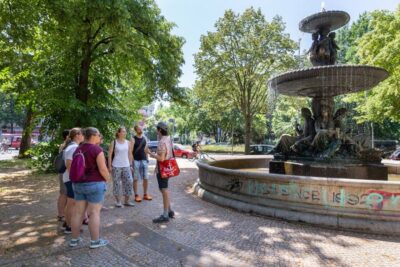 ★ 4.5Kreuzberg: Culinary Food TourFrom $589770 reviews
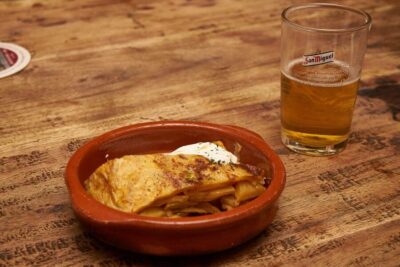 ★ 4.6Cologne: Südstadt Guided Foodie Walking TourFrom $589624 reviews
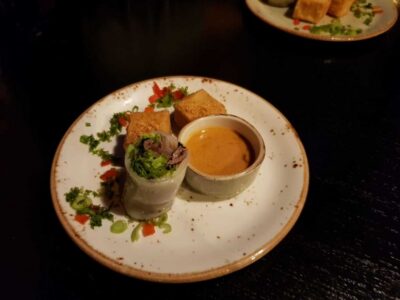 ★ 4.5Berlin: Mitte Culinary Food TourFrom $57447 reviews
Other lists this tour is on