
REVIEW · WARTIME HISTORY
World War 2 Hamburg Private Guided Tour
Hamburg’s WWII story is impossible to ignore once you start walking it. This private, English-language tour maps the city from the interwar years to the night-bombing aftermath, with stops at bunkers and memorials that explain what happened and why it matters. I like that you stay oriented the whole time, since the guide keeps you on track and you are free to ask questions as you go.
Two things I especially like: the scale of what you see in one half-day and the way the route connects politics, persecution, and everyday places like parks and squares. You also get a true private setup, so it is not a rushed “watch and leave” experience.
One possible drawback to plan for: this is a walking-focused tour with a moderate fitness level, and it moves through multiple outdoor sites, so warm layers and good shoes matter. Also, one major viewpoint stop has an admission fee not included, so it helps to know that in advance.
In This Review
- Key highlights in plain terms
- A private Hamburg World War II route you can actually follow
- Setting the stage at Laeiszhalle: WWI fallout, hyperinflation, and antisemitism
- Sievekingplatz and Feldstraße: how institutions failed, then bunkers took over
- Planten un Blomen and Kriegerdenkmal: when a park and a monument become a lesson
- Turmbar and Grindel: over 2,000 bunkers, and the Jewish community’s story
- Jungfernstieg and Rathausmarkt: decoy planning, then Nazi use of civic power
- Afrikahaus and St. Nikolai: colonial roots, mass bombing, and reconciliation
- Price and what you actually get for $714.85 per group
- How to get the most out of this tour (without burning out)
- Should you book this Hamburg World War II private tour?
- FAQ
- What is the duration of the World War II Hamburg private guided tour?
- How much does the tour cost, and what is the group size?
- Is the tour offered in English?
- Do I need to pay for admissions at the stops?
- Where does the tour start and end?
- What is the cancellation policy?
Key highlights in plain terms
- Private route control: You do not have to fight streets, schedules, or unclear signage.
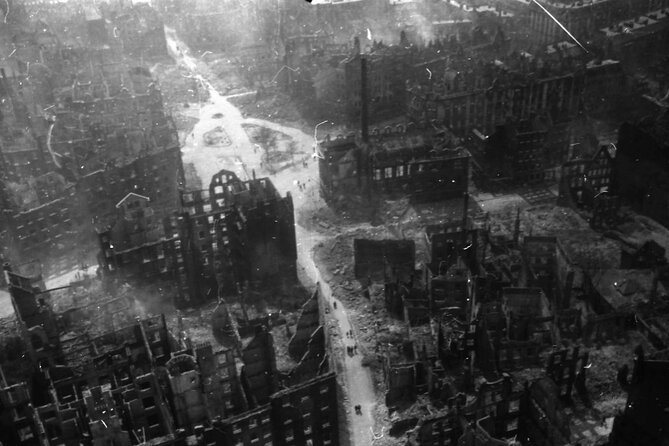
- Bunkers as real objects: You see how WWII defenses were built into Hamburg’s fabric.
- Memory in unexpected places: Parks, squares, and church remains all carry WWII meaning.
- Holistic context: You connect WWII events to WWI aftermath, hyperinflation, antisemitism, and Nazi power.
- Guide-led questions: You can slow down when something hits hard, which it often will.
Undecided? The closest Hamburg write-ups we have are these.
- Hamburg: Sex and Crime in St. Pauli Tour for Ages 18+★ 4.7 · 15,447 reviews
- Hamburg: 1.5-Hour Harbor and Speicherstadt Day Cruise★ 4.6 · 14,200 reviews
- Hamburg: 90-Minute Evening Lights Harbor Cruise★ 4.5 · 7,728 reviews
- Hamburg: 2-Hour XXL Port of Hamburg Cruise Tour★ 4.7 · 6,979 reviews
A private Hamburg World War II route you can actually follow
A good WWII tour is not just about what happened, it is about helping you make sense of it while you are standing in the place where it happened. This one works because it is private, in English, and designed to keep you moving in the right order. The meeting point is at Denkmal für die Gefallenen beider Weltkriege on Schleusenbrücke, and the tour finishes at the WWII Bunker on Feldstraße.
The group size is up to 15 in a private format, which is a nice sweet spot. Big enough for a family or small group to stay together, small enough that your guide can still answer questions without herding you. You also get a mobile ticket, which makes the start simpler on a busy day in Hamburg.
Timing is about 5 hours (approx.), and you cover a lot of ground without making it feel like a nonstop sprint. Expect outdoor stops and several walks between them, so good footwear matters. If anyone in your group needs a slower pace, a private guide setup is one of the best ways to handle it.
Setting the stage at Laeiszhalle: WWI fallout, hyperinflation, and antisemitism
The tour begins at Laeiszhalle and looks backward before the Nazi era takes over. You start in the interwar period, using a place in Hamburg to anchor the story: lesser-known WWI history, the hyperinflation of the 1920s, the rise of antisemitism, and the role of the Treaty of Versailles. That ordering is smart because it explains how people in a city get pushed toward extremist answers.
This first stop is also where the tone of the tour becomes clear. You are not handed facts in isolation. You are shown the chain of cause and effect, starting with economic shock and political blame, then moving toward discrimination.
A practical benefit: since this is early, you can ask your questions right away. If you are not sure what background you need, this is the moment to get it.
Sievekingplatz and Feldstraße: how institutions failed, then bunkers took over
From there, you head to Sievekingplatz, where the story focuses on the downfall of Hamburg’s judicial and political system in the 1930s. It is a hard topic, but the stop makes it tangible by tying power and institutions to real outcomes for ordinary people.
Then comes Feldstraße, marked to this day by one of the largest WWII bunkers in Hamburg. The bunker is now being repurposed as a skyline garden, which can be emotionally strange, in a useful way. You get to see how cities reuse space after catastrophe, and you also learn not to mistake a new function for a clean break from the past.
At this stage, I like that the tour blends “politics class” and “street level reality.” You are not only learning Nazi policy, you are also seeing what the war required cities to build. The result is a better understanding of how quickly daily life can shift from normal routines to survival infrastructure.
Planten un Blomen and Kriegerdenkmal: when a park and a monument become a lesson
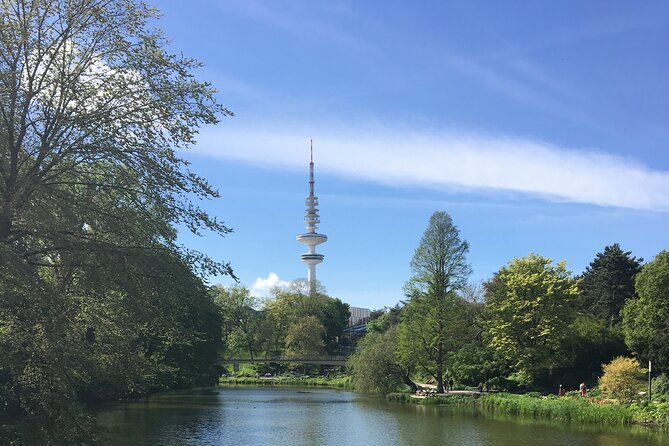
Planten un Blomen is the kind of Hamburg spot many people associate with scenery and a calm walk. On this tour, you also learn a darker layer: it served as a central execution location during WWII, was part of a propaganda project, and was connected to a human zoo and a displaced persons camp. That contrast is jarring, but it is also exactly why guided context matters.
A drawback to consider: if you are sensitive to grim history, this stop may hit hard. The benefit is that your guide can pace the explanation so it feels like understanding, not just shock.
Next is Kriegerdenkmal am Dammtordamm, where you look at five different war memorials from different periods. This is not just a collection of stone. It is a way to understand how remembrance culture changes over time, and how physical space can shape what a city chooses to honor and how.
In a short visit, you get a bigger takeaway: memory is not static. It is debated, reinterpreted, and built into public space.

Turmbar and Grindel: over 2,000 bunkers, and the Jewish community’s story
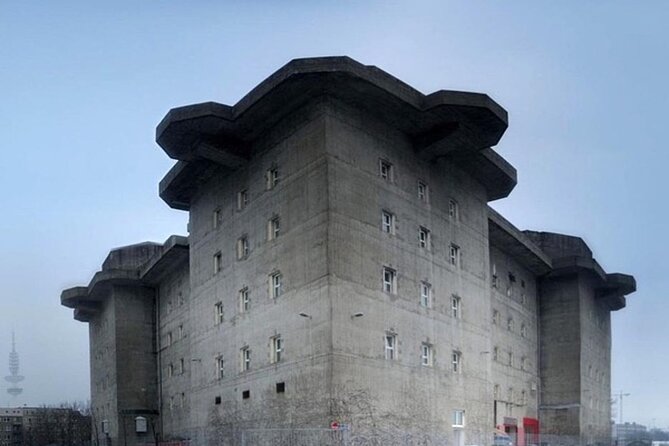
Turmbar looks like a water tower, but it is actually part of Hamburg’s WWII bunker system, one of over 2,000 bunkers built in the city. This kind of stop is excellent for two reasons. First, it forces you to read the city with new eyes. Second, it helps you understand defense as architecture, not just a wartime term.
Then the tour moves to Grindel, where you focus on the neighborhood’s Jewish community and how it changed. You learn how the area formed, who lived there, and what happened during the war. Topics include the places tied to deported Jewish people from Hamburg, Kristallnacht in 1938, book burning in 1933, the Born Synagogue, and the Talmud Torah School.
This is one of the most valuable parts of the route because it gives you names and institutions, not just generalities. When you connect schools and synagogues to the historical timeline, the story becomes much harder to reduce to a single headline.
If you are traveling with multiple generations, this segment can be the most engaging. I have seen guides like Evan tailor this kind of history to mixed ages, keeping it clear without sanding down the facts. That matters if some in your group prefer structure and others want room for questions.
Jungfernstieg and Rathausmarkt: decoy planning, then Nazi use of civic power
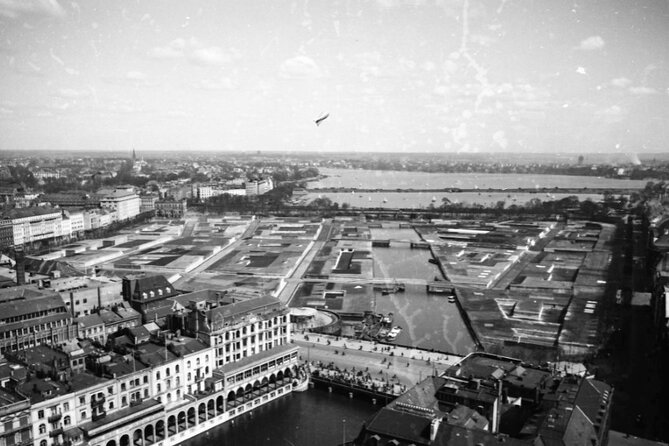
At Jungfernstieg, you learn about how Hamburg tried to build a decoy city center to avoid bombings in WWII. Even if the mechanics are complex, the stop helps you grasp a simple point: cities were not only targets, they were also participants in deception and damage control.
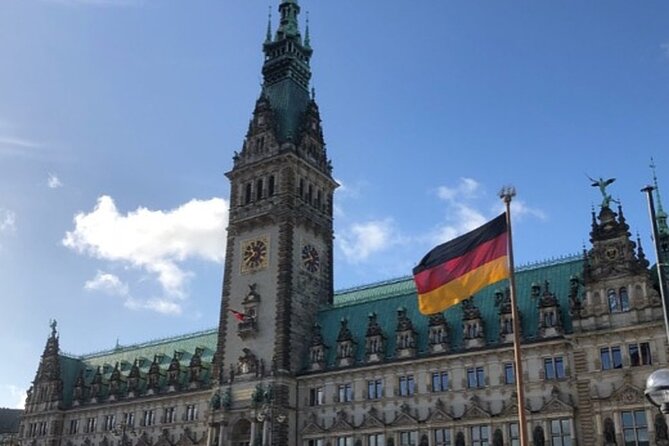
Then you head to Rathausmarkt, where the Town Hall was and remains Hamburg’s symbolic seat of power. Here the story shifts to how the Nazi party used this kind of central authority during WWII, and how the square later carried memorials connected to political opposition, the 1933 book burnings, and WWII-era propaganda tied to WWI.
This is a strong pairing, decoy planning followed by civic power, because it shows two sides of the same reality. Leaders and systems shaped what people saw and what they feared. And later, memorials show what the city decided to remember, who it chose to honor, and which wrongs it wanted to stop repeating.
Afrikahaus and St. Nikolai: colonial roots, mass bombing, and reconciliation
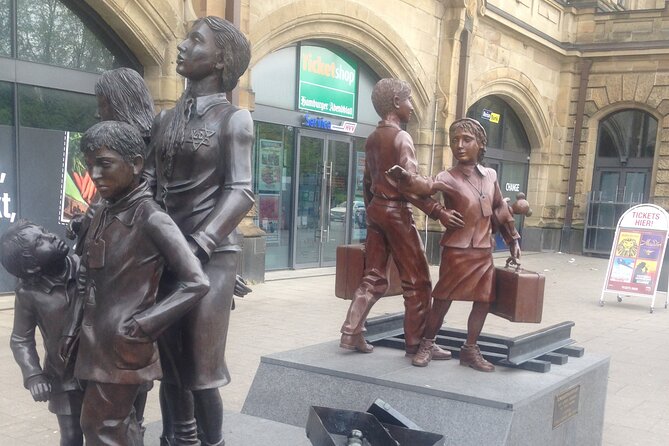
One stop that adds important context is Afrikahaus, a leftover from the German colonial period. The tour explains why this history matters for understanding racial segregation and genocide in WWII Germany. You should not expect a quick “colonial side quest.” It is presented as part of the same system of ideology that shaped later persecution.
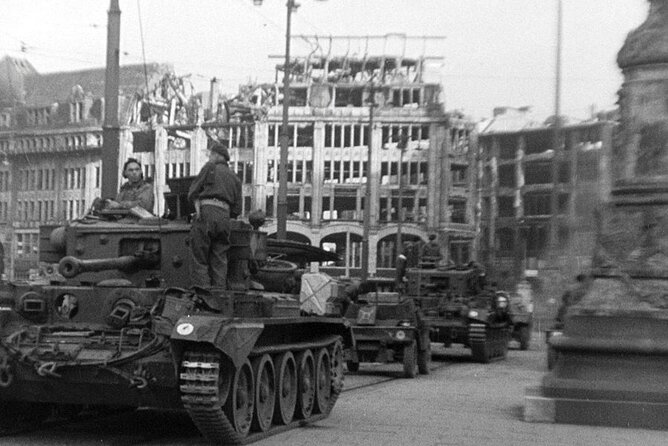
Then the tour ends at St. Nikolai Memorial, built on the remains of a church bombed along with the city in 1943. This site is a memorial to victims of war and the rule of terror, and it includes memorial elements connected to the bombing of Hamburg and the concentration camp Neuengamme, plus a thread of reconciliation between post-war Germany and the UK.
There is also a museum and a tower with an elevator for city views. That part is noted as admission not included, and you have about 25 minutes at this stop. If views are a big priority for your group, it may be worth using some of that time to decide on the spot whether you want to pay for the museum or the tower.
This end point can feel like an emotional reset. You are not just looking at destruction. You are seeing how a modern city deals with grief, documentation, and the long work of rebuilding trust.
Price and what you actually get for $714.85 per group
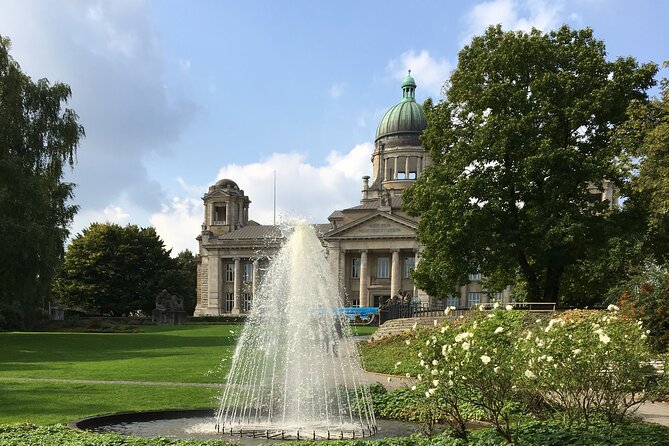
The price is $714.85 per group for up to 15 people, for about 5 hours. On the surface, that may look pricey if you compare it to per-person walking tours. But the math changes if you split the cost across a small group.
More importantly than the arithmetic, you are paying for structure and accountability: a private guide to keep you moving, to help you interpret what you see, and to answer questions while you are standing in the right spot. For WWII history, that matters. You do not want to misread a monument or miss the meaning of a bunker repurposed into a garden.
The other value lever is time. In one half-day, you connect the interwar years, institutional collapse, Jewish community history, Nazi civic power, bombing context, and post-war remembrance. If you tried to build this yourself, you would need both research time and a way to get your questions answered on the street.
One thing to plan: most admission is listed as free, but the St. Nikolai museum and tower admission is not included. If you want those views, budget a little extra.
How to get the most out of this tour (without burning out)
This is not a tour where you should try to capture every detail in photos. Instead, treat it like a guided walking timeline. If something strikes you, write a quick note on your phone and ask about it. The private format means your guide can adjust in real time.
Wear shoes you trust. The tour is “moderate physical fitness,” which usually means walking and standing for stretches. Bring a light layer, since Hamburg weather can change fast.
If you are traveling with kids or elders, the best strategy is to choose moments for questions rather than forcing everyone to hear every detail at full volume. A private guide like Evan, who is described as tailoring the tour to a group’s needs, is especially useful here.
Should you book this Hamburg World War II private tour?
Book it if you want a focused, street-based WWII history tour that explains the story in order and helps you interpret what you see. You will appreciate it most if you care about context, want time for questions, and prefer a guide to keep you from getting lost.
Skip it or rethink your expectations if your group wants only the lightest sightseeing version of Hamburg. This route goes to executions, deportations, Nazi civic power, and wartime terror. It is also outdoors-heavy, so it may feel like a lot in rain or if you have limited mobility.
If you can handle the subject matter and you like learning with a guide in the open air, this is one of the more practical ways to understand Hamburg’s WWII layers in a single day.
FAQ
What is the duration of the World War II Hamburg private guided tour?
The tour lasts about 5 hours.
How much does the tour cost, and what is the group size?
The price is $714.85 per group for up to 15 people.
Is the tour offered in English?
Yes, it is offered in English.
Do I need to pay for admissions at the stops?
Admission is listed as free for the stops described in the itinerary. At St. Nikolai Memorial, the museum and the tower with the elevator are listed as admission not included.
Where does the tour start and end?
It starts at Denkmal für die Gefallenen beider Weltkriege, Schleusenbrücke 1, 20354 Hamburg, Germany, and ends at the WWII Bunker on Feldstraße 66, 20359 Hamburg, Germany. Drop-off at another location is possible upon request.
What is the cancellation policy?
You can cancel for free up to 24 hours in advance for a full refund. If you cancel less than 24 hours before the start time, the amount paid is not refunded.
Everything else we filed on Hamburg
- Hamburg Private Food Tours with a Local: 100% Personalized
★ 5.0 · 3 reviews - The Beatles on St. Pauli
★ 5.0 · 3 reviews - Short walk St. Pauli – the St. Pauli quickie
★ 5.0 · 3 reviews - Hamburg: Safari Tour in St. Pauli
★ 5.0 · 3 reviews - Hamburg Like a Local: Private and Personalized Experience (3hrs)
★ 5.0 · 3 reviews - Private Hamburg rickshaw tour for 2 people
★ 5.0 · 3 reviews
Third Reich and Wartime History Tours, side by side.
 ★ 4.9Berlin: Third Reich and Cold War 2 Hour Walking TourFrom $236,830 reviews
 ★ 4.6Munich: Third Reich & WWII Walking TourFrom $316,181 reviews
 ★ 5.0Berlin’s Best: 2 Hour Walking Tour Third Reich and the Cold WarFrom $245,486 reviews
 ★ 4.5Third Reich Walking Tour MunichFrom $454,291 reviews
 ★ 5.0Third Reich Berlin: Hitler and WWII Walking TourFrom $243,301 reviews
 ★ 4.7Nuremberg: Walking Tour of Former Nazi Party Rally GroundsFrom $151,665 reviews
 ★ 4.9Berlin: Third Reich, Hitler, and WWII Walking TourFrom $201,133 reviews
 ★ 4.8Nuremberg: Historischer Kunstbunker WWII Art Bunker TourFrom $14921 reviews
Other lists this tour is on