
REVIEW · WARTIME HISTORY
Berlin: Third Reich, Hitler, and WWII Walking Tour
Nazi Germany feels close on this walk. You trace the Third Reich at real locations, then see how the city and the world changed in the final collapse. The route links the rise of Nazi power with the last days of Hitler, before ending at Soviet memorial ground.
I love that the tour leans on expert guides who make tough, sensitive history understandable, not vague. You can get a feel for the approach from the named guides who get praised a lot, like Hannah for respectful handling of difficult topics, Xavier for spotting details most people miss, and Mikhail for connecting Nazi-era sites to wider Berlin context. I also like the balance of stops, from the Nazi command centers to the Soviet War Memorial with T-34 tanks and Red Army howitzers.
One possible drawback: it is 3 hours of walking in rain or shine, and one tip from the experience is to plan for no water or toilet breaks. If heavy history drains you fast, pace yourself and take short pauses when you can.
In This Review
- Key points to expect
- Getting Started at Friedrichstraße, With Clear Meeting Marks
- The Nazi Power Map in Plain Sight: From Air Defense to Propaganda
- Following Hitler’s Axis: Germania and the Führer’s Bunker
- Topography of Terror: Turning Sites Into Evidence
- The Fall at the Reichstag and the Soviet Assault Path
- Soviet Victory at the War Memorial With T-34s and Howitzers
- How the Guides Really Make It Work
- Price and Time Value for a $20, 3-Hour Walk
- Who This Tour Suits Best, and Who Might Want to Adjust
- Should You Book This Berlin Third Reich Walking Tour?
- FAQ
- How long is the Berlin: Third Reich, Hitler, and WWII walking tour?
- How much does the tour cost?
- Where do we meet the guide?
- Where does the tour end?
- What languages are offered?
- Does the tour run in bad weather?
- What should I bring?
- Is pickup available?
- Are private or small groups available?
- Is free cancellation available?
Key points to expect
- Friedrichstraße meeting point right by the Palace of Tears area, with guides easy to spot by yellow umbrellas
- Nazi power sites in sequence, including the former locations tied to Goering, Goebbels, Himmler, and SS and Gestapo HQs
- Hitler’s Berlin footprint, including the planned Germania axis and the site above the Führer’s Bunker
- Topography of Terror stop, helping you place what you see in the wider Nazi system of terror
- Reichstag and the final battlefield story, including the route of the Soviet assault
- Soviet victory imagery, with T-34 tanks and Red Army howitzers at the memorial
Further wartime history walks we have written up
- Berlin: Third Reich and Cold War 2 Hour Walking Tour★ 4.9 · 6,830 reviews
- Berlin’s Best: 2 Hour Walking Tour Third Reich and the Cold War★ 5.0 · 5,486 reviews
- Third Reich Berlin: Hitler and WWII Walking Tour★ 5.0 · 3,301 reviews
- Berlin: Third Reich, Hitler, and WWII Walking Tour★ 4.9 · 1,133 reviews
Getting Started at Friedrichstraße, With Clear Meeting Marks
This tour starts outside Friedrichstraße train station, on the square between the Tränenpalast (Palace of Tears) and the station itself. The guide details matter here because this route passes through busy streets and memorial areas, so you want to find the group fast. Look for a guide wearing a blue lanyard and a yellow name tag, often with a yellow umbrella.
The end point is the same as the start, which is practical. You do not have to re-plan your transit after a long, emotional walk, and you can head straight into the rest of your day in central Berlin.
You’ll be out for about 3 hours, and the tour runs rain or shine. Bring comfortable shoes and dress for the weather. This is one of those experiences where your feet matter more than you think, since the focus is on moving site to site while the guide tells the story in order.
The Nazi Power Map in Plain Sight: From Air Defense to Propaganda
Berlin did not just host Nazi politics. It built the physical machinery for them. That’s what makes this section worth your time. Your guide points out former locations tied to key parts of the regime, and the city’s present-day streets become a kind of map for the past.
You’ll stand by areas associated with Goering’s Air Defence Ministry, where the Luftwaffe planned major air operations tied to the Blitz. It’s an important reminder that mass bombing was not random. It was organized, planned, and staffed by people within a system that believed brutality would win.
Then the tour shifts toward the regime’s control of information. You’ll see the former sites connected to Goebbels’ Propaganda Ministry, and that stop helps you understand why propaganda was not just posters and speeches. It shaped what Germans were allowed to believe, what they were encouraged to ignore, and how dissent could be framed as an enemy of the state.
After that, you’ll get pointed to locations tied to Himmler’s SS and Gestapo HQs, the nerve centers where repression worked day to day. Standing near where these structures operated, the history stops being abstract. You start to see how terror was administered through institutions, not just ideology.
One practical note: this part of the tour includes sensitive content, so if you want time to process between stops, do it. Pause, look around, and let your brain catch up. The guide’s job is to keep the thread clear, but your job is to stay steady emotionally.
Following Hitler’s Axis: Germania and the Führer’s Bunker
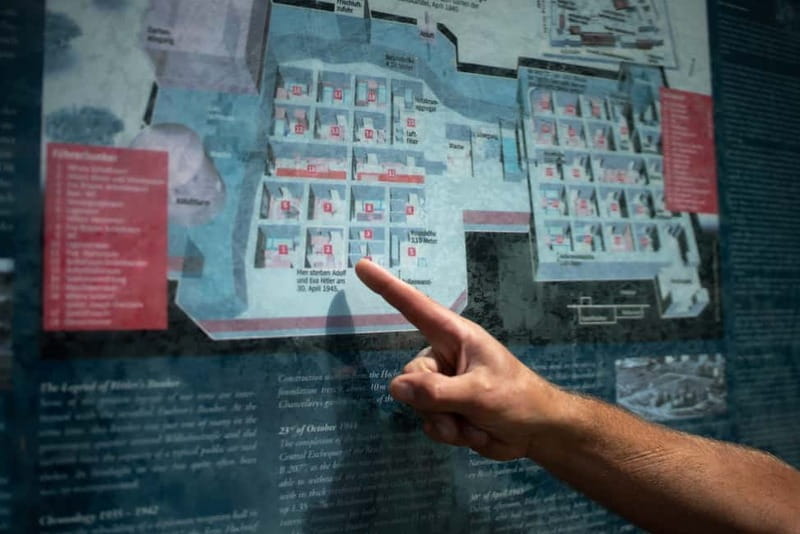
One of the most striking parts of the experience is how it connects ideology to city planning. You’ll walk along Hitler’s planned Germania axis, designed by Albert Speer. Even if you know the basics of Nazi architecture, the real value here is seeing how grand visions were meant to signal power, control, and destiny in the built environment.
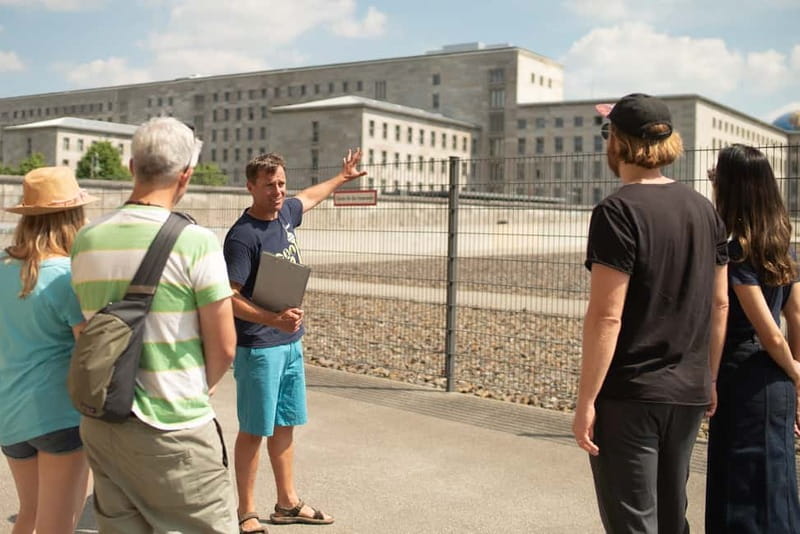
From there, you come to the section focused on the endgame. You’ll visit the site tied to Hitler’s New Reich Chancellery, described as the seat of power in Nazi Europe. This is one of those stops where the guide’s narration does the heavy lifting, because what you see today may feel less dramatic than the historical role.
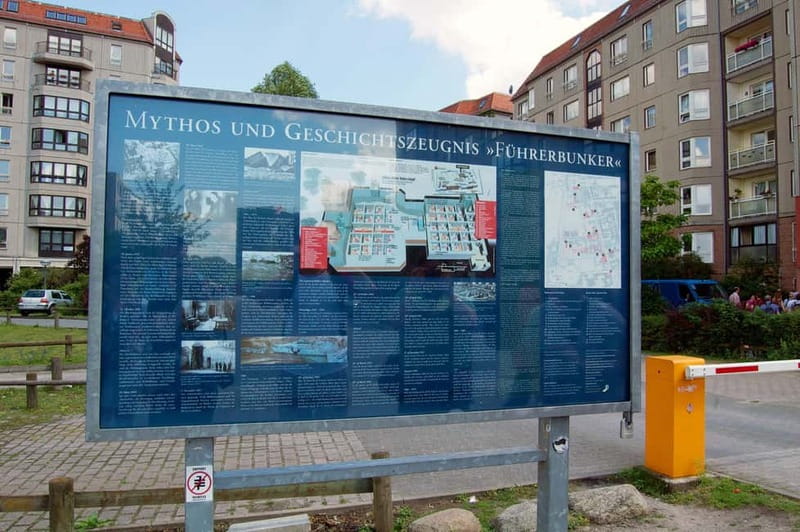
Then comes the most loaded location on the route: the Führer’s Bunker area. The tour focuses on standing above it and hearing a step-by-step account of Hitler’s final days, including the fate of his remains. That narration matters. Without it, the physical place can feel like just another Berlin site. With it, the location becomes a moment in a timeline, not just a point on a map.
Because this is close to the regime’s collapse, you may find your emotions changing during this part of the tour. That’s normal. I find that tours like this work best when you accept that the story is not neat, and the guide is there to keep it human, factual, and in order.
Topography of Terror: Turning Sites Into Evidence
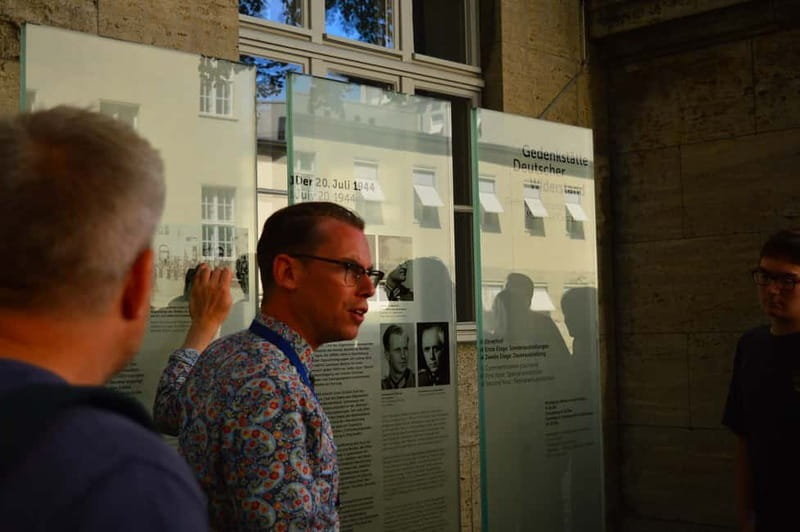
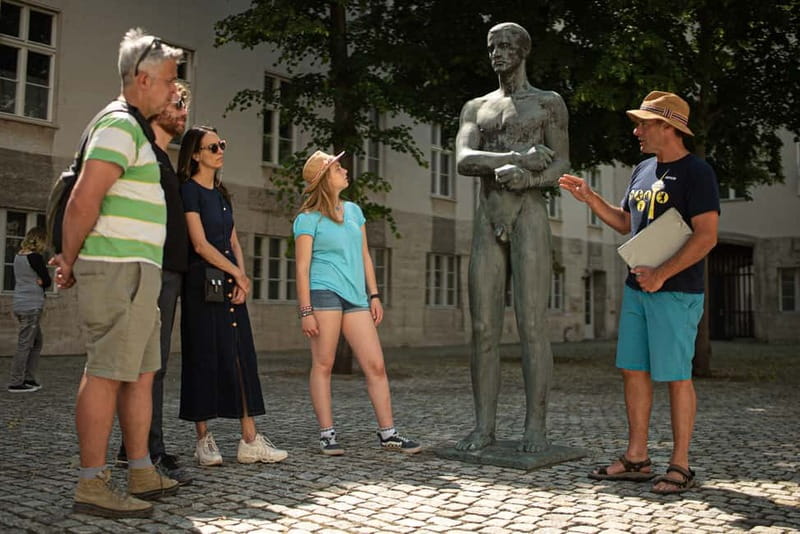
You’ll also explore the Topography of Terror exhibit as part of the walk. This stop is valuable because it gives you context for everything you just saw outside.
The earlier stops are place-based. You’re standing near where Nazi systems operated. The exhibit helps you connect those places to documentation and explanation, so you understand what those institutions did and how the terror network functioned.
A good sign here, based on what’s been praised, is that the guides keep their tone respectful and clear when discussing difficult material. For example, Hannah is specifically noted for describing sensitive topics in a respectful way, thoroughly answering questions, and handling the emotional weight of the story well.
If you like history that has proof, not just vibes, this is the part you’ll appreciate. It also makes the later segments about the war’s end feel more grounded, because you’re carrying the full picture with you.
Other walking routes through Berlin
The Fall at the Reichstag and the Soviet Assault Path
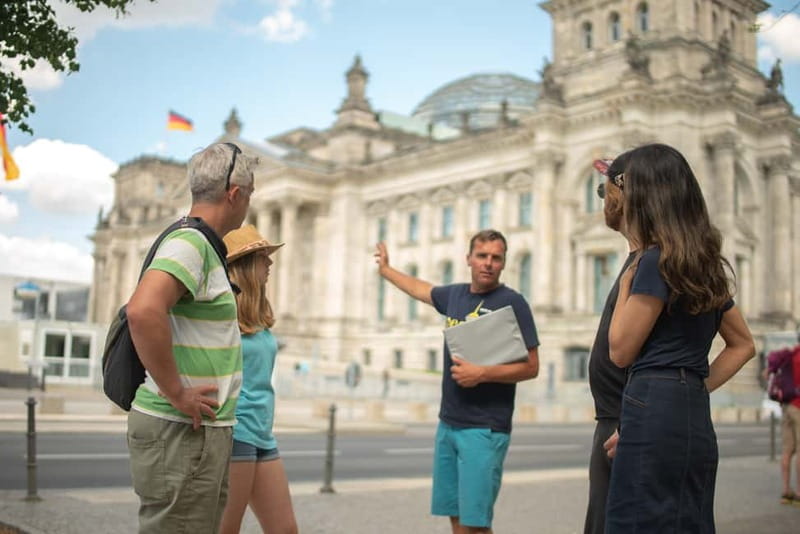
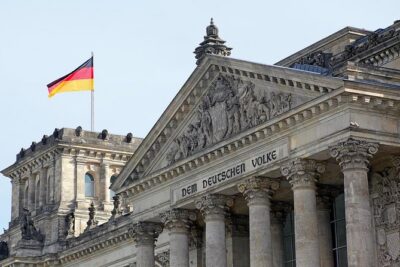
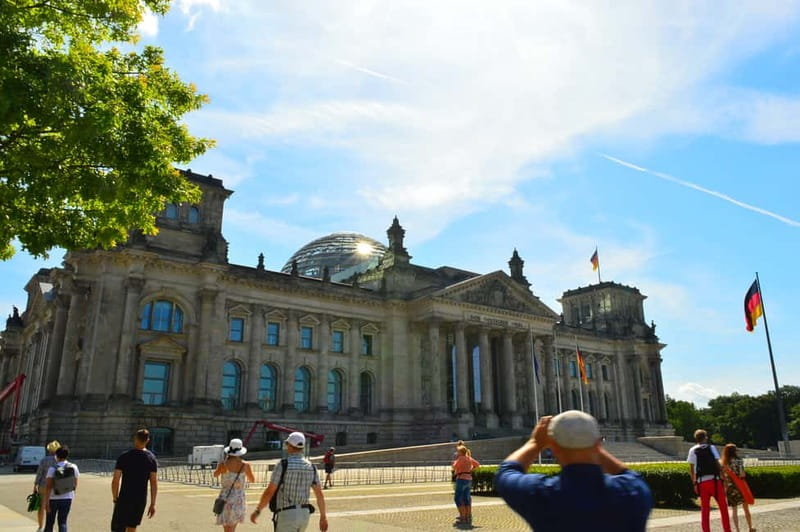
After you’ve traced how power worked, you shift into how it broke. The tour follows the Soviet assault path as you stand near the Reichstag, described as the final battlefield of Nazi Germany.
This is a strong pivot point for your understanding. You’re no longer watching the story from inside the regime. You’re watching it from the outside perspective of invasion, collapse, and takeover. The guide’s narration helps you see the sequence and why this area mattered so much in the final days.
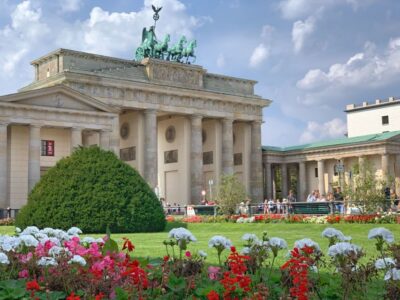
You’ll also pass the Brandenburg Gate, which the tour frames as once a symbol of Nazi power and later a Cold War divide. That transition is one reason Berlin is uniquely powerful for WWII education. The same spaces can carry different meanings depending on who controls the story afterward.
As you move through these stops, keep an eye on how the tour treats the city as a living archive. Streets and monuments here do not stay silent. They absorb political eras and then keep showing the layers.
Soviet Victory at the War Memorial With T-34s and Howitzers
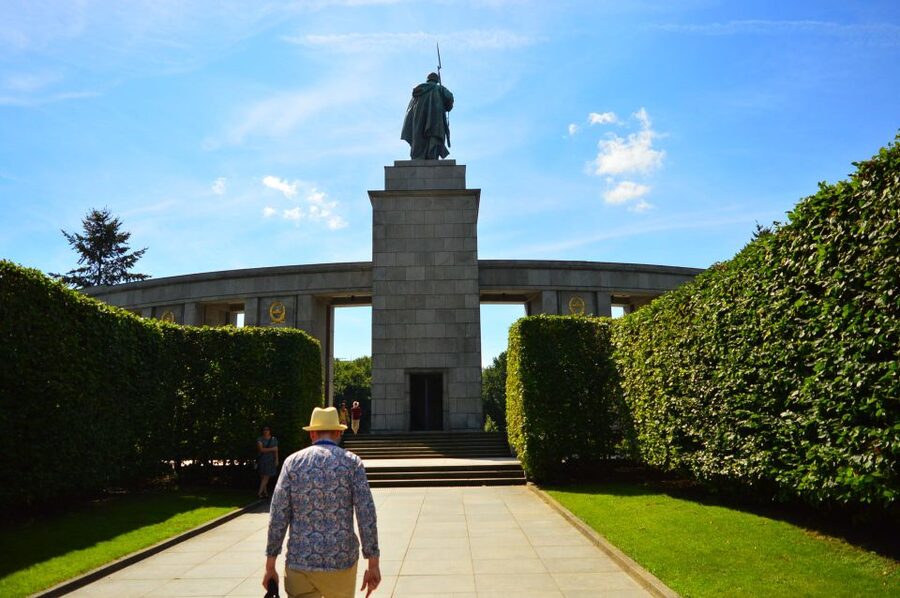
The tour ends this historical arc at the Soviet War Memorial, flanked by T-34 tanks and Red Army howitzers. This is not the same tone as the Nazi sites. It’s a different kind of visual language, focused on victory, survival, and the aftermath of destruction.
Why this stop is more than a photo opportunity: it reminds you that WWII did not end with a single dramatic moment. It ended through occupation, fighting, and the long shadow of what came next. The memorial gives your walk a final physical anchor, so the story doesn’t vanish back into the transit noise.
This ending also balances the tour’s structure. You start with Nazi control, see the execution of terror, then watch the war’s end in the streets and official symbols, and you finish with the Soviet presence made monumental.
If you’re the type who prefers closure, this memorial stop helps. It gives you something concrete to hold onto before you head off to Berlin’s museums and cafes.
How the Guides Really Make It Work
The tour’s rating is very high, with an average of 4.9 from 1,133 ratings. That kind of consistency usually points to one thing: the guide quality is doing the heavy lifting.
Across the praised guides, you’ll notice repeated themes. Guides like Mikhail are mentioned as bringing the locations and history to life, being easygoing and friendly, and slipping in Cold War and broader Berlin context between stops. Will is praised for having an impressive grasp of fascism and for telling stories in a way that makes the history feel like it has gravity, not trivia. Other guides, including Xavier and Hannah, get credit for spotting small details and answering questions clearly.
Two things you should look for when you’re with your guide:
- They explain why each site mattered, not just what happened there.
- They handle sensitive topics with a steady tone and invite questions.
That second part is important for value. If you care about accuracy, you want a guide who responds to your curiosity instead of rushing past it. Many of the strong notes about these guides point to exactly that: answers that stay grounded, and an approach that keeps the story respectful.
Price and Time Value for a $20, 3-Hour Walk
At $20 per person for about 3 hours and a live guide, this is priced like a practical orientation tour, not a premium, museum-only experience. For that money, you get a guided route across multiple major WWII and Nazi-era reference points, plus a stop at Topography of Terror.
The value is not just the number of stops. It’s the sequencing. A guide helps you understand cause and effect: how Nazi power took shape, how it operated through institutions, and how it ended. If you try to DIY this by hopping between sites, you can still do it, but you risk turning history into disconnected locations.
Also, the tour ends where it starts. That’s small, but it saves time and planning after your walk.
Who This Tour Suits Best, and Who Might Want to Adjust
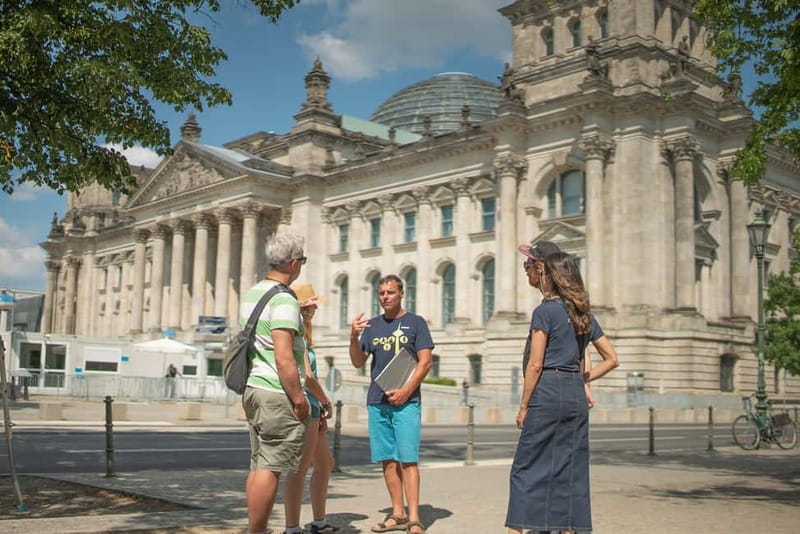
This tour is a great fit if you:
- want an organized way to learn WWII and the Third Reich at real Berlin locations
- like walking tours that connect architecture, institutions, and events
- appreciate guides who handle heavy topics respectfully and answer questions
You might want to adjust your expectations if:
- you need lots of breaks during tough or emotional history. The route is rain or shine, and one tip specifically warns that there are no water or toilet breaks, so plan ahead
- you prefer lighter, purely sightseeing tours. This is explicitly about Nazi Germany and its collapse
For best results, go in with comfortable shoes, water, and a mindset that this is education through place. You’ll get more out of it if you let the story unfold chronologically, step by step, instead of trying to collect every detail at once.
Should You Book This Berlin Third Reich Walking Tour?
If you want a tightly guided, 3-hour route through some of Berlin’s most important WWII touchpoints, I think you should book it. The combination of real sites, a guided explanation, and a Topography of Terror stop makes it much easier to understand what you’re seeing and why it matters.
Book it if you value clarity and guide-led context. The strong ratings and repeated praise for respectful handling of sensitive topics, plus guides who invite questions, point to an experience that’s both informative and emotionally careful.
Skip it, or consider a private option, if you need frequent breakpoints or you know you struggle with long, heavy history walks. Otherwise, this is one of the more cost-effective ways to learn the Third Reich and WWII through the city itself.
FAQ
How long is the Berlin: Third Reich, Hitler, and WWII walking tour?
It lasts about 3 hours.
How much does the tour cost?
The price is $20 per person.
Where do we meet the guide?
You meet outside Friedrichstraße train station, on the square between the Tränenpalast (Palace of Tears) and the station. Guides wear a blue lanyard and a yellow name tag holding yellow umbrellas.
Where does the tour end?
It ends back at the meeting point.
What languages are offered?
The live tour guide is available in English, German, and Spanish.
Does the tour run in bad weather?
Yes, it operates rain or shine.
What should I bring?
Wear comfortable shoes and comfortable clothes, and bring weather-appropriate clothing.
Is pickup available?
Pickup is optional only for private options. For private pickup, you wait in the hotel lobby 5 minutes before your scheduled pickup time, and the guide will be wearing a yellow name tag.
Are private or small groups available?
Yes, private or small groups are available.
Is free cancellation available?
Yes. You can cancel up to 24 hours in advance for a full refund.
Pavements of Berlin
Wartime History Walks We Have Reviewed
Everything else we filed on Berlin
- East Berlin: City of Shadows Walking Tour
★ 5.0 · 11 reviews - Berlin: Die Stachelschweine – Frank Lüdecke – Träumt Weiter
★ 4.7 · 11 reviews - Potsdam Day Trip from Berlin with a Local: Private & Personalized
★ 4.0 · 11 reviews - An Introduction to Berlin Walking Tour
★ 5.0 · 11 reviews - DJ for a Day: Learn to Mix Like a Pro in Berlin
★ 5.0 · 11 reviews - 2-H Segway Sightseeing Tour Berlin
★ 4.5 · 11 reviews
Third Reich and Wartime History Tours, side by side.
 ★ 4.9Berlin: Third Reich and Cold War 2 Hour Walking TourFrom $236,830 reviews
 ★ 4.6Munich: Third Reich & WWII Walking TourFrom $316,181 reviews
 ★ 5.0Berlin’s Best: 2 Hour Walking Tour Third Reich and the Cold WarFrom $245,486 reviews
 ★ 4.5Third Reich Walking Tour MunichFrom $454,291 reviews
 ★ 5.0Third Reich Berlin: Hitler and WWII Walking TourFrom $243,301 reviews
 ★ 4.7Nuremberg: Walking Tour of Former Nazi Party Rally GroundsFrom $151,665 reviews
 ★ 4.8Nuremberg: Historischer Kunstbunker WWII Art Bunker TourFrom $14921 reviews
 ★ 5.0Berlin Third Reich Sites: Half-Day Walking TourFrom $21835 reviews
Other lists this tour is on