
REVIEW · WALKING TOURS
Amazing walking Frankfurt with a local guide
Frankfurt on foot feels like fast-forwarding time. This private half-day walk mixes medieval squares with modern finance, and it does it at a pace that makes sense for a layover. With door-to-door pickup by Oleg Dubinskii, you start in the city center and don’t waste time figuring out transit.
I also love the way the route stacks big-picture stories with real places, so you see why Frankfurt matters, not just what it looks like. The one thing to keep in mind is that the experience style can vary based on your guide and your energy level, so if you want a very specific tone, go in ready with your interests and questions.
In This Review
- Key highlights that make this tour worth your time
- Private Frankfurt walking tour with hotel pickup, led by Oleg Dubinskii
- Where the day starts: Römerberg and the Hauptwache square
- The pedestrian-core walk: Zeil, shopping energy, and quick local stops
- Dom St. Bartholomaus: Gothic grandeur and the power of emperors
- Paulskirche and the 1848 parliament story
- The Iron Bridge and the view toward Sachsenhausen
- Alte Oper, Katharinenkirche, and other church exteriors that teach you the city
- Liebfrauen, Frankfurt Stock Exchange, and the blunt feel of modern power
- European Central Bank, the euro statue, and the switch to Mainhattan
- Markets and shopping stops: Kleinmarkthalle and the modern mall side of Frankfurt
- Eschenheimer Turm and the Goethe connection that rounds out the story
- Price and value: Is $309.62 per group worth it?
- Who this walking tour fits best
- Should you book this Frankfurt walking tour with Oleg?
- FAQ
- How long is the Frankfurt walking tour?
- How much does it cost?
- Is pickup included?
- What language is the tour guide?
- Is a mobile ticket used?
- Are snacks provided?
- Can I cancel and get a full refund?
Key highlights that make this tour worth your time
- Hotel pickup and drop-off so you can stay relaxed from the first minute
- A tight route that hits old-town squares, landmark churches, and key finance stops
- Church and site admissions included at major stops, so it is not only photos from the sidewalk
- Plenty of stops for short layovers, without forcing you to sprint between far-away places
- A market stop with local food browsing at Kleinmarkthalle
- Oleg Dubinskii as the guide, often described as friendly and willing to go at your pace
Other walking routes through Frankfurt
- Frankfurt Highlights English Walking Tour★ 5.0 · 1,203 reviews
- Frankfurt on Foot Daily Walking Tour in English★ 4.9 · 323 reviews
- Frankfurt Self-Guided Historical Walking Tour★ 4.0 · 58 reviews
- 2-Hour Best of Frankfurt Walking Tour (English)★ 5.0 · 55 reviews
Private Frankfurt walking tour with hotel pickup, led by Oleg Dubinskii
If your Frankfurt day feels too short for “real planning,” this is the kind of tour that does the heavy lifting for you. You get a personal guide, Oleg Dubinskii, and that matters in a city where the sights are scattered in layers: medieval streets, grand churches, then the glass-and-neon modern core. You also get picked up and dropped off within the city, so the tour behaves more like a guided day out than a checklist of stops.
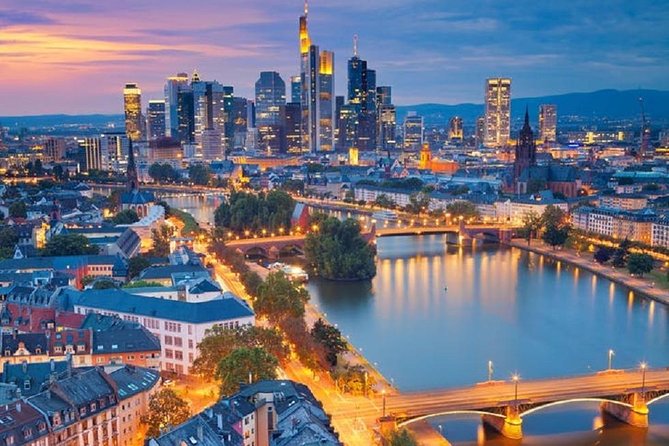
The best value in a walking tour is not the number of landmarks. It is whether the walking time feels purposeful. Here, the route is built for flow. You start in the historic center, then fan out through the pedestrian core, cross bridges to river views, and keep moving toward the modern skyline and finance district. That means you walk where people actually shop, gather, and commute, not just where photo spots live.
And since this is a private group for up to two people, you can ask questions without waiting for a larger group to catch up. Even if you prefer quiet listening over chatter, you still get context at each major stop.
Where the day starts: Römerberg and the Hauptwache square
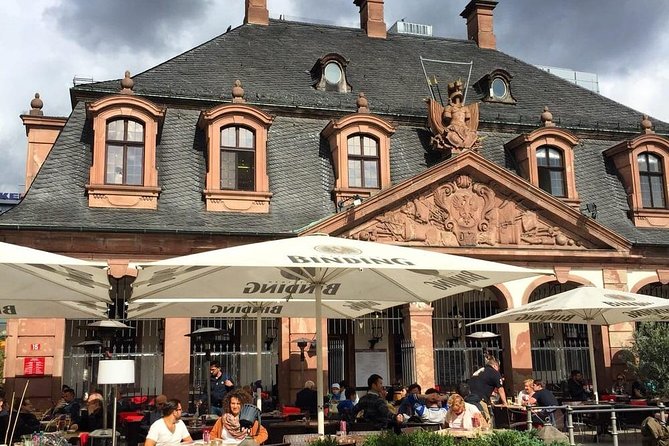
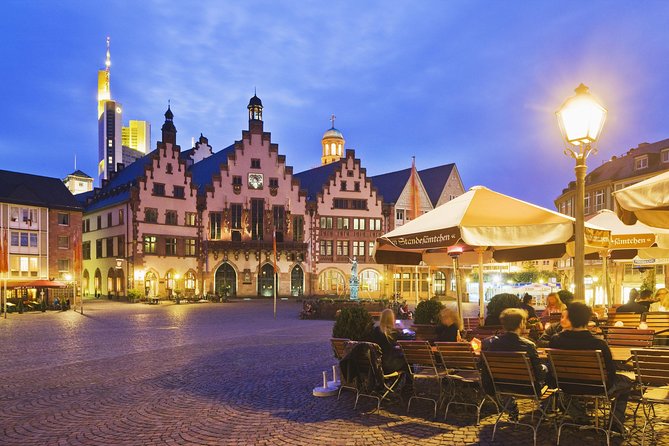
Your morning or afternoon begins at Römerberg, the iconic Roemer square. This is the type of place where buildings seem to carry more than one era at once, and that is exactly what the guide points out. You get a feel for the city’s “old and young” character here, with the Italian palazzos beside modern urban life. It is an easy first stop because it’s central, and it sets the tone quickly.
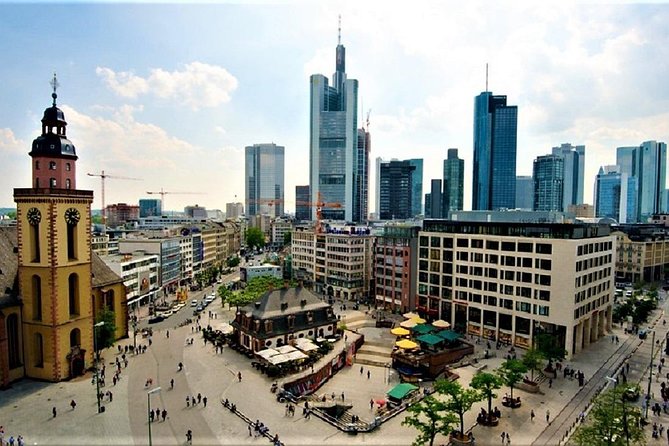
From there you head to Hauptwache, one of Frankfurt’s most famous squares. The standout is how many architectural styles you can spot in a small area, moving from older influences toward newer forms. If you want an immediate win in one of the most walkable parts of downtown, this is it.
One practical tip: wear comfortable shoes. These squares are flat-ish, but the real test comes from the number of stops that follow. A good guide pace makes it manageable, and that pace is part of why people rate Oleg so highly.
The pedestrian-core walk: Zeil, shopping energy, and quick local stops
After Hauptwache, you continue along Zeil, Frankfurt’s best-known shopping street. Think of this as the city’s main people-moving corridor, with shops and cafes right alongside the sightseeing. It is a good contrast to the churches, because it shows Frankfurt as a living city, not just a museum.
This stretch also helps you understand the geography. Once you’ve walked the Zeil corridor with a guide, later stops like market areas and the financial district feel connected instead of random.
If you are traveling with limited time, this “shopping spine” is a smart anchor. It keeps you in the center, where the rest of the route is easy to reach on foot.
Dom St. Bartholomaus: Gothic grandeur and the power of emperors
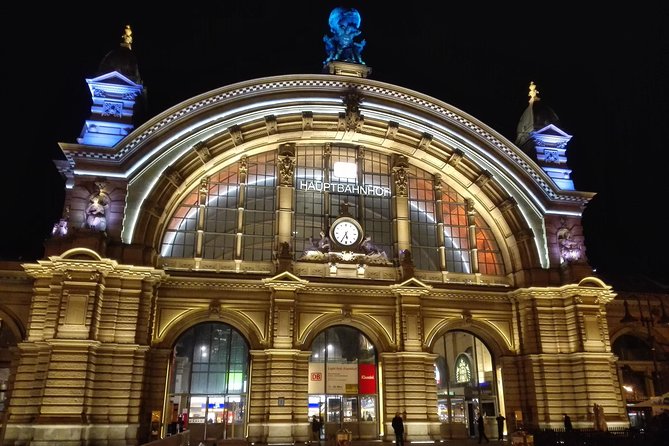
Next comes the Cathedral of St. Bartholomew, also called Dom St. Bartholomaus. This is one of those places where the building’s age and purpose show up in the details. You’re in a Gothic church built in the 14th century, on earlier foundations. The guide also explains why it mattered politically: starting in 1356, elections for the Holy Roman Emperor were held here, and from 1562 to 1792, emperors were crowned in this cathedral.
That kind of context can turn a “pretty church” into a real sense of place. You are not only looking upward at stonework. You are hearing why this location held power. It helps when you’re trying to understand Frankfurt’s role in European history without reading a book at every stop.
Practical consideration: cathedral visits take time, even when the group moves quickly. If you’re prone to fatigue after flights, build in a little extra patience here. The payoff is that you get a meaningful interior moment, not just an exterior glance.
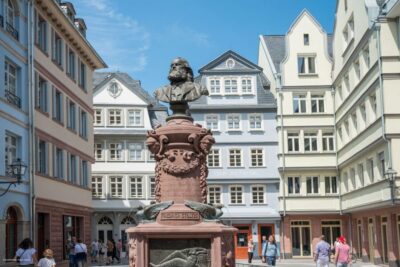

Paulskirche and the 1848 parliament story
From the cathedral you move to St. Paul’s Church, known as Paulskirche. This stop is short but punchy. You go to the seat of the first democratically elected parliament in Germany in 1848. Today, the building is used as a memorial site and as an event space for the awarding of the Peace Prize of the German Book Trade.
This is a great contrast stop because it shifts from imperial power to democracy and civic ideals. You’ll likely walk away with a sharper mental map of how Frankfurt keeps reinventing what “important” means.
The Iron Bridge and the view toward Sachsenhausen
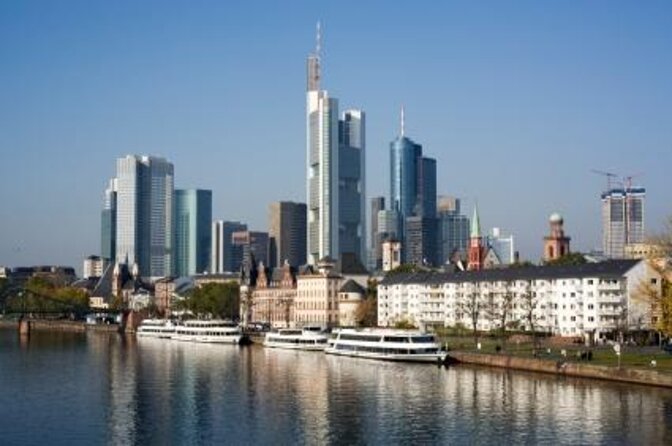
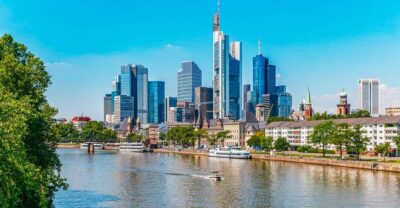
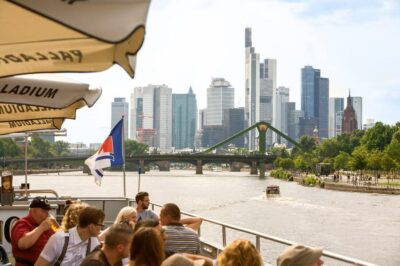
Then it is time for a break from pure city streets: the Iron Bridge. It’s a well-known pedestrian bridge built in 1869, and it is close to Römer square. As you cross, you get skyline and Main river views, which is exactly what you want halfway through a walking tour.
On the far side is Sachsenhausen, a district known for museums and historic pubs. Even if you do not spend a full afternoon there, the bridge view plus the guide’s framing gives you a reason to plan a return trip if you have extra time.
If you like photography, this bridge is one of your best chances to grab river-and-city shots in a way that still feels part of the walking day, not tacked on at the end.
Alte Oper, Katharinenkirche, and other church exteriors that teach you the city
As you continue, you’ll see the Alte Oper. This Renaissance opera building originally opened in 1880 and today hosts concerts and other prominent events. Even if you are not catching a show, it helps you understand Frankfurt’s cultural confidence.
You also stop at Katharinenkirche, a Lutheran church built from 1678 to 1681 on the site of an earlier monastery. With the guide’s explanations, you get a sense for how religious buildings in Frankfurt acted as markers for both continuity and change.
These are shorter stops, but they work well. In a three-hour window, you need quick, high-impact moments. Churches here are more than architecture, they are storytelling cues that connect your walk to the city’s changing identity.
Liebfrauen, Frankfurt Stock Exchange, and the blunt feel of modern power
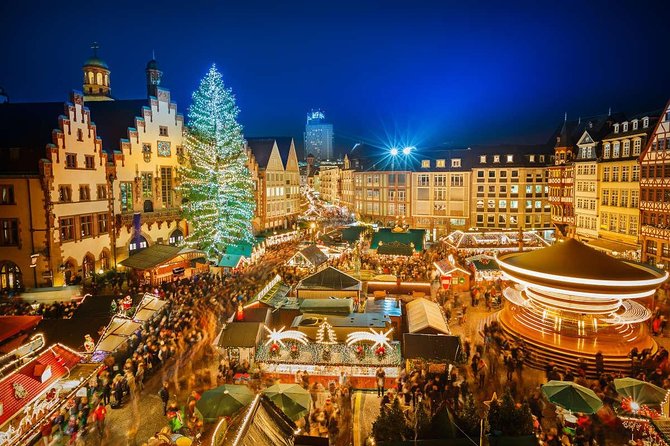
Then you shift again. Liebfrauen is a Roman-Catholic church and monastery with roots in the 14th century, located near Liebfrauen lane by Zeil. It adds another layer to the city’s religious geography so you don’t get a one-note picture.
After that, you reach Borse Frankfurt, the Frankfurt Stock Exchange building. It’s still in use, and the guide points out the famous bull and bear statues outside. That little detail is useful because it turns the idea of finance into something physical, right in the street. You start to see how symbols and industry mix in Frankfurt.
If you’re wondering what Frankfurt “feels like,” this zone is a big part of the answer. It is where the city becomes instantly recognizable as a European business hub.
European Central Bank, the euro statue, and the switch to Mainhattan
The European Central Bank stop adds a visual punch. You focus on the big neon-colored € statue in front of the entrance, a modern landmark that you can’t miss. With a guide, it’s not only a photo moment. It’s a chance to understand that you are standing at the center of financial power in Europe.
From there, you move to the Main Tower area, where the guide outlines the history and current feel of the skyscraper district nicknamed Mainhattan. The nickname actually helps. It makes the area easier to remember, especially if you’re coming from a place that does not have this kind of dense skyline right in the city core.
Even if you keep your time outdoors, the story here gives you context. You are not just looking at glass towers. You are learning why this district grew in the way it did, and how Frankfurt’s modern identity sits on top of older patterns.
Markets and shopping stops: Kleinmarkthalle and the modern mall side of Frankfurt
Not all highlights are ceremonial buildings. Kleinmarkthalle is a market hall where you can drop in for different local and international food products. It’s one of those places where you can snack later, or just browse and get a sense of what people buy day to day. Even if you do not plan to eat inside, it’s valuable to see a market that looks like a working part of the city.
You also see a major modern shopping mall in the heart of Frankfurt. The point is not the mall itself. The point is contrast: medieval squares, then pedestrian shopping streets, then a big indoor retail world.
If you are a “walk and sample” traveler, this portion helps you plan where to grab your real meal afterward, because you’ve already seen how the city’s food and retail ecosystem works.
Eschenheimer Turm and the Goethe connection that rounds out the story
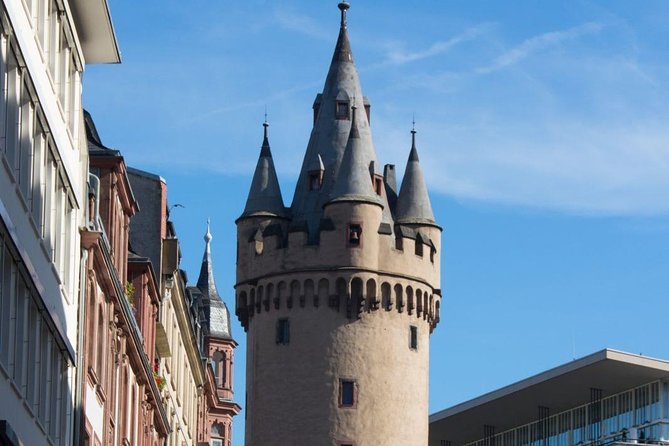
As your walk nears the end, you pass by Eschenheimer Turm, an important example of Frankfurt fortifications built in the 15th century. You get a tangible reminder that the city used to be walled and defensive, not just “historic.”
Then there is the Goethe-Denkmal, the monument marking the birthplace of Germany’s most famous author and poet. This stop makes the tour feel complete. It ties Frankfurt to German cultural identity, so you end with more than just a skyline in your head.
Price and value: Is $309.62 per group worth it?
$309.62 per group for up to two people is not “cheap,” but it can be fair value if you want efficiency and guidance. Here’s why:
- You get hotel pickup and drop-off, which saves time and reduces mental load, especially if you are arriving for a short layover.
- You get a private experience. That means you can keep the pace and ask the questions you actually care about.
- The route includes multiple major sites where admission is included, so you are not paying for entry fees separately at each stop.
- The duration is about three hours, which is the sweet spot when you want a strong overview without losing half the day to transportation.
If you are traveling alone, the cost is higher per person. If you’re two people, the effective per-person price drops, and the private format becomes more attractive fast. Also, since this type of tour is booked about 27 days in advance on average, it helps to reserve early so your preferred date and time window stays available.
Who this walking tour fits best
This tour is ideal for:
- Layovers where you want to see the old center, major churches, and the finance district without running around alone
- Couples or small groups who want a private guide and flexibility at stops
- Travelers who like context. You are not only getting photos, you’re getting a running explanation of what the places meant and what they mean now
It may be less ideal if:
- You want a long, slow gallery-style day with minimal walking. This is still a walking tour, and the schedule stays tight.
- You’re very specific about the guide’s communication style. In private tours, that matters. If you are worried about language comfort, it’s smart to go in prepared with your key questions.
Should you book this Frankfurt walking tour with Oleg?
Yes, I think this is a strong pick if you want a fast, high-clarity overview of Frankfurt from medieval center to modern finance, with real time spent inside important sites. The biggest reason to book is the combination of door-to-door pickup and a route that stays coherent, so the day feels like you are learning the city instead of cramming it.
If you have a short window and you want someone to help you prioritize, this tour does that job. Just be ready to communicate what you care about, and you’ll get a better match for your pace and interests.
FAQ
How long is the Frankfurt walking tour?
It runs for about 3 hours.
How much does it cost?
The price is $309.62 per group, up to 2 people.
Is pickup included?
Yes. Door-to-door pickup and drop-off are offered from any location in the city.
What language is the tour guide?
The tour is offered in English.
Is a mobile ticket used?
Yes, a mobile ticket is included.
Are snacks provided?
No, snacks are not included.
Can I cancel and get a full refund?
Yes. You can cancel up to 24 hours in advance for a full refund. If you cancel less than 24 hours before the start time, you will not receive a refund.
Pavements of Frankfurt
Everything else we filed on Frankfurt
- Airport Transfer: Airport FRA to Frankfurt by Luxury Van
★ 4.0 · 11 reviews - Munich City Tour and Dachau Concentration Camp Memorial Site Day Trip from Frankfurt
★ 3.5 · 11 reviews - Frankfurt: Private Sightseeing Tour in Retro Ape Calessino
★ 5.0 · 11 reviews - Heidelberg and Baden-Baden Tour from Frankfurt
★ 3.5 · 11 reviews - Frankfurt: Private custom tour with a local guide
★ 4.6 · 12 reviews - Frankfurt: Private Skyline Sightseeing Boat Tour
★ 4.9 · 12 reviews
Walking Tours, side by side.
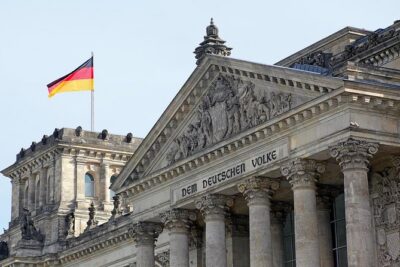 ★ 5.0Discover Berlin Half-Day Walking TourFrom $249,624 reviews
 ★ 4.9Berlin: Third Reich and Cold War 2 Hour Walking TourFrom $236,830 reviews
 ★ 4.6Munich: Third Reich & WWII Walking TourFrom $316,181 reviews
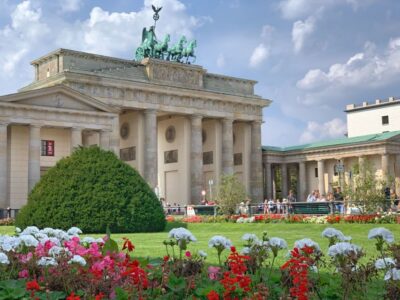 ★ 4.9Berlin: Discover Berlin Walking TourFrom $235,998 reviews
 ★ 5.0Berlin’s Best: 2 Hour Walking Tour Third Reich and the Cold WarFrom $245,486 reviews
 ★ 4.8Berlin: Hidden Backyards Guided Walking TourFrom $235,360 reviews
 ★ 4.5Third Reich Walking Tour MunichFrom $454,291 reviews
 ★ 5.0Third Reich Berlin: Hitler and WWII Walking TourFrom $243,301 reviews