
REVIEW · PRIVATE
Architectural Berlin: Private Tour with a Local Expert
Berlin’s buildings talk if you listen. This private, 2-hour architecture tour is built for that, with a local expert guiding you through Museum Island and the Reichstag glass dome, plus stops that connect Berlin’s art, faith, sustainability, and big political statements. I especially like the way it mixes classic form with bold modern design, and I also like that the itinerary adapts to your walking pace. One possible drawback is simple: quality can depend on the guide, so if architecture is your main focus, it is worth communicating what you want to see.
You will get a tight route with real contrasts, from a neoclassical gallery with 19th-century art to a huge dome church near Lustgarten, and then straight into contemporary statements of eco design, transparency, and acoustics. I also like that you learn how Berliner Fernsehturm, the TV Tower, has shaped the skyline, so the buildings do not feel random or just pretty photos.
The best part of booking a private tour is also the part you should pay attention to. In the guide examples shared, Georg and Rüdiger were praised for being friendly, organized, and responsive, but there was also a report of a guide who did not do proper prep for an architecture-focused tour. Think of this as an experience where you get what you bring, plus what your guide brings.
In This Review
- Key highlights you can actually plan around
- Two hours in Berlin, without racing your feet
- Museum Island’s neoclassical gallery and its 19th-century art focus
- The church near Lustgarten: Renaissance meets Baroque under a big dome
- Eco-friendly modern Berlin: the office building that signals what is next
- Reichstag and Norman Foster’s glass dome: where history meets transparency
- A modern building that respects its neighbors
- Berlin Philharmonic: tent-like modern form and the acoustics factor
- How Berliner Fernsehturm reshapes the skyline
- What the private guide experience is really worth
- Who should book this tour, and who should skip it
- Should you book Architectural Berlin with a Local Expert?
- FAQ
- How long is the Architectural Berlin private tour?
- What group size is this private tour for?
- Where does the tour start and end?
- What is included in the price?
- Are museum, monument, or transport entry tickets included?
- Does the itinerary change based on interests or conditions?
- Are service animals allowed?
- Can I cancel and get a full refund?
Key highlights you can actually plan around
- Exclusive for up to 2 people, so you get a real conversation instead of a crowded group scramble
- Museum Island neoclassical gallery with 19th-century art, a clean entry point into Berlin’s design language
- Reichstag and Norman Foster’s glass dome, where modern engineering meets political symbolism
- Modern eco-friendly office architecture, a practical look at how Berlin builds now
- Berlin Philharmonic’s tent-like form and acoustics, plus the way music heritage lives in the building
- Stop order and walking pace can adapt, with weather possibly shifting what you see
Undecided? The closest Berlin write-ups we have are these.
- Berlin: Reichstag, Dome and Government District Guided Tour★ 4.7 · 18,288 reviews
- Berlin: 1-Hour City Tour by Boat with Guaranteed Seating★ 4.3 · 16,993 reviews
- Berlin: Boat Tour Along the River Spree★ 4.4 · 11,252 reviews
- Discover Berlin Half-Day Walking Tour★ 5.0 · 9,624 reviews
Two hours in Berlin, without racing your feet
This tour is short by design: about 2 hours for an exclusive group of up to 2 people. That matters in Berlin, where distances add up fast and where good architecture viewing often needs pauses. A private format also means you can ask follow-up questions in plain language, like why a building looks the way it does, or what a feature is trying to signal.
You start at Bodestraße 1, 10178 Berlin, and end at Herbert-von-Karajan-Straße 1, 10785 Berlin. The end point is close to the Berlin Philharmonic area, which helps the final stop feel like a natural finish instead of a random detour.
The itinerary is tailored to your interests and walking pace. Stops can also vary depending on weather. That is a good thing if you do not want your day derailed by rain or cold, but it also means you should keep expectations flexible. If you have one must-see building, prioritize it in your thinking, then treat the rest as your guide’s best match to your pace and the conditions.
One more small practical note: the tour uses a mobile ticket. That usually means less fuss finding your confirmation details on the day.
Museum Island’s neoclassical gallery and its 19th-century art focus
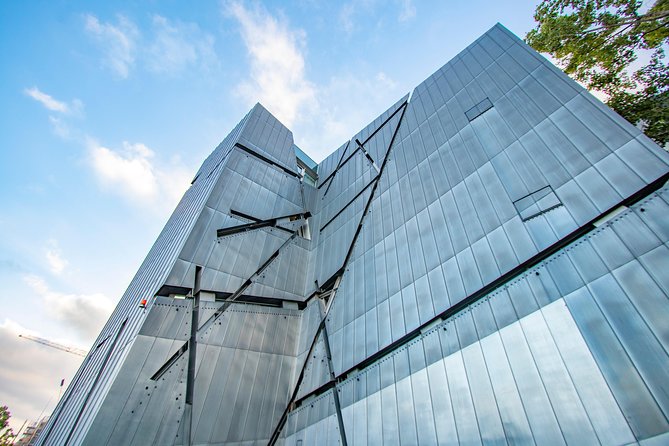
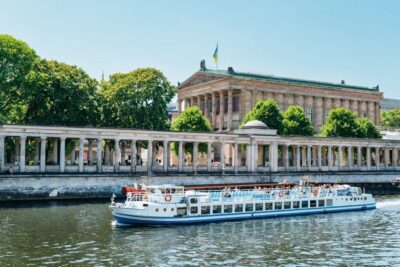
Your first architectural stop centers on a key element of Museum Island, featuring neoclassical architecture and housing a collection of 19th-century art. Even if you do not plan to go inside, this kind of building is a great place to start because it teaches you how Berlin framed taste and culture in a classical visual language.
What to look for here is not just the style name. Neoclassicism usually signals order: balanced composition, structured forms, and a sense that art and ideas deserve strong framing. The connection to 19th-century art matters because it anchors the tour in what people valued visually in that era. You are not just spotting random facades. You are seeing how architecture supported the art world as Berlin built its cultural identity.
A drawback to consider: if you only care about exterior architecture, a gallery stop can feel slower or more museum-oriented. Still, it is a smart start. It gives you a design baseline, so when you hit modern forms later, the contrast lands harder.
Tip for your walk: stand back for a full view first, then move closer. With neoclassical buildings, details make sense only after you see the whole composition.
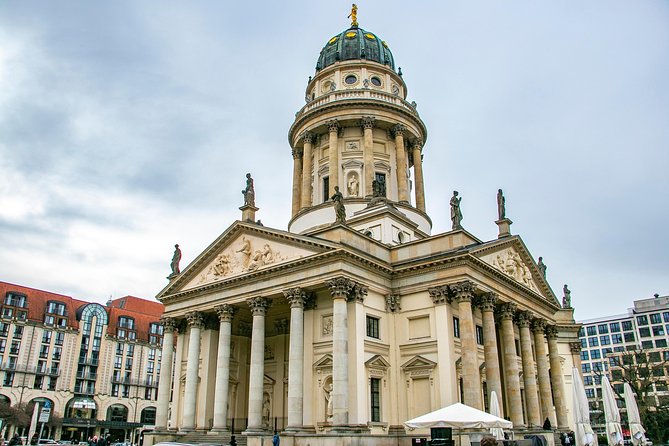
The church near Lustgarten: Renaissance meets Baroque under a big dome
Next comes a grand historic church near Lustgarten park, known for Renaissance and Baroque architecture and its large dome. This is where Berlin shifts from clean, classical symmetry into layered drama.
Renaissance and Baroque together can be a helpful reminder that architecture is not just one style. It is also a timeline. Renaissance ideas often focus on proportion and geometry, while Baroque tends to emphasize movement, impact, and emotional effect. That is especially relevant when a building has a dome, because domes naturally act like visual gravity, drawing the eye upward and making the structure feel monumental.
Why this stop is valuable on a guided tour: the guide can help you translate style into meaning. A dome is not only a structural feature. It also communicates status and presence, particularly for a religious landmark. And the location near Lustgarten gives you a strong sense of how Berlin arranged major civic and cultural space around big public landmarks.
One consideration: churches can be busy, and dome churches are often best from certain angles. If you are cold or you do not like waiting, tell your guide early. A private setup makes it easier to adjust your viewing rhythm.
Eco-friendly modern Berlin: the office building that signals what is next
After the historic weight of Museum Island and the church, you get a modern office building known for innovative and eco-friendly architecture. This stop is less about ornate details and more about the message behind the building.
Modern sustainable design in a city like Berlin is often about performance and responsibility: how a building uses materials, how it handles energy, and how it fits into a changing urban plan. Even if you do not get technical specs, you can still read the building as a statement. Berlin has made room for contemporary architecture that talks about new priorities, not just aesthetics.
What I like here is that it prevents the tour from becoming only a history stroll. Berlin’s skyline is not fixed in time. It keeps changing. An eco-forward office building gives you a concrete example of that change, which makes the rest of the modern stops feel connected instead of random.
Practical note: modern buildings are often more sensitive to viewpoint and time of day. If you have a strong interest in sustainable design, ask your guide what design choices make it feel eco-friendly, not just fashionable.
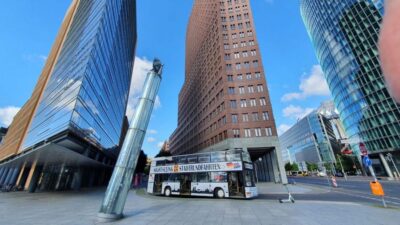
Reichstag and Norman Foster’s glass dome: where history meets transparency
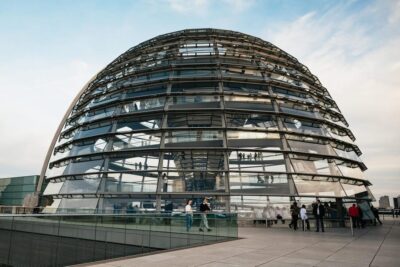
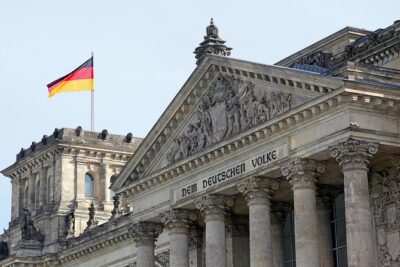
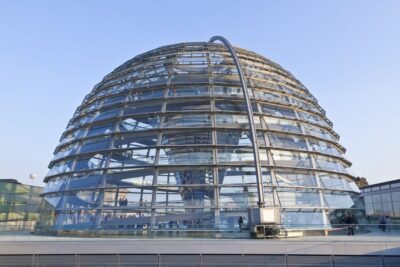
The tour’s political centerpiece is the seat of the German parliament, famous for its iconic glass dome designed by Norman Foster. Even without going deep into politics, architecture explains a lot about power, and this building is one of Berlin’s clearest visual examples.
The dome is a symbolic bridge. It fuses historical government architecture with modern engineering and modern design language. And the tour frames it as representing political transparency. That matters, because it gives you a lens for reading the building. You are not only looking at glass because it looks cool. You are looking at how modern glass design can communicate openness and accessibility.
Why the guided format works well here: a private architecture tour can help you connect the dome’s meaning to the overall story of Berlin’s evolution. This is the point where the city feels like a living argument between old and new, tradition and change.
One consideration based on the tour’s time: you might have limited time at each stop, so focus on understanding the main idea quickly rather than trying to photograph every corner.
A modern building that respects its neighbors
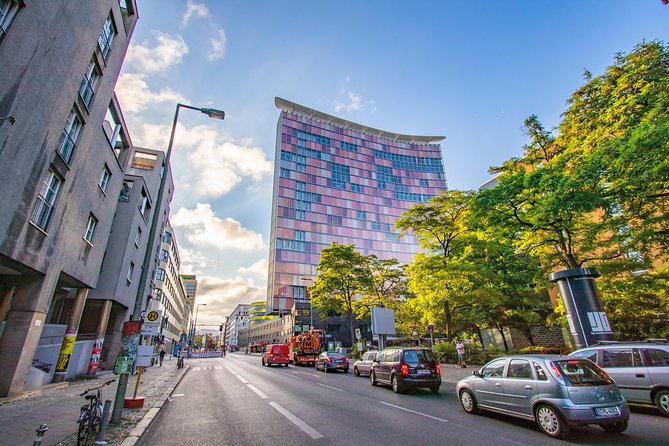
One mid-route stop is described as blending modern architecture with the historical context of its surroundings, showing Berlin’s architectural diversity. This kind of stop is easy to overlook if you expect only famous landmarks, but it is actually one of the most educational parts of an architecture tour.
Here, the goal is reading continuity. Berlin’s strongest architectural moments often happen when new buildings do not wipe out the old ones. Instead, they reference what is nearby, or they create a deliberate contrast that still feels like it belongs on the street.
What to do during this stop: look for the relationship between old and new. Ask yourself what stays consistent, like scale or materials, and what changes, like shape or form. A good local guide can point out patterns you would normally miss during a quick sightseeing walk.
The possible drawback is that this stop might feel less iconic than the Reichstag or the Philharmonic. If you are into architecture because you love famous names, you might wish there were more landmark-level details. If you are into architecture because you like how cities negotiate time, this stop is often a favorite.
Berlin Philharmonic: tent-like modern form and the acoustics factor
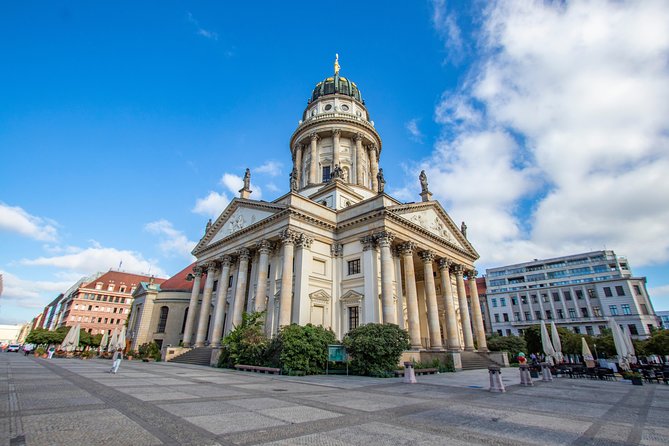
Your final major architecture moment is the Berlin Philharmonic, known for its distinctive tent-like shape and brilliant acoustics. It is home to the Berlin Philharmonic orchestra, and it symbolizes Berlin’s musical heritage.
This stop is a smart closer because it connects architecture to experience. A building that is famous for acoustics is not just visually important. It shapes what people hear, and that makes it feel personal, even if you are visiting as a non-ticket-holding visitor.
The tent-like form also matters as architecture language. Modern shapes often carry a feeling, not just a function. In this case, the overall form supports the building’s reputation for sound. On a guided tour, you can make that link instead of just admiring angles in photos.
One practical consideration: acoustics are hard to judge without being inside and hearing a performance. Still, the structure’s reputation is part of why it is worth seeing, and the tour ends at Herbert-von-Karajan-Straße 1, which places you right in the Philharmonic neighborhood as the walk wraps up.
How Berliner Fernsehturm reshapes the skyline
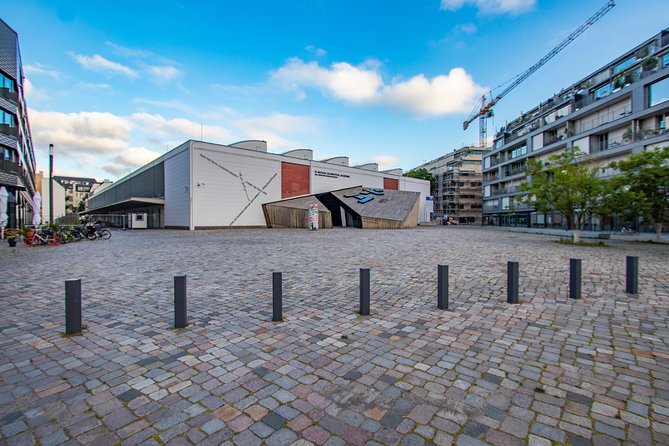
One of the tour’s stated themes is how Berliner Fernsehturm (TV Tower) has shaped Berlin’s skyline. Even if this is not the kind of stop you linger at like the dome church or the parliament building, it is a key piece of architectural storytelling.
A TV tower is a built landmark, but it is also a compass for the city’s modern identity. It creates a vertical reference point, and once you see it as such, the skyline reads differently. Buildings that might have looked unrelated start to feel like part of an evolving pattern.
If you are walking with a local expert, ask how the tower changes what you perceive from street level. That is where skyline talk becomes useful instead of abstract. You will start noticing sightlines, how far you can see, and how the city layers older silhouettes with newer ones.
What the private guide experience is really worth
The price is $639.96 per group, for up to 2 people, for about 2 hours. That might sound steep until you translate it into what you actually get: a Local Expert Guide, an exclusive private tour, and a tailored itinerary.
Here is how I think about value. This is not a ticket to a museum where you pay and then walk alone. You are paying for interpretation, pacing, and flexibility. In an architecture tour, interpretation is the difference between looking at buildings and understanding what you are seeing.
Also, Berlin has architecture you can stumble into on your own. But without a guide, it is harder to connect the dots between neoclassical framing, dome symbolism, eco-forward modernism, and political transparency design. In other words, you are buying the thread that ties the stops together.
That said, one thing to respect from the available guide feedback: architecture tours live and die on preparation. There was a report of a guide who did not have architecture knowledge and did not check whether sites were open. That does not mean every guide is like that, but it does mean your expectations should include the possibility of human variation.
To protect yourself, go in with clarity. If you care most about specific buildings, tell your guide your priorities quickly. If you care about exteriors only, say so. You will get a better match, especially with the tour’s emphasis on adaptation.
Who should book this tour, and who should skip it
This tour is a great fit if you want architecture with context, not just a photo route. It is also a strong match if you like variety: classic Museum Island design, a Renaissance-Baroque dome church, a modern eco office building, then the Reichstag dome, and finally the Berlin Philharmonic.
It is also ideal for couples or friends who want a calmer pace and room to ask questions. With a group size capped at 2, you avoid the awkward moment of waiting for others while your guide talks to the crowd.
Skip it if your main goal is a long list of interiors and museum time. The tour is designed as a walking-focused architecture experience, and the tour does not include entry tickets for transportation, museums, and monuments. You can still enjoy plenty from the outside, but you should plan extra if you want to go in.
Should you book Architectural Berlin with a Local Expert?
I would book this if architecture is your priority and you want a short Berlin route that actually teaches you what you are seeing. The private size, the local expert, and the blend of Museum Island through the Reichstag dome to the Berlin Philharmonic make it feel like a coherent skyline story rather than scattered stops.
I would pause and book with open eyes if you are extremely strict about architecture depth at every single stop. One guide prep issue was noted in the feedback you shared, so communicate your expectations early, and keep your schedule flexible for weather-related stop changes. If you do that, this tour is the kind of experience that turns Berlin’s buildings into a readable, enjoyable walk.
FAQ
How long is the Architectural Berlin private tour?
The tour lasts about 2 hours.
What group size is this private tour for?
It is an exclusive private tour for your group, with up to 2 people.
Where does the tour start and end?
It starts at Bodestraße 1, 10178 Berlin, Germany and ends at Herbert-von-Karajan-Straße 1, 10785 Berlin, Germany.
What is included in the price?
The price includes a Local Expert Guide, an exclusive private tour, and a tailored itinerary.
Are museum, monument, or transport entry tickets included?
No. Entry tickets for transportation, museums, and monuments are excluded.
Does the itinerary change based on interests or conditions?
Yes. The itinerary adapts to your interests and walking pace, and stops may vary depending on weather conditions.
Are service animals allowed?
Yes, service animals are allowed.
Can I cancel and get a full refund?
Yes. You can cancel up to 24 hours in advance for a full refund. If you cancel less than 24 hours before the start time, the amount you paid is not refunded.
Everything else we filed on Berlin
- Private Photo Tour in Kreuzberg
★ 5.0 · 3 reviews - Kreuzberg Private Walking Tour: Immigrants, Artists & Hipsters
★ 5.0 · 3 reviews - Berlin’s Jewish Heritage: Private Tour of the Vibrant Jewish District
★ 5.0 · 3 reviews - Individual city tour Berlin for max. 8 persons
★ 5.0 · 3 reviews - Berlin & The Third Reich Private Guided Tour
★ 5.0 · 3 reviews - Private Analogue Photography Experience in Berlin
★ 5.0 · 3 reviews
Private, side by side.
 ★ 4.8Berlin: Private Reichstag and Glass Dome TourFrom $2882,226 reviews
 ★ 5.0Berlin Private Complete History All Day Walking TourFrom $253474 reviews
 ★ 5.0Munich Private Tour with a Local – Highlights & Hidden GemsFrom $112469 reviews
 ★ 5.0Private Walking Tour Berlin Third Reich Hitler and World War IIFrom $192360 reviews
 ★ 5.0Your private 3-hour Hamburg driving tour with a former policemanFrom $337304 reviews
 ★ 5.0Private Berlin: Iconic Sights and Hidden Gems Walking TourFrom $192292 reviews
 ★ 4.8Nuremberg: 1.5-Hour Private Tour through Historical Old TownFrom $140283 reviews
 ★ 5.0Berlin Private Half-Day Walking Tour: Discover the German Capital’s HistoryFrom $180244 reviews