
REVIEW · WARTIME HISTORY
Private Walking Tour Berlin Third Reich Hitler and World War II
Berlin can be dark history in real size. This private Third Reich, Hitler, and World War II walking tour strings together the places where power, fear, and tragedy played out in plain sight. I like how it mixes major landmarks with pointed context, so you are not just collecting photos. I also love the hotel pickup and drop-off, because it makes an intense day feel far less logistically annoying.
The main thing to think about is the subject matter. You will spend 3 to 4 hours around memorials and sites tied to genocide, persecution, and state violence, and the tour runs in all weather. If you prefer lighter sightseeing, you might find the tone a bit heavy. If you are up for learning with care, it is a powerful way to understand how Berlin ended up where it is today.
In This Review
- Key highlights to expect
- Private means your pace, not a group shuffle
- Price and value: why it costs about $193 per person
- Tiergarten Soviet Memorial: starting with the Battle of Berlin
- Wilhelmstraße and the Detlev-Rohwedder-Haus: power made of offices
- Topography of Terror and the German Resistance Memorial: fear on one side, refusal on the other
- Bebelplatz book burnings and the Reichstag Fire: propaganda as a weapon
- Holocaust Memorial slabs: the design makes memory physical
- Führerbunker and Anhalter Bahnhof: last refuge and forced departures
- T4 euthanasia victims and the Moltkebrücke: how war changed the city
- What walking 3 to 4 hours feels like in real life
- Should you book this Third Reich and World War II private walking tour?
- FAQ
- How long is the private walking tour?
- What is the meeting and start setup?
- Is the tour offered in English?
- Are tickets included for the stops?
- Does the tour run in bad weather?
- What is included in the price?
- Is food included?
Key highlights to expect
- Hotel pickup and drop-off so you start and end where you are staying
- A private group only setup, which helps your guide tailor pace and focus
- Multiple Holocaust and Nazi-violence memorial stops, including the Holocaust Memorial and T4 Memorial
- Clear historical context at every turn, not just names and dates
- Many stops with free entry, plus one main exception (Reichstag entry is not included)
- English language guide with a track record of praised storytelling and pacing (guides like Emma, Georgia, Jasper, Simon, Jimmy, and Daniel are mentioned often)
Further wartime history walks we have written up
- Berlin: Third Reich and Cold War 2 Hour Walking Tour★ 4.9 · 6,830 reviews
- Berlin’s Best: 2 Hour Walking Tour Third Reich and the Cold War★ 5.0 · 5,486 reviews
- Third Reich Berlin: Hitler and WWII Walking Tour★ 5.0 · 3,301 reviews
- Berlin: Third Reich, Hitler, and WWII Walking Tour★ 4.9 · 1,133 reviews
Private means your pace, not a group shuffle
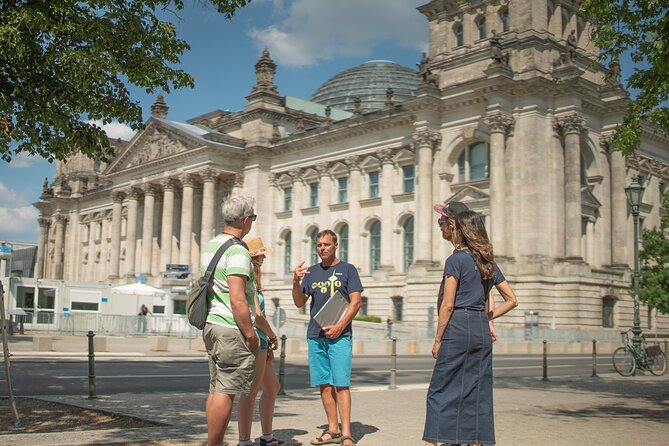
This is a private walking tour. That sounds like a marketing line, but the real payoff is simple: your guide can slow down, speed up, or adjust the order of what matters most to you. The tour is listed as 3 to 4 hours, and with short stop times, timing matters. A private setup helps you absorb what you are seeing instead of sprinting between points.
The biggest practical win is the included hotel pickup and drop-off. Berlin is a city where “just meet us at a station” can quietly wreck your day. Here, you get picked up and dropped back off, which means you can spend your energy on the history, not on tracing meeting spots. In past tours, guides have been praised for personal touches too. Names like Emma and Georgia come up for tailoring, while Jasper and Jimmy are mentioned for pacing that felt comfortable and fast at the same time.
One more thing I appreciate is that the tour is offered in English and includes a mobile ticket. That reduces friction on the day, especially when you are juggling weather, transit, and nerves.
Price and value: why it costs about $193 per person
At $192.97 per person, you are not paying for a casual stroll. You are paying for a professional guide plus hotel transfers, and that adds up fast in big-city costs. What makes the price feel more fair is how many of the major stops are free to enter. Several sites on the route list free admission, which helps keep your total day spend under control.
There is one clear exception: the Reichstag building stop lists admission as not included. That means you should plan for any ticketing or entry costs tied to the Reichstag visit. If you want to go inside and see specific parts, double-check what is covered versus what you would pay separately.
Also, food and drinks are not included. That is common on walking tours, but it matters even more here because you will be spending a long stretch outside, processing heavy information. Bring water and have a plan for a quick break if you need one.
Tiergarten Soviet Memorial: starting with the Battle of Berlin
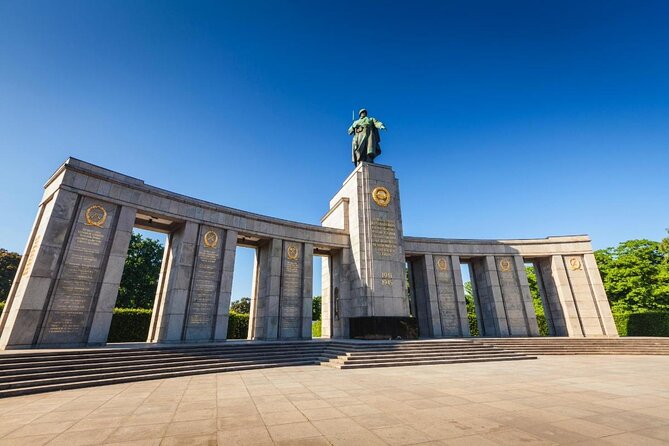
The tour begins at the Soviet Memorial in Tiergarten. This is a smart starting point because it frames the endgame: Berlin in 1945, when the Nazi regime was collapsing and the city’s suffering was already underway. The memorial was inaugurated in 1949 and honors Soviet soldiers who fell during the Battle of Berlin.
The architecture is not subtle. You will see a large statue of a soldier holding a sword and a shield, and that symbolism is part of why the place resonates. Your guide will connect what you are seeing to the broader military context, including how the Soviet Army helped defeat Nazi Germany, and why Berlin remembers this chapter in such concrete form.
Practical note: this is a memorial first, photo spot second. If you keep your expectations respectful, you will get more from the visit, and the conversation your guide leads will land better.
Wilhelmstraße and the Detlev-Rohwedder-Haus: power made of offices
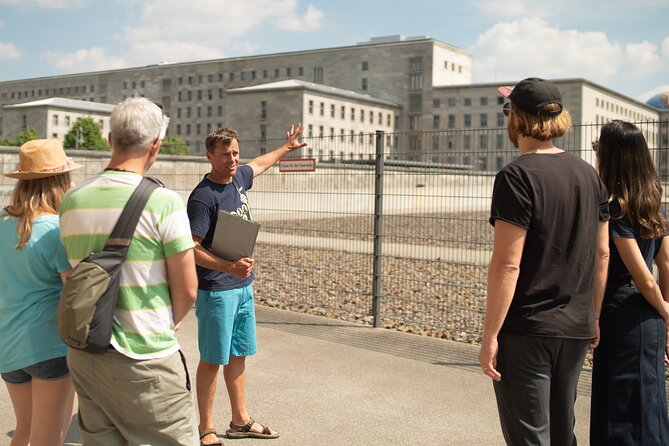
Next you head toward Wilhelmstraße, the kind of street where history hides in architecture. One key stop is the Aviation Ministry building, the Detlev-Rohwedder-Haus. It has a layered life. Built in the 1930s as Reichsbank headquarters, it later became the Ministry of Aviation under Hermann Göring.
This is one of the tour’s strongest “how the system worked” stops. Nazis were not just staging rallies and speeches. They were running an administration. This building connects economics, politics, and wartime decision-making to the people behind the scenes.
After World War II, the building became the German Federal Treasury, but the site still carries weight. Your guide will help you read the location like a document, not like a backdrop.
Then you walk along Wilhelmstraße itself, with the guide pointing out how ministries and offices lined the avenue. This road is often described as the heart of Nazi government because so many crucial decisions and activities took place there. You are seeing a government district that helped shape policy, including the propaganda that kept the regime in control.
Other walking routes through Berlin
Topography of Terror and the German Resistance Memorial: fear on one side, refusal on the other
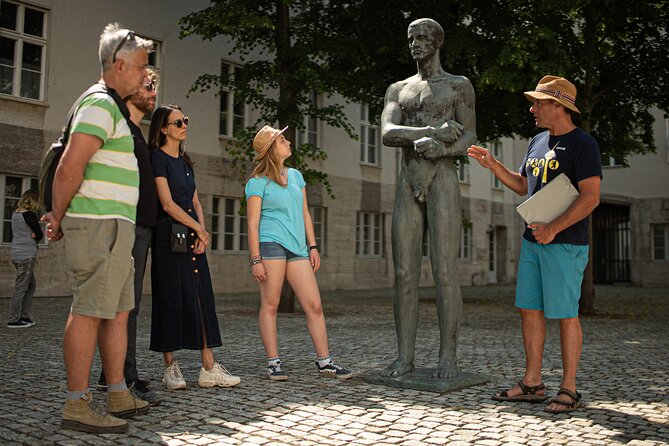
If you want a single place that tells you how Nazi repression felt, Topography of Terror is it. The route takes you to the grounds of the former SS and Gestapo headquarters, which already sets the emotional tone. Here, the tour focuses on the rise of the Nazi regime and the methods of terror used against dissenters.
What I like about this stop is that it is not only outside views. You get indoor and outdoor exhibition time, with photographs, documents, and testimonies. That mix matters because it prevents history from turning into pure abstractions. Your guide will talk through the political repression and the human impact, which makes the later memorial stops hit harder.
Then you swing to the German Resistance Memorial Center at the Bendlerblock. This creates an important contrast. Instead of only watching how tyranny operated, you get to see people who opposed it. The story centers on resistance movements and key figures, including Claus von Stauffenberg, linked to the July 20, 1944 assassination attempt on Hitler.
This pairing, fear first and resistance second, gives you a clearer moral picture. It is not just “bad things happened.” You learn how people tried to stop them, and you also hear what the consequences were.
A drawback to plan for: the time at each site is brief. That is not a flaw of the tour, it is just the reality of a compact route. If you want to read everything slowly, plan a return visit later.
Bebelplatz book burnings and the Reichstag Fire: propaganda as a weapon
Bebelplatz is a shock in the best way. This square is tied to the infamous book burning on May 10, 1933, when thousands of books labeled un-German were destroyed by the Nazi regime. The memorial beneath the square, with empty bookshelves, makes the loss physical. It is a quiet but cutting reminder of censorship.
Your guide connects the architecture around you to the institutions nearby, including the State Opera House and Humboldt University. Then the talk shifts to what this means: totalitarian regimes do not only control people through force. They control ideas by deciding what is allowed to exist.
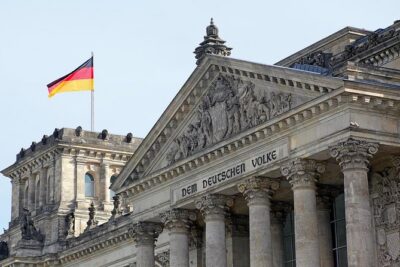
From there, you move to the Reichstag building. Your guide frames it through the Nazi years, starting with the Reichstag Fire in 1933, which the Nazis exploited to consolidate power and suppress opposition. This is the point where you see how a political crisis becomes a takeover tool.
The building was heavily damaged during World War II and later restored, now serving as a symbol of democracy. That contrast is the entire reason this stop makes sense on a Third Reich tour. You are looking at the same stone that once became an instrument of power, now reinterpreted as a democratic warning.
Important practical consideration: the Reichstag admission is not included. So if a major interior component is on your checklist, budget for extra entry.
Holocaust Memorial slabs: the design makes memory physical
The Holocaust Memorial, officially the Memorial to the Murdered Jews of Europe, is one of Berlin’s most visited sites for a reason. It is made of 2,711 concrete slabs of varying heights arranged in a grid, designed to create a disorienting experience that mirrors the scale and complexity of memory.
Your guide explains the design choices and the historical context of the Holocaust, including how Nazi policies devastated European Jewry. The emotional weight here is real, and the tour’s goal is remembrance and education, not spectacle.
I like that your time includes both explanation and room for reflection. In a tour that covers multiple atrocities, the Holocaust Memorial acts like a reset button for your brain. It helps you understand the difference between hearing about history and standing in a space made to hold memory.
Führerbunker and Anhalter Bahnhof: last refuge and forced departures
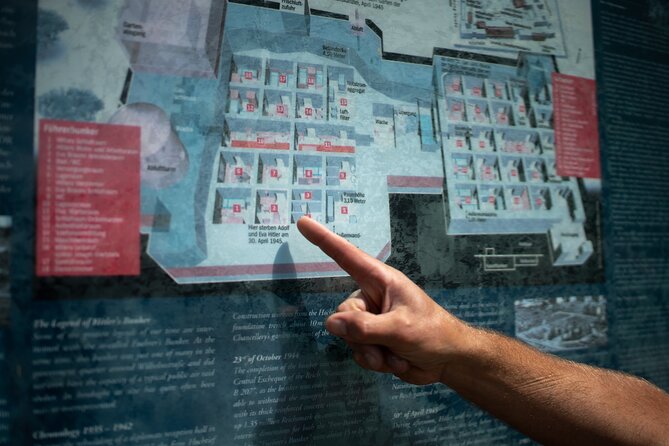
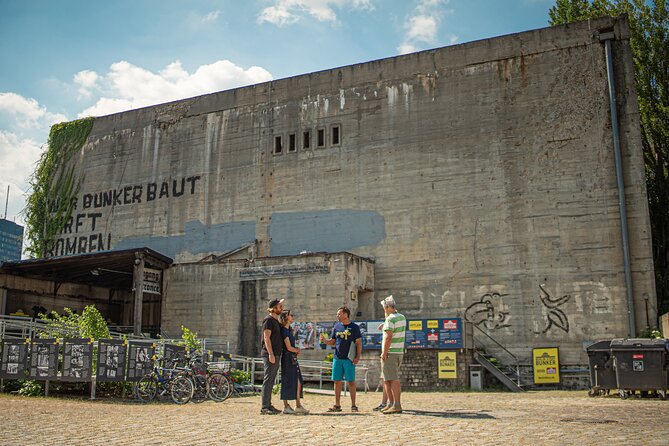
The route then turns to the Führerbunker, the underground complex beneath the Reich Chancellery. This stop is about the final days of the Nazi regime, when Adolf Hitler took refuge there as the Allies closed in on Berlin.
Your guide discusses the bunker’s layout and historical significance, including the mindset of Nazi leadership during their downfall. Much of the original structure was destroyed after the war, but the visit still offers a sobering glimpse at what the end looked like from underground.
From there, the tour goes to Anhalter Bahnhof, once one of Berlin’s busiest railway terminals. This stop connects the machinery of deportation to a real departure point. Your guide explains its role in the Nazi era, including deportations of Jews to concentration camps.
Today, memorials and exhibits commemorate victims, and your guide will help you understand that the station was full of human stories, not just trains and schedules. It is one of those places where you feel the cruelty of bureaucracy, because movement and paperwork became the route to extermination.
T4 euthanasia victims and the Moltkebrücke: how war changed the city
One of the most important stops on the route is the T4 Memorial for the Victims of the Nazi Euthanasia Program at Tiergartenstraße 4. This campaign targeted people Nazis labeled unworthy of life, including those with disabilities and mental illnesses.
Your guide walks you through the memorial design and the informative displays, including the history and impact of the T4 program. This is where the tour broadens beyond “war and camps” into the earlier logic of dehumanization. The stop also raises ethical implications, which is valuable because it shows you how genocide can be built from earlier policies that sound like administration rather than murder.
Then you head to Moltkebrücke, a bridge with direct wartime significance. In April 1945, Soviet forces crossed it during their assault on Berlin. Your guide recounts how the bridge became a critical route for Soviet troops advancing into the city, and you connect that movement to the broader battles nearby.
This stop is quieter than the others, but it still matters. It helps you feel the shift in control that arrived in Berlin during the final weeks of the war.
Finally, the route returns to Wilhelmstraße area context, tying the administrative street to what happened during the Nazi era. Seeing the avenue more than once in your day makes it easier to remember how governance and ideology moved through the city.
What walking 3 to 4 hours feels like in real life
This tour runs in all weather, and you will do a lot of outdoor walking across major city sites. Plan for layers, comfortable shoes, and a rhythm that lets you pause when you need to. Some stops are timed at about 10 minutes, while others are around 15 to 20 minutes. That means the guide has to keep things moving, and you benefit from using the time efficiently.
One practical insight from past experiences: guides have been praised for adapting pacing to interest and group needs. People mention guides like Jasper, Jimmy, Daniel, and Simon for explaining clearly and keeping a good tempo. Others mention that the tour can feel long in cold weather, so do not underestimate how fast your energy can drop outdoors.
A smart move is to treat this as a learning sprint, then plan follow-up time on your own. If there is one stop that hits you, you will likely want to return for deeper reading later.
Should you book this Third Reich and World War II private walking tour?
I think you should book if you want a guided route through Berlin’s most essential Nazi-era sites, with clear context and hotel convenience. The private format is especially valuable when you care about depth but do not want to piece together transit, entry rules, and speaking guides yourself. It also fits history lovers who want more than a list of landmarks, including families who may benefit from a guide that can explain in an accessible way.
You might skip it if you want light, cheerful sightseeing, or if you cannot handle heavy topics for several hours in a row. This is built around memorials tied to persecution, mass murder, and the end of a regime. Even with great guidance, it will feel intense.
If you do book, go in with two intentions. First, ask your guide what you most want to understand, then let them shape the day within the route. Second, bring comfort items, because cold and fatigue can steal the meaning from an experience like this.
FAQ
How long is the private walking tour?
The duration is about 3 to 4 hours.
What is the meeting and start setup?
The tour includes hotel pickup and hotel drop-off.
Is the tour offered in English?
Yes, it is offered in English.
Are tickets included for the stops?
Most stops list free admission. The Reichstag building admission ticket is not included.
Does the tour run in bad weather?
Yes, it operates in all weather conditions, so dress appropriately.
What is included in the price?
Included items are hotel pickup, hotel drop-off, and a professional guide.
Is food included?
No. Food and drinks are not included.
Pavements of Berlin
Wartime History Walks We Have Reviewed
Everything else we filed on Berlin
- East Berlin: City of Shadows Walking Tour
★ 5.0 · 11 reviews - Berlin: Die Stachelschweine – Frank Lüdecke – Träumt Weiter
★ 4.7 · 11 reviews - Potsdam Day Trip from Berlin with a Local: Private & Personalized
★ 4.0 · 11 reviews - An Introduction to Berlin Walking Tour
★ 5.0 · 11 reviews - DJ for a Day: Learn to Mix Like a Pro in Berlin
★ 5.0 · 11 reviews - 2-H Segway Sightseeing Tour Berlin
★ 4.5 · 11 reviews
Third Reich and Wartime History Tours, side by side.
 ★ 4.9Berlin: Third Reich and Cold War 2 Hour Walking TourFrom $236,830 reviews
 ★ 4.6Munich: Third Reich & WWII Walking TourFrom $316,181 reviews
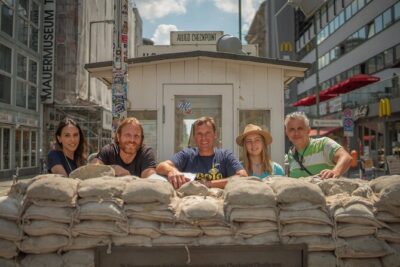 ★ 5.0Berlin’s Best: 2 Hour Walking Tour Third Reich and the Cold WarFrom $245,486 reviews
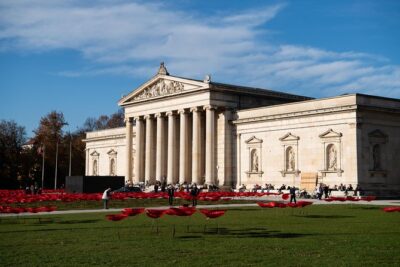 ★ 4.5Third Reich Walking Tour MunichFrom $454,291 reviews
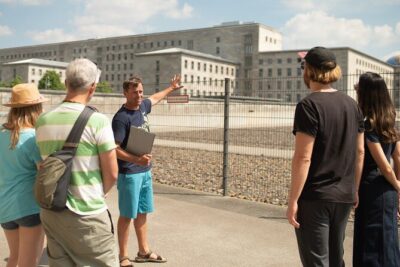 ★ 5.0Third Reich Berlin: Hitler and WWII Walking TourFrom $243,301 reviews
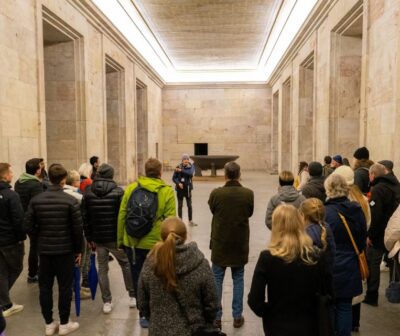 ★ 4.7Nuremberg: Walking Tour of Former Nazi Party Rally GroundsFrom $151,665 reviews
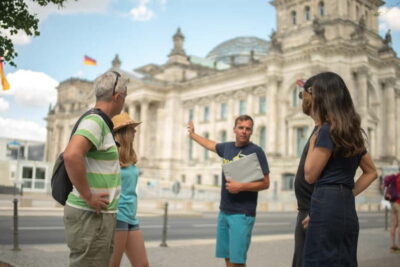 ★ 4.9Berlin: Third Reich, Hitler, and WWII Walking TourFrom $201,133 reviews
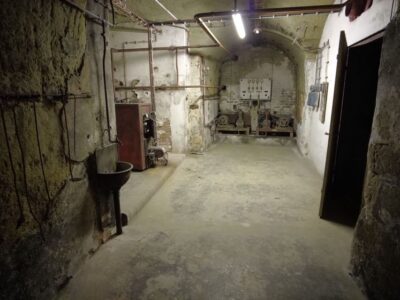 ★ 4.8Nuremberg: Historischer Kunstbunker WWII Art Bunker TourFrom $14921 reviews
Other lists this tour is on