
REVIEW · HALF-DAY
Berlin Private Half-Day Walking Tour: Discover the German Capital’s History
Berlin history hits differently on a walk. This 4-hour private route strings together the city’s major turning points, with a guide who keeps it clear and personal.
I like two things most: you get undivided time with your guide, and you start with hotel pickup plus a map that helps you keep moving after the tour. The one watch-out is the pace, many stops are short, so you’ll do quick context at each site rather than lingering for museum-style depth.
You’ll notice this style in how guides are praised for storytelling and patience. Names like Jimmy, Dylan, Reuben, Luisa, Glen, Mark, and Kai Janssen come up often, and the common thread is explain-like-I’m-smart clarity with room for questions.
In This Review
- Key Highlights Before You Set Foot Outside
- Why Berlin’s Story Works Best on a Private Walk
- The Route in Plain English: From Museum Island to the Brandenburg Gate
- Museum Island to Stadtschloss Berlin: Seeing Berlin’s Cultural Engine
- Neue Wache to Deutsches Historisches Museum: Power, War, and Memory in One Arc
- Bebelplatz and Staatsoper: When Culture and Politics Share the Same Address
- Reichstag, the Holocaust Memorial, and Brandenburg Gate: Big Weight, Clear Direction
- Reichstag Building: A Political Magnet in Walking Form
- The Holocaust Memorial: Don’t Rush, But Do Keep Moving
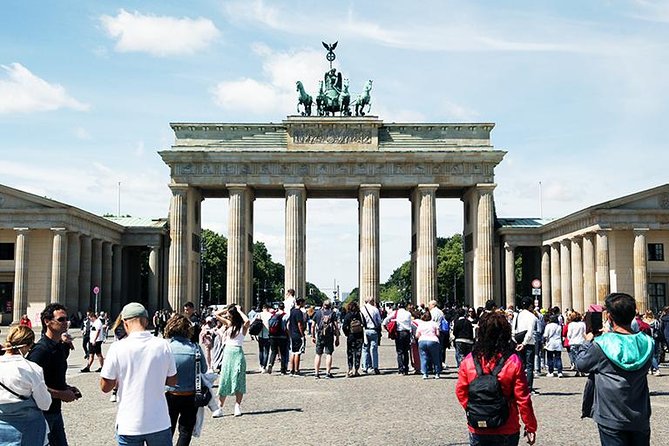
- Brandenburg Gate: The Ending That Still Feels Like a Beginning
- Walking Through Division: 1953 Unrest, the Berlin Wall Memorial, and Checkpoint Charlie
- Topography of Terror: Context You Can’t Pick Up From a Sign
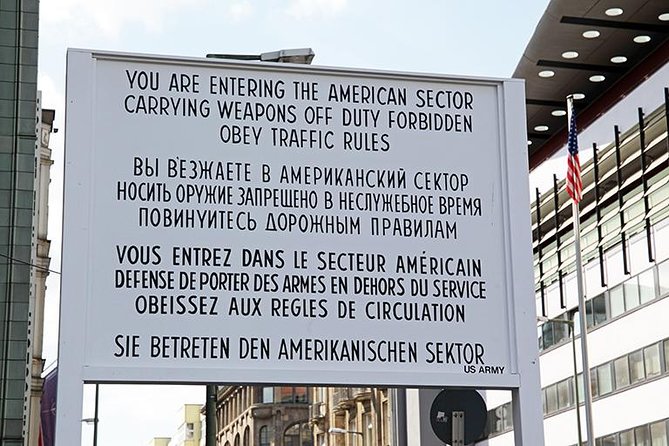
- Checkpoint Charlie: The Cold War Story in One Area
- The Memorial of the Berlin Wall: Why the Route Keeps Pushing You Forward
- Fuhrerbunker and Hitler’s Bunker: Facing the Nazi Era Without Getting Lost
- Extra Stops That Add Texture: Neue Wache, Franzoesischer Dom, Konzerthaus, and More
- What’s Included, What Isn’t, and How to Budget Smartly
- Hotel Pickup and the Meeting Point That Saves Time
- Timing and Pace: Why the Short Stops Can Still Work
- Who This Tour Fits Best (And Who Might Prefer Something Else)
- Small Logistics That Affect Your Experience
- Should You Book This Berlin Private History Walk?
- FAQ
- How long is the Berlin private half-day walking tour?
- Is this tour private or shared with other groups?
- What language is the tour offered in?
- Does the tour include hotel pickup?
- Where is the backup meeting point?
- Are admission tickets included for the stops?
- Is food and drink included?
- Are public transport costs included?
- What public transport costs should I expect?
- What is the cancellation policy?
Key Highlights Before You Set Foot Outside
- Private guide focus so you can ask questions as you walk, not wait your turn.
- Hotel pickup and a map that also points you toward public transport and museum ideas for later.
- Major Berlin landmarks in one half-day including Brandenburg Gate, Checkpoint Charlie, and the Memorial to the Murdered Jews of Europe.
- Free access at the listed stops (each stop is marked admission ticket free for what’s covered).
- Clear, structured timeline feel from the early city to modern Berlin, without drowning you in dates.
- English mobile ticket and a comfort-first plan, with the tour marked near public transportation.
Other walking routes through Berlin
- Berlin: Third Reich and Cold War 2 Hour Walking Tour★ 4.9 · 6,830 reviews
- Berlin: Discover Berlin Walking Tour★ 4.9 · 5,998 reviews
- Berlin’s Best: 2 Hour Walking Tour Third Reich and the Cold War★ 5.0 · 5,486 reviews
- Berlin: Hidden Backyards Guided Walking Tour★ 4.8 · 5,360 reviews
Why Berlin’s Story Works Best on a Private Walk
Berlin can feel like a textbook with buildings. A walking tour is how that makes sense, because the streets show you how power, war, and politics leave scars and rebuild on top of them.
On this private half-day tour, you’re not sharing the guide with a crowd of people who are busy, tired, or on autopilot. That matters here, because Berlin history is dense. A good guide turns that density into something you can actually follow, and guides on this route are repeatedly praised for being clear and accommodating.
The Route in Plain English: From Museum Island to the Brandenburg Gate
This is a 4-hour tour, and the schedule is built around a lot of stops with short on-site time. Think of it like a guided timeline you can walk alongside. You’ll cover a mix of landmark exteriors, institutions, and memorial sites, each with a guide explaining the site’s history.
Museum Island to Stadtschloss Berlin: Seeing Berlin’s Cultural Engine
You start at Museum Island, where the guide sets the scene for why this area matters. Then you move to Berliner Dom to keep the focus on a major Berlin landmark and its story.
Next comes Stadtschloss Berlin, a name you’ll hear in conversations about politics and power. After that you pause at Rotes Rathaus, which helps connect civic life to the bigger historical shifts happening around it.
You then get quick stops at Altes Museum, Neues Museum, and Pergamonmuseum. These are marked as short stops, so treat them as context checkpoints. You’re not promised a museum visit, but you’re given the background that helps you understand why these places matter even from the outside.
Neue Wache to Deutsches Historisches Museum: Power, War, and Memory in One Arc
From there you move to Neue Wache, where the guide explains the site’s history. It’s the kind of stop that nudges you to think about how states choose what to remember.
You continue to Victory Column, then to Deutsches Historisches Museum for another key chapter. Even though each stop is brief, the sequence is useful because it keeps returning you to the same big themes, public institutions, national identity, and how Berlin tells its own story.
More history walks in Berlin
Bebelplatz and Staatsoper: When Culture and Politics Share the Same Address
At Bebelplatz, the guide explains the history of the site, and this area is often where Berlin’s cultural story becomes political. Then you head to Staatsoper Unter Den Linden, another stop that connects place to meaning.
If you like history that lives in architecture and institutions, these pauses help. They also give you a mental map for later, when you want to look up details on your own time.
Reichstag, the Holocaust Memorial, and Brandenburg Gate: Big Weight, Clear Direction
This section of the walk is where Berlin shifts from “city story” into “human story.” The stop list includes the Reichstag Building, the Holocaust Memorial – Memorial to the Murdered Jews of Europe, and Brandenburg Gate, so expect your guide to frame them in the broader timeline you’ve been building.
Reichstag Building: A Political Magnet in Walking Form
At the Reichstag Building, the guide’s job is to help you connect what you see to what happened around it. The stop is marked for about ten minutes, so you’re getting direction more than a lecture.
I like this approach for first-timers. You leave with enough context to understand why the place is always mentioned, and you can decide later how much to go deeper.
The Holocaust Memorial: Don’t Rush, But Do Keep Moving
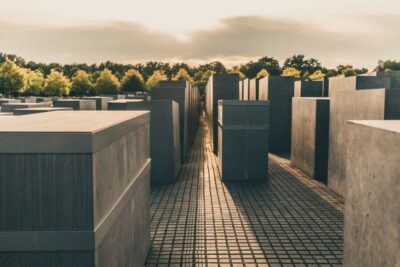
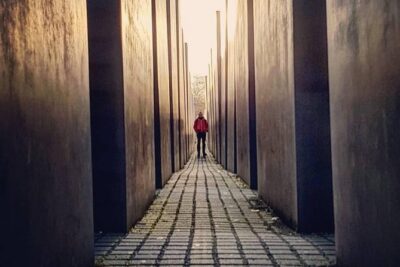
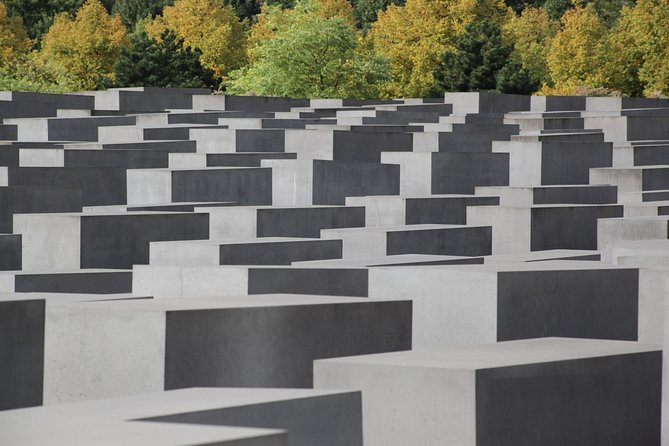
The Memorial to the Murdered Jews of Europe is listed for about ten minutes. This is one of the stops you should treat with care. If you want more time here, a private format helps because you can ask for a slightly longer pause if the group pace allows it.
Even if you keep the schedule, the guide’s explanation makes the memorial feel less like a photo-op. It becomes a chapter you understand, not just a place you passed through.
Brandenburg Gate: The Ending That Still Feels Like a Beginning
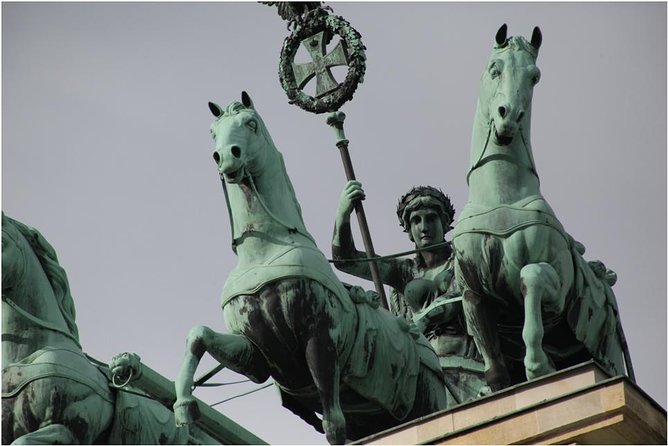
Finally, the route reaches Brandenburg Gate, again with about ten minutes on site. It’s the kind of stop where the guide can bring the last part of the timeline back into view, and it’s the easiest landmark to orient yourself in after the walk.
You’ll likely get the “okay, I get Berlin now” moment here. Not because every fact is memorized, but because the city’s turning points finally line up in your head.
Walking Through Division: 1953 Unrest, the Berlin Wall Memorial, and Checkpoint Charlie
After the gate, the tour stays anchored in modern Berlin. You’ll see Platz des Volksaufstandes von 1953, then you return to Berliner Dom, which helps you connect earlier landmarks to what changed later.
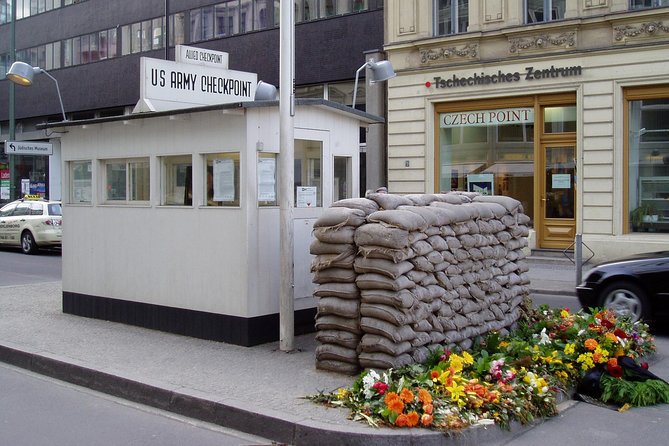
Then you move to Topography of Terror, and to Checkpoint Charlie. These are the stops that often make Berlin feel like it’s speaking in street-level details. Your guide’s explanations are what prevent the route from becoming a list of names.
Topography of Terror: Context You Can’t Pick Up From a Sign
Topography of Terror is on the route for about ten minutes. Since the listed focus is history explanation, plan to treat this as an interpretive stop, not a photo stop.
The value here is how the guide organizes events so you can follow causes and consequences without needing to study beforehand.
Checkpoint Charlie: The Cold War Story in One Area
At Checkpoint Charlie, you get a guided history explanation in about ten minutes. This stop works well on a walking tour because it helps you understand why that location became a symbol.
I also appreciate the schedule length. You get enough time to care, not so much time that you burn out before the final memorials.
The Memorial of the Berlin Wall: Why the Route Keeps Pushing You Forward
Then you reach the Memorial of the Berlin Wall. It’s listed for about ten minutes, again with the guide explaining the site’s history.
This is where the timeline becomes physical. You can see how Berlin’s story isn’t only in museums, it’s in the spaces that mark what was separated and what later reopened.
Fuhrerbunker and Hitler’s Bunker: Facing the Nazi Era Without Getting Lost
Your tour highlights include Hitler’s Bunker, and the itinerary includes Fuhrerbunker as a stop. In practice, this means your guide is handling the Nazi-era story with careful framing, placed in the sequence of earlier events and later aftermath.
This portion is often emotionally heavy, and the private format is helpful. You can ask for clarity if a moment feels confusing. You can also take a step back if you need a breather.
Extra Stops That Add Texture: Neue Wache, Franzoesischer Dom, Konzerthaus, and More
The itinerary also includes several stops that add texture to the story rather than repeating the same theme.
- Neue Wache returns the focus to how public memory is shaped.
- Franzoesischer Dom gives a short stop for history explanation, about five minutes.
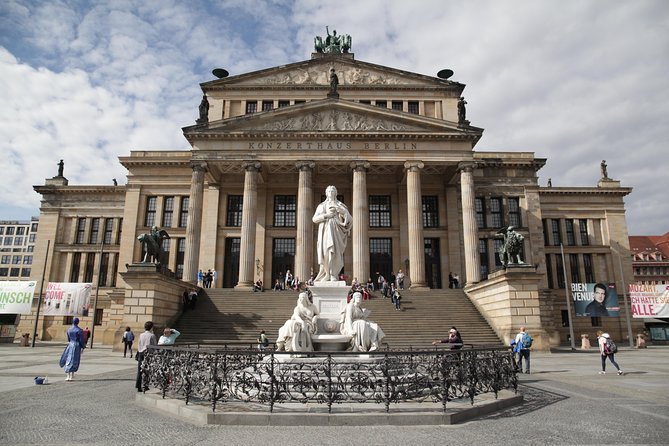
- Konzerthaus is another brief context point, around ten minutes.
These sites are useful because they show Berlin is not only about wars and governments. It’s also about institutions, city life, and how culture continues even as regimes change.
What’s Included, What Isn’t, and How to Budget Smartly
The price is $180.87 per person, and it’s a private experience, about 4 hours. For many travelers, the value comes from the format. You’re paying for time with an expert local guide plus hotel pickup and a map of Berlin that includes top museum recommendations and public transport info.
What’s not included is straightforward: food and drink and public transport costs. If you need transit during the tour or after, Berlin single tickets are listed as €2.70, day passes €7.00, and a group ticket for 5 people €17.30. Prices can change, so if you’re budgeting tight, check the latest numbers once you’re in the city.
Hotel Pickup and the Meeting Point That Saves Time
If your hotel is centrally located, pickup is from the lobby. If not, you meet in front of Starbucks at Hackescher Markt. Either way, it’s designed to reduce the “where do we go now?” stress.
Timing and Pace: Why the Short Stops Can Still Work
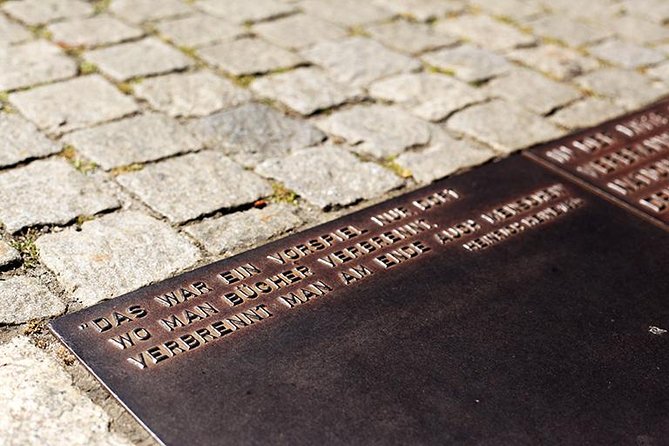
The stop list is packed, with many stops at two to ten minutes each. That’s the trade: you don’t get long deep museum time at each location. Instead, you get a guided framework that makes your time later more productive.
This pace is best if you want a fast, accurate overview. It’s also easier to manage than you might fear, because you’re not stuck on one long lecture. You keep moving, then your guide connects each site back to the bigger story.
Who This Tour Fits Best (And Who Might Prefer Something Else)
This tour is marked for moderate physical fitness. If you can comfortably do a walking-based half-day in a city with lots of street crossings and changing scenery, you’ll be fine.
It also fits travelers who want a first serious introduction to Berlin. If you’re short on time and want to hit major landmarks like Brandenburg Gate, Checkpoint Charlie, and the Holocaust Memorial, this route does that in one go.
If you’re the type who wants to spend long minutes inside each museum or memorial space, you might feel rushed. In that case, plan this as the orientation tour, then return on your own for deeper visits.
Small Logistics That Affect Your Experience
Two details make the tour smoother. First, you get a mobile ticket, which cuts down on paper hassle. Second, the tour is offered in English, and it’s marked as near public transportation if you’re using transit independently.
One more practical point: bring comfortable shoes. With this many stops, even a “short” stop still means you’re standing, walking, and looking for context.
Should You Book This Berlin Private History Walk?
I’d book it if you want to understand Berlin quickly, with serious landmarks and a guide who can answer questions as you go. The repeated praise for guides like Jimmy, Dylan, Reuben, Luisa, Glen, Mark, and Kai Janssen points to the same thing you want from a history tour, clear explanations and a patient tone when your questions get specific.
I’d skip it or pair it differently if you only enjoy long museum time. This tour is built for overview, not extended indoor viewing.
Overall, it’s a strong value for what you get: hotel pickup, an expert local guide, and a tight timeline that hits the places you will want to revisit later.
FAQ
How long is the Berlin private half-day walking tour?
It is about 4 hours.
Is this tour private or shared with other groups?
It is a private tour/activity, only your group will participate.
What language is the tour offered in?
The tour is offered in English.
Does the tour include hotel pickup?
Yes. If your hotel is centrally located, pickup is from the lobby. Otherwise, you meet in front of Starbucks at Hackescher Markt.
Where is the backup meeting point?
If you are not eligible for hotel pickup, you meet in front of Starbucks at Hackescher Markt.
Are admission tickets included for the stops?
The itinerary stops are listed as Admission Ticket Free, and the tour includes an expert guide and context for the sites.
Is food and drink included?
No, food and drink are not included.
Are public transport costs included?
No, public transport costs are not included.
What public transport costs should I expect?
A single ticket is listed as €2.70, a day pass is €7.00, and a group ticket for 5 people is €17.30 (prices subject to change).
What is the cancellation policy?
Free cancellation is available. You can cancel up to 24 hours in advance for a full refund. Confirmation is received at booking.
The Longer History of Berlin
Pavements of Berlin
Everything else we filed on Berlin
- East Berlin: City of Shadows Walking Tour
★ 5.0 · 11 reviews - Berlin: Die Stachelschweine – Frank Lüdecke – Träumt Weiter
★ 4.7 · 11 reviews - Potsdam Day Trip from Berlin with a Local: Private & Personalized
★ 4.0 · 11 reviews - An Introduction to Berlin Walking Tour
★ 5.0 · 11 reviews - DJ for a Day: Learn to Mix Like a Pro in Berlin
★ 5.0 · 11 reviews - 2-H Segway Sightseeing Tour Berlin
★ 4.5 · 11 reviews
Half-Day, side by side.
 ★ 5.0Discover Berlin Half-Day Walking TourFrom $249,624 reviews
 ★ 4.7From Munich: Dachau Memorial Site Half-Day TripFrom $622,526 reviews
 ★ 5.0Early-Start Dachau Memorial Half-Day Tour from MunichFrom $62942 reviews
 ★ 5.0Berlin Third Reich Sites: Half-Day Walking TourFrom $21835 reviews
 ★ 5.0Dachau Small-Group Half-Day Tour from Munich By TrainFrom $60811 reviews
 ★ 4.5Potsdam Half-Day Walking Tour from BerlinFrom $23398 reviews
 ★ 4.7Rostock: Full-Day, Half-Day, or Sunset Sailing ExperienceFrom $86174 reviews
 ★ 4.6From Berlin: Potsdam Half-Day Guided TourFrom $25167 reviews
Other lists this tour is on