
REVIEW · BERLIN WALL
Berlin: East and West Wall Tour by Bike with a Guide
Berlin clicks into place fast on two wheels. This East and West Wall bike tour is a smart way to see big landmarks plus everyday neighborhoods in one compact ride, with a local guide who can explain how the city changed across decades.
I especially love the mix of iconic photo stops and calmer moments in residential streets and along the Spree, so you see Berlin as a living city, not just a postcard. I also like the small-group vibe, capped at 10 people, which keeps the pace friendly for families.
One consideration: it is active sightseeing. Even though the route is flat (about 20 km), you still need to be comfortable riding and stopping often for photos and explanations.
In This Review
- Key things that make this tour worth your time
- Why this East and West Wall bike route works in 4 hours
- Starting at Cotheniusstraße: easy access and a real local launch
- Friedrichshain and Volkspark: where the tour shifts from streets to stories
- East Side Gallery: the Berlin Wall stop that comes with context
- Mitte, Alte Münze, and Nikolaiviertel: small streets, big city feel
- Berlin Palace and Museum Island: grand sights, planned pacing
- Unter den Linden and Brandenburg Gate: the postcard moment with real meaning
- Tiergarten and Victory Column: West Berlin through green space
- Reichstag and Scheunenviertel: political icon meets lived-in streets
- Märchenbrunnen: the fairytale finale and the last big photo round
- Bikes, E-bikes, and small-group comfort without the hassle
- How the itinerary balances East and West without turning into a lecture
- Who this tour suits best
- Should you book this East and West Wall bike tour?
- FAQ
- How long is the Berlin East and West Wall bike tour?
- How far do you bike during the tour?
- Are conventional bikes included in the price?
- Can I use an E-bike instead?
- What is the meeting point?
- What are the tour languages?
- Is the tour suitable for families and kids?
- Do you get any gear for cold weather?
- What kind of group size should I expect?
Key things that make this tour worth your time
- A local Berliner guide with a history and political science background keeps the stories grounded and clear.
- 20 km on mostly protected bike routes, plus long photo stops, makes it doable without racing.
- Parks on both sides of the story, with Tiergarten and Friedrichshain changing the pace from monuments to green space.
- Before-and-now comparisons help you understand what Berlin looked like around 1900, 1945, and 1990.
- Two big East and West anchors, the East Side Gallery and the Brandenburg Gate area, are handled with context, not just curbside photos.
- Family-friendly real-world setup like kids bikes, child seats, and cold-weather extras keeps the tour practical.
Other walks along the Wall we have reviewed
- Skip-the-Line: Berlin Wall Museum at Checkpoint Charlie★ 4.1 · 2,041 reviews
- Berlin: East Side Gallery Spree Cruise in a Solar Catamaran★ 4.0 · 1,039 reviews
- Cold War, Berlin Wall, Spies and the East Side Gallery★ 5.0 · 1,024 reviews
- THE WALL: asisi Panorama Berlin Ticket★ 4.5 · 580 reviews
Why this East and West Wall bike route works in 4 hours
Berlin can feel endless when you plan it station by station. This tour solves that by giving you one clean loop of sights, residential stretches, and riverside paths, then wrapping it up in about 3.5 to 4 hours.
The best part for me is the balance. You get the headline monuments, but you also ride through places that feel like neighborhoods. That matters because Berlin is not only history buildings. It is also everyday life, and biking is one of the few ways to experience that without spending your whole day stuck in transit.
And yes, it is photogenic. You will stop at major landmarks like Brandenburg Gate and the Reichstag, but you will also get chances to take photos from the kind of angles you normally only see when you slow down on foot. The ride is also designed for people who want context, not trivia. The guide uses before-and-now pictures to show how the city’s face changed across major periods, including around 1900, 1945, and 1990.
Starting at Cotheniusstraße: easy access and a real local launch
The tour meets at Cotheniusstraße 8 (10407 Berlin), in front of the bikeshop at a corner house. Inside the same building is a restaurant called Blaue Adria, which makes it easier to spot when you arrive.
This start point is about 3 km east of Alexanderplatz and the TV Tower, in the Friedrichshain area near the Velodrom. That is handy because if you are staying in Prenzlauer Berg, Mitte, Friedrichshain, Pankow, or Lichtenberg, you are already close to the action before the ride begins.
You also get a practical, low-stress setup. Conventional bikes are included in the price, and you can choose appropriate sizes for adults and kids. The tour also comes with gloves and hats for cold weather, plus water. Helmets are included too, even though helmet rules in Germany are not mandatory here.
Friedrichshain and Volkspark: where the tour shifts from streets to stories
After mounting up, the ride focuses on Friedrichshain first, then moves into Volkspark Friedrichshain for a photo stop and sightseeing. This is a smart choice early on because you get variety right away.
Berlin’s parks are not just decorative. They are part of the city’s identity, especially when the guide points out specific structures and history embedded in the space. In this case, the park includes two bunkers built by the Nazis, plus the Grimm fairy tale fountain. That combo is heavy and oddly poetic at the same time, and it helps you understand why Berlin’s layers can be so close together.
This park segment is also where the pace feels most comfortable. You ride from sight to sight, but then you pause. You get time to take photos, listen, and adjust before the tour moves back into monument territory.
East Side Gallery: the Berlin Wall stop that comes with context
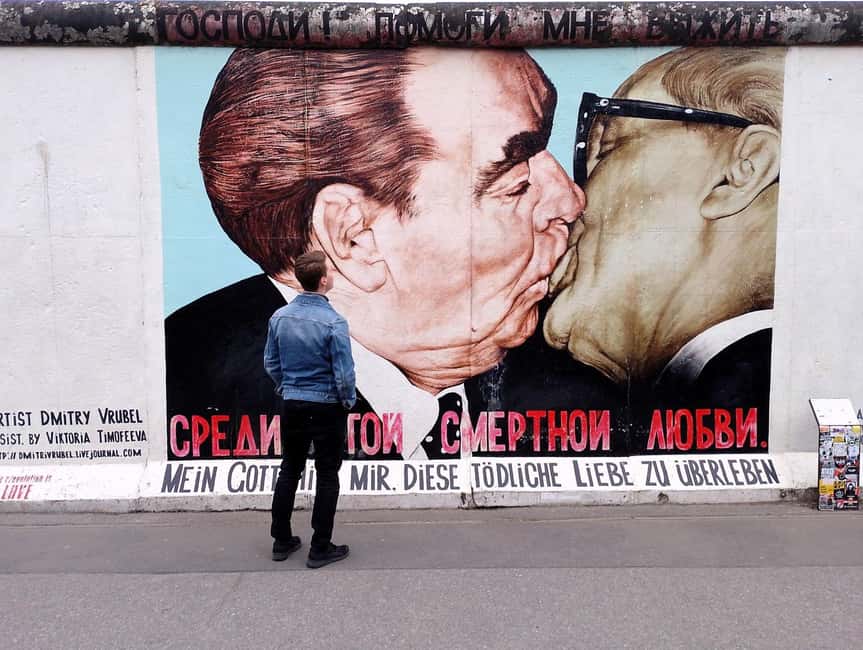
The East Side Gallery is one of the best-known Wall-related stops in Berlin, and the tour handles it with exactly the kind of framing that makes it more than a long wall photo.
You will get guided time here, plus free time to explore and take pictures. The best angle is often the one you only get by having someone point out what to look for. The guide uses before-and-now comparisons to show how Berlin changed around the Wall era and beyond, so you connect the art and the location to the bigger story instead of just capturing it quickly.
This is also where the tour starts to feel like East and West are not separate cities. They are different phases of the same place, visible in streets, river edges, and architecture.
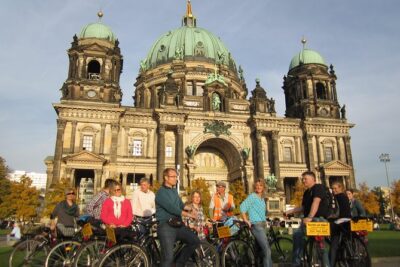
More handlebar time in Berlin
Mitte, Alte Münze, and Nikolaiviertel: small streets, big city feel
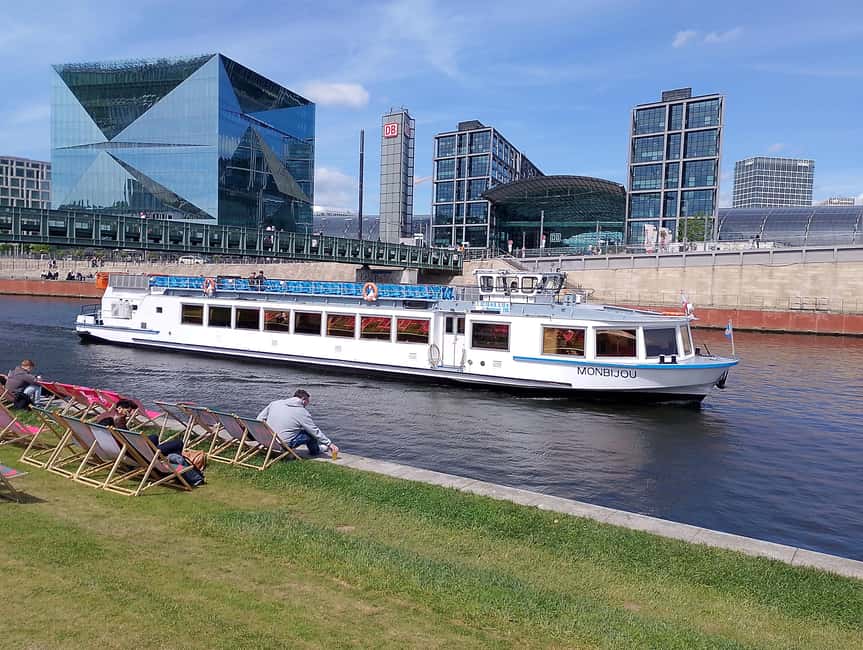
From Friedrichshain you slide toward Mitte, and the tour leans into classic central Berlin imagery without turning it into a sprint.
In the Mitte area, you will have a photo stop at Alte Münze with guided narration and scenic views along the way. Even if you are not a history fanatic, these shorter stops matter. They are where the guide can explain why something looks the way it does, and you can get that context while your legs are still feeling good.
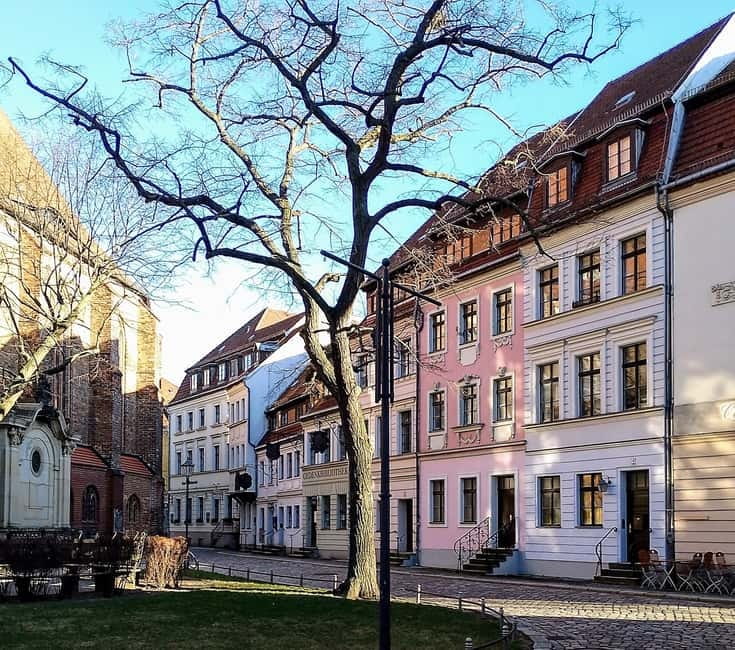
Then comes Nikolaiviertel, where you get another photo stop with guided sightseeing. This part of the ride helps break up the grand-monument rhythm. Nikolaiviertel feels more intimate, and it gives you a human scale contrast with the later stops like Brandenburg Gate and the Reichstag.
It is also a helpful way to understand Berlin as a city of quarters. The route is doing more than stacking famous sights, it is showing neighborhoods in motion.
Berlin Palace and Museum Island: grand sights, planned pacing
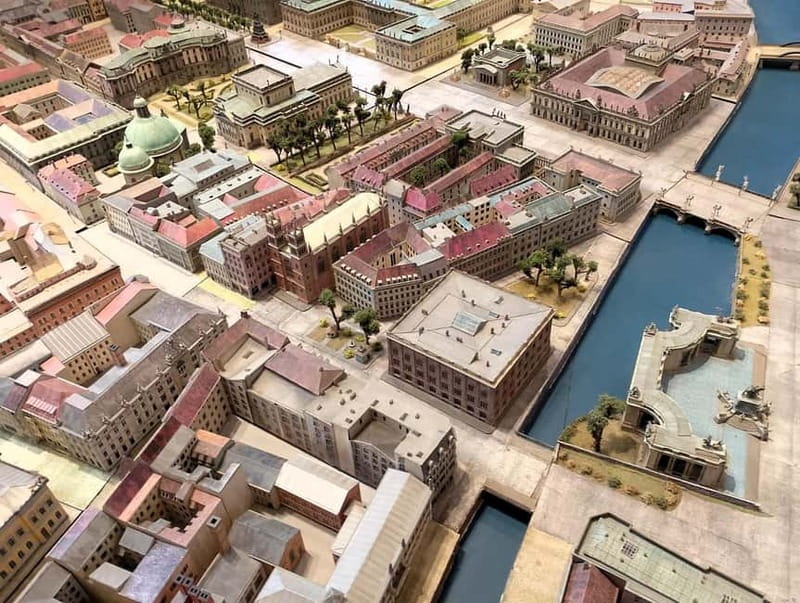
Next you reach Berlin Palace (photographed from key angles, with guided time and a bit of free time), then move toward Museum Island, with a photo stop.
These are the kind of stops where it is easy to get overwhelmed if you try to do them alone. Here, you have the structure of a guided ride, plus the chance to take the photos you actually came for.
What I like is that the guide does not treat these places as isolated masterpieces. The before-and-now style explanations connect the changing city plan and political shifts to what you see today. That gives you a mental map. You start to recognize relationships between buildings, streets, and river viewpoints.
In practical terms, this is also a good zone to rehydrate and reset, because the tour often slows naturally with these major sights.
Unter den Linden and Brandenburg Gate: the postcard moment with real meaning
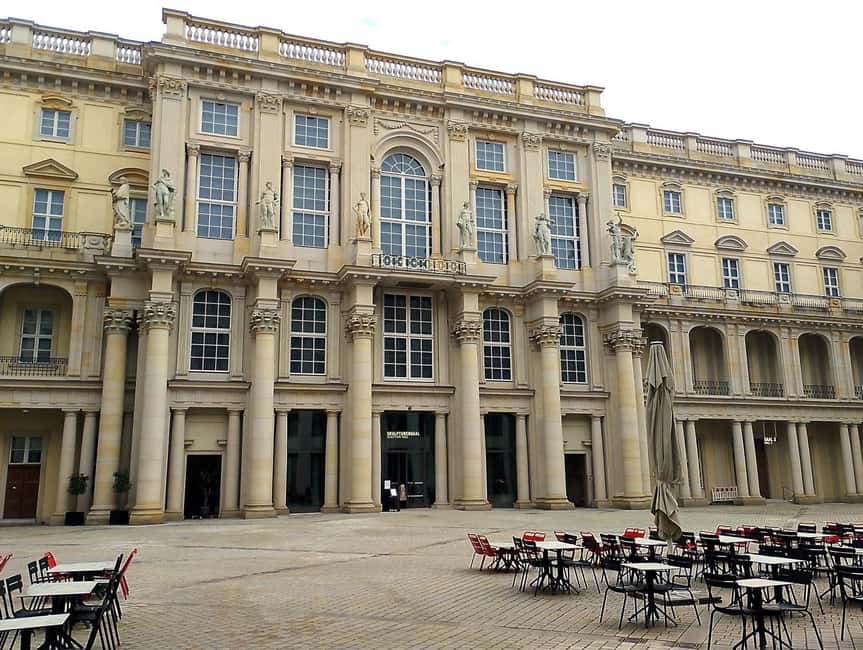
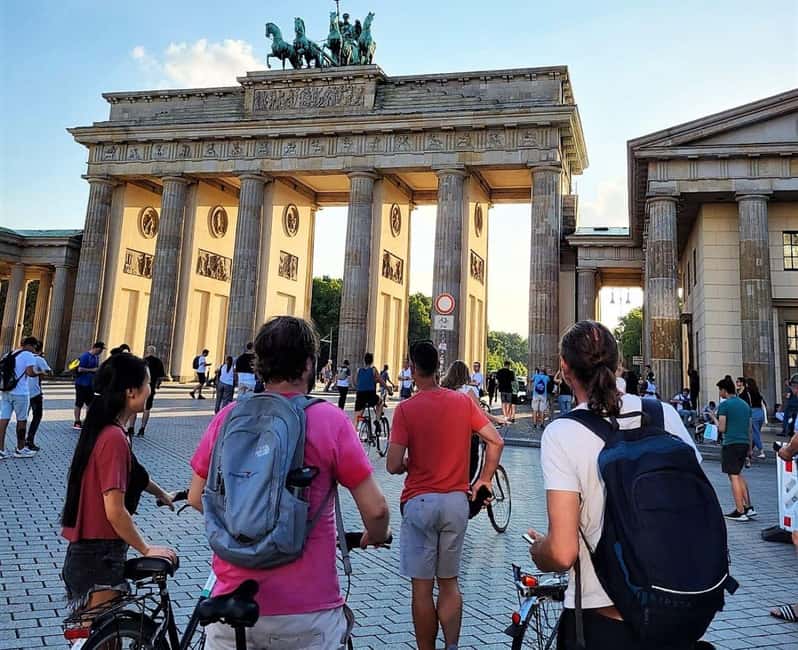
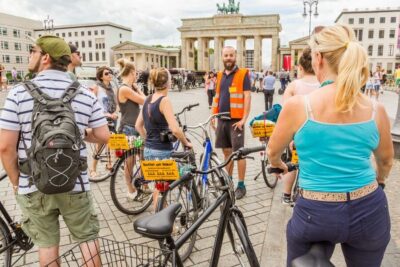
If Berlin has a front porch, it is Unter den Linden. You ride through it as a bike route, then stop at Brandenburg Gate for a break time, photos, and guided sightseeing.
Brandenburg Gate is obviously famous. The value here is the way the guide ties it into Berlin’s shifting eras, not just the obvious facts. The guide’s approach helps you understand why this spot keeps returning to political symbolism. The gate is the kind of place where you want context because the meaning has changed over time.
The break time is also useful. You can stand, stretch, and take your photos without feeling like you are competing with a crowd. If you are cold, this is a good moment to warm up a bit before moving into the parks and west-side landmarks.
Tiergarten and Victory Column: West Berlin through green space
After the gate, the ride moves into Tiergarten, Berlin’s big west-side park. This is one of those transitions that makes bike tours feel special. You go from monumental stone and crowds to open space and pathways where your pace becomes your own again.
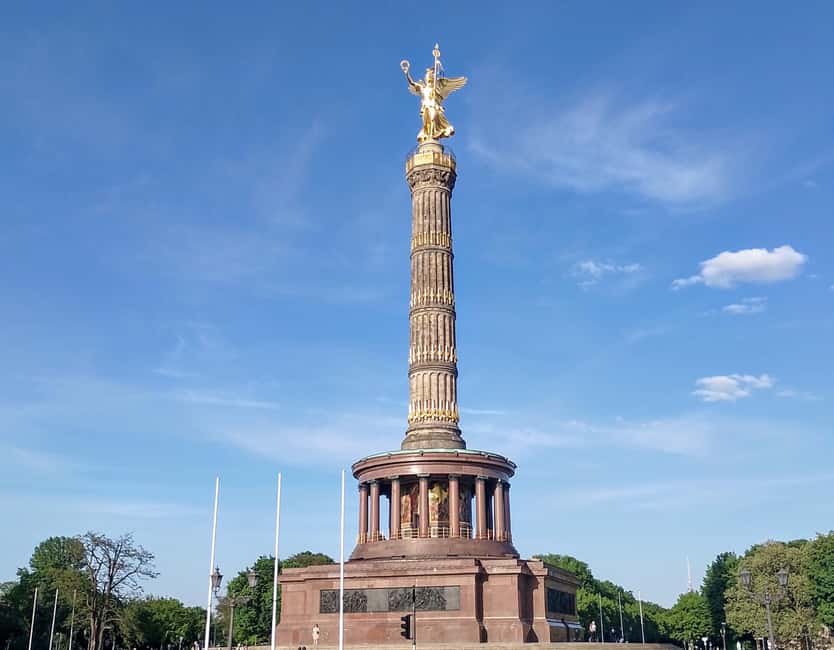
The tour includes guided bike time through Tiergarten, and you also stop for Berlin Victory Column with guided sightseeing and photo time. The Victory Column is a strong visual anchor, and it pairs well with the park because it shows Berlin’s mix of civic grandeur and public leisure.
The guide helps you read the setting too. When the tour talks about how quickly Berlin’s face changes, it is not only about buildings. It is about movement through the city, how people use space, and how the politics of a place show up in what gets built where.
Reichstag and Scheunenviertel: political icon meets lived-in streets
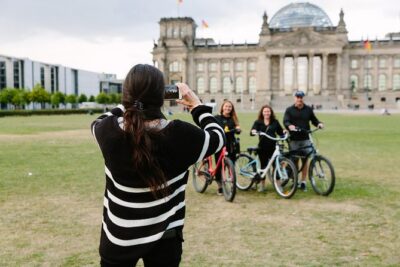
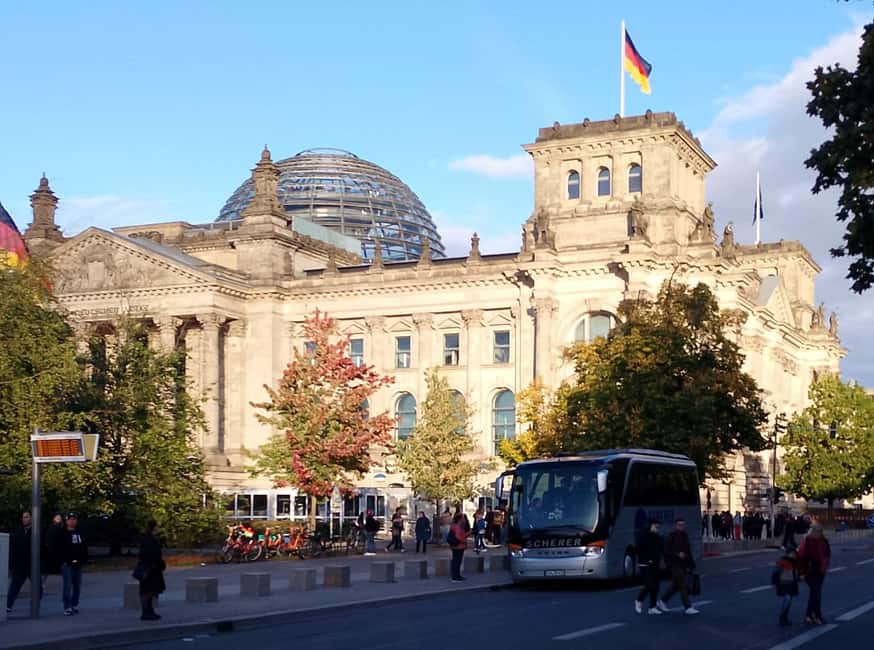
Next comes the Reichstag, another signature stop with photo time and guided sightseeing. This is where you really appreciate the value of an active guide. The Reichstag can be just a big building in photos, but with the right framing it becomes a symbol you understand in a practical way.
Then the tour continues toward Scheunenviertel, with bike time and city context as you move through the area. This stop matters because it helps balance the official architecture of the Reichstag with something more neighborhood-like. Berlin is constantly mixing the official with the everyday, and the tour reflects that.
Märchenbrunnen: the fairytale finale and the last big photo round
The last sightseeing stop is Märchenbrunnen, with photo time and guided sightseeing. This is an end-of-tour moment that feels fitting because the tour has already mixed heavy political history with human scale details, like the Grimm fairy tale fountain earlier.
You get a final chance to grab photos, take in the guide’s closing notes, and then you roll back to the meeting point at Cotheniusstraße 8.
Bikes, E-bikes, and small-group comfort without the hassle
This tour is built around practical cycling comfort. Bikes are well maintained and suitable for different heights, including kids bikes with a minimum height of 120 cm. Baby seats and child seats are available and free of charge, and helmets are provided.
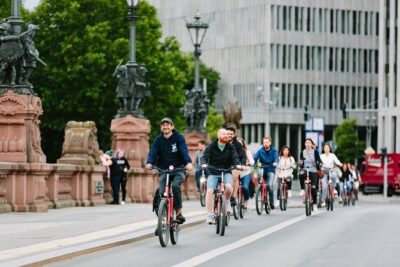
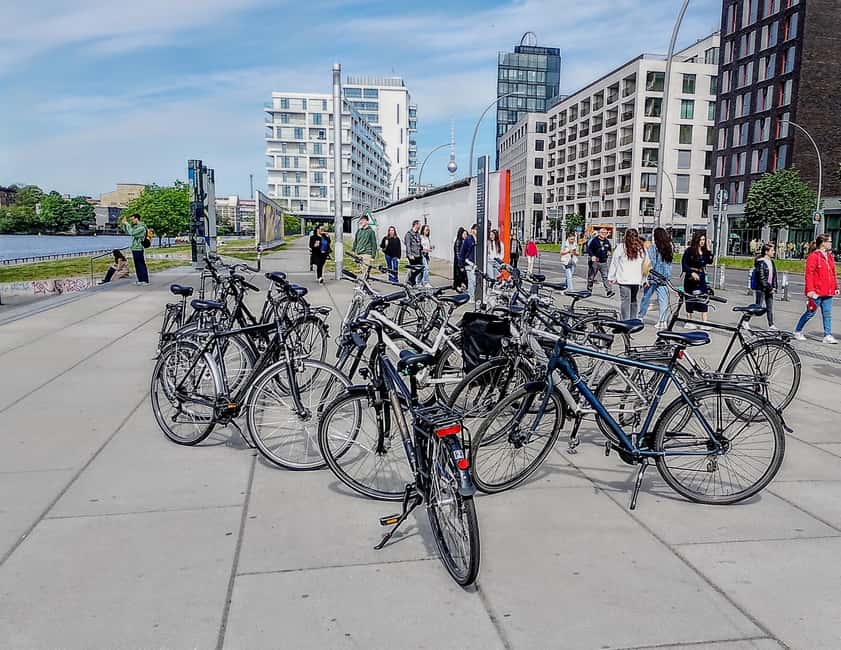
The route is about 20 km (12 miles) and flat. Most of the ride is on bike lanes, paths in parks, or side streets separated from car traffic. That matters because Berlin’s traffic can be busy, and protected cycling routes make a huge difference to how enjoyable the day feels.
If you want an easier assist, E-bikes are available in limited numbers for a 10 euro fee with reservation. Conventional bikes are included, so most people should not need an upgrade. I also like that the cold-weather kit and water are included. That turns the bike tour into something you can show up for without building a whole shopping list.
The group size stays small, maximum 10 participants, and the tour has run for ages from 7 to 77. That range tells you something important: this is not an athletic race. It is guided sightseeing on wheels.
How the itinerary balances East and West without turning into a lecture
The way this tour tells the story is what I think you should watch for.
The guide shows how the city changes across time using before-and-now pictures, and he connects those transformations to specific places on your route, from the East Side Gallery and Wall-related imagery to landmarks in Mitte and West-side symbols like Brandenburg Gate and the Victory Column.
That structure does two things:
- It keeps the stops from feeling random. Each place reinforces a theme.
- It helps you understand Berlin as a layered city. You stop seeing just monuments, and you start noticing how the same urban space can carry different meanings over different decades.
Add in the fact that you also pass residential neighborhoods and smaller quarters, and you get the version of Berlin that most people miss when they only chase the top 10 sights.
Who this tour suits best
This is a good fit if you want:
- A big-sight overview without spending a whole day on public transit.
- Photo stops plus real explanations, with time to pause.
- A route that is active but not punishing, thanks to the flat distance and bike-lane style routing.
- A small-group experience that can handle mixed ages, including families and solo travelers.
If you want a slow, hours-long museum day, this will not replace that. But if you want to get your bearings fast and understand the city’s East and West story while actually moving through it, this tour is a very practical choice.
Should you book this East and West Wall bike tour?
Yes, I would book it if your goal is a guided Berlin “map in motion.” The value is strong: about 4 hours of guided sightseeing, 20 km of flat biking, major landmarks, both parks, and included gear like helmets plus cold-weather basics. The small group size also makes the experience feel personal without being exclusive.
If you hate biking, or if you want only indoor stops, skip it. Otherwise, this tour is a clean way to see a lot, learn a lot, and still feel like you spent time in the city, not just in front of it.
FAQ
How long is the Berlin East and West Wall bike tour?
The tour runs for about 4 hours, including many stops and breaks.
How far do you bike during the tour?
The total distance is about 20 km, or 12 miles, and it is described as flat.
Are conventional bikes included in the price?
Yes. Suitable conventional bikes are included in the tour price.
Can I use an E-bike instead?
E-bikes are available in limited numbers. You can reserve one after booking, and there is a 10 euro E-bike fee.
What is the meeting point?
You meet in front of the bikeshop at Cotheniusstraße 8, 10407 Berlin. The tour ends back at the same meeting point.
What are the tour languages?
The tour is offered in English and German. The exact language mix can depend on the participants.
Is the tour suitable for families and kids?
It can be. The tour has run with a youngest participant of 7. Bikes for kids are available for a minimum height of 120 cm, and baby seats and helmets are provided.
Do you get any gear for cold weather?
Yes. Cold weather equipment such as gloves and hats is provided for free, and water is also provided.
What kind of group size should I expect?
The group is small, limited to a maximum of 10 participants.
The Berlin Bike Lanes
Following the Wall a Little Further
Everything else we filed on Berlin
- East Berlin: City of Shadows Walking Tour
★ 5.0 · 11 reviews - Berlin: Die Stachelschweine – Frank Lüdecke – Träumt Weiter
★ 4.7 · 11 reviews - Potsdam Day Trip from Berlin with a Local: Private & Personalized
★ 4.0 · 11 reviews - An Introduction to Berlin Walking Tour
★ 5.0 · 11 reviews - DJ for a Day: Learn to Mix Like a Pro in Berlin
★ 5.0 · 11 reviews - 2-H Segway Sightseeing Tour Berlin
★ 4.5 · 11 reviews
Berlin Wall and Divided City Tours, side by side.
 ★ 4.8Nuremberg: Tunnels and Secret Passages in the City Wall TourFrom $142,334 reviews
 ★ 4.1Skip-the-Line: Berlin Wall Museum at Checkpoint CharlieFrom $212,041 reviews
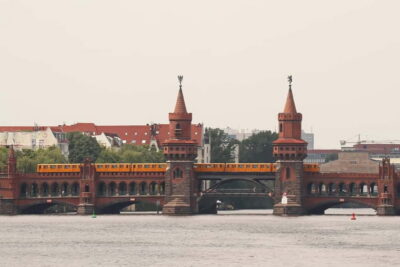 ★ 4.0Berlin: East Side Gallery Spree Cruise in a Solar CatamaranFrom $271,039 reviews
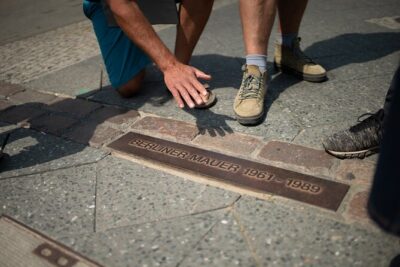 ★ 5.0Cold War, Berlin Wall, Spies and the East Side GalleryFrom $181,024 reviews
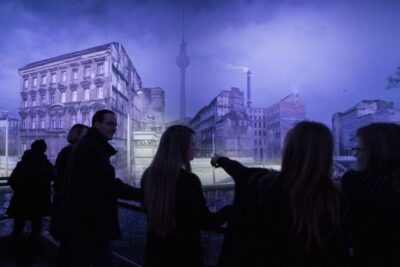 ★ 4.5THE WALL: asisi Panorama Berlin TicketFrom $16580 reviews
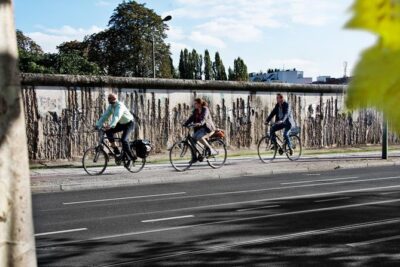 ★ 4.7Berlin: Guided Bike Tour of the Berlin Wall and Third ReichFrom $40499 reviews
 ★ 4.8Berlin: Cold War Walking Tour on Berlin Wall RouteFrom $26437 reviews
 ★ 4.9East Berlin and the Wall: Walking TourFrom $351407 reviews
Other lists this tour is on