
REVIEW · BERLIN WALL
THE WALL: asisi Panorama Berlin Ticket
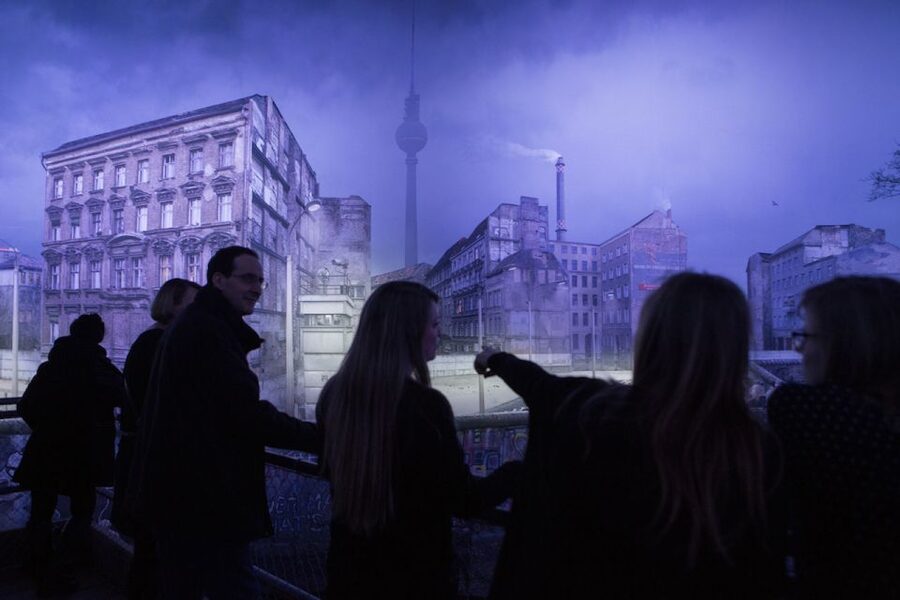
Berlin’s Wall hits different when you can see everyday life. The asisi Panorama Berlin ticket recreates Kreuzberg on a fictitious autumn day in the 1980s, right in the shadow of the Wall, with details that feel uncomfortably real. I love the 4-meter-high visitor platform view and the way the exhibition mixes mundane daily routines with the harsh reality of the border zone. One thing to consider: this is a self-guided experience, so if you want a live human to explain everything, you may miss some context.
What makes it worth your time is that you do not just look at a Wall photo. You view scenes of West Berlin life in SO 36, see the so-called Death Strip and border facilities, and then tie it all together with a documentary about the artist Yadegar Asisi, from his first ideas to the creation of the Panorama. A free key folder adds extra information, and you can skip the ticket line when you arrive, making it easy to fit into a day.
In This Review
- Key Things to Know Before You Go
- Entering asisi Panorama: what your $16 ticket really gives you
- The 4-meter visitor platform: why your viewpoint matters
- Kreuzberg on a fictitious autumn day in the 1980s
- The mundane and the gruesome: how the exhibit teaches with details
- The documentary on Yadegar Asisi: the art process matters
- Language and on-site support: following the story without a guide
- How long to plan for (and why rushing will spoil it)
- Pair it with other Wall sites near Friedrichstraße
- Who this is best for (and who might want a different option)
- Should you book the asisi Panorama Berlin ticket?
- FAQ
- Where is asisi Panorama Berlin located?
- How much does the asisi Panorama Berlin ticket cost?
- How long is the experience valid for?
- Is a guided tour included?
- What language options are available?
- Is the exhibition dog-friendly, or are pets allowed?
- What time flexibility and cancellation options are offered?
Key Things to Know Before You Go
- 4-meter-high platform for an eye-level look at what separation looked like from close range
- Scenes of Kreuzberg and SO 36 on a fictitious autumn day in the 1980s
- You can spot the Death Strip and border facilities as part of the viewing experience
- The exhibition includes a documentary on Yadegar Asisi and an additional exit video
- English translation options and English captions help you follow the story
Other walks along the Wall we have reviewed
- Skip-the-Line: Berlin Wall Museum at Checkpoint Charlie★ 4.1 · 2,041 reviews
- Berlin: East Side Gallery Spree Cruise in a Solar Catamaran★ 4.0 · 1,039 reviews
- Cold War, Berlin Wall, Spies and the East Side Gallery★ 5.0 · 1,024 reviews
- THE WALL: asisi Panorama Berlin Ticket★ 4.5 · 580 reviews
Entering asisi Panorama: what your $16 ticket really gives you
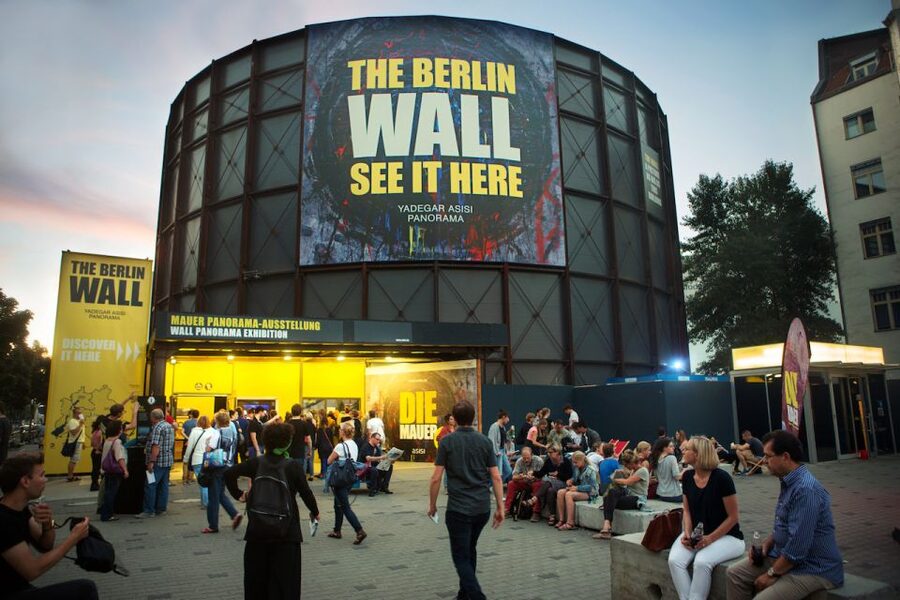
For $16 per person, the asisi Panorama is strong value because it is not trying to be a giant museum. It is a focused, ticketed experience built around one powerful idea: showing what life felt like when East and West Berlin were separated, yet close enough to be in each other’s shadow.
Your meeting point is asisi Panorama Berlin, Friedrichstraße 205, 10117 Berlin. The good news is you can skip the ticket line, so you are not spending part of your day waiting indoors before you even start. The experience is valid for one day, and you can check starting times based on availability, which is handy if your Berlin schedule is still moving around.
Also, it is simple in a way that helps. Your ticket includes entry plus a free key folder with extra information. A guided tour is not included, so plan to use the signage, captions, and key folder to connect the dots.
One practical heads-up: pets are not allowed, so plan accordingly if you are traveling with animals.
The 4-meter visitor platform: why your viewpoint matters
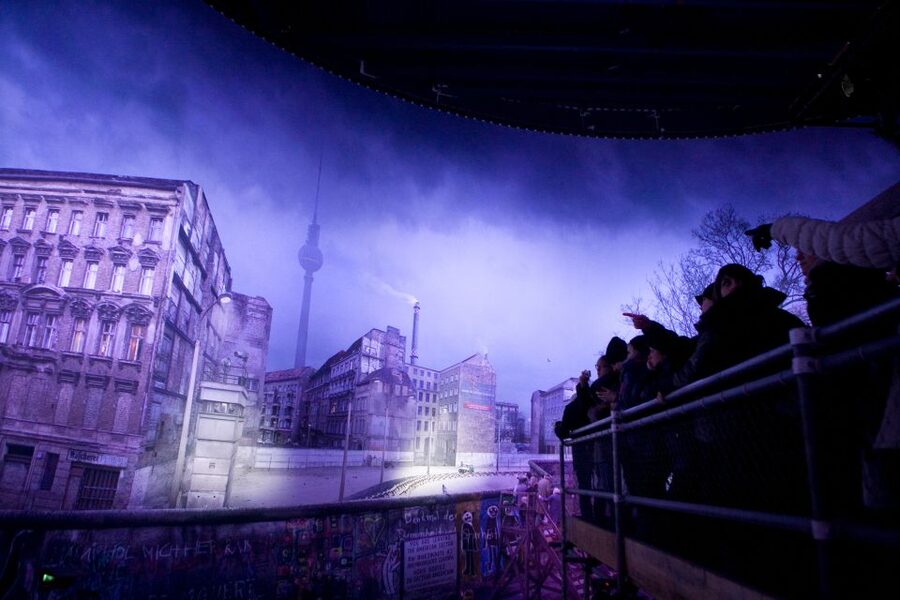
The centerpiece is the viewing platform, 4 meters high. That height is a big deal because it changes how the scenes read. From lower levels, a panorama can feel like set dressing. From this platform, the border zone looks more like something you are standing beside rather than looking at from a distance.
What I like about this design is how it makes you slow down. You do not just glance and move on. You naturally scan, because the exhibit is built to reward attention. There are details across the scene that you notice more the longer you stand there, especially where everyday life sits next to the border infrastructure.
The platform also does something psychological. It compresses scale. A Wall can be “big” in your mind and still feel abstract. Here, the distance feels shorter, the separation feels sharper, and that makes the experience more likely to stick with you after you leave the building.
Kreuzberg on a fictitious autumn day in the 1980s
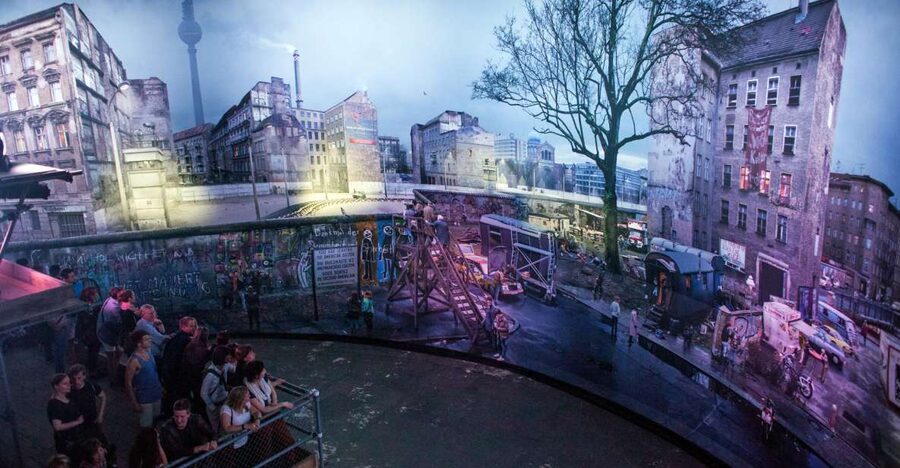
The Panorama recreates Kreuzberg on a fictitious autumn day in the 1980s. That time-and-place choice matters because it does not freeze everything in a dramatic postcard moment. It shows the feel of normal life, but with the Wall shaping the air around it.
From the scenes, you see SO 36 in West Berlin, separated from East Berlin, yet close enough that it is truly “only a stone’s throw away.” I find that contrast is the point. You are not just learning about a border. You are seeing how a neighborhood could be both ordinary and constrained at the same time.
On the viewing side, you will also encounter the so-called Death Strip and border facilities. The exhibit aims to make both the daily and the grim readable in one glance. That is a difficult balance, but it is exactly why this is more effective than reading history alone.
The mundane and the gruesome: how the exhibit teaches with details
One of the strongest parts of the Panorama is how it handles contrast. The everyday scenes are there, but they are not presented as harmless background. They become the backdrop for the border reality: the place where routines exist alongside danger.
From what you can see from the platform, you get a sense of how mundane life could look while still being fenced in by systems designed for control. At the same time, the exhibit does not shy away from the gruesome nature of the separation. The Death Strip and border facilities are not generic symbols. They are treated as part of the everyday setting.
A subtle bonus is the way the experience is built around sensory cues you would not get from static displays. Even on a day you might think is just sightseeing, this one presses on memory and imagination. You start noticing how the surroundings shape behavior and movement. That is the kind of learning that feels personal without pretending to be firsthand.

The documentary on Yadegar Asisi: the art process matters
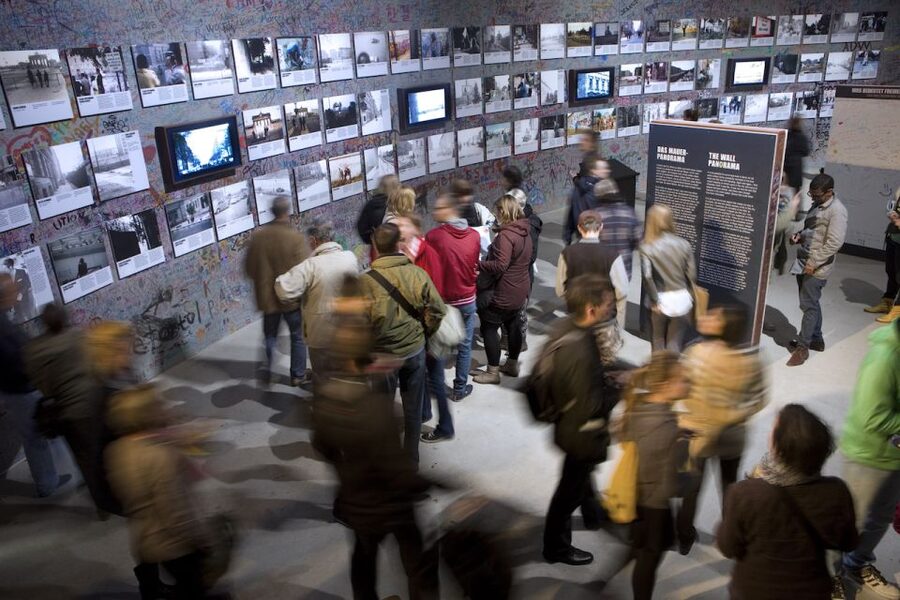
This is not only a history lesson. It is also a story about how the artist made it.
The exhibition includes a documentary on Yadegar Asisi, covering his early ideas and the creation of the Panorama. This is valuable because it explains why the scenes feel so convincing. When you understand the amount of planning behind the artwork, you start seeing it less as a trick and more as a carefully constructed experience.
There is also an added video component at the exit area. It tells the story of the artist, which helps you connect the dots between what you saw and why it was built that way. If you are the type who wants to know how something works, this portion is a satisfying wrap-up.
If you care about realism in exhibits, do not skip this section. The documentary turns the Panorama from a “wow” moment into a “now I get it” moment.
Language and on-site support: following the story without a guide
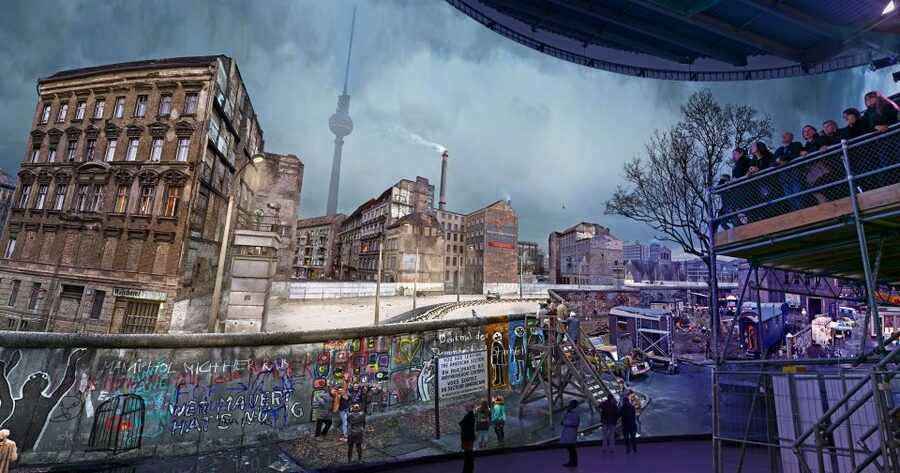
Because a guided tour is not included, you will want the exhibit’s information to do some of the teaching for you. The good news is that English speakers have translation options, and English captions support key storytelling.
I also like that the exhibition uses multiple ways to help you connect. The key folder with extra information gives you something to reference as you move around. The personal stories and the photo details help explain what life could look like from different sides of the border.
One small drawback I would flag for planning: if you only like experiences where a person explains every reference, you might want to pair this with another stop that provides live commentary elsewhere in Berlin. Here, the explanation is mostly on the walls, in captions, and in the documentary.
How long to plan for (and why rushing will spoil it)
Your ticket is valid for one day, and you can choose starting times based on availability. That flexibility is useful, especially if you are combining it with other Wall-related sights.
How long should you plan on spending inside? The exhibit is small compared to a full museum, but it is designed to slow you down. You will be on the viewing platform, then you will move through the exhibition rooms, and you will want time for the documentary and the exit video. I recommend arriving with time to spare so you are not racing through your reading and scanning.
A couple more practical tips:
- Stand still on the platform long enough to let the details land.
- When you reach the documentary sections, resist the urge to treat them like background noise. They explain the choices behind the realism.
Pair it with other Wall sites near Friedrichstraße
The asisi Panorama sits in an area where you can string together Wall memories without needing a long commute.
If you are doing the classic Berlin Wall day, it pairs nicely with Checkpoint Charlie timing. After spending time there, this Panorama hits harder because you are not just looking at a single location. You are seeing how separation shaped daily life in a neighborhood setting.
There is also a practical street-level tip worth using. After you finish the exhibition, you can take a short walk outside. If you go straight down the road to the traffic lights, cross the road, you should be able to spot a remaining section of the original Wall nearby. It is one of those moments that snaps your indoor experience back into real geography.
Who this is best for (and who might want a different option)
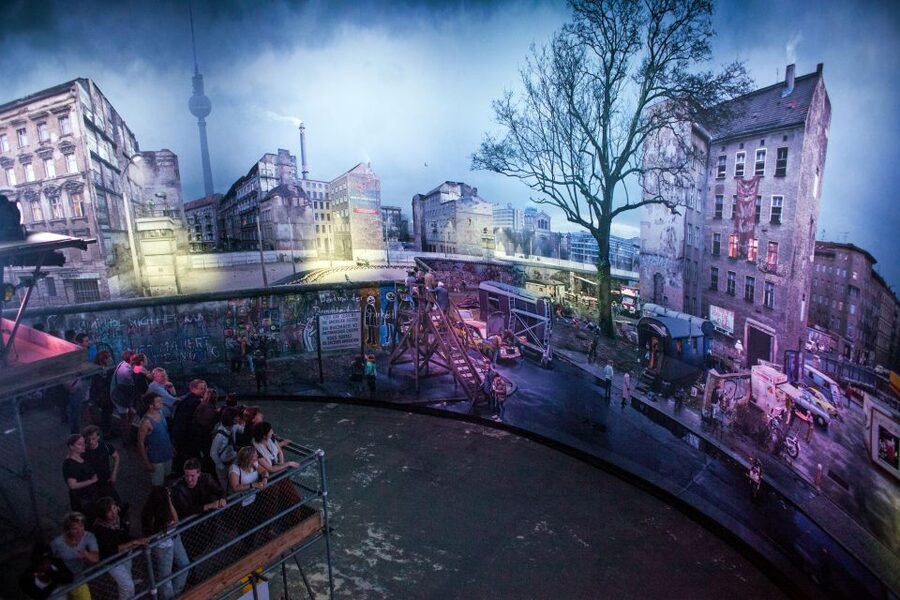
This ticket works especially well if you want a visual way into Berlin’s divided-era reality. It is also a good fit when you have minimal background knowledge and want context without doing homework first. The exhibition is built to be readable, even if you are not coming in with deep familiarity.
It is also a good choice if you like art that teaches. The documentary on Yadegar Asisi helps you appreciate the craftsmanship, not just the subject matter.
On the other hand, it is not built around live guide narration. If you know you prefer guided explanations, you might find the self-guided format limiting. And if you are traveling with pets, you will need to plan another option since pets are not allowed.
Should you book the asisi Panorama Berlin ticket?
If you are trying to get the most emotional and visual value from one Berlin day, I would book it. The combination of a 4-meter-high platform view, the scenes of Kreuzberg and SO 36, and the inclusion of the Death Strip and border facilities creates a powerful, coherent experience. Add in English support, a helpful key folder, and the documentary on Yadegar Asisi, and you get an experience that feels both informative and human.
Book it if you want a Wall experience that is more than a line on a map. Skip it only if you strongly prefer a guided tour format or you want a broader, room after room museum at every stop. Otherwise, this is one of the rare Berlin attractions where the details do the talking long after you leave.
FAQ
Where is asisi Panorama Berlin located?
It is at Friedrichstraße 205, 10117 Berlin.
How much does the asisi Panorama Berlin ticket cost?
The price listed is $16 per person.
How long is the experience valid for?
Your ticket is valid for 1 day.
Is a guided tour included?
No. A guided tour is not included with the ticket.
What language options are available?
There are translation options for English speakers, including English captions.
Is the exhibition dog-friendly, or are pets allowed?
No. Pets are not allowed.
What time flexibility and cancellation options are offered?
You can reserve with a pay later option, and you can cancel up to 24 hours in advance for a full refund.
Following the Wall a Little Further
Everything else we filed on Berlin
- East Berlin: City of Shadows Walking Tour
★ 5.0 · 11 reviews - Berlin: Die Stachelschweine – Frank Lüdecke – Träumt Weiter
★ 4.7 · 11 reviews - Potsdam Day Trip from Berlin with a Local: Private & Personalized
★ 4.0 · 11 reviews - An Introduction to Berlin Walking Tour
★ 5.0 · 11 reviews - DJ for a Day: Learn to Mix Like a Pro in Berlin
★ 5.0 · 11 reviews - 2-H Segway Sightseeing Tour Berlin
★ 4.5 · 11 reviews
Berlin Wall and Divided City Tours, side by side.
 ★ 4.8Nuremberg: Tunnels and Secret Passages in the City Wall TourFrom $142,334 reviews
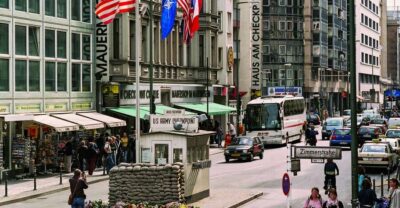 ★ 4.1Skip-the-Line: Berlin Wall Museum at Checkpoint CharlieFrom $212,041 reviews
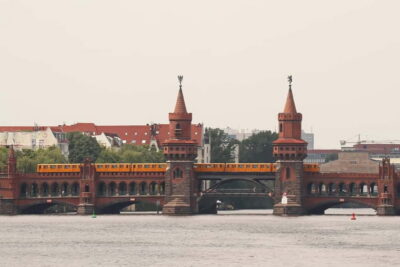 ★ 4.0Berlin: East Side Gallery Spree Cruise in a Solar CatamaranFrom $271,039 reviews
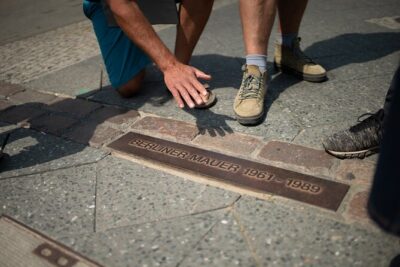 ★ 5.0Cold War, Berlin Wall, Spies and the East Side GalleryFrom $181,024 reviews
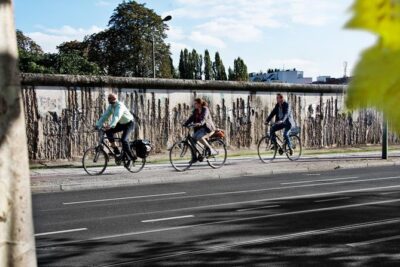 ★ 4.7Berlin: Guided Bike Tour of the Berlin Wall and Third ReichFrom $40499 reviews
 ★ 4.8Berlin: Cold War Walking Tour on Berlin Wall RouteFrom $26437 reviews
 ★ 4.9East Berlin and the Wall: Walking TourFrom $351407 reviews
 ★ 4.1Berlin: The Wall Museum East Side Gallery TicketFrom $14292 reviews
Other lists this tour is on