
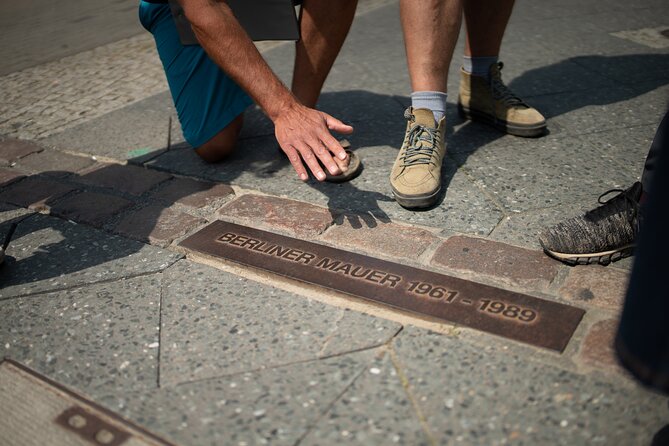
REVIEW · BERLIN WALL
Cold War, Berlin Wall, Spies and the East Side Gallery
Cold War Berlin feels close up, even today. This 3-hour walk through the Berlin Wall story mixes major landmarks with human-scale details, from Allied versus Soviet power games to the everyday pressure of surveillance. You also get the visual punch of the East Side Gallery, where the Cold War’s hard line becomes art.
I especially like how the tour uses real transition points like Friedrichstrasse and the Palace of Tears, so the history has weight, not just dates. I also like the way the guide connects big themes such as NATO versus Soviet tension with on-the-ground life in East Berlin, including escape attempts along Bernauer Strasse. One drawback to plan for: you’ll need that AB Zone daypass for Berlin transport, and two locations on the route are listed as not included for admission.
In This Review
- Key things to know before you go
- Friedrichstrasse, the place where the Cold War started to bite
- The ghost train moment beneath East and West Berlin
- Tränenpalast, Palace of Tears, where goodbye meant goodbye
- Admiralspalast and the politics behind the control
- Alexanderplatz and Karl-Marx-Allee, communist power as daily scenery
- The Death Strip story along Bernauer Strasse and the wall remains
- East Side Gallery, the longest wall turned into public art
- Value check: is this $18.04 a good deal for Berlin Wall time?
- Who this tour is best for, and who might want a different pace
- Book it or skip it? My decision guide
- FAQ
- Where does the tour start and end?
- How long is the Cold War tour?
- What time does the tour start?
- How much does it cost?
- Is public transport required during the tour?
- Is food included?
- What language is the tour offered in?
- What is included in the price?
- Are there any extra admission costs?
- How big is the group?
Key things to know before you go
- Friedrichstrasse kicks things off at the center of Berlin’s division, with a ghost train segment that sets the mood.
- Tränenpalast, Palace of Tears turns separation into something you can feel, not just read about.
- Propaganda spaces matter at Alexanderplatz and Karl-Marx-Allee, where politics became daily scenery.
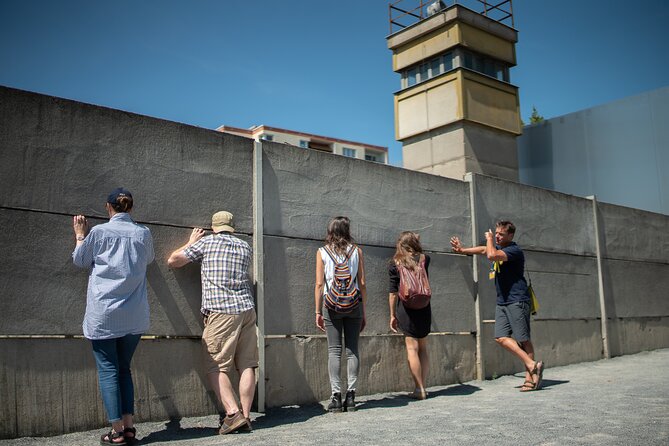
- The Death Strip is treated with care, with stops tied to escape attempts and wall remains.
- East Side Gallery is the grand finale, turning a deadly border into a long public mural gallery.
- Small group size (up to 22) helps you keep up and ask questions without shouting.
Other walks along the Wall we have reviewed
- Skip-the-Line: Berlin Wall Museum at Checkpoint Charlie★ 4.1 · 2,041 reviews
- Berlin: East Side Gallery Spree Cruise in a Solar Catamaran★ 4.0 · 1,039 reviews
- Cold War, Berlin Wall, Spies and the East Side Gallery★ 5.0 · 1,024 reviews
- THE WALL: asisi Panorama Berlin Ticket★ 4.5 · 580 reviews
Friedrichstrasse, the place where the Cold War started to bite
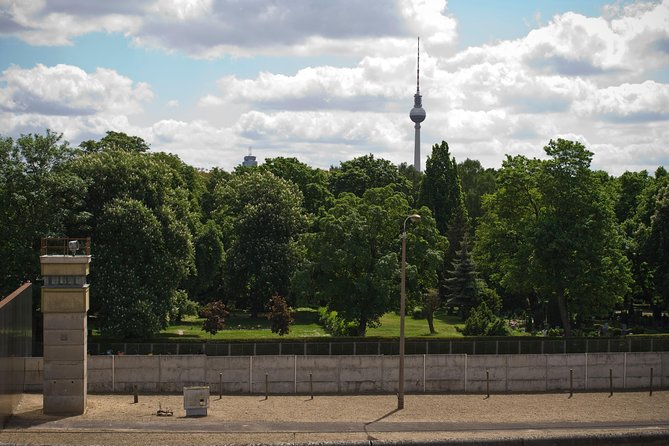
The tour begins at Friedrichstrasse area, right where East and West Berlin’s boundaries were most visible in everyday life. If you’ve ever wandered Berlin and thought the city layout feels slightly too straight, this is where it makes sense. Berlin did not just get divided. It got engineered.
This start matters because Friedrichstrasse was a key hinge point for movement and control. And the guide’s job is to help you notice what normal travel would hide: checkpoints, restricted access, and the constant calculation of risk. In some tours, Berlin’s division is delivered like a lecture. Here, it’s built into the route so you see how people lived with it.
Also, you’re not stuck in one lane of history. The tour’s focus includes military tension between the United States and its NATO allies versus the Soviet Union and its allies, plus the reality of spying in the shape of CIA, KGB, and Stasi techniques. The result is a Cold War story that isn’t only about governments. It’s about control.
The ghost train moment beneath East and West Berlin
One of the more memorable transitions on the route is the underground ghost train experience. The idea is simple but effective: you get to move along an underground connection that once linked East and West Berlin during the Cold War. It’s not just a ride. It’s a time capsule.
Why this works: it gives you a physical sense of “separation with function.” Berlin wasn’t only walls and slogans. It had routes, systems, and hidden connections that made the divide practical and therefore more stressful. Even if you’ve read about border crossings, this kind of under-the-city framing helps it click.
Admission for this segment is listed as free, which is a nice value detail. And because the tour is about three hours total, this early injection of atmosphere helps you stay engaged for the rest of the walk.
Tränenpalast, Palace of Tears, where goodbye meant goodbye
If you want one stop that explains why the Berlin Wall hurt beyond politics, this is it. The Palace of Tears, Tränenpalast, was a former border crossing where families faced tearful separations as East and West Berliners were forced apart.
The tour frames it like an emotional center of the division. That’s not soft storytelling. It’s practical. You start understanding the Wall as a system that broke routines, not just borders. The museum in the Palace of Tears looks at the emotional and physical toll the Wall took, and it includes themes like escape attempts, harsh separation, and the reunification that followed.
Here’s the main thing I think you’ll appreciate as a visitor: you see how personal events fit into the larger story of control. A border crossing is where policy becomes lived experience. And the name Palace of Tears is not poetic branding. It points to what people actually went through.
Time on site is listed as about 20 minutes, with admission noted as free as part of this tour plan. That makes it a strong use of your limited time, especially if you only have a half-day in Berlin.
Admiralspalast and the politics behind the control
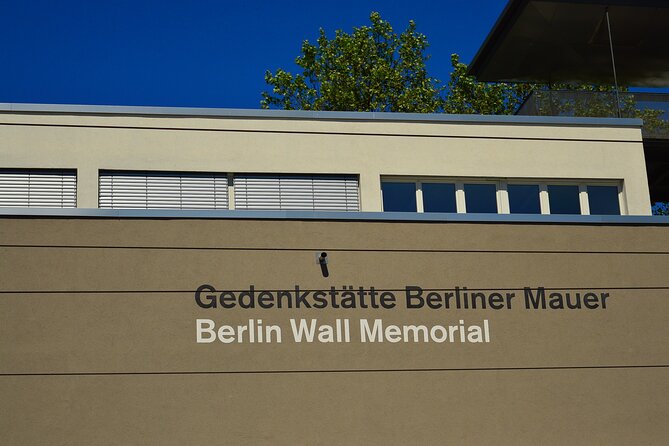
Next up is Admiralspalast Berlin. This is a short stop, but it’s meaningful because it ties the Cold War story to political power inside East Germany. The specific location mentioned is where the East German political party, the SED, was founded in 1946.
This is one of those “small stop, big context” moments. Without it, you might understand the Berlin Wall as an isolated symbol. With it, you understand how institutions formed, then turned into mechanisms for control, including surveillance and restricted movement.
The time listed here is about 5 minutes, and admission is not included. Translation for your planning: it’s more about the story the guide attaches to the building than about wandering inside for a long time.
More of the divided city, written up in full

Alexanderplatz and Karl-Marx-Allee, communist power as daily scenery
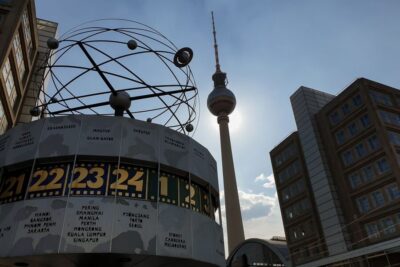
From the Palace of Tears, the tour keeps moving through spaces that shaped daily life. Alexanderplatz is described as the beating heart of East Berlin, with communist power, mass rallies, and everyday life under surveillance. Even the architecture becomes part of the narrative, with socialist symbols and the feeling that propaganda is in the air.
Then comes Karl-Marx-Allee, East Germany’s showcase boulevard. The tour notes the grand Stalinist architecture and the way it projected ideology to the world, while masking the everyday reality behind the Iron Curtain. This is where you’ll likely feel the contrast the guide is pointing to: a grand setting versus a controlled life.
What I like about including these stops is that it prevents a common mistake. It’s easy to focus only on the dramatic border sites and forget that the Cold War lived in ordinary routines. These avenues and squares are not background. They are where power demonstrated itself.
Karl-Marx-Allee is listed as about 20 minutes, and admission is not included. Alexanderplatz is listed as about 15 minutes, and admission is free as part of the tour flow. So you get a decent visual dose without turning this into a museum binge.
The Death Strip story along Bernauer Strasse and the wall remains
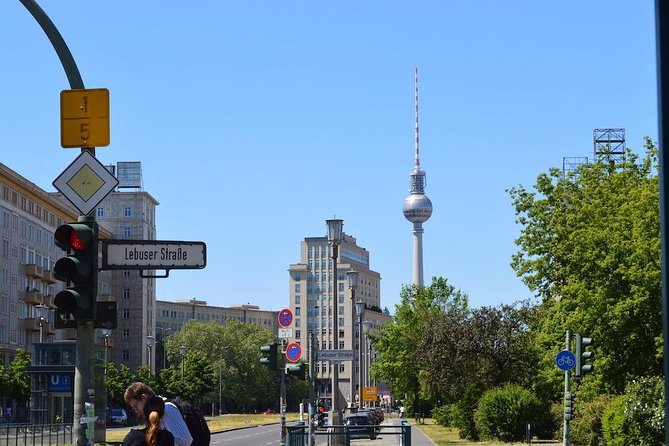
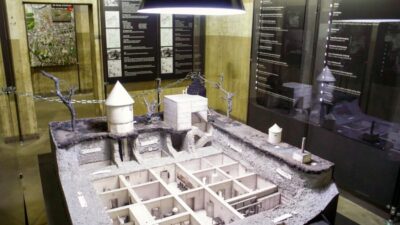
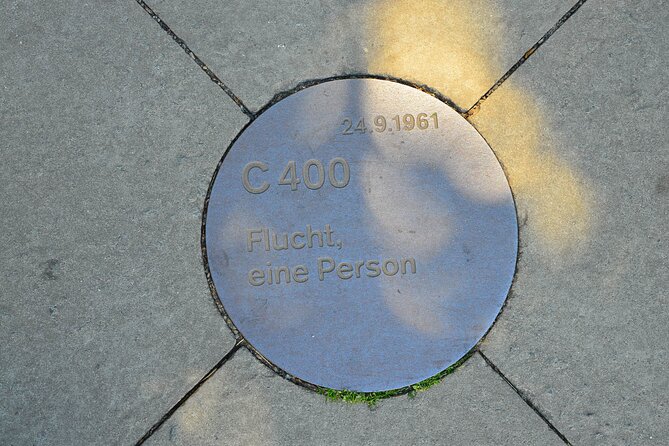
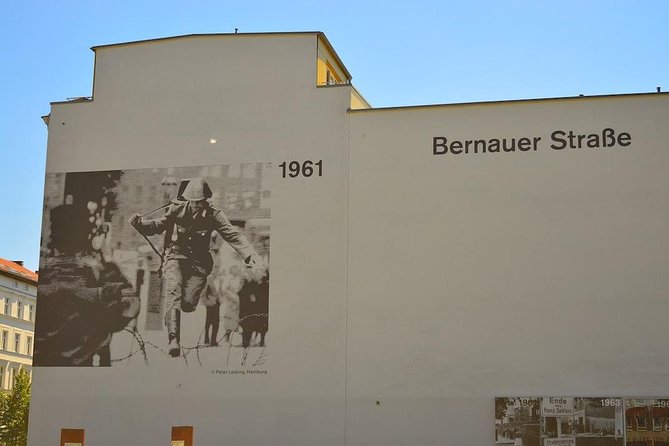
Now we hit the part of Berlin that reads like a warning sign. The tour retraces the trail of the death strip and the Berlin Wall, including the area of Bernauer Strasse where many escape attempts happened. It also includes remains of the wall at the Berlin Wall Memorial and the Former Stasi (DDR secret police).
This section is the heart of the “Cold War as geography” concept. The Wall wasn’t just a line. It created a dangerous zone, shaped movement, and made escape attempts a constant reality. The guide connects this to surveillance culture and how intelligence work, including Stasi techniques, shaped what people could do.
Why I think this hits hard (in a useful way): Berlin makes it easy to look at the Wall like a monument. But this route forces you to treat it like infrastructure for control. You’re not only seeing concrete. You’re seeing cause-and-effect.
The tour also mentions walking under the Brandenburg Gate. This matters here because Brandenburg Gate is a visible pivot between division and unity. During the Cold War it functioned as a symbol of division, and after reunification it became a national symbol of peace and unity. Including it after the Wall sites helps you feel the shift in meaning, not just the fact of reunification.
East Side Gallery, the longest wall turned into public art
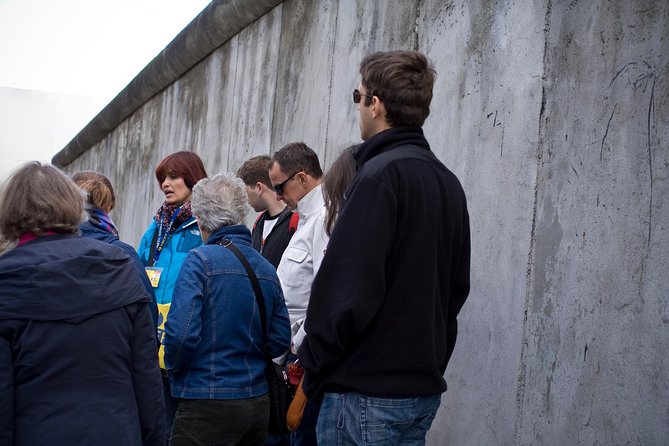
The finale is the East Side Gallery, described as the longest permanent graffiti wall in the world and the largest remaining section of the Berlin Wall. It’s now a symbol of freedom, and the murals are the tour’s way of closing the loop from oppression to expression.
You’ll walk through an open-air history lesson. The guide explains the transformation of concrete oppression into bold art, with themes such as resistance, hope, and the fall of the Cold War’s most infamous divide. The feeling here is different from the memorial stops, which is exactly why this ending works.
The time listed is about 25 minutes, with admission noted as free. That’s enough time to read a handful of murals without turning it into a speed run. And since the tour ends in an easy transportation area near Mühlenstraße, you can keep the momentum and head to lunch or another stop.
Value check: is this $18.04 a good deal for Berlin Wall time?
At $18.04 per person, this tour is priced like a smart add-on rather than a luxury experience. And for most visitors, that’s the point. You’re paying for an expert guide, a curated route built around Cold War landmarks, and the built-in time saving of not figuring out the order yourself.
The strongest value piece is that the tour mixes major sites with emotionally loaded locations like the Palace of Tears, plus “systems history” stops like Admiralspalast. You also get the Cold War spy context, with CIA, KGB, and Stasi techniques brought into the story. That combination is harder to assemble on your own in a single half-day.
The main cost to budget beyond the ticket is the Berlin transport daypass AB Zone ticket, listed at €10.00 per person. Two other items are listed as not included for admission at certain stops: Admiralspalast Berlin and Karl-Marx-Allee. So your total outlay depends on whether you plan to enter those sites separately, but you’ll at least get the guided context even if you do not add extras.
One more practical detail: the tour is about three hours, and it’s designed as a walking route plus short transfers. That’s long enough to matter, but short enough for a first-timer day. If you’re trying to see Berlin’s division story without exhausting your legs, it’s a good balance.
Who this tour is best for, and who might want a different pace
This tour is a great fit if you want Cold War Berlin to feel real, not abstract. You’ll like it if you care about the Berlin Wall story, the Stasi angle, and the way surveillance shaped daily life. It’s also suitable for families since the route includes major “readable” sites and a pace that keeps things understandable.
I also appreciate that the group is limited to a maximum of 22 travelers. That size is big enough for energy but small enough for a guide to answer questions, which matters on a topic like this where people arrive with lots of curiosity.
If you prefer a pure museum day with lots of indoor time, you might find this too much “outdoors with stories.” But if you want the city to do the explaining, this tour format works.
Book it or skip it? My decision guide
I’d book this tour if your goal is a focused, emotionally serious Cold War introduction that hits the big landmarks in about three hours. The route covers the Wall, the death strip theme, the Palace of Tears, East Berlin’s major squares and boulevards, plus the East Side Gallery finale. That’s a lot of key ground without needing a second day.
I’d be cautious only about one thing: show up early and double-check your meeting point details. The tour asks you to be there 15 minutes before it begins, and missing the start time can ruin your plans. If you’re tight on timing, add buffer.
If you want more after, you can often build on the Wall and Stasi theme with additional time at Stasi-related sites, if your schedule allows. This route sets the context, so follow-ups tend to make more sense.
FAQ
Where does the tour start and end?
The tour starts at Friedrichstrasse train station area, with the listed meeting point at Reichstagufer 17, 10117 Berlin. It ends at East Side Gallery, Mühlenstraße, 10243 Berlin.
How long is the Cold War tour?
It runs for about 3 hours.
What time does the tour start?
The start time is 10:00 am.
How much does it cost?
The price listed is $18.04 per person.
Is public transport required during the tour?
Yes. A Berlin transport daypass AB Zone ticket is required, and it can be purchased from the meeting point for €10.00 per person.
Is food included?
No. Food and drinks are not included.
What language is the tour offered in?
The tour is offered in English.
What is included in the price?
A local expert guide is included. Some segments list free admission, like the ghost train at the first stop and admission at key sites on the route.
Are there any extra admission costs?
Some listed stops show admission ticket not included, including Admiralspalast Berlin and Karl-Marx-Allee. Admission details for other segments are listed as free as part of the tour experience.
How big is the group?
The maximum group size is 22 travelers.
Museums Worth the Queue in Berlin
The Divided Years, Reviewed
Following the Wall a Little Further
Everything else we filed on Berlin
- 2-H Segway Sightseeing Tour Berlin
★ 4.5 · 11 reviews - Daily First Rickshaw promotion in Combi Vehicle public Group 90€
★ 5.0 · 11 reviews - Berlin: One-Hour Segway Signature Tour
★ 5.0 · 11 reviews - Berlin: Street Food Tour with 10 Tastings
★ 5.0 · 11 reviews - Private Third Reich Walking Tour of Berlin
★ 5.0 · 12 reviews - In Search of Jewish Berlin Walking Tour
★ 5.0 · 12 reviews
Berlin Wall and Divided City Tours, side by side.
 ★ 4.8Nuremberg: Tunnels and Secret Passages in the City Wall TourFrom $142,334 reviews
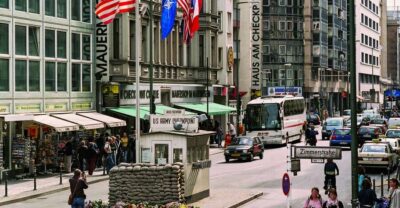 ★ 4.1Skip-the-Line: Berlin Wall Museum at Checkpoint CharlieFrom $212,041 reviews
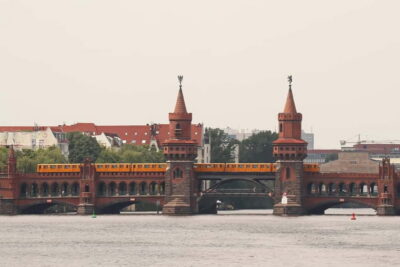 ★ 4.0Berlin: East Side Gallery Spree Cruise in a Solar CatamaranFrom $271,039 reviews
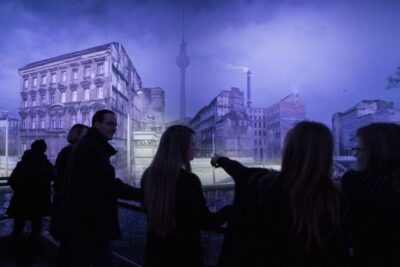 ★ 4.5THE WALL: asisi Panorama Berlin TicketFrom $16580 reviews
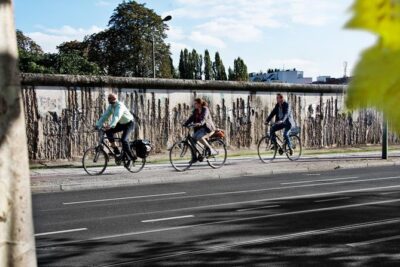 ★ 4.7Berlin: Guided Bike Tour of the Berlin Wall and Third ReichFrom $40499 reviews
 ★ 4.8Berlin: Cold War Walking Tour on Berlin Wall RouteFrom $26437 reviews
 ★ 4.9East Berlin and the Wall: Walking TourFrom $351407 reviews
 ★ 4.1Berlin: The Wall Museum East Side Gallery TicketFrom $14292 reviews
Other lists this tour is on