

REVIEW · BERLIN WALL
Skip-the-Line: Berlin Wall Museum at Checkpoint Charlie
Berlin’s escape stories hit hard. This museum turns the Cold War into something you can read, see, and feel, right by Checkpoint Charlie. It was created as a protest against the Berlin Wall, with a mission to fight human rights violations and help people trying to get out.
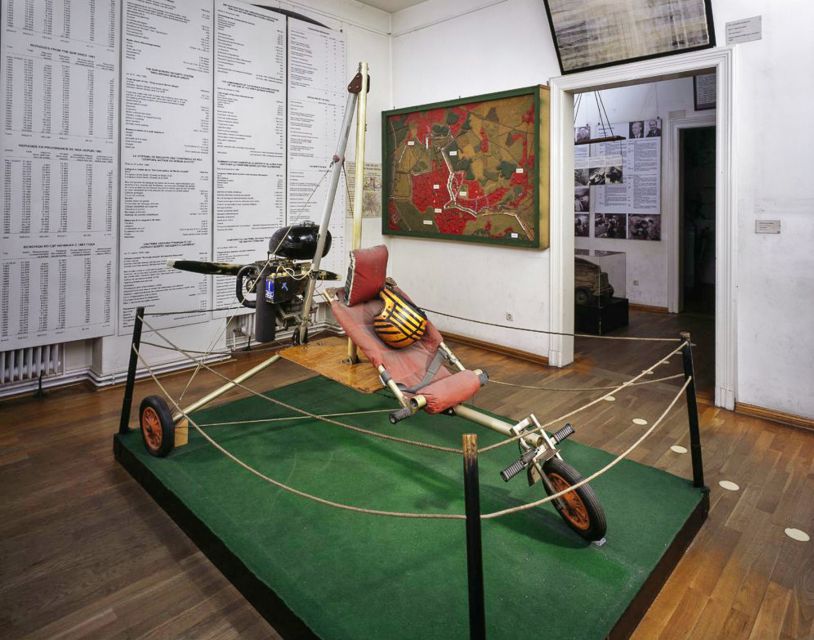
I especially love the original artifacts from successful escapes, including devices like a hot-air balloon and a mini-submarine. And I love that the exhibits don’t just stop at 1961 and the fall of the Wall, they keep documenting what happens to people when borders and regimes harden.
One thing to plan for: expect a lot of reading. The museum is huge, information-heavy, and not every section feels quick or interactive, so a headset can help if you get tired of text.
In This Review
- Key things to know before you go
- Skip-the-Line Entry at Checkpoint Charlie, Without the Headache
- Why this Museum Feels Different Than a Typical Berlin Wall Stop
- Original Escape Devices You Can Actually See
- Checkpoint Charlie Context, Plus Views From Inside
- Your Self-Guided Flow: How to Structure a 2 to 3 Hour Visit
- Audio Guide vs. No Audio: When a Headset Helps
- Price and Value: Does $21 Make Sense?
- Guides, Storytelling, and Group Energy
- Practical Tips Before You Go
- Who Should Book This Museum Ticket
- Should You Book Skip-the-Line Berlin Wall Museum at Checkpoint Charlie?
- FAQ
- Where is the Berlin Wall Museum meeting point?
- How much does this experience cost?
- How long is the ticket valid?
- What is included with the ticket?
- Is an audioguide included?
- Is a guided tour included?
- Does this include skip-the-line entry?
- Is the museum wheelchair accessible?
- What is the cancellation policy?
Key things to know before you go
- Skip-the-line entry saves real time at a famous, often-busy location
- Original escape methods like a hot-air balloon and mini-submarine make history tangible
- The museum’s mission started in 1962, as a protest and support center
- Checkpoint Charlie context is right there, including views from inside the building
- You can spend 2.5 hours or more, depending on how closely you read
- It keeps going into today, tying Cold War themes to later conflicts
Other walks along the Wall we have reviewed
- Skip-the-Line: Berlin Wall Museum at Checkpoint Charlie★ 4.1 · 2,041 reviews
- Berlin: East Side Gallery Spree Cruise in a Solar Catamaran★ 4.0 · 1,039 reviews
- Cold War, Berlin Wall, Spies and the East Side Gallery★ 5.0 · 1,024 reviews
- THE WALL: asisi Panorama Berlin Ticket★ 4.5 · 580 reviews
Skip-the-Line Entry at Checkpoint Charlie, Without the Headache
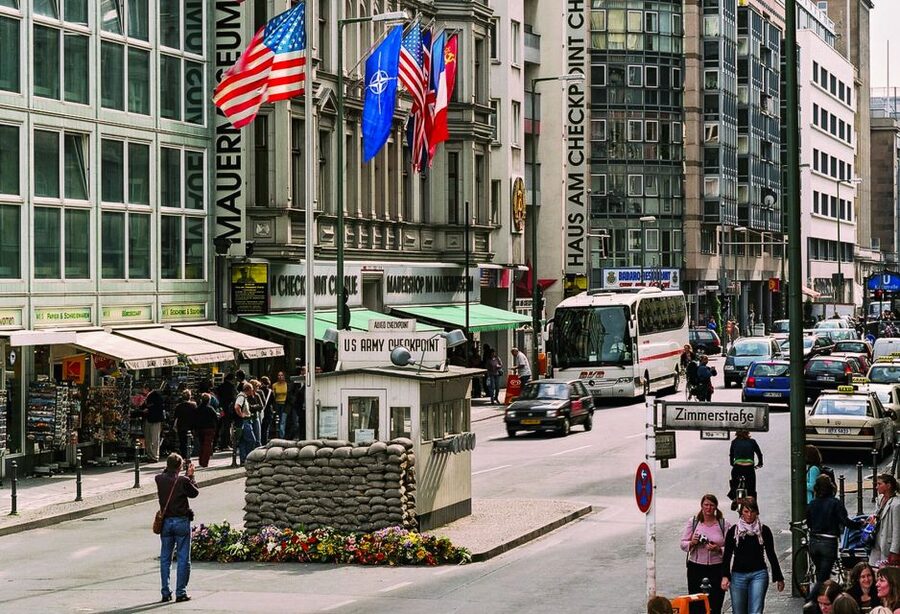
If you only have one day for Berlin history, this ticket is a smart way to protect your time. The museum sits at Friedrichstraße 43-45, and it’s linked to the legend of Checkpoint Charlie, so lines are common.
With skip-the-line, you spend less time waiting and more time absorbing what the place is really about. The museum is also wheelchair accessible, which matters if you are using a chair or need barrier-free access.
Even with that smooth start, I’d still give yourself breathing room. This is not a quick “take a photo and leave” site. The collections are dense, and you’ll want time to follow the story from escape attempts to the broader political pressure that made them necessary.
Why this Museum Feels Different Than a Typical Berlin Wall Stop
Most Wall-related sites focus on the Wall as a physical barrier. This museum treats it like a system built to control people, punish choices, and shape daily life.
It opened in October 1962, shortly after construction began, as a protest against the Wall. The aim was not only to document, but to help people seeking assistance and to fight human rights violations tied to the Wall.
That origin story changes your experience. You’re not just looking at artifacts in a glass case. You’re seeing proof that people tried to get out, people tried to help them, and those efforts mattered enough to preserve. And over time, the museum expanded its exhibitions and helped keep attention on why the Wall fell.
Original Escape Devices You Can Actually See
This is the big draw, and it’s also the reason the museum is worth more than a half-hour stop. The exhibits include original artifacts connected to successful escapes and the ingenuity behind them.
You’ll encounter items tied to escape methods like:
- a hot-air balloon
- a mini-submarine
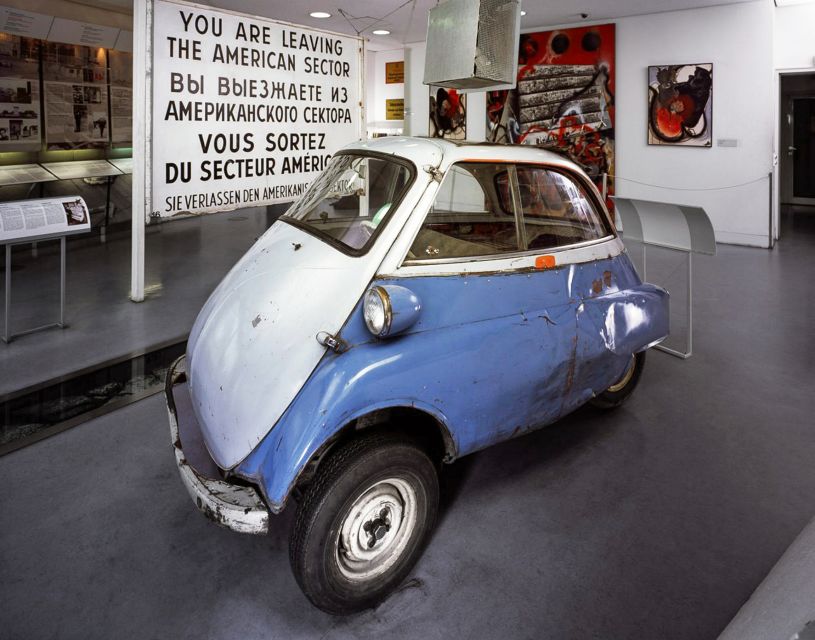
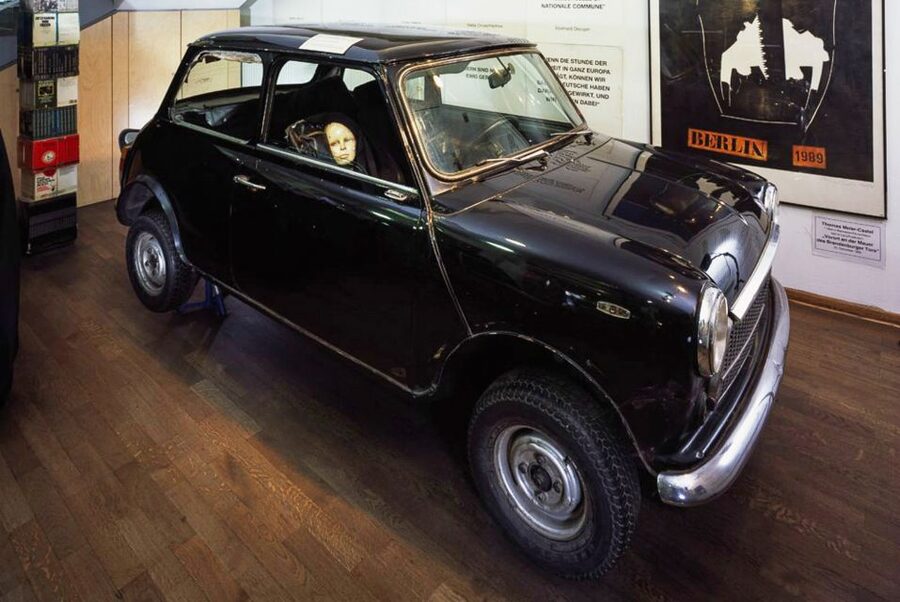
- escape attempts involving cars and airplanes
What I like about seeing these objects in Berlin is that they remove the abstraction. It’s easier to grasp the stakes when you can point to the exact tools used and see how desperate planning had to be.
There is also an important human layer. The museum describes how people helping East Germans to flee used the site as a base for planning, organizing, and resistance against the unjust GDR regime. After people escaped, helpers donated various means of conveyance and related objects, which is why so much of what you see is tied to real attempts, not only imagined reconstructions.
One consideration: a couple of visitors note that the exhibition experience can feel text-heavy, and the museum is large enough that some sections might feel less focused if you’re rushing. I’d go in planning to read and stay flexible.
Checkpoint Charlie Context, Plus Views From Inside
Checkpoint Charlie is right there outside, so the location gives you an immediate sense of place. This museum doesn’t pretend the Wall was only about one crossing point, but it does use the Checkpoint Charlie setting to anchor your understanding.
A standout detail from the experience is that you can see Checkpoint Charlie from an overhead view inside the museum. That perspective helps you connect the museum artifacts with the geometry of the border zone, which is often what makes it click for first-time Berlin visitors.
The museum also covers more than the immediate Wall era. Some exhibits go beyond the typical timeline and expand into Cold War conflicts and the longer aftermath of division. One visitor even pointed out a display that connects Cold War themes to later refugee journeys, including an item from a family fleeing Ukraine. The takeaway is sobering, but it’s also useful: the Wall may be down, but the mechanisms that force people to flee do not vanish on their own.
More collections to walk through in Berlin





Your Self-Guided Flow: How to Structure a 2 to 3 Hour Visit

There is no included guided tour here, so you’ll be building your own route. That can be a bonus, as long as you plan for the fact that this museum is information-heavy.
Here’s a practical way to pace yourself without feeling lost:
- Start with orientation and the museum’s core framing. You want the mission and timeline early so later artifacts make sense.
- Target the escape artifacts next, especially the big names like the hot-air balloon and mini-submarine. Seeing them before you get overwhelmed by additional context usually helps.
- Follow the helper and resistance stories. The museum’s emphasis on how helpers organized makes the history feel human, not mechanical.
- Save the broader context for the end. Later sections that connect to other international conflicts tend to land better when you already understand the Wall’s logic.
Plan on about 2.5 hours if you read at a comfortable pace. If you stop to study artifacts and photos closely, or if you tend to wander back for details, it can stretch longer. One visitor described it as large and suggested you could easily spend more time if you want to absorb everything.
If you’re visiting with teens, keep expectations realistic. Some visitors said the museum is not very interactive, so younger visitors may need breaks or a clear focus. That said, if your group likes history, the sheer variety of escape methods tends to win people over.
Audio Guide vs. No Audio: When a Headset Helps
Your ticket includes entry, but an audioguide is not included. That choice might sound minor, but it can affect how comfortable you feel if you get tired of reading.
Some visitors felt there was plenty to read and didn’t think audio was necessary. Others wish they had used a headset because the material is intense and the museum is bigger than expected.
So here’s my practical suggestion: if you prefer narrative guidance and quicker context, look for audio options at the museum (if available). If you love reading and want control over pacing, you’ll be fine without it. Just do not assume it will be a light, breezy museum.
Price and Value: Does $21 Make Sense?
At $21 per person, the price sits in the “worth it if it fits your interests” category. This isn’t just a generic museum stop. You’re paying for direct, original escape-linked objects, a strong framing story about human rights, and a location that helps you understand the Wall in real space.
Skip-the-line matters too. If you’ve planned your Berlin day tightly, saving time is part of the value. And the museum’s scale makes it feel like more than a quick exhibit. Multiple visitors described it as bigger than expected, and they reported spending around 2.5 hours, sometimes longer.
Where the value is weakest is if you hate reading-heavy exhibits or if you need lots of hands-on interaction. In that case, you might feel there is too much text for the time you have. But for most history-minded visitors, the combination of original artifacts and clear political framing justifies the ticket.
Guides, Storytelling, and Group Energy
Even though a guided tour is listed as not included, guides do show up in the overall experience. Reviews mention guides such as Peter, Steve, and Louisa, with praise for pacing and making stories feel real.
If you can join any optional talk or guided element offered on-site, a good guide can help you avoid getting stuck in the text wall. Storytelling also helps when topics are heavy and you want clarity on what matters most.
Group size can also change your comfort level. Some visitors noted the museum can coincide with big school groups, which can make quiet parts harder. If you want a calmer visit, consider going at a quieter time of day.
Practical Tips Before You Go
A few details make the visit smoother:
- Bring patience for reading, because you’ll spend a lot of time taking in text.
- If you want to store bags, plan ahead. One visitor mentioned leaving a deposit, including a 2 euro coin for lockers.
- Photography rules can affect your plan. Some visitors were disappointed that taking pictures wasn’t allowed in parts of the exhibition.
- The museum can be tricky to find if renovations or layout changes are happening. Build in a few minutes just to get oriented.
None of this should scare you off. It’s just the kind of real-world friction that helps you plan a stress-free museum day.
Who Should Book This Museum Ticket
You should book if:
- you want real escape artifacts, not only photos and explanations
- you care about how the Berlin Wall functioned socially and politically
- you want context connected to later human rights and refugee realities
You might think twice if:
- you hate text-heavy exhibits and need interactive displays
- you want something short, light, and low-effort
- you are visiting only for Checkpoint Charlie photos and nothing else
This ticket works well as a foundation stop for first-time Berlin visits. It also pairs well with other Cold War or border-zone sites across the city, because it gives you a mental framework for what you’ll see next.
Should You Book Skip-the-Line Berlin Wall Museum at Checkpoint Charlie?
Yes, I think you should book if you have one day and you want your time to count. For $21, skip-the-line access buys you fewer delays, and the museum’s original escape-linked objects give you a more grounded understanding than most Wall stops.
Go ahead and book if you’re the type of traveler who enjoys reading, connecting details, and sitting with difficult history long enough to make it meaningful. If your tolerance for text is low, plan shorter pacing and consider audio options if available on-site.
Either way, this is one of those Berlin experiences that stays with you after you walk away. Not because it tries to shock you, but because it shows how far people went, and why.
FAQ
Where is the Berlin Wall Museum meeting point?
The meeting point is Friedrichstraße 43-45, 10969 Berlin.
How much does this experience cost?
The price is $21 per person.
How long is the ticket valid?
The ticket is valid for 1 day. You can check availability to see starting times.
What is included with the ticket?
Your ticket includes entrance to the museum.
Is an audioguide included?
No, an audioguide is not included.
Is a guided tour included?
No, a guided tour is not included.
Does this include skip-the-line entry?
Yes, the experience includes skip-the-line ticket entry.
Is the museum wheelchair accessible?
Yes, the museum is wheelchair accessible.
What is the cancellation policy?
Free cancellation is available up to 24 hours in advance for a full refund.
Museums Worth the Queue in Berlin
Following the Wall a Little Further
Everything else we filed on Berlin
- East Berlin: City of Shadows Walking Tour
★ 5.0 · 11 reviews - Berlin: Die Stachelschweine – Frank Lüdecke – Träumt Weiter
★ 4.7 · 11 reviews - Potsdam Day Trip from Berlin with a Local: Private & Personalized
★ 4.0 · 11 reviews - An Introduction to Berlin Walking Tour
★ 5.0 · 11 reviews - DJ for a Day: Learn to Mix Like a Pro in Berlin
★ 5.0 · 11 reviews - 2-H Segway Sightseeing Tour Berlin
★ 4.5 · 11 reviews
Berlin Wall and Divided City Tours, side by side.
 ★ 4.8Nuremberg: Tunnels and Secret Passages in the City Wall TourFrom $142,334 reviews
 ★ 4.0Berlin: East Side Gallery Spree Cruise in a Solar CatamaranFrom $271,039 reviews
 ★ 5.0Cold War, Berlin Wall, Spies and the East Side GalleryFrom $181,024 reviews
 ★ 4.5THE WALL: asisi Panorama Berlin TicketFrom $16580 reviews
 ★ 4.7Berlin: Guided Bike Tour of the Berlin Wall and Third ReichFrom $40499 reviews
 ★ 4.8Berlin: Cold War Walking Tour on Berlin Wall RouteFrom $26437 reviews
 ★ 4.9East Berlin and the Wall: Walking TourFrom $351407 reviews
 ★ 4.1Berlin: The Wall Museum East Side Gallery TicketFrom $14292 reviews
Other lists this tour is on