
REVIEW · BERLIN WALL
Berlin Wall: City Tour of Divided Germany
Berlin still has a way of making you look twice. This 2-hour city tour follows the places where the Berlin Wall shaped everyday life, from border stations to political sites. I especially like how the route is explained through human stories told by a live German guide.
I also like that the walk links major landmarks to one clear idea: the wall was not just concrete, it was a line that affected daily choices in real time. One drawback to consider is simple: the tour is in German, so if you want English, you may feel held back.
In This Review
- Key things that make this tour worth it
- A 2-hour walk that makes the border feel real
- Meeting at Tränenpalast near Friedrichstraße station
- Friedrichstraße station and the one border crossing that mattered
- Along the Spree to Parliament and the government district
- Brandenburg Gate, the symbol of division, and the former death strip
- Potsdamer Platz and the Tiergarten Triangle split you can see
- The longest remaining wall stretch and what you can still read
- Checkpoint Charlie, the world-famous border with context
- Price and value: why $21 works for a focused Berlin Wall loop
- Who should book this Berlin Wall city tour
- Should you book this tour?
- FAQ
- How long is the Berlin Wall city tour?
- How much does the tour cost?
- Where do I meet the guide?
- Is there a live tour guide?
- What language is the tour in?
- What should I bring?
- Is free cancellation available?
- Can I reserve and pay later?
Key things that make this tour worth it
- Friedrichstraße, the Cold War single border station, as a starting point for the whole story
- A guided line along the Spree toward the parliament and government district
- Brandenburg Gate as a symbol, where the border ran through the city’s public life
- Holocaust memorial near the former death strip, placing the division in a wider moral context
- Potsdamer Platz and the Tiergarten Triangle, where the split becomes very visible on foot
- Checkpoint Charlie and the longest remaining wall stretch, mixing big names with what you can still see
Other walks along the Wall we have reviewed
- Skip-the-Line: Berlin Wall Museum at Checkpoint Charlie★ 4.1 · 2,041 reviews
- Berlin: East Side Gallery Spree Cruise in a Solar Catamaran★ 4.0 · 1,039 reviews
- Cold War, Berlin Wall, Spies and the East Side Gallery★ 5.0 · 1,024 reviews
- THE WALL: asisi Panorama Berlin Ticket★ 4.5 · 580 reviews
A 2-hour walk that makes the border feel real
A good Berlin Wall tour should do more than point at famous spots. This one is built to show you how a city functioned when two hostile systems pressed up against each other. You’re walking through the kind of geography where normal errands, commuting routes, and public spaces had different meanings because the border was nearby.
What I like most is the pacing. In two hours you cover several of the most recognizable Cold War reference points, but you’re not stuck in museum mode. You’re moving through central Berlin with an explanation that connects the wall to the day-to-day rhythm of the city, which is exactly what makes the topic hit harder than a textbook does.
One more plus: the tour is described as intense, and that usually happens when the guide keeps things moving and uses the stops to tell a coherent story. Guides named Stephan or Stefan are specifically credited for personal storytelling, so you can expect the human side, not just dates and geography.
Meeting at Tränenpalast near Friedrichstraße station
You meet right at the entrance of Tränenpalast, the Palace of Tears, in front of Friedrichstraße station on Reichstagufer, 10117 Berlin. The key practical detail is that Tränenpalast has one entrance, so it’s worth aiming for the correct door instead of wandering around the building.
This meeting point is smart for first-time visitors because it instantly frames what you’re doing. Instead of starting with an iconic wall photo spot, you begin at a place already associated with separation and emotion. That sets your mindset before you move outward to the broader city border route.
Logistically, plan to arrive a few minutes early so you can get your bearings. You’ll be doing a walking tour, so start with your feet ready. Comfortable shoes matter here, because the whole experience is about moving between meaningful points, not sitting down.
Friedrichstraße station and the one border crossing that mattered
Friedrichstraße station is not just another stop. You’ll focus on it as the single border station during the Cold War, which is a big deal because it concentrates attention where movement was controlled. Instead of treating the wall as an abstract barrier, you’re viewing it as a system with gates, procedures, and limits.
From here, the tour’s logic becomes clearer. The guide helps you understand that border control wasn’t only at the wall itself. It worked through infrastructure, through checkpoints, and through the way people accessed parts of the city. That makes the station more than a transit hub. It becomes a window into how daily life got shaped by the border.
If you like tours that explain how places actually worked, this stop delivers. You’ll see Friedrichstraße in a new way, and you’ll start noticing how easily a city can hide its past until someone points out the specific mechanics of control.
Along the Spree to Parliament and the government district
After Friedrichstraße, the route follows the Spree toward the parliament and government district. This segment matters because it shifts your attention from border crossings to political power and the institutions that framed the conflict.
You’ll walk where buildings were positioned partly along the border strip, so the geography feels more direct. That’s the difference between reading about division and standing near it. The city layout starts to make sense as something shaped under pressure, not something that simply existed.
This part is also a good time to notice how the river corridor functions in modern Berlin. You’re moving through a natural route that still connects neighborhoods, while at the same time the story tells you that the border ran close enough to affect what was possible. That contrast is one of the tour’s best teaching tools.
A small consideration: this is a walking-heavy city tour, so if you’re sensitive to cold or long standing times, dress for the weather. The route includes outdoor stops, and most of the explanations happen right where the story happened.
The wider Berlin sightseeing pile
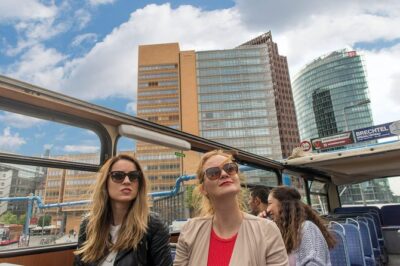
Brandenburg Gate, the symbol of division, and the former death strip
Then comes the stop most people recognize instantly: Brandenburg Gate. You’ll learn why it became such a powerful symbol of division, because the border ran right there. That matters emotionally because the gate isn’t a private or hidden location. It was, and still is, a public face of the city.
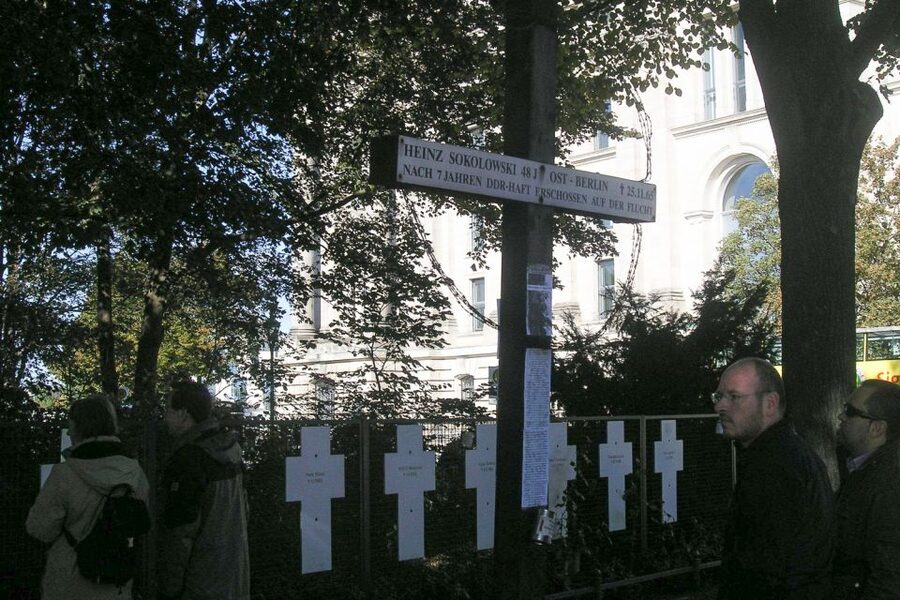
From the gate you proceed to the Holocaust memorial at the former death strip. This is the tour’s solemn turn. It connects division to the most extreme consequences of persecution and dehumanization. Even if you already know the memorial, being told it sits in the context of the former border area changes how you absorb the space.
This combination of stops works because it forces you to hold two ideas at the same time. One is political separation in the Cold War. The other is the moral weight of what humans did inside and around that same landscape. It gives the tour seriousness without pretending history is simple.
If you want a tour that helps you see how Berlin’s past is still present in everyday sightlines, this is where it clicks.
Potsdamer Platz and the Tiergarten Triangle split you can see
After the memorial area, the tour heads to Potsdamer Platz. This isn’t only about seeing a major square. The goal is to show you how the split was especially visible in the former Tiergarten Triangle, a place where the division looks clearer when you stand in the right positions.
Potsdamer Platz is great for this kind of explanation because it’s central and familiar. You might feel like you already know it from photos or maps. But the tour helps you reframe it: the layout tells part of the story, and the guide’s pointing turns the space into an illustrated guide to division.
The value here is perspective. Instead of thinking the wall is only a single straight line, you start to see it as a network of barriers, sightlines, and restricted movement. That is why this stop feels more meaningful than a generic photo break.
Tip for your photos: don’t rush. Take a minute to stand where the guide tells you to stand. The point is usually not the building itself, but the angle that helps you understand how the split worked.
The longest remaining wall stretch and what you can still read
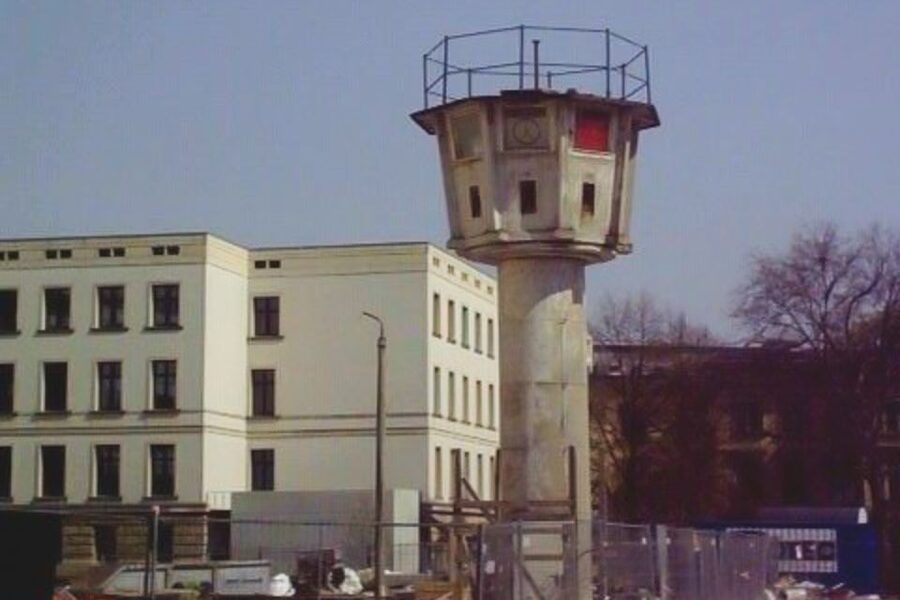
A highlight of the route is seeing the longest remaining stretch of the wall. This is where the tour shifts from explanation to evidence. Standing near an extended section of surviving wall makes the scale harder to ignore, and it helps you understand why people living nearby had to adapt their routines around it.
Even without extra materials, the wall segment functions like a text on a page. You can see the thickness, the persistence, and the fact that parts of the barrier still shape how the city looks.
This stop also helps you connect earlier points. Once you’ve heard about border stations, a border strip along government buildings, and the symbolic role of Brandenburg Gate, the longer wall stretch becomes the physical center of the story. It’s not just a landmark. It’s the reality that linked everything else.
If you’re the kind of traveler who likes to understand why a city is shaped a certain way, this is one of the most satisfying moments of the tour.
Checkpoint Charlie, the world-famous border with context
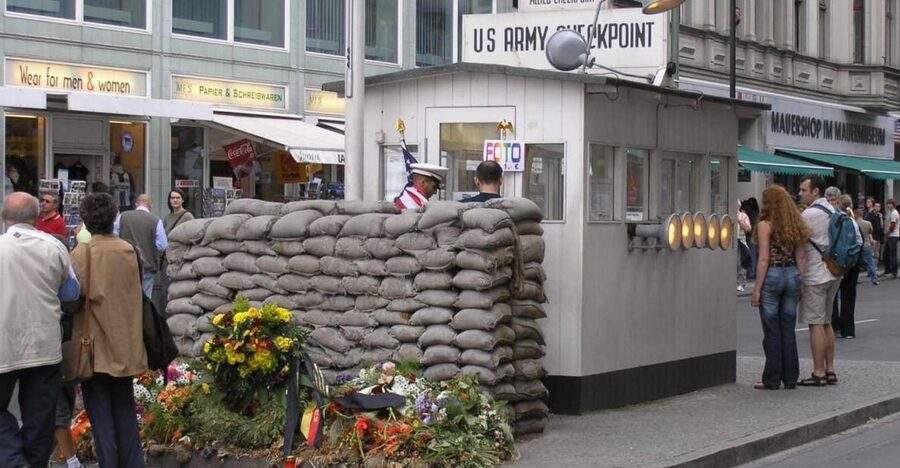
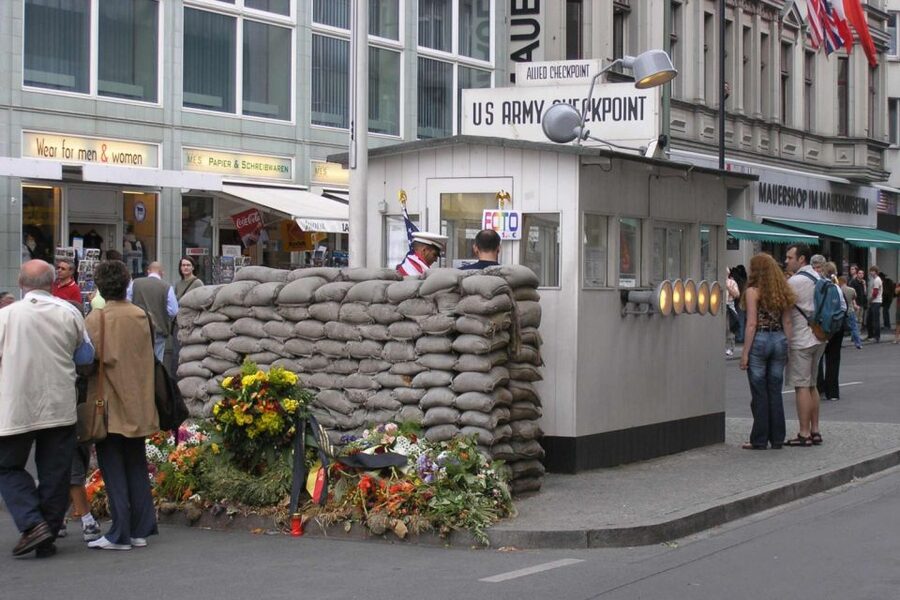
Next up is Checkpoint Charlie, one of the world-famous names connected to Berlin’s division. On its own, it can become a quick photo stop. With this tour, the goal is context: you see it as part of the daily reality of the border system.
Checkpoint Charlie is effective as a teaching tool because it’s already recognizable. That means your guide can spend less time on basic orientation and more time on what matters, especially how the wall changed what people could do and how quickly life could become constrained by politics.
This is also a good place to ask questions. If your German is solid, you can go deeper on how the border affected the city’s flow. If your German is only basic, you can still follow the story because the tour is designed around clear, visible locations and a consistent line of explanation.
The tour ends with you leaving Central Berlin with a different kind of map in your head. You’ll still see the usual sights, but now you’ll also see the border logic behind them.
Price and value: why $21 works for a focused Berlin Wall loop
At about $21 per person for a 2-hour guided city tour, this is priced for value if you want the major Cold War landmarks without building a full self-guided itinerary. You’re paying for a live guide who can connect the sites into one message: how the wall influenced daily life.
The short duration matters. Two hours is enough time to cover multiple key locations, but it doesn’t trap you on a half-day schedule. That’s helpful if you’re also planning museums or a Berlin food stop the same day.
You should also consider the language factor. The tour is German, and that can be a real cost if you can’t follow the guide comfortably. If you do speak German, the value gets better because you’ll likely catch the personal details that make the story stick.
Finally, the meeting point is central and practical. Starting near Friedrichstraße station means you can pair this tour with other nearby plans without needing a long commute.
Who should book this Berlin Wall city tour
This tour is a great fit if you want a walkable, story-driven Berlin Wall experience that ties specific locations to the way the city was shaped by division. I especially think it suits first-timers who feel overwhelmed by how many Cold War sites Berlin has. The route gives structure.
It also works well for travelers who care about human scale. The strongest feedback about this experience emphasizes the guide’s personal storytelling style, which is exactly how this kind of history should be explained.
Consider another option if you need English, since the tour guide is German only. Also, pack for outdoor walking. Even if the distance feels manageable, you will stand at stops and listen, and comfortable shoes are non-negotiable.
Should you book this tour?
Book it if you want a clear, guided path through Berlin Wall history that connects famous places like Brandenburg Gate and Checkpoint Charlie to everyday-life impact. The 2-hour focus is a smart way to get meaning from the city without losing a whole day.
Don’t book it if German is a barrier for you. The tour’s value depends on following the guide closely, especially during the emotional stops around the former death strip area. If you can handle German, this one is an excellent use of your time in Berlin.
FAQ
How long is the Berlin Wall city tour?
The tour duration is 2 hours.
How much does the tour cost?
The price is $21 per person.
Where do I meet the guide?
Meet at the entrance of Tränenpalast (Palace of Tears) in front of Friedrichstraße station on Reichstagufer, 10117 Berlin. Tränenpalast has only one entrance.
Is there a live tour guide?
Yes, the tour includes a live guide.
What language is the tour in?
The tour is in German.
What should I bring?
Wear comfortable shoes.
Is free cancellation available?
Yes. You can cancel up to 24 hours in advance for a full refund.
Can I reserve and pay later?
Yes. You can reserve now and pay later to keep your plans flexible.
Seeing Berlin in One Go
Following the Wall a Little Further
Everything else we filed on Berlin
- East Berlin: City of Shadows Walking Tour
★ 5.0 · 11 reviews - Berlin: Die Stachelschweine – Frank Lüdecke – Träumt Weiter
★ 4.7 · 11 reviews - Potsdam Day Trip from Berlin with a Local: Private & Personalized
★ 4.0 · 11 reviews - An Introduction to Berlin Walking Tour
★ 5.0 · 11 reviews - DJ for a Day: Learn to Mix Like a Pro in Berlin
★ 5.0 · 11 reviews - 2-H Segway Sightseeing Tour Berlin
★ 4.5 · 11 reviews
Berlin Wall and Divided City Tours, side by side.
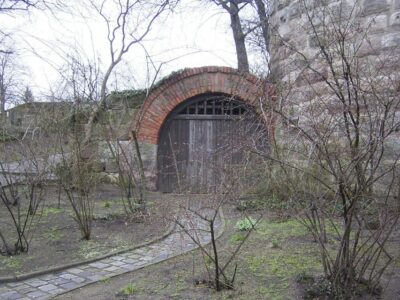 ★ 4.8Nuremberg: Tunnels and Secret Passages in the City Wall TourFrom $142,334 reviews
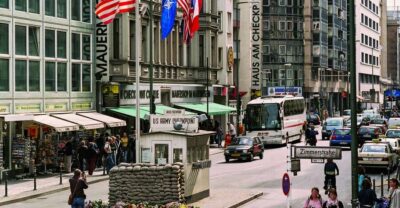 ★ 4.1Skip-the-Line: Berlin Wall Museum at Checkpoint CharlieFrom $212,041 reviews
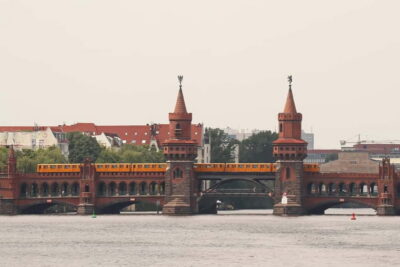 ★ 4.0Berlin: East Side Gallery Spree Cruise in a Solar CatamaranFrom $271,039 reviews
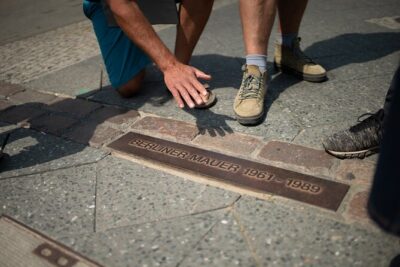 ★ 5.0Cold War, Berlin Wall, Spies and the East Side GalleryFrom $181,024 reviews
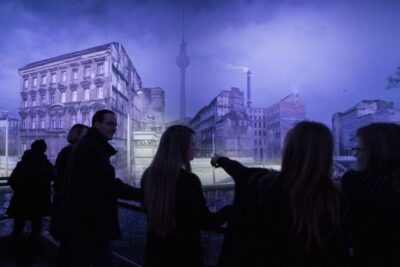 ★ 4.5THE WALL: asisi Panorama Berlin TicketFrom $16580 reviews
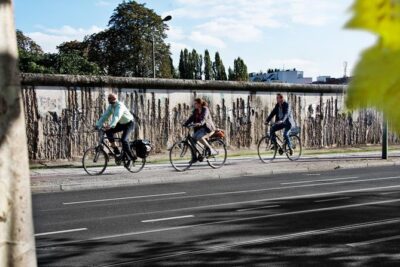 ★ 4.7Berlin: Guided Bike Tour of the Berlin Wall and Third ReichFrom $40499 reviews
 ★ 4.8Berlin: Cold War Walking Tour on Berlin Wall RouteFrom $26437 reviews
 ★ 4.9East Berlin and the Wall: Walking TourFrom $351407 reviews
Other lists this tour is on