

REVIEW · WALKING TOURS
Citybeering – Walk with funny and interesting stories while having local beers
Beer, stories, and a tight harbor walk in Hamburg. This Citybeering tour mixes landmark viewing with local beer stops and guided anecdotes that explain what you are actually looking at, from Hamburg Town Hall to the Elbtunnel. I love how quickly it gives you orientation in the center, and I also like that it runs in English with a small group feel. One heads up, the route ends near St. Pauli, so you will pass through a very adult, red-light district area.
I also really like the guide style, especially how guides can adapt the pacing in real life, like Bela adjusting timing for a triathlon so the tour still works. And I appreciate that the big sights on the route have free admission tickets, so your money goes toward the storytelling and the beer rather than museum fees. The main consideration for some people is the walking pace for 2 to 3 hours, plus the fact that St. Pauli is not a quiet, family-first zone.
In This Review
- Key Highlights You Should Know
- Citybeering Is an Efficient Hamburg “Orientation + Beers” Plan
- Rathaus and Rathausmarkt: Neo-Renaissance Hamburg Meets a Venetian-Style Square
- Jungfernstieg: Where the City Lets You Watch Itself
- Deichstraße and Old Hamburg Town Houses: Small-Scale History That Still Feels Real
- St. Michaelis (Michel): The Shipping Symbol Church You Can Spot From Afar
- The Portuguese Quarter Roots: How Harbor Pubs Became The Coast
- St. Pauli Landungsbrücken: Passenger Ships, Jetties, and Real Port Energy
- Alter Elbtunnel: The 1911 Engineering Marvel Under the Norderelbe
- St. Pauli: Adult Entertainment, Big-City Reality
- Park Fiction: Art and Socio-Political Ideas at the Harbor Edge
- Price and Value: $46.13 for Beer, Stories, and Free Stops
- Timing Tips: Why Afternoon Often Feels Easier
- Who This Tour Suits Best (and Who Might Skip It)
- Should You Book Citybeering with Jolly Tours?
- FAQ
- How long is the Citybeering tour in Hamburg?
- How much does Citybeering cost?
- Is the tour offered in English?
- Does the tour include local beers?
- How large is the group?
- Is there a mobile ticket?
- Where does the tour start?
- Where does the tour end?
- Are service animals allowed?
- What is the cancellation policy?
Key Highlights You Should Know
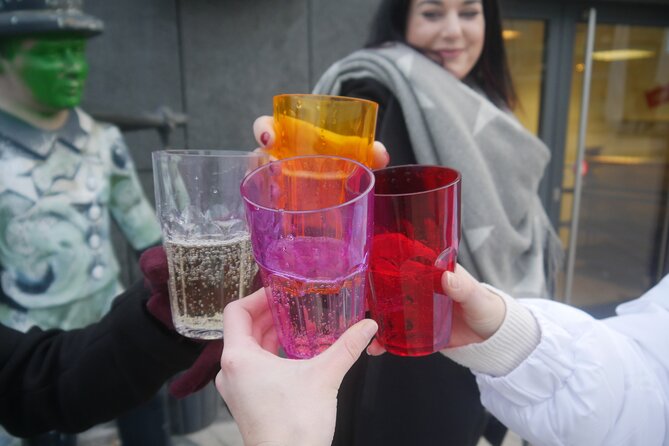
- Beer stops during the walk with a focus on local flavor and good storytelling
- Small group, max 15 people, which keeps things personal and easier for questions
- English guided tour with a mobile ticket you can keep simple on your phone
- Top Hamburg landmarks in one route, from Rathaus to St. Michaelis and the harbor
- Elbtunnel on foot or bike lanes with a strong piece of engineering lore
- Pacing can be adjusted in the moment, like Bela doing with a triathlon schedule
Other walking routes through Hamburg
- Hamburg: Guided Walking Tour for Magic Fans★ 4.8 · 1,992 reviews
- Reeperbahn Walking Tour with St. Pauli Local★ 4.8 · 577 reviews
- Hamburg: Speicherstadt Walking Tour with Coffee Tasting★ 4.6 · 360 reviews
- Hamburg Reeperbahn Small-Group Walking Tour★ 4.0 · 269 reviews
Citybeering Is an Efficient Hamburg “Orientation + Beers” Plan
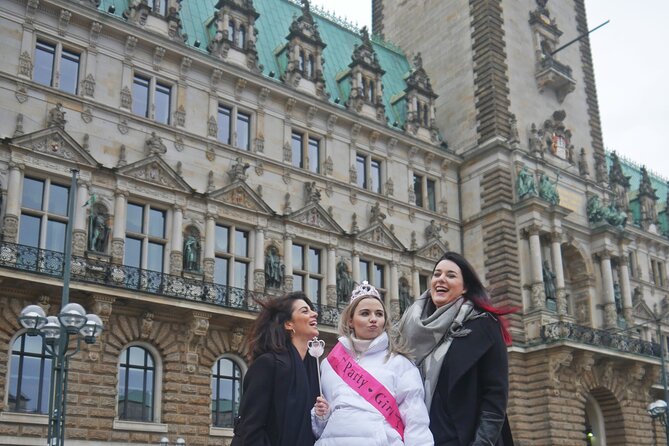
Citybeering is built for people who want more than photos. You get a guided walk through Hamburg’s central showpieces, but the stories are the point. Between stops, you are also having local beers, which turns the tour into something social instead of a lecture.
The structure is friendly: you start at Hamburg Town Hall and then work your way toward the harbor, crossing through classic city streets, churches, and port landmarks. It is also a good length. At roughly 2 to 3 hours, you can fit it into a day with other plans without burning your whole afternoon.
Rathaus and Rathausmarkt: Neo-Renaissance Hamburg Meets a Venetian-Style Square
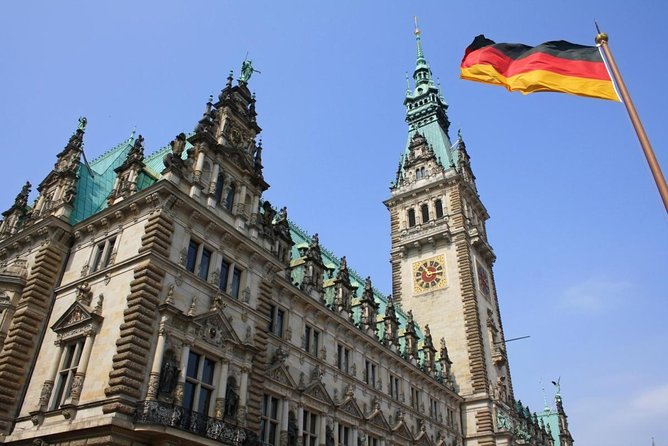
Your route begins at Hamburg Town Hall, at Rathausmarkt 1. This building is the seat of the Hamburg citizenship and the Senate of the Free and Hanseatic City of Hamburg, so it is not just pretty architecture. Construction ran from 1886 to 1897, and the style is historicist Neo-Renaissance, which shows in the building’s confident symmetry and grand presence on the Little Alster.
Stop time is short, about 15 minutes, so you do not get stuck. You get enough to clock the main features and understand why it matters. The key value for you is that the tour sets the mental map early: Rathaus, Alster, bridges, and the way the city’s civic life sits right in the center.
A little further along you hit Rathausmarkt, the town hall market area. This square was designed as a model based on St. Mark’s Square in Venice, including the idea of the space opening toward water. The overall ensemble plan dates to 1842, and you see the influence in how the buildings and public space relate to the Little Alster.
Jungfernstieg: Where the City Lets You Watch Itself
Next comes Jungfernstieg, a street along the southern bank of the Inner Alster. The name comes from Low German meaning “steig,” and the vibe is very Hamburg: it is a place about seeing and being seen. The street runs between Reesendammbrücke and Gänsemarkt, so it connects major center points rather than feeling like an off-the-beaten-path detour.
This is only about 5 minutes on paper, but it is a smart stop. You get a sense of the city rhythm without needing a museum ticket. If you have been to big European capitals where the center is all traffic and hurry, this feels more like a social promenade.
Practical tip: it helps to stand near the water and watch how people move around the arcades and bridges. That’s where the “getting your bearings” payoff happens.
Deichstraße and Old Hamburg Town Houses: Small-Scale History That Still Feels Real
Then the tour shifts tone. Deichstraße is a city-center street known for the last remaining ensemble of old Hamburg town houses. If you care about how cities actually preserve identity, this stop is a good one, because it is about continuity rather than grand monuments.
You also get a specific historical detail: across the Nikolaifleet there is a preserved relic, the Cremon storage group. The tour keeps it compact, around 5 minutes, but it points you toward the kind of Hamburg that survives even when the city modernizes around it.
One downside to note: Deichstraße is more about atmosphere than jaw-dropping sights. If you only want iconic, photogenic landmarks, you might wish it had a longer stop. Still, it is a useful counterweight to the larger buildings.

St. Michaelis (Michel): The Shipping Symbol Church You Can Spot From Afar
Now for one of Hamburg’s big visual anchors: St. Michael’s Church, nicknamed Michel. This is the main evangelical church of St. Michaelis and often described as the most famous church building in Hamburg. The style matters too. It is considered the most important baroque church in northern Germany.
The church is designed so it is visible from far away, and that matters for how you read the city. The tour frames it as a symbol of Hamburg’s Hanseatic shipping identity on the Elbe, not just as a pretty facade.
The stop itself is brief at about 5 minutes, so treat it as a “get the big idea” moment. You are not going inside on this itinerary based on the info you have here, but you still learn how it became tied to the city’s maritime power.
The Portuguese Quarter Roots: How Harbor Pubs Became The Coast
Between Michel and the harbor, you pass through the kind of neighborhood history that explains why Hamburg feels the way it does today. The area has long had small businesses, especially gastronomy. In the 1950s and 1960s, harbor pubs were common here, and that gave today’s Portuguese Quarter its earlier nickname, The Coast.
In the 2000s, food and café culture expanded further. By 2011, there were around 40 cafés and restaurants in the area. That is the kind of detail that turns a street stroll into a story about social change, not just where to eat.
This segment is not listed as a timed numbered stop, but it’s where the tour becomes more lifestyle-focused before it jumps into the industrial harbor sights.
St. Pauli Landungsbrücken: Passenger Ships, Jetties, and Real Port Energy
The walk then reaches St. Pauli Landungsbrücken, a landing stage for passenger ships at the northern edge of Hamburg’s port. The jetties sit in the St. Pauli district between Niederhafen and St. Pauli Fischmarkt along the Elbe.
This stop lasts about 20 minutes, which is longer for a reason. It gives you space to actually absorb the harbor environment. This is one of the most meaningful segments for you if you want Hamburg beyond the center streets, because you see the city’s working face, not just its civic monuments.
In practical terms, this is also where the tour feels most like a local walk. The setting is wide, active, and easier to enjoy if you give yourself a moment to slow down.
Alter Elbtunnel: The 1911 Engineering Marvel Under the Norderelbe

Next is the highlight that feels like you stepped into another era: Elbtunnel, also known as the St. Pauli-Elbtunnel or the Alter Elbtunnel. It opened in 1911 and runs under the Norderelbe for 426.5 meters.
The tunnel connects the northern harbor edge at St. Pauli landing bridges to Elbe island Steinwerder, with the north entrance having two tunnel tubes. It is used by pedestrians and cyclists, and motor vehicles only to a limited extent, which makes it feel very human-scale for something this old and technically impressive.
The story here is more than trivia. The tunnel was considered a technical sensation at opening, and it has been a listed building since 2003. It even received the title Historic Landmark of Engineering in Germany on September 7, 2011, awarded by the Federal Chamber of Engineers and the Hamburg Chamber of Engineers.
This is a great stop for your brain because it links city history to how people actually moved. You do not just look at Hamburg, you experience one of its transit solutions.
St. Pauli: Adult Entertainment, Big-City Reality
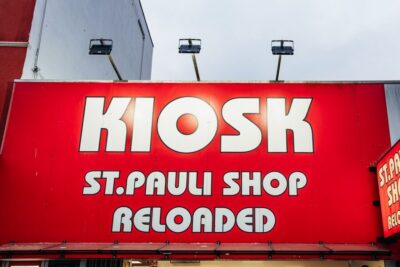
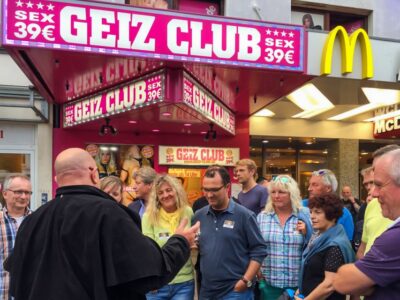
After the tunnel, you reach St. Pauli, including time by the iconic red-light district. The tour frames it as world-famous and describes it in straightforward terms: bars, pubs, clubs, strip clubs, brothels, and similar venues.
Plan for this emotionally and logistically. This is the main “consideration” piece of the tour, because it is not a themed, softened attraction. It is a real nightlife district with adult-focused businesses, and the vibe is different from the more classic Hamburg sights earlier in the walk.
If that makes you uncomfortable, you might prefer a different route for your day. If you are fine with it, this part gives you the honest end of Hamburg’s spectrum, and it helps you understand why the harbor neighborhoods evolved into entertainment zones.
Park Fiction: Art and Socio-Political Ideas at the Harbor Edge
The final stop is Park Fiction, an artistic and socio-political project in Hamburg that has existed since the mid-1990s. It is placed right at the edge of the harbor area, so you get a sharp change from the street energy of St. Pauli to something more reflective.
The meeting point detail matters here: the tour ends at the edge of the harbor near Schauermanns Park, on the edge of the St. Pauli entertainment district. That finish is smart if you want an easy next step, because you can decide whether to head back toward the city center or keep exploring the harbor-side neighborhoods.
Park Fiction also works as a mental reset. After the big civic buildings, the church, the tunnel, and the adult district, the tour ends with an idea-driven place. It feels like Hamburg saying, yes, we have history and industry, but we also have art with opinions.
Price and Value: $46.13 for Beer, Stories, and Free Stops
At $46.13 per person for about 2 to 3 hours, the value comes from combining four things into one package.
First, you are paying for a guided walk that connects landmarks into a story arc. Second, local beers are part of the concept, so some of what you would normally spend separately is already baked in. Third, the stops listed here have free admission tickets, so your ticket price is not being used to cover museum entry fees. Fourth, you are capped at 15 travelers, which makes it easier to get real answers instead of watching a guide talk at a crowd.
Now, the tradeoff is what you would expect from a walking tour. You need to show up ready to walk for a few hours, and you need to accept that part of the route is not for everyone because of St. Pauli.
If you are the type of traveler who likes to learn the why behind the what, this price makes more sense. If you only want sightseeing postcards and prefer to keep alcohol out of the mix, you may decide it is not the best fit.
Timing Tips: Why Afternoon Often Feels Easier
The tour runs with scheduled stops and beer along the way. If you are choosing between morning and later departures, I think afternoon makes the day feel more comfortable.
Reason is simple. Beer earlier in the day can feel like a mismatch if you prefer coffee or a slow start, or if you just do not want to turn your morning into a tasting. An afternoon start keeps the vibe relaxed, and you will likely enjoy the city sights more without the mental scramble of an early drink plan.
Bring common-sense items too: comfortable shoes, water, and a jacket you can handle if the weather shifts by the harbor.
Who This Tour Suits Best (and Who Might Skip It)
This is a strong choice for you if:
- You want Hamburg highlights without piecing together multiple tickets
- You like guided stories that explain what you see in plain language
- You enjoy a social pace with local beer included
- You like smaller groups, because max 15 people makes it easier to connect
It might be a weaker choice if:
- You strongly prefer not to be in or near St. Pauli adult nightlife areas
- You want an inside-focused sightseeing day, because several stops are primarily about viewing and orientation
Also, since it is offered in English and geared to most travelers, it works well for mixed groups, not just German speakers.
Should You Book Citybeering with Jolly Tours?
If you want one practical plan that gives you city orientation, history context, and a fun beer element, I would book Citybeering. The route hits major anchors like Rathaus, Michel, the St. Pauli port area, and the 1911 Elbtunnel, then ends with an art project at the harbor edge.
I would only hesitate if St. Pauli is a deal-breaker for you. If it is not, this tour is a sensible way to experience Hamburg with less effort and more storytelling than you would get wandering alone.
And if your schedule is flexible, the experience offers free cancellation up to 24 hours in advance, so you can decide with less stress.
FAQ
How long is the Citybeering tour in Hamburg?
It lasts about 2 to 3 hours.
How much does Citybeering cost?
The price is $46.13 per person.
Is the tour offered in English?
Yes, the tour is offered in English.
Does the tour include local beers?
Yes, it is described as a walk with funny and interesting stories while having local beers.
How large is the group?
The tour has a maximum of 15 travelers.
Is there a mobile ticket?
Yes, it uses a mobile ticket.
Where does the tour start?
It starts at Hamburg Townhall, Rathausmarkt 1, 20095 Hamburg, Germany.
Where does the tour end?
It ends at Park Fiction, Schauermanns Park, Pinnasberg 27, 20359 Hamburg, Germany.
Are service animals allowed?
Yes, service animals are allowed.
What is the cancellation policy?
You can cancel for a full refund up to 24 hours in advance of the experience start time, and it is free cancellation.
Pavements of Hamburg
Everything else we filed on Hamburg
- Hamburg: Safari tour in St. Pauli
★ 4.9 · 11 reviews - Hamburg: Party Bingo with the Bingo Gringos
★ 4.8 · 11 reviews - Hamburg Harbor: 3.5-Hour Guided Tour by Bike
★ 4.7 · 11 reviews - Hamburg: 2-Hour St. Georg Walking Tour
★ 4.8 · 11 reviews - Hamburg: Guided Walking Tour in Danish
★ 5.0 · 11 reviews - Discover Hamburg in a retro Bulli
★ 3.0 · 12 reviews
Walking Tours, side by side.
 ★ 5.0Discover Berlin Half-Day Walking TourFrom $249,624 reviews
 ★ 4.9Berlin: Third Reich and Cold War 2 Hour Walking TourFrom $236,830 reviews
 ★ 4.6Munich: Third Reich & WWII Walking TourFrom $316,181 reviews
 ★ 4.9Berlin: Discover Berlin Walking TourFrom $235,998 reviews
 ★ 5.0Berlin’s Best: 2 Hour Walking Tour Third Reich and the Cold WarFrom $245,486 reviews
 ★ 4.8Berlin: Hidden Backyards Guided Walking TourFrom $235,360 reviews
 ★ 4.5Third Reich Walking Tour MunichFrom $454,291 reviews
 ★ 5.0Third Reich Berlin: Hitler and WWII Walking TourFrom $243,301 reviews