
REVIEW · WALKING TOURS
Hamburg: Guided Walking Tour
Hamburg tells its story on foot. In two hours you move from the Town Hall to the Elbphilharmonie area, with stops that connect merchant power, port industry, and modern waterfront life. You also pass the inner Alster lake, classic central promenades, and warehouse buildings that became some of Hamburg’s most famous visitor spots.
I love two things most. First, the guided storytelling feels practical and fast, and the guide uses images to make the timeline easier to follow. Second, the route gives you a strong sense of how Hamburg grew from a merchants’ city state into today’s port-centered metropolis, without turning your day into a museum marathon.
One drawback to consider: the live narration is in German, and entrance fees are not included. So if you do not speak German well, or you’re hoping for lots of inside access, you might want to pick a different tour style.
In This Review
- Key highlights to know before you go
- A 2-hour Hamburg walk that links old trade to today’s harbor
- Town Hall and the civic core: where Hamburg’s authority is visible
- Alsterarkaden and Jungfernstieg: the easy way to read the city
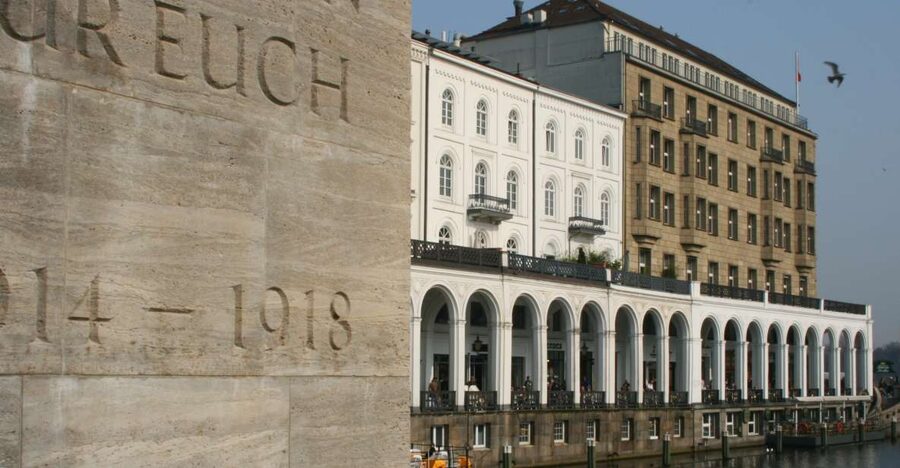
- Trostbrücke and St. Nikolai Memorial: history you can feel in your feet
- Deichstrasse and the Kaiser-era port transformation
- Speicherstadt: warehouses, museums nearby, and a district built for trade
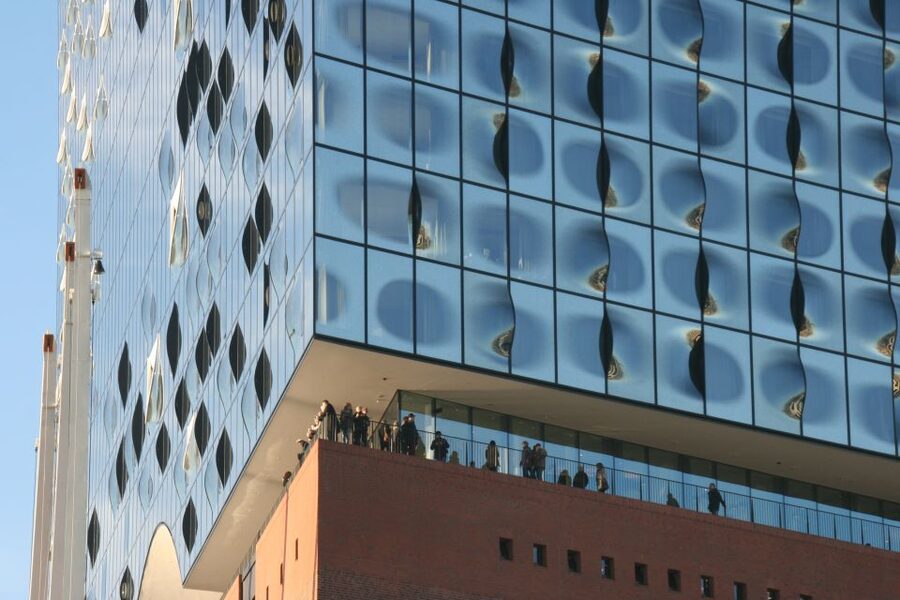
- HafenCity and the Elbphilharmonie: modern architecture at the water’s edge
- Price and practical value at $21 for 2 hours
- Who this tour fits best (and who might prefer another option)
- Should you book this Hamburg guided walking tour?
- FAQ
- Where do I meet the guide?
- Where does the tour end?
- How long is the walking tour?
- Is the tour guided in German?
- What is included in the price?
- Are entrance fees included?
- Is snacks and beverages included?
- Is free cancellation available?
- Can I reserve and pay later?
Key highlights to know before you go
- Town Hall start at a clear, central landmark, right where Hamburg’s power gets introduced
- Inner Alster lake promenades that help you orient fast before you head to the waterfront
- St. Nikolai Memorial and nearby streets that add weight to the city’s story
- Speicherstadt warehouse district sights in the area of the Spice Museum, the model railway, and the Hamburg Dungeon
- HafenCity and Elbphilharmonie viewpoints for modern architecture and big harbor views
- Engaged guiding with visuals, and a group that works best when you show up ready to ask questions
Other walking routes through Hamburg
- Hamburg: Guided Walking Tour for Magic Fans★ 4.8 · 1,992 reviews
- Reeperbahn Walking Tour with St. Pauli Local★ 4.8 · 577 reviews
- Hamburg: Speicherstadt Walking Tour with Coffee Tasting★ 4.6 · 360 reviews
- Hamburg Reeperbahn Small-Group Walking Tour★ 4.0 · 269 reviews
A 2-hour Hamburg walk that links old trade to today’s harbor
This is the kind of tour that helps you get your bearings fast. You start in the historic core, then keep walking until the city opens up toward the water, where Hamburg’s port identity becomes the main character.
The value here is the smart sequencing. You see the civic center first, then the city’s elegant water-edge life around the Alster, then the memorial and trade streets, then the warehouse district, and finally HafenCity and the Elbphilharmonie area. In a short window, you get a usable mental map, not just a list of sights.
Town Hall and the civic core: where Hamburg’s authority is visible
The walk begins in front of the main entrance of the Town Hall, so you get a big anchor point right away. From there, your guide sets the tone: Hamburg’s development as a merchants’ town and a sovereign city state, not just a generic German city.
I like this starting choice because it frames everything else. When you understand that Hamburg built its strength through trade and city governance, the later scenes make more sense, especially the shift from warehouses and port facilities to newer harbor districts.
Drawback to keep in mind: you are not getting a deep, inside visit to the Town Hall in this tour format. It’s a guided walking experience, so you will mostly be learning in the street, with what you can see around you.
Alsterarkaden and Jungfernstieg: the easy way to read the city
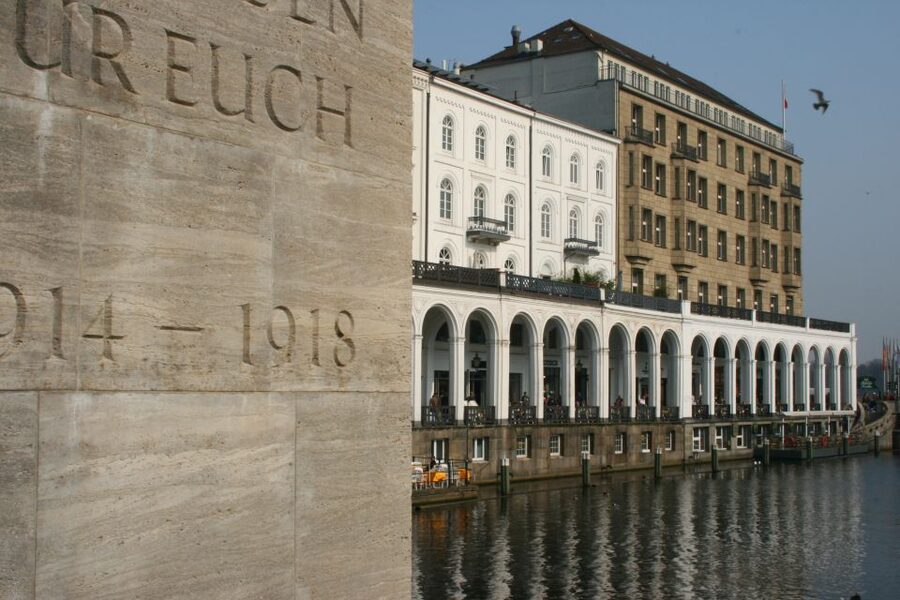
Next up are the Alsterarkaden and Jungfernstieg. These are central waterfront zones around the inner Alster lake, and they’re a great mental reset before the more industrial parts of the city.
Here’s what you should pay attention to. The Alsterfront shows a side of Hamburg that is polished and social, with promenades and grand-looking streets that look made for everyday walks. It’s a contrast to what comes later, and that contrast is useful because it explains how Hamburg can feel both civic and commercial at the same time.
In reviews, people noted the tour stays interesting and clear, with an engaged guide and helpful visuals. That matters most around stops like these, because the Alster area can otherwise feel like “just another promenade” unless someone gives you the story.
Trostbrücke and St. Nikolai Memorial: history you can feel in your feet
As you continue, you reach Trostbrücke and then the St. Nikolai Memorial. This pair changes the mood, adding a heavier layer to the walk.
You’ll feel why this works on foot. Bridges and nearby landmark points are natural moments for a guide to connect past events with the city you’re standing in. The memorial stop is especially valuable for context, because it adds meaning to the route rather than leaving it as pure sightseeing.
A practical consideration: this is a popular central area, and crowds are normal around major sights. If you prefer to easily spot your guide, arrive a few minutes early and orient yourself at the meeting point and each new stop. One review specifically called out that it can be hard to identify the guides in busy crowds, so a little early effort pays off.



Deichstrasse and the Kaiser-era port transformation
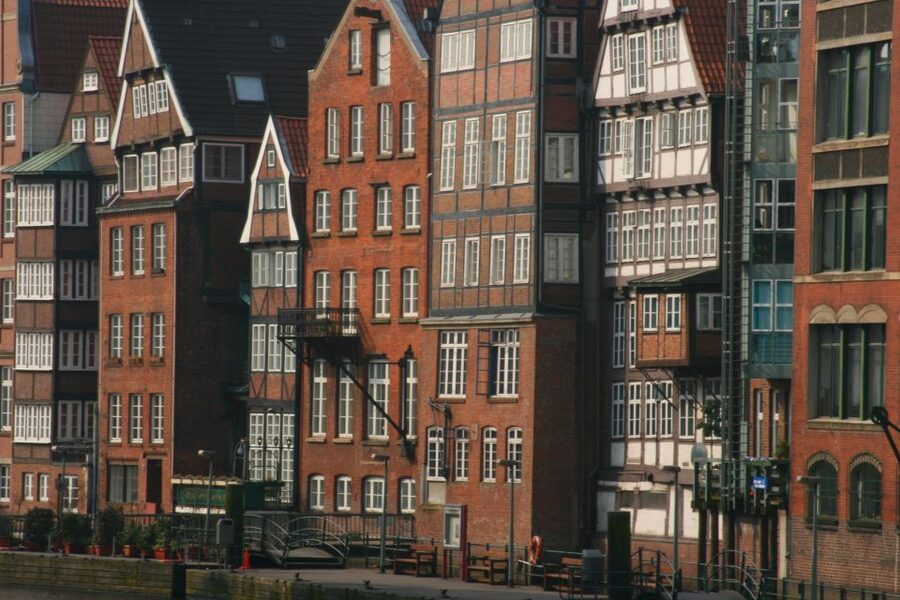
Deichstrasse is where the walk begins to lean hard into Hamburg’s port identity. You’re moving toward the harbor story, including how port facilities date back to the reign of the Kaiser and how those older structures were later turned into new urban quarters.
I like tours that explain the “why changed” part, not just what existed. This one gives you that through the idea of transformation, from older port functions to modern inner-city use. It’s the difference between seeing warehouses and understanding why they became worth keeping.
If you are a person who enjoys city planning as much as architecture, this segment is a good match. You get to watch the city evolve as you walk, which is exactly what a two-hour walking tour should do.
Speicherstadt: warehouses, museums nearby, and a district built for trade
The Speicherstadt district is one of Hamburg’s defining photo areas, and you spend time there. This is the historic warehouse zone, now linked with major visitor attractions in the neighborhood, including the Spice Museum, the biggest model railway in the world, and the Hamburg Dungeon.
What makes this stop worthwhile is the way a guide connects the buildings to their original purpose. Warehouses are not just old bricks. They were designed for storage, for handling valuable goods, and for keeping trade moving. When your guide frames them like that, they stop feeling like “cute old buildings” and start feeling like real infrastructure.
Also, remember that entrance fees are not included. So while you’ll be in the area of those famous attractions, you should plan on seeing the district and learning from the guide, not necessarily going inside every venue.
HafenCity and the Elbphilharmonie: modern architecture at the water’s edge
Towards the end of the walk, the route shifts to HafenCity, a growing inner-city district with newer architecture and public spaces along the Elbe. This is where the city story completes its arc, moving from old trade storage into a forward-looking waterfront district.
You also reach the Elbphilharmonie, one of the city’s biggest modern landmarks. Even if you never buy a ticket for a concert, the exterior and the surrounding harbor views can still be impressive. This stop is valuable for two reasons: it shows the present version of Hamburg, and it helps you understand how the waterfront became a public space rather than a closed-off industrial edge.
Finish point: the tour ends at Am Sandtorkai 66, 20457 Hamburg. That matters because it places you near the harbor side at the end, which is convenient if you want to keep exploring on your own afterward.
Price and practical value at $21 for 2 hours
At $21 per person for about two hours, this is a solid value if you want context fast. You are paying mainly for an experienced guide and a guided route that strings together the civic center, Alsterfront, historic trade areas, and modern harbor districts.
The trade-offs are straightforward. It’s a guided walk, so you are not getting entrance fees included, and snacks and beverages are not included either. If you’re doing this in the middle of a long day, plan to grab water or a snack before you start, especially since you are covering a lot of ground on foot.
Language is another factor. The live guide is German, so if you want to fully absorb the story, you’ll do best with at least basic German listening skills. If you do not, you might still enjoy the architecture and the route, but you may not get every layer of meaning.
Who this tour fits best (and who might prefer another option)
This tour is ideal if you want a fast, coherent introduction to Hamburg. It works well for first-time visitors, people who like walking routes with real context, and anyone who enjoys the story behind city architecture.
You’ll also like it if you are curious about how Hamburg’s port history became part of everyday urban life. The walk’s arc from Town Hall to waterfront makes that transformation easy to grasp.
If you need a lot of inside time, or you want a guided tour in a language other than German, you may want to compare alternatives. This one is built for outdoors learning and exterior seeing.
Should you book this Hamburg guided walking tour?
I think you should book it if your goal is simple: in two hours, learn how Hamburg works, then leave with a map in your head. The combination of civic landmarks, inner Alster promenades, memorial context, Speicherstadt warehouse sights, and the HafenCity Elbphilharmonie area is a smart sequence for first orientation.
Skip it or reconsider if you do not speak German comfortably, or if you mainly want ticketed museum time and entrances. In that case, you might feel shortchanged because the tour focuses on walking and guiding, not on paid entry experiences.
If you do book, show up a little early, keep an eye on the meeting point area, and bring questions. The guiding style seems to work best when you actively engage, not just watch.
FAQ
Where do I meet the guide?
You meet in front of the main entrance of the Town Hall.
Where does the tour end?
The tour finishes at Am Sandtorkai 66, 20457 Hamburg, Deutschland.
How long is the walking tour?
The duration is 2 hours.
Is the tour guided in German?
Yes, the live tour guide language is German.
What is included in the price?
The price includes the walking tour and a qualified guide.
Are entrance fees included?
No. Entrance fees are not included.
Is snacks and beverages included?
No. Snacks and beverages are not included.
Is free cancellation available?
Yes. You can cancel up to 24 hours in advance for a full refund.
Can I reserve and pay later?
Yes. You can reserve your spot and pay later.
Pavements of Hamburg
Everything else we filed on Hamburg
- Hamburg: Safari tour in St. Pauli
★ 4.9 · 11 reviews - Hamburg: Party Bingo with the Bingo Gringos
★ 4.8 · 11 reviews - Hamburg Harbor: 3.5-Hour Guided Tour by Bike
★ 4.7 · 11 reviews - Hamburg: 2-Hour St. Georg Walking Tour
★ 4.8 · 11 reviews - Hamburg: Guided Walking Tour in Danish
★ 5.0 · 11 reviews - Discover Hamburg in a retro Bulli
★ 3.0 · 12 reviews
Walking Tours, side by side.
 ★ 5.0Discover Berlin Half-Day Walking TourFrom $249,624 reviews
 ★ 4.9Berlin: Third Reich and Cold War 2 Hour Walking TourFrom $236,830 reviews
 ★ 4.6Munich: Third Reich & WWII Walking TourFrom $316,181 reviews
 ★ 4.9Berlin: Discover Berlin Walking TourFrom $235,998 reviews
 ★ 5.0Berlin’s Best: 2 Hour Walking Tour Third Reich and the Cold WarFrom $245,486 reviews
 ★ 4.8Berlin: Hidden Backyards Guided Walking TourFrom $235,360 reviews
 ★ 4.5Third Reich Walking Tour MunichFrom $454,291 reviews
 ★ 5.0Third Reich Berlin: Hitler and WWII Walking TourFrom $243,301 reviews